“Can’t repeat the past? Why of course you can!” – F. Scott Fitzgerald, The Great Gatsby (1925)
Updated on: November 26, 2026
Fitzgerald’s line, written in 1925, serves as a fitting introduction to our contemporary relationship with Art Deco – a design language born that same year, which refuses to recede into historical footnote. A century later, we find ourselves still captivated by the aesthetic that Gatsby certainly would have recognized: the crystalline geometries, the sumptuous materials, the tension between machine precision and sensual exuberance.
The birth of Art Deco crystallized in the summer of 1925, as visitors strolled through the Grand Palais in Paris during the Exposition Internationale des Arts Décoratifs et Industriels Modernes. This watershed moment in design history marked not just an aesthetic shift but embodied the zeitgeist of an interwar society simultaneously enchanted by technological progress and haunted by recent catastrophe. Art Deco emerged as the last truly joyful style before the austerity of another world war—a spectacular fusion of contradictions: machine-age materials with handcrafted precision, ancient motifs reimagined through modernist geometry, democratic accessibility paired with unabashed luxury.
Art Deco turned 100 in 2025, and its influence on interior design is as strong as ever. Below, we trace where the style came from, what defines an Art Deco interior and how to bring it into a contemporary home, with three pieces from independent studios.
Art Deco’s Revolutionary Use of Materials
What distinguishes Art Deco as a design phenomenon was its revolutionary material vocabulary. The movement represented the first aesthetically coherent integration of industrial materials into elite design circles. Chrome, bakelite, vitrolite glass, and aluminum—materials previously relegated to purely functional applications—became the building blocks of a new visual language that celebrated both technological advancement and sensory pleasure.
In interior design, Art Deco introduced unprecedented juxtapositions: exotic veneers paired with chromed steel, lacquer with mirror, sharkskin with crystal. Furniture designer Jacques-Émile Ruhlmann elevated these combinations to high art, creating pieces whose astronomical prices (a single cabinet might cost as much as a Parisian apartment) belied the movement’s eventual democratization.
Simultaneously, manufacturers like the Wurlitzer Company and Clarice Cliff adapted Art Deco principles for mass-market consumption, bringing streamlined forms and bold geometric patterns into middle-class homes through jukeboxes, ceramics, and affordable furnishings. This dual existence—as both rarefied luxury and accessible style—explains Art Deco’s unique cultural penetration and enduring appeal.


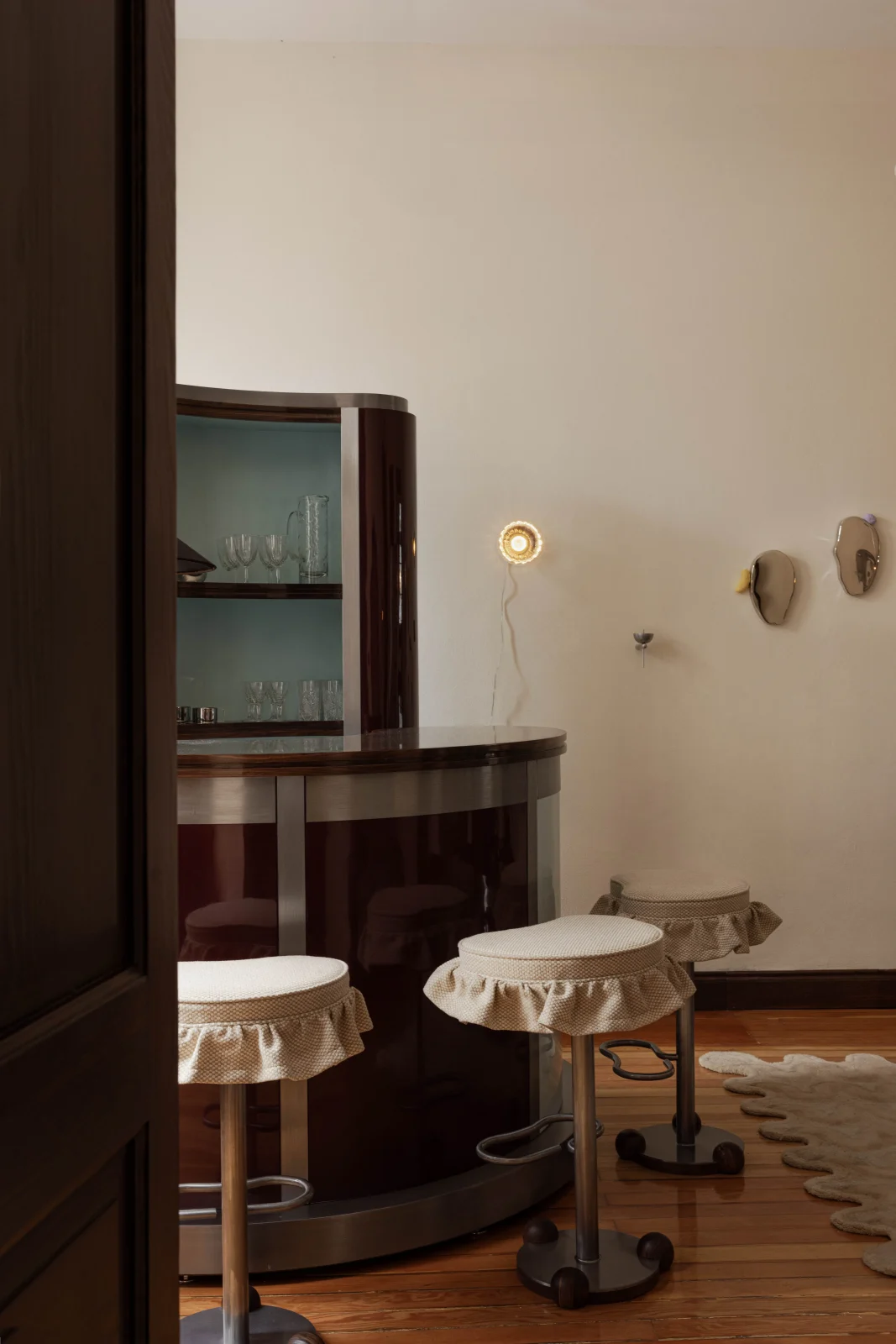
The style transformed public spaces with grand hotel lobbies and movie palaces that democratized luxury, making spectacle accessible to ordinary citizens during the economic turbulence of the 1930s. In domestic environments, it introduced a new vocabulary of sophistication through furniture crafted from exotic veneers, mirrors with sunburst motifs, and cocktail cabinets whose very existence celebrated the end of Prohibition’s moral constraints.
Architectural Impact and Spatial Innovation in Art Deco
In architecture, Art Deco’s impact was transformative and global. William Van Alen’s Chrysler Building (1930) remains perhaps its most iconic embodiment—a structure whose terraced crown, eagle gargoyles, and distinctive spire synthesize ancient temple architecture with machine-age precision, ascending skyward into a theatrical experience.
This theatrical quality defined Art Deco interiors as well. The movement pioneered innovative lighting techniques—cove lighting, recessed fixtures, and dramatic up-lighting—that transformed spatial perception. Interior designers like Dorothy Draper used bold color blocking, oversized patterns, and strategic mirrors to create environments that felt simultaneously intimate and expansive, an approach she termed “anti-minimalism” that deliberately rejected the austere functionalism gaining popularity in European design circles.
Global Reinterpretations of Art Deco
Perhaps most remarkably, Art Deco became the first truly international design language of the modern era, a global phenomenon that adapted to local sensibilities while maintaining its distinctive character. Along Mumbai’s Marine Drive, it merged with Indian motifs to create a unique architectural expression that represented a colonial style indigenized through local craftsmanship. In Miami Beach, it absorbed tropical influences to birth a pastel-colored variant that architectural preservationist Barbara Baer Capitman would later champion, revitalizing an entire district. In Shanghai’s Bund district and Mexico City’s central corridors, Art Deco buildings became symbols not just of modernity but of cosmopolitan identity in rapidly changing societies.
Art Deco’s Influence in Contemporary Design
Today, Art Deco’s influence permeates contemporary design across multiple scales. What distinguishes Art Deco from other historical styles is its extraordinary adaptability. Its formal vocabulary—symmetry, stepped profiles, contrasting materials—can be reinterpreted through countless material palettes without losing its essential character.
In contemporary interiors, we see this adaptability in the resurgence of curved furniture forms with channel tufting, bold geometric patterns in wall coverings and textiles, and the renewed appreciation for mixed metallics. Lighting designers have rediscovered the dramatic potential of Deco-inspired fixtures, creating contemporary interpretations of the movement’s iconic stepped forms and frosted glass elements.
The Rise, Fall, and Revival of Art Deco
Despite its initial ubiquity, Art Deco fell from favor as the austerity of World War II gave way to more minimalist mid-century aesthetics. By the 1960s, many Art Deco buildings faced demolition, dismissed as outdated relics of a frivolous age.
It was only in the 1980s, when nostalgia for pre-war glamour resurged, that Art Deco experienced a dramatic reappraisal. Preservationists fought to save its architectural landmarks, collectors began seeking out original furniture pieces, and designers started incorporating its elements into contemporary work. The 1982 designation of Miami Beach’s Art Deco Historic District—the first 20th-century neighborhood to receive such protection—signaled a watershed moment in the style’s critical revaluation.
How to Bring Art Deco Into a Modern Interior
Start with geometry. Stepped forms, sunbursts, chevrons and arches are the backbone of the style. Introduce them through a mirror, a rug or the silhouette of a side table rather than covering every surface.
Mix luxurious materials. Pair marble, lacquer, burl wood and velvet with polished brass, chrome and glass. One or two such contrasts in a room are enough to signal Art Deco.
Use reflection and light. Mirrors, metallic finishes and layered lighting, especially uplights and wall lights, give a room the theatrical glow of a 1930s lobby.
Choose a confident palette. Deep greens, navy, black and ivory with gold accents feel classic; Miami-style pastels feel lighter and more playful.
Balance it with restraint. In a contemporary home, a few strong Art Deco pieces read better than a full period room. Let clean walls and simple furniture frame them. For more ideas, see our Art Deco furniture and Art Deco decor guides.
3 Art Deco Pieces From Independent Studios
These contemporary pieces carry the Art Deco spirit, through rich materials, radiating ornament or a taste for decadence. Browse more Art Deco design on ADORNO.
Shrine Side Table by VAUST Studio
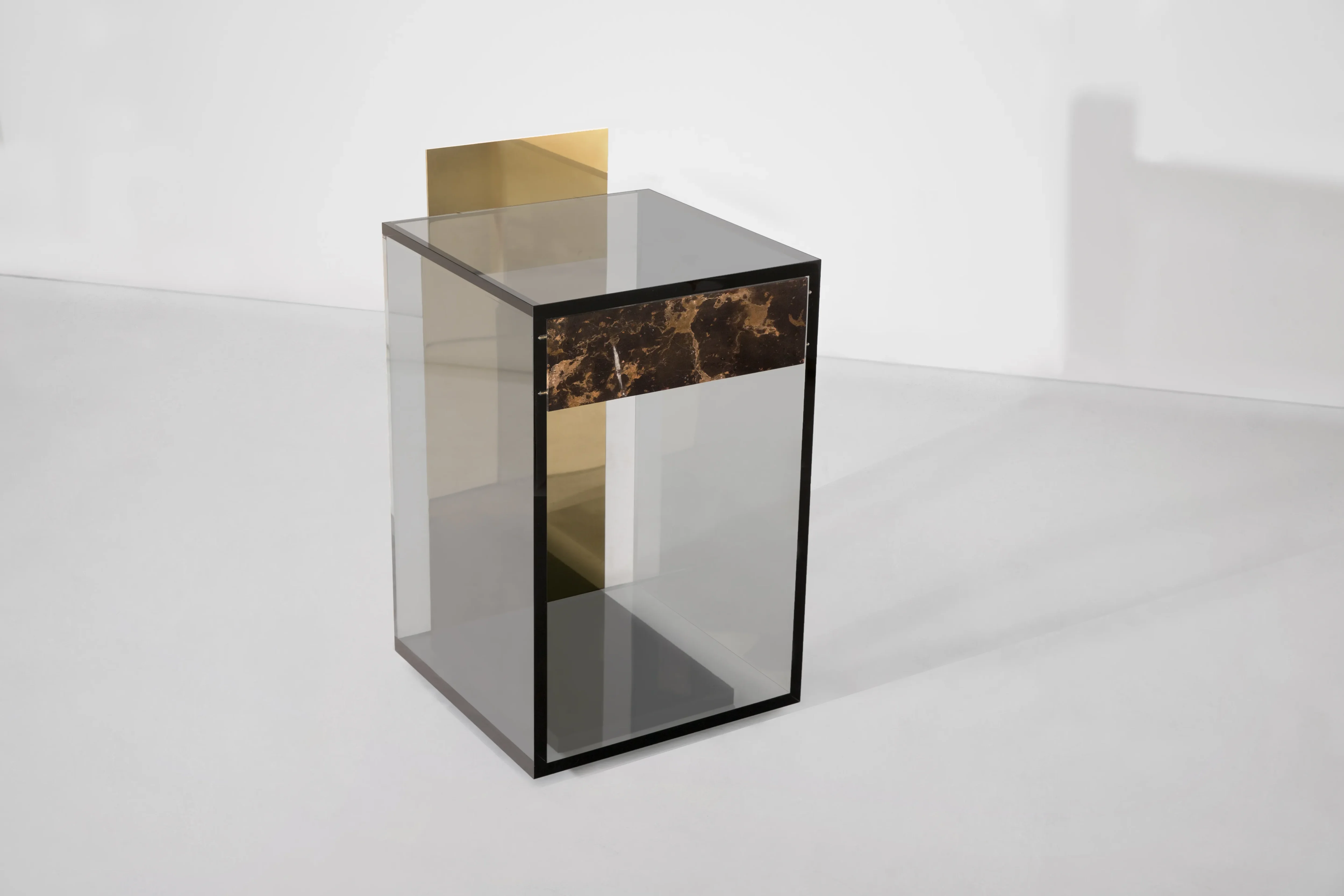
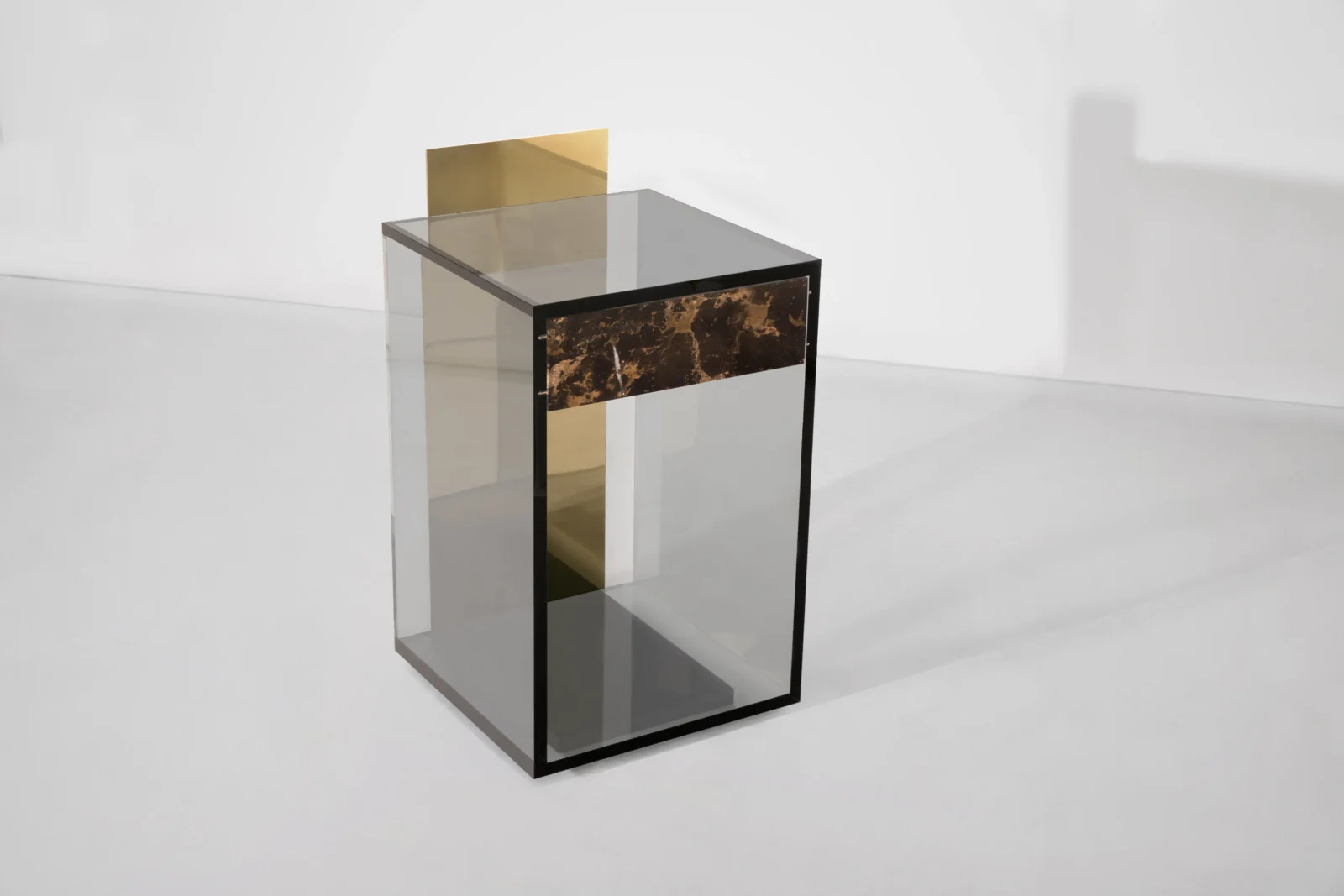
VAUST Studio’s Shrine holds a slab of marble in a transparent acrylic frame above oak and mirror-polished brass. The mix of stone, gleaming metal and modern material, arranged in strict geometry, is pure Art Deco thinking in a contemporary form. It stands 90 cm (35.5 in) tall.
By VAUST Studio
€8,200 incl. tax
Small Wall Mirror in Plaster by Sacha Parent & Valentine Tiraboschi
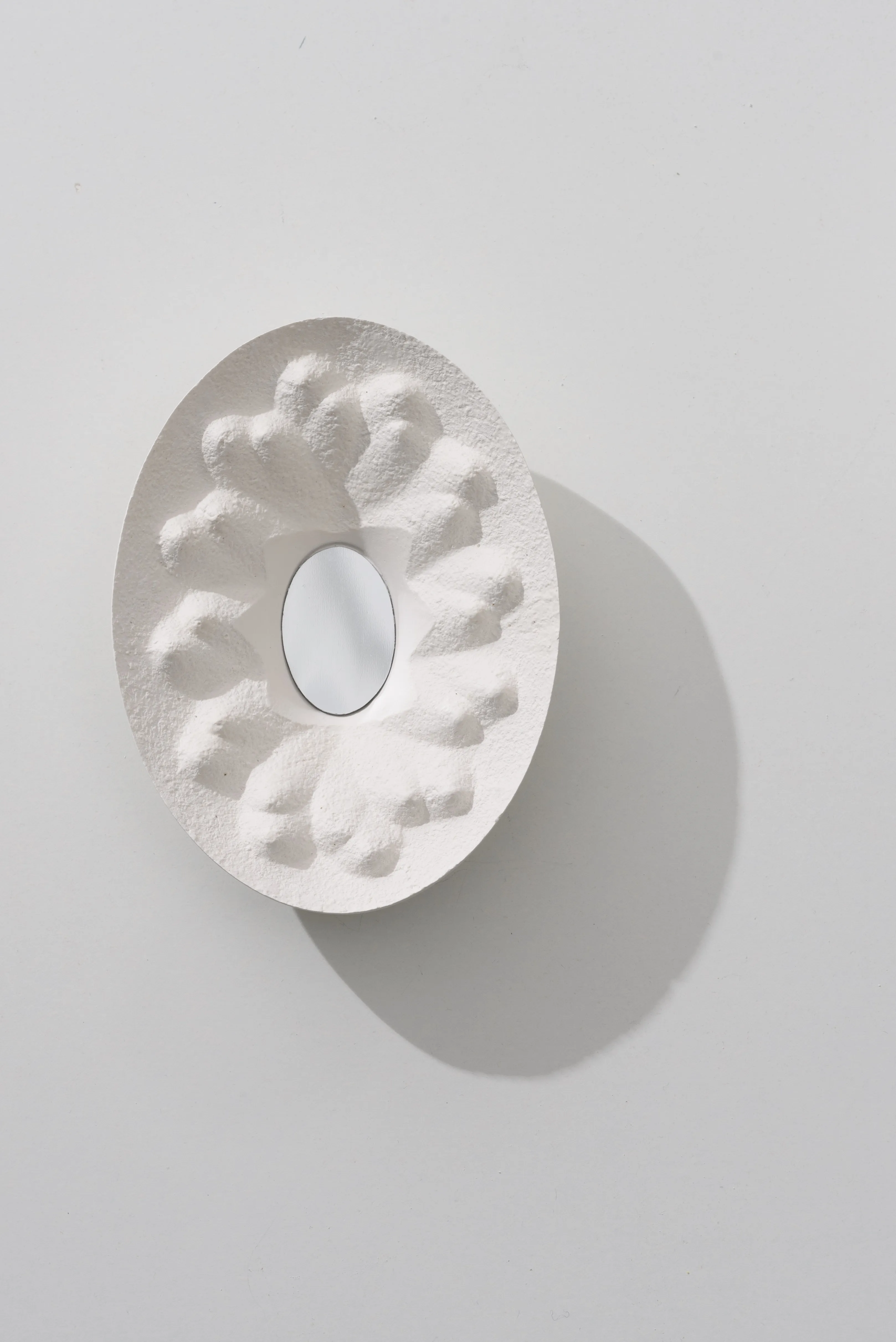
From the Sand Decor Project, which won the Jury’s Grand Prize at Villa Noailles Design Parade 2024, this mirror’s ornament is generated by flowing sand and cast in hard plaster. Its radiating, repeated pattern recalls the sunburst mirrors of the 1920s and 1930s, made by hand in France.
By Sacha Parent & Valentine Tiraboschi
€75 incl. tax
Oyster Shell Medium by Sugoi Studio
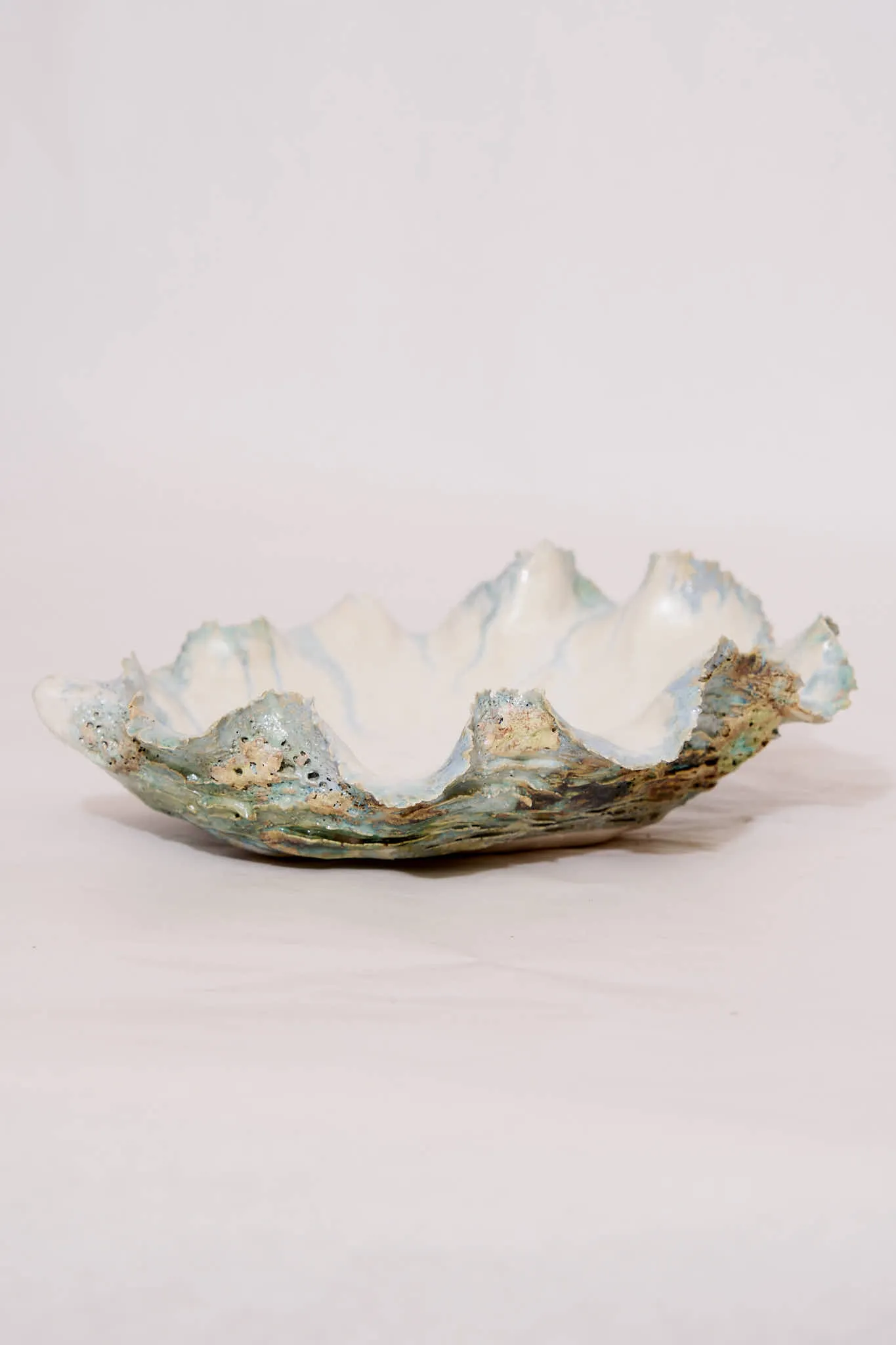
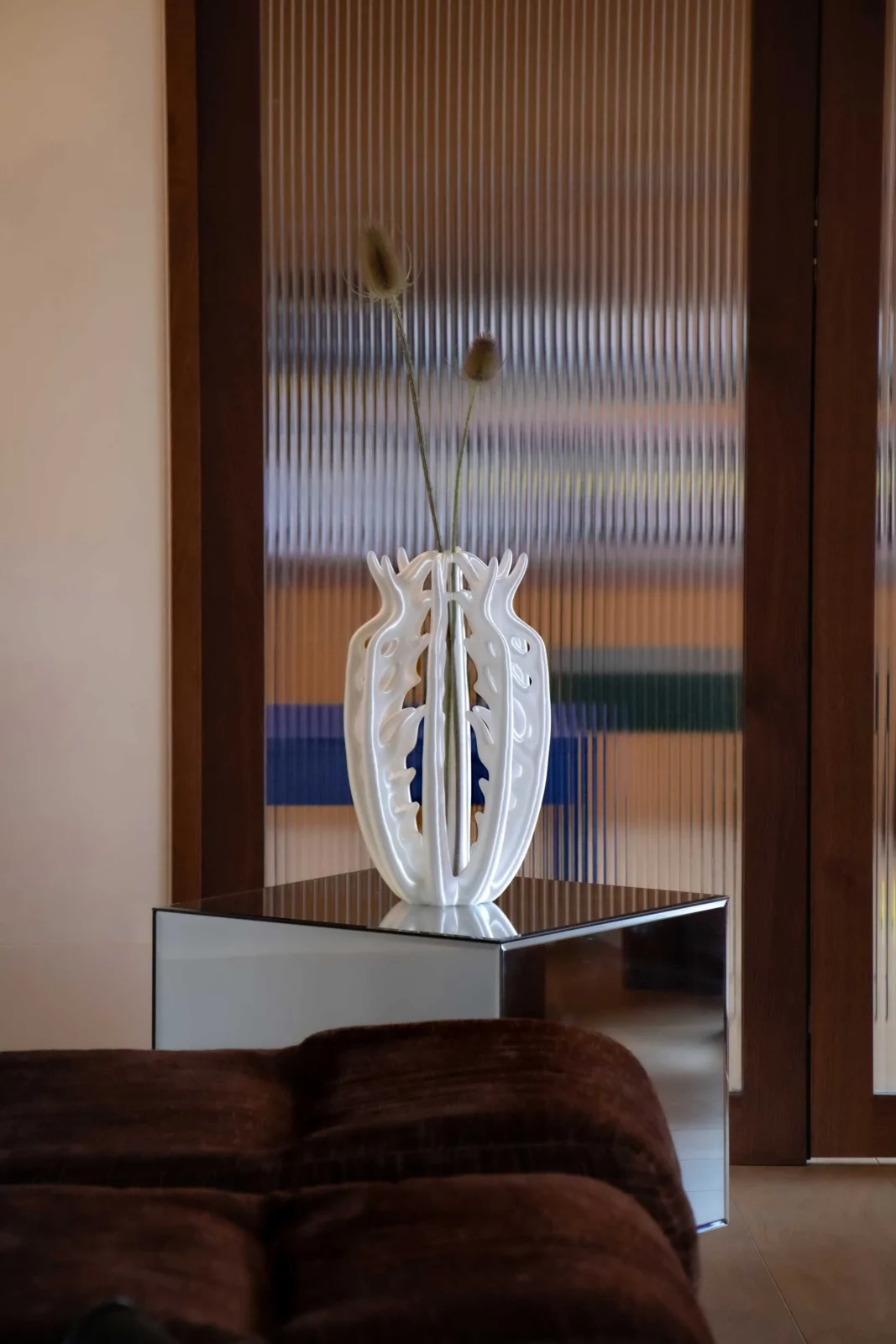
Sugoi Studio’s Oyster Series is about decadence, a theme Art Deco knew well. Shaped and glazed by hand in white clay, this 40 cm (15.5 in) shell works as a bowl, a centerpiece or a wall sculpture, bringing the period’s love of luxury and natural motifs to a modern table.
By Sugoi Studio
€290 incl. tax
Looking Forward
More than a hundred years after the Paris Exhibition, we find ourselves drawn back to something that once represented an idealized future—not in futile attempt to recover what was lost, but in continued appreciation for a design movement that still inspires us to imagine what might be possible. As we create the visual language of tomorrow, Art Deco reminds us that the most enduring design doesn’t just reflect the world; it transforms it.
Frequently Asked Questions
What is Art Deco interior design?
A style that began in 1920s Paris and combines bold geometry, symmetry and luxurious materials such as marble, lacquer, burl wood, chrome and brass, often with mirrors and dramatic lighting.
What are the key features of Art Deco?
Stepped and geometric forms, sunburst and chevron motifs, rich contrasting materials, polished metal finishes, strong color and a sense of glamour.
When did Art Deco start?
The style takes its name from the 1925 Exposition Internationale des Arts Décoratifs et Industriels Modernes in Paris, and was at its height between the 1920s and the late 1930s.
How is Art Deco different from Art Nouveau?
Art Nouveau, popular around 1890 to 1910, uses flowing, plant-like curves. Art Deco replaced those with crisp geometry, symmetry and machine-age materials.