


-
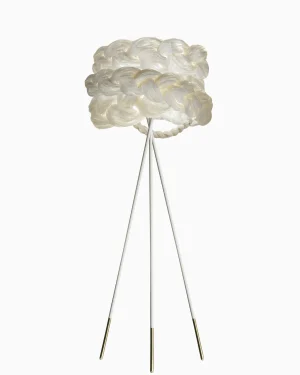
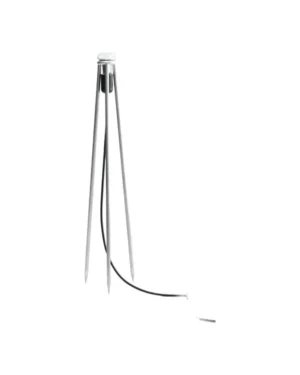
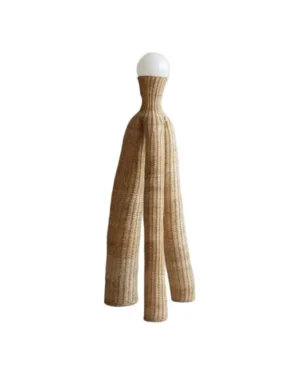
The Bride Floor Lamp in Paper
By Mammalampa
€609 -
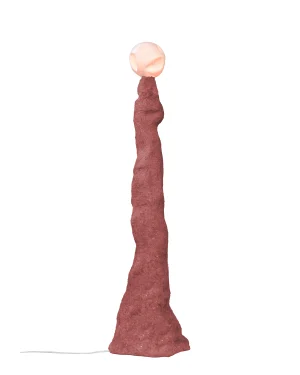
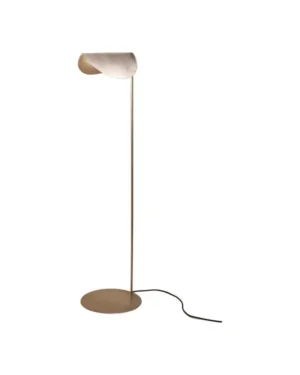
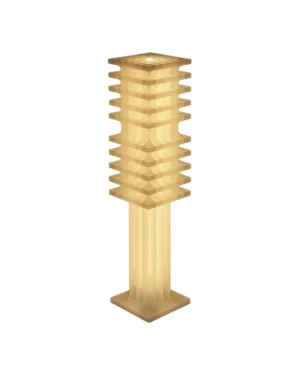
Meteora Floor Lamp in Paper Pulp
By Jonathan Bocca
€3.000 -
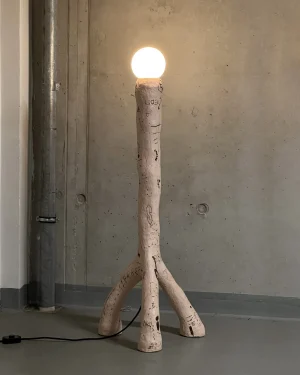 In stock
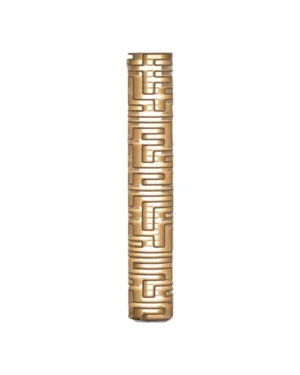
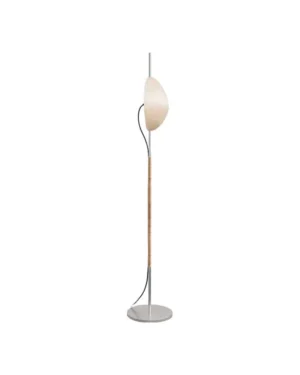
Tattooed Shining Creature Floor Lamp In Paper And Steel
By David Čáp
€1.400 -
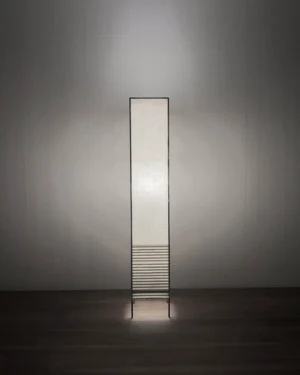
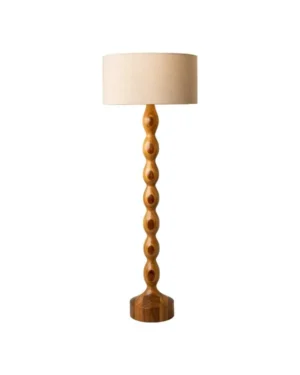
Biiit 003 Floor Lamp in Paper and Brass
By Bo Ah Kim
€1.900 -
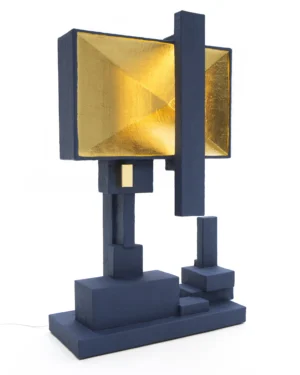 In stock
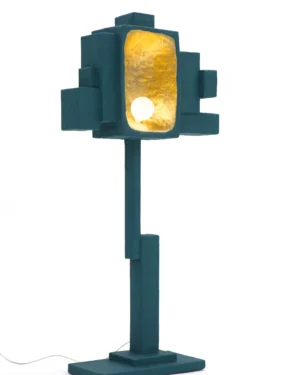
Box-2 Floor Lamp in Blue Cardboard and Gold-leaf
By Studio Josha
€8.995 -
 In stock
Peony Floor Lamp In Fiber-cement
By Donatas Žukauskas
€2.450 -
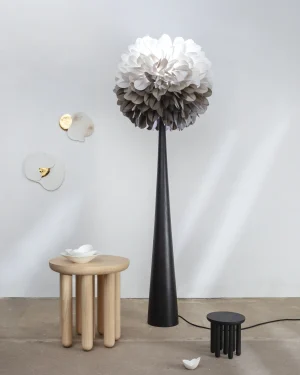
Blossom Floor Lamp in Washi Paper
By HEIKE BUCHFELDER
€5.618 -
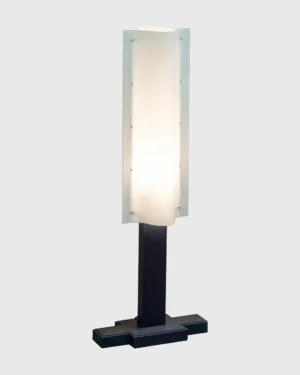
Mora Floor Lamp in Sapele Wood and Recycled Paper
By MESEME by Riya Panchal
€2.676 -
 In stock
Box-1 Floor Lamp in Cardboard and Gold-leaf
By Studio Josha
€4.500 -

Giraffa Floor Lamp In Alder Wood And Paper
By Jonathan Bocca
Price Upon Request
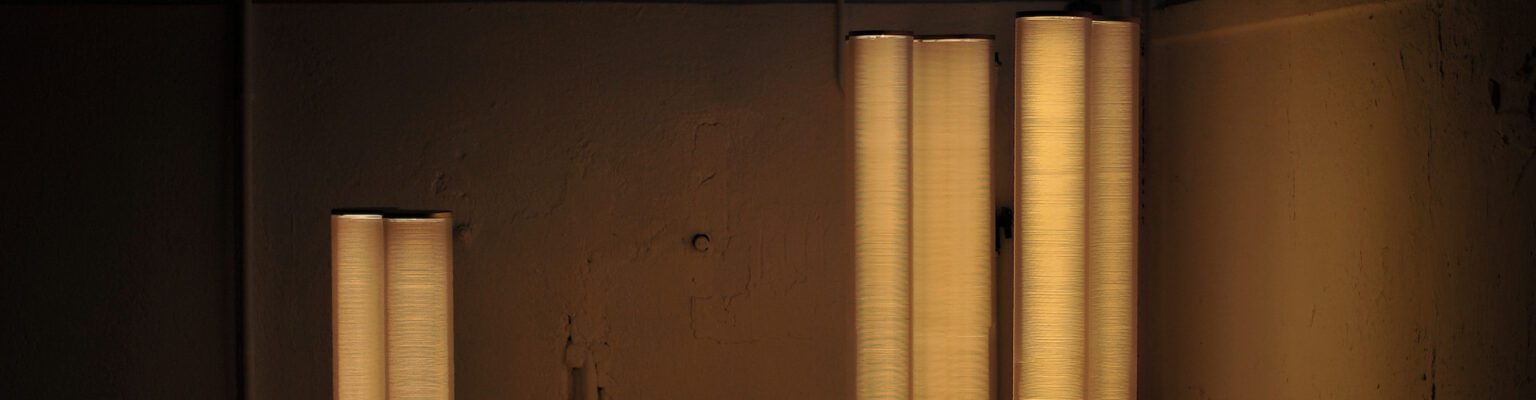
Paper floor lamps are built from pulp, cardboard and natural fiber, pressed, folded or layered into shades that stand on their own base rather than hanging from a ceiling. Studios working in paper favor it for what it does to light: the material glows rather than glares, softening a bulb into an even, warm wash. Most pieces are shaped by hand, sheet by sheet or in a single molded form, which is part of why no two castings sit quite the same.
How paper behaves as a lighting material
Paper pulp dries into a shell that is light to lift yet rigid enough to hold a shade's shape for years, provided it stays dry. Cardboard works the same way in flatter planes, often scored and folded rather than molded, which gives it a more angular, architectural edge. Natural fiber sits somewhere between the two, adding texture and a slightly uneven, hand-worked surface that pulp alone does not have.
Color in paper lighting tends to come from the pulp itself or from a thin wash over the surface, so tones read as off-white, white or pink rather than glossy. Gold appears too, usually gilded or leafed onto a molded base rather than printed on. Crimson, black and teal show up on pieces where the paper has been dyed through, giving a floor lamp a stronger presence even switched off.
The range of paper floor lamps on ADORNO
Technique separates one paper floor lamp from another more than finish does. Papier-mâché building, where wet strips are layered over a form, gives rounded, almost ceramic volumes. Flat paperwork and hand assembly produce faceted, brutalist blocks or folded, origami-like shades, while gilding adds a worked metal surface to an otherwise plain base. Styles run from pared-back, contemporary silhouettes to eclectic and surrealist forms, and occasionally a shade that nods to Neolithic, hand-built pottery. Editions vary too: some lamps are made as open editions in a repeatable process, others as limited runs or unique, one-off pieces where the maker's hand is harder to repeat exactly.
Choosing a paper floor lamp
Scale matters more with paper than with denser materials, because a large shade still reads as light rather than heavy. A tall, narrow silhouette suits a corner or the side of a sofa, where it adds height without crowding the floor. A wider, lower form works better as a single statement near a reading chair, where the shade sits close to eye level and its texture is easiest to see.
- Height: match the shade's midpoint roughly to seated eye level so the glow falls where you read or sit.
- Finish: raw, undyed pulp suits a quieter room; gilded or dyed surfaces carry more visual weight and work as a focal point.
- Placement: keep paper lamps away from direct foot traffic and away from radiators or vents, since heat and knocks both shorten their life.
Where these lamps work in a room
Paper floor lamps suit rooms where the light is meant to be lived with rather than worked under: a sitting area, a reading corner, a bedroom's far wall. Many buyers place them as living room floor lamps beside seating, where the diffuse glow reads as ambient rather than task light. For a quieter, pared-back scheme, a lamp from the minimalist floor lamps group keeps the form simple and lets the paper's texture do the work.
Caring for a paper floor lamp
Paper stays stable indoors away from damp, so keep these lamps clear of bathrooms, kitchens and open windows that let in rain. Dust with a dry, soft brush or a low vacuum setting rather than a damp cloth, since moisture can soften pulp and loosen fiber over time. Treat the shade gently when moving it; most damage to paper lighting comes from a knock or a fold rather than ordinary use.
Paper's range extends past the floor lamp itself. The same studios apply pulp, cardboard and fiber to paper wall sconces, and the wider paper material pages cover lighting and objects built the same way. For a sense of scale and structure, it helps to compare paper against the full spread of floor lamps made in wood, metal, ceramic and stone.
How do I choose a paper floor lamp?
Decide whether you want a rounded, molded shade or a folded, architectural one, then match the glow, warm and diffuse, to how bright you need the corner to be.
Are paper floor lamps durable, and how do I care for one?
The shell is light but rigid and holds its shape for years if kept dry. Dust with a soft brush and keep it away from damp rooms and direct sun.
What size paper floor lamp do I need?
Let the shade's diameter match the scale of the corner it fills, and keep the overall height close to seated eye level so the glow lands evenly, not overhead.
Which rooms suit a paper floor lamp?
Living rooms and bedrooms suit them best, anywhere a soft, even wash of light matters more than task brightness, and away from kitchens or bathrooms where moisture collects.
Does ADORNO ship paper floor lamps worldwide, and can I return one?
Yes, shipping is insured and worldwide. Returns are accepted within 14 days, except on made-to-order pieces.
How do I know a paper floor lamp is authentic, and is the price fair?
Every piece ships with a certificate of authenticity, and ADORNO guarantees the lowest price. For details on a specific lamp, chat with the maker on its page.