




-
 In stock
Lampadulure Pink Floor Lamp in Metal
By BehaghelFoiny Studio
€1.700 -

Lampadulure Purple Floor Lamp in Metal and Plaster Composite
By BehaghelFoiny Studio
€3.000 -
 In stock
Crush On You Floor Lamp in 3D Printed PLA
By M’ama edizioni
€380 -
 In stock
Voguing No. 2 Floor Lamp in Cast Aluminum
By BY JAMPS
€2.500 -
 In stock
Pregnant Lady Floor Lamp in Fiberglass
By StorqueStudios
€4.869 -

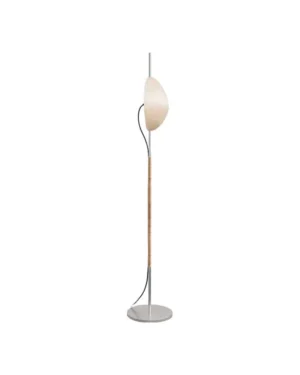
Luna Crescente Floor Lamp in Feathers and Oak Wood
By HEIKE BUCHFELDER
€4.580 -
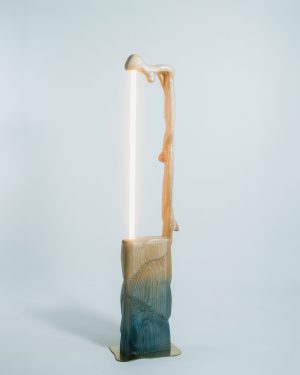 In stock
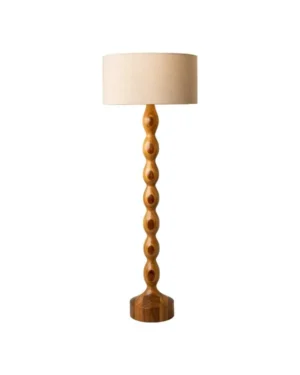
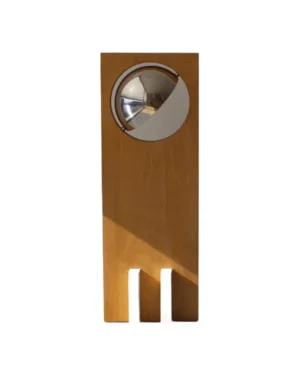
Blueprint Floor Lamp in Ash Wood
By Studio Kloak
€2.500 -

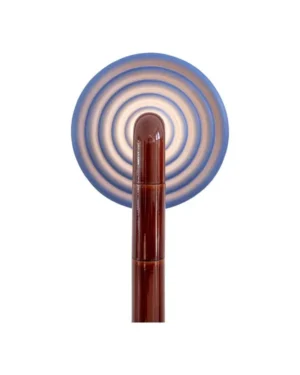
The Rouge Floor Lamp In Clay Paste And Metal
By Harshita Jhamtani Designs
€4.430 -
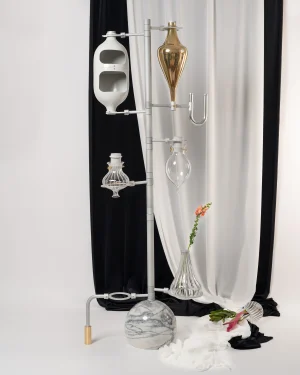 In stock
Emotional Lab Grey Floor Lamp In Marble And Aluminum
By Hania Jneid Design Studio
Price Upon Request -
 In stock
Emotional Lab White Floor Lamp In Stainless Steel And Glass
By Hania Jneid Design Studio
Price Upon Request -

Emotional Lab Beige Floor Lamp In Brass And Glass
By Hania Jneid Design Studio
Price Upon Request
Maximalism floor lamps turn a single light source into a statement, built from shaped metal, plaster composite, blown or borosilicate glass and the occasional run of 3D-printed PLA. Independent studios working in metalwork, glassblowing and plastering push color and pattern into the base, the shade or the stand itself, so the lamp reads as an object first and a light second. The result sits closer to sculpture than to fixture, and it is meant to be seen from across the room, not tucked into a corner.
What defines a maximalist floor lamp
Where a minimalist lamp hides its structure, a maximalist one shows it off. Expect saturated color, lacquered or painted finishes in pink, purple, burgundy, terracotta and blue and white, and silhouettes that curve, stack or flare rather than run straight from base to shade. Plaster composite bodies carry a chalky, matte surface that reads soft against glossy stainless steel or aluminum neighbors, while hand-blown and borosilicate glass shades catch light in a way flat metal cannot.
Pattern matters as much as color here. Ribbed glass, textured metalwork, and embroidered or textile shades all add a second layer of visual interest once the lamp is lit, so the piece keeps working even after dark.
Materials, finishes and the ways they are made
Metal bodies, whether mild steel, stainless steel or aluminum, are shaped by hand through metalwork, then painted or left in a brushed or polished finish depending on the studio. Plaster composite pieces are built up and smoothed by hand through plastering, which gives them a soft, slightly irregular surface that metal cannot fake. Glass shades, blown or formed from borosilicate, carry color inside the material itself rather than on top of it, so the hue shifts with the light passing through.
- Unique pieces and one-offs, where a maker has shaped or painted each lamp individually
- Limited editions, produced in small, fixed runs
- Open editions, made to a standing design without a cap on numbers
Wood and cabinetmaking, woodturning and 3D printing also turn up on bases and stands, usually paired with a painted or glazed shade rather than carrying the color themselves.
How to choose one for a room
Scale decides whether a maximalist floor lamp anchors a room or overwhelms it. A tall, narrow silhouette holds its own next to a sofa or an armchair, while a lower, wider base needs floor space around it to read as a piece rather than clutter. Match the shade height to where you sit or stand nearby, so the light falls where you read or gather rather than straight down onto the floor.
Where these lamps work
Living rooms take the boldest versions well, since there is usually space to let a tall or patterned lamp stand on its own; see the range of living room floor lamps for scale references. Bedrooms suit a quieter maximalist piece, one with color but a simpler silhouette, positioned beside a chair or at the foot of the bed rather than at the bedside. Studies and reading corners benefit from a lamp with a defined shade angle, so the light stays useful even as the base carries the visual weight.
Care and handling
Painted metal wipes clean with a soft, dry cloth; avoid abrasive cleaners, which dull the finish over time. Plaster composite is porous and can chip at edges, so lift rather than drag it when moving the lamp, and keep it away from damp rooms where the surface can absorb moisture. Glass shades should be dusted rather than scrubbed, and checked periodically where they meet the metal fitting, since that joint takes the most handling over years of use.
For the full range of styles alongside these, the floor lamp category covers every material and finish, while every maximalism piece on ADORNO extends the same color and pattern language into mirrors, tables and seating. Those drawn to the metal versions specifically can look through the metal floor lamps on their own, and the wider maximalism lighting range shows how the same approach carries into pendants and table lamps.
How do I choose a maximalism floor lamp?
Pick the lamp as you would a chair, for its silhouette and color first, since it reads as an object in the room even when unlit. Let it contrast with quieter pieces nearby rather than match them.
What are maximalism floor lamps made of?
Most are hand-shaped metal, plaster composite, or blown and borosilicate glass, sometimes with 3D-printed PLA parts. Finishes include paint or a chalky matte plaster surface.
How do I care for a maximalism floor lamp?
Dust metal and plaster surfaces with a dry or barely damp cloth, and avoid abrasive cleaners on painted finishes. Wipe glass shades gently, since blown and borosilicate glass can scratch or chip.
What size or height should a floor lamp be?
Most floor lamps stand between 55 and 65 inches, tall enough to cast light across a seating area without competing with ceiling fixtures. A bold shade or base may warrant extra clearance from furniture.
Which rooms suit a maximalism floor lamp?
Living rooms and reading corners with enough open floor to let a sculptural base or patterned shade stand clear of other furniture. They also work well beside a bed or in an entryway as a first statement.
What is ADORNO's shipping and return policy?
Shipping is insured and worldwide. Returns are accepted within 14 days, except for made-to-order pieces, and every lamp arrives with a certificate of authenticity.