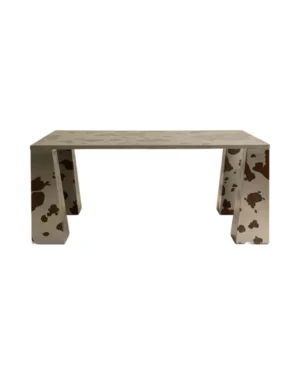
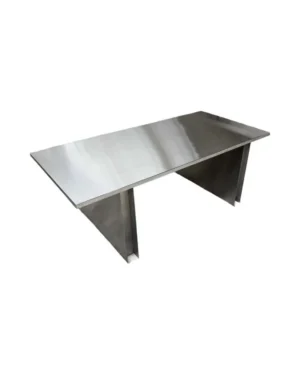
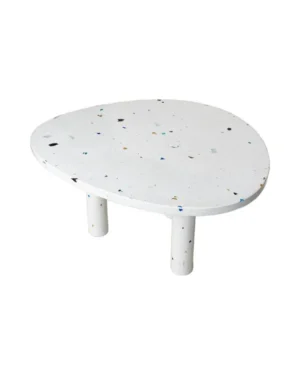
-
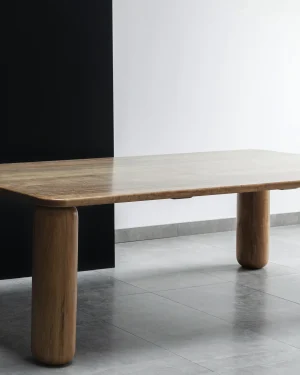
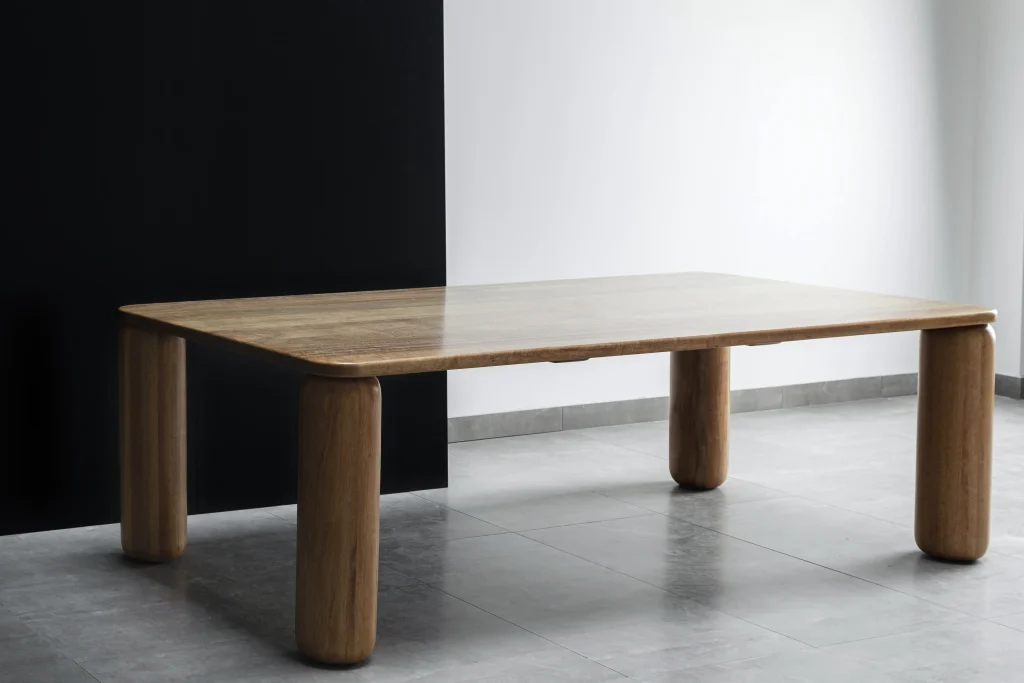
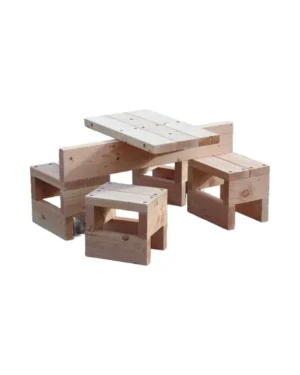
Well Grounded – Minimalist Wood Dining Table
By Laluz Handcraft
€5.040 -

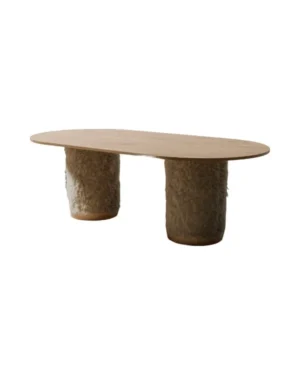
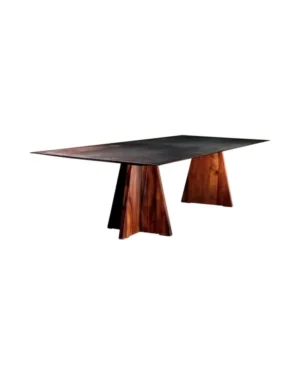
Cast Bronze and Wood Twin-pedestal Dining Table By Costantini, Benone Indigo
By Costantini Design
€52.000 -
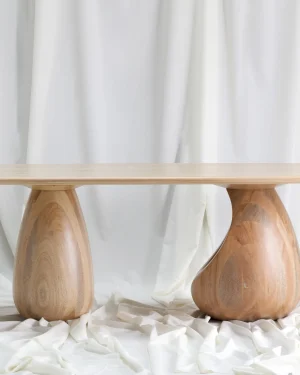
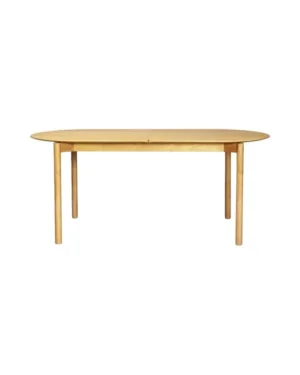
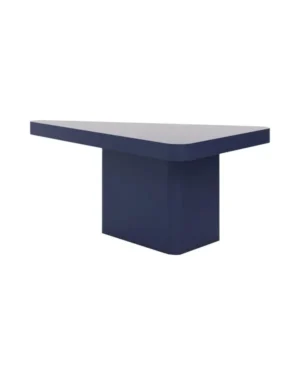
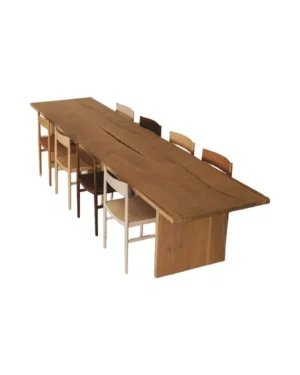
Mar – Asymmetric Wood Dining Table
By Laluz Handcraft
€7.800 -
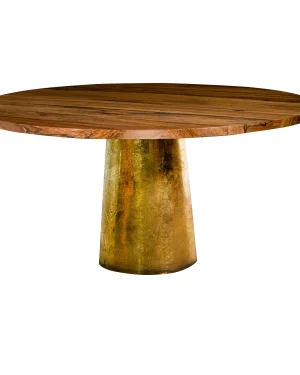
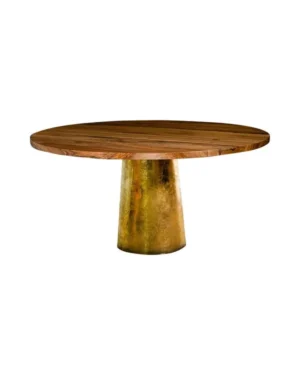
Benino – Round Exotic Wood Cast Bronze Pedestal Dining Table
By Costantini Design
€14.850 -

Cast Bronze, Parchment, Torched Steel, And Bronze Twin-pedestal Dining Table By Costantini, Benone
By Costantini Design
€65.000 -
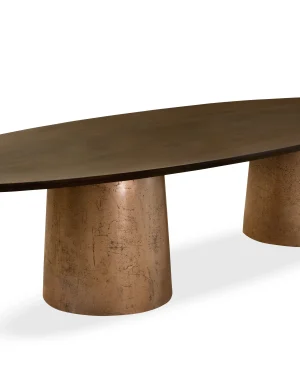
Benone – Cast Bronze & Lacquered Twin-pedestal Oval Dining Table With Quartz Top
By Costantini Design
€43.051 -
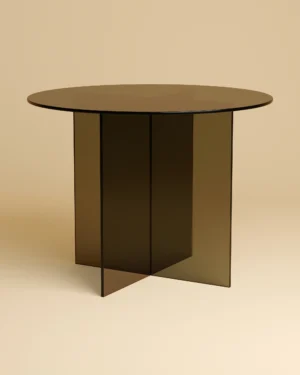
Round Glass Dining Table – Yuri Series
By Lebanto
€3.100 This product has multiple variants. The options may be chosen on the product page -
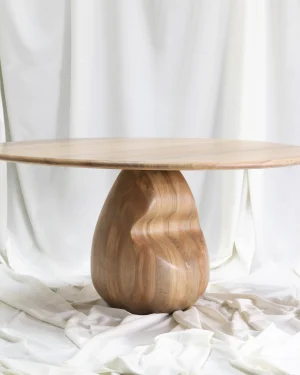 In stock
Droplet – Circular Minimalist Dining Table
By Laluz Handcraft
€6.960 -
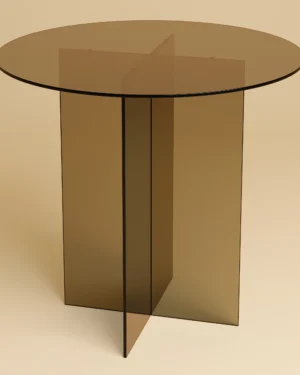
Round Glass Dining Table – Iki Series
By Lebanto
€2.500 This product has multiple variants. The options may be chosen on the product page -
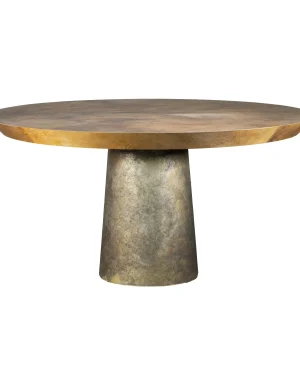
Benino Pergamino – Round Pedestal Table In Parchment And Cast Bronze
By Costantini Design
€18.800 -
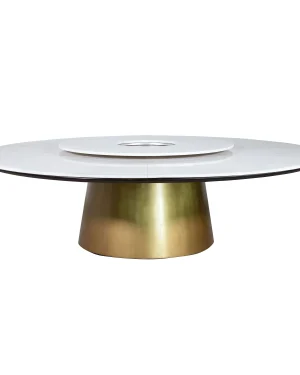
Outdoor Dining Table With Metal Base, Teak & Marble Top By Costantini, Aragon
By Costantini Design
€38.500 -
 In stock
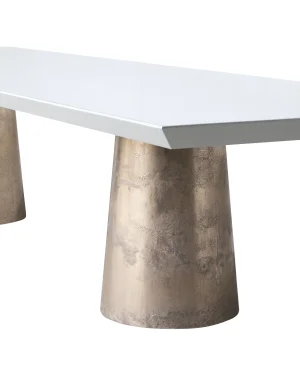
Benino – Oil Rubbed Cast Bronze Twin Pedestal Lacquered Oval Dining Table
By Costantini Design
€29.570 -
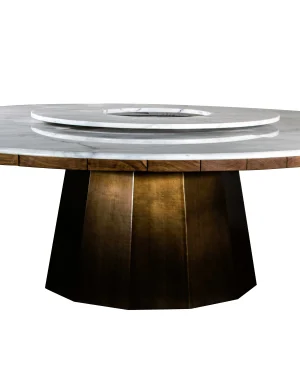
Aragon – Outdoor Dining Table With Metal Base, Teak & White Ibiza Marble Top
By Costantini Design
€46.200 -
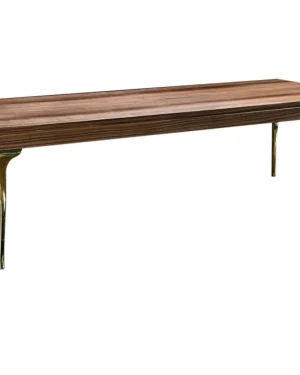
Enzio – Modern Cast Bronze And Walnut Coffee Table
By Costantini Design
€5.175 -

Alonzo – Statement Dining Table
By Costantini Design
€26.700 -
 In stock
Benino – Cast Bronze Twin Pedestal Lacquered Modern Dining Table
By Costantini Design
€33.382 -
 In stock
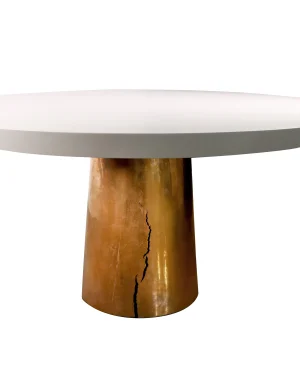
Beninx – Unique Collectible Cast Bronze Pedestal Dining Table
By Costantini Design
€16.526
Bronze dining tables pair a cast or forged bronze base, top, or frame with wood, stone, or glass, made by studios working in metalwork, metal casting, and lost-wax casting. The alloy of copper and tin carries real weight, resists corrosion, and takes a surface finish that shifts color over years of handling and light. A table built this way reads as a fixed point in a room rather than a piece that gets rearranged.
What defines bronze as a table material
Bronze is cast in a mold or built up through metalwork, then ground, polished, or left with a living patina that darkens and shifts from gold to brown to near black as it meets air and touch. Lost-wax casting lets a studio form legs, bases, and joinery as continuous sculptural shapes, something harder to achieve in sheet metal. The result is dense and cool to the touch, and it holds its form under the everyday stress of a dining table: chairs pulled in and out, dishes set down, elbows leaned on. Every bronze piece on ADORNO traces back to this same family of casting and metalworking methods, whatever the final shape.
The range of bronze dining tables
Bronze rarely stands alone on a dining table. It is common to find a bronze base carrying a top in glass, stone, or hardwood, or a bronze frame wrapping a wood surface through cabinetmaking joinery. Finishes run from a bright gold polish to a deep amber or near-black patina, and some studios pair bronze with glass cold working or glassblowing for a top that stays clear and light against the solid base.
Styles span a wide range: Art Deco tables that lean on bronze's old association with ornament, Brutalist pieces that leave the casting marks visible, and quieter Minimalist or Scandinavian tables that use bronze only at the structural points. Some pieces come from open editions, made as needed, others from limited editions where a studio casts a fixed, small run. The full set of bronze tables and the broader dining table category both show how this plays out beyond the dining room alone.
How to choose a bronze dining table
Start with scale. A bronze base is heavier, visually and physically, than a wood or steel one, so measure the room with that weight in mind rather than relying on seat count alone. Standard dining height sits around 28 to 30 inches, and a bronze base keeps that line steady since the metal does not flex or settle the way wood can.
Finish matters as much as shape. A polished gold bronze draws light and shows fingerprints; a patinated or near-black bronze hides daily wear and reads calmer in a room with other metal finishes. Placement follows from this: a table meant to anchor an open living and dining space can carry a bolder cast base, while a table in a smaller, enclosed dining room often works better with a lighter, simpler one. For comparison against other metal bases, the metal dining tables on ADORNO sit alongside bronze as a useful reference point.
Where a bronze table suits a room
Because of its weight and permanence, bronze suits dining rooms meant to stay fixed for years rather than spaces that get reconfigured often. It also holds its own in open-plan kitchens and living areas, where a dense base anchors the eye against lighter furniture nearby. The same casting and metalwork methods extend into bronze furniture beyond the table itself, including seating and smaller objects that pick up the same tone.
Caring for a bronze dining table
Bronze develops its color through exposure and handling, so a patina that looks uneven at first will settle with regular use. Wipe spills promptly, since acidic foods and cleaners can mark a polished surface faster than a patinated one. A light coat of wax, applied occasionally, slows further oxidation if a studio recommends it, and dry, soft cloths are safer than abrasive pads for daily cleaning.
How do I choose a bronze dining table?
Consider how the base is formed, cast or welded, since that shapes the leg lines and how much knee room the table allows. Match the patina, warm brown or green-toned, to the metals already in the room.
How do you care for a bronze dining table?
Wipe with a dry or slightly damp cloth, and avoid harsh cleaners that strip the patina. Bronze darkens and develops texture over time, which is normal and part of the material's character.
Does bronze tarnish or change color over time?
Yes, bronze oxidizes gradually, shifting from bright gold tones toward deeper brown or green patinas. This aging is expected and generally adds depth rather than damage.
What size and height should a dining table be?
Standard dining height runs around 28 to 30 inches, with enough surface length to allow roughly 24 inches per seat. Cast bronze bases can be heavy, so check floor load for larger rooms.
Which rooms suit a bronze dining table?
Bronze carries weight and anchors larger dining rooms or open-plan spaces well, standing up to daily use and heavier serving pieces. It also reads strongly in rooms with natural light, where the metal's tones shift through the day.
What is ADORNO's shipping and return policy?
Shipping is insured and sent worldwide. Returns are accepted within 14 days, except for made-to-order pieces, and each table arrives with a certificate of authenticity.