
-

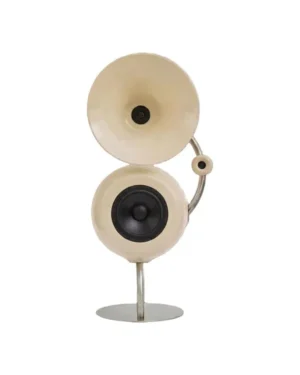
Obj_rv.bi-radial Speaker
By Concept Object
€3.000 -

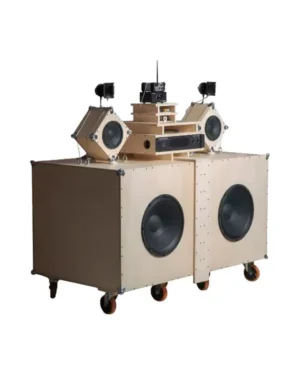
Type 2.1
By Western Acoustics
€5.700 This product has multiple variants. The options may be chosen on the product page -
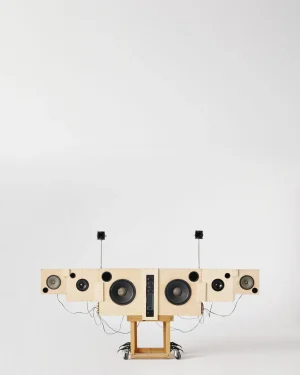
S.S Series, Sound System 01
By Lucas Muñoz Muñoz
€24.000 -
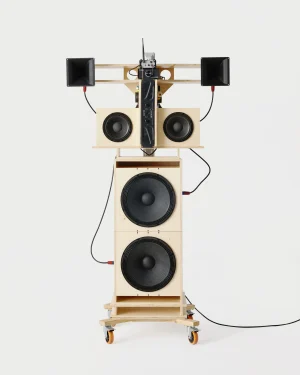
S.S Series, Sound System 03
By Lucas Muñoz Muñoz
€24.000 -

12i2 Units Sound System
By MYCOAUDIO
€4.400 -

Ziryab Wood Speakers
By Brett Paulin
€3.139 -

Obj_cx Speaker
By Concept Object
€1.220 -
Ziryab Wood Speakers
By Brett Paulin
€3.139 -
 In stock
S.S Series, Sound System 02
By Lucas Muñoz Muñoz
€24.000 -

Obj_jbl Speaker
By Concept Object
€900
Wooden speakers pair a solid or engineered wood cabinet with audio drivers, so the enclosure reads as a piece of furniture first and a technical object second. Studios working in birch, poplar, maple, cherry and walnut build these cabinets through cabinetmaking, joinery, veneering, wood carving and CNC milling, and each technique leaves a different seam, grain pattern or surface. The timber itself shapes the sound as much as the look, since denser species damp resonance differently than lighter ones.
Species and finishes behind wooden speakers
Birch and poplar run pale and even-grained, often left with a light finish that keeps a cabinet looking close to raw timber. Plywood, built from thin layers pressed together, shows its edges as a striped detail and tends toward a lighter, workshop-made feel. Walnut and cherry sit at the darker end, with tighter grain and a warmth that deepens over years of light exposure, while maple falls somewhere between, pale but harder-wearing than birch.
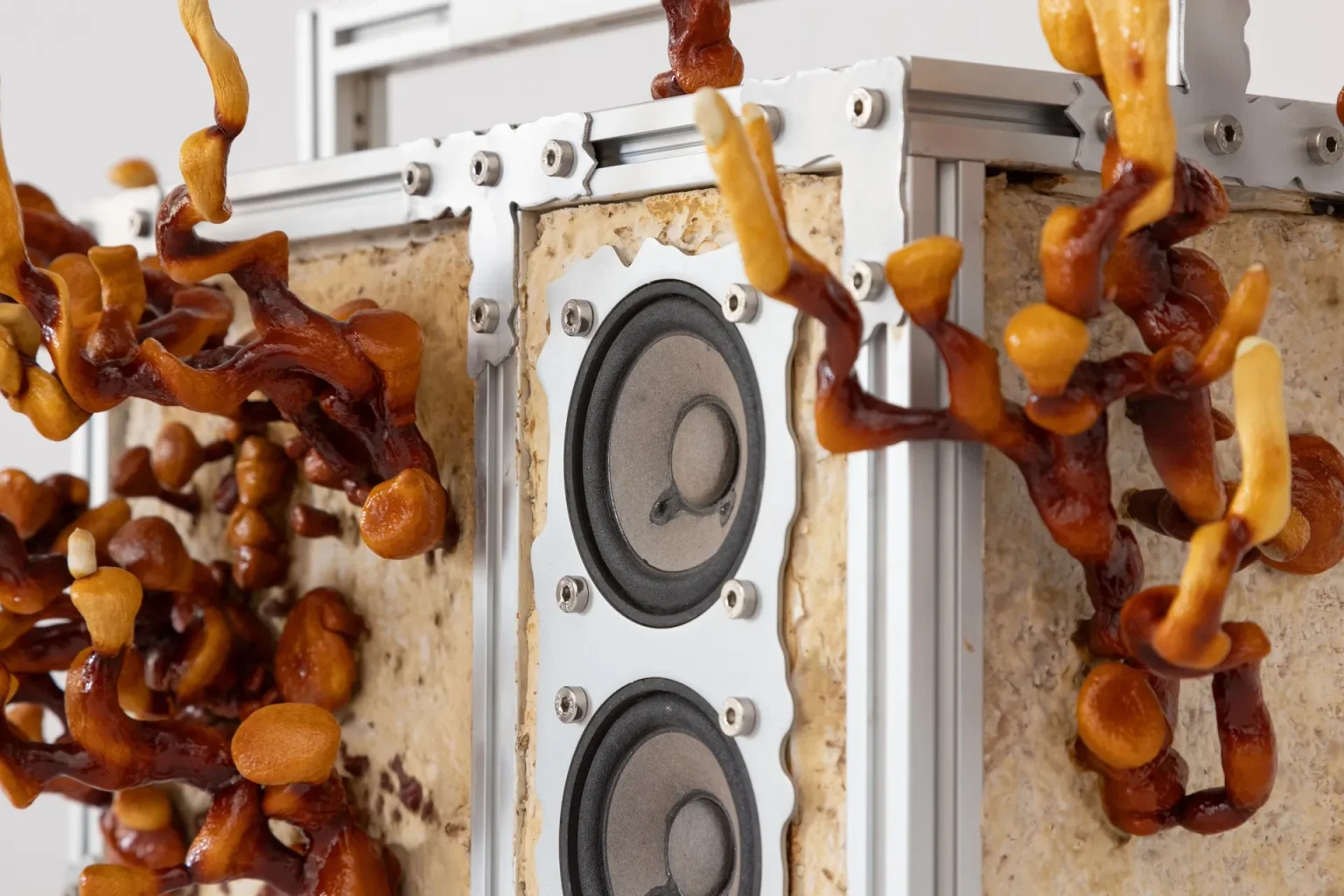
A smaller number of pieces bring in ceramic or mycelium-based components alongside the wood, for a grille, base or inlay, which extends the material palette without changing the wood-led structure of the cabinet. For a fuller sense of how these species and composites are used across other kinds of pieces, the full range of wood pieces on ADORNO spans seating, tables and lighting as well as speakers.
How wooden speakers are made
Cabinetmaking and joinery favor solid panels joined at the corners, giving a cabinet that reads as one continuous block of timber. Veneering layers a thin skin of a finer species over a more stable core, which keeps costs and weight down while still showing figured grain on the surface. Wood carving and CNC milling go further, cutting ports, curves or sculptural faces into the body itself, work that shows up in cabinets pushed toward Brutalist, Space Age or Futuristic shapes as readily as in quieter Mid-Century Modern or Minimalist boxes.
Some studios turn out wooden speakers as open editions, repeating a form across a run of identical cabinets, while others work piece by piece and sell each cabinet as a unique, one-off object with no exact twin. Both approaches sit within unique speakers and more repeatable editions found across the category.
Choosing a wooden speaker for a room
Scale is the first question: a compact bookshelf cabinet suits a desk, console or shelf, while a floor-standing pair reads as its own piece of furniture and needs clearance on each side to let the cabinet resonate properly. Height matters too, since a speaker set too low under a table or too high above seated ear level changes how the sound reaches a listener as much as it changes the look of the room.
Finish should follow the rest of the room's wood tones rather than fight them. A pale birch or maple cabinet sits easily against lighter floors and oak furniture, while walnut or cherry pairs more naturally with darker frames and warmer palettes. Placement against a wall, a shelf or open floor also affects bass response, so it is worth thinking about position before finish.
For rooms built mostly in timber, it helps to look at wooden speakers alongside other wood pieces for the same space, including wooden furniture and wooden accessories, to keep grain and tone consistent across a room.
Where wooden speakers sit at home
Living rooms are the obvious setting, where a pair of floor-standing cabinets can anchor a seating arrangement the way a credenza or side table would.
- Living rooms: floor-standing pairs flanking a sofa or media unit
- Studies: a single bookshelf speaker near a desk
- Bedrooms: compact cabinets on a nightstand or dresser
Caring for a wood speaker cabinet
Wood responds to light and humidity, so keeping a cabinet out of direct sun slows fading and keeps color even across the surface.
For the wider set of forms, finishes and audio formats available, the full speakers range on ADORNO covers wood alongside other materials and approaches.
How do I choose a wooden speaker?
Match the wood tone to nearby furniture, walnut and cherry read warm and dark, birch and maple read light. Consider grain pattern and joinery as part of the room's visual weight, not just the sound output.
How do you care for wooden speakers?
Dust with a dry or slightly damp cloth and keep pieces away from direct sun and heat vents, which dry and crack wood over time. A light coat of furniture wax once or twice a year keeps the surface stable.
What size speaker suits a bookshelf or a floor?
Bookshelf speakers sit compact on a shelf or stand near ear height when seated, while floor-standing pieces reach higher and anchor a corner or flank a sofa. The maker can confirm exact dimensions on the piece's page.
Which rooms suit wooden speakers?
Living rooms and studies take them well, where the wood grain pairs with existing shelving, tables or seating. Bedrooms and dining spaces also suit smaller bookshelf models that double as sculptural objects.
Can I order a custom size or finish?
Some studios take made-to-order requests in different woods or dimensions. Chat with the maker on the piece's page to ask directly.
What are ADORNO's shipping, returns and authenticity terms?
Shipping is insured and worldwide. Returns are accepted within 14 days, except made-to-order pieces. Each purchase includes a certificate of authenticity, backed by a lowest-price guarantee.