Modern Rugs for Dressing the Room From the Ground Up
Updated on: August 6, 2026
Rugs are the most consequential decision in a room and the one most often got wrong, usually by buying too small. A rug sets the scale of everything around it: it determines where furniture sits, how contained the space feels, and whether the arrangement reads as deliberate or accidental.
What follows starts with the practical part — what size you actually need and where to put it — then moves through sixteen modern rugs from independent studios, from handwoven Anatolian kilims to tufted wool landscapes and jacquard pieces that work as readily on a wall.
Modern rugs for the living room
In living rooms, rugs set the framework for everything else. A living room rug might be the boldest visual element present, or it might exist to support stronger shapes and colours around it — and the choice between those two roles should be made before anything else. Graphic, high-contrast rugs want restrained furniture; textural, tonal ones can carry a busier room.
Bedroom rugs for layering, warmth and ease
Bedroom rugs serve a different purpose, where comfort and atmosphere take priority over graphic impact. The practical test is what your feet meet first thing in the morning, which argues for higher pile and softer fibre than you would choose for a living room. Pattern can be quieter here too — the room is for resting in, and a rug that demands attention works against that.
16 modern rugs from independent studios
The Echo Rug by Mush Studios

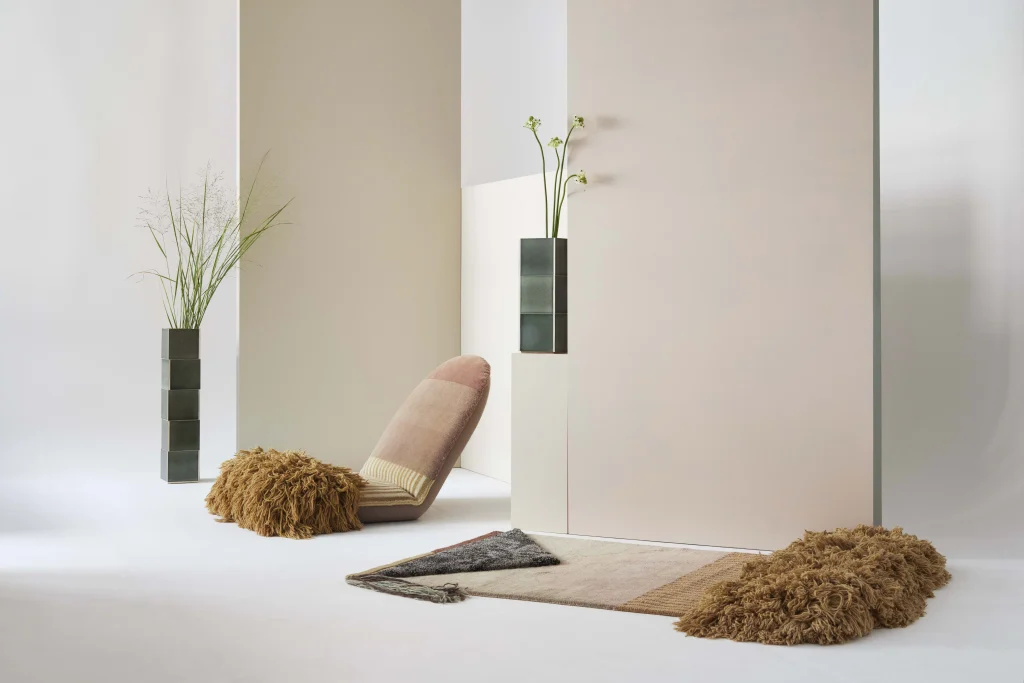
Echo’s shaggy form thrives against restraint. Layered on a handwoven flatweave, its fibres spill outward and sink into the surface, gaining presence through contrast — which is exactly the pile-over-flatweave logic that makes layering work. It sits comfortably in minimalist interiors that rely on texture and in maximalist spaces where excess takes the lead.
By Mush Studios
€375 – €1.855 incl. tax
Red, White & Blue Wool & Hemp Rug by Justyna Szymańska
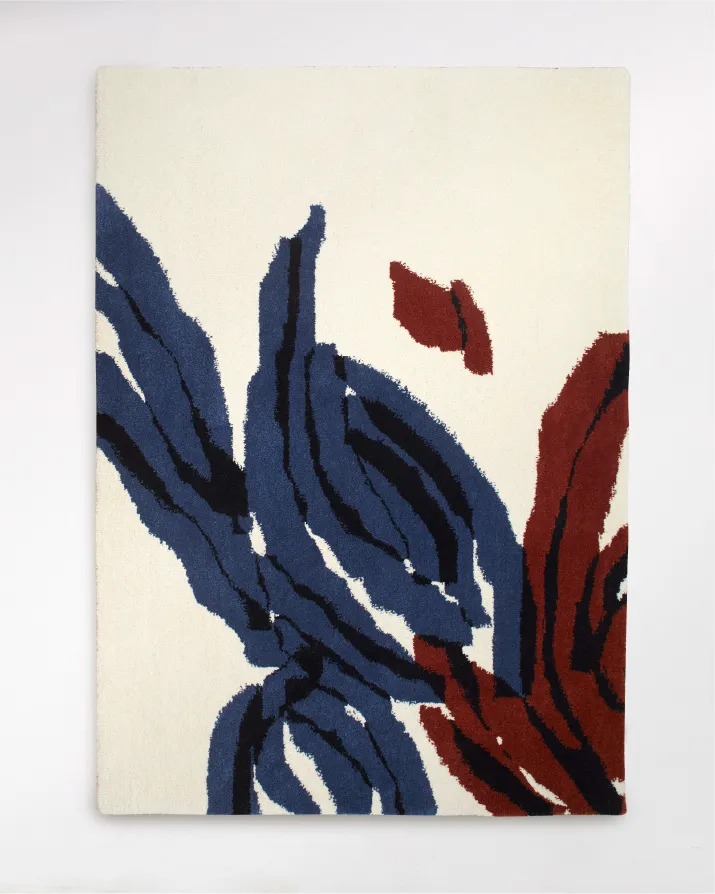
These hand-tufted rugs begin as fast, self-reflective digital drawings, then translate into tactile compositions through hand stitching. Each piece balances instinctive mark-making against deliberate structure, producing patterns that never repeat. Made from New Zealand wool, which is finer and takes dye more cleanly than most — the reason the colour reads as saturated rather than muddy.
By Justyna Szymańska
€3.500 incl. tax
Arresø – Wool Landscape Rug by Viktorija Kuliavaitė
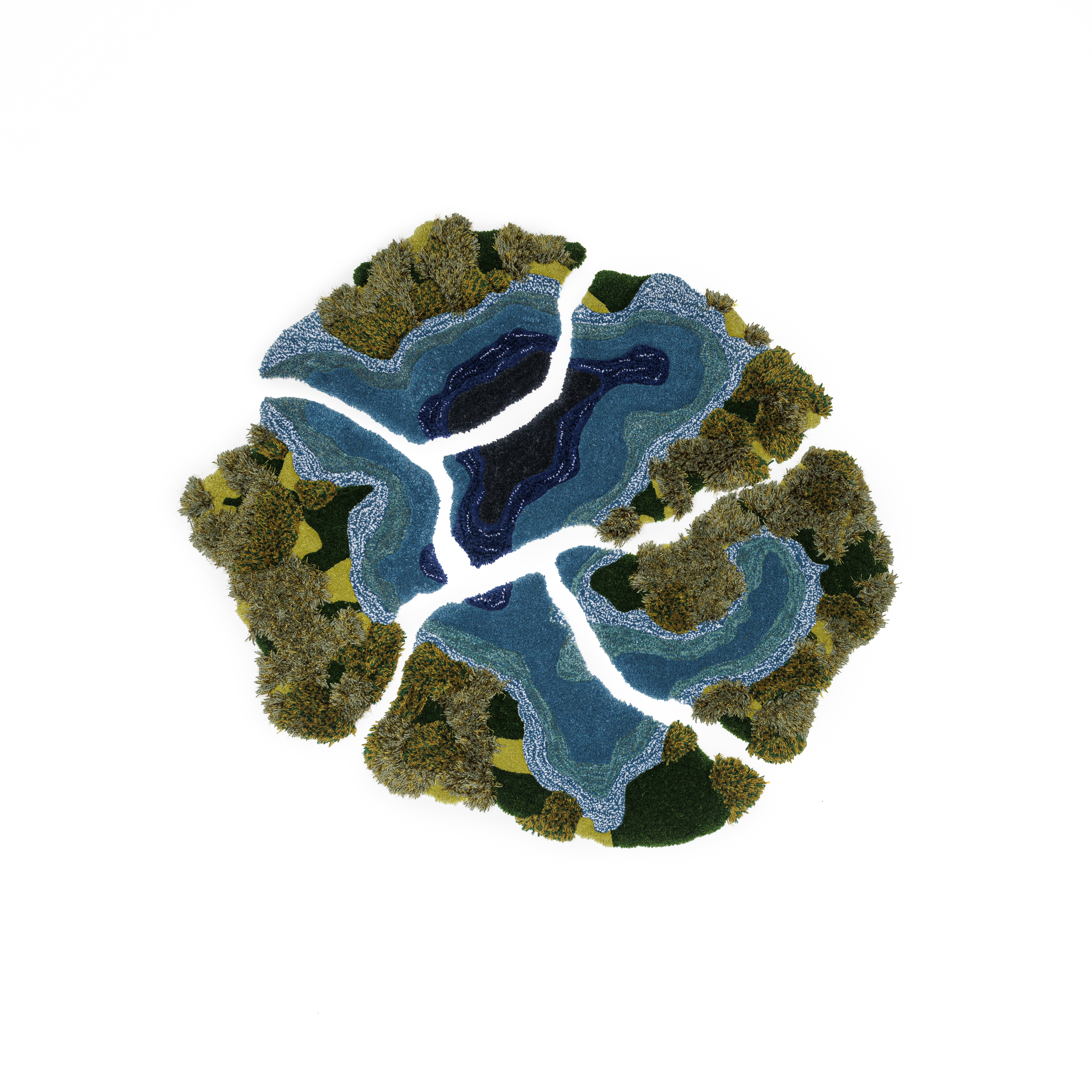
Inspired by Denmark’s largest lake, the Arresø puzzle rug translates landscape into form through organic shapes and layered colour. Tufted from 100% wool, the five-piece design separates or combines — which makes it one of the few rugs here that can change size with the room. Made in Lithuania.
By Viktorija Kuliavaitė
€2.500 incl. tax
Ege No 1 Kilim Rug by Studio Kali
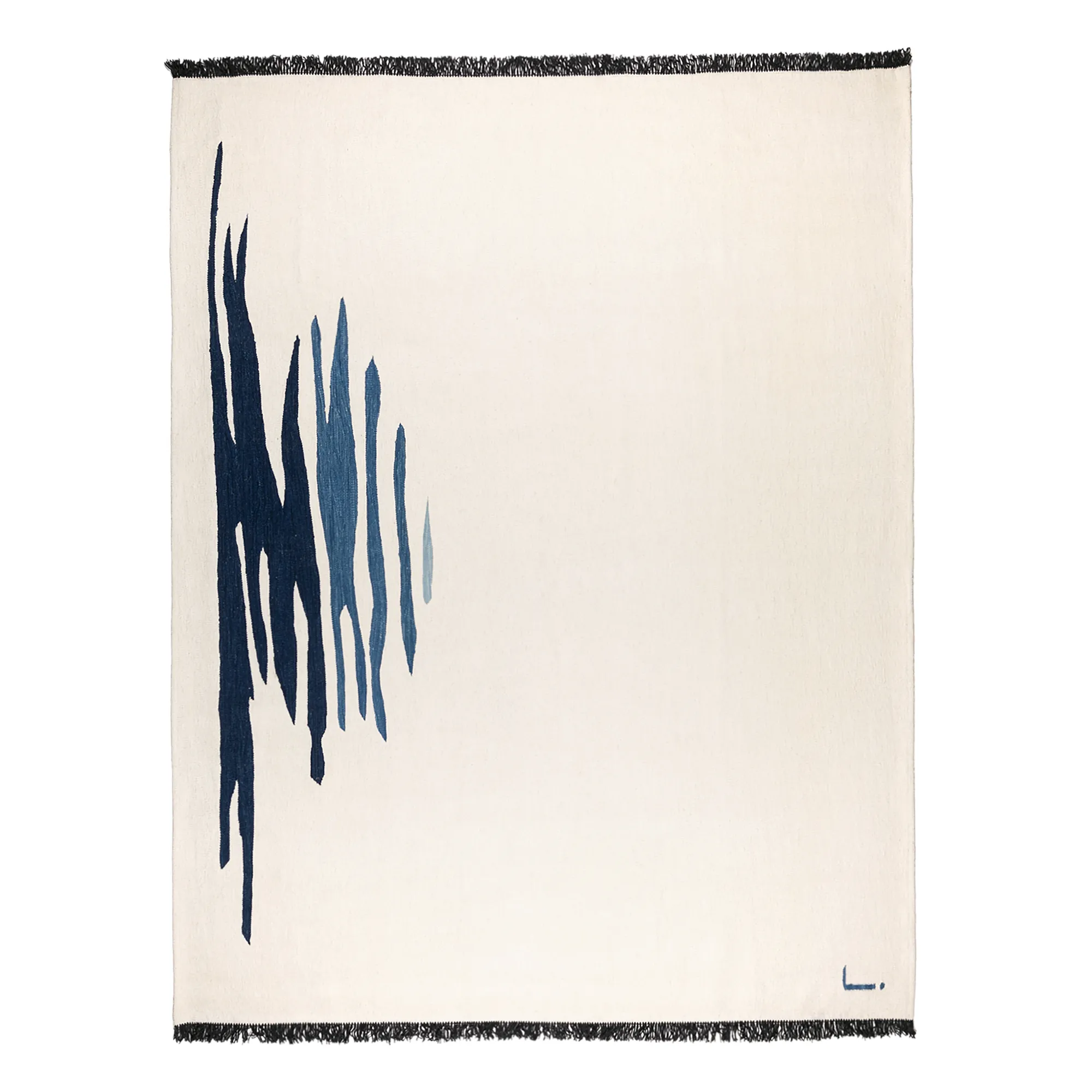
From Studio Kali’s Ege Collection, drawing on the shifting colours of the Aegean. Handwoven in Anatolia from 100% sheep wool, it reinterprets traditional kilim weaving through coastal reference. As a flatweave it is reversible and light enough to layer under a pile rug — the practical advantage kilims have over tufted work.
By Studio Kali
€1.020 – €2.040 incl. tax
Boz Woven Rug by hermhaus
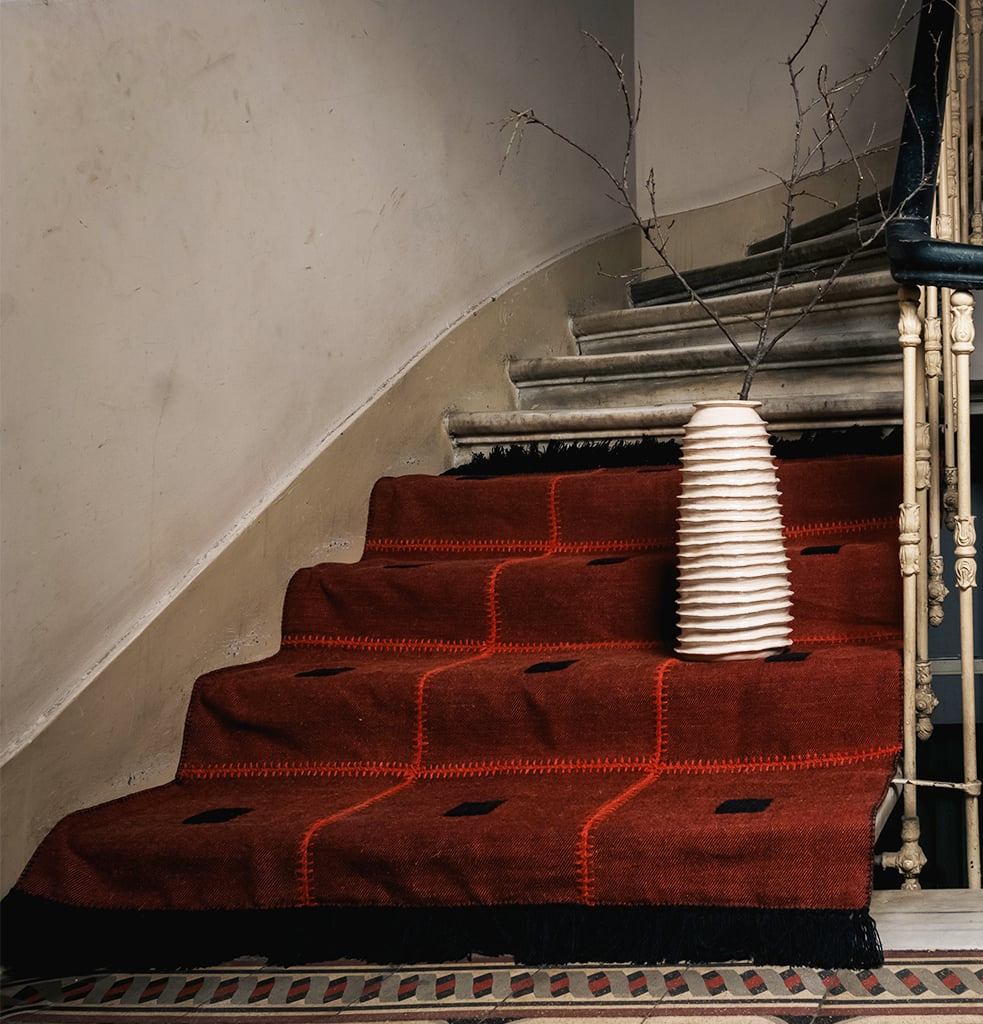
Produced in hermhaus’s first workshop in Turkey using the traditional KARACAKILAVUZ weaving technique. The rug reinterprets Anatolian motifs through a restrained contemporary lens, giving historic patterns a sharper presence — a clear respect for Turkish weaving traditions without treating them as heritage decoration.
By hermhaus
€1.570 – €2.125 incl. tax
Medley – Eclectic Textured Rug by Lyk Carpet
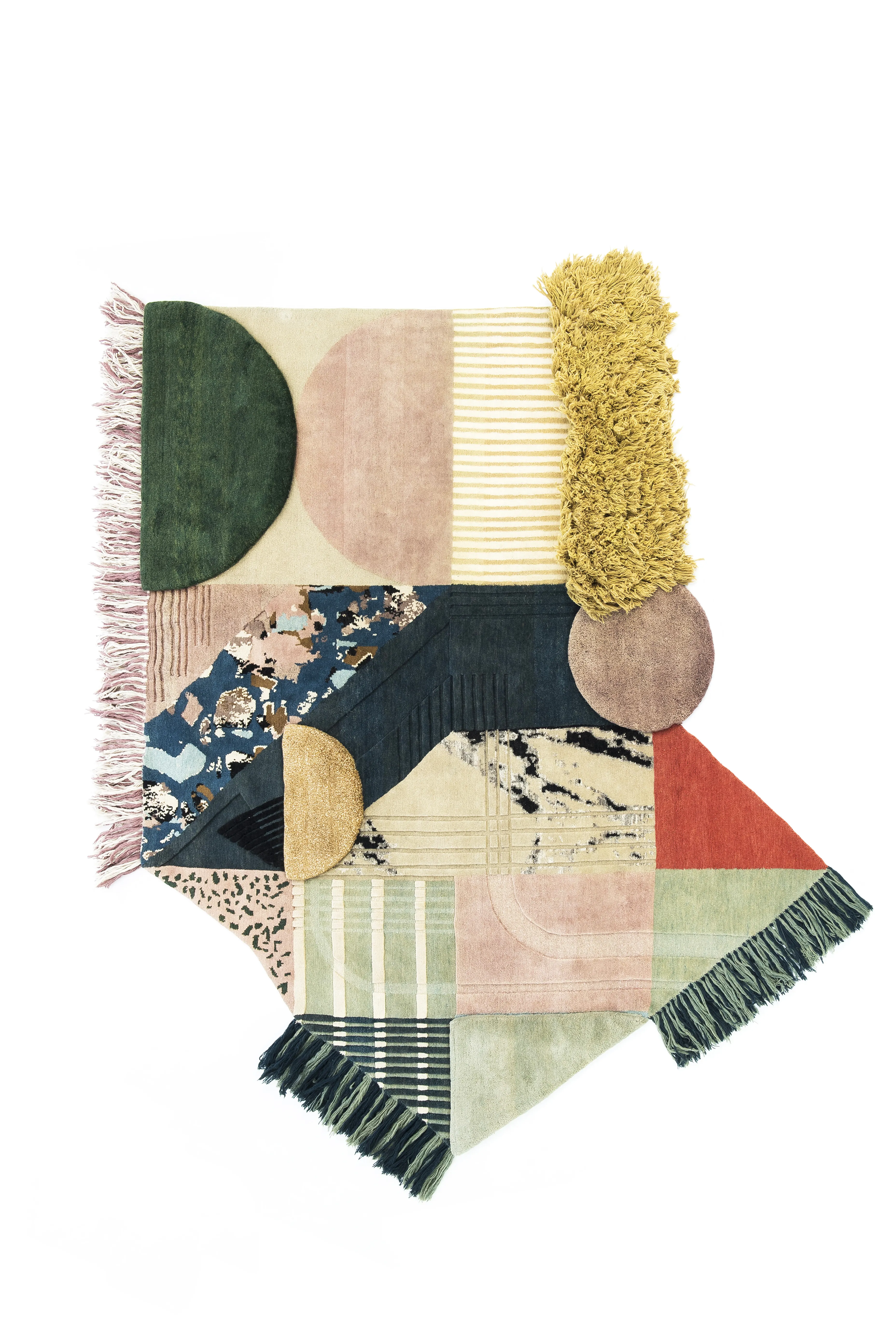
Designed by Mareike Lienau of Berlin-based Lyk Carpet, Medley asks what craft looks like in a contemporary context. Geometric, colourful and asymmetrical, it pairs hand-knotting with a deliberately unresolved composition. Fringed texture and layered form give it enough visual rhythm to work as sculptural wall piece as well as floor rug.
By Lyk Carpet
€9.378 incl. tax
Step Rug by Objectry
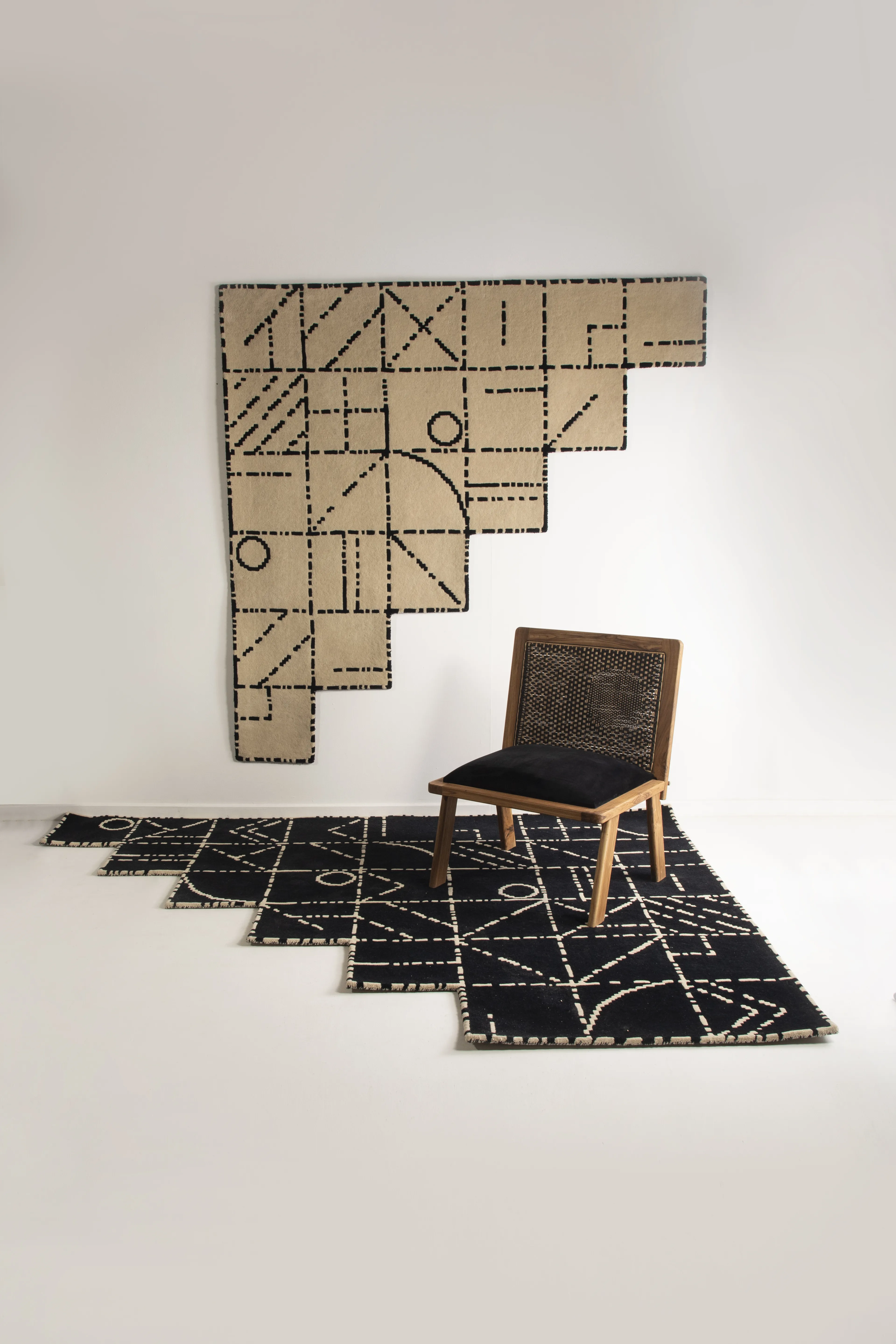
Two interlocking halves that work together or apart, so the footprint adapts to the layout rather than dictating it. Subtle colour and abstract geometric graphics keep it easy to integrate. Useful in a room where you are not yet sure of the furniture plan — the rug can follow rather than lead.
By Objectry
€761 incl. tax
The Calendar – Hand-Knotted Wool Rug by A* alittlemore studio
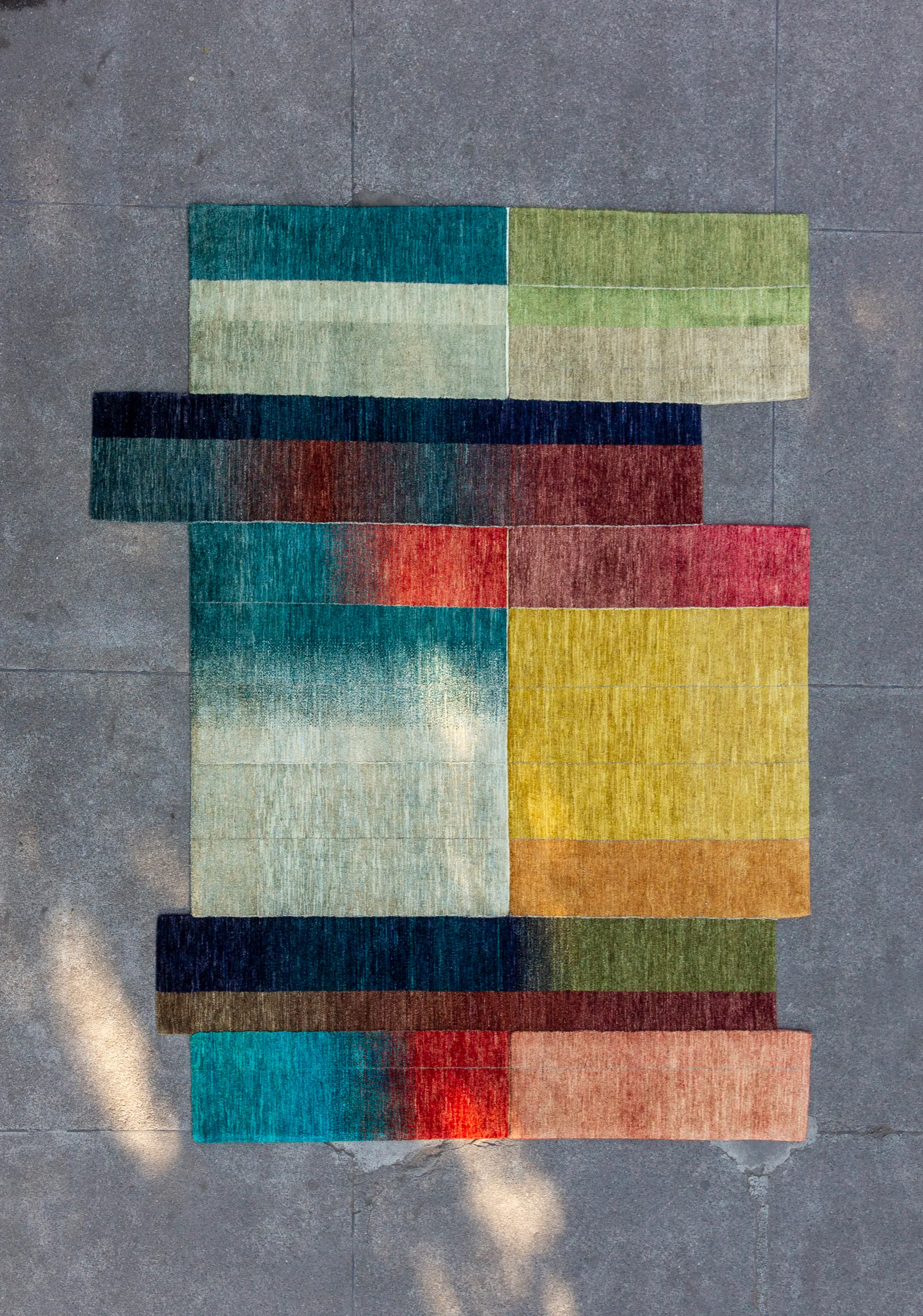
From The Smog Collection, mapping a full agricultural year — the seasonal cycles of wheat, rice and cotton traced through shifting colour and texture, including the atmospheric effect of crop burning. So the tonal changes are documentary rather than decorative. Hand-knotted by local weavers, and one of the few rugs here that rewards being read as well as walked on.
By A* alittlemore studio
INQUIRE
Dune – Tapestry by Atelier Nuanda
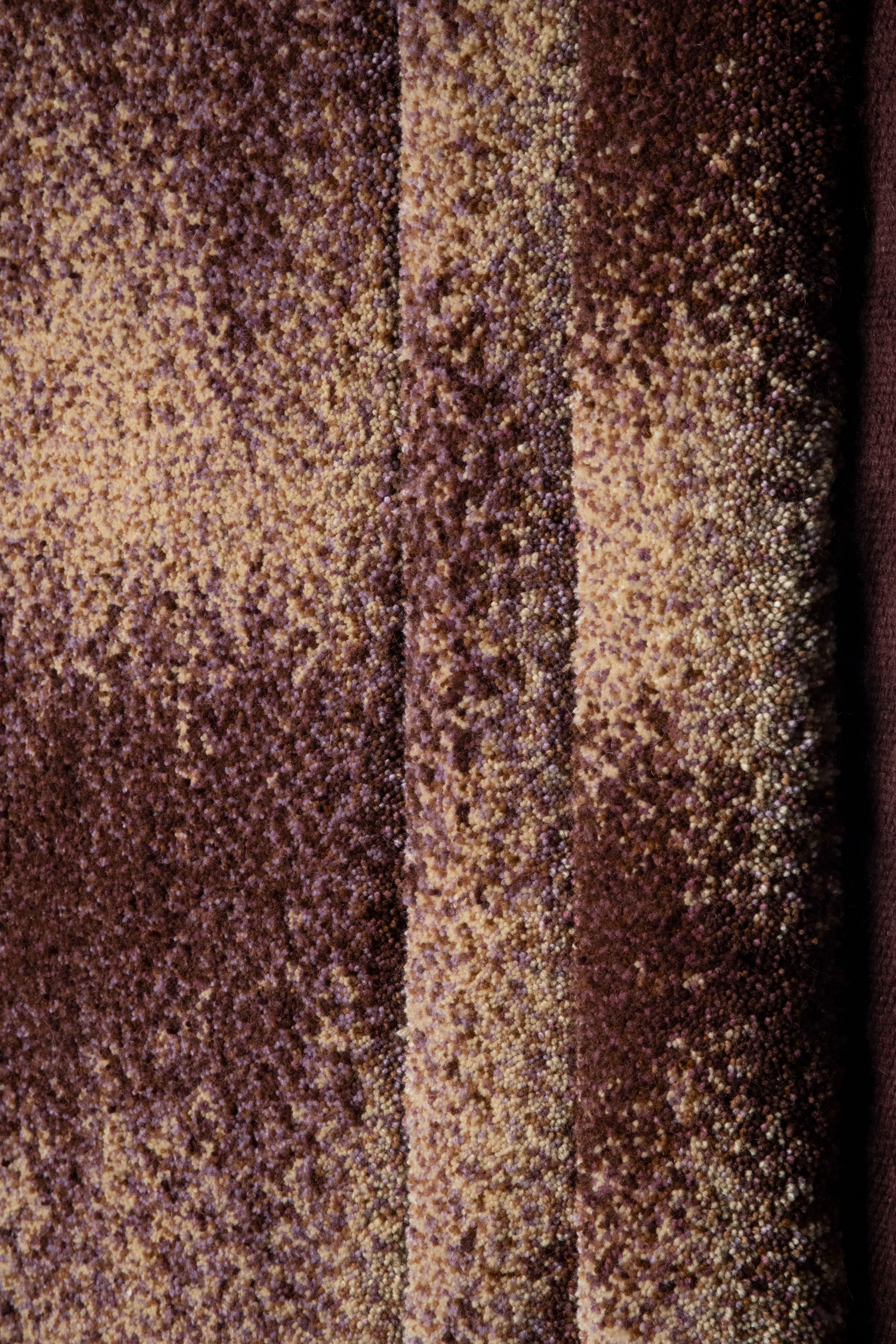
An Italian tapestry produced with Arazzeria Scassa, one of Europe’s most respected textile workshops. Woven on seventeenth-century looms inside a former Carthusian monastery in Asti. Best hung rather than laid — a tapestry of this provenance on a floor is a waste of it.
By Atelier Nuanda
€8.725 incl. tax
TOPOKKI – Hand-Spun Noodle Rug by Rest Studio
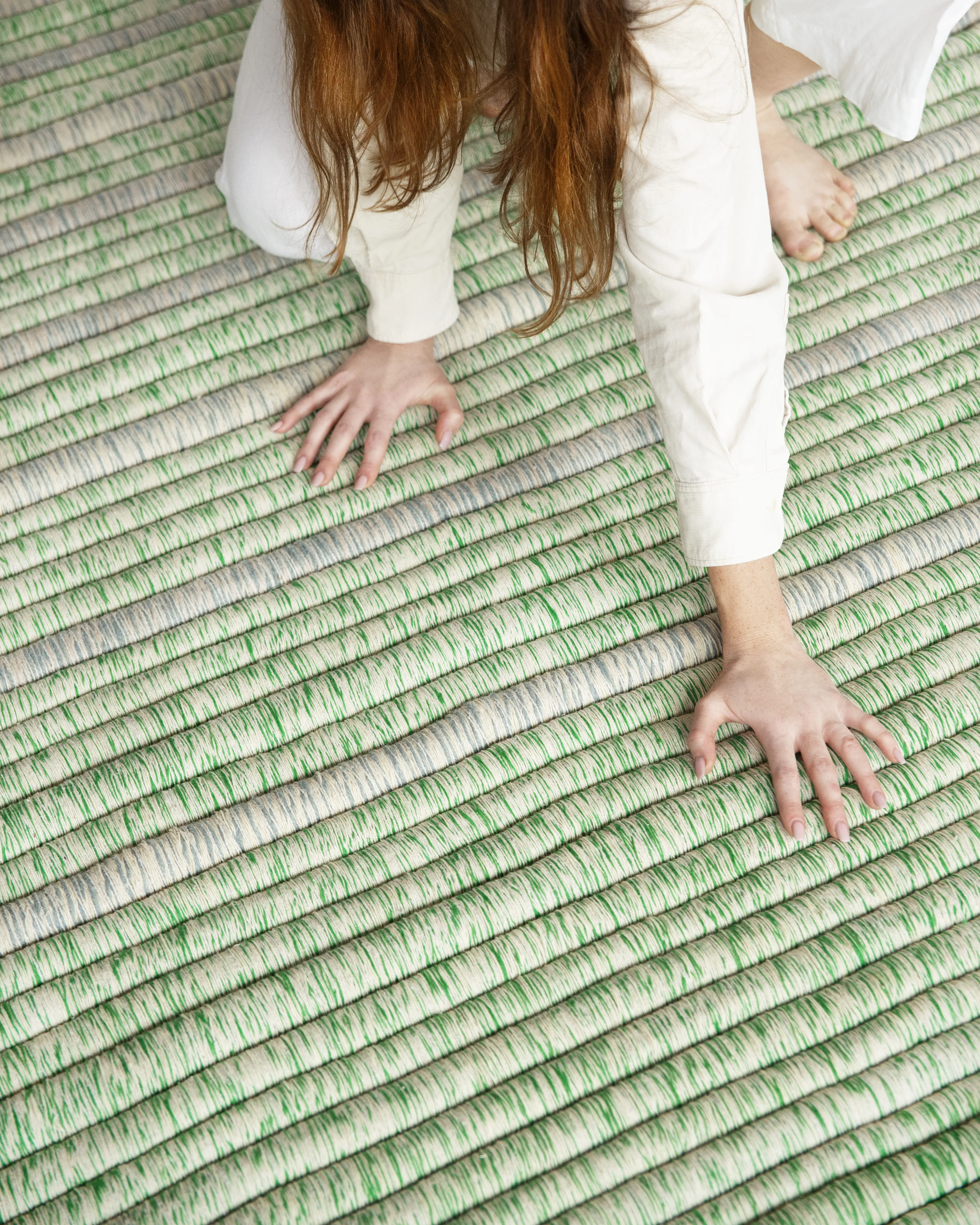
Drawing on the coiled texture of Korean rice noodles, translated into a sculptural surface. Wool wrapped around recycled cords and woven with a pineapple fibre warp — an unusual construction that gives it real density underfoot. The kind of rug that makes a case for high pile in a bedroom.
By Rest Studio
€2.540 incl. tax
Principessa – Hand-Tufted Wool Rug by M’ama edizioni
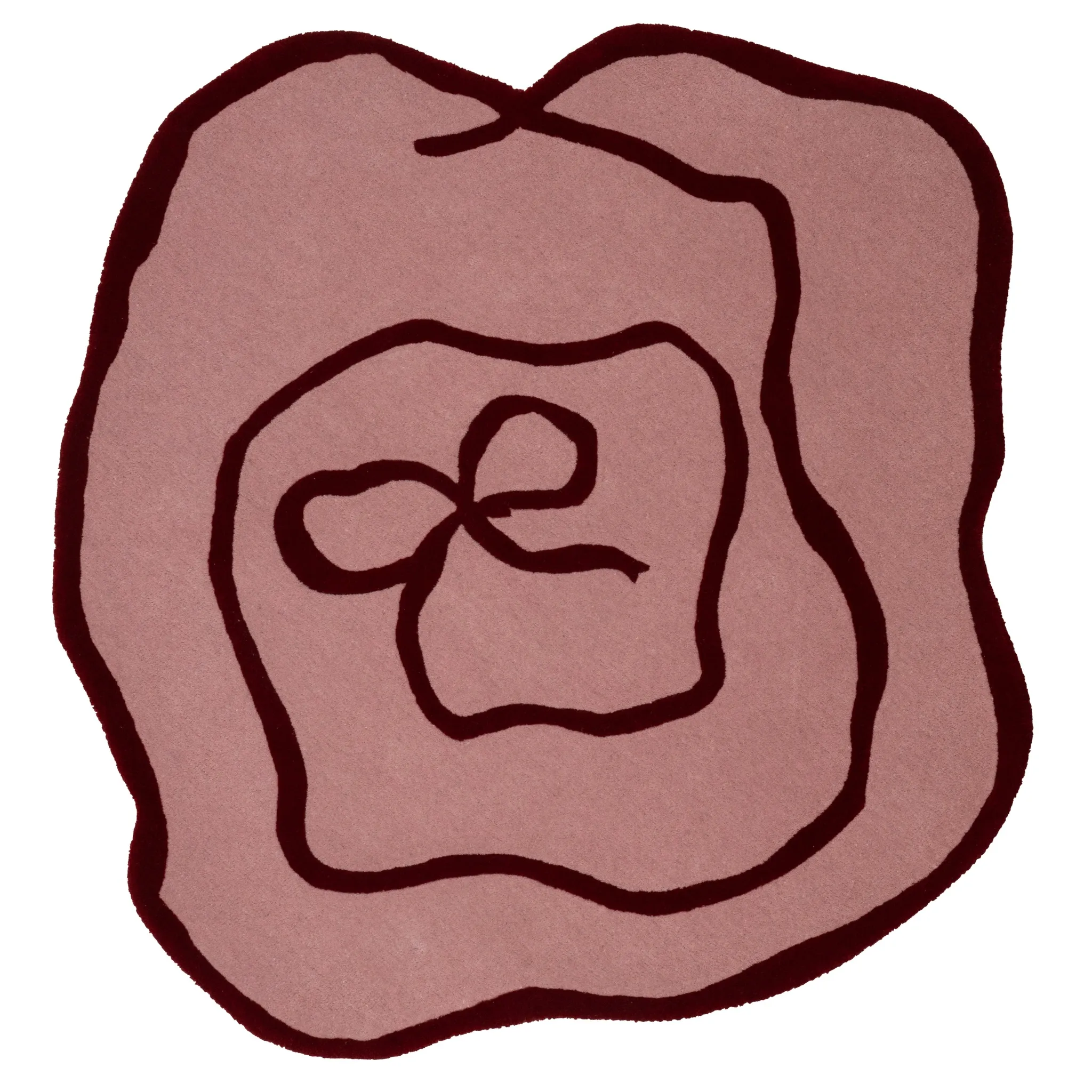
A hand-tufted wool piece by Federica Zama, defined by bold patterning and a strong graphic presence. Built to balance decorative impact against everyday durability, which is the harder trick with high-contrast rugs — they show wear at the pattern edges first. Works as a focal point in a room where nothing else is competing.
By M’ama edizioni
€980 incl. tax
The Neon Rug by Draken Studio
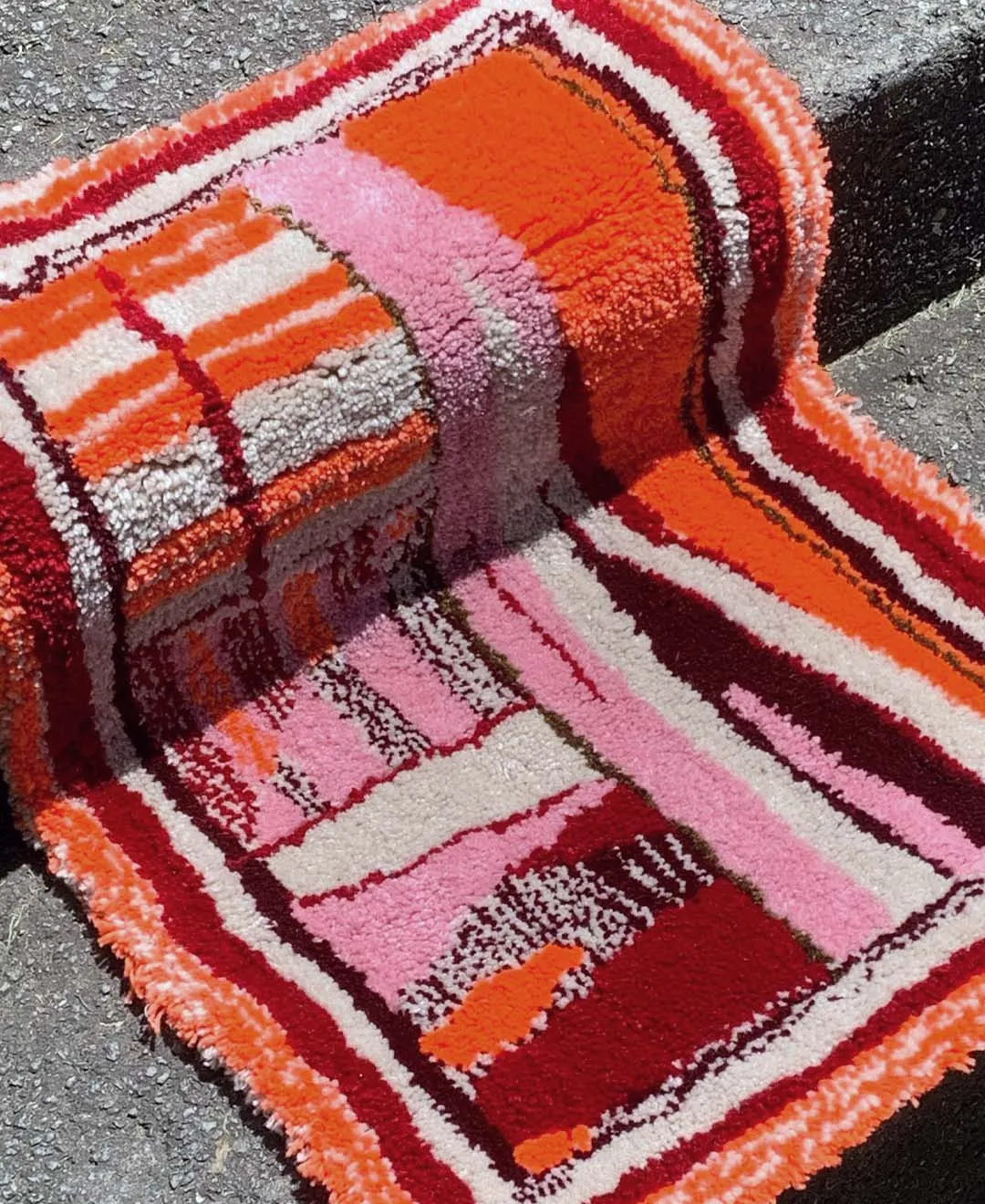
Hand-tufted in pink, red, burgundy and beige with a sharp hit of neon orange. The smaller size works as an accent, a wall piece, or layered over a chair or bench; the larger version carries a living room or sits bedside. Strong visual impact without committing the whole room to one mood.
By Draken Studio
€100 – €550 incl. tax
Secret Garden Rug by Sergio Mannino
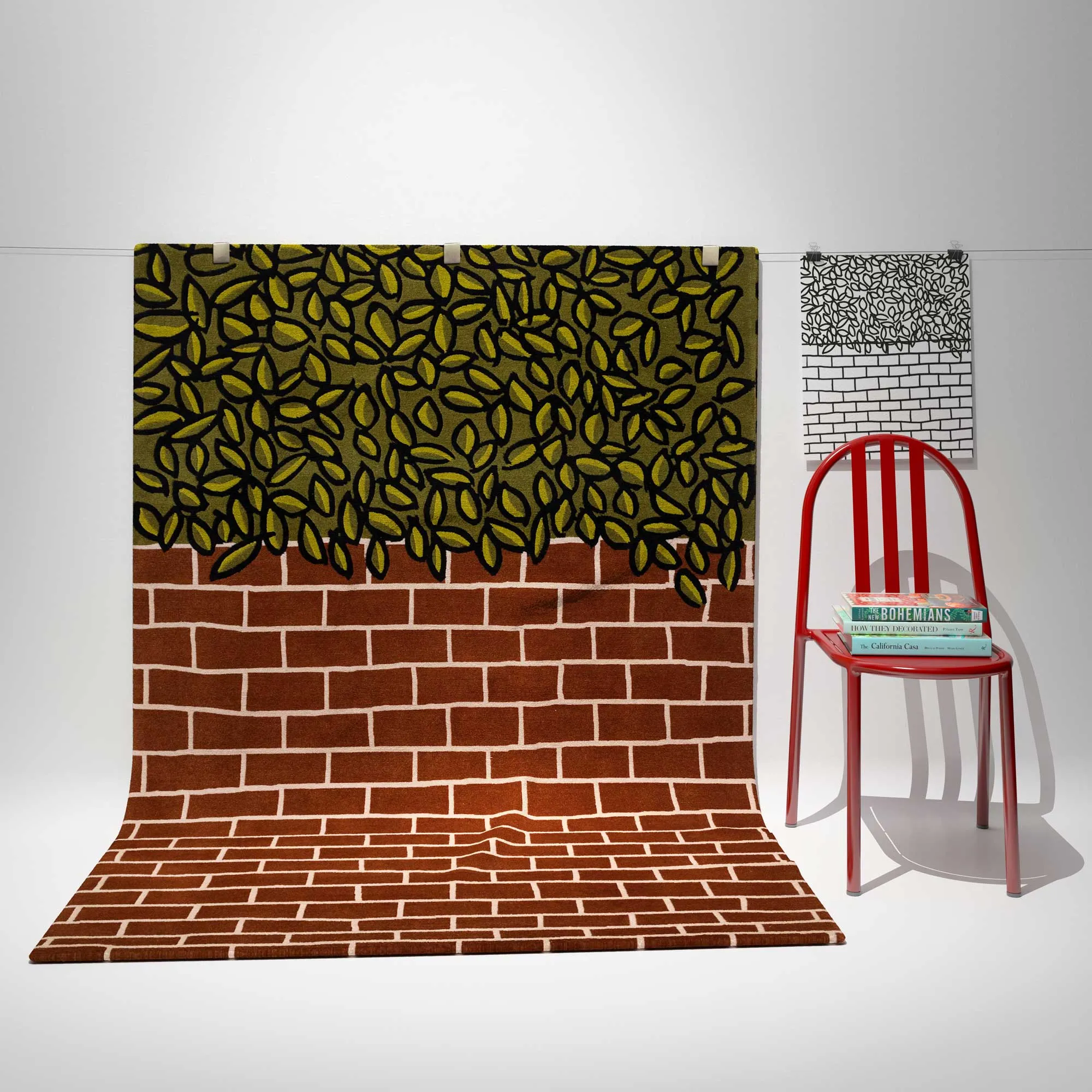
Part of a series of hand-drawn rugs built around narrative rather than motif, with layered colour and illustration inspired by concealed spaces and private landscapes. Every pattern is drawn by hand in the studio, which is why the composition reads as deliberate rather than generated. Adds depth and story without dominating the room.
By Sergio Mannino
€3.700 incl. tax
Mango – Wool Kilim by Tartaruga Studio

A handmade kilim by Jadzia Lenart from the NORD-SUD collection, designed for the floor or as a wall tapestry. The design works as a travel memoir, translating the shift between northern light and southern heat into colour. Woven from recycled wool and plant-dyed yarn, so the palette has the tonal variation hand-dyeing gives and machine dyeing does not.
By Tartaruga Studio
€2.846 incl. tax
Repeated II Rug by Severija Inčirauskaitė-Kriaunevičienė
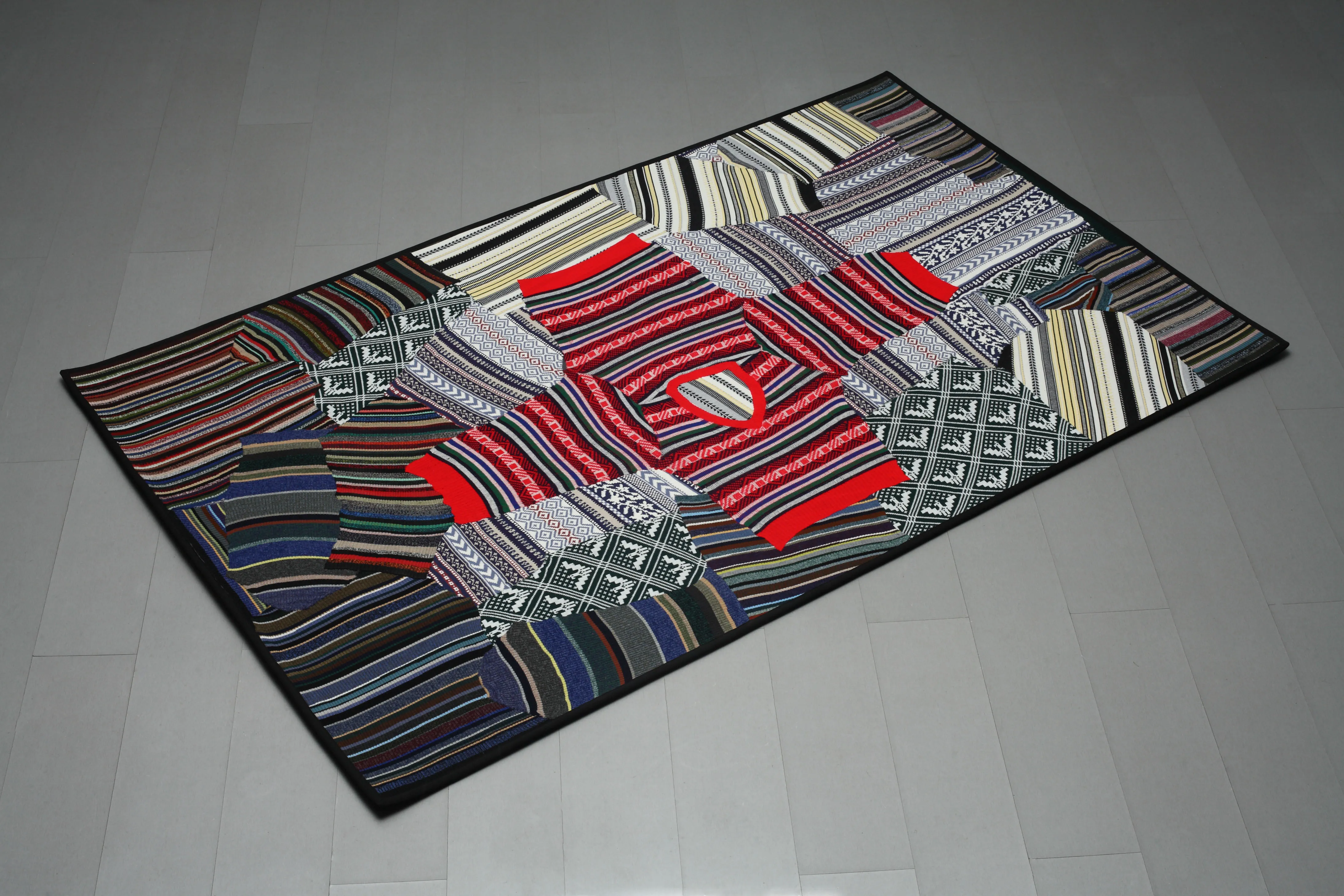
Made from reclaimed knitwear — sweaters, scarves, gloves — reworked into rugs defined by rhythmic repeated pattern. Produced on industrial looms in Lithuania, so each piece follows the same process while varying with whatever textiles came in. Personal garments can be used, which turns a rug into something closer to an archive.
By Severija Inčirauskaitė-Kriaunevičienė
€3.500 incl. tax
Gradient Rug by Emma Terweduwe

Jacquard woven from merino wool, mohair, linen and cotton, then felted and manipulated so the fibres shrink and distort. That post-weaving step turns a flat graphic pattern into a three-dimensional landscape — the four fibres shrink at different rates, which is what produces the relief.
By Emma Terweduwe
€3.500 incl. tax
What size rug do you need?
Buying too small is the single most common mistake, and it makes a room look smaller rather than larger. The rug should feel like it belongs to the furniture group, not like a mat placed near it.
Living room rug sizes
Three workable approaches, in ascending order of cost. The minimum is a rug that sits under the **front legs** of all seating — typically 8×10 for a standard sofa-plus-two-chairs arrangement — which visually binds the group without covering the whole floor. Better is a rug with **all furniture legs on it**, usually 9×12 or larger, which reads as a defined room within a room. The most generous leaves roughly **45–60cm of bare floor** on all sides as a border.
A 5×7 works only in a genuinely small room or as an accent under a coffee table with seating off it — in an average living room it will float and look undersized. Therefore if you are between two sizes, take the larger one.
Rug placement in the living room
Centre the rug on the seating group rather than on the room, and align its long edge with the sofa. Leave the same margin on left and right so the asymmetry is not visible. In an open-plan space, use the rug to draw the boundary of the sitting area — that is the job it does better than any piece of furniture. A round rug works under a circular table or in a reading corner but rarely under a full seating group, since the corners of the arrangement fall off it.
Bedroom rug sizes and placement
Three options again. A large rug **under the bed** with 60–75cm showing on both sides and at the foot is the most comfortable, since you step onto it getting out of bed on either side — allow 8×10 for a queen, 9×12 for a king. Alternatively run a rug **across the lower two-thirds** of the bed, starting below the nightstands, which gives the same warm landing for less money. Or use **two runners**, one either side, which suits a room too narrow for anything larger.
Layering a rug over carpet
Entirely workable, and often the best move in a rental. The rule is contrast: put a flatweave or low-pile rug over carpet rather than pile on pile, or the layering reads as a mistake. A thin non-slip underlay stops it creeping, and a rug with a defined border or strong pattern reads as intentional where a vague one looks like it has been dropped there.
Frequently asked questions
What size rug do I need for my living room?
At minimum, large enough for the front legs of all seating to sit on it — usually 8×10 for a standard arrangement. A 9×12 lets every leg sit on the rug, which reads better. If you are choosing between two sizes, take the larger: undersized rugs make rooms look smaller, not bigger.
Where should a rug go in a bedroom?
Either fully under the bed with 60–75cm showing on both sides and the foot, or across the lower two-thirds of the bed starting below the nightstands. Two runners either side work in a narrow room. What matters is that your feet land on it when you get up.
Can you put a rug on carpet?
Yes, and it is often the best option in a rental. Use a flatweave or low pile over carpet rather than pile on pile, add a thin non-slip underlay to stop it creeping, and choose something with a defined pattern or border so it reads as deliberate.
Is a 5×7 rug big enough for a living room?
Rarely. In a small room, or as an accent under a coffee table with the seating off it, a 5×7 works. In an average living room it floats and makes the furniture look unanchored. Treat it as an accent size rather than a main rug.
Should a rug be wider than the sofa?
Yes — ideally 15–30cm wider on each side. A rug narrower than the sofa makes the seating look too big for the space, which is the visual error most undersized rugs actually create.
Which rug construction lasts longest?
Hand-knotted, by a wide margin — the pile is structural and there is no adhesive backing to fail, so it can last generations. Flatweaves and kilims come next and have the advantage of being reversible. Tufted rugs depend on glue that eventually degrades, which is reflected in the price.
Shop all Rugs on ADORNO →
More rugs on ADORNO
“pyra” Rug
€15.840 incl. tax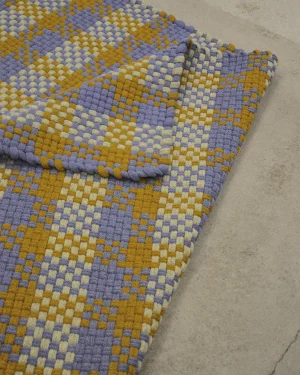
“mylla” Rug
€15.840 incl. tax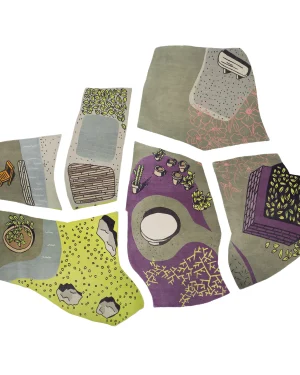
“non Flying Carpet” Limited Edition Whimsical Rug
€11.400 incl. tax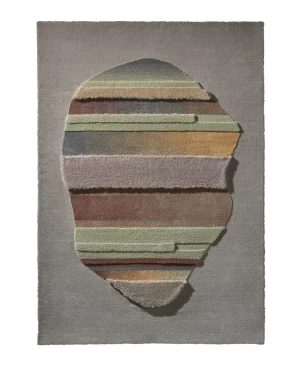
“Lutetia” Rug
€10.220 incl. tax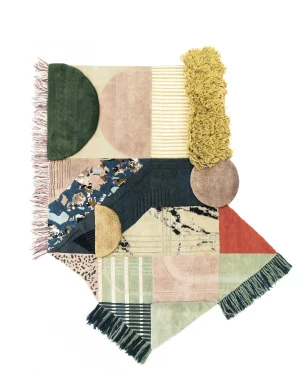
Medley – Eclectic Textured Rug Or Wallhanging
€9.378 incl. tax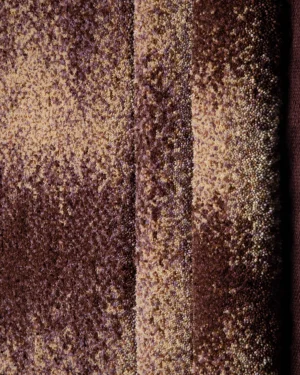
Dune – Tapestry
€8.725
Modern Ojos Errantes Rug
€7.795 incl. tax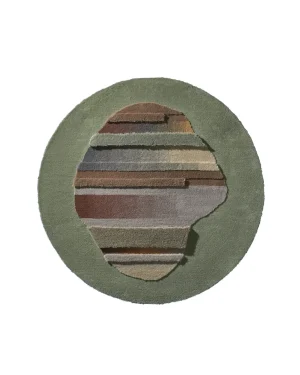
“Juno” Rug
€7.240 incl. tax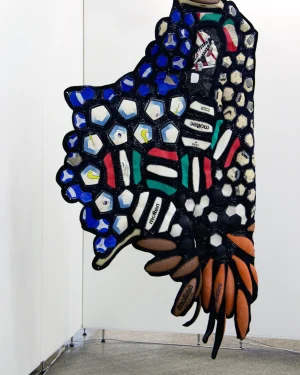
Sports at Home I Rug
€6.500 incl. tax
Sud – Wool Kilim
Price range: €4.075 through €6.352 incl. tax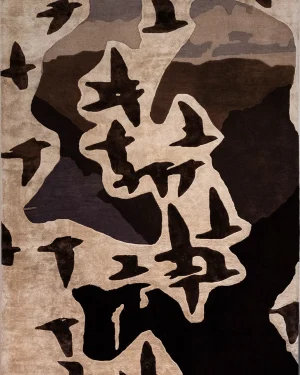
B J O R N | Rug
€6.300 incl. tax
Aurora – Wool Kilim
Price range: €3.050 through €5.805 incl. tax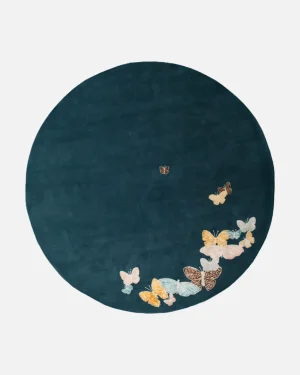
“Spirit in the Night Sky” Handcrafted Rug
€5.800 incl. tax
Baskets – Wall Decoration
€5.528 incl. tax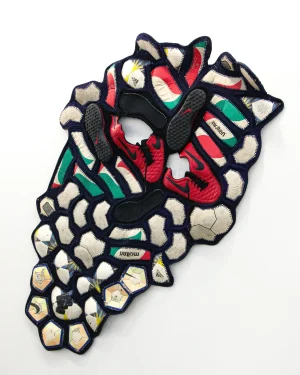
Sports at Home II Rug
€5.500 incl. tax
Op Kilim No. 3 – Rug
€4.879 incl. tax
Op Kilim No. 2 – Rug
€4.879 incl. tax
Op Kilim No. 1 – Rug
€4.879 incl. tax
Eclipse Oval Rug With Geometric Pattern
€4.320 incl. tax
Op Kilim No. 3 / Square – Rug
€3.903 incl. tax
Op Kilim No. 2 / Square – Rug
€3.903 incl. tax
Op Kilim No. 1 / Square – Rug
€3.903 incl. tax
Zebra In Love Rug
€3.800 incl. tax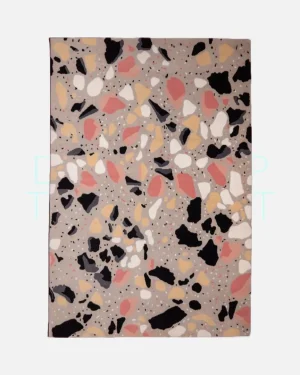
“Venezia” Hand-Knotted Tibetan Wool Rug
€3.700 incl. tax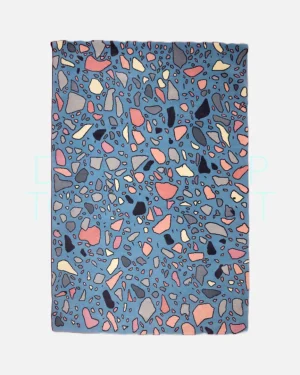
“Mondello” Hand-Knotted Tibetan Wool Rug
€3.700 incl. tax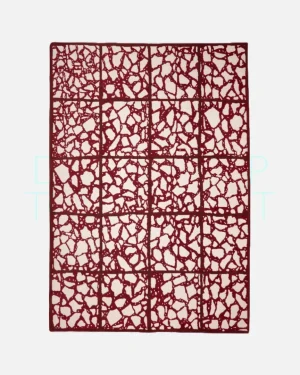
“Ravenna” Hand-Knotted Tibetan Wool Rug
€3.700 incl. tax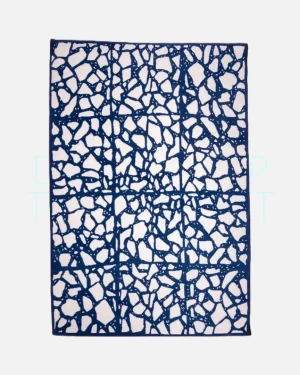
“Lecce” Handcrafted Rug
€3.700 incl. tax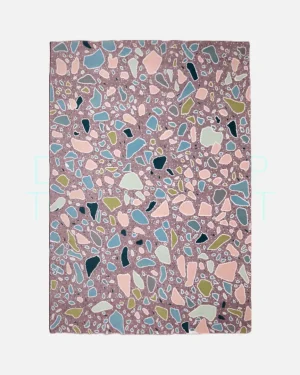
“Piazza Armerina” Hand-Knotted Tibetan Wool Rug
€3.700 incl. tax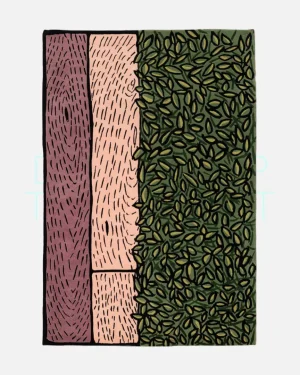
“Rose Realm” Handcrafted Rug
€3.700 incl. tax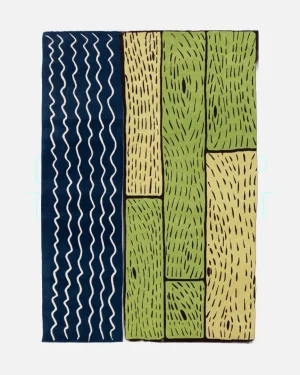
“Sapphire Streams” Handcrafted Rug
€3.700 incl. tax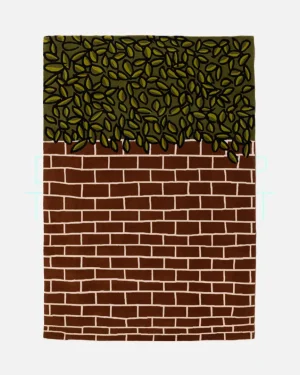
“Secret Garden” Handcrafted Rug
€3.700 incl. tax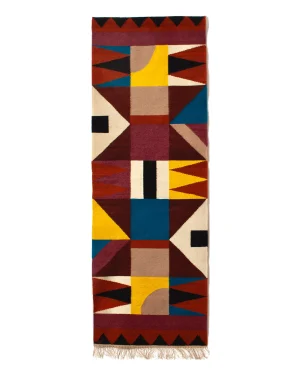
Mouth – Wall Decoration
€3.659 incl. tax
Uranos – Wall Decoration
€3.659 incl. tax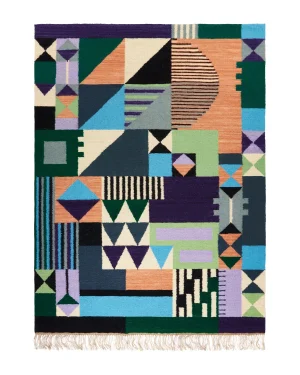
Dawn Rug/Wall Recoration
€3.659 incl. tax
Herd – Wall Decoration
€3.659 incl. tax
Wave – Wall Decoration
€3.659 incl. tax
Wacław – Wall Decoration
€3.659 incl. tax
Eros – Rug / Wall Decoration
€3.659 incl. tax
System Chaos Wall Decoration
€3.659 incl. tax
Cosmos – Rug / Wall Decoration
€3.659 incl. tax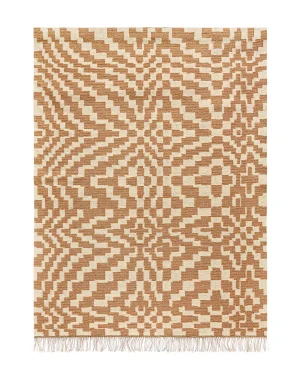
Vertigo Wall Decoration
€3.659 incl. tax
Jolly Rug / Wall Decoration
€3.659 incl. tax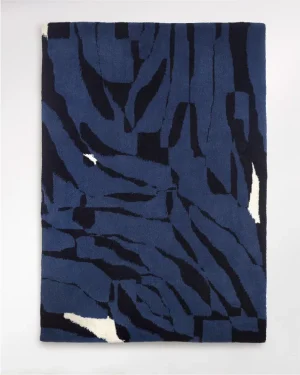
Untitled, Composition With Blue, Black And White (2024)
€3.500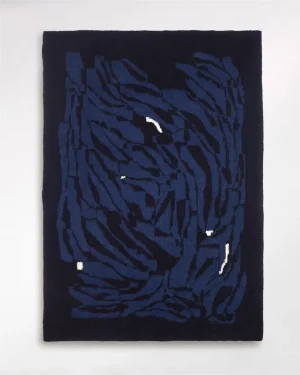
Untitled, Composition With Black, Blue And White (2024)
€3.500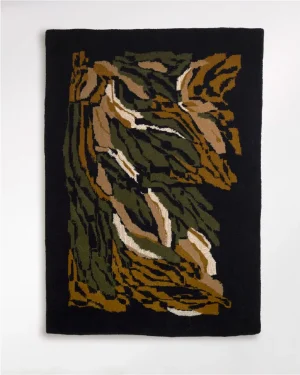
Black, Beige, Yellow & Green Wool & Hemp Rug
€3.500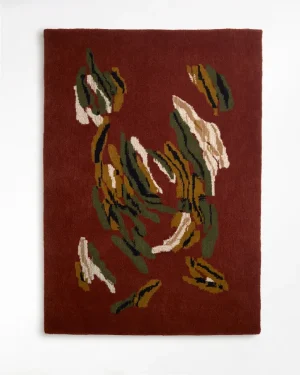
Red, Beige, And Green Wool / Hemp Rug
€3.500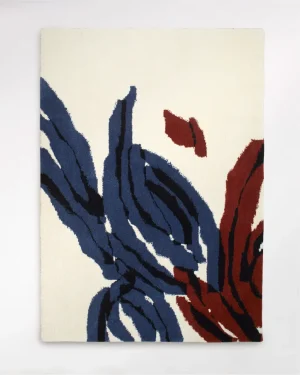
Red, White & Blue Wool & Hemp Rug
€3.500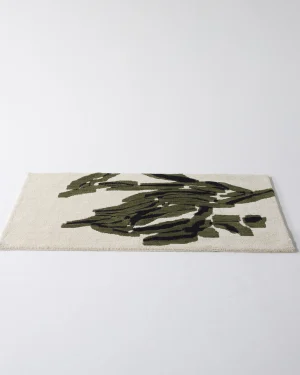
Cream, Black & Green Wool & Hemp Rug
€3.500
Made From Jordan – Geometric Indigo Rug
€3.500 incl. tax
Repeated II Rug
€3.500 incl. tax
Rapallo – Wall Decoration/Rug
€3.170 incl. tax
Repeated I Rug
€3.000 incl. tax
Mango – Wool Kilim
€2.846 incl. tax
Bloossom Rug
€2.750 incl. tax
