Unique Home Decor: 9 Radical Objects for Bold Interiors
Updated on: August 14, 2026
Most decorative objects are designed to agree with a room. These are not. Radical design starts from the assumption that an object can argue with its setting — break a category rule, use a material nobody expects, or simply refuse to be background — and the nine pieces below all do at least one of those things.
What follows is a short note on what actually makes a piece radical rather than merely loud, nine objects from independent studios, and some practical guidance on living with something this assertive.
What makes a decorative object radical?
It breaks a category rule
A vase that is also a rat. A mirror that shows you the room behind you rather than your face. A sound system built like furniture. The common move is taking a familiar object type and violating the one convention that defines it, which is why these pieces read as arguments rather than ornaments.
It is genuinely one of one
Nearly everything here is a single piece or an edition in the low single figures. That is not a marketing decision — hand-blown uranium glass, hand-painted platinum and hand-woven kilim cannot be batched. Consequently the irregularities are evidence rather than defects.
It rewards a second look
The distinction between radical and merely loud is what happens after the first glance. A loud object has told you everything immediately. A radical one has a second layer — the uranium glass that fluoresces under UV, the ceramic vessel that turns out to be about extinction, the goblet built from Lego and Star Wars memories. Therefore these work best where you will encounter them repeatedly.
9 radical objects from independent studios
The Nature Face Tapestry by Sandra Keja Planken
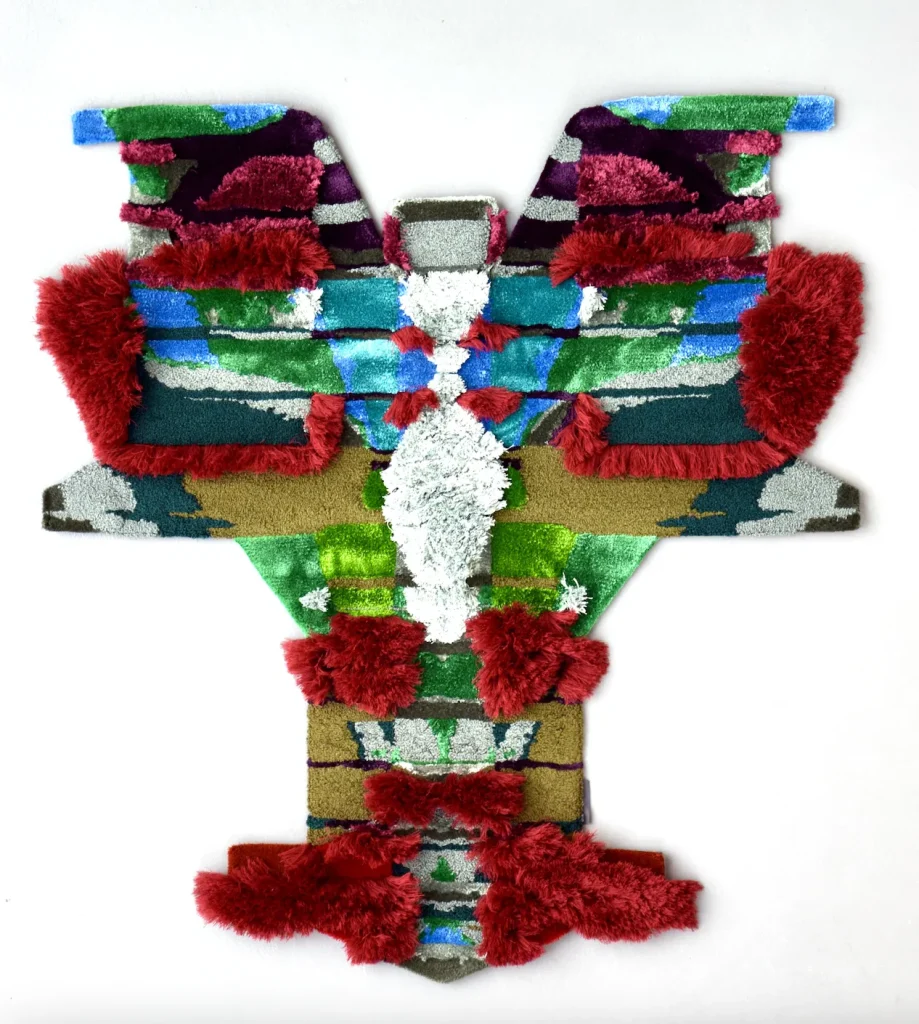
A tapestry built to relax the eye rather than challenge it — shape, texture and colour working together across varied pile heights. The wool is handled through several treatments and techniques at once, so the surface changes as you move past it. One of the calmer pieces here, and radical mainly in scale and ambition.
€8.888 incl. tax
S.S Series, Sound System 03 by Lucas Muñoz Muñoz
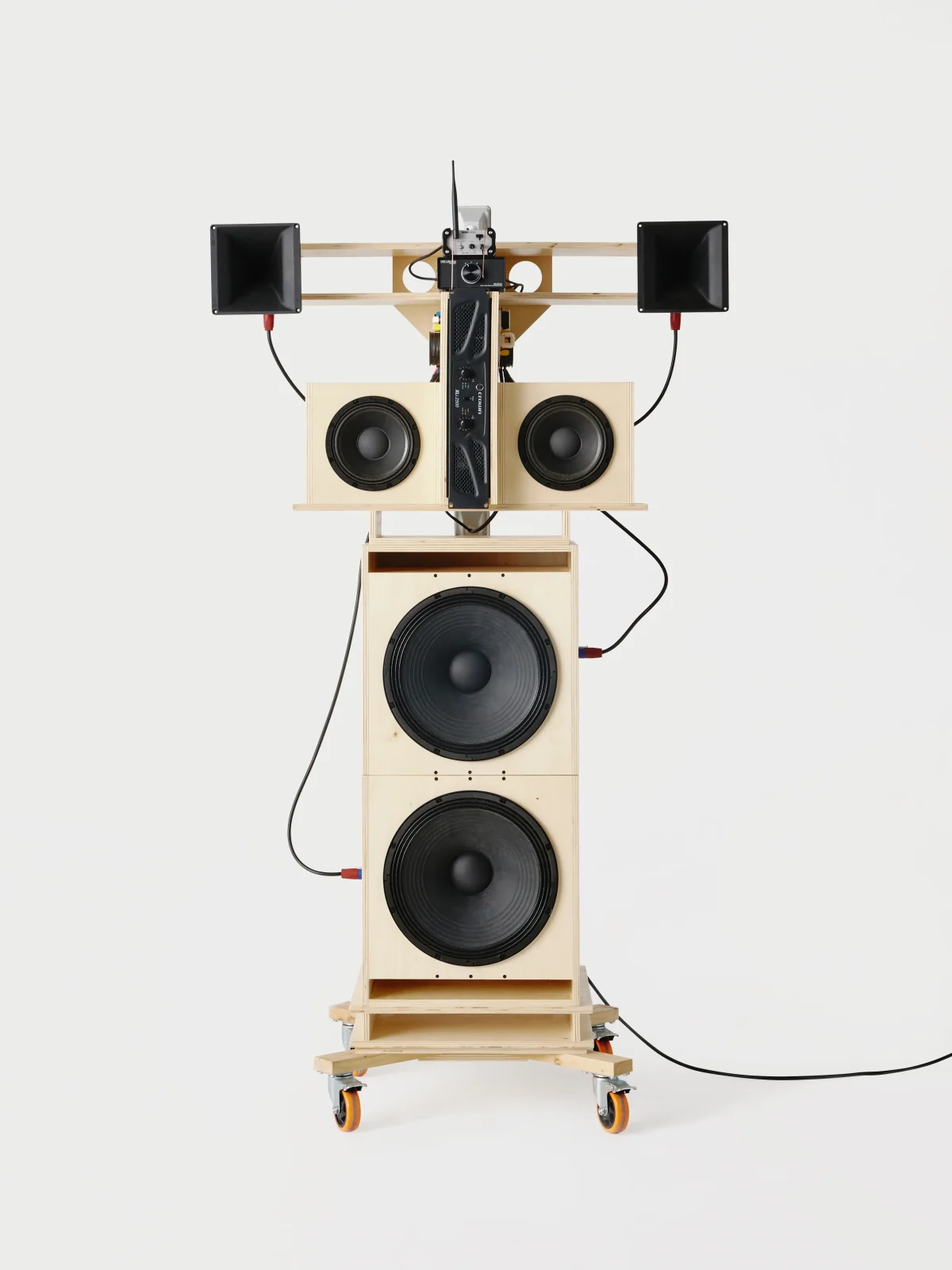
Known as ‘La Niña’, the third iteration of the Sound System series and the most radical object here by some distance — a functioning 1000-watt PA built as furniture. Sustainably grown European poplar plywood, water-based varnish, heat-blackened screws, and acoustic muffling made from 100% recycled textile panels. Nothing inside the compartments is glued, so every component can be reached and replaced.
€24.000 incl. tax
“RENAISSANCE” Triumph Crystal Goblet: by Leo De Carlo
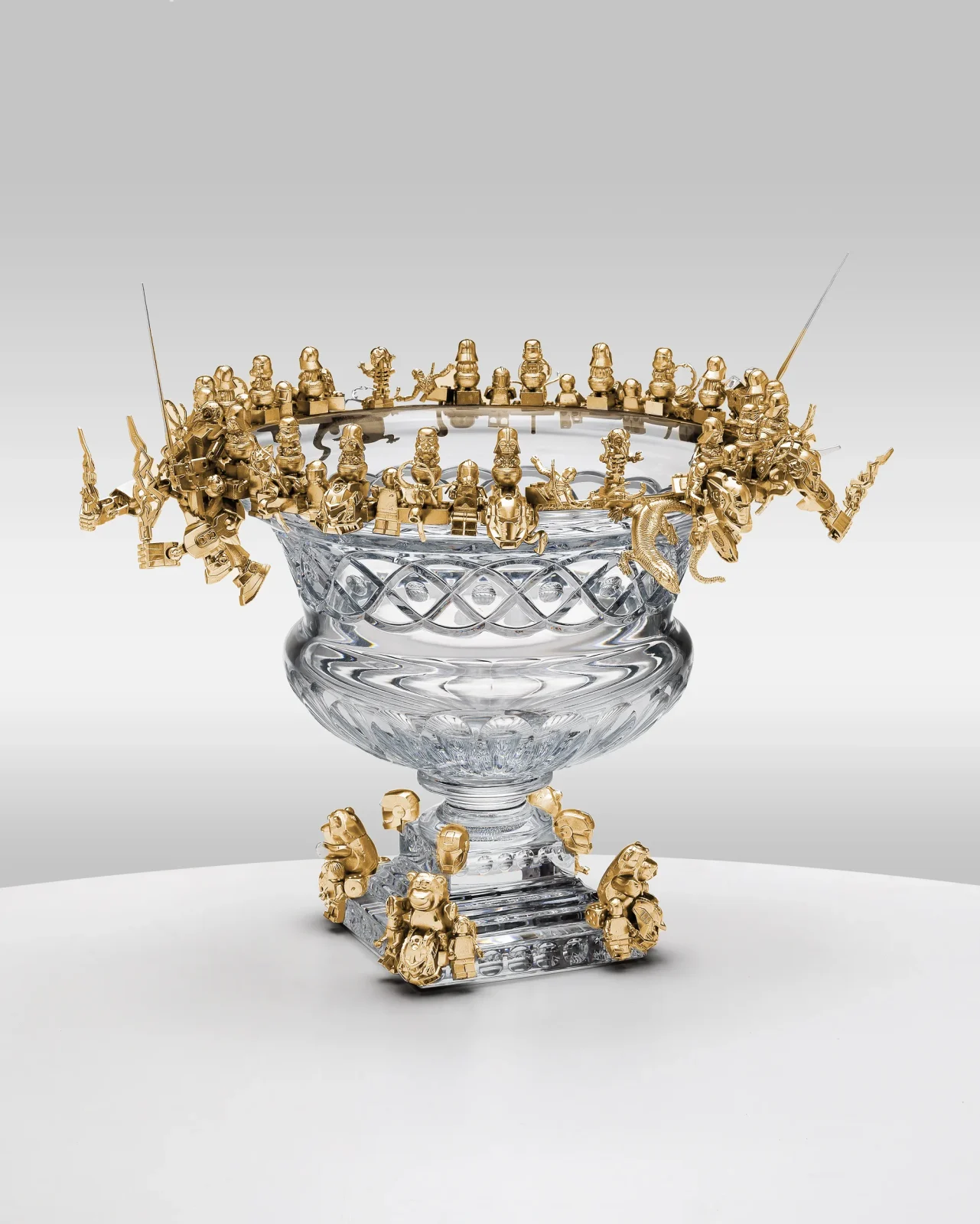
From The Post War collection, edited in only three copies by Vetralia and made in Venice by the artist. Hand-engraved crystal with figures in 24-carat gold-leaf coated brass — and the figures are the point. They are a tribute to a 1980s childhood, crystallising Lego, Star Wars and Disney heroes into an object that mixes the highest craft register with pop culture. Goldsmithing applied to something entirely unserious.
By Leo De Carlo
€14.200 incl. tax
Baskets – Wall Decoration by Splot
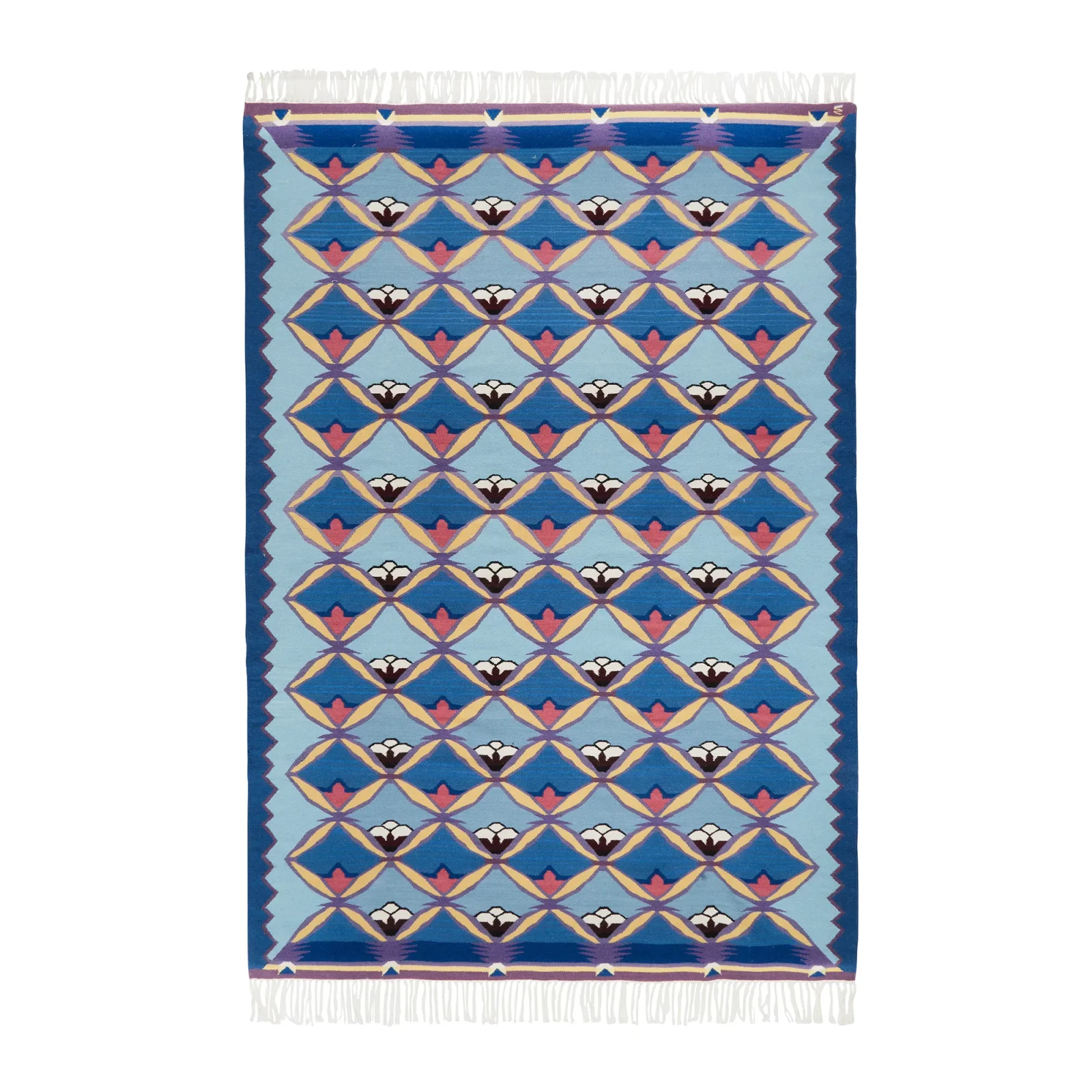
Edward Trojanowski showed this kilim design at the Paris exhibition of 1925 — he painted, and designed interiors, stained glass, furniture, stamps and kilims, treating no technique or scale as an obstacle. It is woven now in Gliniany near Lviv, where kilims have been made since the mid-1800s, on non-automated looms at roughly one week of work per square metre. Recycled wool on a cotton warp keeps it light and almost sketch-like. Not suitable as a rug.
€5.528 incl. tax
Dome Mirror by thehighkey

A parabolic mirror that shows you the space around you rather than your reflection — which is the category rule it breaks. The routed wood frame reads as ripples in water. Released at ICFF Manhattan as part of the RELIEF collection, where the technique is the argument: reliefs have historically been carved from natural material, and here the same cutting is applied to plywood and foam to find the human quality in industrial stock.
By thehighkey
€4.200 incl. tax
Trifid – Surrealism Vase by František Jungvirt
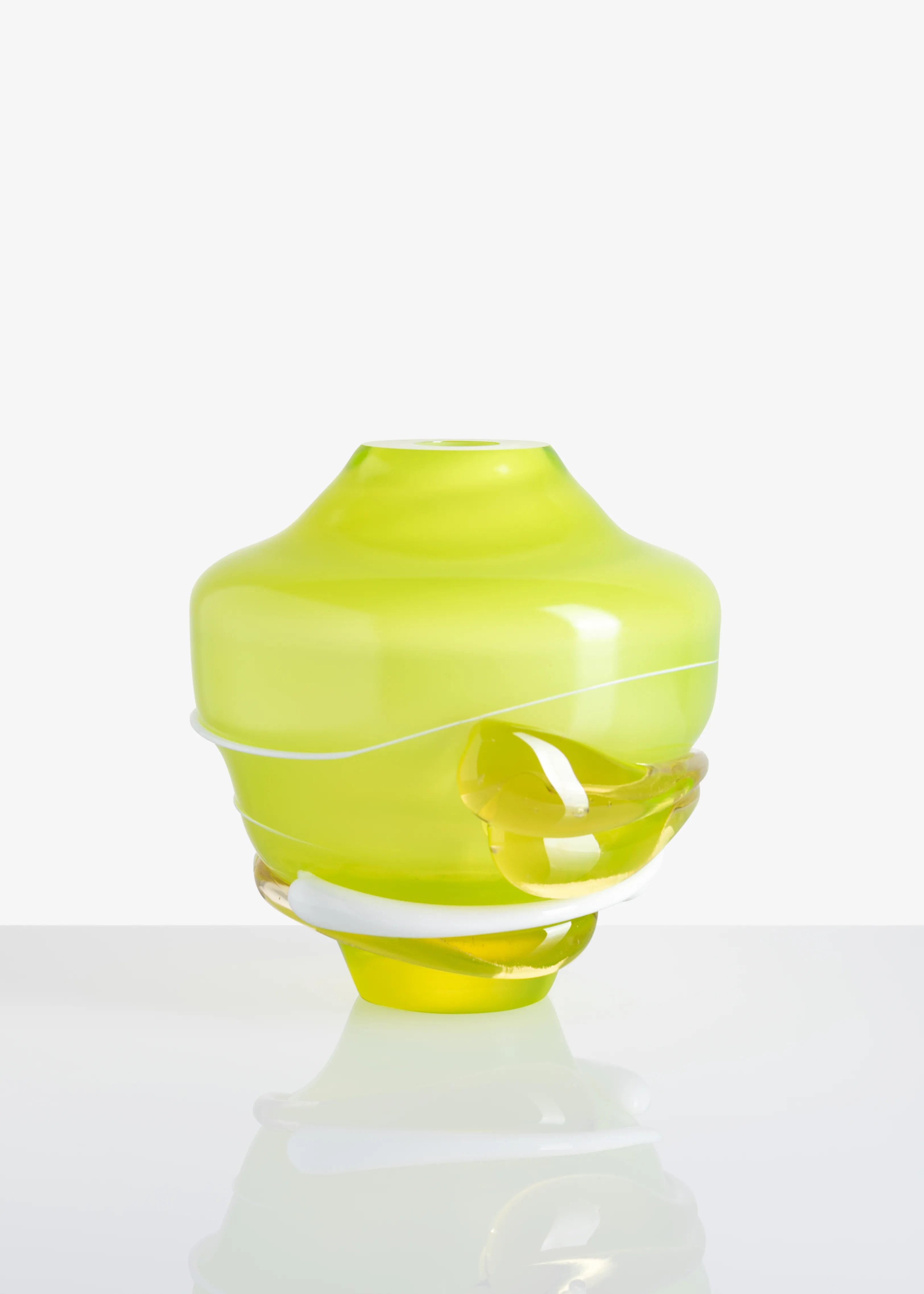
Mouth-blown into a wooden mould from Czech uranium glass, then hand-cut, sanded, matted to a velvety finish and decorated freehand with hot glass. The uranium content gives it a characteristic olive colour — and makes it fluoresce under ultraviolet light, which is the second layer that separates radical from merely striking. Signed, numbered and certified. 22 × 20cm.
By František Jungvirt
€2.300 incl. tax
Dearth – Crane by Gilles Mayk Navangi and Antimaterie
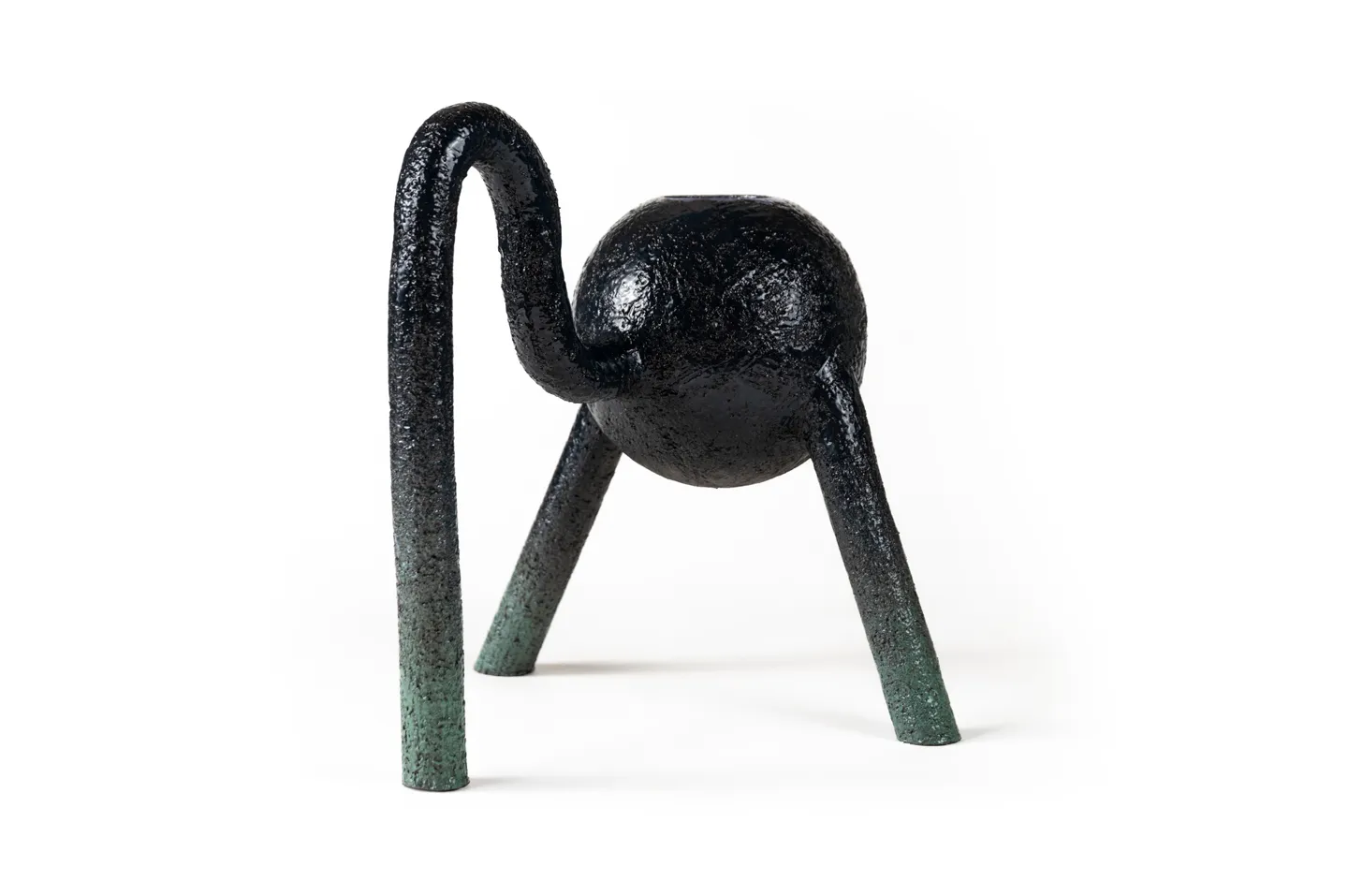
Ceramic vessels symbolising endangered animals — jars, totems and meditative sculptures arguing for contemplation rather than consumption. A percentage of sales goes to Virunga National Park, the richest protected area in Africa and home to a third of the world’s remaining mountain gorillas. Made to order, and the colour of a commissioned piece will differ from the one shown, since each is unique.
By Gilles Mayk Navangi and Antimaterie
€2.000 incl. tax
The Rat / Object by Volokhova Porcelain

Both a vase and an object, which is the ambiguity it trades on — a rat rendered in porcelain and finished with the reverence usually reserved for something more flattering. The decoration is hand-painted in platinum or gold, made in Germany, and the pattern can be varied on request. Applying precious-metal decoration to vermin is the whole joke, and it holds.
€580 incl. tax
Melted Porcelain Vase V.17 by John Nordenstein
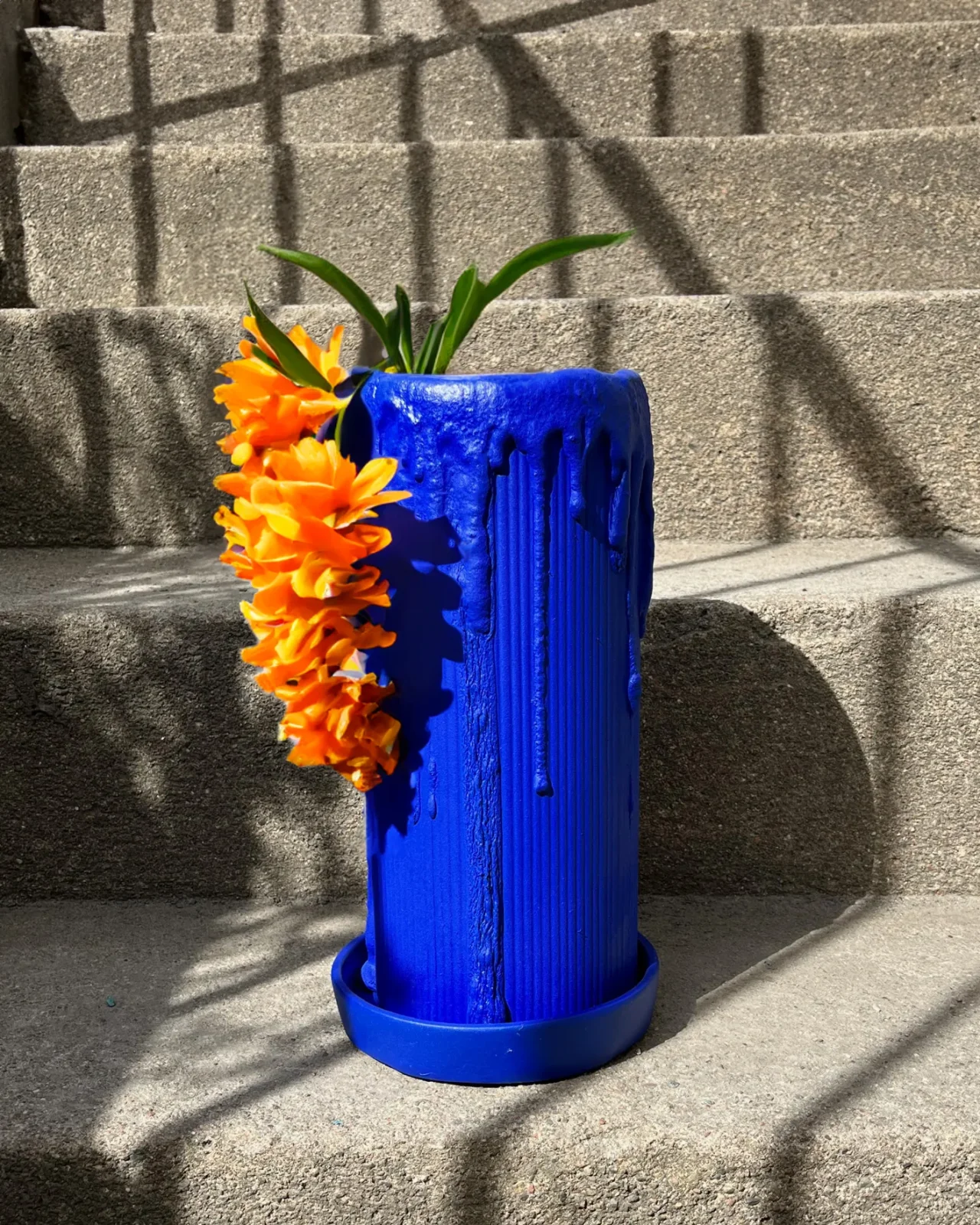
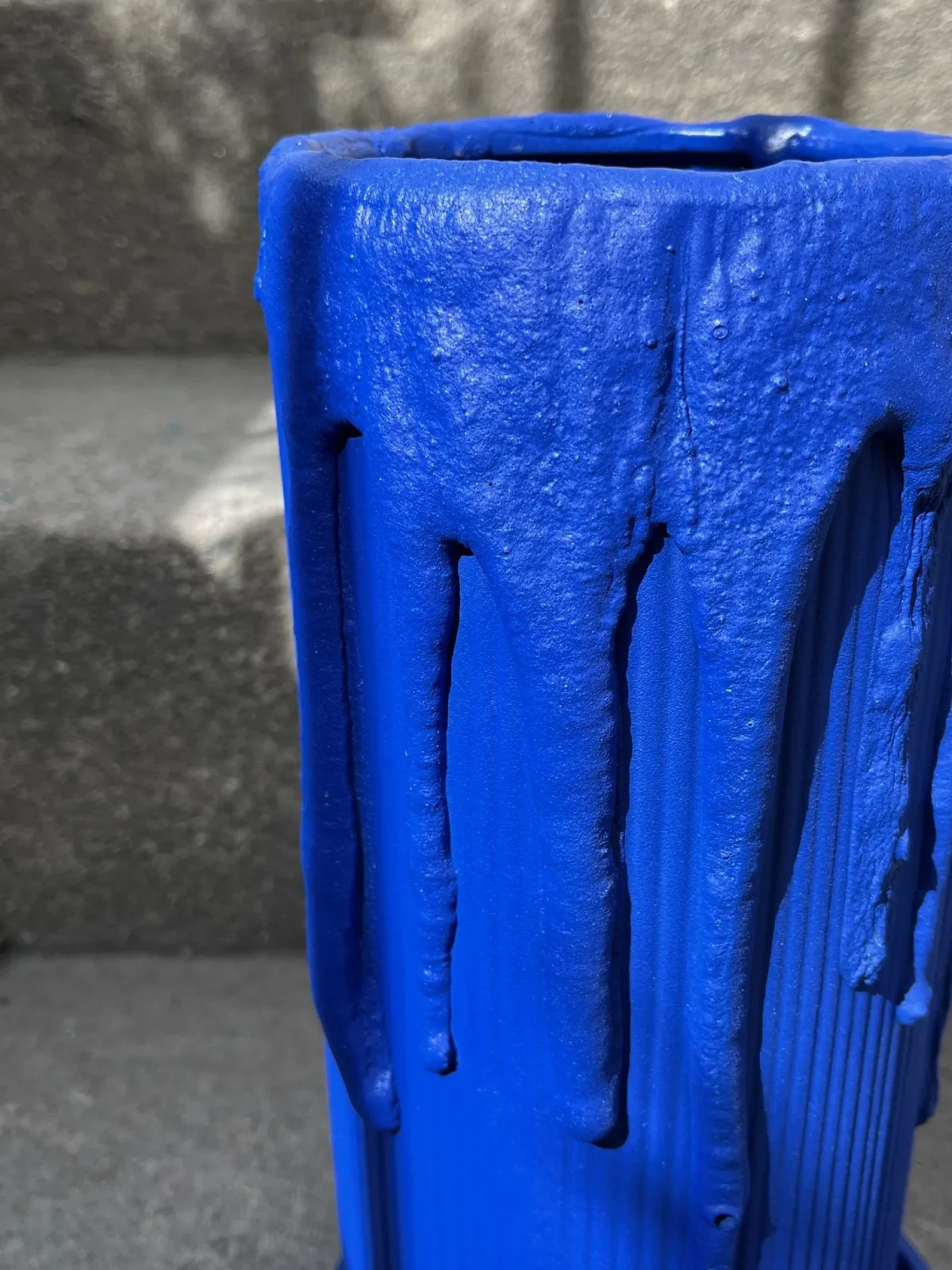
A sculptural vase in blue, built up across many layers rather than painted — each material contributing its own thickness, viscosity, glossiness or transparency, so the work grows instead of being decorated. The idea started from a fascination with things melting or dripping away, and with upcycling. Signed by the artist underneath.
Made to order
How to place a statement object
- One per room, and mean it. Two competing statement pieces cancel each other out — the eye has nowhere to rest, and both read as clutter rather than decision. Everything else in the room should be quiet enough to let the object be the subject.
- Give it clear space. Leave at least as much empty surface around it as the object occupies. A radical piece crowded onto a full shelf loses the isolation that makes it read as deliberate, which is the same principle that governs pared-back rooms.
- Put it where you pass it. These reward repeated encounters rather than a single look, so a hallway, a landing or the wall opposite a chair works better than a formal room you rarely enter.
Frequently asked questions
What is radical design?
A design approach that treats convention as something to argue with rather than follow. It grew out of the Italian Radical movement of the 1960s and 70s, where designers used furniture and objects to question consumer culture. In contemporary practice it usually shows up as a category rule deliberately broken.
How is radical design different from maximalism?
Maximalism is about quantity and layering — more pattern, more colour, more objects. Radical design is about the individual object and the idea inside it, and it is perfectly compatible with an otherwise spare room. One is a decorating strategy, the other is a design position.
Will a bold object date faster than a neutral one?
Not necessarily, and often the opposite. What dates is following a trend; a genuinely singular object was never in step with one to begin with. The pieces most likely to look tired in five years are the ones that were popular in a given season, not the ones that were unusual.
Is uranium glass safe?
Yes, for decorative use. The uranium content in glassware is very low and largely locked into the glass matrix, which is why it has been collected for well over a century. It gives a distinctive olive colour and fluoresces green under UV light.
What does “made to order” mean for these pieces?
The studio begins making it once you order rather than shipping from stock. Lead times run to weeks or months depending on the technique, and for one-off work the finished piece will differ slightly from the one photographed — with hand processes that variation is unavoidable and generally the point.
Where should a radical object go in a small flat?
On a wall, usually. A small space cannot spare the floor or surface area a sculptural object needs to read properly, but a wall piece takes no footprint and still carries the room. Failing that, put one object on an otherwise empty surface rather than several on a full one.
Browse our entire selection of radical objects
ADORNO’s radical pieces come from independent studios where the idea arrives before the object does — one-offs and very short editions, in materials chosen because they were difficult rather than convenient.
