An outdoor lounge chair holds a particular promise. It stays in the garden when the light goes flat, and earns its place when the light is good.
Most outdoor lounge chairs are built to survive. The better ones are built to be worth looking at. The eight pieces on this list belong to the second category — designer outdoor lounge chairs, each made by an independent studio from materials chosen for weatherability and formal consequence, not price and turnover. Whether the setting is a garden, a pool terrace, or a covered patio that receives full morning sun, the right outdoor lounge chair is a seating decision that shapes the whole space around it. Indeed, it’s worth treating as seriously as any indoor lounge chair in a living room.
Lapis Lounge Foam Chair by Pablo Octavio

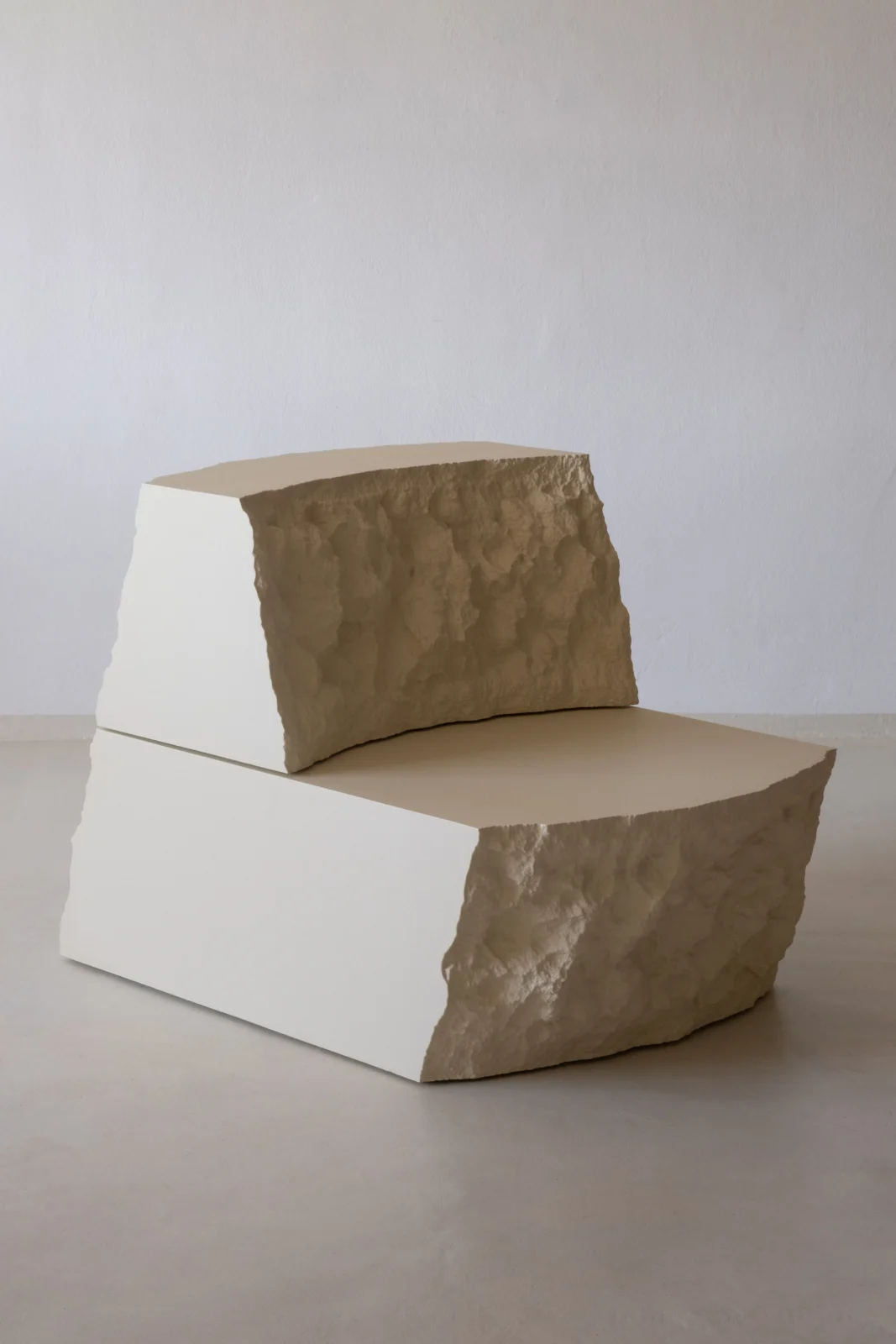
German designer Pablo Octavio built the Lapis Chair around a studied contradiction: what appears rough, heavy, and unyielding reveals itself, on first contact, as yielding foam. Each piece is cut from a single large block, the components ripped apart by hand so the surfaces retain the raw, geological texture of the break. The mineral weight and split-stone surface read, placed outdoors, as something altogether stranger than furniture — the piece set poolside or on a concrete terrace, against actual stone, becomes a quiet act of formal misdirection. Among outdoor lounge chairs suited to garden and patio environments, few carry this kind of conceptual weight alongside the tactile warmth the material delivers.
By Pablo Octavio
€3,100 incl. tax
Boni Lounge by Heaps and Woods
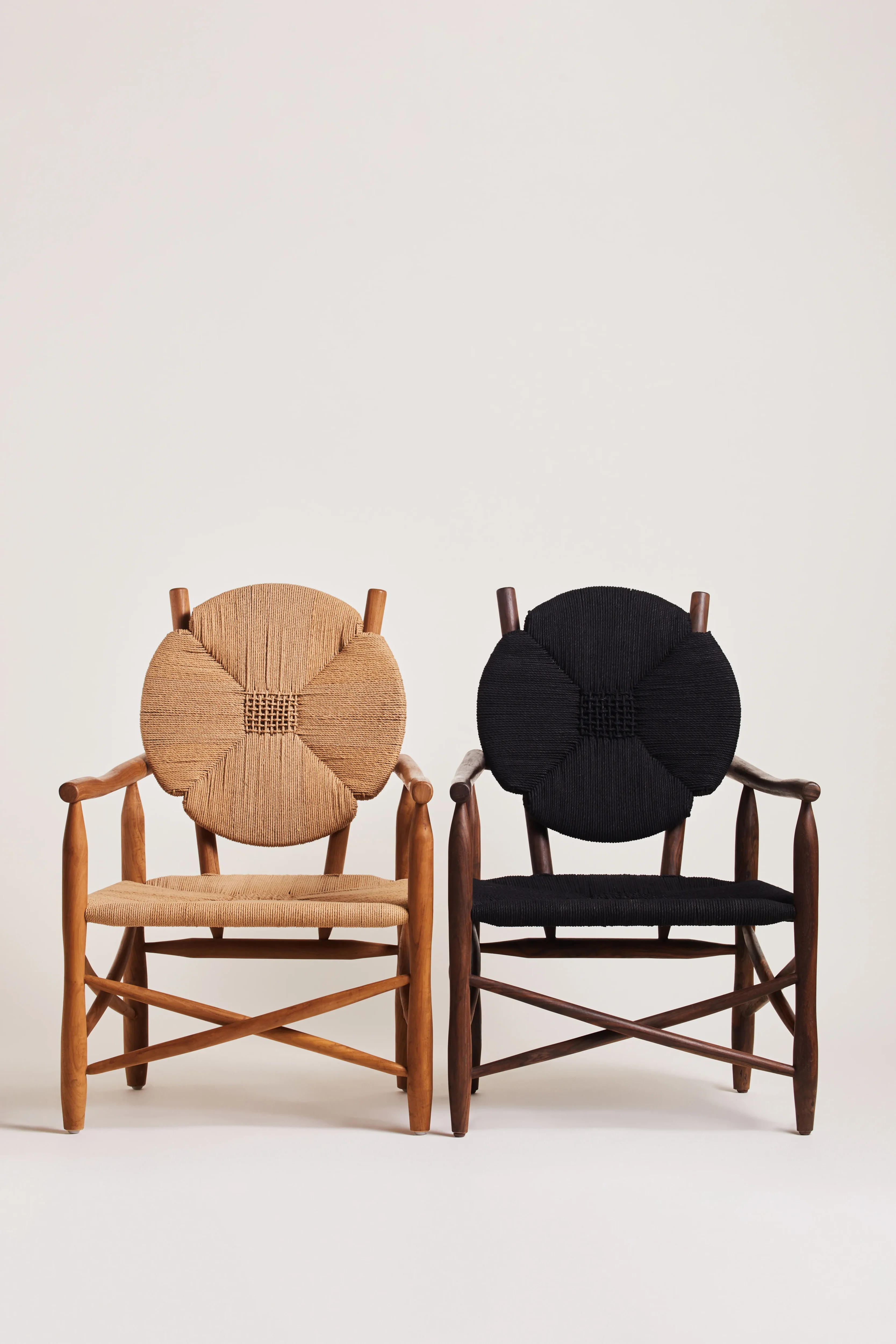
The Boni Lounge by Heaps and Woods pairs an elongated teak wood frame — organically textured through hand-carving — with a woven seat and back in either natural or synthetic rope. The natural rope version reads with the warmth and grain of the wood, the two materials reinforcing each other’s tactile logic; the synthetic rope option offers a more consistent surface and greater resistance to direct weather exposure. Teak’s natural oil content makes it one of the few hardwoods suited to full outdoor placement without treatment, and the carving that runs across the frame gives the piece a sculptural presence that sets it apart from standard teak lounge chairs. A considered choice for a garden terrace or shaded pool deck.
By Heaps and Woods
€2,750 incl. tax
Pitufi Lounge by Heaps and Woods
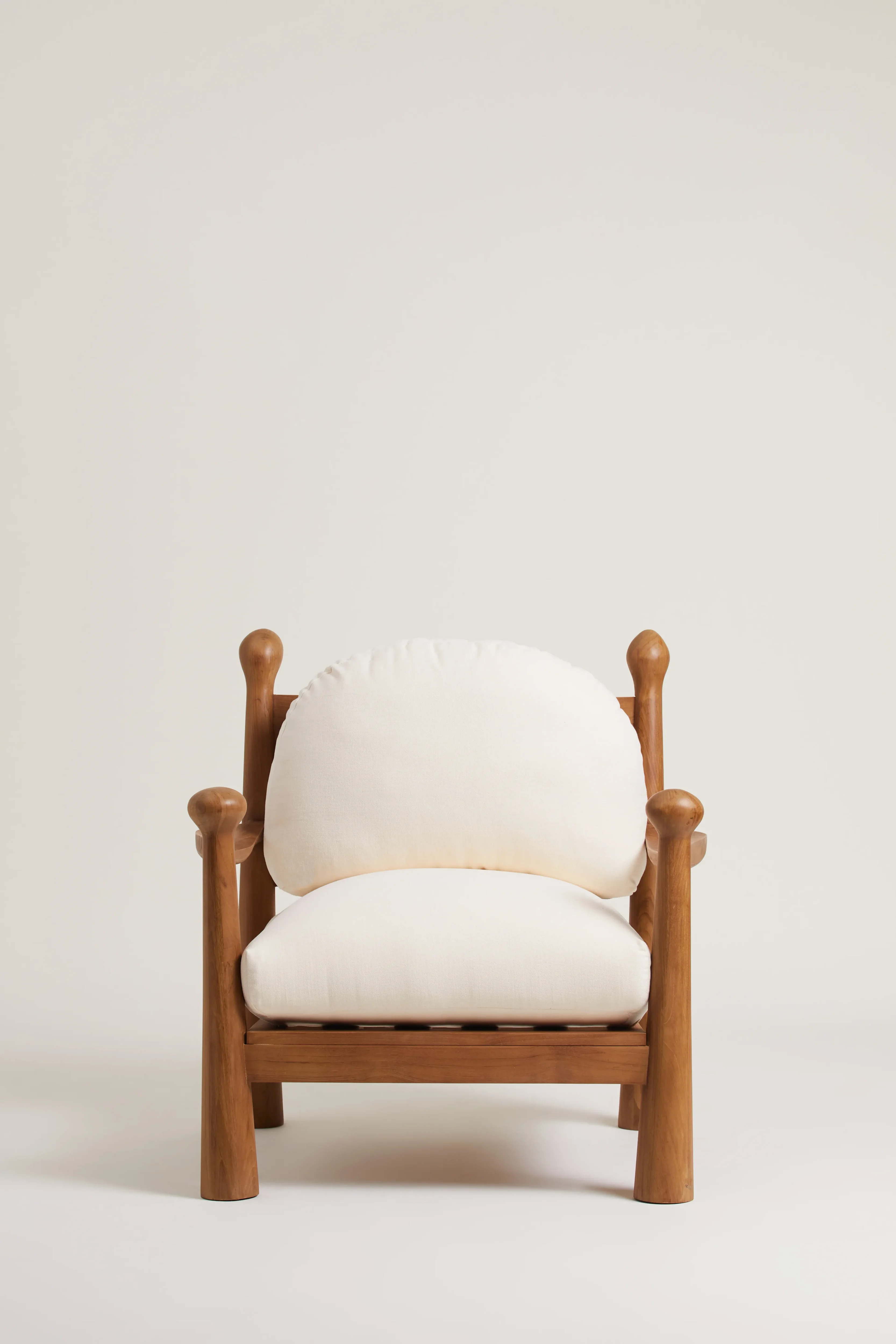
Where the Boni is elongated and restrained, the Pitufi Lounge from the same studio plays with asymmetry — hand-carved from teak wood and detailed with intricate rope work, its curves are deliberately irregular, each chair carrying the marks of the carver’s hand in a way that makes the piece unrepeatable in the truest sense. The seat height of 40cm and generous width make it a deeply comfortable outdoor lounge chair; the included cushion in Casamance fabric adds a considered upholstery layer without softening the sculptural logic of the frame. Now also available in oakwood for interior-facing placements. Notably, the Pitufi is designed explicitly for outdoor durability — teak and rope together weathering gracefully over seasons rather than degrading.
By Heaps and Woods
€4,375 incl. tax
Aluminium Lounge Chair by case studios
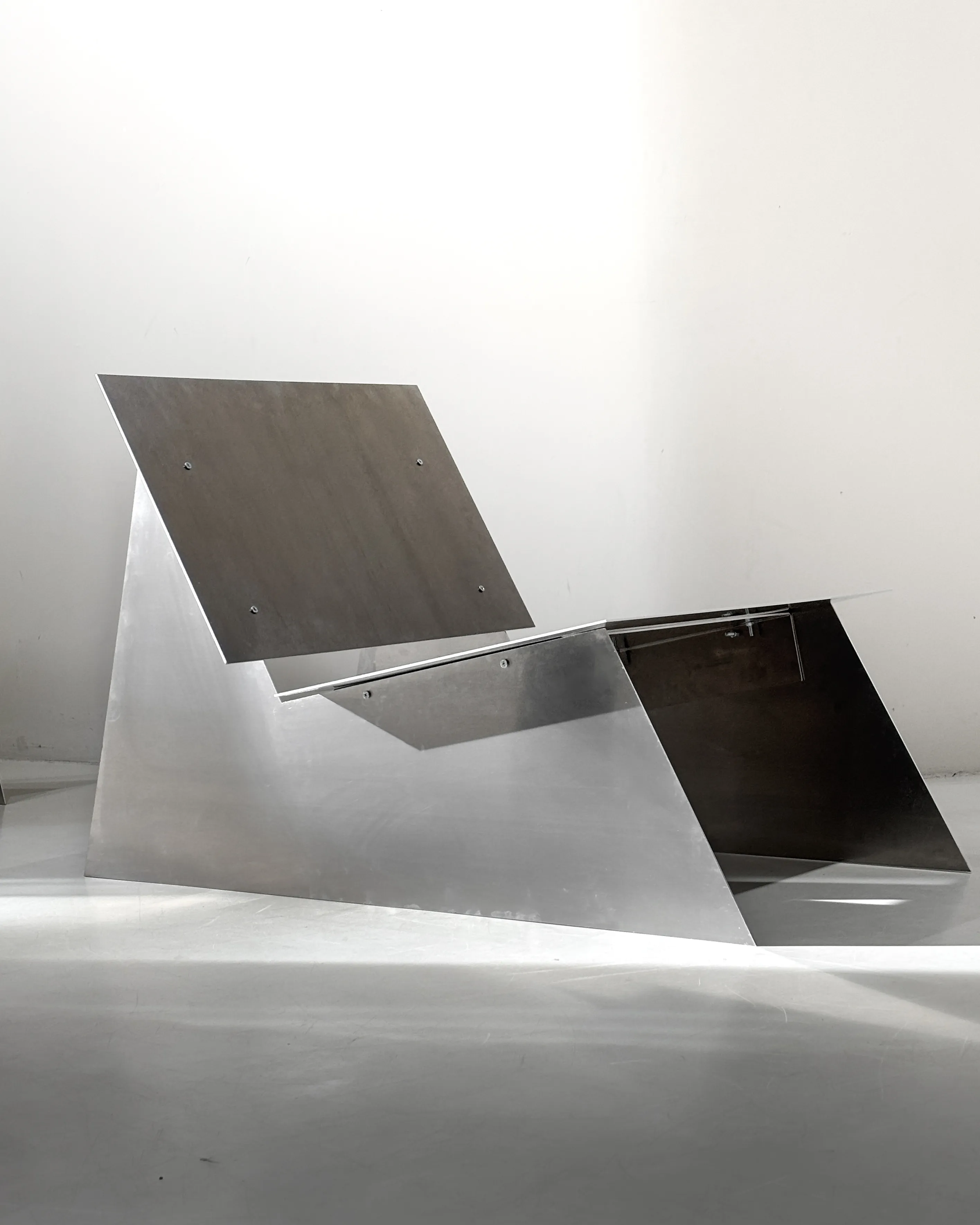
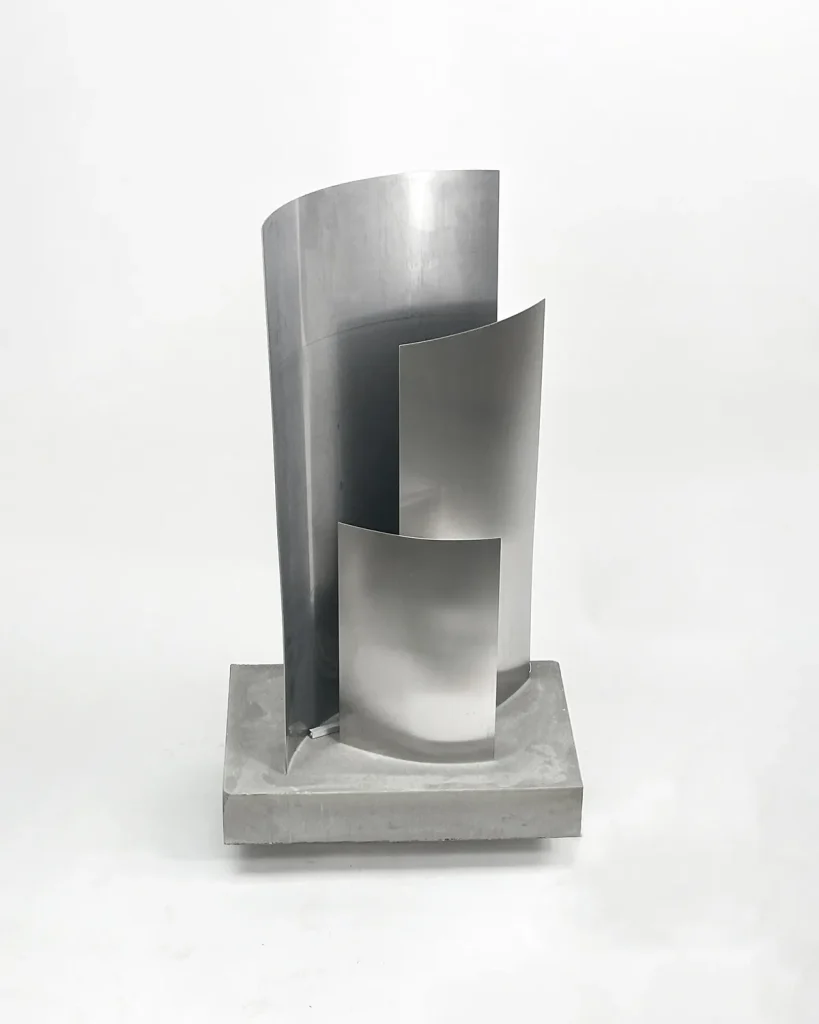
Cast and assembled in Germany from 4mm aluminium parts, this lounge chair by case studios is the rare piece that requires no weatherproofing beyond itself. The material is the logic: aluminium neither rusts nor warps, and its surface holds a particular quality of light — somewhere between matte and reflective, shifting through the day. Founded by interdisciplinary designers with backgrounds spanning visual culture and craft, case studios treats metal as subject matter rather than mere structure. Consequently, this chair reads as an argument about what outdoor seating should be — sculptural, resolved, and made without compromise for the elements. It ships fully assembled and carries five units in stock.
By case studios
€1,571 incl. tax
Chaise Sossego by am.o atelier
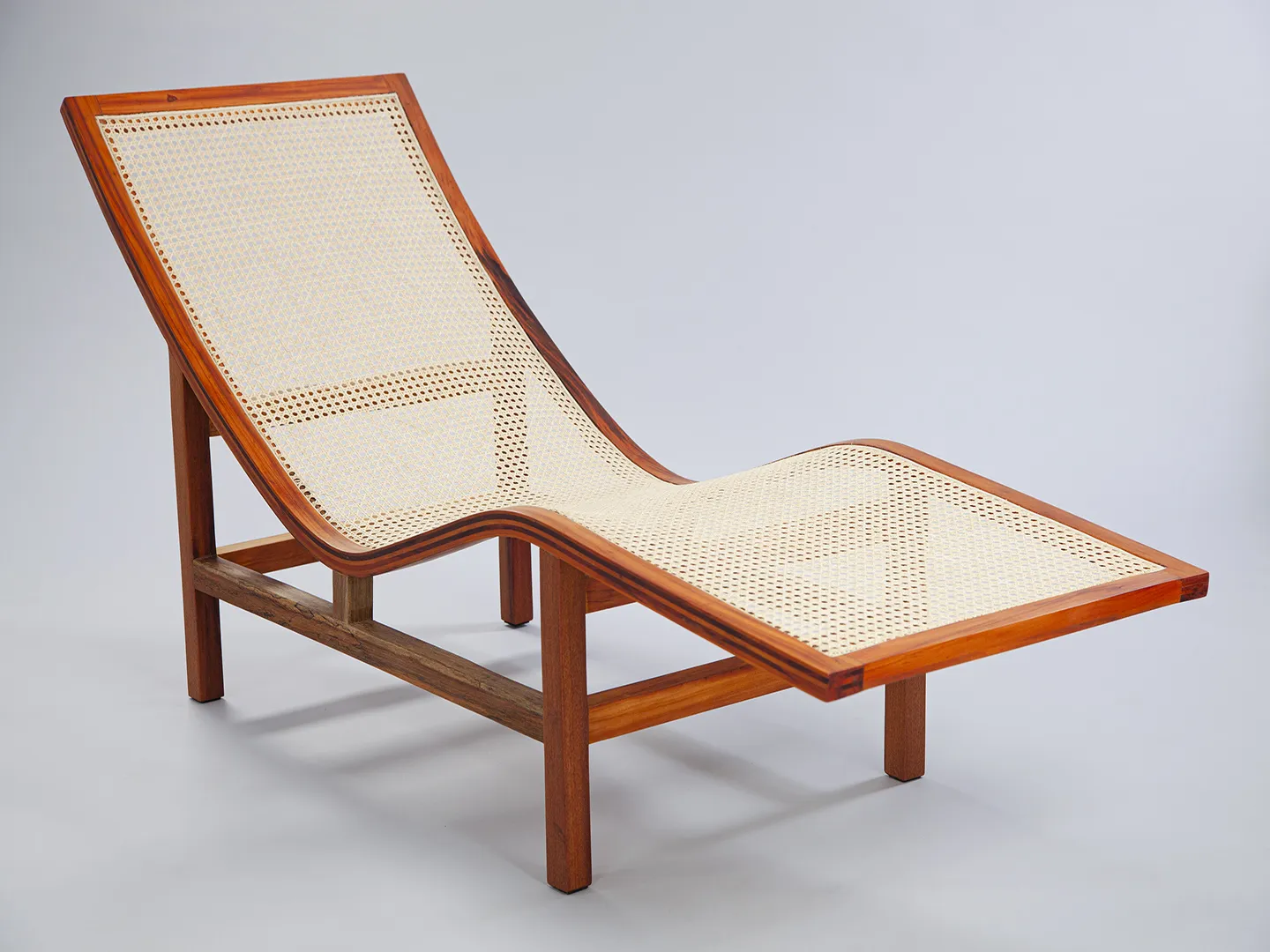
The Chaise Sossego by Brazilian studio am.o atelier is built entirely from solid wood and natural cane, its fluid organic silhouette shaped through artisanal steam-bending — a process that coaxes timber into ergonomic curves without screws or metal. Available in seven Brazilian hardwood species including Freijó, Imbuia, and Purple Heart, the piece changes character entirely depending on which wood is chosen. Moreover, the Sossego is designed for indoor/outdoor use — the covered veranda, the shaded garden terrace, the transitional space where outside meets in. It carries the grain of a chaise lounge in the most literal sense: a seat that holds the body while the material tells its own story.
By am.o atelier
€2,956 incl. tax
Chainlink Outdoor Chair by BY JAMPS
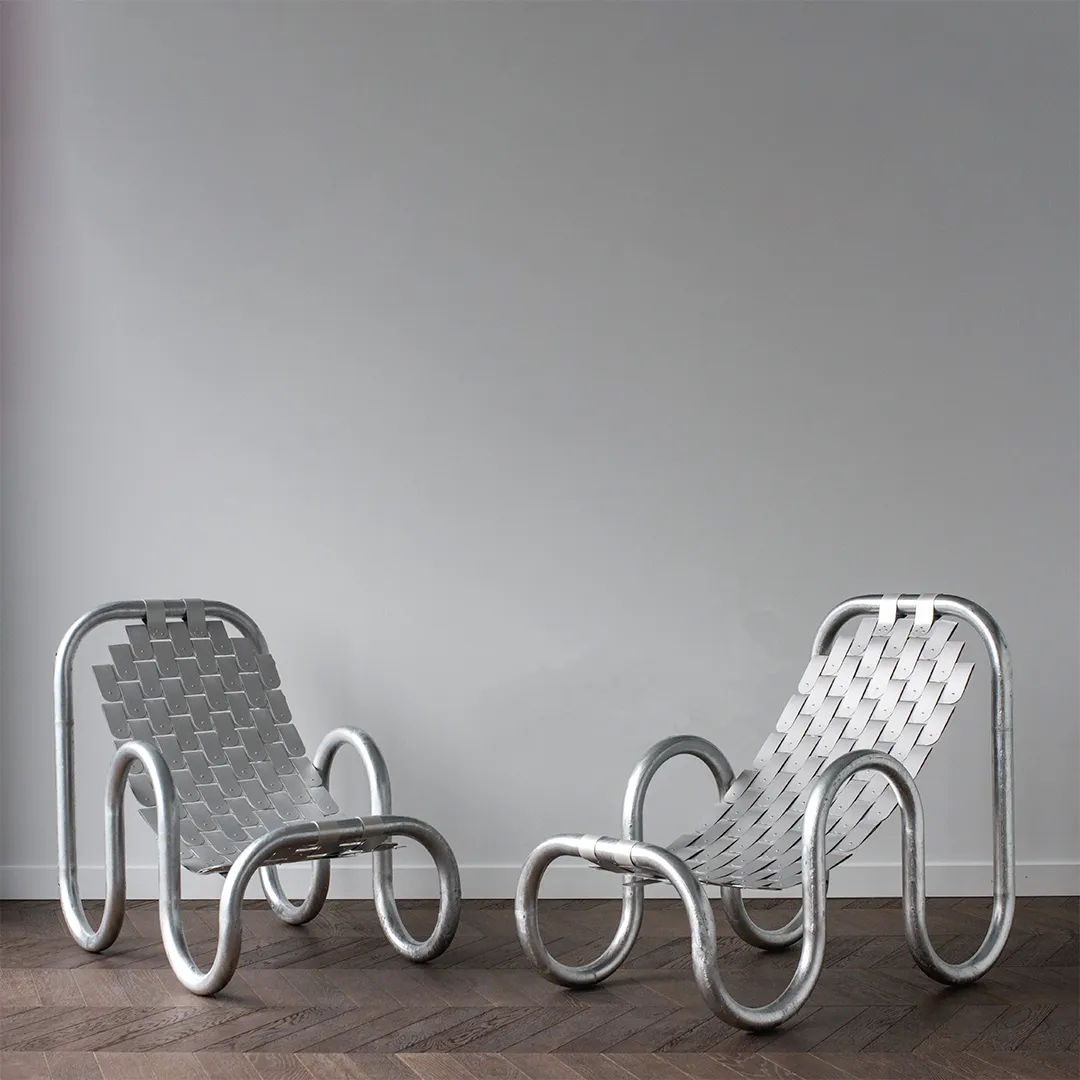
London studio BY JAMPS — Martha McGuinn and Tom Pearson, working from a Greenwich workshop — constructs the Chainlink Chair from anodized aluminium and galvanized steel, each joint reinforced with rivets. The result is an outdoor armchair with industrial resilience and a silhouette that reads, unmistakably, as sculptural. Notably, the studio works exclusively with recycled and scrap metals, so the durability here carries a material ethic behind it, not just a specification. Designed for patios, gardens, and urban outdoor spaces, the Chainlink Chair handles hard weather and holds its form against it — a Neo Industrial piece that earns its garden placement.
By BY JAMPS
€1,250 incl. tax
Recycled Plastic Armchair (RP AV1) by Willem A. Stibolt
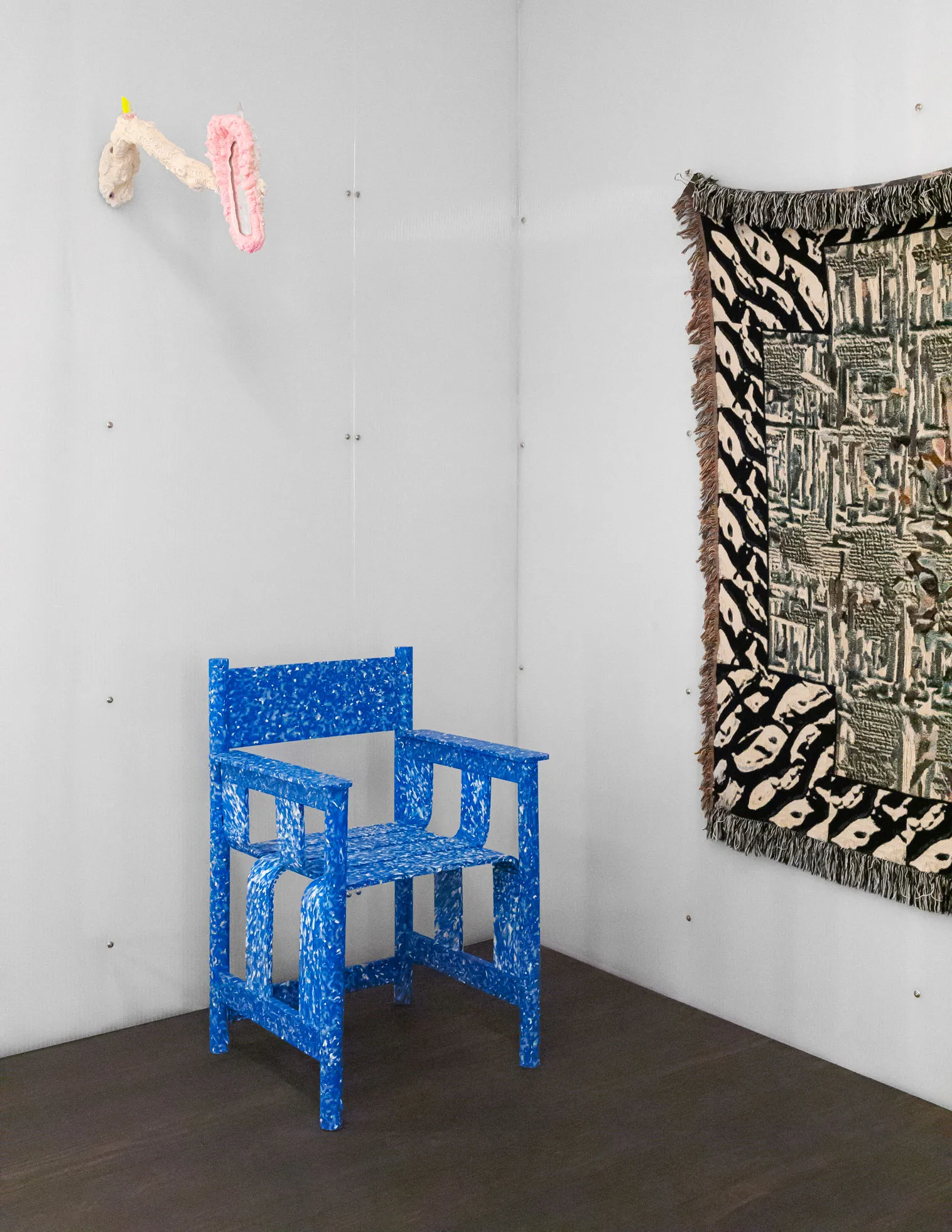
Danish designer Willem A. Stibolt built the RP AV1 to make a case for recycled plastic as a material worthy of classical furniture references — form derived from tradition, fabrication derived from waste streams. The result is an outdoor armchair that resists easy categorization: its silhouette gestures toward historical chair forms while its material logic is entirely of the present moment. By contrast to most outdoor seating that simply tolerates the weather, the RP AV1 is made for it — designed to sit in a garden or patio without cover, without decline, and without apology. A Scandinavian modern piece that treats sustainability as a design language.
By Willem A. Stibolt
€4,350 incl. tax
S·3D Recycled Plastic Chair by Goslo Studio
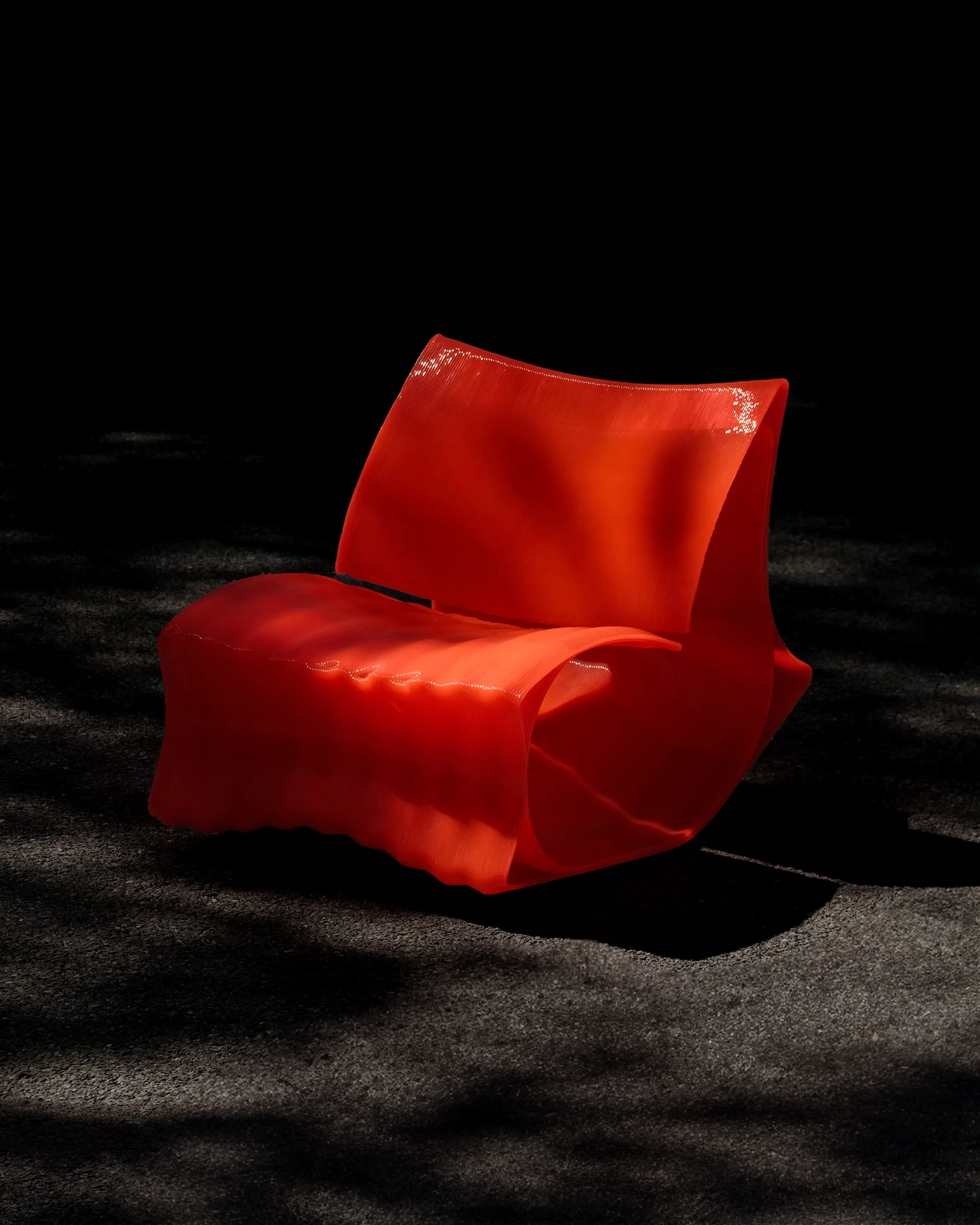
The S·3D by Goslo Studio arrives via 3D printing — fabricated from recycled PETG, the same polymer found in beverage bottles, adapted through digital manufacturing for furniture. Designer Alejandro Gómez Slok built the sinuous, capitonné-inspired surface to encourage movement, the geometry shifting as the body shifts within it. As a result, the piece is simultaneously an outdoor lounge chair, a sustainability statement, and a demonstration of what additive manufacturing can look like when taken seriously as craft. Made to order, customizable by color, rated for outdoor use — it is as close as a patio chair gets to a collectible design object. Particularly suited to contemporary and experimental outdoor schemes.
By Goslo Studio
€2,800 incl. tax
How to choose outdoor lounge chairs
Choosing an outdoor lounge chair involves two intertwined decisions: what the setting demands of the material, and what the material does to the setting. Most buyers address only the first question. The better approach addresses both simultaneously.
Match the material to the exposure
Full-sun, rain-exposed positions demand metals — aluminium and galvanized steel in particular — or weather-engineered plastics and composites. Aluminium neither rusts nor corrodes; it ages with a surface patina that deepens rather than degrades. Teak — as used in the Boni and Pitufi — is the hardwood exception: its natural oil content makes it one of the few woods that handles direct outdoor exposure without annual treatment. Recycled PETG and bioplastics, as used in the S·3D, are UV-stable and dimensionally consistent across temperature ranges. Covered terraces and shaded verandas open up a wider material range: denser hardwoods like Freijó or Imbuia resist moisture when protected from direct splash, and natural cane — as in the Chaise Sossego — performs well in sheltered conditions. Moreover, pool lounge chairs specifically need surfaces that tolerate chlorinated water and constant humidity cycling.
Consider the sightline, not just the seat
An outdoor lounge chair is visible from inside the house as often as it’s occupied from outside. The pieces that earn their garden placement are those that read well from distance — a clear silhouette, a material that catches and holds light, a form that works as composition within a larger outdoor picture. Pool lounge chairs in particular anchor a terrace scheme from across the water; the Aluminium Lounge Chair’s reflective planes and the Lapis Chair’s mineral surface both perform differently under midday light versus evening shade. Furthermore, scale matters outdoors in ways it doesn’t indoors: the garden absorbs furniture differently than a room, and what reads as large inside reads as right-sized on a generous patio.
Rethink the concept of matching sets
The conventional outdoor lounge chair set — two identical units arranged symmetrically — is a functional default, not a design principle. Mixing a metal outdoor lounge chair with a teak-and-rope piece, or pairing a sculptural recycled plastic armchair with a more restrained wood option, produces the same visual tension that interior designers seek in living room seating arrangements. Indeed, the ADORNO approach to outdoor furniture is the same as its approach to interior spaces: collect by intention rather than by matching, and let dissimilar pieces establish a conversation between them. A considered outdoor space with two or three deliberate pieces reads more resolved than a matched patio set in volume production.
Materials and construction
The material choices that define designer outdoor lounge chairs differ substantially from mass-market outdoor furniture — not only in quality, but in conceptual intent. Each material carries a different logic and demands a different approach to care and placement.
Teak wood and rope
Teak is the benchmark hardwood for outdoor furniture: dense, oily, and dimensionally stable across wet and dry cycles. Its natural silica content resists insects and fungal growth without treatment, and it weathers to a distinguished silver-grey if left unoiled — a natural process that doesn’t affect structural integrity. The Boni and Pitufi Lounge chairs from Heaps and Woods pair hand-carved teak frames with rope detailing — natural or synthetic — that adds woven texture without compromising weather performance. Natural rope softens and darkens over time with outdoor exposure; synthetic rope holds its colour and surface more consistently. Both are appropriate for garden lounge chairs and pool terraces with adequate drainage.
Aluminium and steel
Aluminium is the most structurally honest outdoor material: it requires no coating, no paint, and no periodic treatment. Its natural oxide layer forms immediately on exposure to air and prevents further corrosion. Consequently, aluminium outdoor chairs — including the 4mm case studios lounge chair and the anodized-aluminium Chainlink — maintain their dimensional stability across temperature extremes without swelling, shrinking, or warping. Galvanized steel, used alongside aluminium in the Chainlink Chair, adds tensile strength where the load is highest. Both metals are fully recyclable at end of life — the lowest long-term environmental cost among outdoor chair materials. Furthermore, modern outdoor armchairs in aluminium are typically lighter than they appear, making them easy to reposition as sun and shade shift through the day.
Solid wood and natural cane
Dense tropical hardwoods — Imbuia, Freijó, Purple Heart, and Itaúba — resist moisture through natural oil content rather than surface treatment. Their grain absorbs and releases humidity slowly, which prevents the cracking that affects less dense softwoods. Moreover, steam-bending, as applied in the Chaise Sossego, makes solid wood into compound curves without lamination or joinery — the resulting form is structurally continuous, stronger along the curve than a flat component would be at the joint. Natural cane is inherently weather-tolerant in covered outdoor conditions: it flexes with humidity rather than resisting it. In full-sun, rain-exposed positions, these woods and cane benefit from annual oiling and dry storage during hard weather months.
Recycled and bio-based plastics
Recycled PETG — the polymer in the S·3D — is fully UV-stable, chemically resistant to rain and poolside chemicals, and dimensionally consistent across the temperature range found in temperate and Mediterranean outdoor environments. Its surface is non-porous and requires only periodic wiping. The RP AV1 by Willem Stibolt is fabricated from post-consumer waste streams, giving the material a closed-loop logic that teak or aluminium cannot match on those terms. Furthermore, 3D-printed plastics allow zero-waste production — material is deposited rather than cut, so no offcuts result. For patio lounge chairs that can genuinely be left out year-round, recycled plastic is the most considered option.
Placing outdoor lounge chairs: pool, patio, garden, deck
The placement of an outdoor lounge chair determines its functional range as much as its material specifications. Different outdoor positions create different demands — and different visual opportunities.
Pool lounge chairs and poolside placement
Pool lounge chairs are exposed to a specific set of conditions: reflected UV from water surfaces, poolside chemicals in splash zones, and constant humidity cycling between wet and dry. Aluminium and galvanized steel handle this environment reliably. Accordingly, the Aluminium Lounge Chair and the Chainlink Chair are well-suited to poolside positions — their surfaces neither corrode from chlorinated water exposure nor degrade under prolonged UV reflection. Recycled plastic chairs perform equally well. Teak pieces like the Boni and Pitufi are excellent at the shaded end of a pool terrace where drainage is good; the natural rope versions should be kept away from direct chlorinated splash, while synthetic rope handles it better. Importantly, pool lounge chairs are seen as much as sat in: the visual weight of a designer outdoor chair against water and light is itself a design decision.
Patio and terrace lounge chairs
Covered and partially covered patio environments offer the widest material range: the degree of shelter determines what works. A deep-covered patio with a west-facing opening receives afternoon light without rain exposure, making it suitable for the full range of materials in this selection — including the solid wood Chaise Sossego. Open-sky terrace positions revert to full-sun, rain-exposed logic: teak, aluminium, steel, and weather-engineered plastics. Notably, a patio that bridges interior and exterior — French doors opening onto a stone terrace — rewards patio lounge chairs that read well from inside the house. The Lapis Chair, the Pitufi, and the Chainlink Chair all carry enough formal presence to hold the view from two rooms away.
Garden and deck positions
Garden placement is the most demanding in terms of material durability — chairs placed directly on lawn or gravel are exposed to ground moisture from below as well as weather from above. Teak and aluminium both handle this condition; protective non-corrosive feet prevent grass staining and improve stability on uneven ground. A wooden deck creates a more controlled surface for outdoor lounge chairs, with less ground moisture transfer and better drainage. The RP AV1 Recycled Plastic Armchair — inherently moisture-indifferent — is an excellent garden-placement option, as is any aluminium or galvanized steel piece. The S·3D’s 3D-printed structure is lighter than its visual weight suggests, making it straightforward to move between positions as sun and shadow shift.
Care and maintenance for outdoor lounge chairs
Designer outdoor lounge chairs are built for longevity. That longevity is a function of material quality and, in most cases, simple periodic attention rather than intensive maintenance.
Caring for teak and rope outdoor chairs
Teak requires less maintenance than almost any other hardwood used outdoors. Left untreated, it weathers from honey-gold to silver-grey over one to two seasons — a natural process that doesn’t affect structural integrity. To preserve the original colour, apply teak oil annually in dry conditions, allowing it to penetrate before wiping the excess. Natural rope seats and backs should be rinsed with fresh water after prolonged exposure to rain or sea air, and allowed to dry fully in a well-ventilated position before storage. Synthetic rope requires only wiping with a damp cloth. Both the Boni and Pitufi benefit from a breathable cover during extended periods of non-use in winter.
Cleaning aluminium and metal outdoor chairs
Aluminium and anodized aluminium surfaces clean with warm water and a mild soap solution on a non-abrasive cloth. Hard water deposits — common near pools — respond to a diluted white vinegar wipe followed by a fresh water rinse. Avoid wire brushes or abrasive pads, which scratch the anodized surface without improving it. Galvanized steel rivets — as on the Chainlink — are maintenance-free: the zinc layer sacrificially protects the base steel underneath. Meanwhile, inspect any powder-coated steel finish annually for chips that could expose bare metal to moisture, and touch up with appropriate paint to prevent rust ingress at those points.
Caring for solid wood, cane, and plastic outdoor pieces
Solid hardwood outdoor furniture beyond teak benefits from an annual application of food-grade mineral oil, applied in dry conditions and left to penetrate overnight. Natural cane should be cleaned with a slightly damp cloth and allowed to dry fully before storage. Prolonged standing water on wood surfaces accelerates surface checking; after rain, wipe and allow to drain. Recycled plastic and 3D-printed PETG surfaces require the least maintenance of any material in this selection — clean with soap and water, avoid solvent-based cleaners. The RP AV1 and S·3D can be left out year-round in temperate climates without deterioration, which is part of their design proposition: furniture that removes the seasonal anxiety of outdoor seating entirely.
Frequently asked questions
What is the best material for outdoor lounge chairs?
Teak and aluminium are the two most reliably weather-resistant materials for outdoor lounge chairs. Teak handles direct outdoor exposure through natural oil content; aluminium through its self-sealing oxide layer. Both require minimal maintenance and age with character rather than failure. Recycled and bio-based plastics are equally weather-independent and carry an additional sustainability argument. Solid tropical hardwoods beyond teak — Freijó, Imbuia — are excellent in covered or sheltered positions. The best material is ultimately determined by the specific outdoor position, the degree of exposure, and the visual character the space demands.
Are outdoor lounge chairs sold as sets of 2?
Most of the designer outdoor lounge chairs on ADORNO are sold individually, allowing for deliberate pairing rather than default matching. This reflects the curatorial approach the platform takes to outdoor seating: two different pieces placed in conversation produce a more considered result than two identical units arranged symmetrically. That said, some pieces — including the Chainlink Chair — are designed to work in multiples, and studios often offer quantity discussions via direct inquiry through the piece page.
What makes an outdoor lounge chair weatherproof?
Weatherproofing in outdoor lounge chairs comes from material chemistry rather than surface coating alone. Teak’s natural silica and oil content resists moisture, insects, and fungal growth without treatment. Aluminium forms a self-sealing oxide layer on exposure to air. Anodized aluminium adds an electrochemically thickened surface that also resists abrasion. Galvanized steel is protected by a sacrificial zinc layer. Recycled PETG and bioplastics are inherently non-porous and UV-stable. All materials age outdoors — the best outdoor chairs age with character rather than failure.
Can outdoor lounge chairs also be used indoors?
Several pieces in this selection move seamlessly between indoor and outdoor contexts — the Chaise Sossego, the Aluminium Lounge Chair, the Pitufi (available in oakwood for interior settings), the RP AV1, and the S·3D are all described by their makers as indoor/outdoor pieces. An outdoor lounge chair placed in a bright interior — against a window or in a winter garden — often reads better than an explicitly indoor piece placed in the same position. The material character of teak, aluminium, dense tropical wood, or matte recycled plastic brings a different sensory weight to interior settings than upholstered seating.
What types of outdoor lounge chairs exist?
The main types of outdoor lounge chair are the chaise longue (a reclining form that supports the full length of the body, as in the Sossego), the upright lounge or armchair (a deeper, lower-slung chair for relaxed seating, as in the Boni, Pitufi, Aluminium Chair, and Chainlink), and the sculptural accent chair (a piece that prioritizes formal presence as much as function, as in the Lapis and the S·3D). Within these types, modern outdoor lounge chairs span materials from teak and aluminium through rope-woven frames, recycled plastic, and 3D-printed composites. The designer category tends toward the upright lounge and sculptural accent types, where the formal vocabulary is as considered as the weather performance.
How do I style outdoor lounge chairs for a poolside or patio?
Poolside styling benefits from visual restraint — the water and light already carry the setting. One or two considered outdoor lounge chairs placed to capture the best sightline, with a small side table between them, resolves more naturally than a crowded terrace. Mix materials deliberately: aluminium with stone, teak with linen cushions, recycled plastic with concrete. As Dezeen’s coverage of contemporary outdoor furniture has consistently noted, the strongest outdoor spaces treat furniture as sculpture within a landscape composition. On a patio, grouping outdoor lounge chairs around a low coffee table creates a defined living zone that reads legibly from inside the house.