
-
 In stock
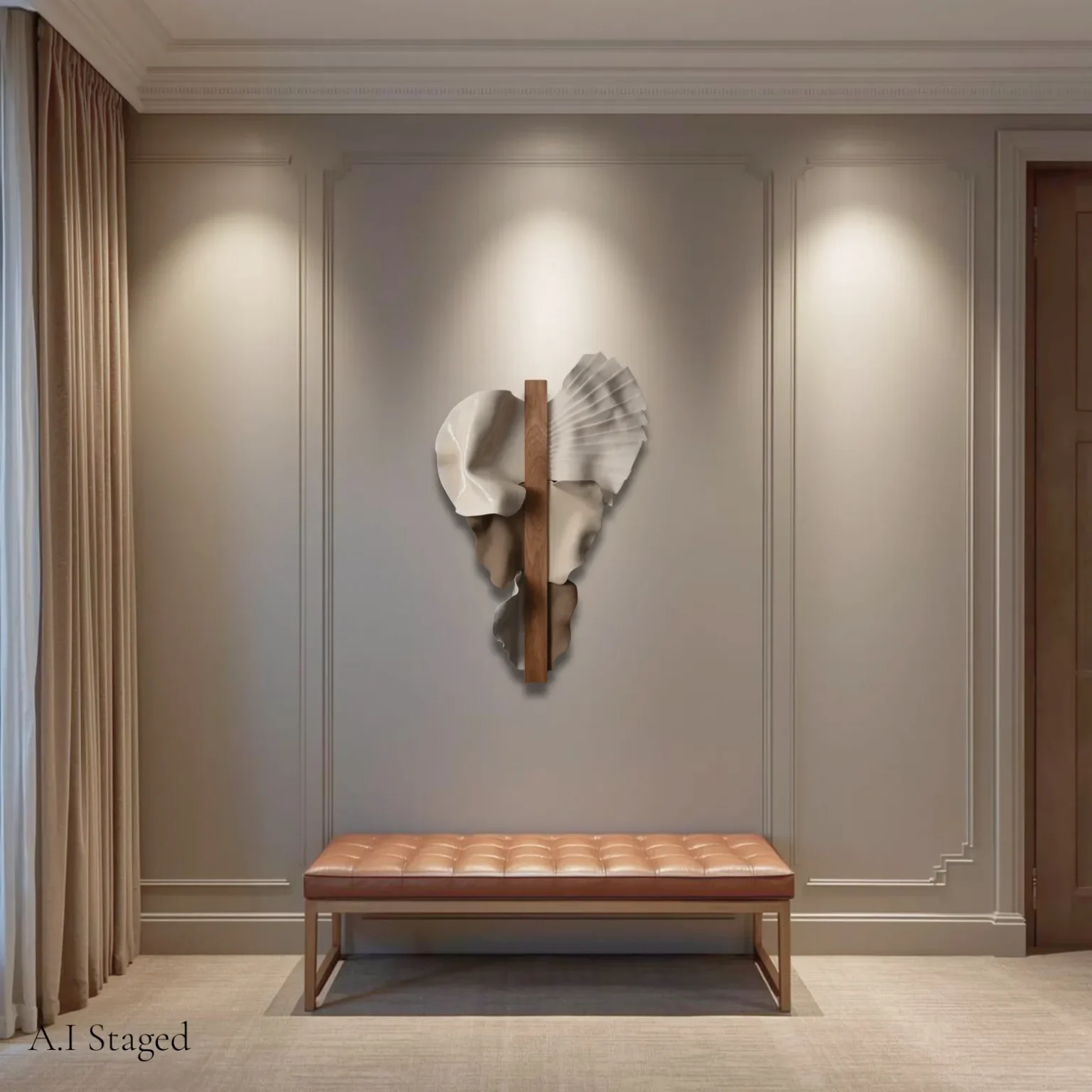
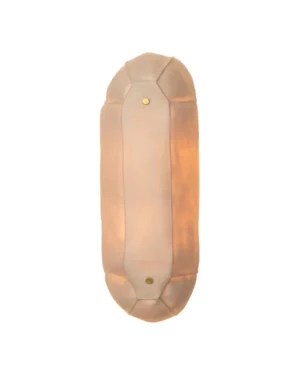
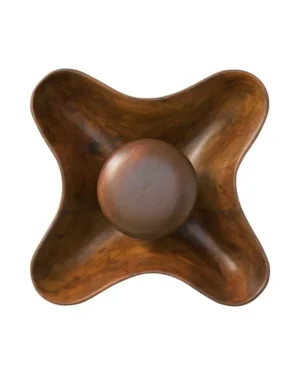
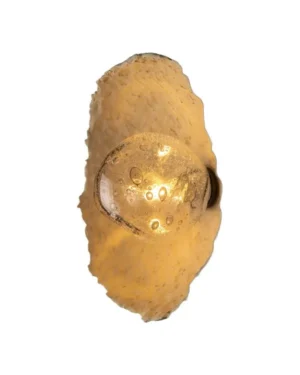
Mujo P Iver Wall Sconce in Walnut Wood and Washi Paper
By Prangé
€948 -
 In stock
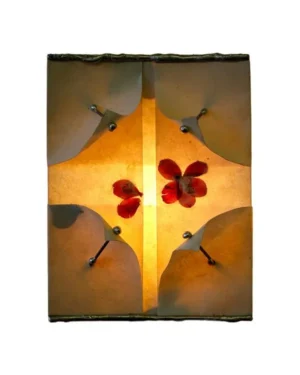
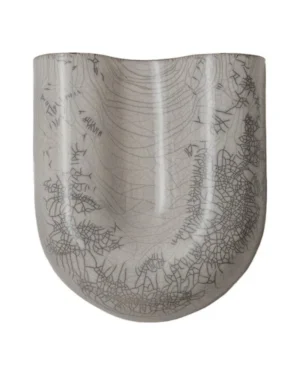
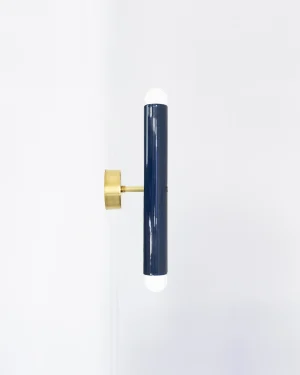
Trn Wall Sconce In Glazed Ceramic
By Pani Jurek STUDIO
€470 -
 In stock
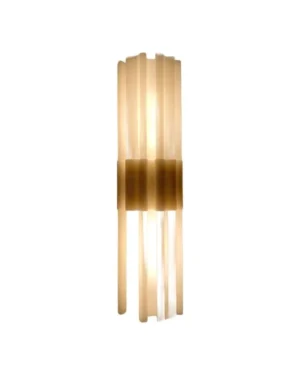
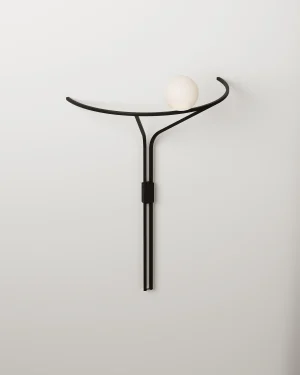
Na Linii Wall Sconce in Steel
By SVITANOK
€1.050 -
 In stock
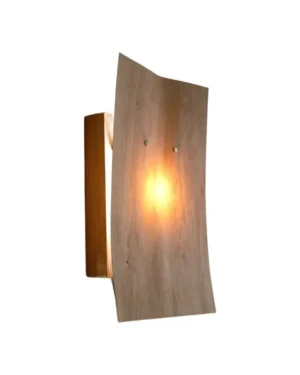
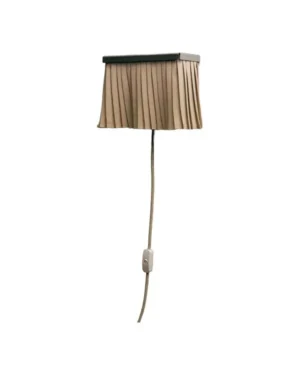
Mujo M Reol Wall Sconce in Walnut Wood and Washi Paper
By Prangé
€1.706 -
 In stock
Mujo M Aray Wall Sconce in Walnut Wood and Washi Paper
By Prangé
€1.706 -
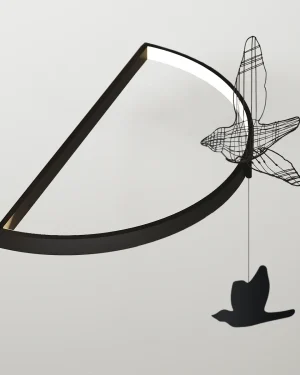 In stock
Flight Shadows Wall Sconce In Steel
By SVITANOK
€1.020 - €1.140 -
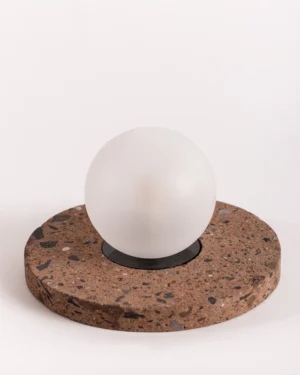
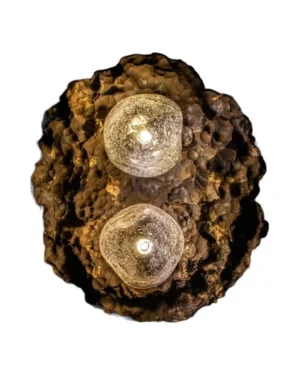
Saturn Floor Lamp in Volcanic Stone
By Daniel Orozco Estudio
€560 -
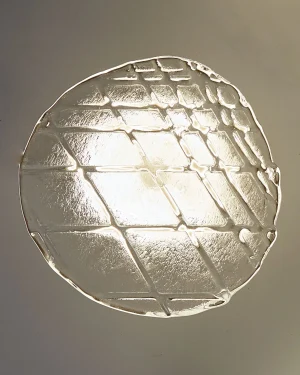
Hot Casted Rhombus Wall Sconce in Brass and Glass
By Pablo Ejarque-González
Price Upon Request -

Hot Casted Lines Wall Sconce in Brass and Glass
By Pablo Ejarque-González
Price Upon Request -

Hot Casted Wall Sconce in Brass and Glass
By Pablo Ejarque-González
Price Upon Request
Mid-century modern wall sconces carry forward the vocabulary of the 1950s and 60s: brass arms that pivot on a visible joint, walnut backplates sanded to show the grain, glass shades blown or pressed into simple geometric forms. Independent studios build them using the same logic that guided the period, honest material, few parts, a mechanism you can see and understand. The result reads as warm and functional rather than ornamental, a fixture that does its job in brass, wood, and glass instead of hiding behind a shade.
What defines the mid-century modern style in a sconce
The period favored exposed structure over concealment. A cone or dome of glass sits on an arm of brass or steel, a disc of walnut backs the fixture against the wall, and the whole piece stays low enough in profile that it reads as an object in its own right, not just a light source. Lines stay clean, joints stay visible, and ornament is left out in favor of proportion and material contrast.
Compared with the softer curves of contemporary wall sconces, mid-century pieces tend toward geometric shades and straight or gently angled arms, a look that has stayed close to the original drawings for seven decades without needing updating.
Materials, finishes, and ways of making
Brass appears most often, left raw to darken over years or lacquered to hold its bright color longer. Walnut shows up in solid backplates and arms, worked by hand and finished to let the grain carry the visual weight. Glass shades are cast or blown into cones, globes, and discs, sometimes left clear, sometimes given a tinted surface that softens the bulb behind it.
Steel and aluminum turn up in slimmer, more industrial readings of the style, while plastic and washi paper diffusers offer a lighter, more translucent alternative within the same design language. Editions vary by studio: some sconces are produced as open editions, others in limited runs or as unique pieces, so the finish and the run size are worth checking piece by piece. For a broader look at how these same materials and forms extend into pendants and table lamps, see mid-century modern lighting and mid-century modern lamps.
How to choose a sconce for scale and placement
- Hang sconces at roughly eye level, so the light falls across faces and surfaces rather than down onto the floor.
- Pair warm brass or walnut with warm-toned bulbs, and cooler steel or aluminum with a crisper color temperature.
- Check whether the arm pivots or stays fixed, since a swing arm lets you redirect light toward a reading chair or mirror.
If brass or steel is the material you keep returning to, the full range of metal wall sconces narrows the search to that finish alone.
Rooms where these sconces work
Because a sconce takes nothing from the floor or a tabletop, it suits rooms where space is already spoken for. A pair flanking a headboard replaces a bedside lamp without crowding a nightstand, a use covered in more depth under bedroom wall sconces. In a corridor or stairwell, a single run of fixtures at regular intervals does the work of an overhead fixture while keeping the ceiling clear, an approach detailed under hallway wall sconces.
Living rooms take mid-century modern wall sconces well beside a sofa or flanking a piece of art, standing in for a floor lamp without the footprint. For the complete range of sconces in every style, the wall sconces catalog covers the category in full, and the mid-century modern style page extends the same material logic into furniture and seating.
Caring for brass, walnut, and glass
Unlacquered brass will darken and spot with handling; a light polish restores shine, or leave it to form an even patina if you prefer that look. Walnut should stay away from direct heat and standing moisture, and an occasional wipe with a dry cloth keeps the grain visible. Glass shades need only dusting, done cool and unplugged, to keep the diffusion even across the bulb.
How do I choose a mid-century modern wall sconce?
Look at the arm and shade first: brass or steel for a cooler tone, walnut backplates for warmth. Match the shade shape, cone, dome, or disc, to the proportions of the wall it will sit on.
How do you care for brass and walnut sconces?
Dust brass with a dry cloth; raw brass will darken over years while lacquered brass holds its color longer. Wipe walnut with a dry or barely damp cloth and keep it out of direct, prolonged sun.
How high should a mid-century modern wall sconce be mounted?
Eye level is the usual guide, roughly 60 to 66 inches from the floor to the center of the fixture, adjusted up or down for ceiling height and the room it lights.
Which rooms suit mid-century modern wall sconces?
Hallways, bedrooms, and living rooms all take well to them, since the light throws across the wall rather than down onto a surface, freeing floor and tabletop space.
Do you offer worldwide shipping and returns?
Shipping is insured and worldwide. A 14-day return policy applies, though made-to-order pieces are excluded.
Is a certificate of authenticity included with each piece?
Yes, every piece comes with a certificate of authenticity, and ADORNO offers a lowest-price guarantee.