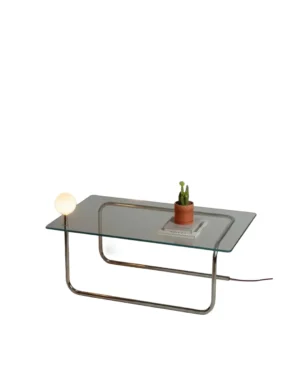

-

Arcy Floor Lamp In Lava Stone
By MERCOEUR EDITION
€11.663 -
Arcy Floor Lamp In Lava Stone
By MERCOEUR EDITION
€11.663 -

Aurora Floor Lamp
By PROSA
€1.800 -
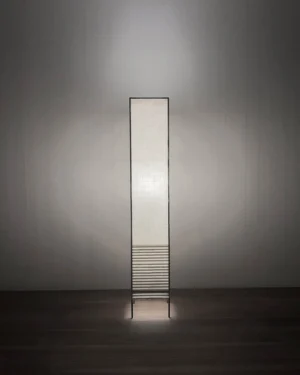
Biiit 003 Floor Lamp in Paper and Brass
By manodesignstudio.com
€1.900 -
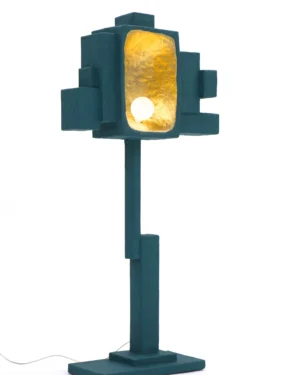 In stock
Box-1 Floor Lamp in Resin, Cardboard And Natural Fibers
By Studio Josha
€4.500 -
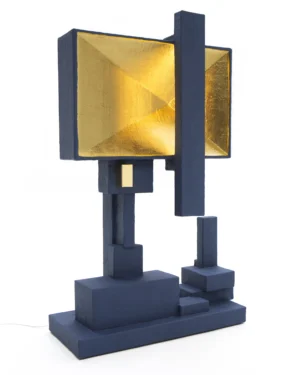 In stock
Box-2 Floor Lamp In Blue Cardboard
By Studio Josha
€8.995 -

Bright Side Table
By Ziroru Studio
€1.485 This product has multiple variants. The options may be chosen on the product page -

Citiez 0.1
By Niels Stoeltie
€3.050 - €3.350 This product has multiple variants. The options may be chosen on the product page -

Exélixi – Floor Lamp
By Julie Mallet Studio
€1.958 -

Glow Coffee Table
By Ziroru Studio
€2.320 -

Glow Side Table
By Ziroru Studio
€1.275 This product has multiple variants. The options may be chosen on the product page -
 In stock
Gotham Floor Lamp In Resin And Stainless Steel
By Jürgen Baumann
€3.200 -
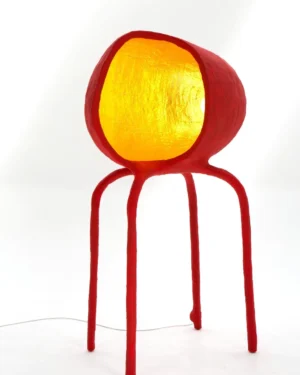 In stock
Ic-12 Floor Lamp In Resin, Foam And Natural Fibers
By Studio Josha
€8.500 -
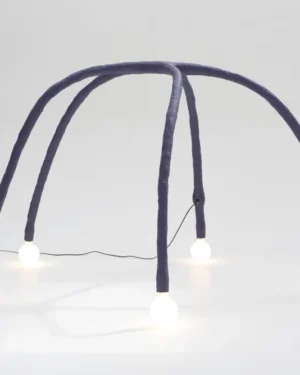 In stock
Ic-13 Floor Lamp In Resin, Foam And Natural Fibers
By Studio Josha
€9.900 -
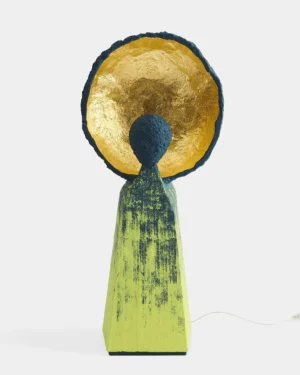 In stock
Ic-15 Floor Lamp In Green Wool
By Studio Josha
€6.250 -
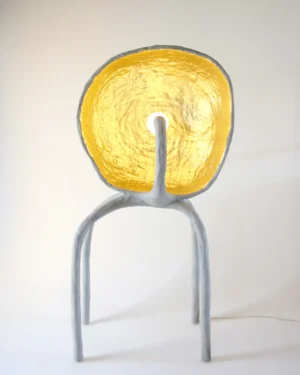 In stock
Ic-17 Floor Lamp in Resin, Foam And Natural Fibers
By Studio Josha
€10.500 -
 In stock
Ic-6 Floor Lamp In Resin, Foam And Natural Fibers
By Studio Josha
€9.500 -
 In stock
Manon Standing Lamp
By Heaps & Woods
€2.125 - €2.375 This product has multiple variants. The options may be chosen on the product page -
 In stock
Petita Floor Lamp in Rattan
By Heaps & Woods
€375 - €1.975 This product has multiple variants. The options may be chosen on the product page -
 In stock
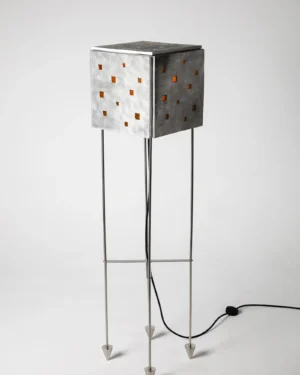
Prisma Massiva Floor Lamp in Cast Aluminum, Resin And Steel
By DONÓ Design
€3.780 -
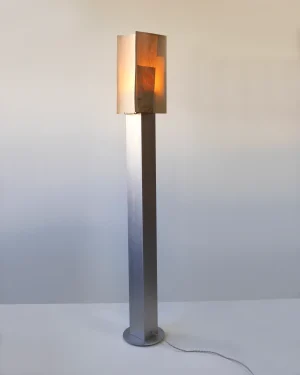
Soft Ply Floor Lamp in Wood and Aluminum
By Sheyang Li
€1.364 -
 In stock
Steppe Floor Lamp in Felt and Wood
By Danik Uderbekov
€900 -

Uiara Floor Lamp In Travertine & Wood
By Estudio Leonardo Zanatta
€2.800 - €3.800 This product has multiple variants. The options may be chosen on the product page -
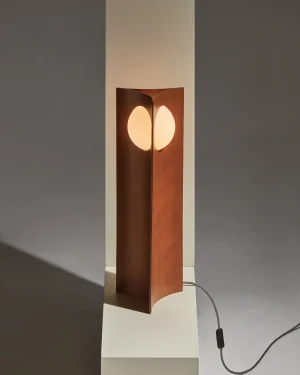
Hecate Floor Lamp in Brown Leather
By Studio Aristotelis Barakos
€610 This product has multiple variants. The options may be chosen on the product page -
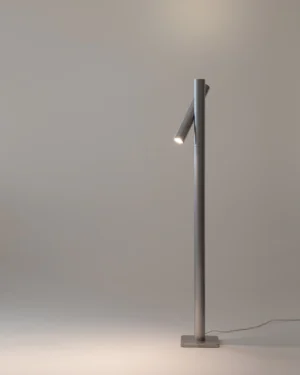
Pivot Floor Lamp
By Stem
€2.750 - €4.150 This product has multiple variants. The options may be chosen on the product page -
 In stock
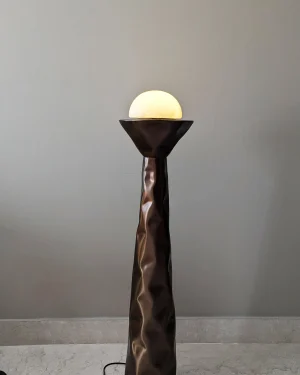
Oio Pedestal – Stainless Steel Floor Lamp
By Nitush and Aroosh
€2.500 -

“plume” Floor Lamp
By Giselle Vanessa Johnson
€2.600 This product has multiple variants. The options may be chosen on the product page -
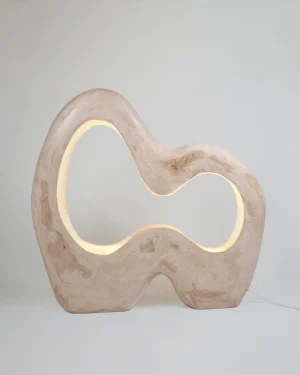
Infinite Floor Lamp in Pigmented Gypsum
By Studio AOAO
€6.000 -

Sky-set – Floor Lamp
By Dace Sūna
€5.800 -

“xoria” Floor Lamp
By Giselle Vanessa Johnson
€1.600 - €2.400 This product has multiple variants. The options may be chosen on the product page -
 In stock
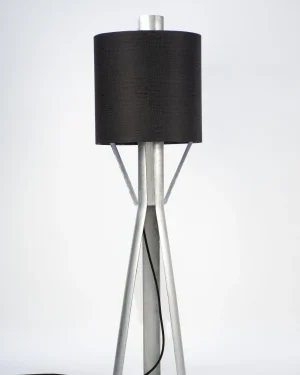
Arinna Floor Light
By MARAU
€15.000 -
 In stock
Big Tube Split
By Emil Keller
€2.500 -

Biggest Floor Lamp
By Ryan Mercer
€3.488 -
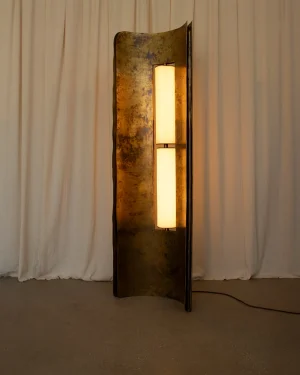
Curio No.3.1 Floor Lamp
By Buket Hoşcan Bazman
Price Upon Request -

Loop Floor Lamp
By noknok
€5.500 This product has multiple variants. The options may be chosen on the product page -
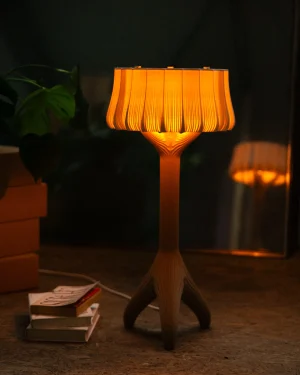 Sold
SoldM 1 – Bio Polymer Modular Standing Lamp
By diploria studio
€450 This product has multiple variants. The options may be chosen on the product page -

Ember Sculptural Floor Lamp
By PletoStudio
€3.200 -
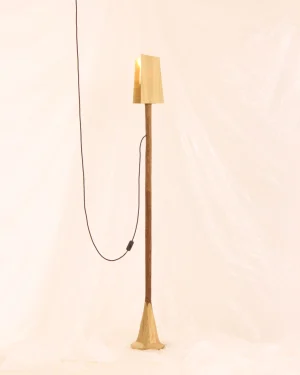 In stock
Envol Floor Lamp – Oak
By Vital Lainé
€1.330 -
 In stock
Floor Lamp
By Joseph Santiago-Dieppa
€9.000 -
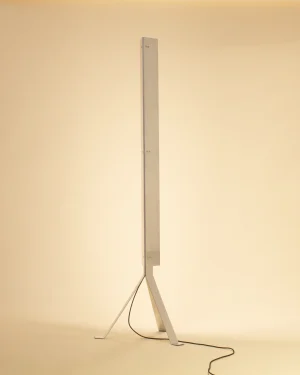
L1 High Floor Lamp in Aluminum
By Luiz Solano
€1.200 -
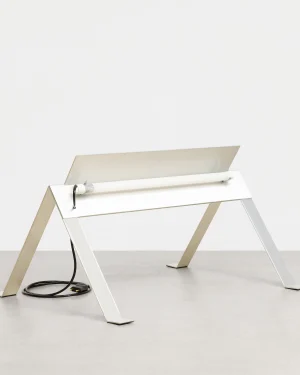
L1 Low Floor Lamp
By Luiz Solano
€900 - €1.200 This product has multiple variants. The options may be chosen on the product page -

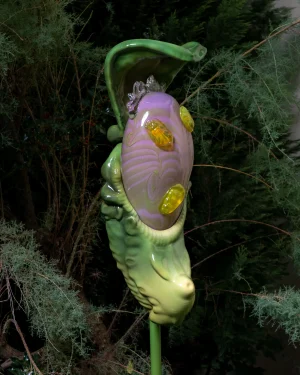
Bella Pupa – Floor Lamp
By PUFF-BUFF
€2.130 -
 In stock
Lapas Paradiso Novo Series
By Anna Jožová
€9.500 -

Lomo Floor Lamp
By Natural Urbano - Sebastián Beltrán
€565 -

Fat Op No. 002 / Four Piece Ceramic Standing Lamp
By Pani Jurek STUDIO
€2.313 -
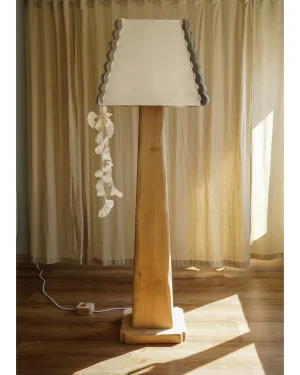
Falbanka Lamp
By Basia Pruszyńska
Price Upon Request
Designer Floor Lamps
A floor lamp occupies a room the way furniture does. It has a footprint, a height and a silhouette you walk around, which makes it the only light you choose the way you would choose a chair. It is also the most forgiving: no wiring, no ceiling box, no fixed position — you decide where it stands and you can change your mind.
Every floor lamp here is made by an independent designer or studio, in brass, steel and aluminum, oak, walnut and other solid woods, hand-thrown ceramic, hand-blown glass, woven rattan and natural fiber, handmade paper, stone and concrete. Because a floor lamp is seen in full from across a room, proportion and structure matter more here than surface detail — a bent brass arm or a turned wooden column is the whole design. Browse the unique and limited-edition pieces for one-off work, or filter for pieces ready to ship if your timeline is short.
The Formats, and What Each Solves
- Arc and arched lamps: a long curved arm that reaches out over a sofa, an armchair or a low table. This is the piece that lights a seating area from the side when there is no ceiling fixture above it — the most useful floor lamp in a rented apartment.
- Torchieres and uplights: light aimed at the ceiling, using the plaster as a reflector. Soft, glare-free and the quickest way to make a dim room feel bigger, particularly in a corner.
- Tripods and columns: a shade carried on three legs or a single turned stem. The classic reading position beside a chair, and the format where material shows best.
- Swing-arm and adjustable lamps: a jointed arm you can redirect, for reading, working or lighting a specific task from standing height.
- Sculptural and statement pieces: lamps that read as objects first, usually lower in output, meant to be seen as much as to illuminate.
- Small and low lamps: short pieces for beside a sofa arm, a bed or a window, where a full-height lamp would dominate.
Height, Placement and Scale
- Overall height: 150–180 cm covers most floor lamps. Torchieres and uplights can go taller, since the light is thrown upward; reading lamps sit lower.
- The seated test: beside a chair or sofa, the bottom of the shade should sit at or just below eye level when you are seated — roughly 100–130 cm from the floor. Higher and you see the bulb; lower and the light pools on your lap.
- Position for reading: slightly behind and to the side of the chair, about 40–50 cm from your shoulder, so light falls on the page and not into your eyes.
- Corners: an uplight or a tall slim lamp in a corner lifts the darkest part of the room and makes the whole space read as larger.
- Behind a sofa: an arc lamp placed behind or beside the seat gives overhead light without a ceiling fixture. Check the arm's reach and the base depth before ordering.
- Beside a chair: a floor lamp and a small side table together make a reading corner that neither does alone.
- Base footprint: a wide or weighted base is what keeps a tall lamp upright. Long arc arms in particular need a heavy counterweight, and product pages list dimensions and weight.
Light, and How It Layers
- Reading and task light: 400–800 lumens directed onto the page.
- Ambient and corner light: 200–500 lumens, or an uplight bouncing off the ceiling for a soft, even wash.
- Colour temperature: 2700 K for living rooms and bedrooms; up to 3000 K where the lamp lights a desk or work surface.
- Dimming: the difference between a lamp that works all evening and one you switch off after an hour. Check lamp, bulb and dimmer compatibility.
- Bulbs: E14 and E27 sockets let you choose warmth and replace bulbs for the life of the piece; integrated LED gives slimmer forms but cannot be re-lamped.
- Cable and plug: pieces ship internationally from designers' studios, so confirm plug type and voltage, and think about where the cable will run before you choose a position.
A floor lamp is rarely the whole answer. Two or three light sources at different heights — a floor lamp, a table lamp, a pair of wall lamps, all dimmable — produce a warmer room than any single fixture, and let you drop the ceiling light entirely in the evening.
Explore the full collectible lighting collection, or tell our curation team the room and the position you need to fill and we will suggest pieces that suit.
What is a floor lamp?
A floor lamp is a freestanding light that rests on the floor, tall enough to light a room or a seating area from above surface level. Unlike a table lamp it needs no furniture to stand on, and unlike a ceiling fixture it needs no installation — which makes it the easiest way to add a permanent light source to a room you cannot rewire.
How tall should a floor lamp be?
Between 150 and 180 cm for most positions. The number matters less than the shade height: seated beside the lamp, the bottom edge of the shade should fall at or just below your eye level, roughly 100–130 cm from the floor, so the bulb stays hidden. Uplights and torchieres can be taller because they throw light upward, away from your eyeline.
Where should a floor lamp go in a living room?
Three positions do most of the work: in a corner, where an uplight lifts the darkest part of the room; beside or slightly behind a chair, for reading; and behind or over the sofa, where an arc lamp substitutes for a ceiling fixture. Avoid placing one directly in a walkway or where its cable crosses a route people take.
What is an arc floor lamp for?
An arc or arched lamp has a long curved arm that extends the light source away from the base, so it can hang over a sofa, a coffee table or a chair without anything mounted overhead. It is the standard solution in rented flats and rooms with no central fixture. Check two things before buying: how far the arm reaches, and how heavy the counterweighted base is.
What is a torchiere, and when should I use one?
A torchiere directs light upward into the ceiling rather than down into the room. The ceiling reflects it back as soft, even, glare-free light, which makes a low or dark room feel considerably larger. It works best against pale matte ceilings; dark or heavily textured surfaces absorb much of the effect.
Which floor lamp is best for reading?
ne with directed light and an adjustable or downward-facing shade — a swing-arm or tripod lamp rather than an uplight. Aim for 400–800 lumens landing on the page, position the lamp slightly behind and to the side of your shoulder, and choose a shade deep or opaque enough that you never see the bulb from your reading position.
Do you have floor lamps with an integrated table or shelf?
Yes — there is a dedicated selection of lamp-and-table pieces, and it is one of the more interesting corners of the catalogue. These are not the shelf-tower lamps sold by furniture chains but single designed objects in which the light and the surface are one thing: illuminated side and coffee tables, lamps whose base doubles as a tabletop, and sculptural pieces that read as furniture with a light source built into them. They are made in ash and plywood, steel, brass, stoneware, marble and natural fiber, and several are held in stock rather than made to order. They earn their place beside a sofa or an armchair where there is only floor space for one object instead of two.
Are the shades replaceable, and can I change them?
It depends entirely on the piece. Where a lamp uses a conventional frame and a standard fitting, a shade can usually be swapped. Many pieces here, though, are designed as a single form — a blown glass diffuser, a paper shade sized to its frame, a ceramic body — where the shade is the lamp and is not intended to be changed. Product pages describe the construction; ask us if you need certainty.
How stable are they, and are they safe with children or pets?
Stability comes from base weight and footprint, both listed on product pages. Tall slim lamps and long arc arms need a substantial counterweight, and a heavy handmade lamp is not a piece you want knocked over. In a home with small children or large dogs, favor a low center of gravity, a wide base, and a position out of traffic routes — and route the cable along a wall rather than across a floor.
Which materials work best for a floor lamp?
Brass, steel and aluminum for slim arms and arcs that need structural strength; solid wood for tripods and columns with visible joinery; ceramic, stone and concrete for weight and a low center of gravity; woven rattan and natural fiber for texture and broad, dappled light; handmade and rice paper for the soft, screen-like glow associated with Japanese lighting. All of them show wear as patina rather than damage.