-
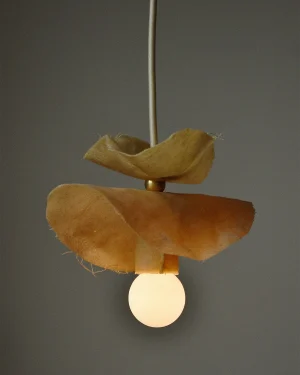
Judie Pendant Lamp in Cotton
By Atelier Alz
€200 -
 In stock
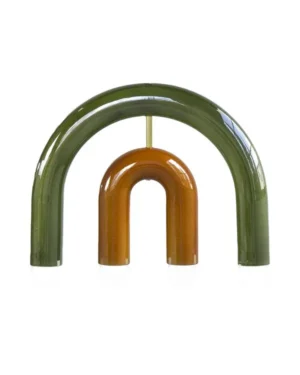
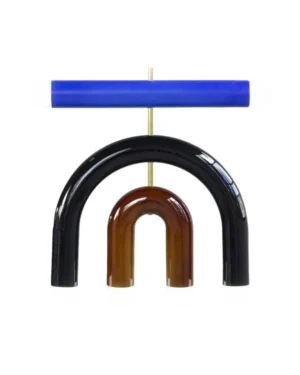
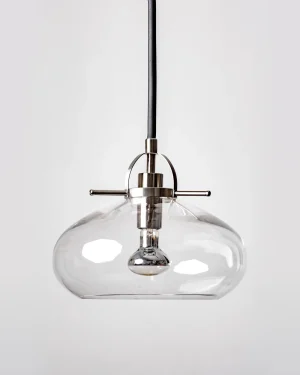
Art Deco Pendant Lamp in Glass and Stainless Steel
By Szostak Atelier
€1.000 -
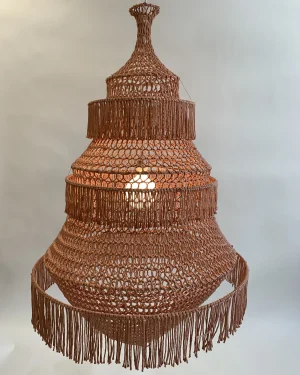
Typha Pendant Lamp in Cotton Rope
By Annie Legault
€1.907 -

Florance I Ceiling Lamp in Brass, Glass and Fabric
By Atelier Alz
€575 -
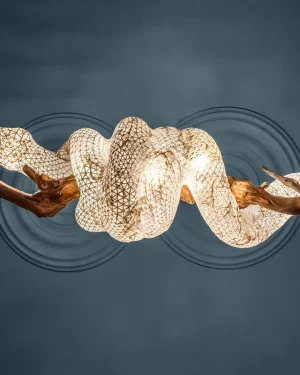
The Staff Of Asclepius Chandelier In Pla And Wool
By Danik Uderbekov
€2.500 -
 In stock
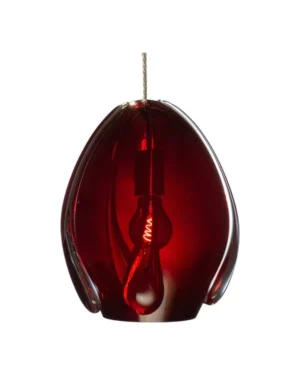
Large Pendant Lamp in Blown Glass and Textiles
By SVITANOK
€375 - €500 -
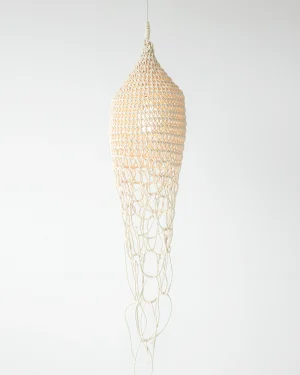
Meduse Pendant Lamp in Cotton
By Annie Legault
€700 -

Echin Pendant Lamp in Cotton and Glass
By PletoStudio
€1.100 -
In stock
Medium Pendant Lamp in Blown Glass and Textiles
By SVITANOK
€300 - €415 -
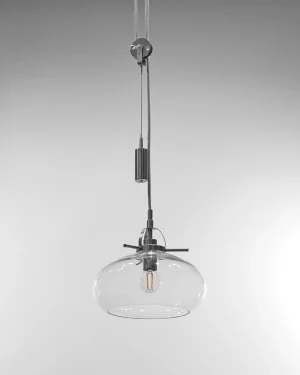
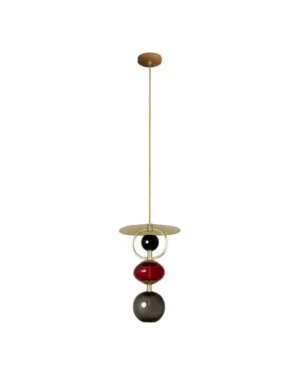
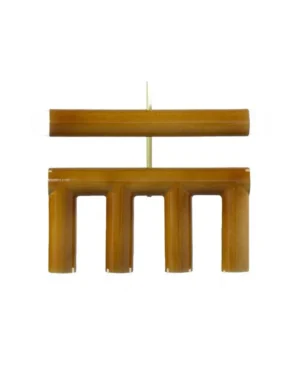
Art Deco Pendant Lamp with Weight in Glass and Steel
By Szostak Atelier
€1.400€1.330 -

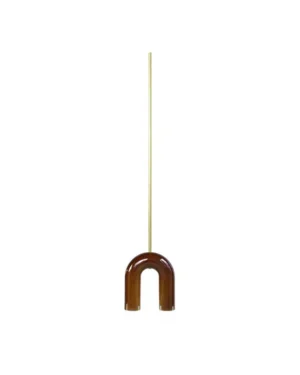
Lomo Pendant Lamp In Ash Wood And Wool
By Natural Urbano - Sebastián Beltrán
€400 -
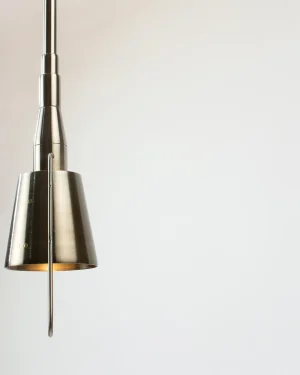
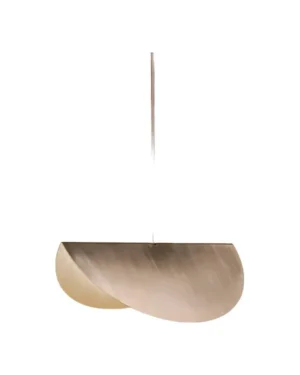
Suspension Pendant Lamp in Stainless Steel
By Szostak Atelier
€1.000 -
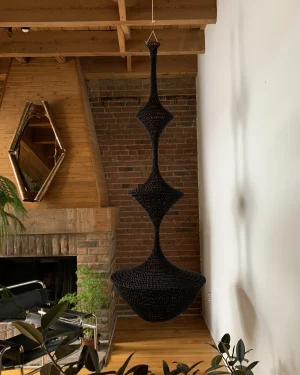
Briza Pendant Lamp in Cotton
By Annie Legault
€2.250 -
 In stock
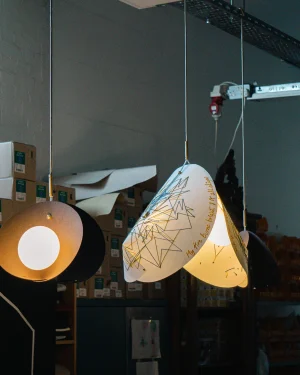
Concha Embroidure Pendant Lamp in Paper and Brass
By MESEME by Riya Panchal
€788 -
 In stock
Ic-4 Pendant Lamp In Resin, Foam And Natural Fibers
By Studio Josha
€8.250 -
Small Pendant Lamp in Blown Glass and Textiles
By SVITANOK
€279 - €345 -

Melica Pendant Lamp in Cotton
By Annie Legault
Price Upon Request -
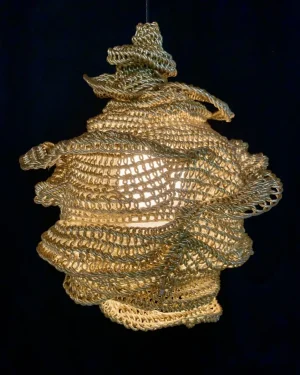
Auræ Pendant Lamp in Glass and Textiles
By Annie Legault
Price Upon Request -
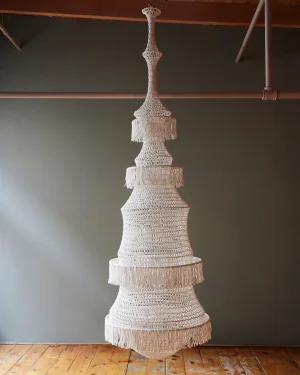
Luzule Pendant Lamp in Cotton Rope
By Annie Legault
Price Upon Request -
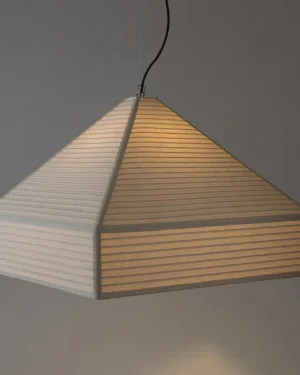
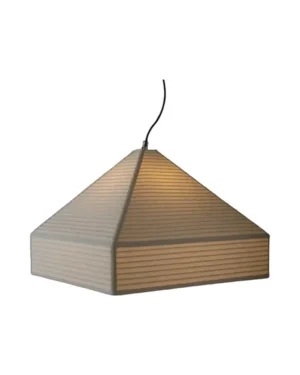
Pyramid Pendant Lamp In Textiles
By NASSI LAMPS
€1.049 - €1.575 -
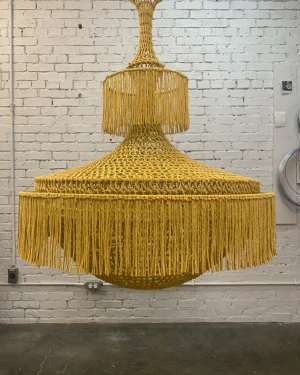
Lola Chandelier in Textiles
By Annie Legault
Price Upon Request
Textile ceiling lamps bring the warmth of cloth and fiber to a part of the room usually left to metal or glass. Woven or knotted from textile, cotton, wool and other natural and synthetic fibers, they are made by studios working in textilework, macramé and hand assembly, sometimes alongside a blown glass diffuser or a steel frame that does the structural work while the fiber does the rest. The result reads soft rather than polished, closer to a textile object than a fixture.
What defines a textile ceiling lamp
The shade or body is built from fiber rather than cast or cut from a hard material. Cotton is wound and knotted over a frame, wool adds a denser surface, synthetic fibers are woven for pieces that need to resist humidity. Where glass appears, it is usually hand-blown and sits inside or below the fiber structure, giving the light a diffused, uneven glow rather than a sharp point source.
Because the shade is porous or layered, light passes through unevenly. Expect pooling and shadow rather than flat, even coverage, which is part of why these pieces suit rooms built around atmosphere rather than task lighting.
Color, finish and style
Multicolor weaves, off-white, gray and natural tones are the most common, following the fiber's own color rather than an applied pigment. Black, terracotta, blue and multicolor versions appear where a studio dyes the yarn or combines several fibers in one piece, and gold or silver hardware sometimes shows at the fitting or frame.
Styles run from boho chic and eclectic pieces built from visibly knotted rope or macramé, to contemporary and minimalist shades where the fiber is pulled tight and smooth. Neo-industrial versions pair a woven shade with exposed steel or stainless steel fittings; sustainable pieces favor biofabrication or undyed natural fiber over synthetic materials. For a tighter, more pared-back shade, the minimalist ceiling lamps group narrows the range further.
Editions and how pieces are made
Textilework by hand means no two knots fall quite the same way, so many of these lamps come as open editions, limited editions or unique pieces rather than identical runs. Hand assembly also means the shade can be heavier or more irregular than a molded equivalent, which is worth checking against the ceiling point and any existing wiring before ordering.
Choosing one for a room
Scale matters more with fiber than with glass or metal, since a woven shade reads larger than its actual diameter once it is lit from inside. In a living or dining space, a textile ceiling lamp set at a low to mid height brings the eye down and works well over a seating group or table; in an entry or bedroom, a smaller, tighter weave avoids overwhelming the space. The living room ceiling lamps group shows how studios scale these shades for shared spaces.
- Rope and macramé shades suit rooms with some height, so the knotting can be seen from below.
- Wool shades read warmer and work well over soft furnishings.
- Woven synthetic fiber holds up better in kitchens or bathrooms where humidity is a factor.
Care and placement
Natural fiber and wool pick up dust in their texture, so a soft brush attachment or occasional vacuum on a low setting keeps the weave clear without flattening it. Keep these lamps away from direct steam or standing moisture, since cotton and wool can hold water and lose shape. For the full range of fiber and woven pieces beyond lighting, the textile and natural fiber material page covers seating, tables and rugs made the same way; for other lit fittings in cloth and fiber, see textile lighting; and the wider ceiling lamps group sets these textile pieces against ceramic, glass, wood and metal alternatives.
How do I choose a textile ceiling lamp?
Start with the light quality you want: dense wool gives soft, contained glow, open rope or macramé lets light pool and cast shadow. Match the tone, off-white and beige read calm, black or terracotta read bolder.
How do you clean and care for a textile ceiling lamp?
Dust regularly with a soft brush or vacuum attachment, and keep it away from steam or damp rooms unless the fiber is synthetic. Spot clean gently, since natural fibers like cotton and wool can shrink or discolor if soaked.
What size textile ceiling lamp do I need?
Larger woven or knotted shades suit open living and dining areas where diffused light is welcome, while smaller tufted or wrapped forms work over a desk or reading corner. The maker can confirm exact dimensions on the piece's page.
Which rooms suit a textile ceiling lamp?
They suit living rooms, bedrooms and dining areas built around atmosphere rather than task lighting, where uneven, pooling light feels right. Kitchens and workspaces needing even, direct light usually call for glass or metal fixtures instead.
Are textile ceiling lamps handmade or one of a kind?
Many are hand assembled through macramé, embroidery or tufting, though not all are unique, some are made in open or limited editions. The maker can confirm the technique and edition on the piece's page.
What are ADORNO's shipping, returns and authenticity policies?
Shipping is insured and worldwide. Returns are accepted within 14 days, excluding made-to-order pieces, and every piece comes with a certificate of authenticity, backed by a lowest-price guarantee.