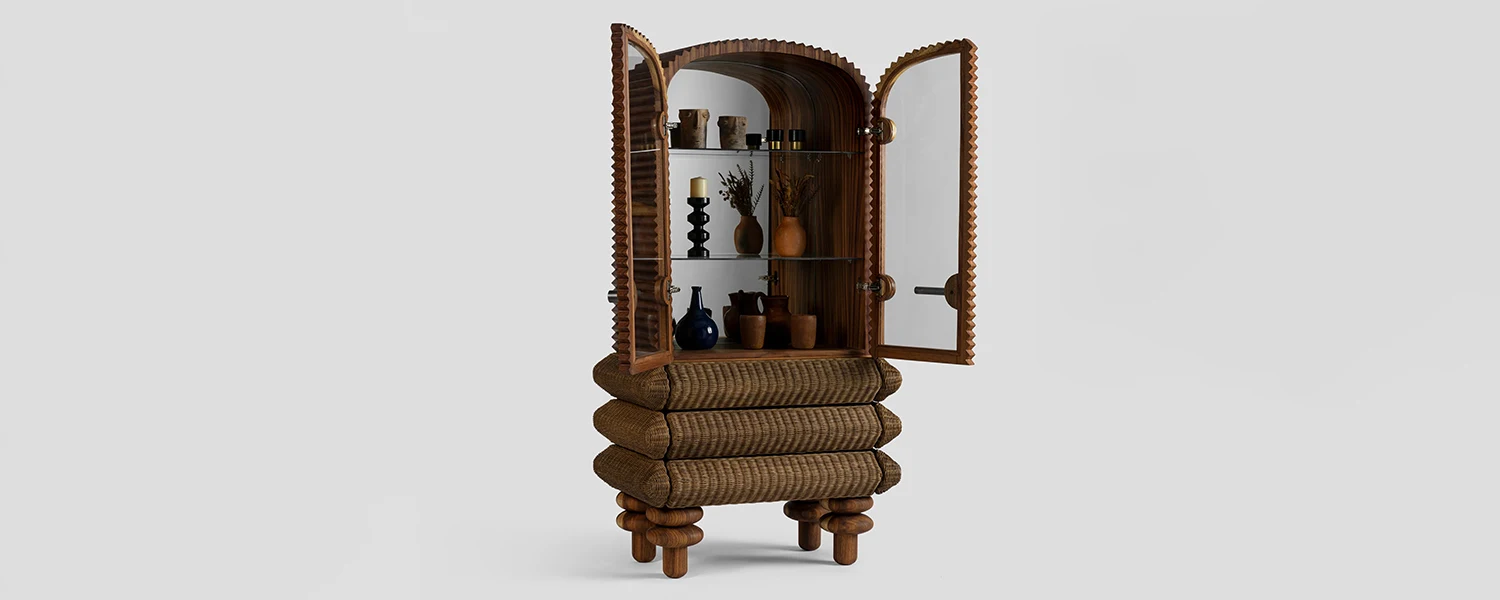
The Return of the Curio Cabinet in Modern Design
Updated on: August 21, 2026
A curio cabinet is a display case built to be looked into rather than merely stored in. Traditionally glass-fronted, it held collections — heirlooms and ceramics, rare books, objects brought back from somewhere. The form has been reimagined considerably since, and this selection reads it broadly: some are cabinets, some shelves, some sculptural storage, but each carries the same premise of display.
What is a curio cabinet?
A curio cabinet is a piece of furniture designed to display objects rather than conceal them — typically with glass doors or open sides, interior shelving, and often lighting. The name comes from curiosity, and the lineage runs back to the cabinet of curiosities: the sixteenth-century precursor to the museum, where collectors kept natural specimens, antiquities and oddities together in one room.
Consequently the defining feature is not the glass but the intent. A cabinet that hides its contents is storage; one that frames them is a curio cabinet, whatever it is made of.
Curio cabinet, display cabinet or vitrine?
Largely regional and interchangeable. Curio cabinet is the American term and usually implies a tall, narrow, glass-fronted piece for small collectibles. Display cabinet is the British equivalent and covers a wider range of proportions. Vitrine is the French term, more common in gallery and retail contexts, and generally implies glass on multiple sides so the contents are visible from more than one angle.
How to style a curio cabinet
A curio cabinet is a small gallery, and the same rules apply as to any hang.
- Vary height, texture and colour so the eye moves through the composition rather than scanning a row.
- Layer with purpose — combine sculptural pieces, books laid flat as plinths, and natural elements.
- Leave breathing room. A shelf packed edge to edge reads as storage; the same objects with space between them read as chosen.
- Group in odd numbers and keep a shared thread — one material, one colour range, one period — so the variety holds together.
In dining rooms, a curio cabinet suits glassware and ceramics. In living room spaces, it becomes a showcase for collectible design, or for curiosities gathered from travels. Either way it earns its footprint by making a collection legible.
12 modern curio and display cabinets
Simbiose Glass Cabinet by Andreas Anwander
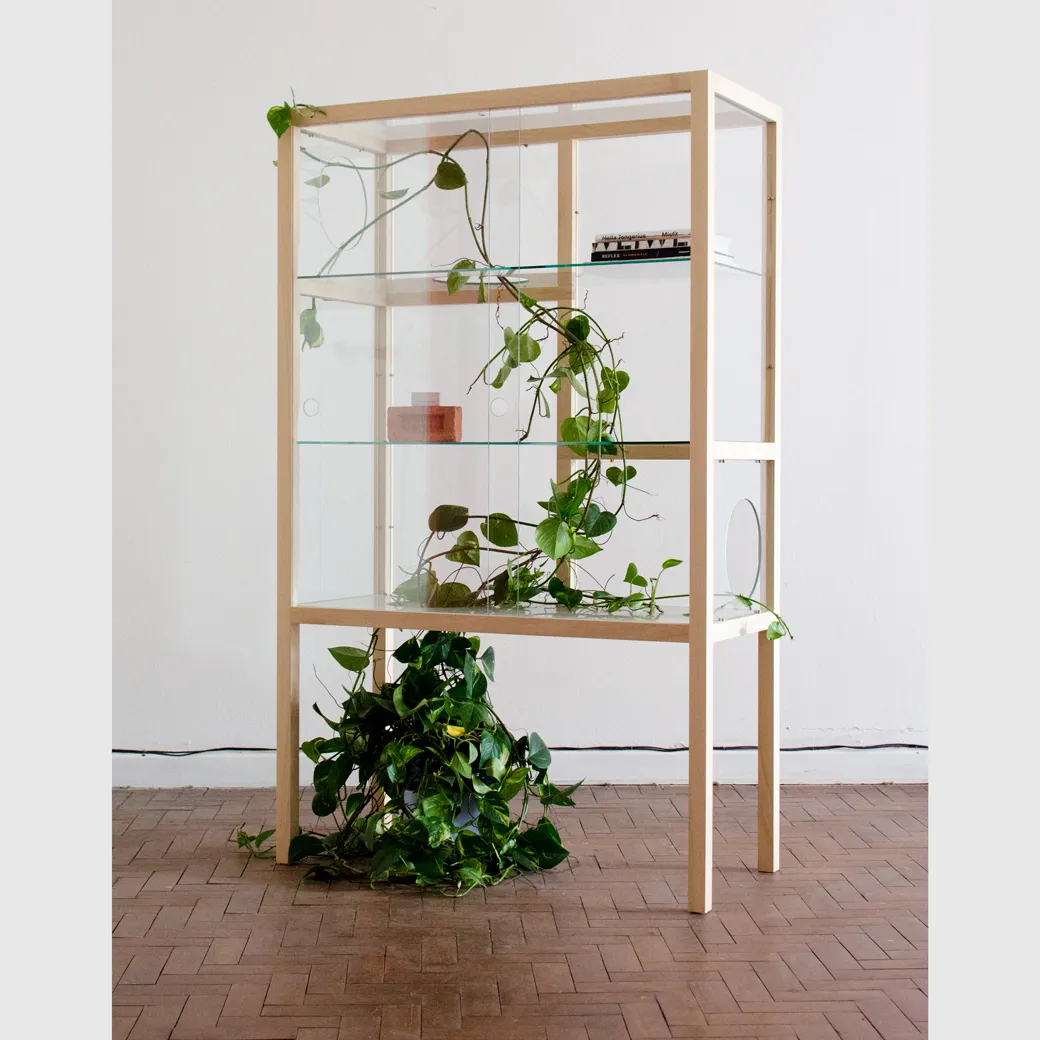
This display cabinet captures the dialogue between nature and civilization, its transparent surfaces revealing plant-like forms that seem to grow within. Made from responsibly sourced wood, it applies sustainable design principles to a poetic approach to storage — well suited to interiors working in biophilic or organic modern registers.
€4.800 incl. tax
Loop – Stainless Steel Cabinet by Tuğçe Geyik
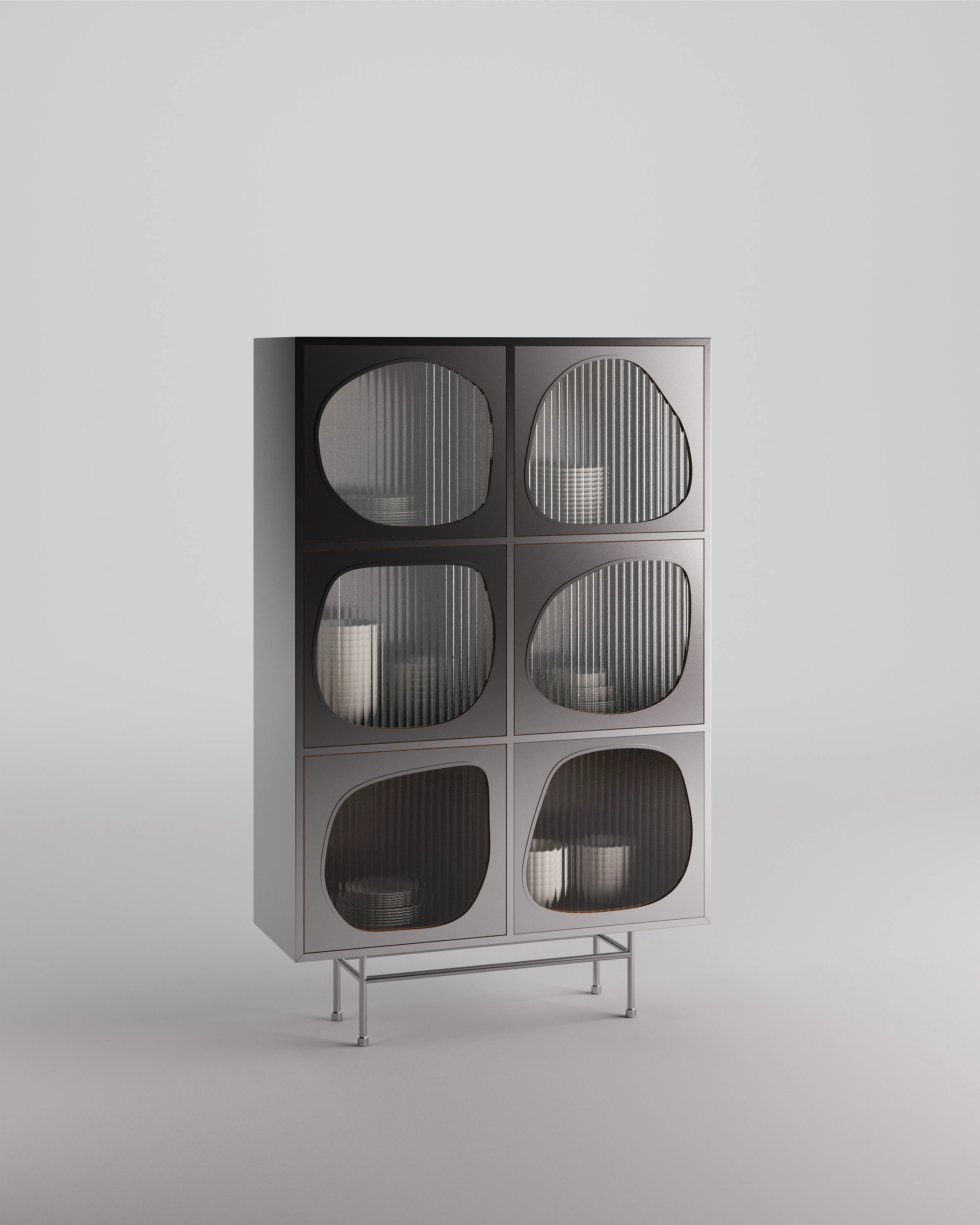
Round glass panels balance transparency with obscurity, offering a softened view of what sits inside — the textured glass is doing deliberate work here, since a display cabinet that reveals everything at once stops rewarding a second look. Stainless steel exterior over a wooden carcass, with a glossy root wood veneer interior. Available in stainless steel or lacquered finishes, 190 × 120 × 45cm. Suits contemporary or neo-industrial interiors.
By Tuğçe Geyik
Made to order
Cabinet from the 1+1+1 Series by AaltoAalto Studio
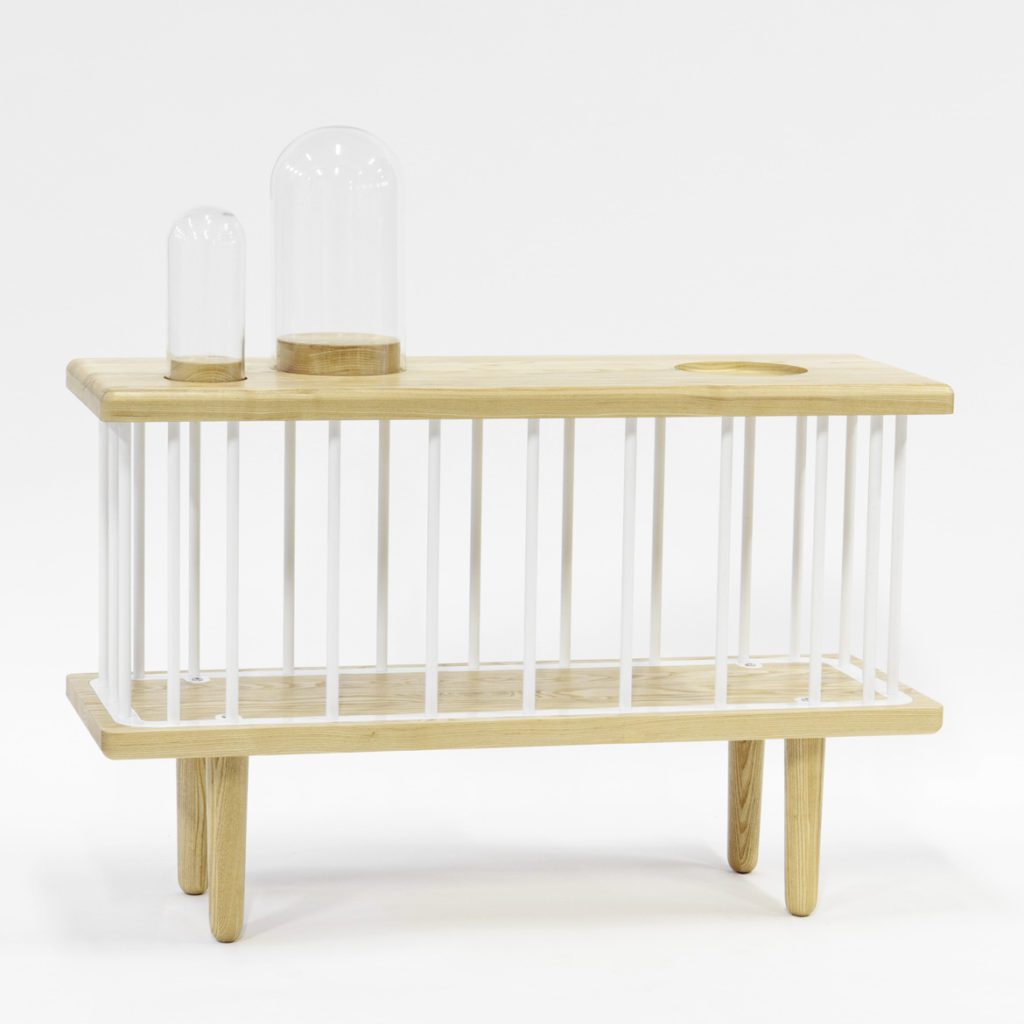
The 1+1+1 project came from a collaborative experiment in chance and authorship. Several studios each designed an object in three distinct parts, then the parts were recombined in unpredictable ways — twenty-seven possible compilations from the first round, ranging from strange to exhilarating. Forms and material pairings emerged that no single studio would have arrived at. This is the original cabinet design by Aalto+Aalto, shown at Helsinki Design Week.
€2.600 incl. tax
Brocado Cabinet – Cabreúva Wood and Embroidered Glass by YANKATU
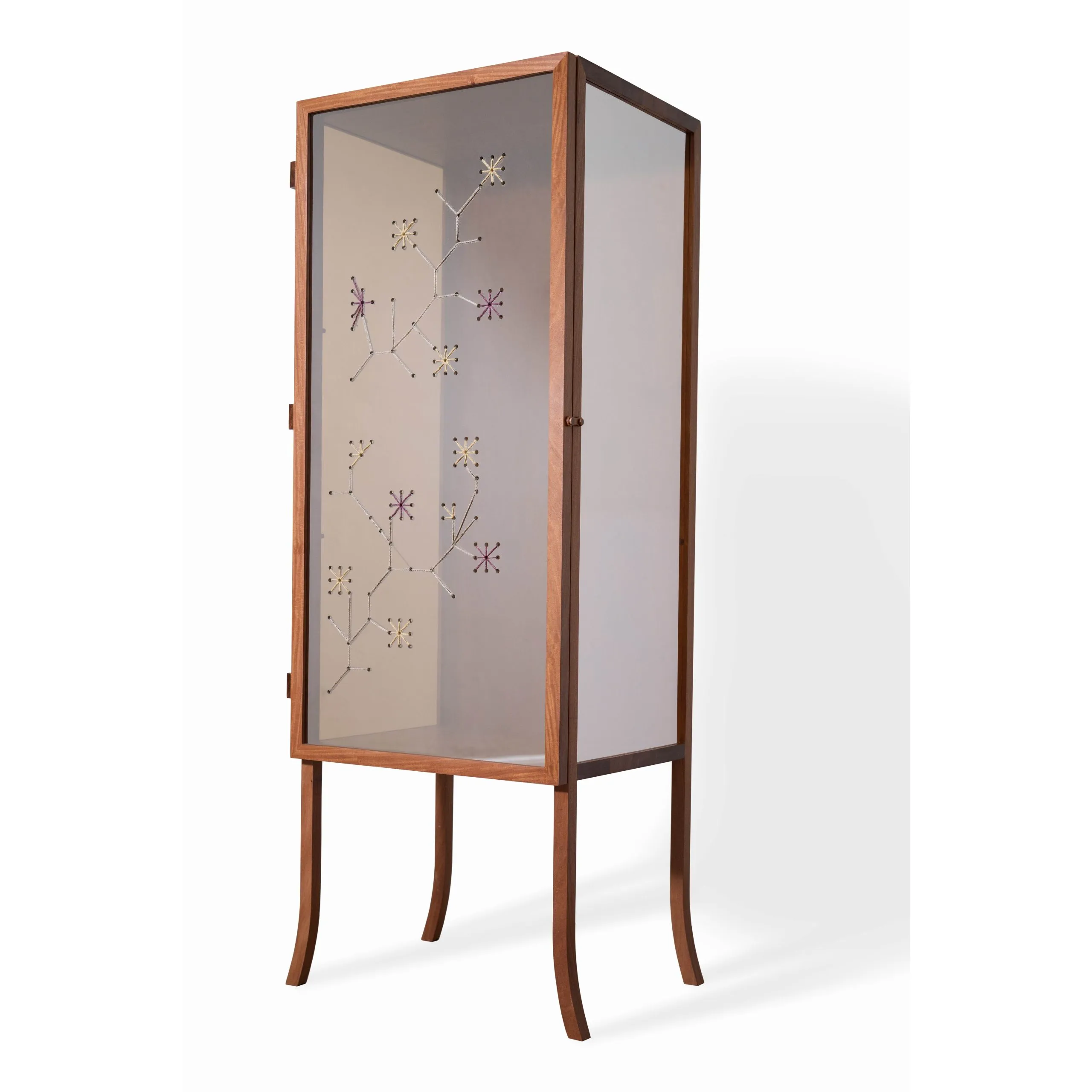
Solid cabreúva wood with traditional embroidery worked directly onto bronze glass, so the pattern spills from fabric onto the door. The naturally dyed yarns recall the tones of paintings in the churches and historic houses of Tiradentes, Minas Gerais — Rococo arriving from Europe in the second half of the eighteenth century. The embroidery is by the artisan D. Maria Conceição de Paula. Each piece ships with a certificate in book form, with blank pages left for the next owner to continue the story. Artisanal in the fullest sense.
By YANKATU
€5.100 incl. tax
D300 Shelves – Matte Aluminium by MLK Furniture
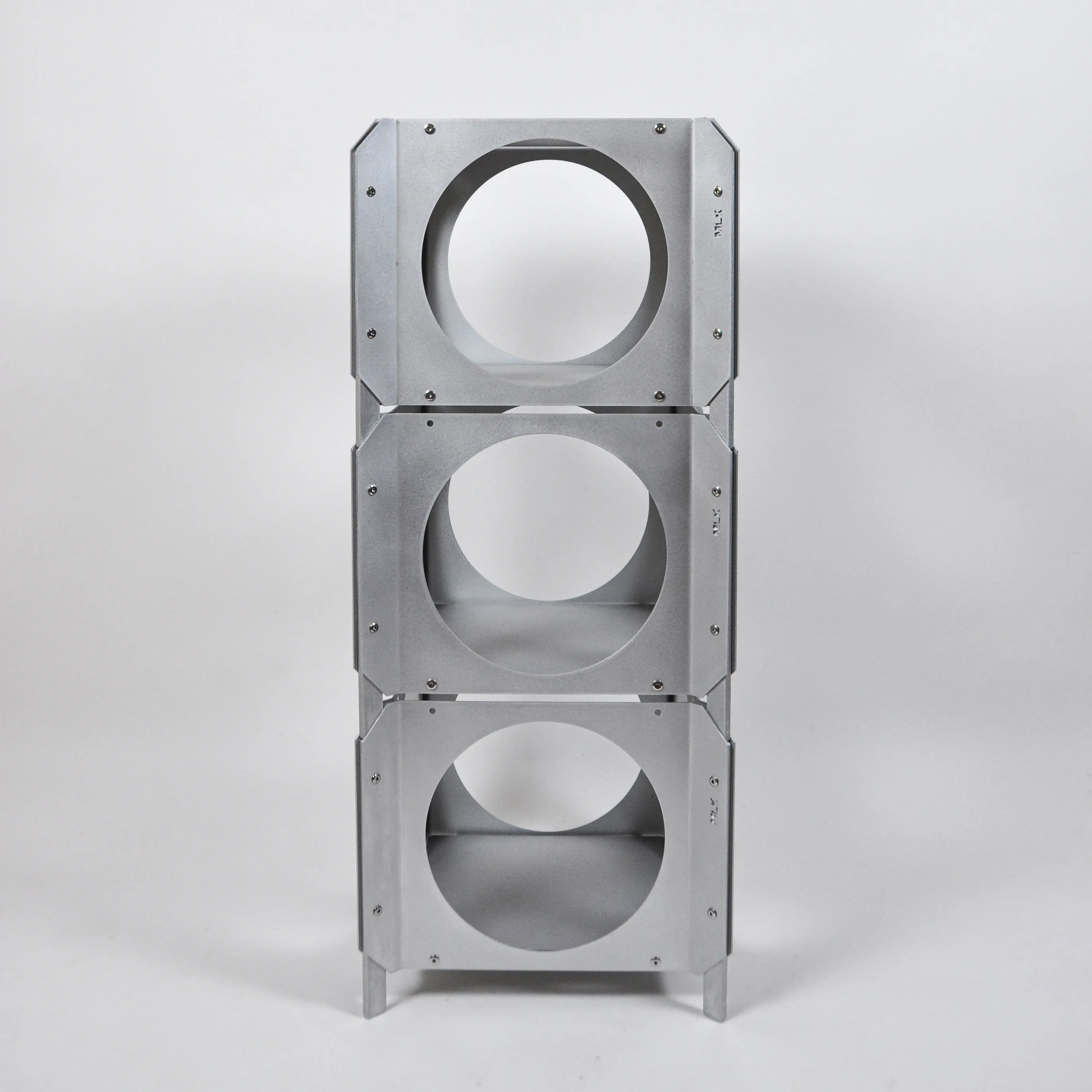
Built from left-over pieces of laser cutting, which is the whole argument — a low-tech philosophy that treats industrial waste as stock rather than as loss. The brutalist result leaves construction exposed, and because it fully disassembles, it can be adjusted by adding or removing layers and eventually recycled. Ready to assemble.
€860 – €3.160 incl. tax
Natrix Natrix Bar Cabinet by Mantas Lesauskas
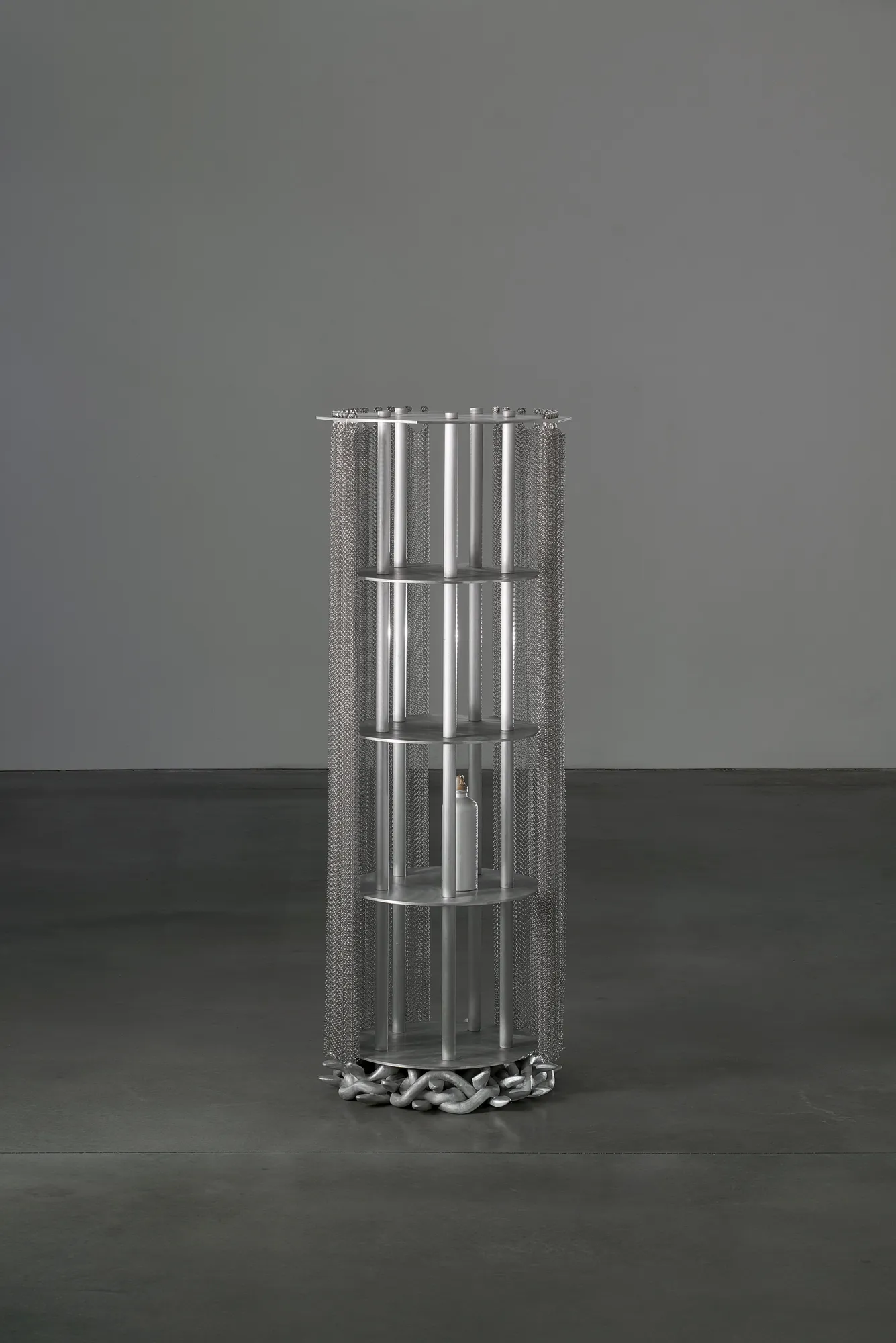
The best argument here for partial concealment. Perforated aluminum mesh both reveals and hides the contents, which is exactly the tension a display cabinet trades on. The base is cast from intertwining, digitally manipulated forms of the grass snake, and the mesh curtain hangs like a shed skin — containment, transformation and renewal running through one object. From the Slipcover Collection, and customizable to your dimensions.
€7.000 incl. tax
Fresh Catch II by Lauren Goodman
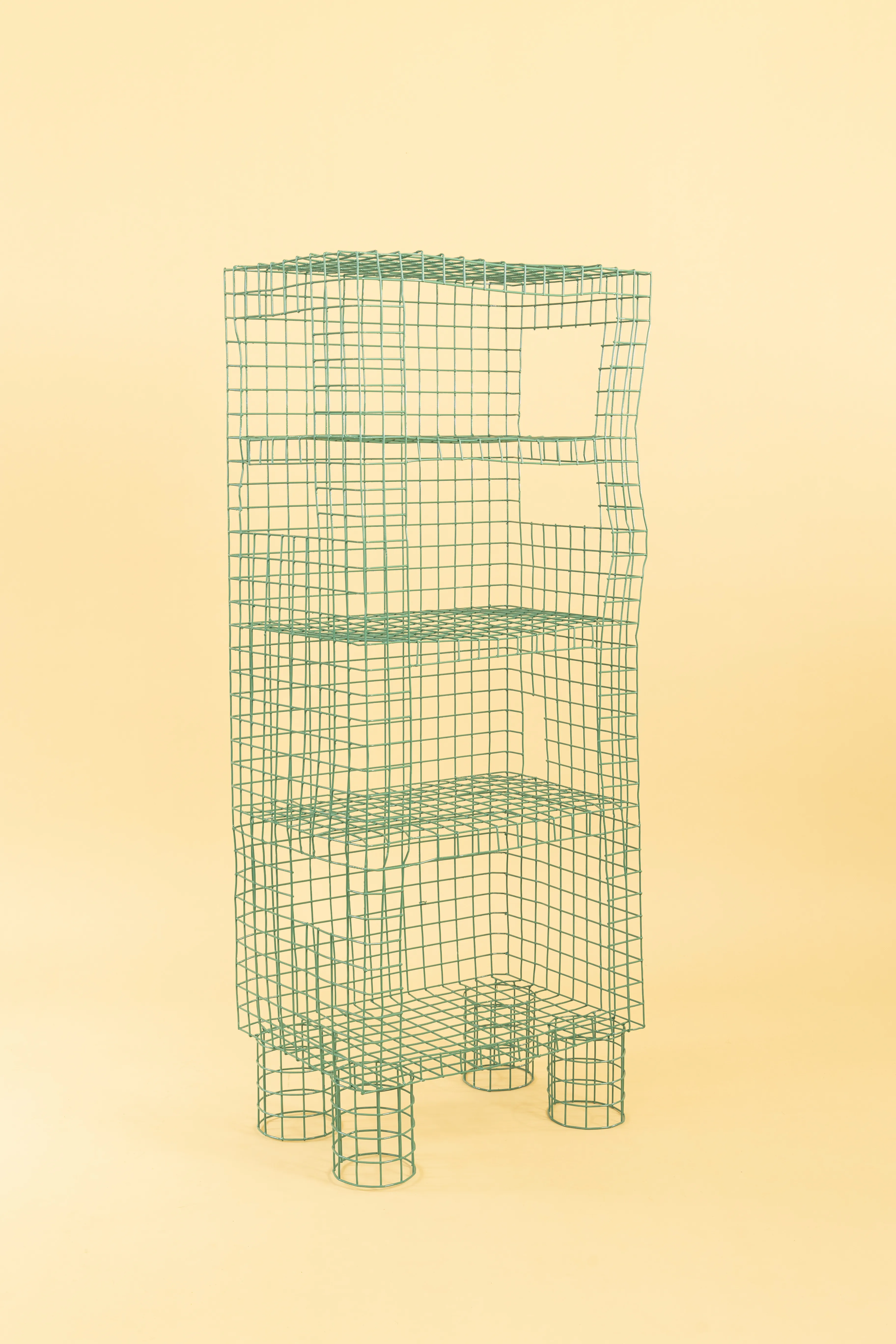
There are roughly three million lobster traps in Maine’s waters and more than a hundred thousand are lost each year. Fresh Catch is built from abandoned traps hand-collected from tidal coves, deconstructed and welded back together. This piece splices two traps into four compartments with a powder-coated finish, weighs under 6kg, and works indoors or out — a genuine example of upcycled design rather than a gesture toward it.
€8.448 incl. tax
Gate – Modular Shelving System by SVITANOK
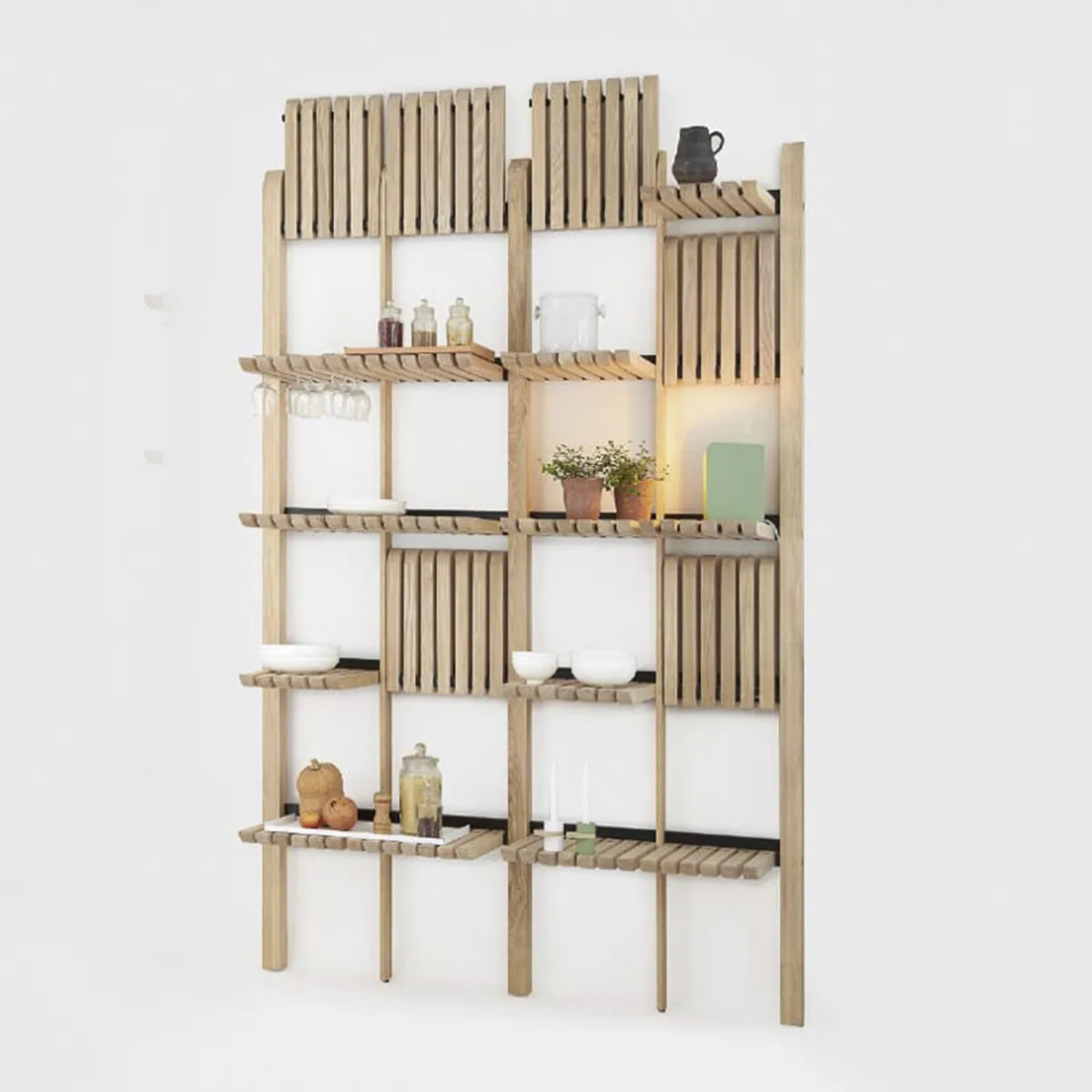
Solid ash blades held vertical by magnets, folding or lowering with a single touch — so the same frame becomes open display or closed screen depending on the moment. Available in five widths and two depths, and it extends with chairs, stools, countertops, boxes, a mirror and more. Designed by Artem Zakharchenko-Hal. Moves between living spaces, home offices and hospitality interiors.
By SVITANOK
€4.220 – €11.370 incl. tax
Vilma – Wood Display Cabinet by Comité de Proyectos
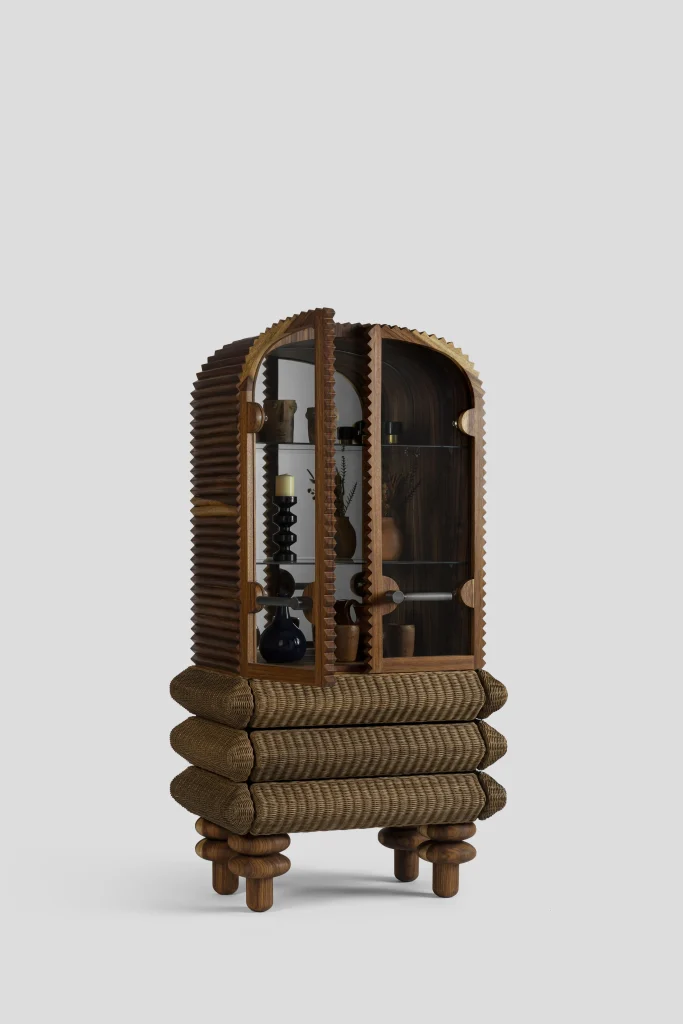
From the Sentinels Collection, which takes the act of caring as its subject. Each piece personifies attention and connection through ornamented forms in carved wood and hand-turned metal. The detail is unusually dense for a display piece, and it reads as warm rather than formal — a cabinet that looks like it is looking after what it holds.
€15.110 incl. tax
Orí – Wood and Shell Shelf by Nina Coimbra
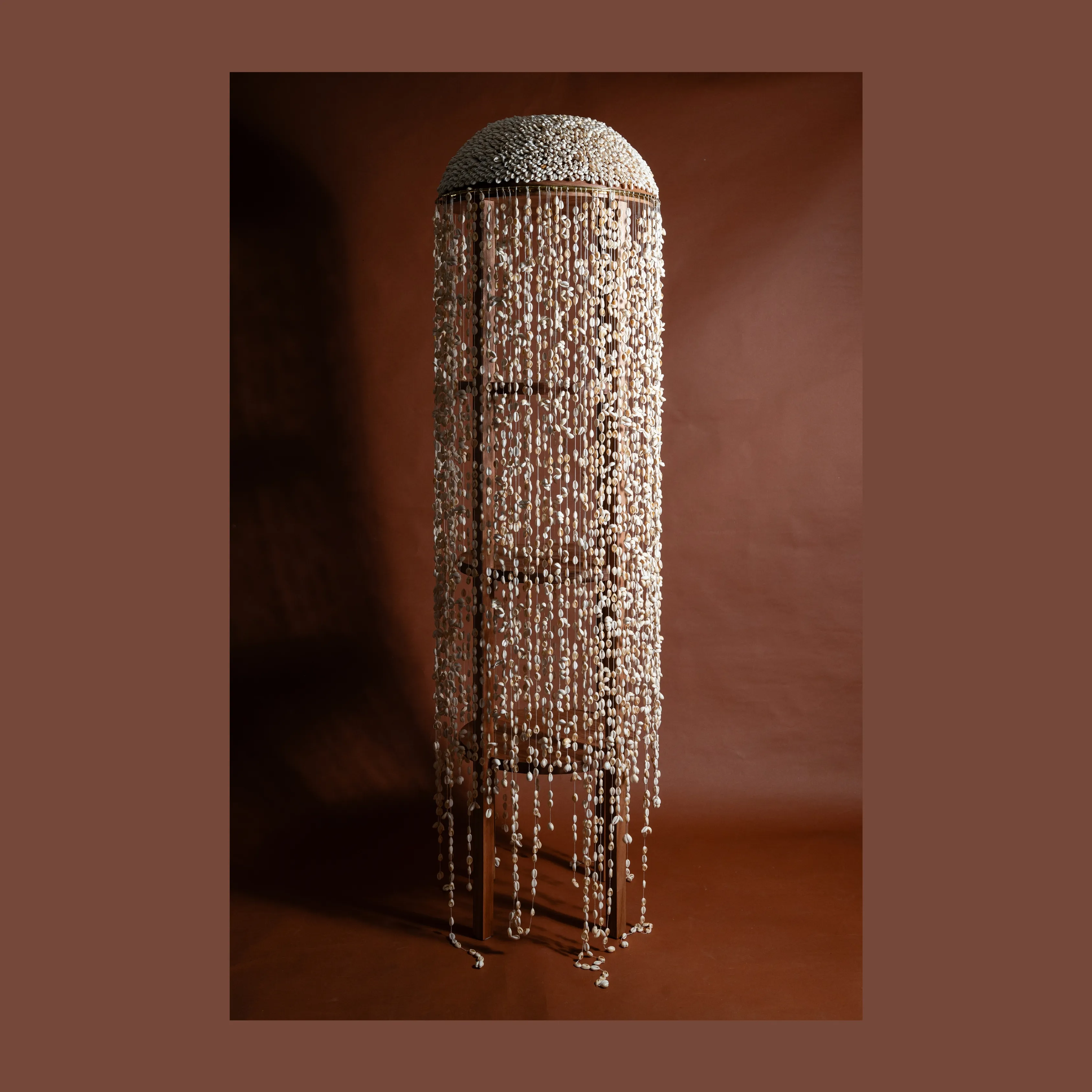
Drawn from Afro-Brazilian religions — Ifá, Candomblé and Umbanda — and named for Orí, the entity responsible for looking after one’s head. A domed wood top holds a headpiece of more than 3,000 natural cowshells, with a shell curtain enclosing the circumference to create a protected space for objects of personal meaning. Jequitibá Rosa wood, brass details, over 7,000 shells in total. The intent is to re-enchant everyday objects and rethink our relationship with consumption.
By Nina Coimbra
€4.500 incl. tax
Succession – Leather and Textile Cabinet by FÄRG & BLANCHE
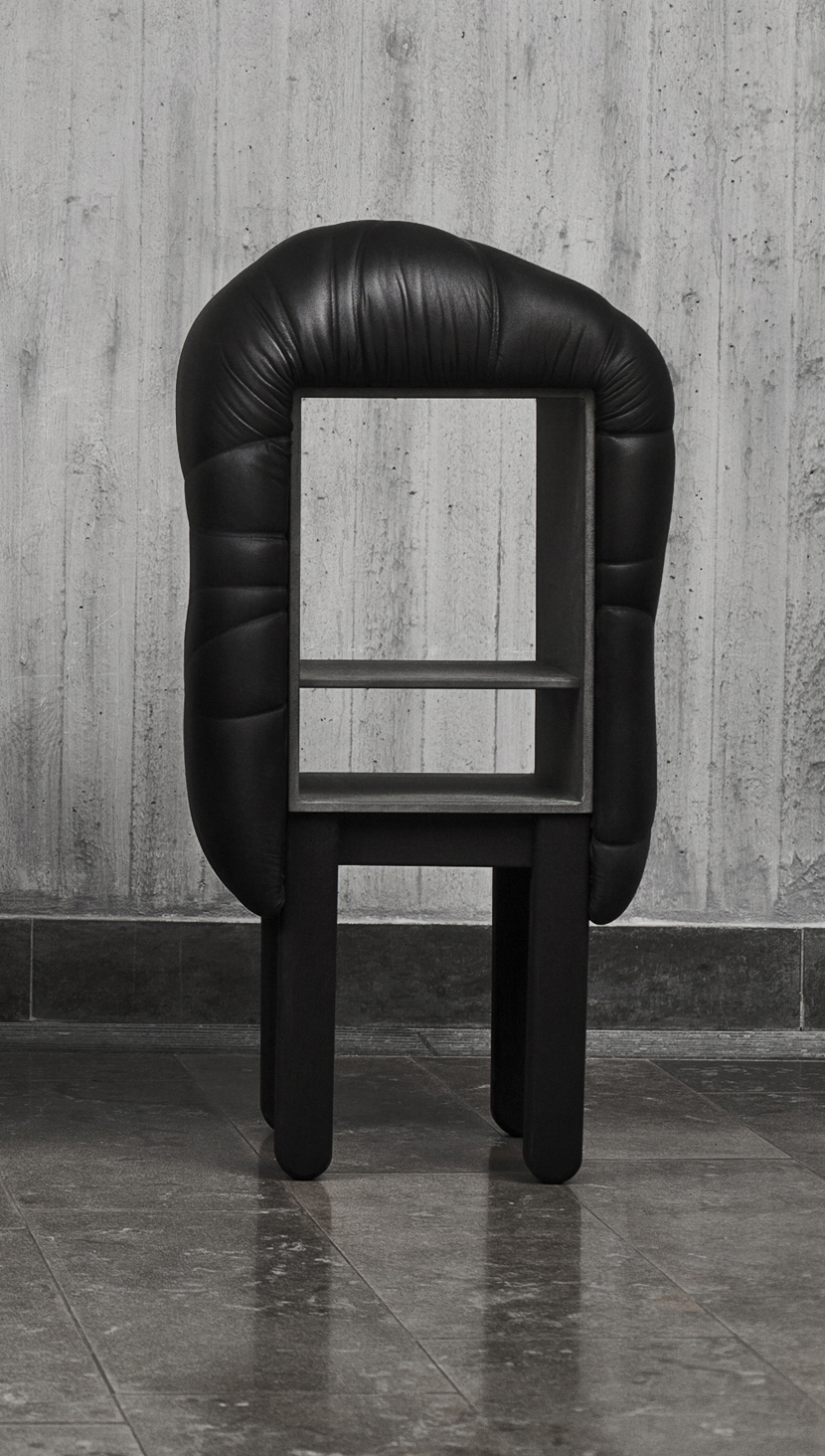
The making is the design. A base of composite material is dressed in textile and leather, bound with rope, then baked — and when the rope is cut away it leaves a pattern with no seams. Brutal and refined at once, which is the tension the whole Succession collection works. The series also includes mirrors, stools and large outdoor sculptures.
€6.000 incl. tax
Contas Round Swivel Bookcase by YANKATU
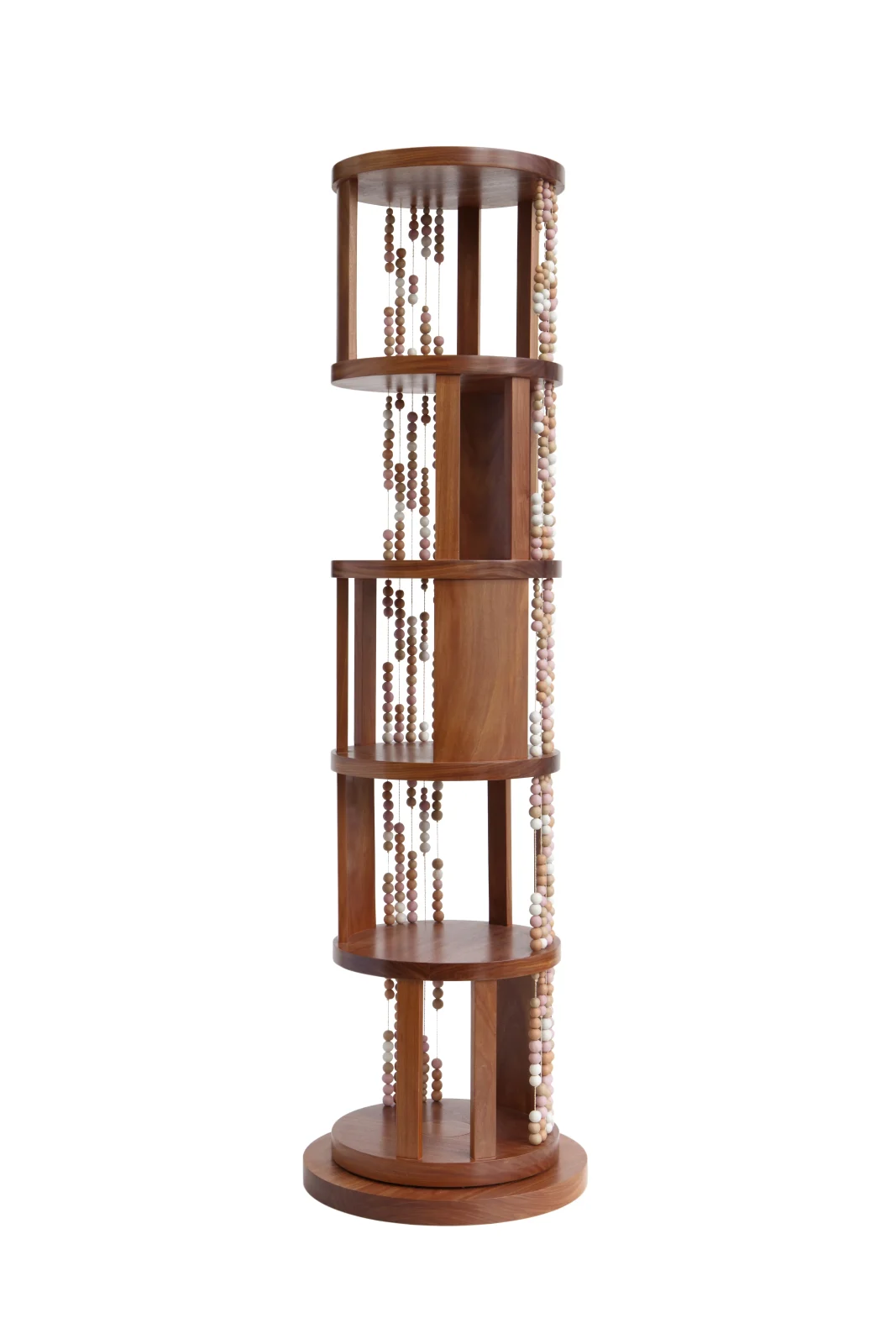
A round bookcase in cabreúva hardwood, with every level threaded through buriti palm yarn and ceramic beads — so the composition changes as you walk around it, and swivels besides. The muted ceramic tones come from the clay, stones and plants of Brazil’s Jequitinhonha Valley. Designed after Maria Fernanda Paes de Barros spent time in the artisan community of Coqueiro Campo, taking the decorative house curtains and the poetry of artisan Deuzani Gomes dos Santos as starting points. Can be made with four niches, up to 142cm.
By YANKATU
€5.100 incl. tax
Frequently asked questions
What is a curio cabinet?
A cabinet designed to display objects rather than store them out of sight — usually glass-fronted, with interior shelving and often lighting. The name comes from curiosity, and the form descends from the sixteenth-century cabinet of curiosities, the precursor to the modern museum.
What is the difference between a curio cabinet and a display cabinet?
Mostly regional. Curio cabinet is the American term and tends to mean a tall, narrow, glass-fronted piece for small collectibles. Display cabinet is the British equivalent and covers a broader range of shapes. A vitrine is the French term, usually implying glass on more than one side.
What do you put in a curio cabinet?
Anything you want looked at rather than stored — ceramics, glassware, small sculpture, books, objects from travel. The practical rule is fewer things with space between them. A shelf packed edge to edge reads as storage; the same objects spaced apart read as a collection.
Are curio cabinets outdated?
The mass-market version with mirrored backs and spotlights has dated; the underlying idea has not. Interest in collecting, thrifting and objects with provenance has grown steadily, and a cabinet that frames a collection answers that directly. Contemporary versions tend to be more sculptural and less literal about the glass.
Where should a curio cabinet go?
Somewhere you pass regularly rather than a formal room you rarely enter — a hallway, a landing, the wall opposite a chair. Keep it out of direct sunlight, which fades textiles and paper, and leave enough clearance to open the doors fully.
How do you style a small curio cabinet?
Fewer, larger objects rather than many small ones — visual clutter comes from the number of outlines rather than the volume they occupy. Group in odd numbers, vary height, and keep one shared thread across the whole cabinet so the mix holds together.
A reflection of individual taste
Choosing a curio cabinet is an act of self-expression. Pick something that matches how you actually live, then let each object inside it carry its own story. For collecting as a subject in itself, read Functional Art: A Better Way to Describe Collectible Design. To finish the composition, add table lamps or ceramic vases for light and balance.
