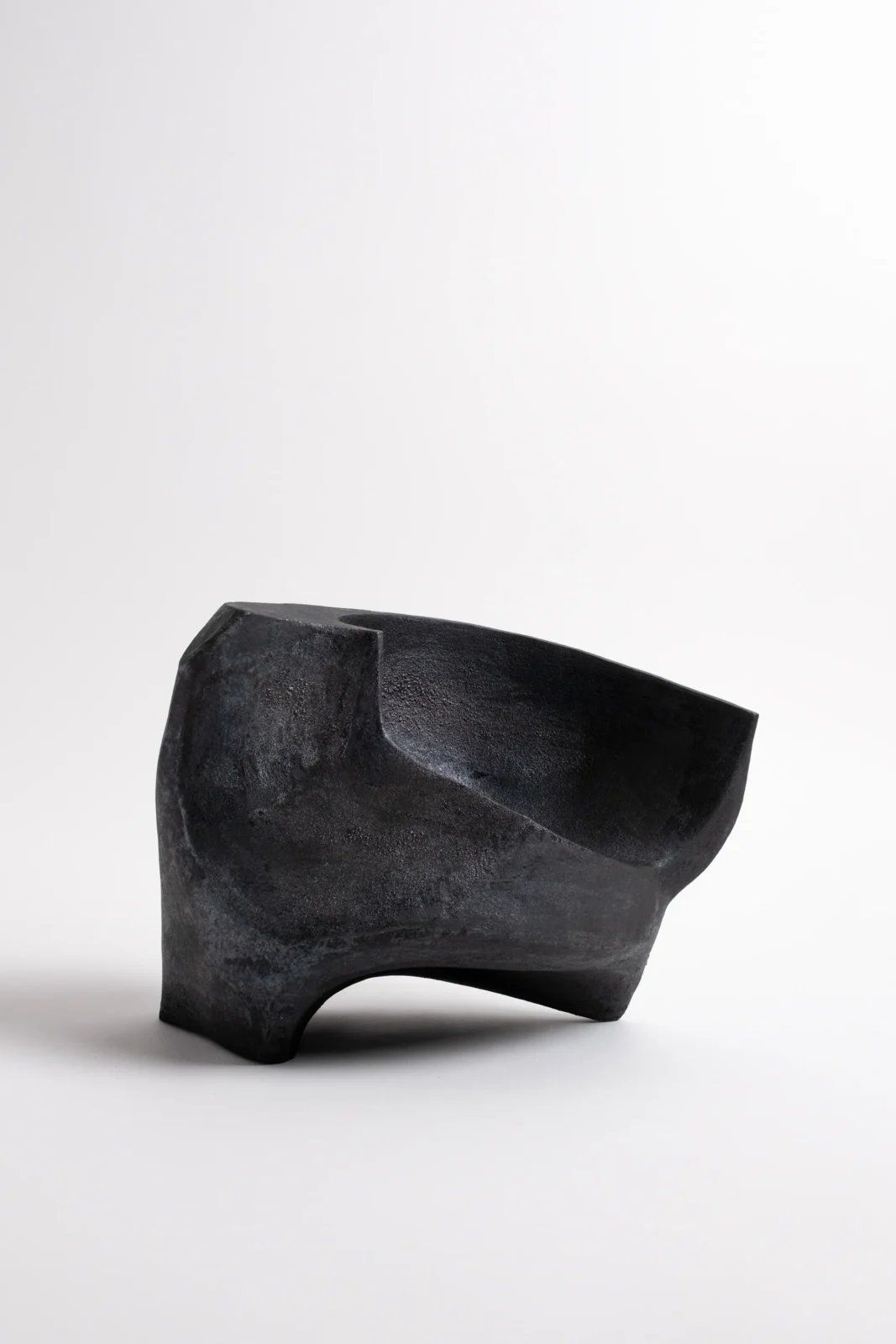
Stone is the oldest material we have shaped into art, and it still sets the pace for how long an object can last.
Stone sculpture is one of the few art forms that links a prehistoric hand axe to a contemporary design studio. The process has barely changed: a maker studies a block, removes what does not belong, and lets the grain, veining and weight of the stone decide much of the final form. What has changed is where stone sculpture lives. Today it is as likely to be a lamp, a bench or a vase as a figure on a plinth.
This guide covers what stone sculpture is, where it comes from, the main carving techniques and tools, which stones suit which methods, and eight pieces by independent studios that carry the craft into the home.
What is stone sculpture?
Stone sculpture is the art of shaping natural stone into three-dimensional forms, usually by carving, which means removing material rather than adding it. Unlike clay or bronze, there is no going back: every cut is permanent, so the sculptor plans the form around the block’s size, flaws and grain. The finished piece can be figurative, like a portrait bust, or abstract, like a polished curve that exists only for its shape and surface. At ADORNO, you will find stone sculpting under the stone carving discipline, alongside the materials each studio works with.
A short history of stone sculpting
The earliest stone art was carved with other stones: symbols cut into cave walls and small figures shaped for ritual. In ancient Egypt, sculptors cut monumental statues and hieroglyphs from granite and limestone, and in Greece, artists such as Phidias and Praxiteles set lasting standards for realism in marble. The Romans copied and adapted Greek work, filling cities with portrait busts of emperors.
During the Renaissance, Michelangelo carved David and the Pietà from single blocks of Carrara marble, believing the figure was already inside the stone. In the 19th century, Auguste Rodin left parts of his marbles rough, setting finished and unfinished surfaces side by side. Then the 20th century pared stone back to its essence: Constantin Brâncuși reduced forms to smooth, simple volumes, and Henry Moore opened holes through reclining figures so landscape and sculpture became one.
Perhaps the closest ancestor of today’s design studios is Isamu Noguchi, who worked in basalt, granite and marble while also designing lamps, tables and gardens. He showed that a stone sculpture and a functional object could come from the same hands and the same thinking, which is exactly the space the pieces below occupy.
Stone carving techniques
Most stone sculptures move through the same stages, from rough to refined:
- Roughing out: the sculptor removes large amounts of stone with a pitching tool or a point chisel to find the basic mass.
- Pointing: a traditional method for copying a model, in which measurements are transferred point by point onto the block so proportions stay accurate.
- Shaping: toothed claw chisels and flat chisels refine the surfaces and define the edges.
- Drilling: drills open holes and undercuts, as in the pierced forms of Henry Moore or the totem further down this list.
- Abrasion and finishing: rasps, files, sandpaper and polishing compounds move the surface from textured to honed to mirror-smooth.
Many studios now combine these hand methods with digital ones. A form may be modeled in 3D software, roughed out on a CNC machine, then finished by hand, which is how several of the designs below reach their precise curves.
Stone carving tools
A basic stone carving kit includes a mallet or lump hammer, a point chisel, a claw chisel, a flat chisel, rasps and files, and wet-and-dry sandpaper in several grits. For harder stones such as granite, carvers add carbide-tipped chisels, angle grinders with diamond blades and pneumatic hammers. Safety gear matters as much as the tools: goggles, a dust mask rated for silica and ear protection.
The best stone for carving
Each stone suits a different level of skill and a different kind of detail. From softest to hardest:
- Soapstone: so soft it can be shaped with files and even a knife, which makes soapstone carving the usual starting point for beginners.
- Alabaster: soft and translucent, so it glows when lit from inside, which is why it is often used for lamps.
- Limestone and sandstone: even-grained and forgiving, ideal for larger forms, architectural details and textured finishes.
- Marble and onyx: the classic middle ground, soft enough for fine detail yet hard enough to hold it, and able to take a high polish.
- Granite and quartz: very hard and durable, best worked with power tools, and suited to outdoor sculpture and heavy-use furniture.
For a closer look at individual stones, read ADORNO’s guides to marble, travertine, lava stone and natural stone design.
8 stone sculptures and sculptural pieces to collect
These designs are all available on ADORNO and each comes from a different studio. They range from a €35 limestone photo holder to a hand-sculpted sandstone coffee table, and together they cover marble, alabaster, onyx, sandstone, quartz, limestone and granite.
Strata – Flower Vase – Staggered Pink by Iyo Hasegawa
Iyo Hasegawa collects the slender offcuts left over when marble slabs are cut for architecture, then stacks them with slight offsets so the vase reads like geological layers. Each piece is assembled by hand, so the arrangement of pink, white and amber fragments changes from one vase to the next. At 20 cm (7.9 in) across, it holds a few stems or a candle, and it has already found buyers on ADORNO.
By Iyo Hasegawa
€930 incl. tax
Roma Stone Totem by Studio Ayres

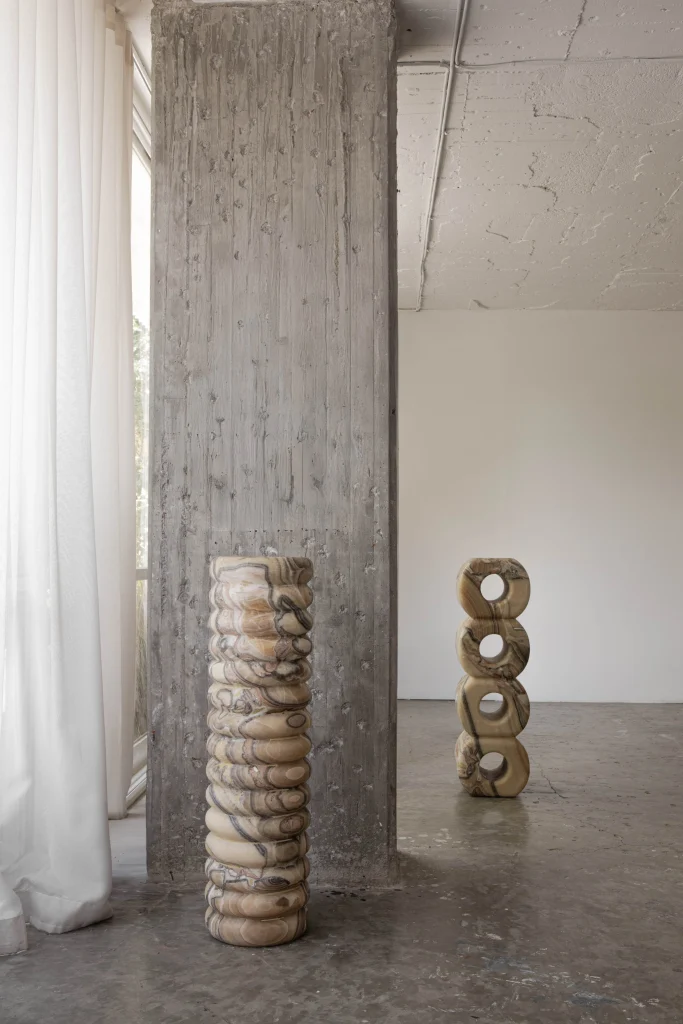
Mexico City studio Ayres stacks four pierced, rounded blocks of marble and onyx into a column, inspired by the twisted shapes of traditional Mexican candies. The banding of the stone wraps around each opening, so the totem changes as you walk past it. It is a true stone sculpture for a floor or a plinth.
By Studio Ayres
€2.348 incl. tax
Lunel Table Lamp in Alabaster by Mugen
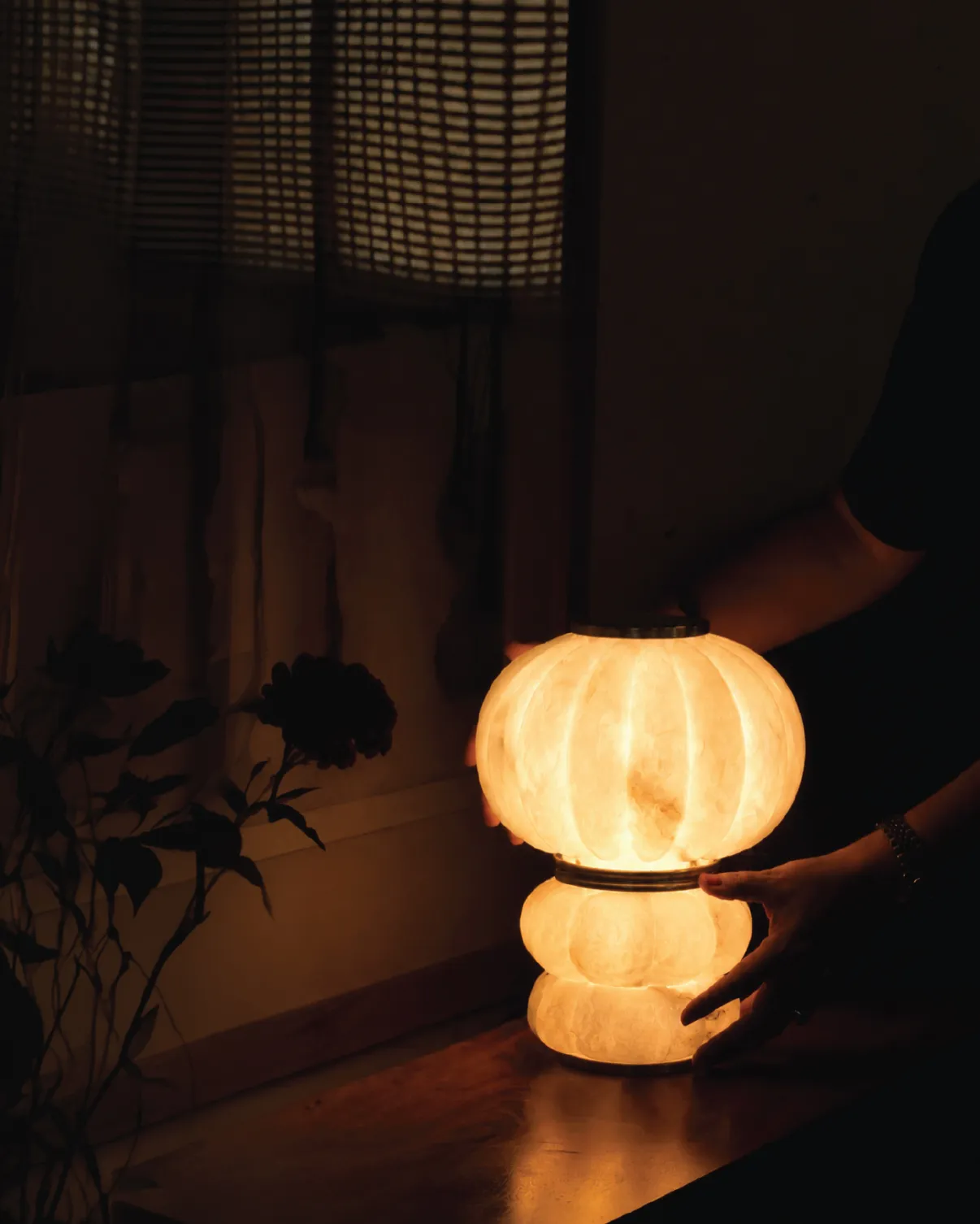
Alabaster is one of the few stones that lets light through, and Mugen uses that quality fully. Lunel stacks rounded alabaster forms into a soft, balanced column; switched on, the stone glows from inside and shows its veining. It is a quiet example of how a carved stone object can also do a daily job.
By Mugen
€2.042 incl. tax
Rocky Montage Coffee Table In Sandstone by Odditi

Australian studio Odditi sculpts this table by hand from a sandstone composite, with an oval top cantilevered over three rounded legs and three small domes rising from its surface. At 160 cm (63 in) long and 43 cm (16.9 in) high, it brings the presence of an outdoor stone sculpture into a living room. It is a limited edition of five.
By Odditi
€4.208 incl. tax
Ashen – Marble Ashtray / Catch All Tray by Boo Design Studio

Boo Design Studio carves Ashen with soft curves taken from desert dunes. Use one as a catch-all for keys and rings, or line up several and the waves join into a continuous landscape. With repeat sales on ADORNO, it is the easiest way to bring carved stone onto a table.
By Boo Design Studio
€162 incl. tax
Incense Holder I-45 by julius.works
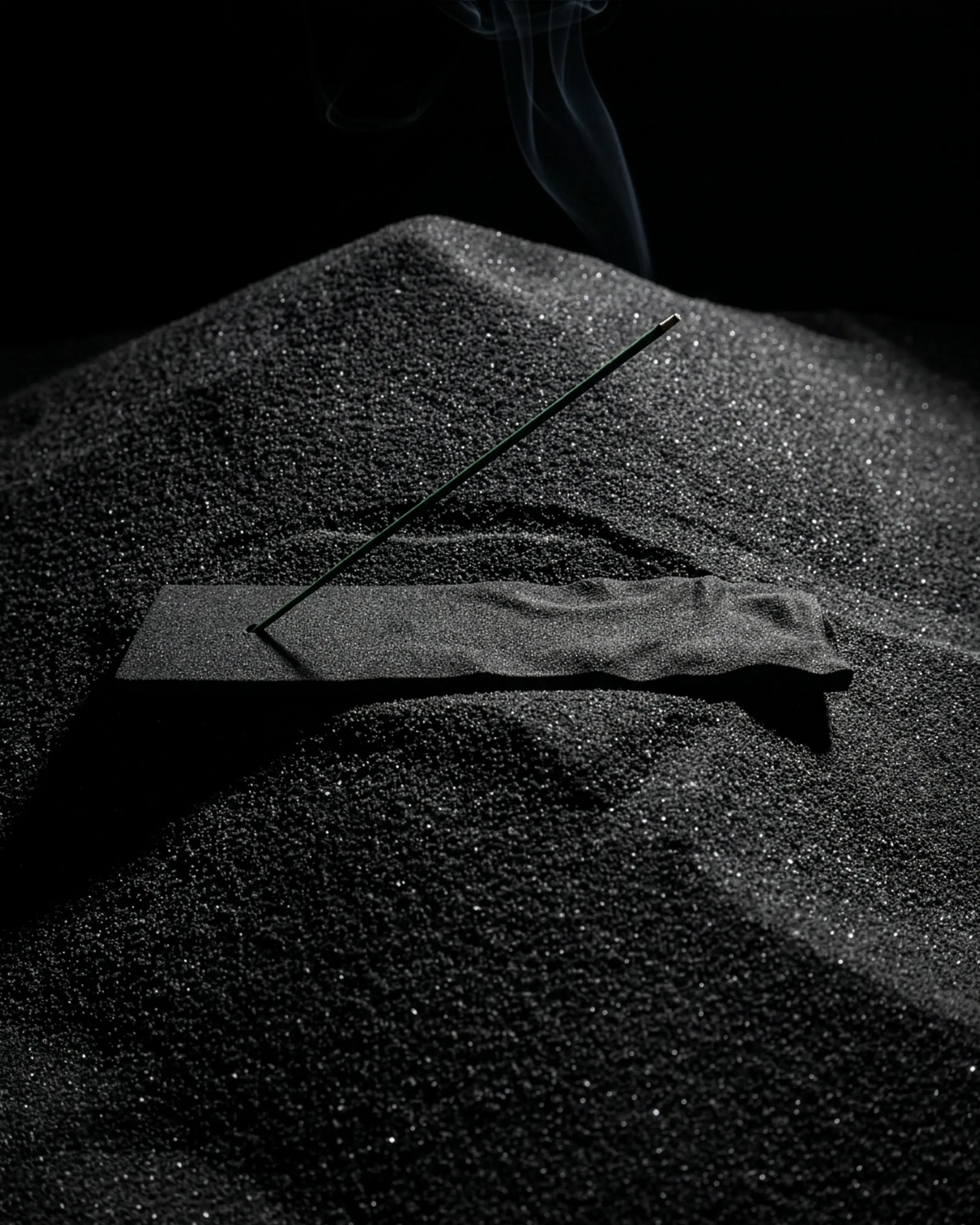
julius.works modeled the rippled surface of this black quartz holder on the movement of rising smoke, using digital simulation before the stone was made. It holds a stick at exactly 45° and measures 220 × 45 mm (8.7 × 1.8 in). Made in an edition of five, it is one of the most checked-out stone pieces on ADORNO this season.
By julius.works
€90 incl. tax
Iste – Photo Holder by Atelier Nienē
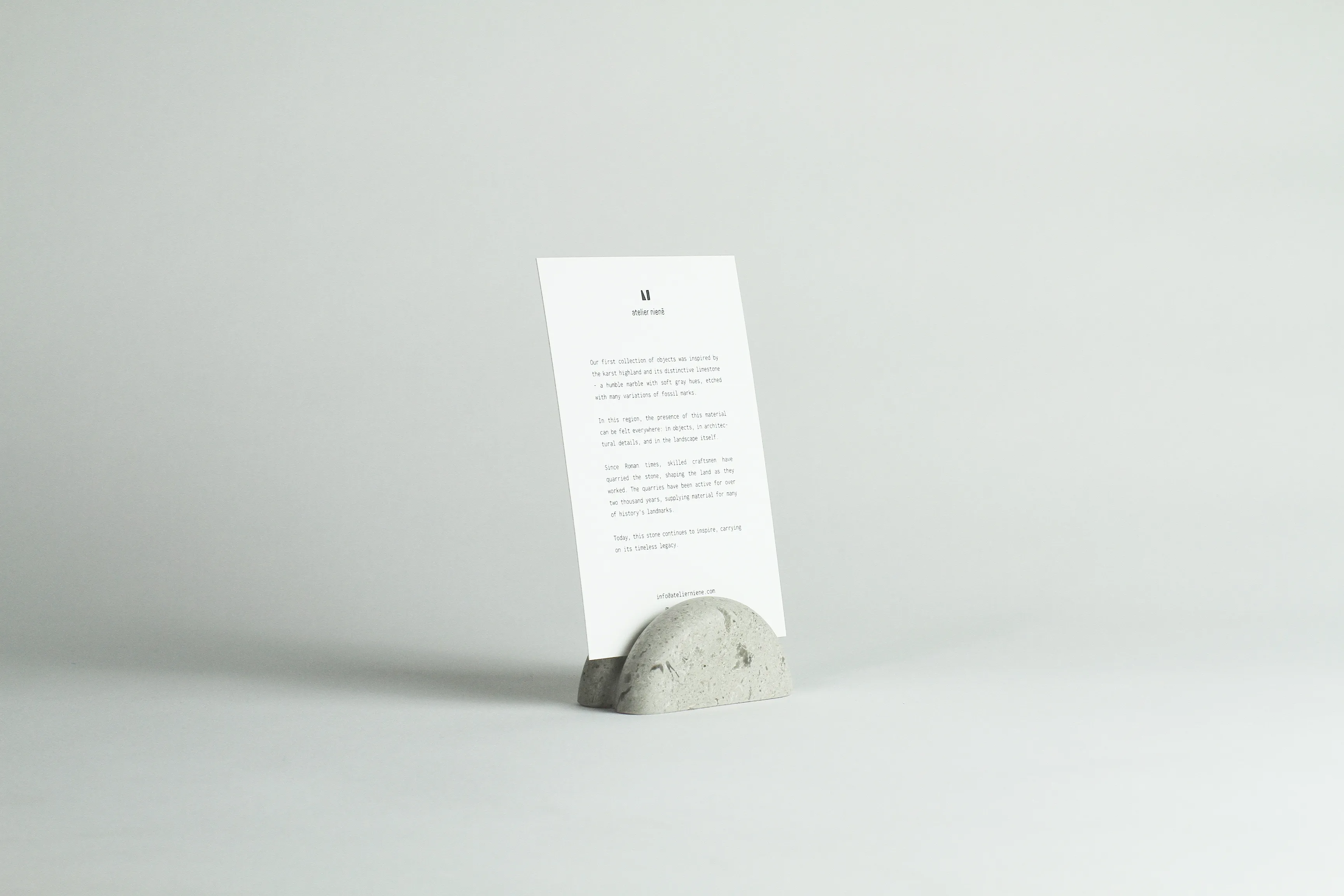
Iste is carved from Lipica Fiorito, a limestone from the Karst region between Italy and Slovenia that is full of fossil shells and corals. Local artisans shape each piece by hand, continuing a stoneworking tradition that goes back to Roman quarries. A small curve of stone holds a photo or a card, and it is the most accessible piece here.
By Atelier Nienē
€35 incl. tax
Filar Stone Bench | Re-enchantment by małe dobra
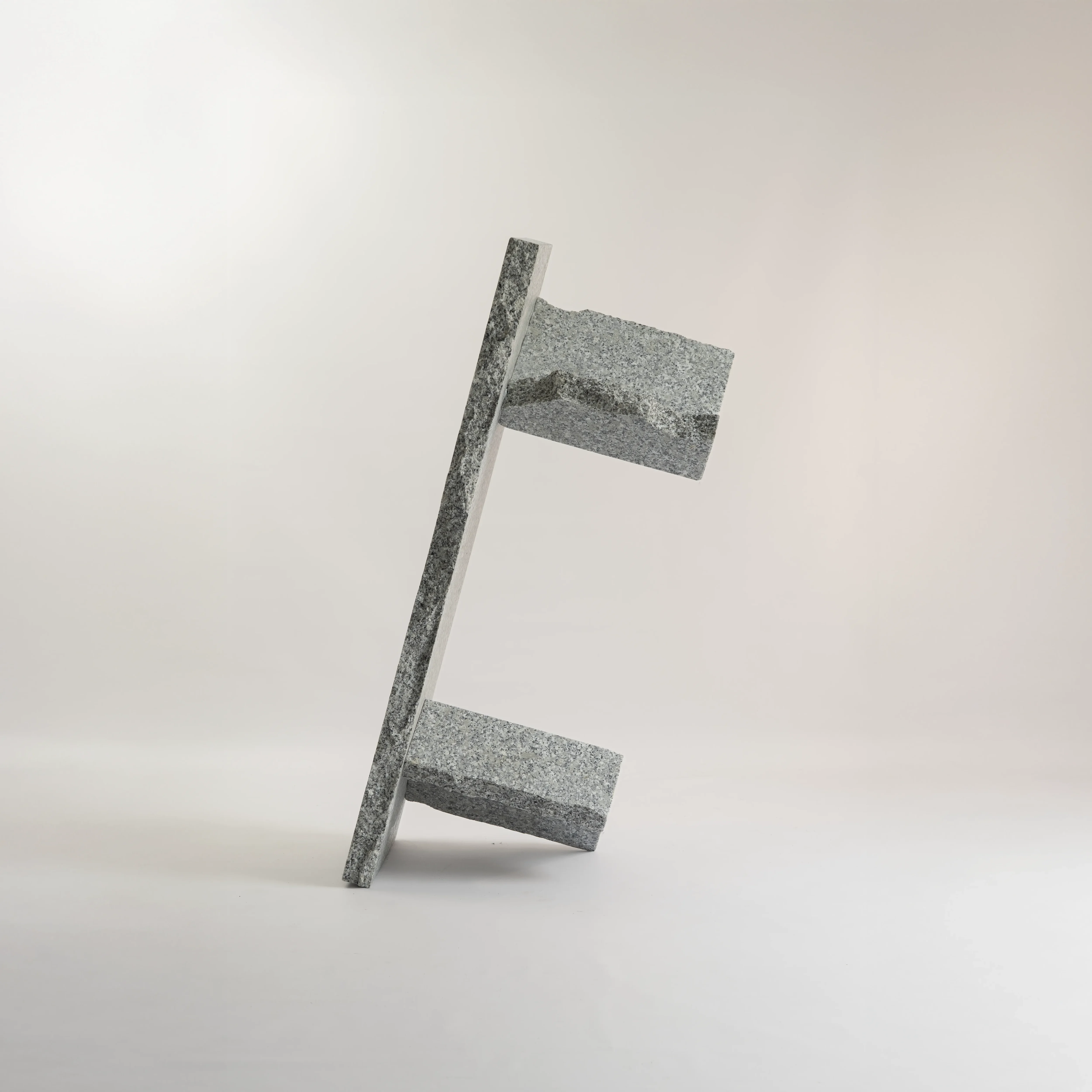
Polish studio małe dobra works with a local stonemason to rescue offcuts of Strzegom granite that would otherwise be thrown away. The edges stay rough and the finish is brushed, never polished, so the mineral grain does the talking. It is new to ADORNO and the only granite piece in this list.
By małe dobra
€1.400 incl. tax
How to live with stone sculpture
Give a stone piece room and light. Side light from a window or a low lamp brings out carving marks, fossils and veining, while flat overhead light tends to hide them. Small pieces, such as trays and incense holders, work best in groups of two or three on a shelf or console. Larger sculptures, such as a totem or a bench, need space around them so you can see them from several angles. For more ideas, browse ADORNO’s selection of sculptures for the home and the essay on abstract sculpture.
Care is simple. Dust with a soft, dry cloth and clean with water and a pH-neutral soap. Avoid vinegar, lemon and other acids, which etch marble, limestone and travertine. Porous, uncoated stones can absorb oil and wine, so use coasters, or ask the studio whether a sealant suits the piece.
Frequently asked questions about stone sculpture
What is the easiest stone to carve?
Soapstone is the easiest, followed by alabaster and soft limestone. All three can be shaped with hand tools.
What stone is best for an outdoor sculpture?
Granite and dense sandstone handle frost and rain best. Marble and limestone weather slowly outdoors, and alabaster should stay inside.
What is the difference between stone carving and stone sculpture?
Stone carving is the technique of cutting and shaping stone. Stone sculpture is the finished artwork or object that the carving produces.
How do you clean a marble sculpture?
Dust it with a soft cloth and wipe it with water and a pH-neutral soap. Avoid acidic or abrasive cleaners, which dull the surface.
Why stone sculpture endures
Stone records every decision a maker takes, and it outlasts almost everything else in a room. Whether it is a totem, a lamp or a small tray, a carved stone piece connects your home to one of the longest traditions in art.