Amber is a moment that refused to end. Resin design is still chasing that idea.
Updated on: October 16, 2026
In the old markets of the Baltic coast, merchants held amber up to the sun and watched prehistoric moments hang in golden light. Those drops of fossilized tree resin say something lasting about our fascination with preserved time.
Today, designers working with bio-based and synthetic resins continue the same conversation about permanence and change. Like the amber traders before them, they work on the line between what nature provides and what people transform. Below, ADORNO traces resin from amber to epoxy, then looks at eight pieces of resin furniture, lighting and objects available now.
What is resin?
Resin is a thick, sticky substance that hardens into a solid. Natural resin flows from trees, and over millions of years it can fossilize into amber. Synthetic resins, such as epoxy and acrylic, are made from two liquid parts that cure into a hard, often translucent material. Bio-based resins replace some of the petroleum with plant oils. In resin design, makers cast, pour, layer or 3D-print these materials into furniture, lamps and objects, and designers such as Wonmin Park, profiled by Wallpaper*, have made resin a material of its own rather than a substitute for glass.
Types of resin in design
Epoxy resin is the most common in furniture. It cures hard and clear, which is why epoxy resin tables often look like water or glass. Acrylic resins, including water-based Acrystal and Jesmonite, cast in fine detail and can be tinted with pigment or mineral powder. Crystal resin is a clear, glass-like grade often used for lamps. Finally, bio-based resins swap part of the oil-based content for plant sources, and they are increasingly popular with studios working on lower-impact design.
Origins in amber
For thousands of years, resins have served as nature’s own preservative, from the amber-rich pines of the Baltic to the lacquer trees of East Asia. Nature moves in cycles of life and death, yet it also offers a way to stop time. Fittingly, the warmest resin pieces today still look like amber: honey-colored, translucent and glowing when the light hits them.
Lung 1.0 Honey Matte Side Table in Resin by Szymon Keller
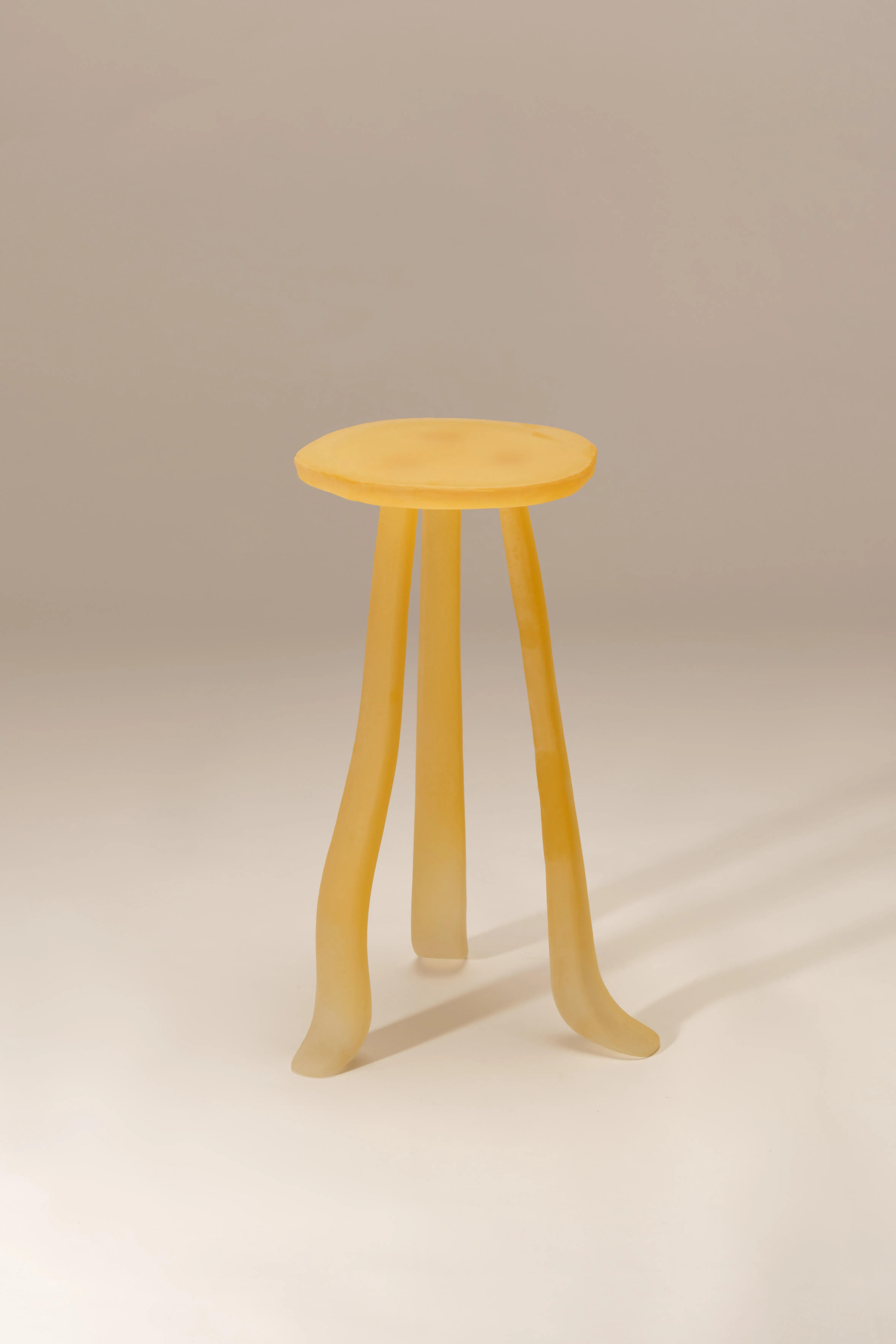
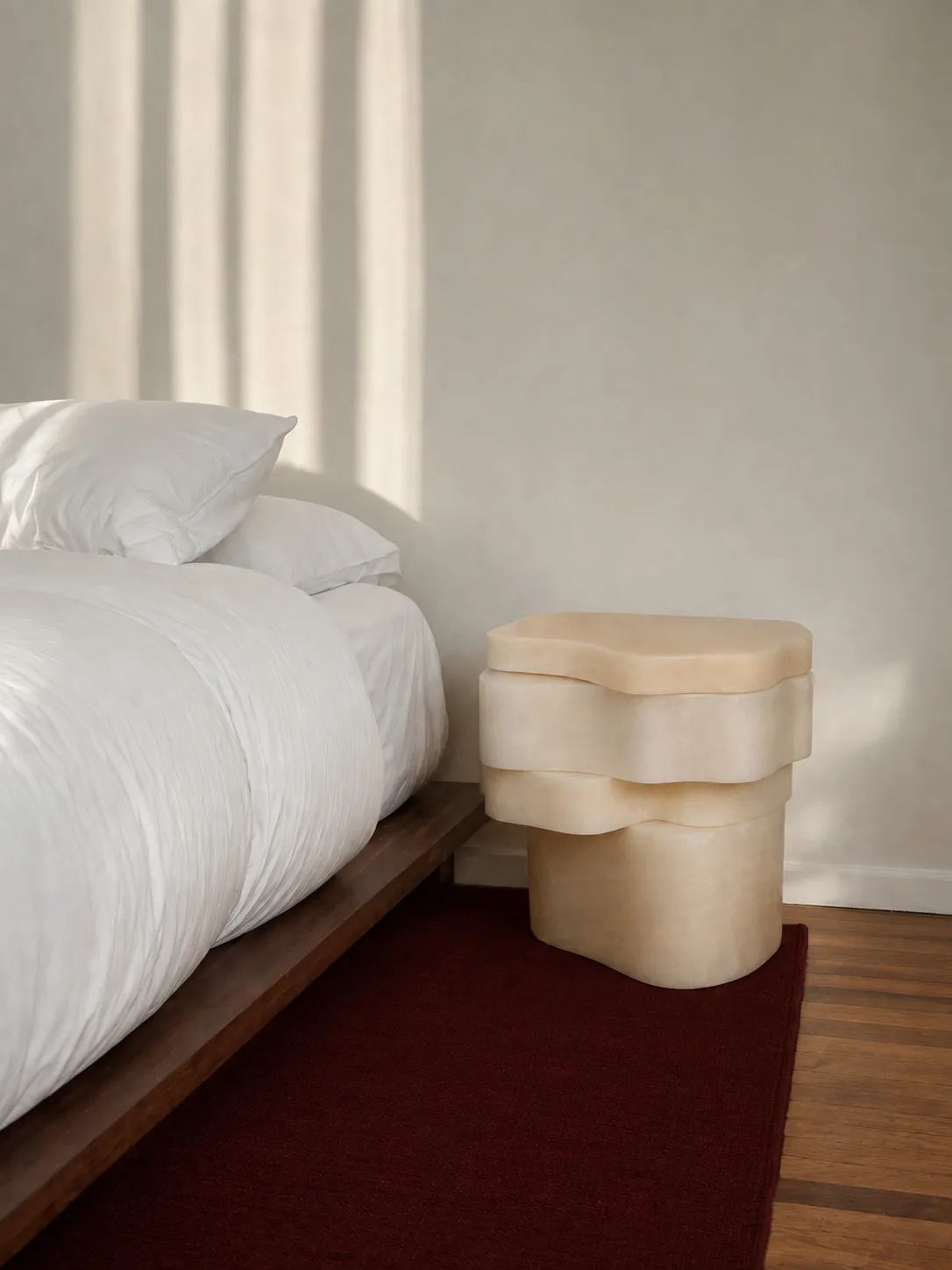
Cast in honey-colored resin, the Lung martini table is the closest thing here to a piece of amber you can put a glass on. Its wavy legs look fragile, yet the resin is strong and light enough to carry from room to room, and sunlight makes the surface shimmer.
By Szymon Keller
€2.200 – €2.400 incl. tax
Kalia Table Lamp in Glass and Resin by Justyna Poplawska

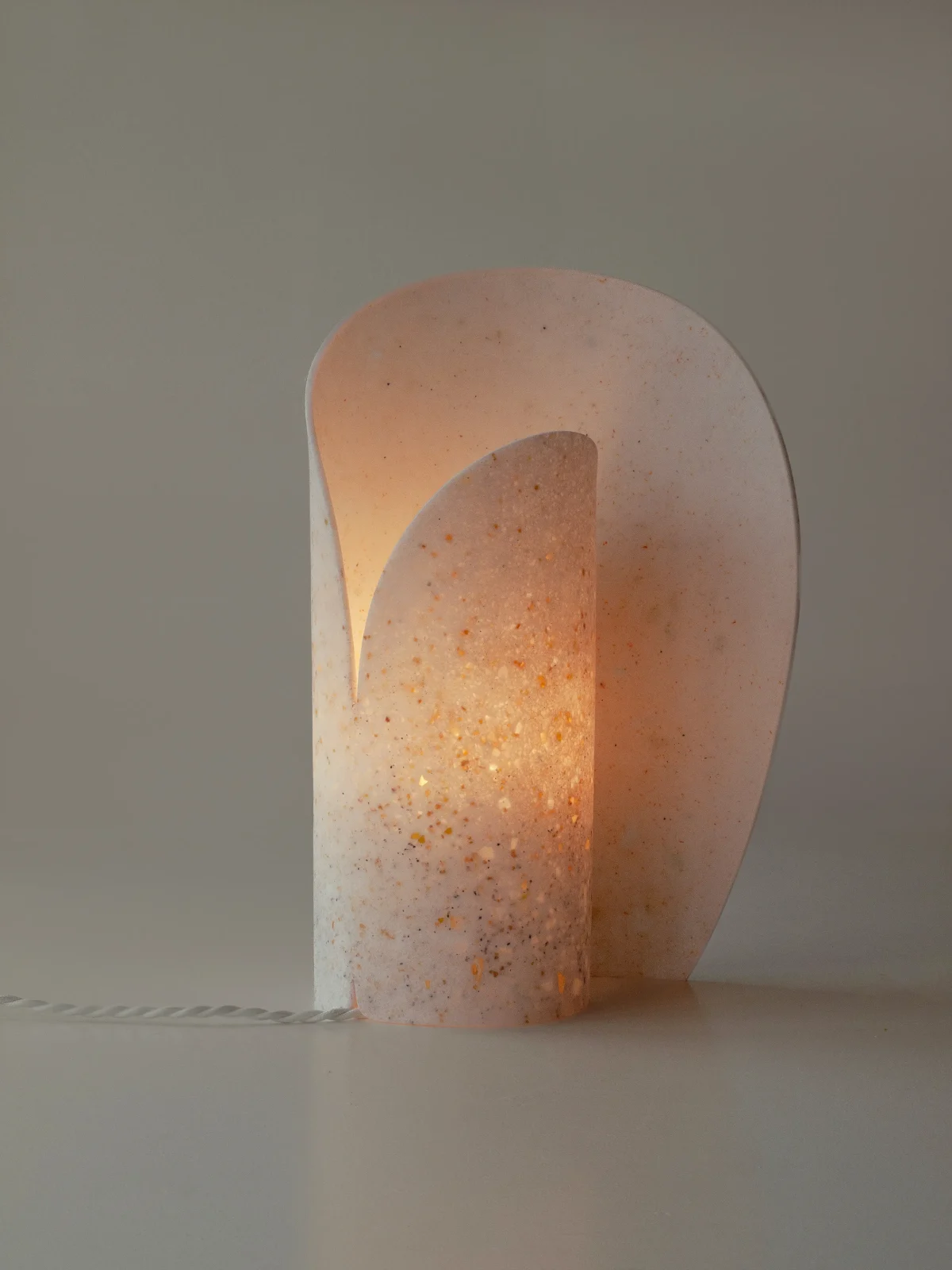
Kalia rises and folds inward like a shell. Lit, a warm amber glow passes through the translucent resin and catches on glass particles embedded inside, so the lamp looks grown rather than built.
By Justyna Poplawska
€536 incl. tax
Synthetic resin in the 21st century
By the mid-20th century, chemistry had learned to imitate nature’s preservative magic. Synthetic resins no longer needed centuries to form, which opened new possibilities for table lamps and objects that seem to float. Even so, the best of them still echo the fluid shapes that first drew people to amber.
Rotonda Table Lamp in Resin by Adrian Cruz

Inspired by the floor plans of Renaissance villas, Rotonda holds its bulb between plates of crystal resin. The result is a balancing act that seems weightless, which is exactly what synthetic resin made possible.
By Adrian Cruz
€2.380 incl. tax
Lullaby and Promenade High Table Lamp in Resin by BDCI

Lullaby is a wireless orb of resin that charges without contact under Promenade High, a fluted cradle shaped like a birdcage. Lift the orb out and it becomes a portable light that follows you through the evening.
By BDCI
€2.200 incl. tax
Resin and craft
Today’s designers walk a careful line between technical control and respect for the material. Rather than forcing resin into perfect shapes, many let it work with paper, sand or pigment, much as amber once formed around whatever it caught. The result is a new kind of craft, seen in resin side tables, pedestals and small objects.
Trace Side Table in Epoxy Resin and Vellum by Calen Knauf Studio

Each Trace table is made by soaking vellum paper in epoxy resin, so a fragile material becomes a rigid, translucent cylinder. It is a quiet piece that lets light through rather than blocking it.
By Calen Knauf Studio
€340 – €380 incl. tax
Flywater Side Table in Epoxy Resin by Calen Knauf Studio

Made for an exhibition in Toronto, Flywater sets a translucent pink resin top, like a pool of still water, on three steel cylinders. It is the more sculptural of Calen Knauf’s two resin tables, and the studio’s best seller of the pair.
By Calen Knauf Studio
€2.838 incl. tax
Four Elements Pedestal in Acrystal Resin by Kajsa Melchior

Kajsa Melchior sculpts this pedestal in sand using air, water and her own body, then casts it in Acrystal, a water-based acrylic resin colored with coal. The rough black surface keeps every trace of the process.
By Kajsa Melchior
€2.500 incl. tax
Desktop Swimming Pool – Speckled Jesmonite Tray/catchall by Craig Barrow

Made from Jesmonite, a water-based resin composite, these small trays look soft but feel heavy in the hand. Designed during lockdown as a tiny indoor oasis, they hold keys, rings or nothing at all.
By Craig Barrow
€127 incl. tax
Caring for resin furniture
Cleaning. Wipe resin with a soft cloth and mild soapy water. Avoid abrasive pads, acetone and alcohol-based cleaners, which can cloud or scratch the surface.
Light and heat. Many resins can yellow slowly in strong, direct sun, so keep translucent pieces out of all-day sunlight. Use coasters and avoid hot pans, since high heat can mark or soften the surface.
Frequently asked questions
What is resin made of?
Natural resin is a sap produced by trees. Synthetic resins such as epoxy combine a liquid resin with a hardener that cures into a solid.
Is amber a resin?
Yes. Amber is tree resin that has fossilized over millions of years.
Is resin furniture durable?
Well-made resin furniture is strong and water-resistant. It can scratch and may yellow in strong sun, so it lasts longest indoors and away from direct heat.
What is Jesmonite?
A water-based composite of mineral powder and acrylic resin. It casts finely, feels like stone and is often used for trays, vases and small furniture.
What is bio-based resin?
Resin that replaces some petroleum-based ingredients with plant-derived ones, such as vegetable oils. See ADORNO’s biomaterials for more.
Resin resonance: past, present and future
Between natural and synthetic, preservation and invention, lies resin’s true raison d’être: not only to protect, but to test the line between what we make and what we keep. Like amber, the best resin furniture holds a moment in place, a bridge between what was and what could be.