The most sustainable shipping box is the one that carries a whole chair in the space of a few boards.
Updated on: October 30, 2026
Flat pack furniture is usually associated with a hex key and a long evening on the floor. Yet the idea of furniture that travels in pieces and is assembled at home is older than any big-box store, and independent designers are now using it for some of their most thoughtful work: lamps that come apart for repair, stools held together by two metal bars, shelves that separate into recyclable materials.
This guide explains what flat pack furniture is, where it comes from, why it can be a more sustainable way to make and ship furniture, how to judge quality, and eight pieces by independent studios that are designed to be taken apart.
What is flat pack furniture?
Flat pack furniture, also called ready-to-assemble (RTA) or knock-down furniture, is shipped in parts and assembled by the owner. Legs, panels and frames are packed flat, so a piece takes up a fraction of the space it would fully built. The best examples go further than saving space: they are designed so that assembly is simple, joints are strong and the piece can be taken apart again without damage.
A short history of flat pack design
In 1859, Michael Thonet designed his Chair No. 14 to be made of a few pieces of steam-bent wood and screws, so that dozens of disassembled chairs could be shipped in a single crate. It became one of the best-selling chairs ever made. In 1956, an IKEA designer famously took the legs off a table to fit it into a car, and the company built its business on flat packs.
In 1974, Italian designer Enzo Mari published Autoprogettazione, a free manual for building simple furniture from pine boards and nails, sent to anyone who wrote to him. Wallpaper* covered a London exhibition that revisited it with contemporary designers, and the same magazine has published a DIY lounge chair by Massproductions inspired by Mari’s idea.
Why flat pack furniture can be sustainable
- Less space in transit: a piece packed flat takes a fraction of the volume of the same piece built, so more fits in each truck, container or van.
- Less packaging: flat parts need less filling and protection than an assembled shape.
- Easier to move: furniture that comes apart goes with you to the next home instead of being left behind.
- Repairable: a broken part can be replaced rather than the whole piece.
- Recyclable: pieces joined with bolts or slots instead of glue can be separated into clean materials at the end of their life.
Flat packing is only one part of the picture. Durable materials, local production and buying less matter as much. Our guide to sustainable design covers the wider principles, and our story on upcycling shows designers reusing what already exists.
How to choose flat pack furniture
- Look at the joints: bolts, metal bars, wooden pegs and precise slots last longer than cam locks pressed into particleboard.
- Check the material: solid wood, aluminum, steel and cork survive repeated assembly; chipboard does not.
- Ask how many tools it needs: the best pieces need none, or only one.
- Think about the second assembly: if you move often, choose a piece designed to be taken apart many times.
- Look for modular systems: modular furniture can grow, shrink or change shape with your home.
8 flat pack and easy-assembly pieces by independent studios
Each piece comes from a different studio, is available on ADORNO and is designed to ship in parts, come apart or fold flat. They are ordered by demand on ADORNO over the last 90 days.
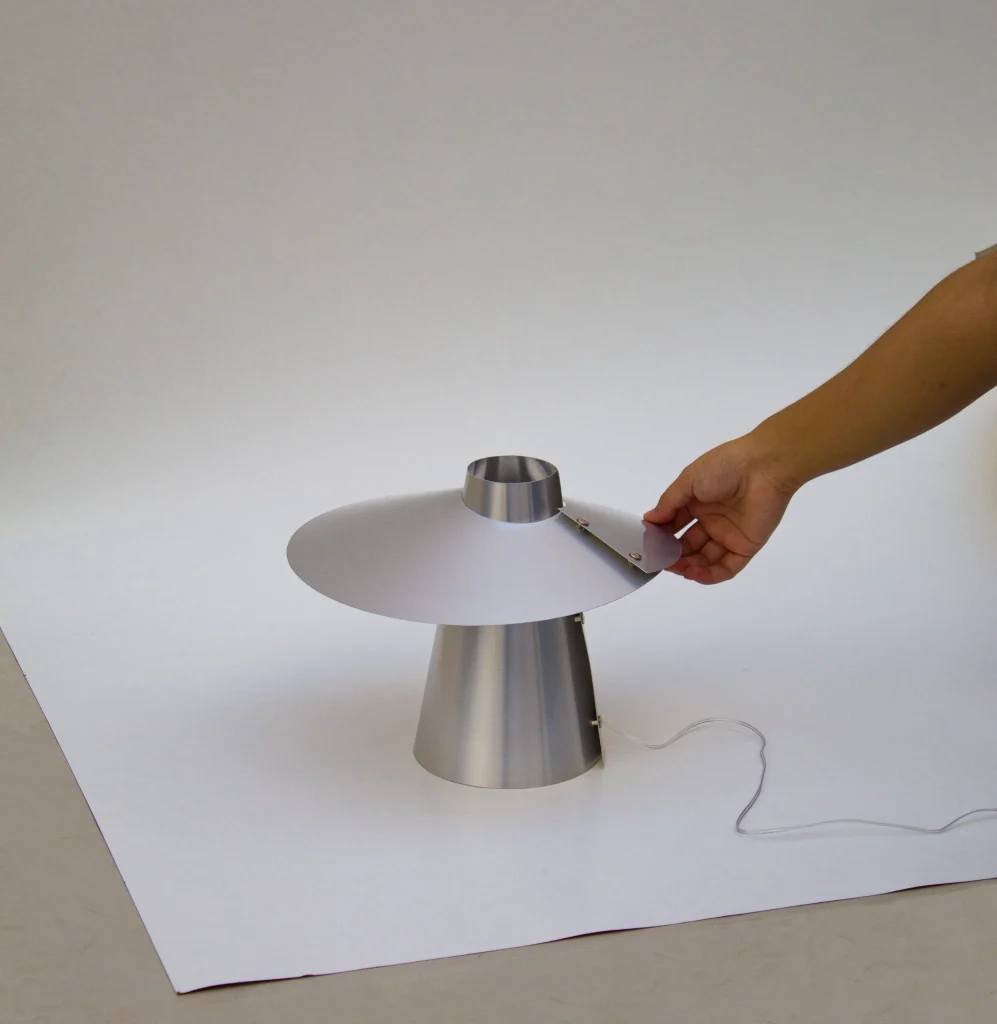
Pa 02 Table Lamp In Polished Aluminum by BuRRo

Mexican studio BuRRo named its Pe and Pa lamps after the Spanish saying “para armarse de Pe a Pa”, from beginning to end. Every part of this polished aluminum lamp comes apart, so it ships and stores flat and can be repaired one piece at a time. The studio wants it to be as practical as a fly swatter sold at a traffic light and as good to look at as a design object. It measures 25 x 25 x 37 cm (9.8 x 9.8 x 14.6 in).
By BuRRo
€110 incl. tax
Ripple 2.0 Coffee Table in Teak Wood and Marble by Tectona Grandis Furniture

Indian studio Tectona Grandis Furniture tops a base of Indian marble with a round slab of reclaimed teak, its center carved in stone like ripples on water. Top and base travel separately and are assembled on arrival, which keeps a heavy table manageable to ship. It is an evolution of Dhruvkant Amin’s Ripple table, eight years in the making, and comes with three white marble spheres.
By Tectona Grandis Furniture
€2.550 incl. tax
The Memory Stool by COSEINCORSO

Belgian studio COSEINCORSO has The Memory Stool made by hand in Italy from three boards of solid oak joined by two stainless steel bars, with no tools needed to put it together. The top carries an engraved date, a memory that travels with the stool from home to home. It measures 61 x 35 x 37 cm (24 x 13.7 x 14.5 in), comes in black or natural oak and joined ADORNO this spring.
By COSEINCORSO
€780 incl. tax
Cork X | Bench 01 – Cork / Metal Bench by Robert Megel
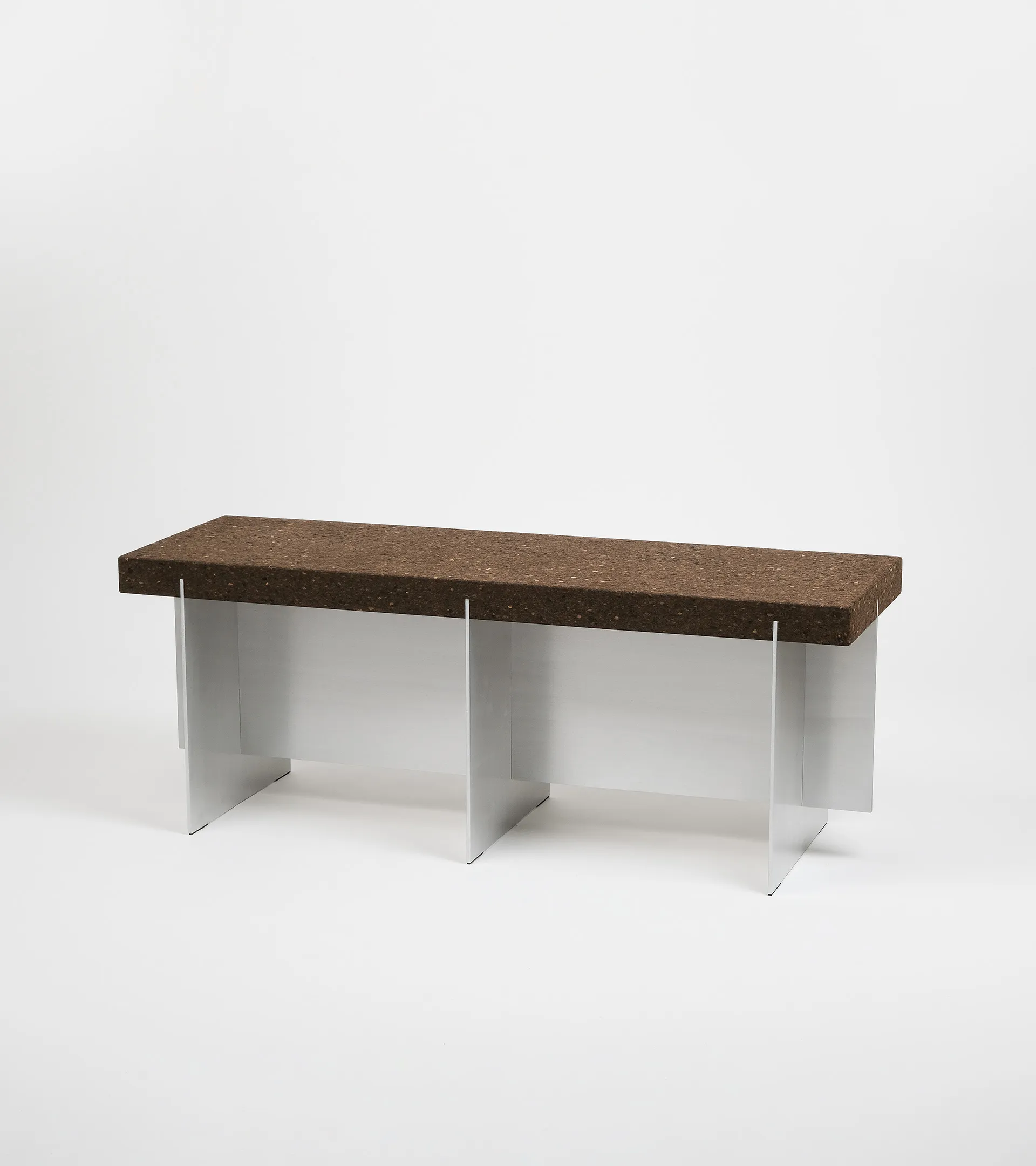
German designer Robert Megel builds this bench for self-assembly from a thick slab of Portuguese cork and three slim plates of satin aluminum. The joinery is so reduced that the bench goes together in minutes and comes apart just as fast. At 120 cm (47.2 in) long, it seats two at a table or by the door. Cork is light, warm to the touch and harvested from the bark of living cork oaks.
By Robert Megel
€1.499 incl. tax
Mortaise Shelf – Cork by Clemence Birot
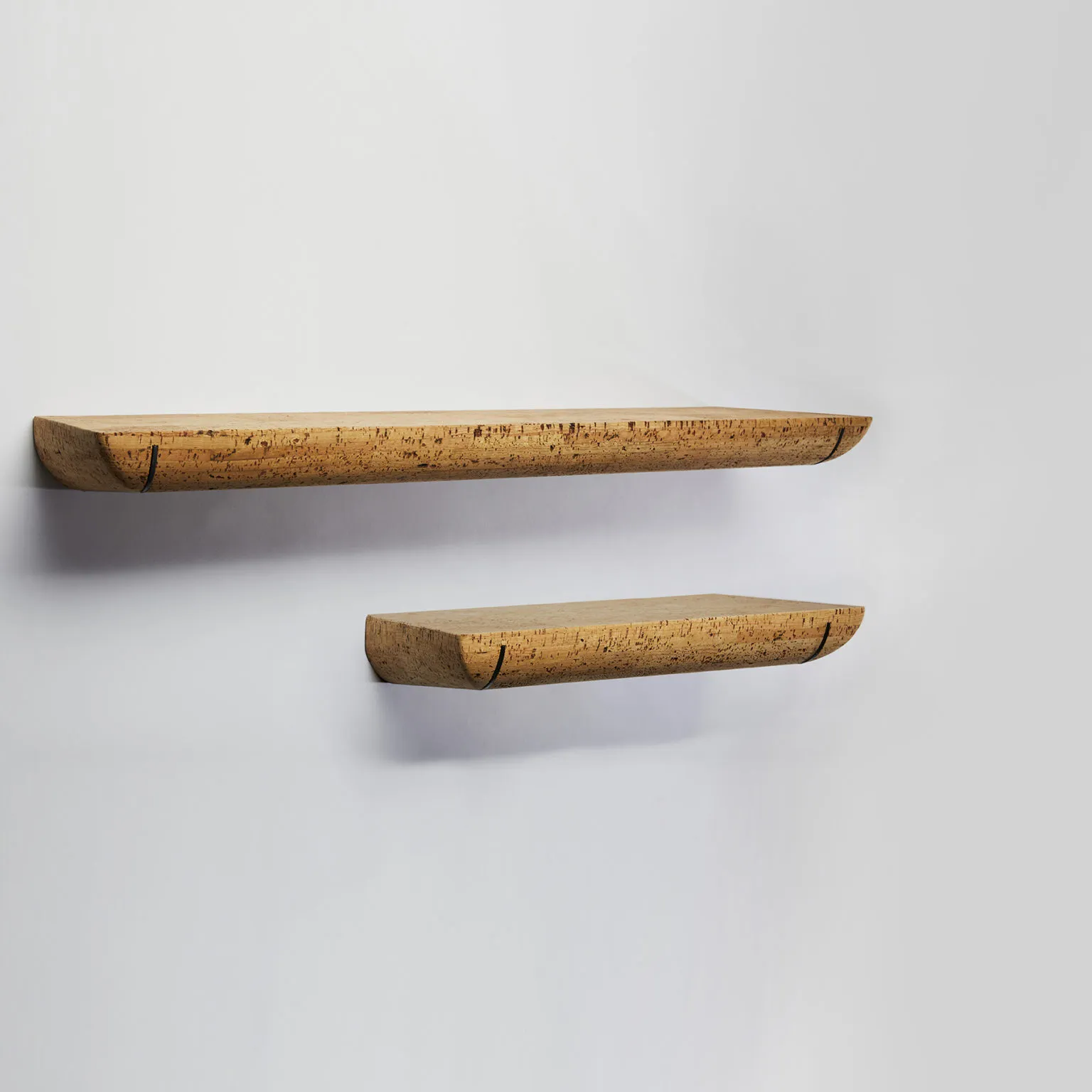
French designer Clemence Birot sets a folded metal frame into a slab of cork without glue. Because the two materials never bond, they can be separated and recycled at the end of the shelf’s life, and the shelf ships flat. It comes in two lengths, 40 cm (15.7 in) and 75 cm (29.5 in).
By Clemence Birot
€384 – €509 incl. tax
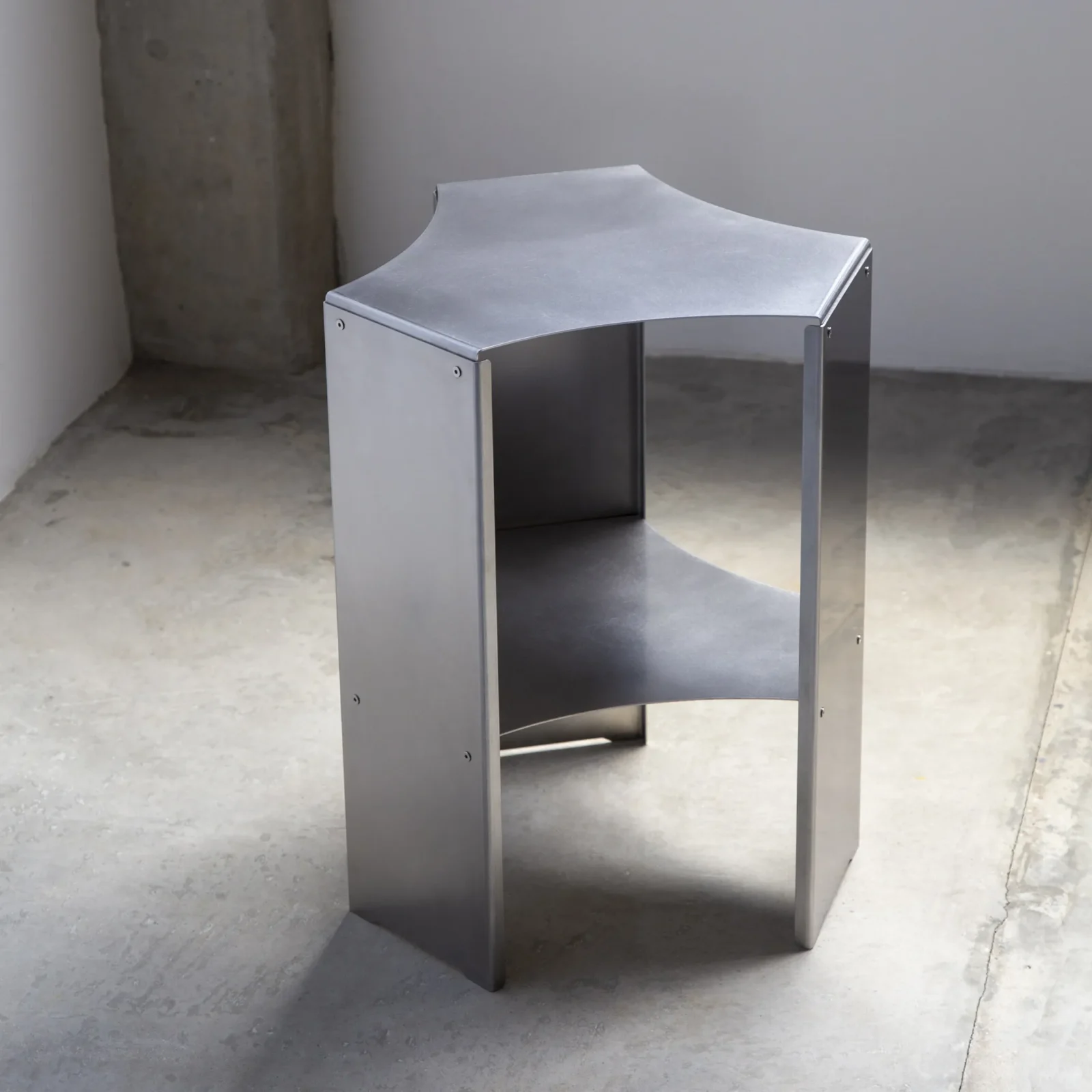
Stackable Stool 2 – Ikea-inspired Aluminum Stool by PRACTICE

Korean studio PRACTICE pays homage to IKEA’s basic stool, the flat-pack classic, and remakes it in raw aluminum. Bolts and nuts hold it together, so it can be taken apart and rebuilt as often as needed. Its stacks save floor space when not in use, and the textured metal is built to outlast the original.
By PRACTICE
€644 incl. tax
Chromodular by Moneo Brock Studio

Madrid studio Moneo Brock builds Chromodular from one material: sheets of polycarbonate, clear for the shelves and colored for the folded modules. It works as a room divider and storage at once, with cavities on both sides. No tools are needed to assemble it, and the modules nest inside one another when taken apart. It measures 212 x 48 x 179 cm (83.5 x 18.9 x 70.5 in).
By Moneo Brock Studio
€9.000 incl. tax
NoAr stool by Carol Gay

Brazilian designer Carol Gay braids the seat of NoAr by hand from two strips of recycled tire rubber and sets it on a folding coated metal base. The base folds flat for shipping, and the stools stack to save space. It is the most affordable seat here and one of the few pieces that is both flat-packed and upcycled.
By Carol Gay
€309 incl. tax
Where flat pack furniture works best
Flat pack pieces suit anyone who moves often, lives in a small apartment or furnishes a second home. Folding and stacking stools are extra seats that disappear when guests leave. Self-assembly benches and coffee tables reach upper floors through narrow stairwells. Wall shelves, table lamps and room dividers that come apart can be rearranged as a room changes.
How to assemble and care for flat pack furniture
Assemble on a soft rug or the box itself to protect the parts. Hand-tighten bolts first, check the piece is level and square, then tighten fully, but not so hard that you crush wood or strip threads. Check bolts again after a few weeks of use, as wood settles. When moving, keep every screw and bar in a labeled bag taped to the largest part. Clean aluminum with mild soap and water, wipe cork with a barely damp cloth, and oil solid wood once or twice a year.
FAQ
What is flat pack furniture?
Furniture that is shipped in parts, packed flat, and assembled by the owner. It is also called ready-to-assemble (RTA) or knock-down furniture.
Is flat pack furniture good quality?
It depends on the materials and joints, not the packaging. Pieces in solid wood, aluminum or steel with bolted or pegged joints can last for generations, while particleboard with cam locks often does not survive a move.
Is flat pack furniture sustainable?
It can be. It takes less space to ship, needs less packaging and is easier to move, repair and recycle. It is most sustainable when the materials are durable and the piece is designed to be taken apart and rebuilt.
What is the difference between flat pack and knock-down furniture?
They mean almost the same thing. Knock-down furniture is designed to be taken apart and reassembled, while flat pack describes how it is packed and shipped. Most knock-down furniture is shipped flat.
Who invented flat pack furniture?
Michael Thonet shipped disassembled bentwood chairs in the 19th century, and IKEA made flat packs a mass-market idea from 1956.
Can flat pack furniture be disassembled and moved?
Yes, if it was designed for it. Bolts, pegs and slots can be undone many times, while glued or cam-locked joints may loosen after the first move.
Browse more modular and flat pack furniture on ADORNO.