A good book deserves better light than a phone flashlight propped against a pillow.
For most of the twentieth century, the reading lamp was an afterthought: a bulb, a shade, a switch, done. Lately, that has changed. As screens have taken over most of the day, the hour spent with an actual book has become something people protect, and the light that makes it possible has followed suit. Consequently, a reading lamp is no longer just a fixture beside the bed. It is a small, daily ritual object, chosen the way you might choose a chair or a rug — for what it does to a room, not just for what it does to a page. Accordingly, the market has responded with fixtures that look less like hardware store inventory and more like the rest of the furniture around them.
ADORNO’s collection of lamps treats reading light as a design problem worth solving properly. Below, eight pieces from independent studios — in alabaster, hand-blown glass, reclaimed brick, and bio-based polymers — cover the floor lamp, the table lamp, and the wall-mounted sconce, each suited to a different kind of reader. Notably, none of them were designed to disappear into the background. They were designed to be looked at first, and read by second. In addition, several ship with adjustable heads or dimmable drivers, so the same fixture that anchors a corner by day can be dialed down to something gentler once the lights elsewhere in the house go off.
How to choose a reading lamp
The first decision is placement, not style. A lamp that sits beside an armchair needs to throw light down and forward, onto the page, without spilling into the eyes of anyone across the room. A bedside piece, by contrast, wants a lower, warmer glow that will not fight with sleep. Floor lamps suit a dedicated reading corner; table lamps suit a nightstand or a desk; wall-mounted sconces free up surface space in a small bedroom where every inch of the nightstand is already spoken for. Specifically, measure the seat height and the surface height of whatever the lamp will sit beside before shopping by eye alone — a shade angled two inches too high or low undoes most of the benefit of an otherwise well-designed fixture.
Beyond placement, the light itself matters more than the wattage on the box. Look for an adjustable shade or head, which lets you direct the beam precisely rather than lighting the whole room to read one page. Dimmable sources are worth the small added cost, since a passage read at midnight wants less light than the same page at seven in the evening. Finally, consider the piece as an object first — a lamp beside a bed is visible for more hours of the day switched off than switched on, so its form should earn a place on the nightstand independent of what it does after dark. On the other hand, a lamp reserved for a rarely used guest room can afford to prioritize output over presence, since no one is looking at it for long.
Materials and construction
Alabaster and stone
Alabaster has become something of a signature material for ambient lighting, and for good reason. Carved thin enough, the stone turns translucent, so the lamp itself becomes the shade, glowing with the warm, uneven light that only a natural material can produce. Every block carries its own veining, which means no two lamps read quite the same even within an identical edition. As a result, an alabaster reading lamp tends to double as a piece of quiet sculpture on the nightstand once the light is off. By contrast with a painted ceramic base, the stone’s surface changes subtly with the angle of view, catching daylight differently in the morning than it catches lamplight at night.
Glass, blown and frosted
Hand-blown glass carries the mark of the maker’s breath in every irregular curve, and no two pieces leave the furnace identical. Frosted glass, meanwhile, diffuses a bulb’s harsh point of light into something soft and even, which is precisely what a page wants. Together, these two treatments of glass span both ends of a reading lamp’s job: one throws atmosphere onto a wall, the other throws usable light onto a book. Notably, both hold up well over decades of use, since glass neither yellows nor degrades the way some plastics eventually do.
Reclaimed and upcycled materials
Some of the most interesting reading lamps on the market right now are built from things that already had a life. Reclaimed brick, still bearing a century-old maker’s stamp, can anchor a lamp with the same weight it once gave a building. Oxidized steel and reworked concrete, similarly, carry the trace of previous use rather than hiding it. Consequently, these pieces read less like new objects and more like objects that have simply changed jobs.
Bio-based and 3D-printed polymers
A newer generation of studios is building lamps from plant-based PLA, sometimes bulked out with recycled coffee grounds, sometimes paired with hand-applied paper in a nod to traditional craft. These materials print in geometries a mold could never achieve, which is precisely why they tend to produce the most unusual silhouettes in a lamp collection. In addition, the process is low-waste and largely biodegradable, so the sustainability case doesn’t come at the expense of form.
Wood, aluminum, and natural fiber
Aluminum tubing, hand-bent rather than machine-stamped, brings a lightness that stone and glass can’t match, while natural fibers and wood composites soften a floor lamp’s presence so it reads as furniture rather than fixture. Altogether, this family of materials tends to produce the most casual, livable reading lamps in the group — pieces built to be moved from room to room as easily as a side table.
Citiez 0.1 by Niels Stoeltie
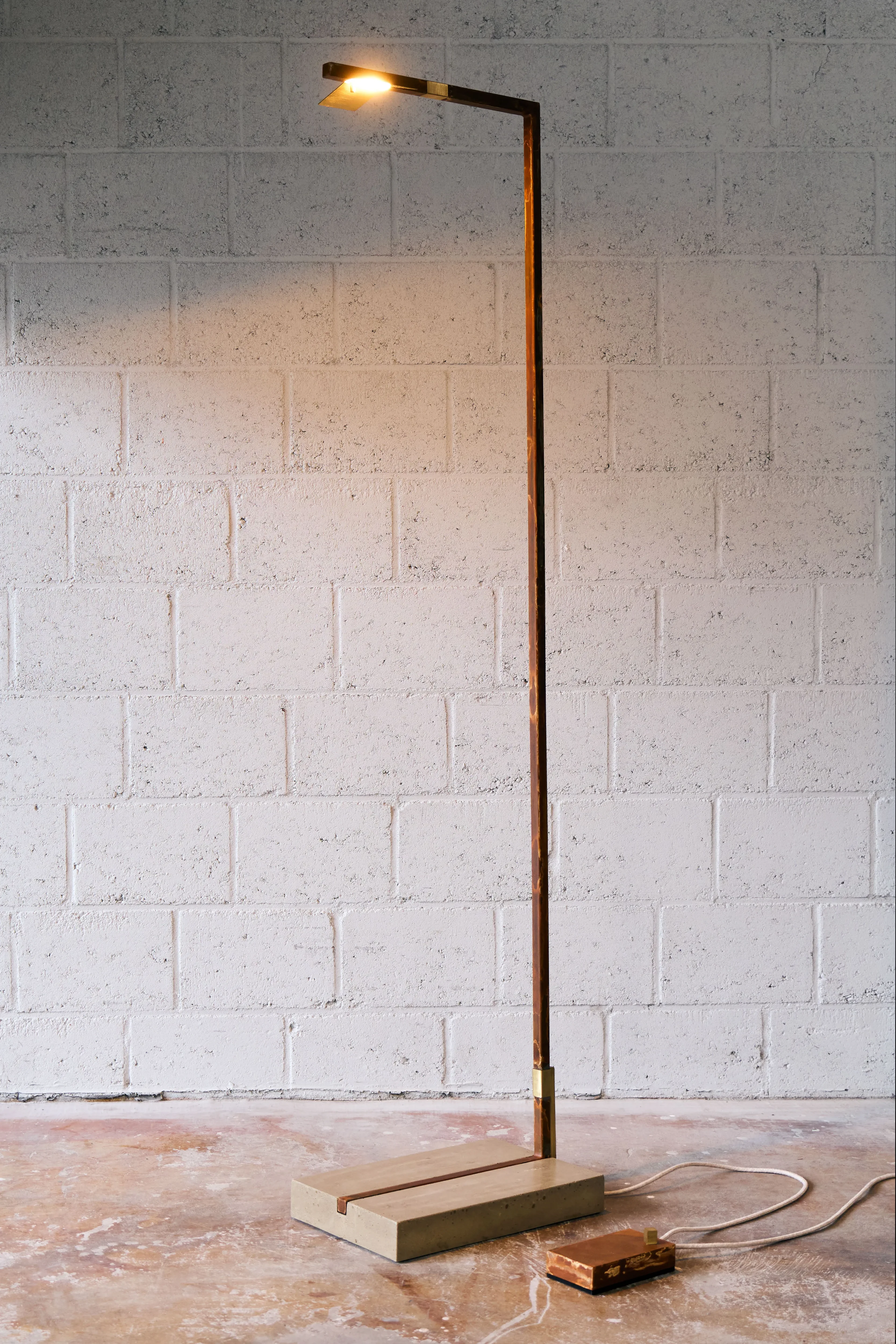
Built from oxidized steel, brushed brass, and partially recycled concrete, Citiez 0.1 translates the layered facades of Amsterdam’s canal houses into a grounded floor lamp. Its shade adjusts and its 9V COB LED dims, so the beam can be aimed squarely at a page or opened up to soften an entire reading corner. Notably, leftover metals from local workshops carry visible traces of their former use, which gives the piece a sense of history that a factory-fresh floor lamp simply can’t fake.
By Niels Stoeltie
€3.050 – €3.350 incl. tax
Helen Table Lamp by Solmistudio
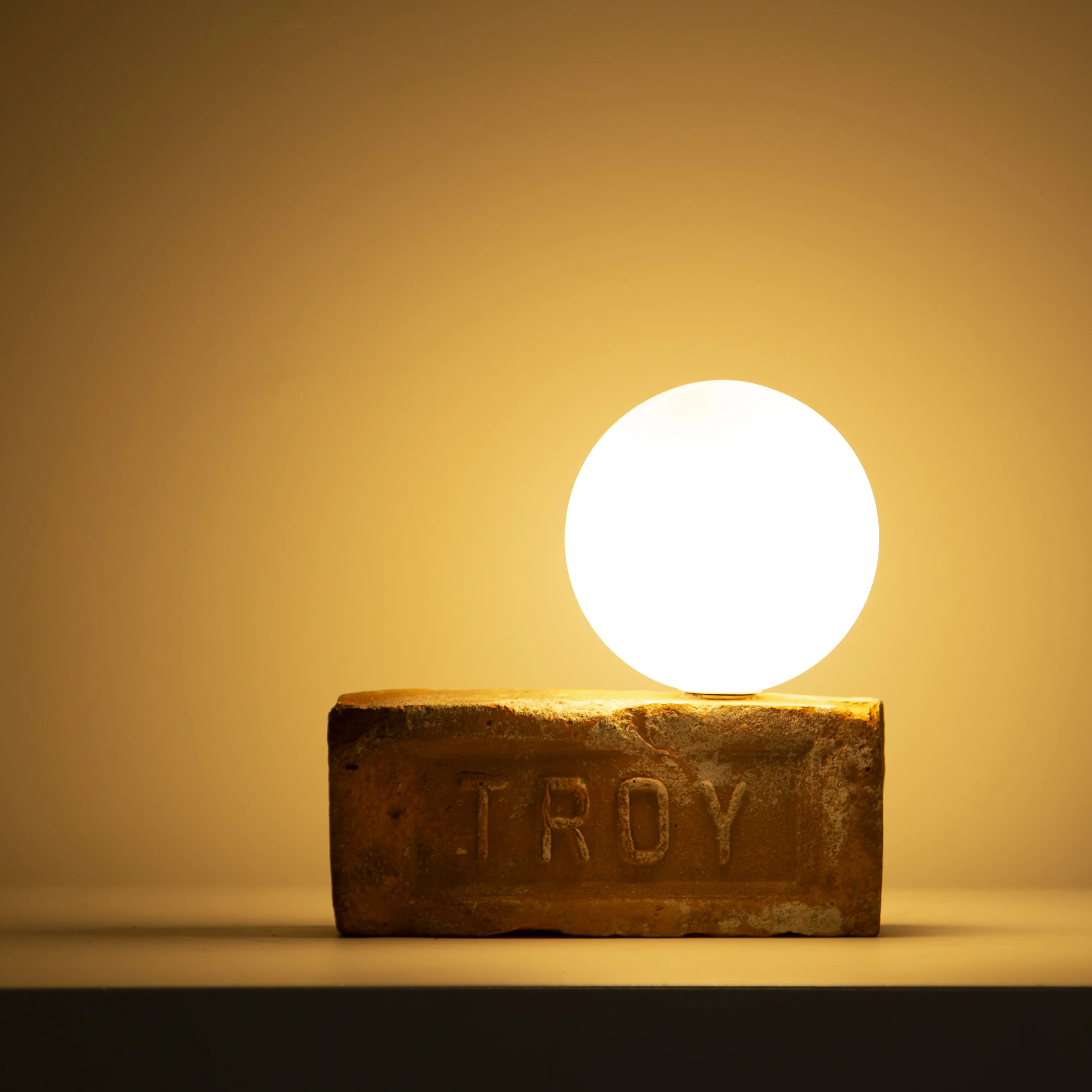
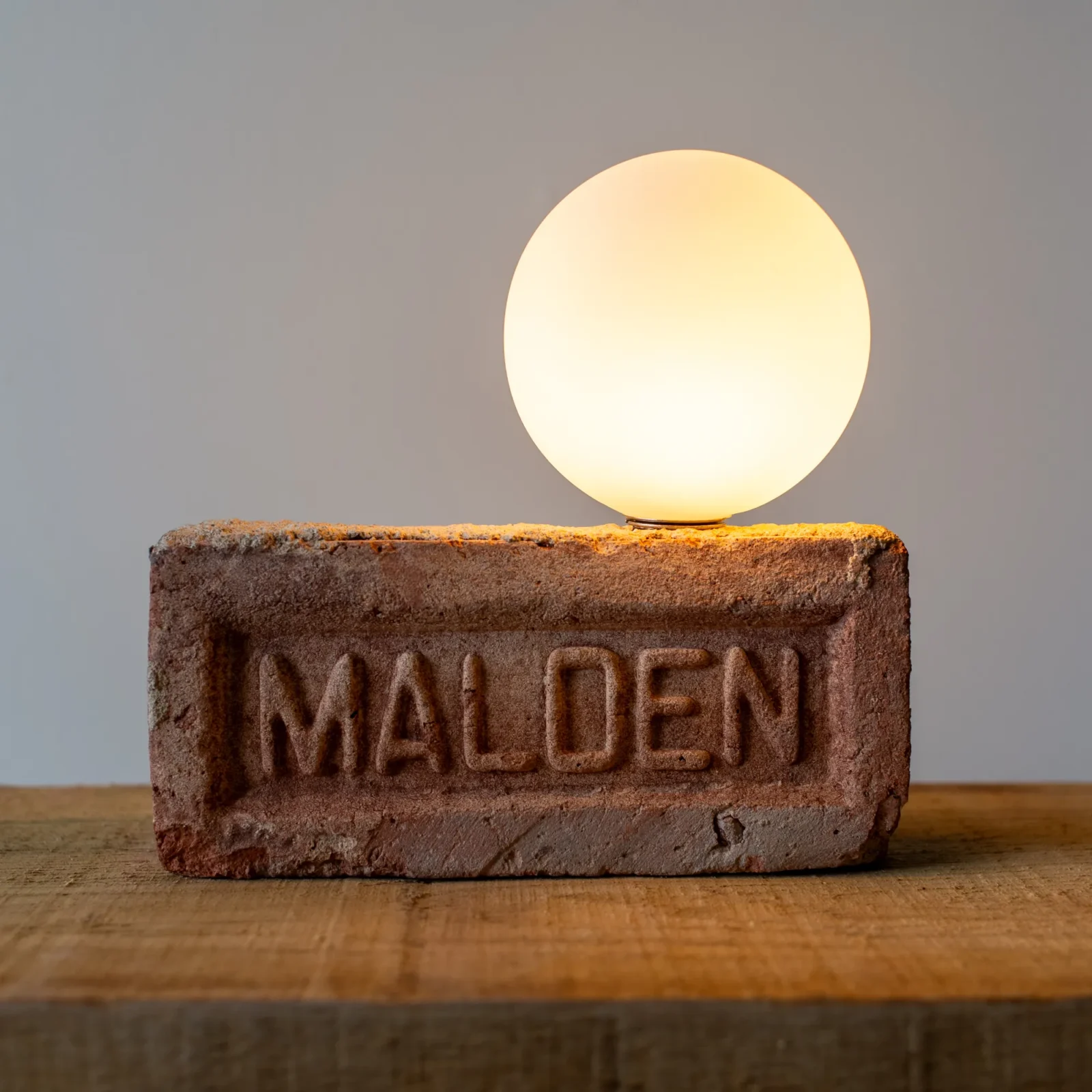
Solmistudio built Helen from reclaimed nineteenth-century brick sourced in Troy, New York, each block still stamped by the maker who fired it a century ago. A weightless, frosted glass globe rests on top, throwing a warm 2700K glow at 400 lumens — enough to read a full chapter without strain. The contrast is the point: heavy, weathered masonry beneath a sphere that looks like it might float away. As a result, Helen works as well on a study desk as it does on a nightstand.
By Solmistudio
€350 – €500 incl. tax
Umbra Table Lamp by Luis Gimeno Design
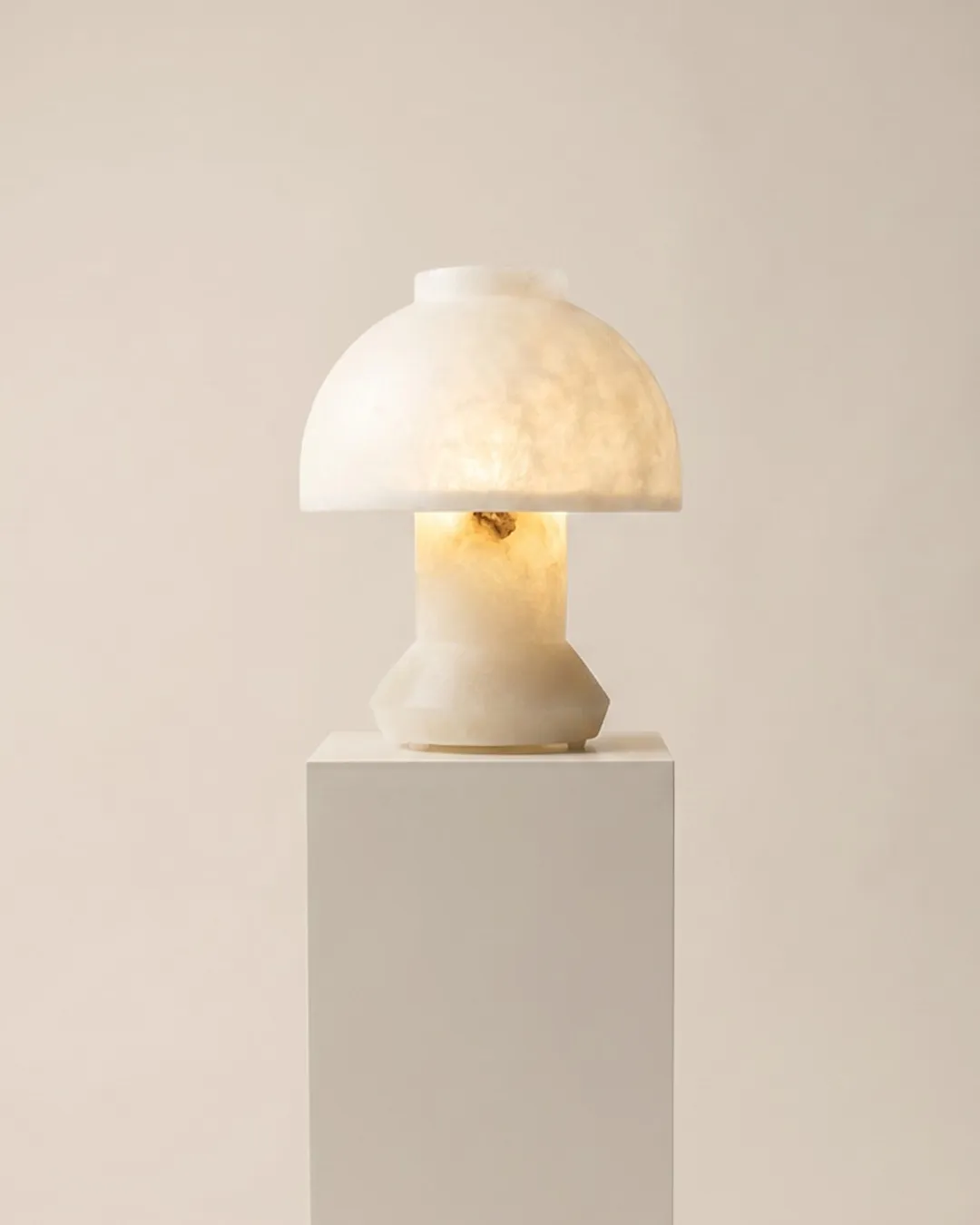
Hand-carved from alabaster, Umbra borrows its proportions from the traditional paper lantern, setting a softly lit upper volume against a dark brown stone base. Light passes through the natural veining of the stone, so the glow shifts slightly depending on where the block was quarried — no two lamps in the edition are lit quite the same way. Consequently, Umbra reads as a bedside piece built first for atmosphere and second for the page, though it comfortably does both.
By Luis Gimeno Design
€1.990 – €2.400 incl. tax
Nova Hand-blown Glass Wall Lamp by Ceren Gürkan
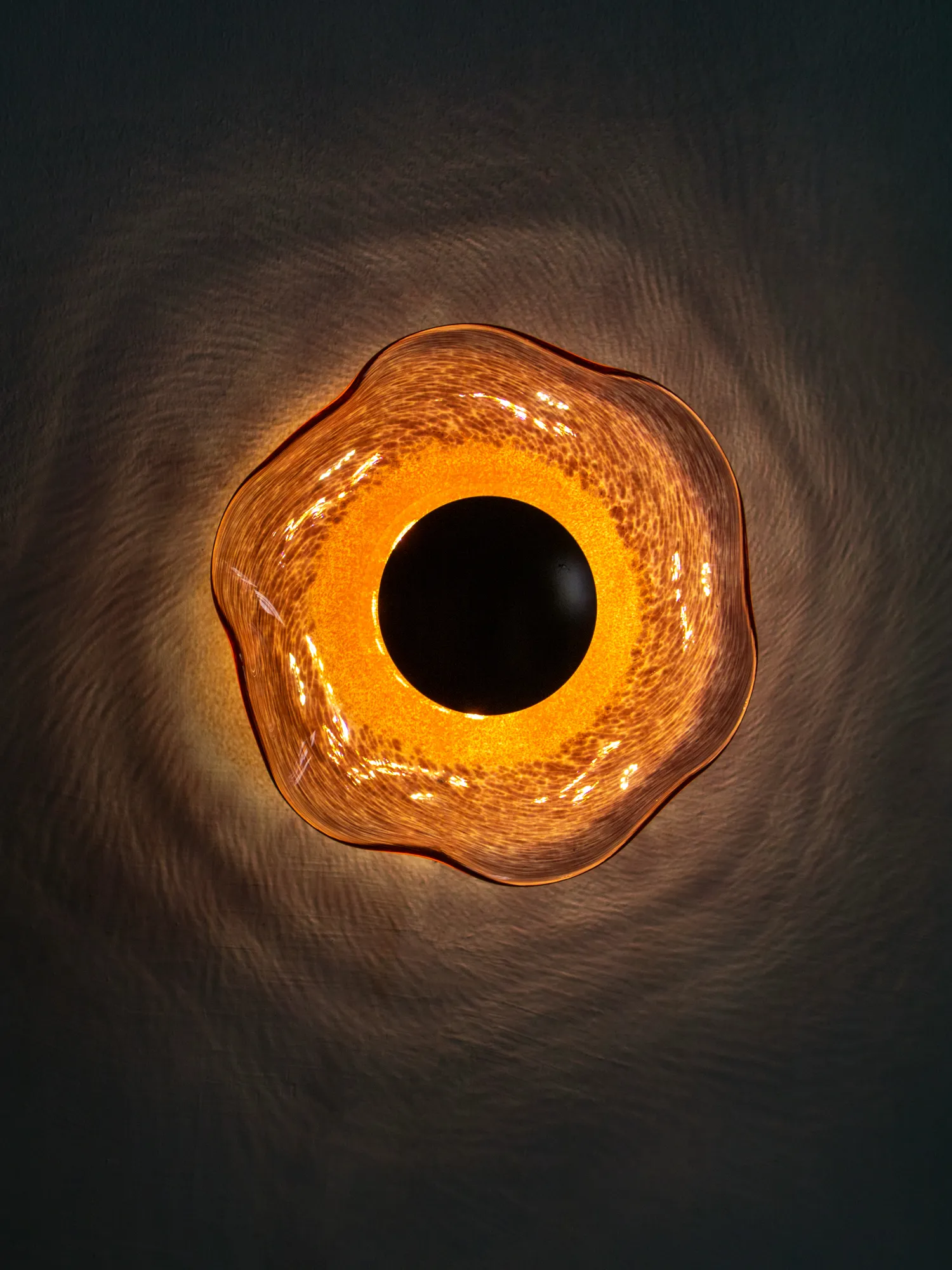
Named for the sudden flare of a supernova, Nova is entirely hand-blown, its glass surface left with the organic texture only breath and gravity can produce. Mounted above a headboard or beside an armchair, it frees the nightstand entirely, which matters in any bedroom too small for a table lamp. Furthermore, its sculptural depth means it earns wall space even in rooms where reading isn’t the primary activity — a rare quality in a fixture built around a single task.
By Ceren Gürkan
€700 incl. tax
Kuni Floor Lamp by Joyful Objects, Yes!
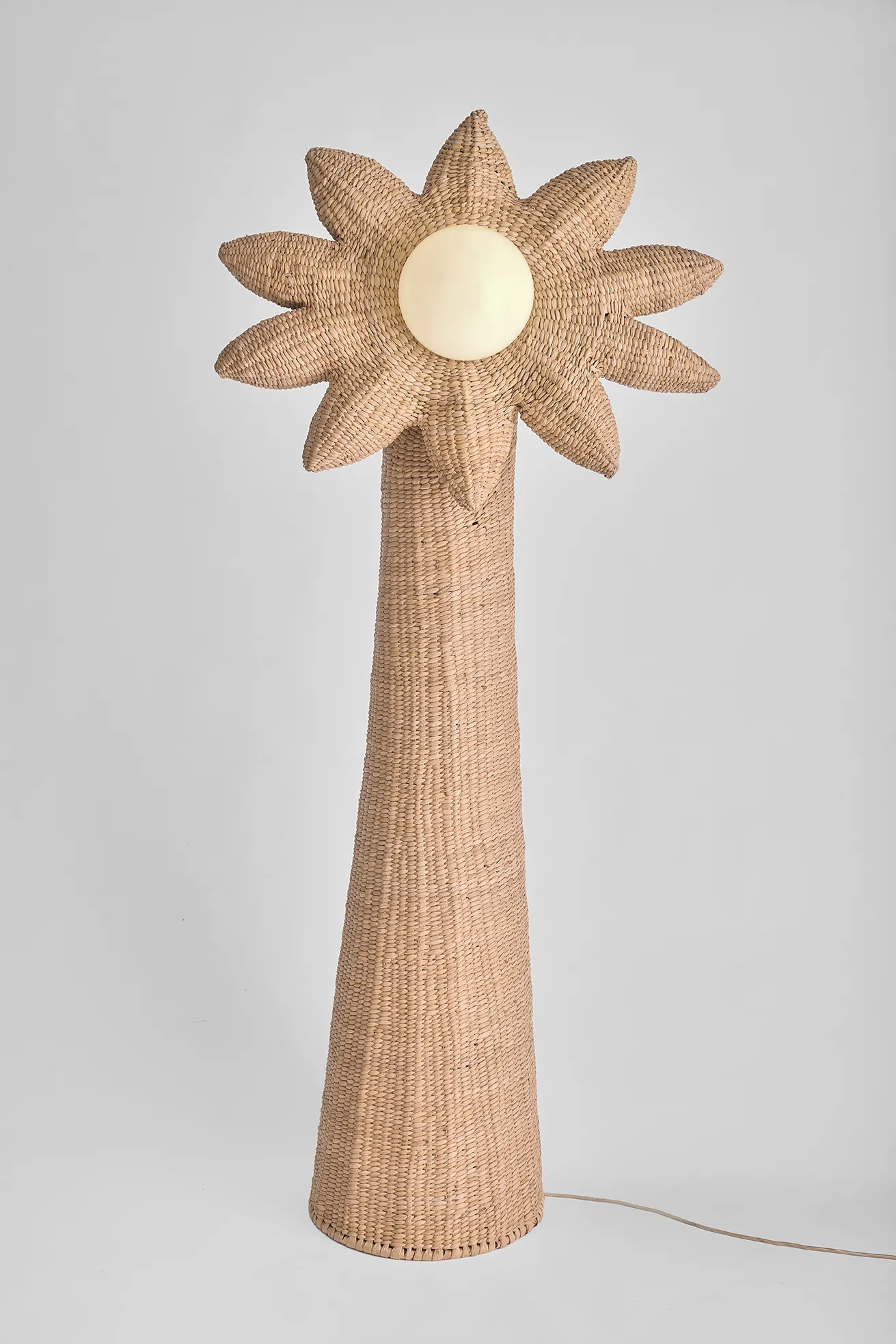
Joyful Objects, Yes! hand-weaves Kuni entirely from natural fiber over a sturdy metal frame, made start to finish in Mexico. Its rounded, sun-like silhouette nods to the Mexican skies that inspired it, and at 180 centimeters tall, it holds a commanding floor presence in any corner it occupies. Consequently, Kuni pairs a rustic, handwoven texture with a genuinely reliable sales record — a rare combination in a category this sculptural.
By Joyful Objects, Yes!
€2.900 incl. tax
Off-form Lamp, Cube by Nao Iyama
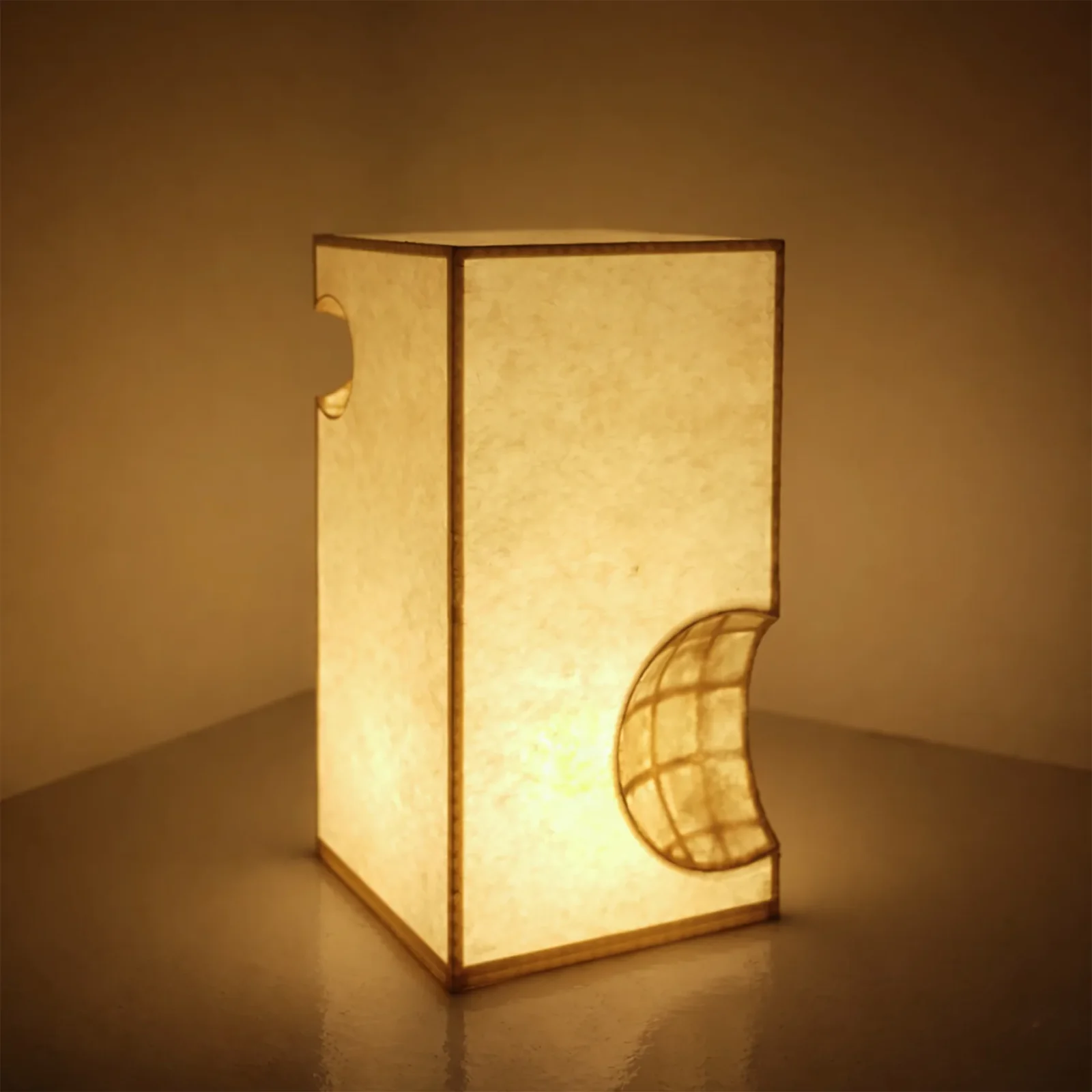
Nao Iyama builds the Off-Form Lamp series from handmade mulberry washi paper stretched over a 3D-printed internal structure, a deliberate pairing of a 1,500-year-old Japanese material with digital fabrication. Cube, the original form in the series, leans into soft distortion and unexpected proportion rather than the perfect symmetry traditional washi lamps pursue. Its shade is repairable rather than disposable, and its diffused glow suits a nightstand better than a desk. In other words, this is the lamp for a reader who wants ambiance around the page as much as light on it. Specifically, its irregular, hand-formed silhouette makes it a poor match for anyone after a strictly symmetrical bedside pair — and a strong one for a reader who wants their nightstand to look like nobody else’s.
By Nao Iyama
€1.350 incl. tax
Blampa90 M Floor Lamp by Bluba Studio
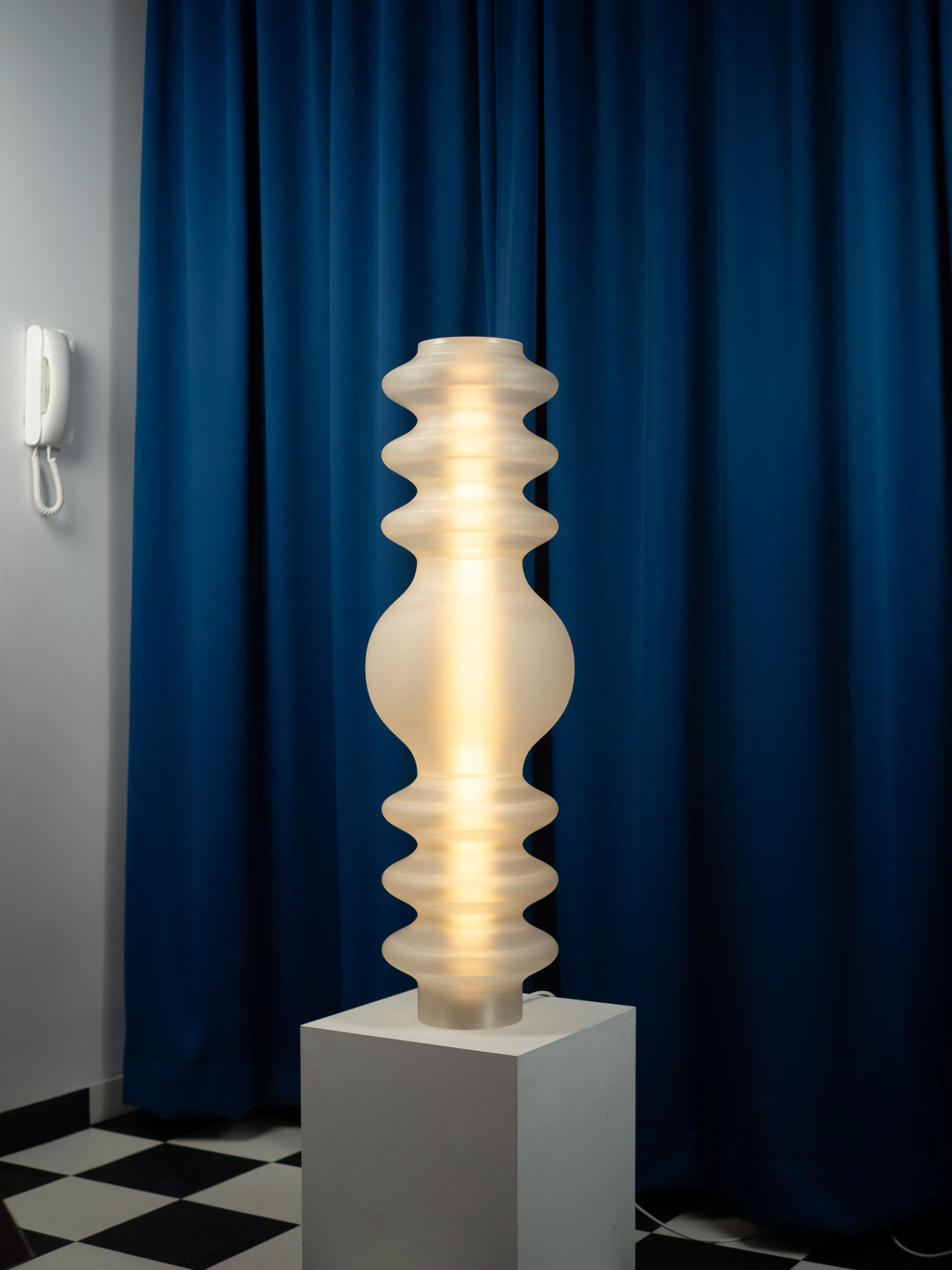
Bluba Studio 3D prints Blampa90 from biodegradable PLA in Poland, building each shade from interchangeable modules borrowed loosely from Memphis-era geometry. Switched off, the lamp stays a clean translucent white; switched on, it can glow in pink, blue, green, or a neutral white suited to actual reading. Accordingly, Blampa90 is less a fixed object than a lighting system — one that can shift from a colorful accent to serious task lighting depending on the module chosen for the night.
By BLUBA Studio
€570 €542 incl. tax
Mori Lamp by Julie Mallet Studio

Julie Mallet casts Mori in Marseille from plant-based PLA enriched with recycled coffee grounds, shaping the shade into the silhouette of a morel mushroom found on a woodland walk. Light passes through the textured surface in an uneven, dappled way, diffusing into a warm glow rather than a hard beam. Notably, Mori proves a reading lamp doesn’t need a four-figure price tag to earn a spot on the nightstand — its quiet presence functions equally as sculpture and as light.
By Julie Mallet Studio
€146 incl. tax
Reading lamps, room by room
Living room
In a living room, a floor lamp positioned just behind and to the side of an armchair does the most work, throwing light over the shoulder and onto the page without casting the reader’s own shadow across it. A piece like Kuni or Citiez 0.1 can anchor a reading chair the way a side table anchors a sofa, giving the corner a reason to exist beyond passing through it. Furthermore, a floor lamp scaled to the chair rather than the room tends to feel intentional rather than merely present.
Bedroom
The bedroom is where most reading actually happens, and where the lamp has the least room to be wrong. A table lamp on the nightstand, dimmed low and warm, lets one partner read while the other sleeps; a wall-mounted piece like Nova solves the same problem while freeing the surface for a glass of water and a phone charger. Either way, warmth matters more here than brightness. Finally, a fixture with a soft, in-line switch is worth the small extra cost, since fumbling for a hard-to-find button in the dark defeats the point of a bedside lamp entirely.
Reading corner and home office
A dedicated reading corner rewards a taller floor lamp with an adjustable head, since the goal is to direct light precisely rather than flood the whole nook. The same logic carries into a home office, where a desk lamp with a dimmer earns its keep across long stretches of screen work followed by a few pages of something that isn’t a screen. Indeed, the two spaces increasingly overlap, since the same chair that holds a laptop by day often holds a novel by night.
Entryway and hallway
Reading lamps rarely get invited into a hallway, but a sculptural piece — Off-form’s Cube, say, or Mori — can double duty there, adding a warm pool of light near a console table by day and migrating to a favorite chair by night. Given how portable a table lamp is, there is no reason to confine it to one address in the house.
Troubleshooting reading lamps
Stability on uneven floors
A tall floor lamp on an old or uneven floor can rock at the base rather than the head, which is more annoying to fix after the fact than before. Accordingly, check for an adjustable foot or felt pad kit at setup, and place heavier bases like Kuni’s or Blampa90’s away from high-traffic paths where a stray foot could catch the cord.
Specifying and replacing bulbs
Most pieces here ship built for a standard E26 or E27 socket, which keeps replacement simple almost anywhere. For reading specifically, look for a 2700–3000K warm white bulb around 400–800 lumens; anything cooler or brighter tends to feel closer to task lighting for work than the softer light a novel deserves.
Cords, switches, and dimmers
An in-line switch on the cord is easier to find in the dark than a switch buried under a shade, which matters more than it sounds like it should at eleven at night. Consequently, if a lamp doesn’t ship with built-in dimming, an in-line dimmer switch is a cheap, reversible upgrade rather than a reason to pass on an otherwise perfect piece.
Cleaning shades and intricate surfaces
Alabaster and glass shades want a dry microfiber cloth and nothing wetter; both materials can stain if liquid cleaner seeps into a seam. Similarly, textured or 3D-printed surfaces, like Off-form’s paper shade or Blampa90’s ribbed modules, collect dust in their grooves and are best cleared with a soft brush rather than a cloth that could snag.
Rewiring and voltage for your country
Several pieces in this collection, including Citiez 0.1 and Off-form’s Cube, are offered in multiple voltage and plug configurations, so it is worth specifying your country at checkout rather than adapting a plug after delivery. Otherwise, where a lamp ships EU-only, a certified adapter is a safer route than rewiring the fixture yourself.
Frequently asked questions
How tall should a reading lamp be?
For a floor lamp beside a chair, aim for a shade that sits roughly level with or just above the seated reader’s shoulder — around 140 to 160 centimeters overall. For a table lamp, the bottom of the shade should sit near eye level when seated, so the bulb itself stays out of view.
What bulb temperature is best for reading?
Warm white, in the 2700–3000K range, is the standard recommendation, since it reduces eye strain over long sessions compared with cooler, bluer light. By contrast, daylight-balanced bulbs above 4000K suit close work like sewing more than they suit a novel before bed.
Can I use a dimmable LED in any reading lamp?
Only if the lamp’s switch or driver is dimmer-compatible — check the specification before assuming. Several pieces here, including Citiez 0.1 and Blampa90, ship with dimming built in, which removes the guesswork entirely.
How do I stop a reading lamp from overheating?
Stick to the wattage specified for the fixture, and favor LED bulbs, which run far cooler than incandescent ones. Specifically, this matters for paper and bio-based shades, like Off-form’s washi paper or Mori’s PLA shell, where a hot bulb sitting close to the material can shorten its life.
Floor lamp or table lamp for reading in bed?
A table lamp within arm’s reach is generally the more practical choice for bed, since it can be switched off without getting up. That said, a wall-mounted piece like Nova solves the same problem while leaving the nightstand entirely clear — worth considering in a smaller bedroom.
Is warm light or bright white light easier on the eyes?
For most readers, warm light causes noticeably less fatigue over an hour or more, which is why the majority of pieces in this collection default to a 2700K bulb. For residential lighting, warmer color temperatures are increasingly the default recommendation for spaces built around rest rather than work.
Why reading lamps earn their place
A reading lamp gets more daily use than almost any other object in a home, switched on and off in the same small ritual, night after night. Given that frequency, it makes little sense to treat it as an afterthought bought in bulk from wherever is cheapest. The eight pieces collected here — in alabaster, glass, reclaimed brick, and bio-based polymer — treat the reading lamp the way ADORNO treats every category: as an object worth living with, not simply owning. Subsequently, the choice of lamp becomes less about matching a decor scheme and more about matching a habit — the hour before sleep, the Sunday afternoon in an armchair, the late chapter finished by a light no one else in the house even notices is on.
Ultimately, the best reading lamp is the one that disappears into the habit of reading itself, noticed only when it’s switched off and the room goes dark too soon. Whether that means a hand-blown sconce freeing up a crowded nightstand, or a sculptural floor lamp anchoring a corner that finally has a reason to be sat in, each piece here was collected first for its presence in a room and second for the light it throws on a page. That order, more than anything, is what separates a design piece from a fixture.