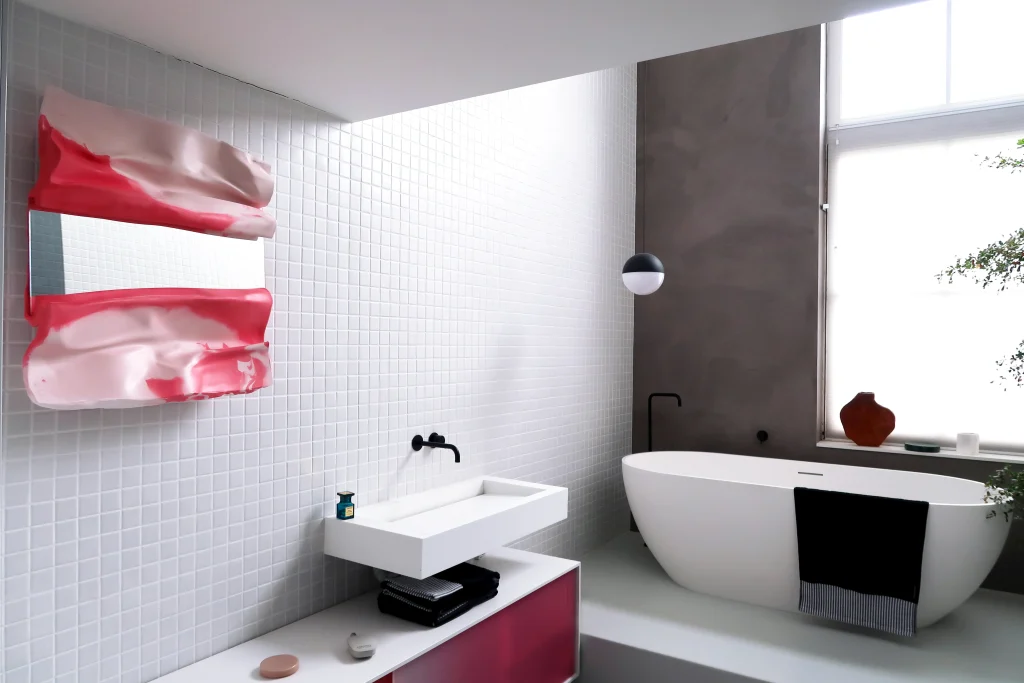
A bathroom is the smallest room in the house and the one asked to hold the most. Something has to give, and usually it is the surfaces.
Bathroom storage advice almost always arrives as a shopping list: buy a taller cabinet, add a unit over the toilet, get a caddy for the shower. That approach treats the room as a container problem, and it explains why so many bathrooms end up with more storage and no more order — every new box arrives full within a fortnight.
The more useful way in is to work out what a bathroom actually has to hold, then decide what deserves to be visible and what does not. Consequently this guide starts with the audit, moves through towels, vertical space, countertops and mirrors, and ends with the part that gets left out entirely: which materials survive a room that is soaked in steam twice a day. Pieces from independent studios on ADORNO appear throughout, in folded steel, cork, oak, aluminium and cast cement.
Start with what the room has to hold
Before adding anything, sort what is already in the room into four groups. The sorting does more work than any cabinet.
- Daily, wet hands. Soap, toothbrush, the one face cream you actually use. These need to be reachable without opening anything.
- Daily, dry hands. Towels, hairbrush, razor. Hooks and open shelves suit these.
- Weekly or occasional. Spare rolls, refills, the hairdryer. Closed storage, and it does not need to be at eye level.
- Should not be in a bathroom at all. Medicines degrade in heat and humidity, most cosmetics have a shorter life in steam, and spare linen picks up damp. Moving these out is the single largest space gain available, and it costs nothing.
That last category is usually a third of the contents. Notably, most people reach for a bigger cabinet at precisely the moment they should be emptying the one they have.
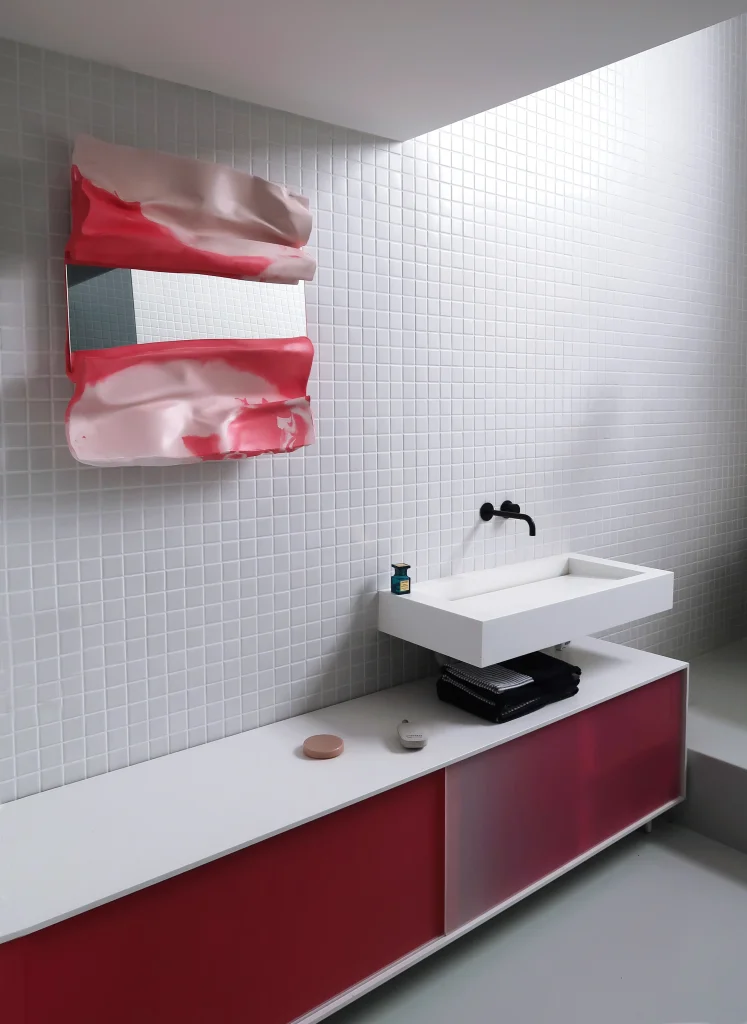
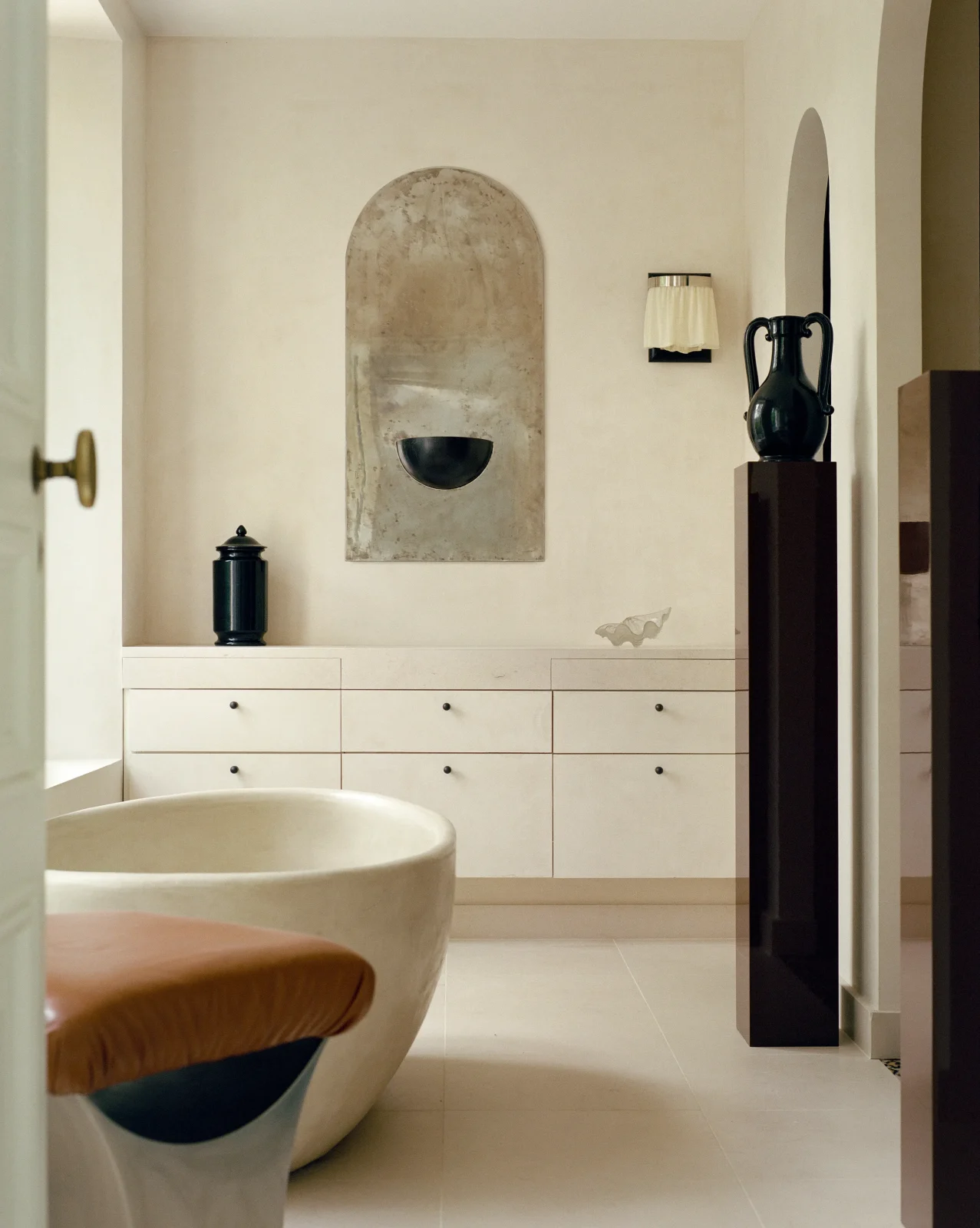
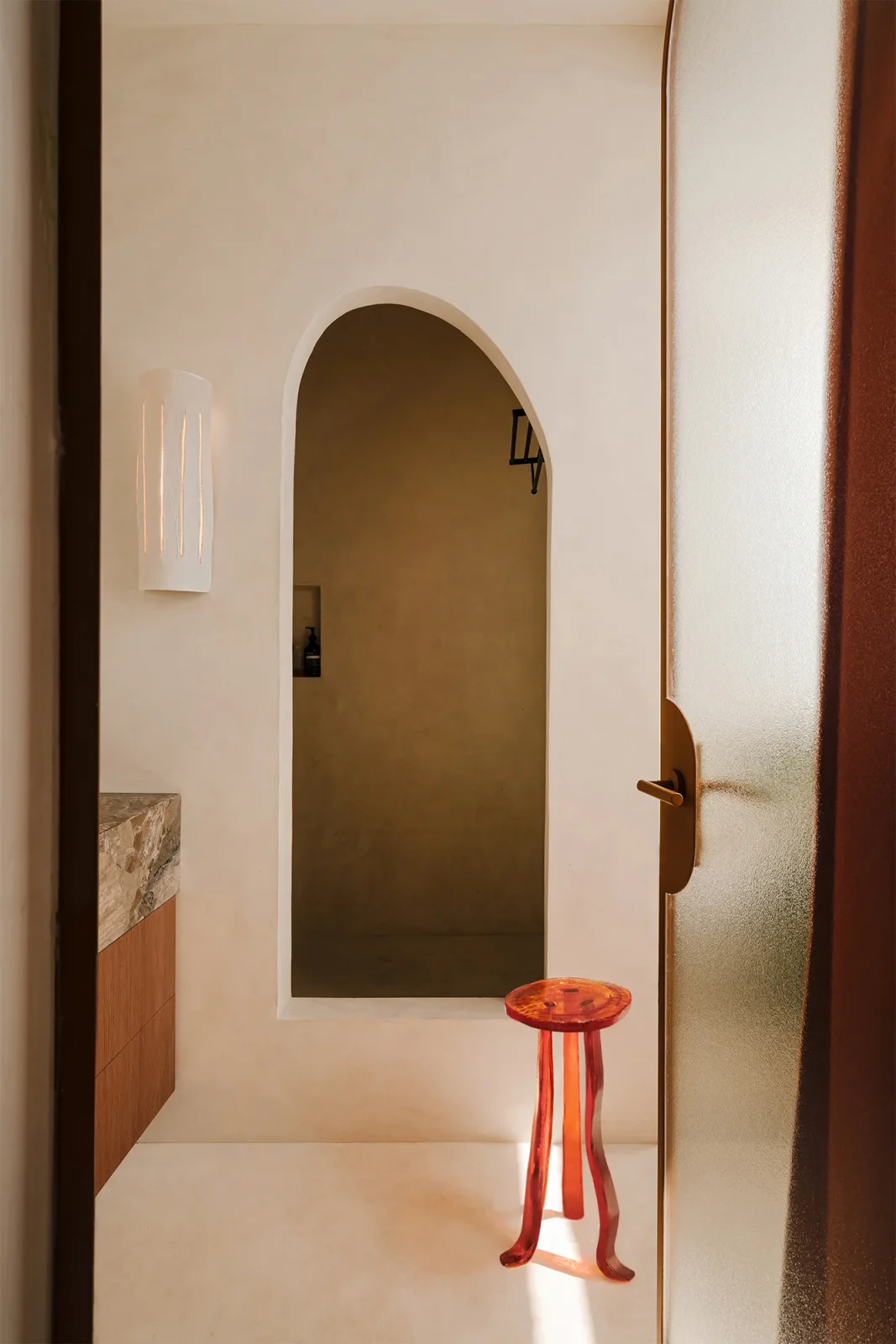
The open-versus-closed decision
Everything else follows from one choice, and it is not a matter of taste but of how much visual noise your things carry.
Open storage — shelves, hooks, rails — keeps a small room feeling larger, because the eye reads past the objects to the wall behind. It also makes a bathroom look considerably worse if what sits on it is packaging: shampoo bottles, branded tubes, plastic in six colours. Closed storage hides all of that but visually shortens the room, since a solid cabinet reads as a wall.
The workable answer in most bathrooms is a split: closed storage low down for the ugly and the occasional, open storage at eye level for towels and the few things worth seeing. Furthermore, decanting is what makes open storage viable — soap in a ceramic dispenser instead of a branded bottle changes a shelf more than any amount of tidying.


Towel storage
Towels are the bulkiest thing a bathroom holds and the most often mishandled. The core problem is that a wet towel needs air, and almost every storage solution people reach for denies it — folded in a closed cupboard, doubled over a single narrow rail, or stacked in a basket where the damp one sits against the dry ones.
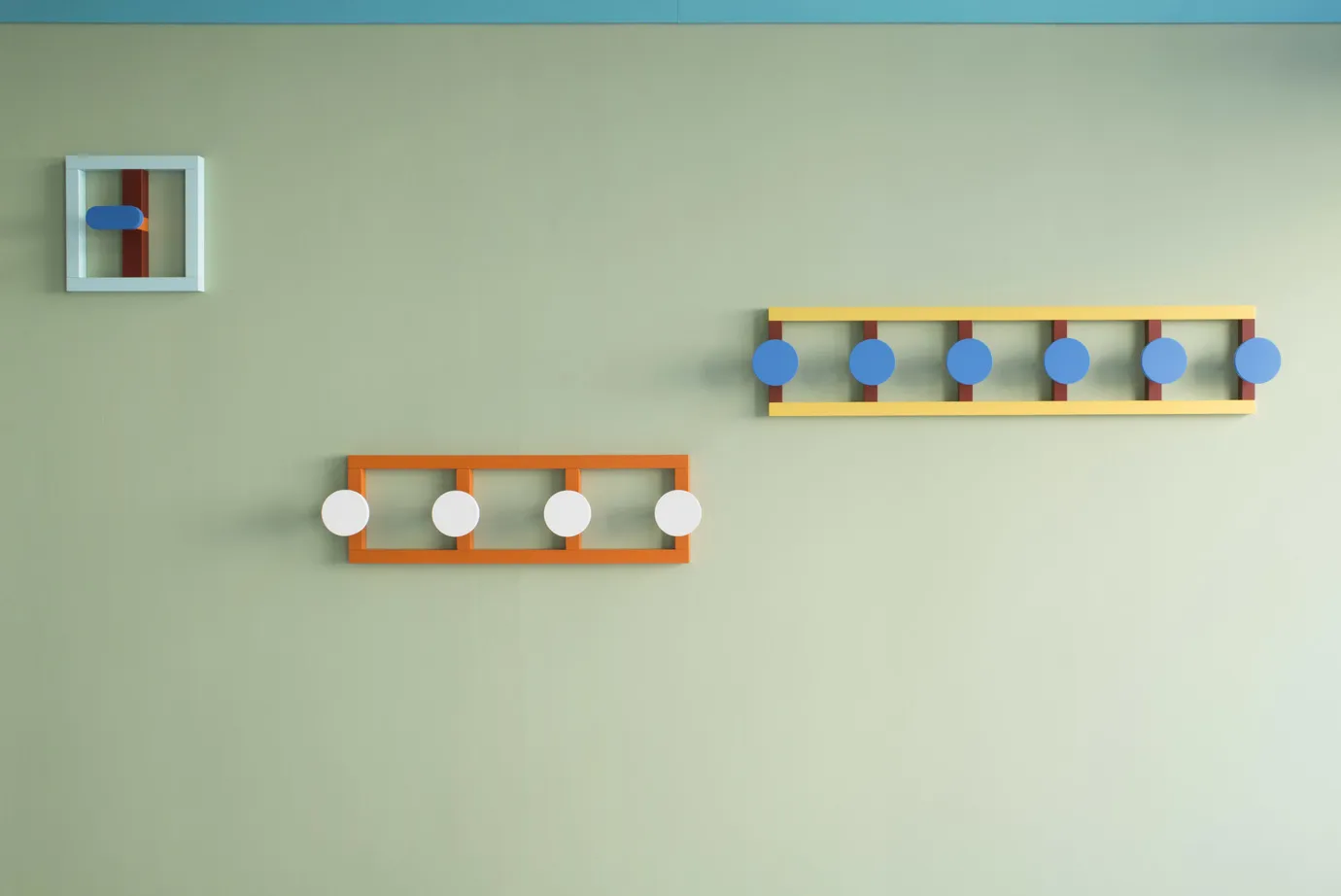
Hooks beat rails for daily use. A towel on a hook has air on every side and dries faster than the same towel folded over a rail, where the two faces press together. Two hooks per person, spaced at least 25cm apart, outperform one long rail almost every time. Therefore the elegant single rail is often the wrong choice in a family bathroom, however good it looks.
Height matters more than people think. Hooks at 165–175cm let a full-length bath towel hang clear of the floor. Lower than about 150cm and the towel puddles, stays wet at the hem and eventually smells. For children, a second row at 120cm is worth more than any amount of instruction.
Separate wet from stored. The towels in use want hooks or a rail in the open. The clean spares want somewhere else entirely — ideally outside the bathroom, or in closed storage low down. Consequently a folded stack on an open shelf works only if that shelf is well away from the shower and the room ventilates properly.
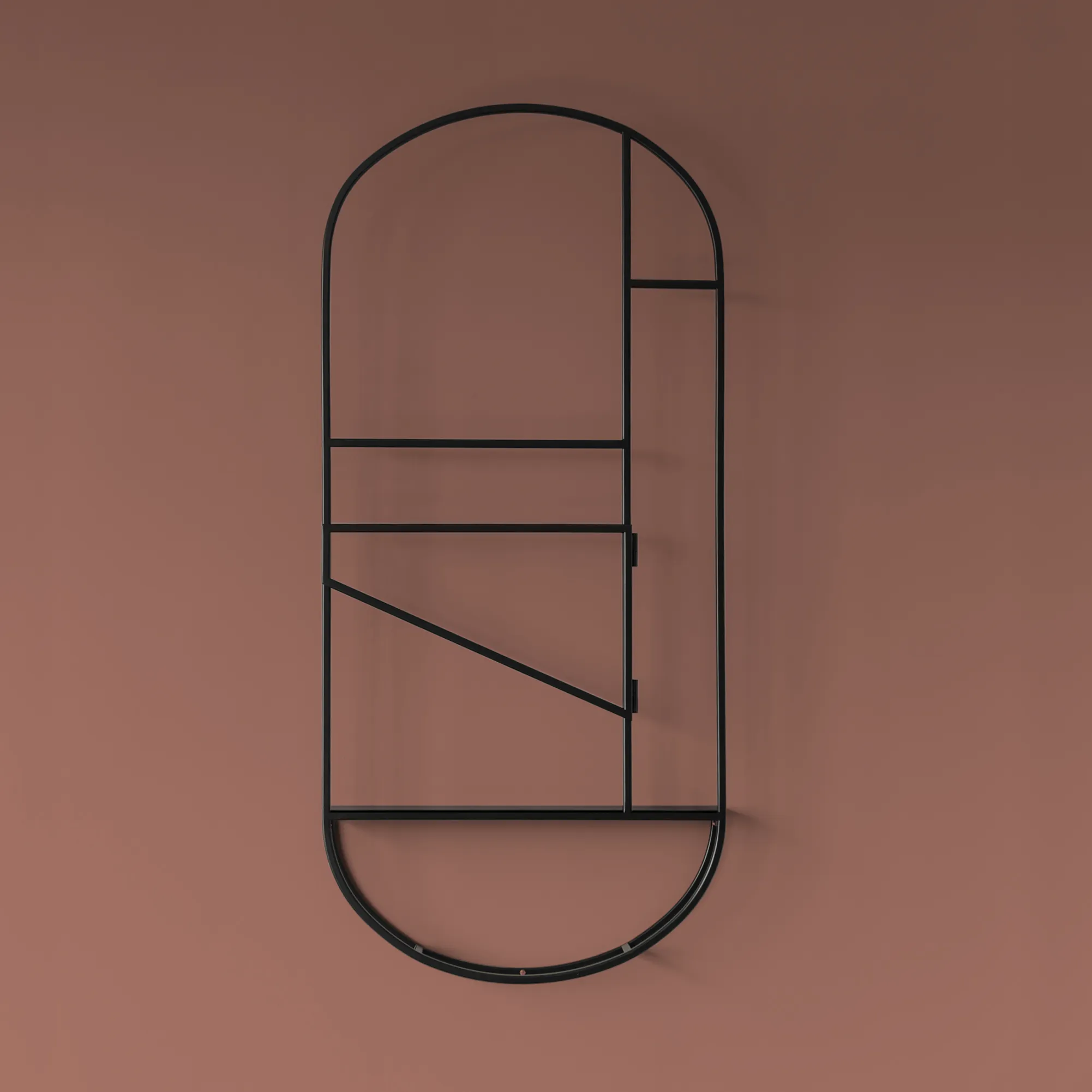
A wall-mounted rack that folds flat when unused solves the small-bathroom version of this, since it takes up depth only when there is something on it.

Go vertical before you go wider
Most bathrooms have far more unused wall than unused floor, and floor space is what makes a small room feel small. Therefore the first move in any tight bathroom is upward.
The band above head height
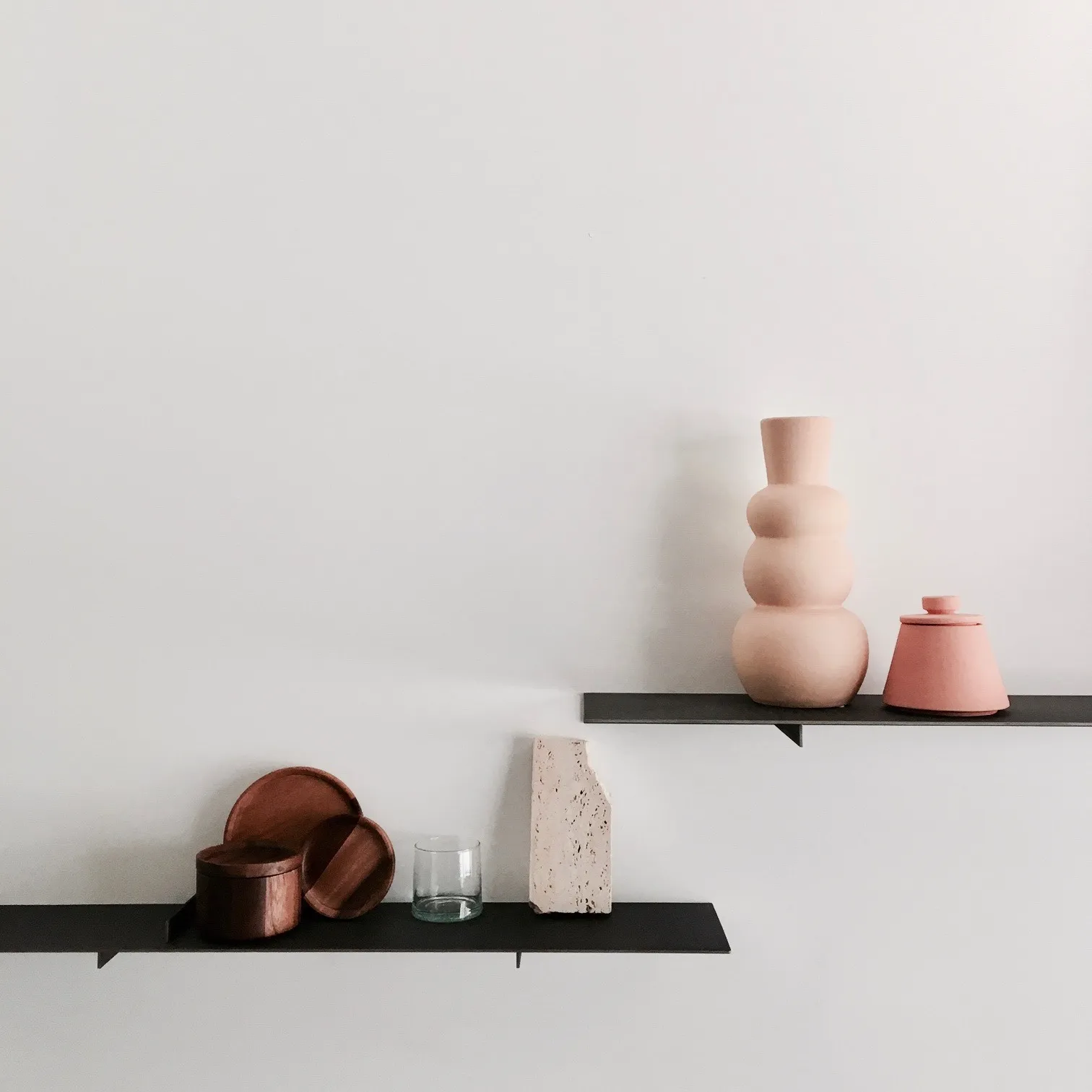
Everything above roughly 180cm is usually empty, and it is the right place for the things you reach for weekly rather than daily — spare rolls, refills, folded spares. A single shelf running the full width of a wall at that height reads as architecture rather than as furniture, which is why it disappears visually in a way a cabinet does not.
The narrow gaps
The strip beside a cistern, the recess between studs, the wall behind a door: these are the spaces that a standard cabinet cannot use and a shelf can. Specifically, a shelf 15cm deep holds almost everything a bathroom needs except towels, and it costs a fraction of the floor depth a freestanding unit takes.
Over the toilet, done properly
The space above a cistern is genuinely useful, but the units sold for it are usually too deep and sit too low, so people knock their heads and the whole thing reads as an afterthought. Two slim shelves at 150cm and 180cm do the same job without the bulk, and they let the wall stay visible between them. Meanwhile, keep nothing loose or heavy directly above a toilet — anything that falls, falls somewhere awkward.
Countertops and the vanity
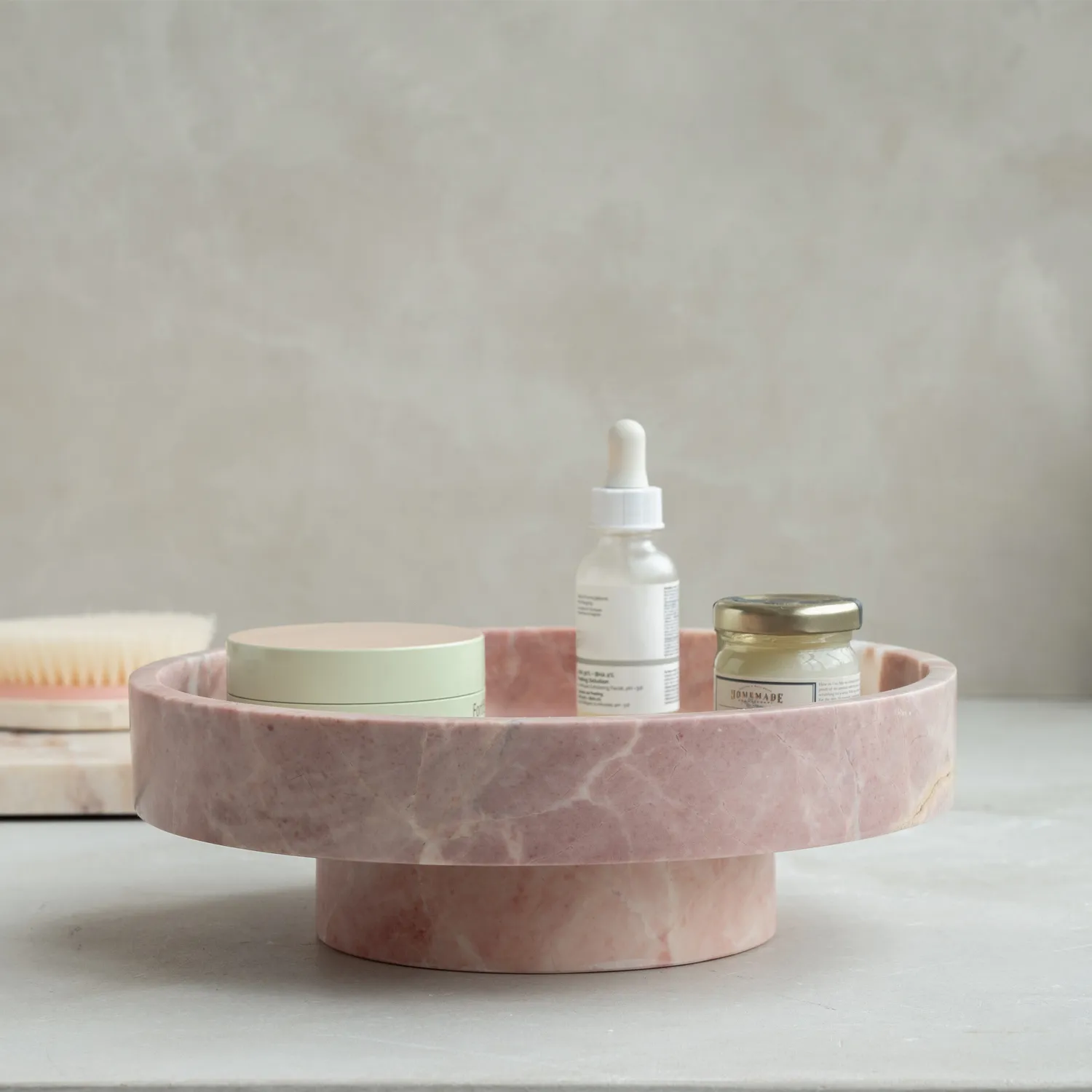
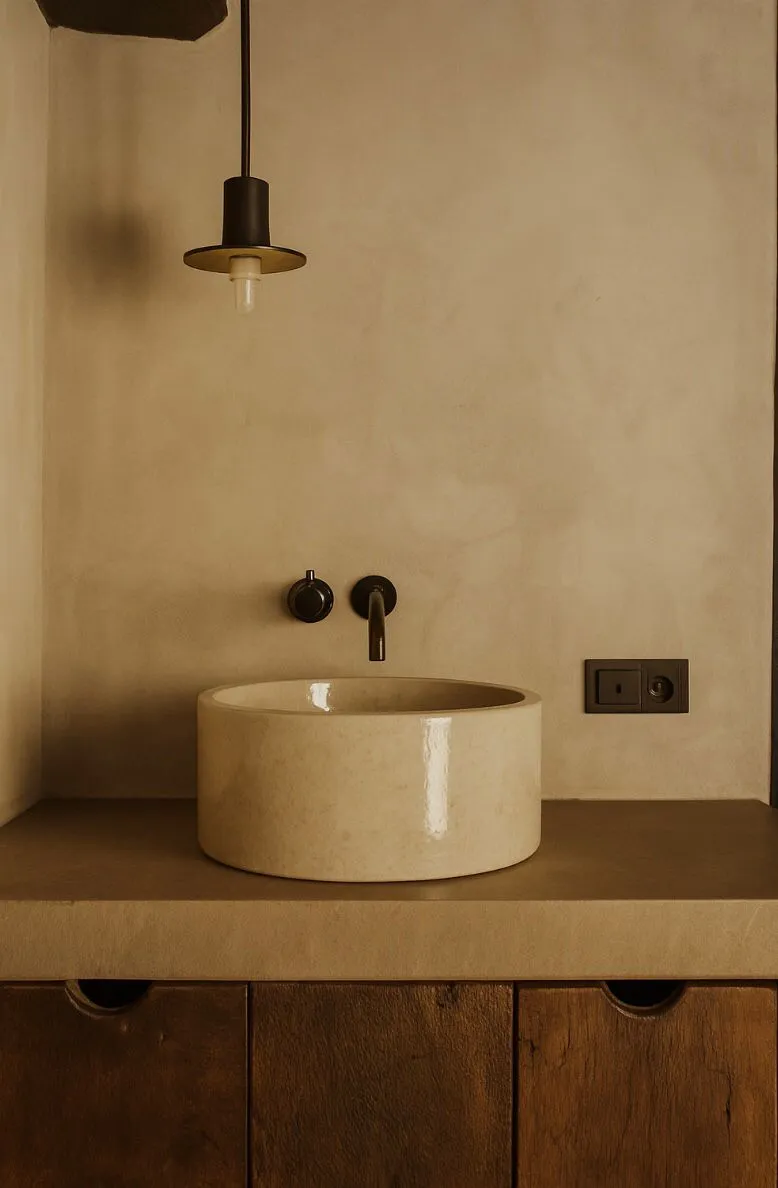
A countertop is not storage. It is working surface, and every object left standing on it reduces the room’s usable area and its calm in equal measure. The discipline is to keep no more than three or four things out, and to give them a boundary.
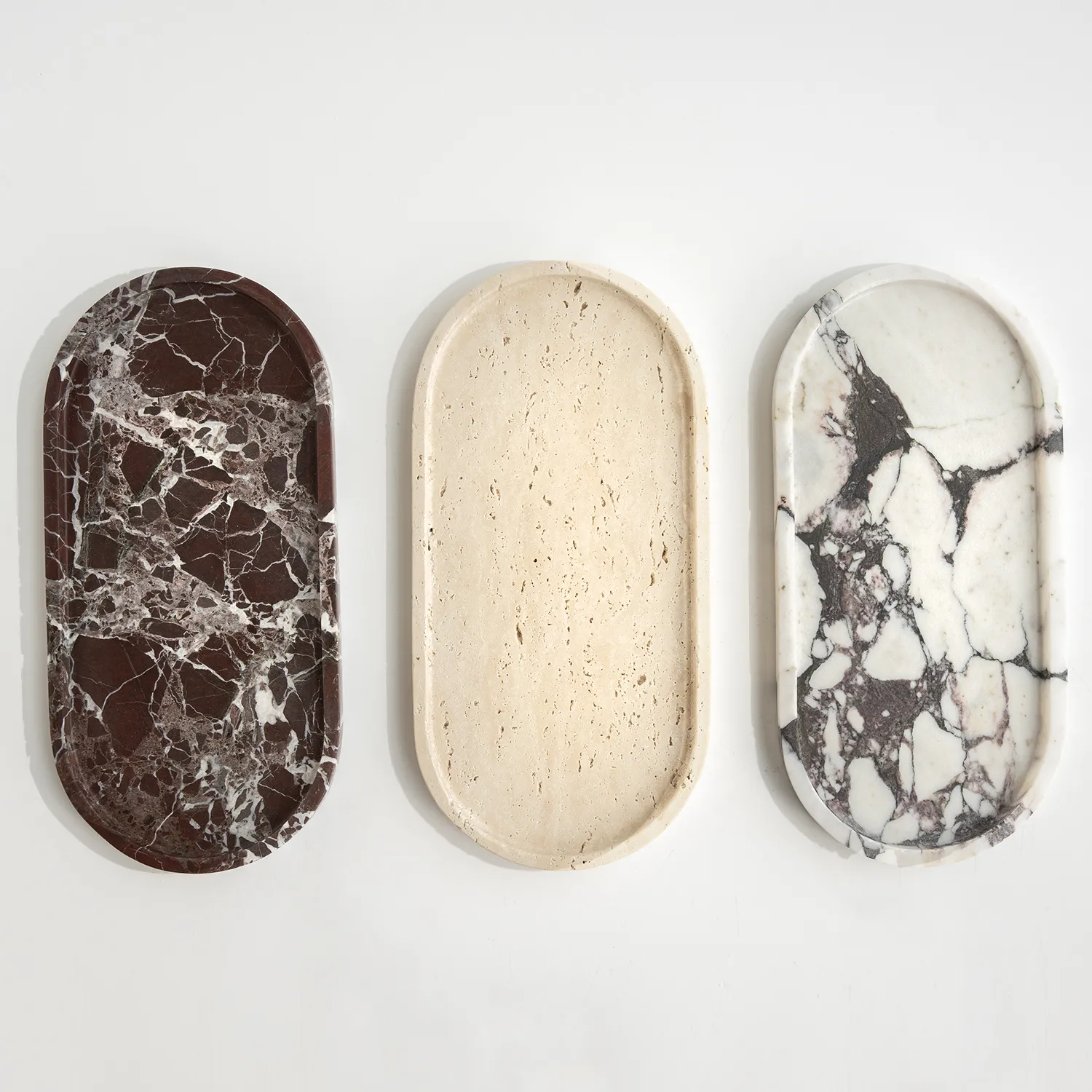
A tray is the most effective object in a bathroom for exactly this reason: it turns four scattered items into one group, and it can be lifted in a second when the surface needs wiping. Consequently a tray plus a small vessel for the things that would otherwise roll — hairpins, a razor, a ring taken off before washing — solves most countertop clutter without any cabinetry at all.
Under the sink, the enemy is depth. A deep cupboard swallows things at the back permanently, and the plumbing takes the middle. Shallow containers that pull out, arranged front to back rather than stacked, are the fix. Furthermore, anything stored under a sink should tolerate a slow leak, which rules out cardboard packaging and paper.
Mirrors, and making a small bathroom read larger
A mirror is the only thing in a bathroom that adds apparent space rather than consuming it, which is why it matters more here than in any other room. The sizing logic is the same as anywhere: aim for roughly two-thirds to three-quarters of the vanity width, hung 10–15cm above the counter or backsplash, with the centre around eye level for whoever uses it most.
Two bathroom-specific points. A wide mirror does more for a narrow room than a tall one, because it stretches the wall in the direction the room is short. And a mirror facing the window rather than the door doubles the daylight instead of reflecting a corridor. Our guide to the types of mirrors covers shape and format in more detail, and the wall decor guide goes further into hanging heights.
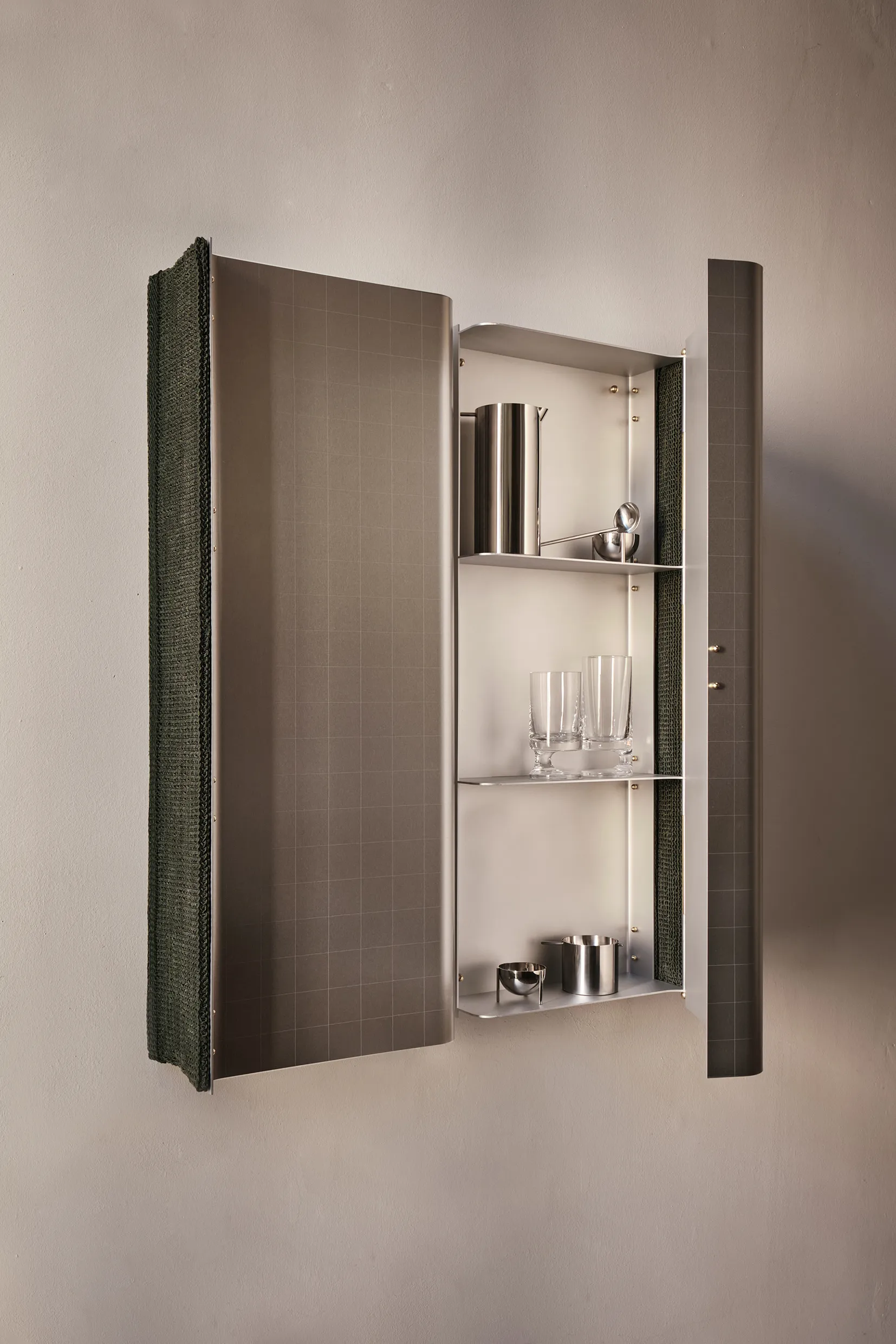
On the popular idea of a mirror with storage built in: a recessed cabinet behind the glass is genuinely efficient in a small room, since it uses wall depth rather than floor. A surface-mounted one, by contrast, projects 12–15cm into a space where you lean forward to wash your face, and that is usually a poor trade. A shallow shelf paired with a mirror does much of the same work at a fraction of the depth.


Materials that survive a bathroom
This is the section that most storage advice skips, and it is why so much bathroom storage looks tired within two years. A bathroom cycles between high humidity and dry several times a day, and that movement is harder on materials than constant damp would be.
What holds up. Teak and cedar contain natural oils and are the traditional bathroom timbers for good reason. Stainless steel, powder-coated steel and anodised aluminium tolerate humidity indefinitely. Solid brass develops a patina rather than failing. Glazed ceramic, porcelain, glass and sealed stone are effectively inert. Cork is quietly excellent — naturally water-resistant, warm underfoot and light enough to mount easily.
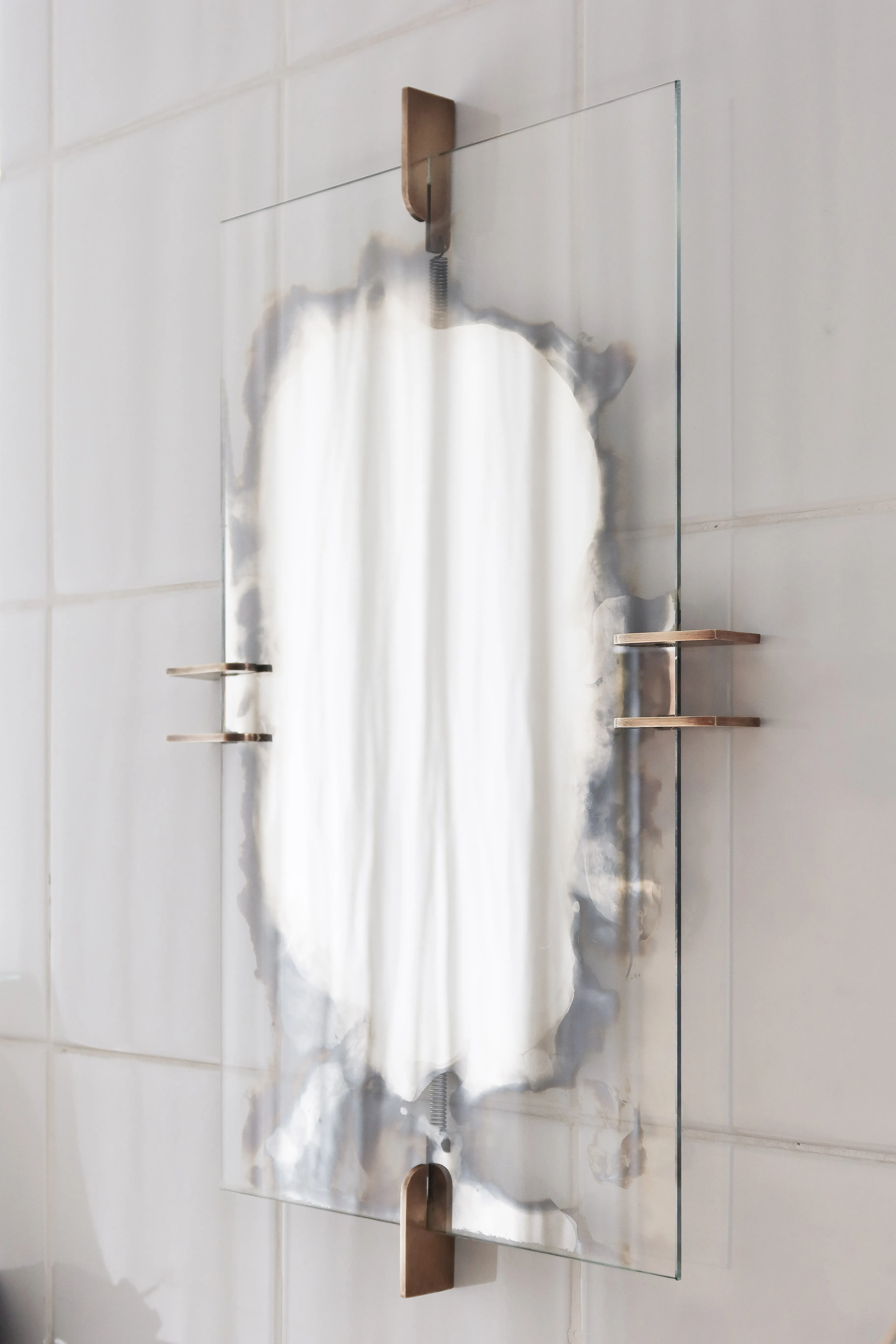
What struggles. MDF and chipboard swell irreversibly at the edges once water finds a cut face, which is what fails first in most inexpensive bathroom cabinets. Veneer lifts. Untreated softwood greys and eventually spots. Raw or unfired clay and unsealed plaster absorb moisture continuously. Mild steel rusts at every scratch, and mirror backing corrodes from the edge inward, which is why bathroom mirrors tend to show damage as a dark rim before anything else.
Two practical consequences. Buy solid rather than sheet material wherever the budget allows, since a solid piece can be sanded and re-oiled while a swollen edge cannot be repaired. And ventilate — an extractor run for fifteen minutes after a shower does more for the lifespan of everything in the room than any finish.
Small bathroom storage: what actually works
- Empty before you buy. A third of most bathroom contents belongs elsewhere. Do this first and you may not need the cabinet.
- Use the wall above 180cm. It is almost always empty and it is free.
- Hooks over rails. Faster drying, less wall, and they work at two heights for children.
- Shallow beats deep. A 15cm shelf holds nearly everything and steals almost no floor.
- One tray on the counter. A boundary turns clutter into a group.
- Decant what you can. Open storage only works when the objects on it are worth seeing.
- Wide mirror, not tall. It stretches the room in the direction it needs.
- Leave the floor clear. Visible floor is what makes a small bathroom read as a room rather than a cupboard.
Common mistakes
- Buying storage before editing. The reliable way to end up with a full cabinet and the same mess.
- Deep cupboards. Anything past arm’s reach at the back is lost. Depth is not capacity.
- Open shelves full of packaging. Open storage exposes whatever you put on it. If it is branded plastic, close it in.
- Towel rails too low. Below 150cm and a bath towel touches the floor and never fully dries.
- Medicine in the bathroom. Heat and humidity shorten the life of most of it. A bedroom drawer is better.
- Sheet-material furniture in a wet room. Swollen MDF edges cannot be repaired, only replaced.
- Filling every wall. A bathroom crowded to the ceiling feels smaller than an emptier one with less storage in it.
Frequently asked questions
How do you store towels in a small bathroom?
Hooks rather than rails, at 165–175cm so a bath towel hangs clear of the floor, with two hooks per person spaced at least 25cm apart. Keep only the towels in use in the bathroom and store clean spares elsewhere, since folded stacks in a humid room pick up damp. A wall rack that folds flat when empty is the best option where depth is tight.
What is the best storage for a very small bathroom?
Vertical and shallow. A 15cm-deep shelf holds nearly everything except towels while taking almost no floor space, and the wall above 180cm is usually completely unused. Combine that with one closed low cupboard for packaging and refills, and keep the floor as clear as possible — visible floor is what makes a small bathroom feel like a room.
Is over-the-toilet storage a good idea?
The space is worth using, but most purpose-made units are too deep and sit too low, so they crowd the head and dominate the wall. Two slim shelves at roughly 150cm and 180cm achieve the same capacity with far less bulk. Avoid anything heavy or loose directly above the toilet.
Should bathroom storage be open or closed?
Both, split by content. Open shelves and hooks at eye level keep a small room feeling larger and suit towels and anything worth looking at. Closed storage low down handles packaging, refills and the occasional items. Open storage only works if you decant — bottles in their original branding are what make an open shelf look cluttered.
What materials last in a bathroom?
Teak, cedar, cork, stainless and powder-coated steel, anodised aluminium, solid brass, glazed ceramic, glass and sealed stone all tolerate repeated humidity. MDF and chipboard are the main things to avoid, since the edges swell permanently once water reaches a cut face. Untreated softwood, veneer and unsealed plaster also struggle.
How do you keep a bathroom countertop tidy?
Limit it to three or four things and give them a boundary. A tray groups the daily items and lifts off in one movement when you wipe the surface, and a small vessel catches the things that would otherwise roll. Everything used less than daily should be behind a door.
Less in the room, better on the wall
Bathroom storage is one of the few design problems where subtraction beats addition almost every time. Empty out what does not belong, move the towels onto hooks at the right height, use the wall you have been ignoring above head height, put a tray on the counter and close the rest away. None of that requires a new cabinet, and all of it makes the room work better than one would.
What is worth spending on is the small number of things that stay visible. A folded steel rack, a cork shelf, a brass hook, a stone tray — objects made from materials that take steam without complaint and look better after five years than they did new. In a room this small, the few pieces on show carry the whole thing.