A vase is allowed to do nothing and still earn its place in a room.
Unlike almost everything else in a home, a vase doesn’t have to perform. It doesn’t need power, doesn’t need to hold weight, and several pieces here can’t even hold water. What it needs to do is exist well — to hold a shelf, a windowsill, an empty corner, and make that space feel considered rather than incomplete. That’s the case for this selection: vases pulled from across ADORNO’s most collectible work, chosen for how convincingly they do that one job.
Each one is pulled from what’s genuinely standing out across ADORNO’s vase catalog, not discounted because it wasn’t moving.
The 10% discount holds through August 31. After that, all pieces return to full price.
Blown & Sculptural Glass
Glass is the one material here that changes depending on what’s behind it — the wall it hangs against, the light it catches, the hour of the day.
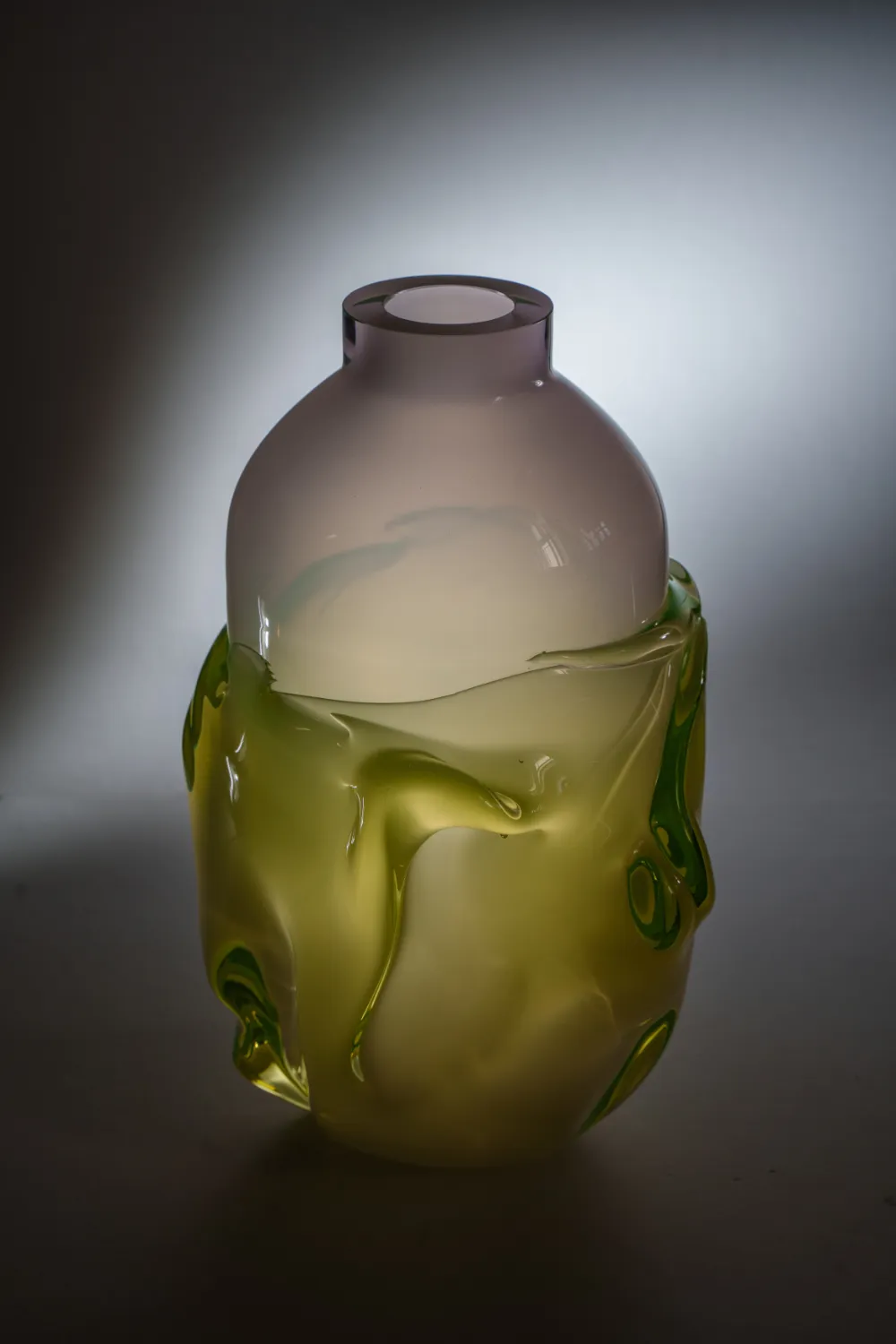
The Persona XL Uranium Vase by MILA ZILA is handmade from uranium glass, a material dating back to Roman mosaics, prized for a faint yellow-green glow that shifts under different light. Each piece grows freely rather than into a fixed mold, so no two share quite the same silhouette.
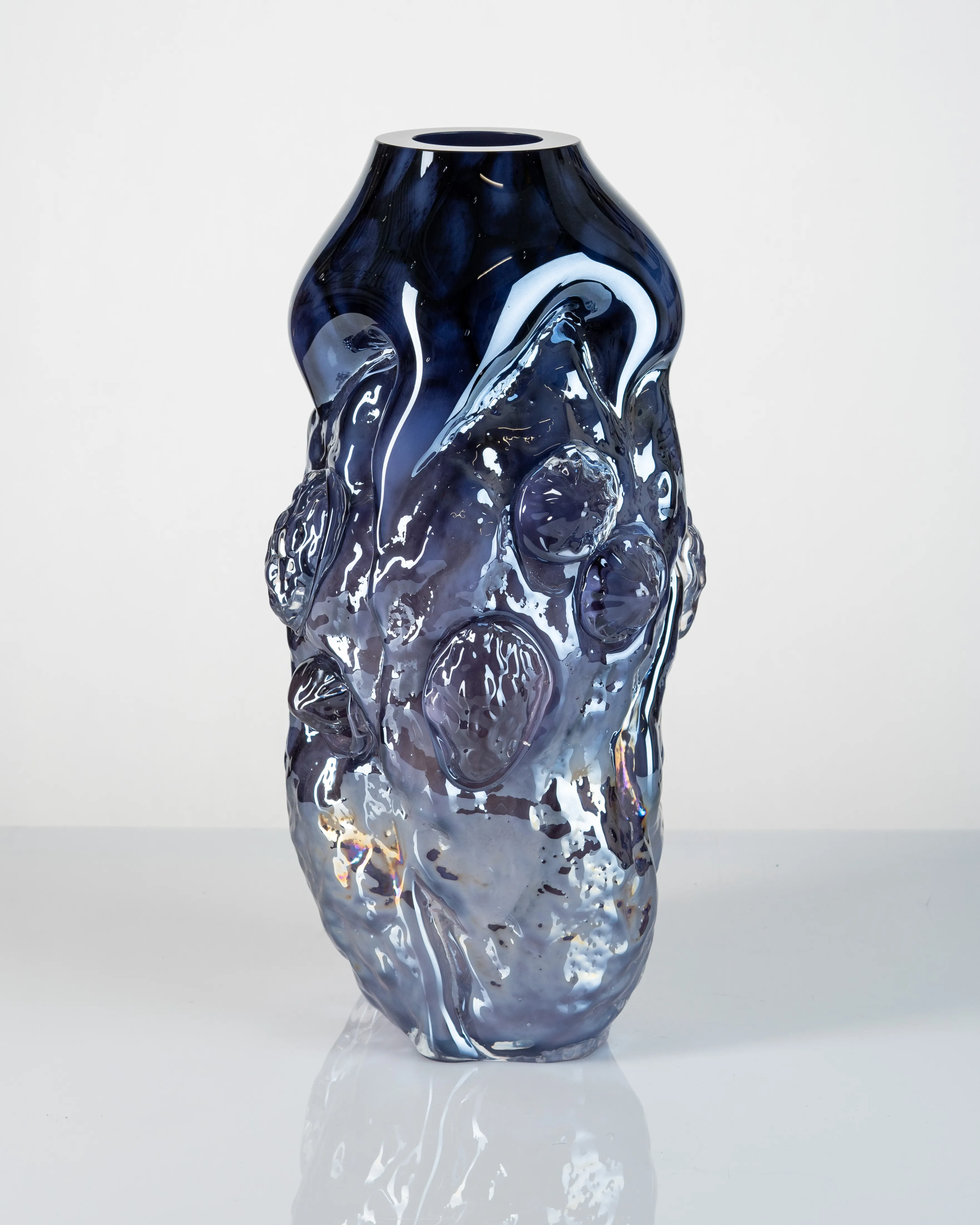
The Dysplasio Dark Purple Vase by Anna Jožová takes a stranger premise: mold-blown glass overlaid with a historic Central European technique that imprints raised, parasitic-looking textures onto a smooth host form. It’s unsettling in the best way, and it holds attention precisely because it doesn’t try to be pretty first.
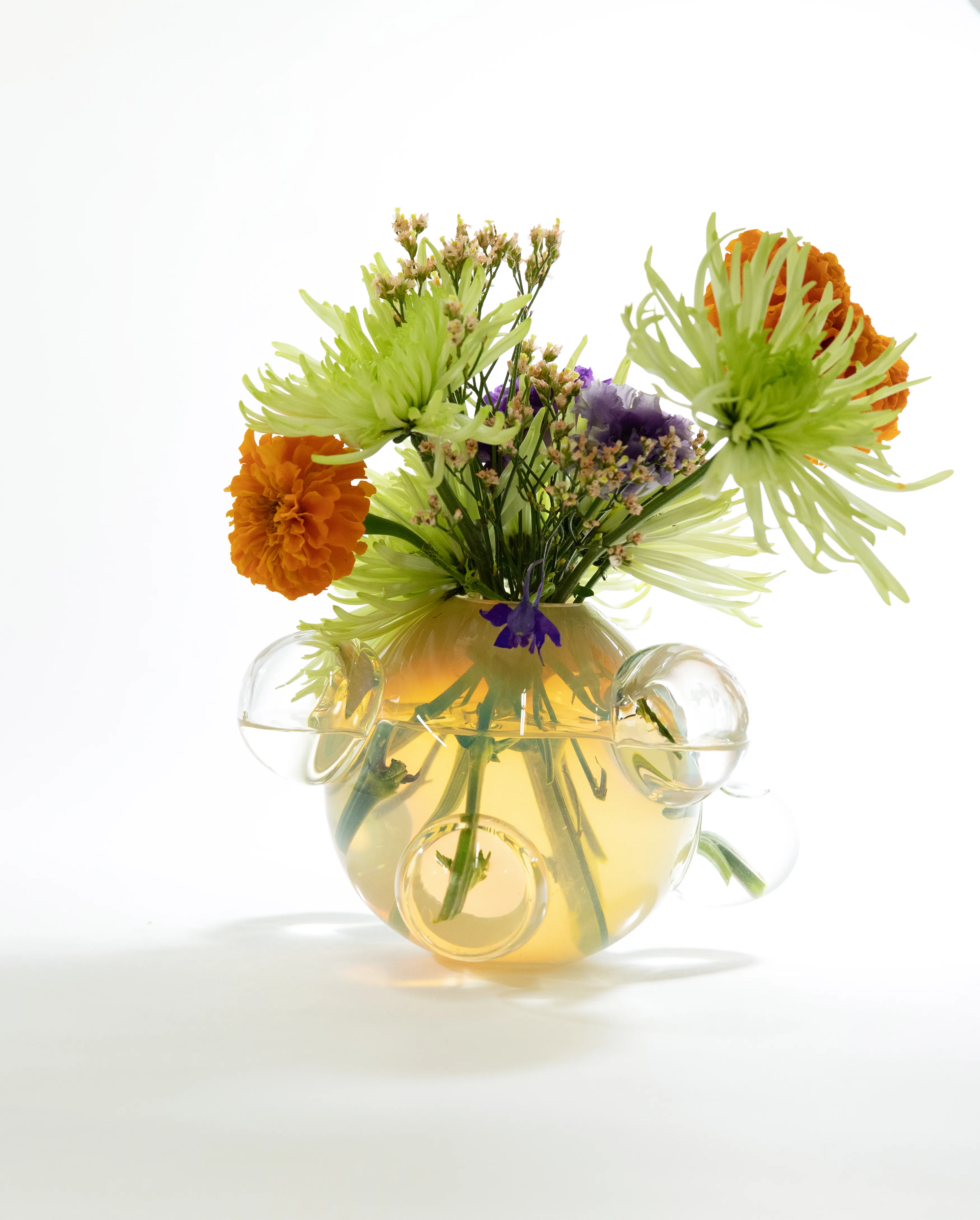
The Bubble Vase by Sticky Glass is hand-blown in Brooklyn using the expandable, inflatable properties of molten glass, leaving each piece with its own chambers and bubbles that refract light as it moves through. No two are identical, and each is one of a kind by design rather than accident.
Ceramic & Ceramic-Adjacent Studies
Four pieces, four completely different ideas of what clay and ceramic can be made to do.
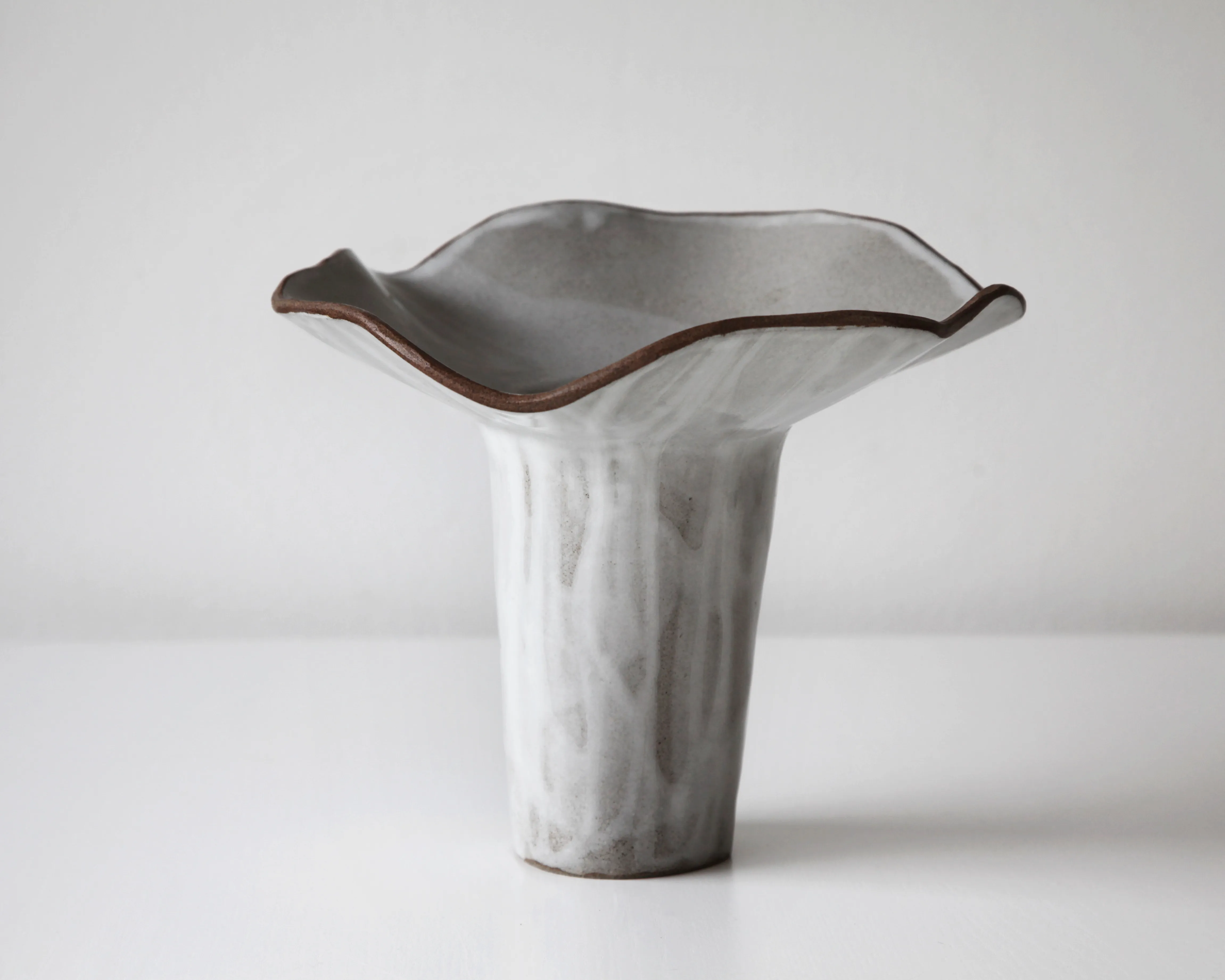
The Floral Study I: White Bloom and Floral Study II: Night Tulip by Elena Yakimushkina are a matched pair, each handbuilt in stoneware with a shape reminiscent of an opening flower. They’re sculptural enough to stand empty, and considered enough not to compete with whatever’s placed inside them.
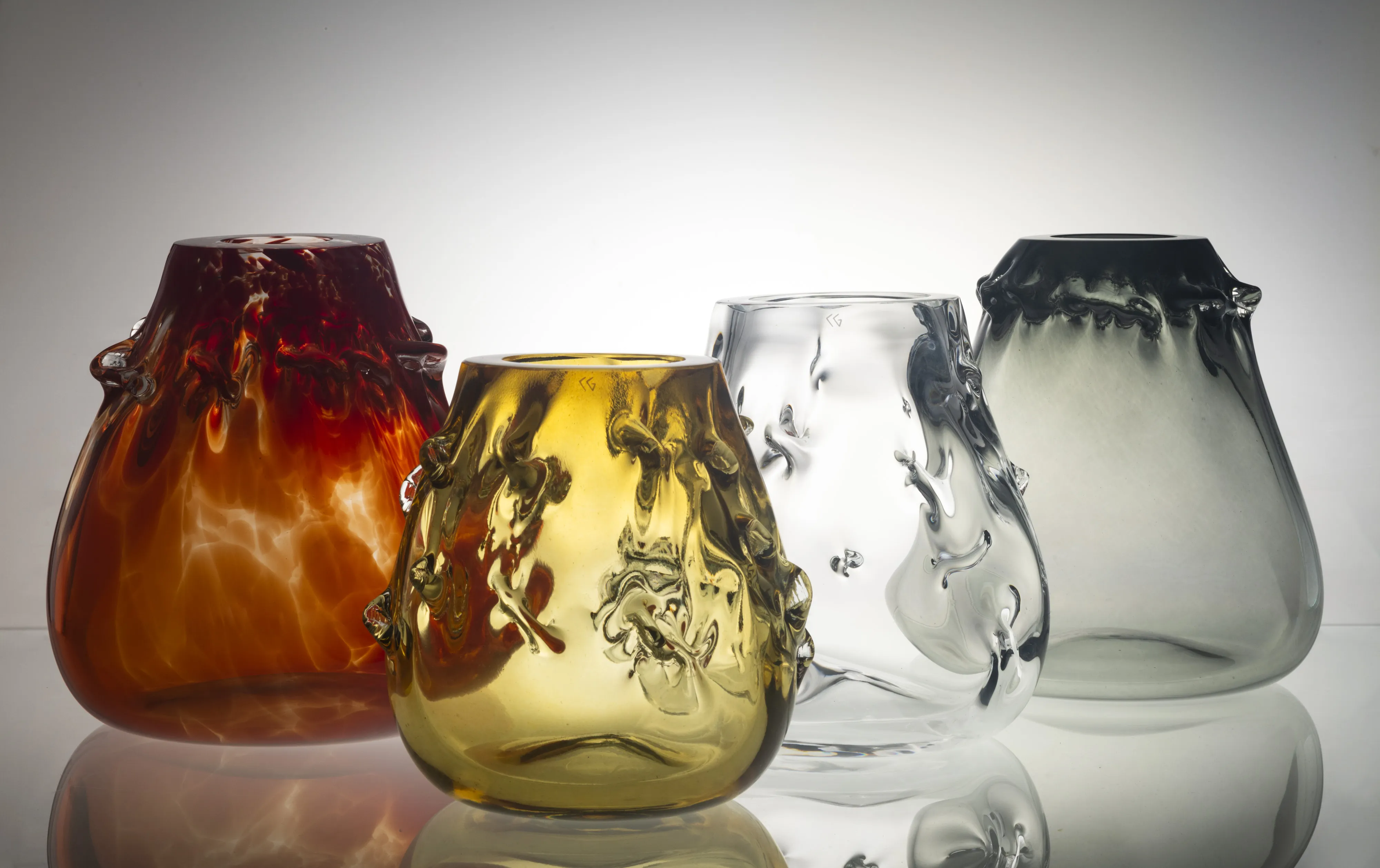
The Espinhos Vase by Carol Gay takes a sharper approach, its surface built from small ceramic thorns that catch light and shadow differently depending on the angle it’s viewed from.
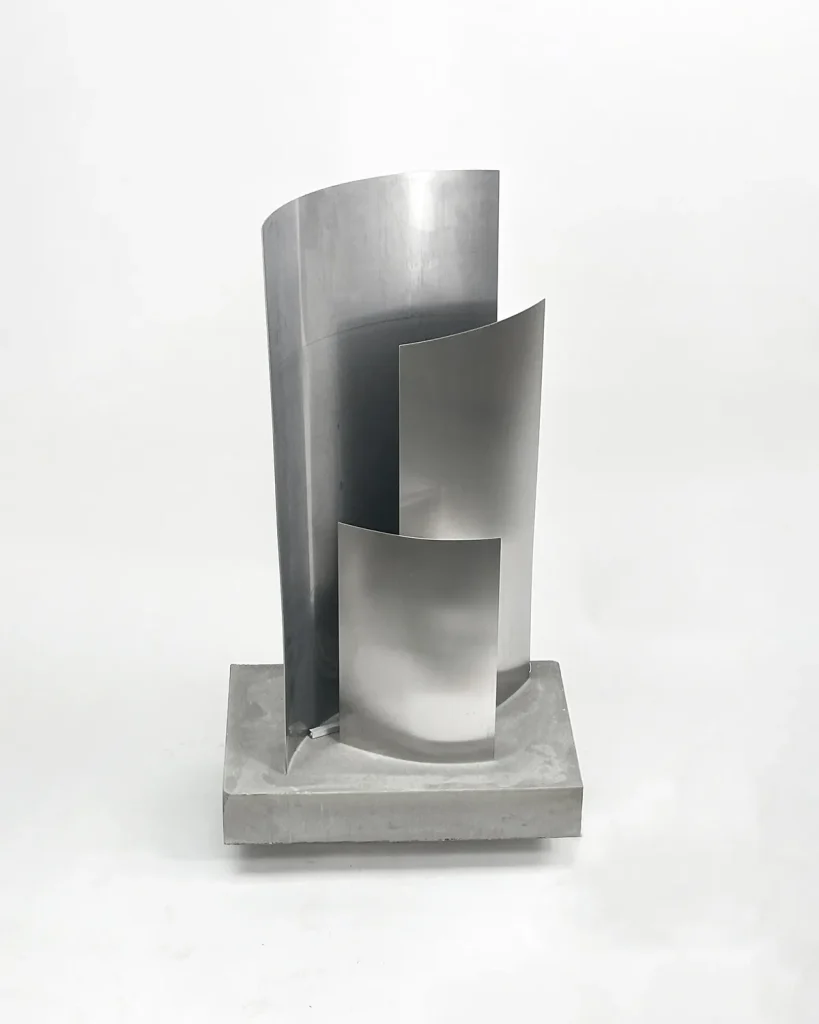
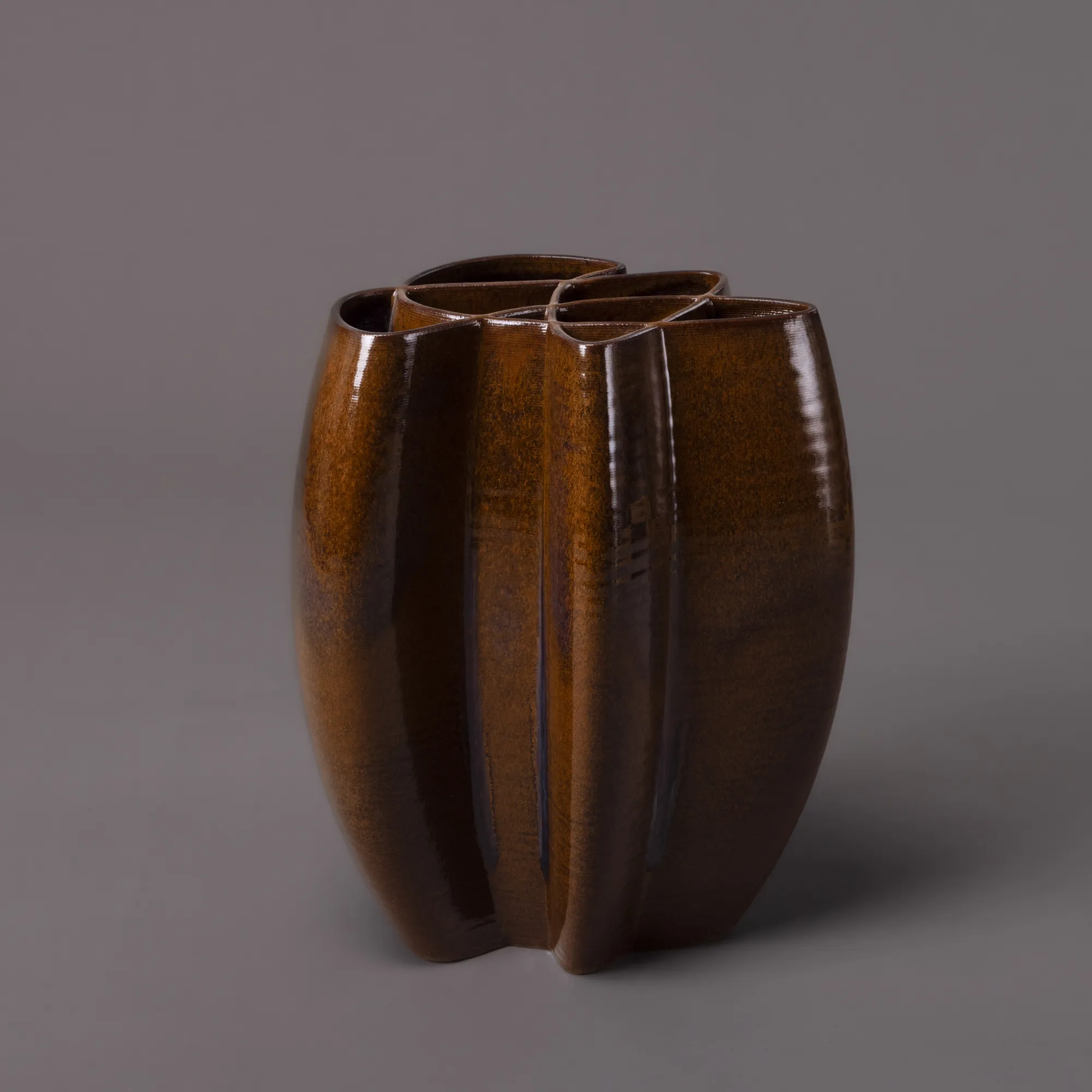
The Intersect – 0100 by Yiannis Vogdanis approaches the material almost mathematically: a single continuous curve, 3D-printed in ceramic, allowed to intersect itself until it forms an independent container. It’s the most conceptual piece in this group, and it reads that way.
Stone, Metal & Industrial Forms
None of these three read as delicate, and that’s the point.
The Pressure Vase Square by Tim Teven starts as an ordinary steel tube, then gets exposed to up to 45 metric tons of pressure until it yields and folds — turning a hard, cold material into something that looks soft simply because of how it failed.
The Distressed Sandstone Vessel No.4 by Alex Roby Design is hand-thrown, then intentionally cracked from the inside, revealing tan clay beneath a white slip in a controlled, deliberate kind of damage.
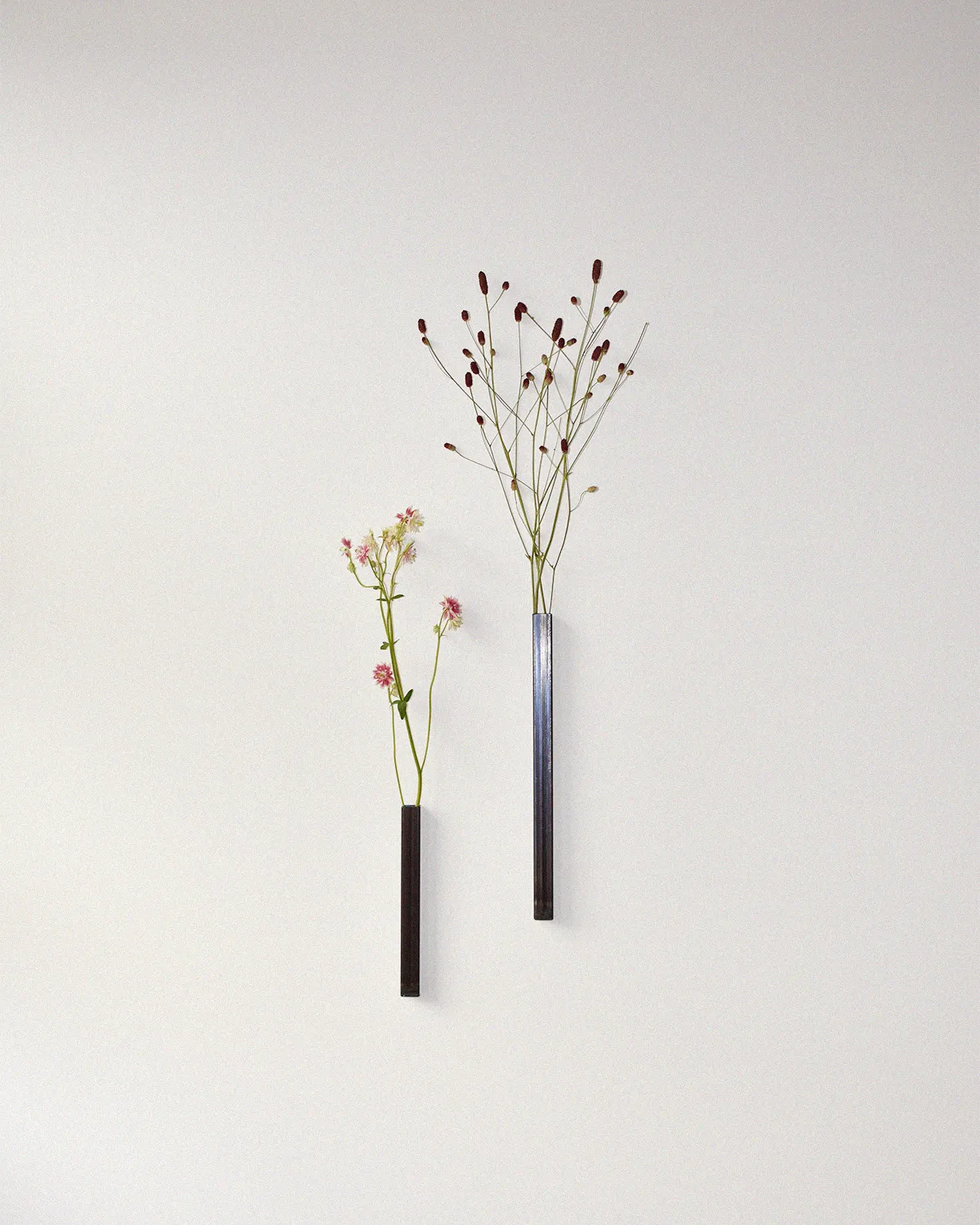
The Dahlia Steel Wall Vase by Atelier Alz mounts flat to a wall rather than sitting on a surface, its heat-based coloring process leaving each piece with its own variation. It suits dried flowers and a room that’s run out of table space.


Organic & Sculptural Vessels
The last three don’t share a material so much as a shared refusal to look machine-made.
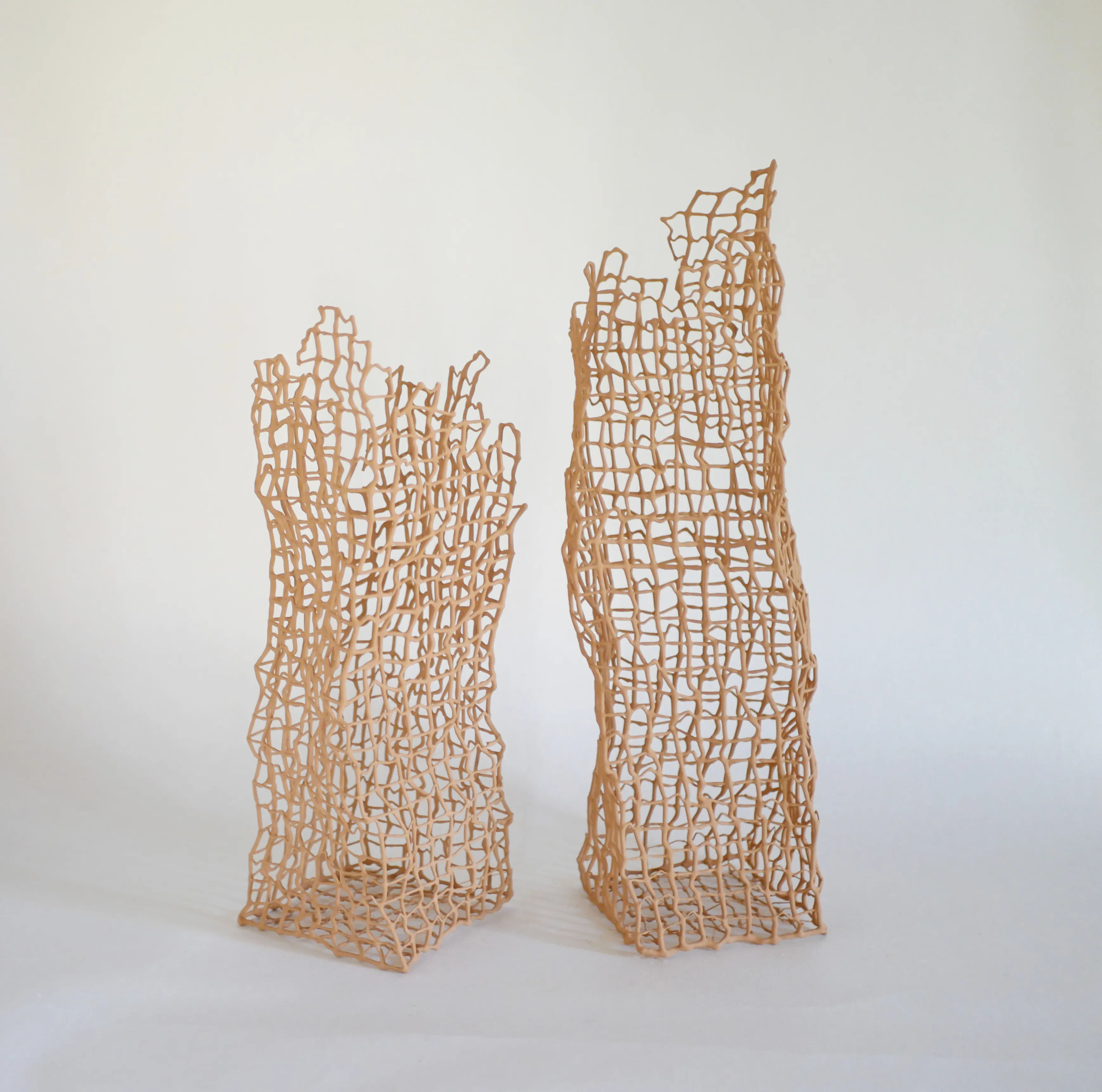
The Pair Of Reef Vases by Dzovag Kotchian are shaped from stabilized raw clay into forms that look pulled from the seabed rather than built by hand — sculptural objects that can’t hold water, and aren’t trying to.
The Ailes Noir by Lucia Mondadori is hand-built in stoneware and finished in a deep black oxide slip, its shape shifting with every angle it’s viewed from — a study in movement frozen mid-gesture.
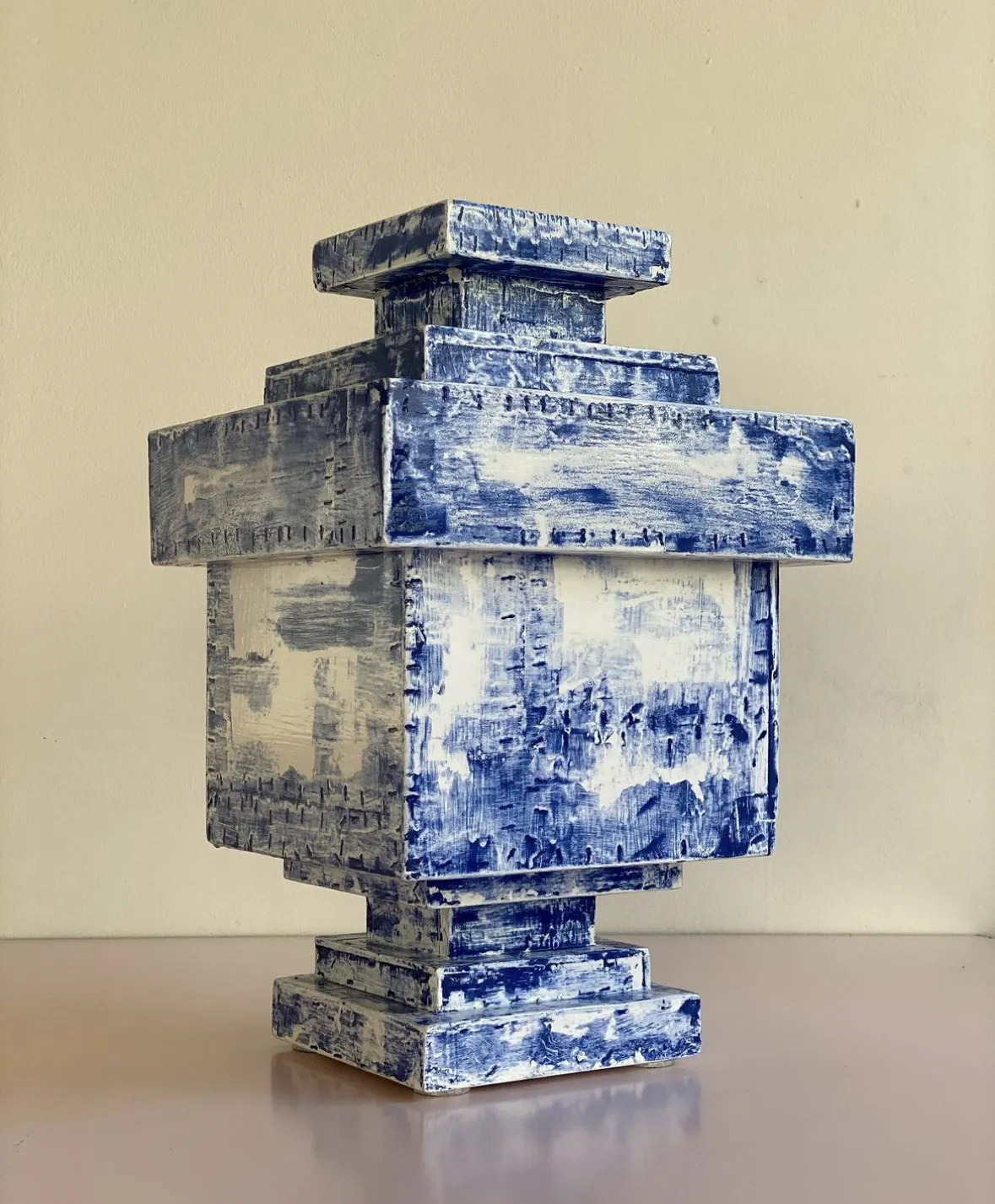
The Common Practice Table Vase by Studio Fabius Clovis closes the group out in upcycled plywood, reinterpreting the Delft Blue aesthetic in reclaimed material rather than porcelain. Each one is unique in size, shape, and color.

Why an Empty Vase Still Works
Most objects in a home justify themselves through use. A chair holds a body, a lamp holds light, a shelf holds books. A vase is the rare exception — several pieces in this selection can’t hold water at all, and it doesn’t diminish them.
What a vase actually does is mark a spot as considered rather than empty. A shelf with nothing on it reads as unfinished; the same shelf with one strong sculptural object reads as intentional, whether or not anything is ever put inside it. That’s why texture and silhouette matter more here than in almost any other category — the object has to hold interest entirely on its own terms, with no function to fall back on.
Vases on Sale, Through August 31
These vases are currently discounted, not permanently reduced — pulled from what’s standing out across ADORNO’s vase catalog, priced down for a defined window rather than cleared out.
That window closes on August 31. After that, each returns to full price.