
-

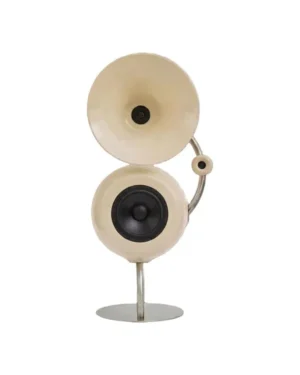
Bella – Speaker – Cream Color
By SOOS Sound
€4.500 -
 In stock
Wua-g Il Speakers
By POL AGUSTI
€7.000 -
 In stock
Mini Bulbasaur – Speaker
By SOOS Sound
€2.150 -

Ziryab Wood Speakers
By Brett Paulin
€3.139 -

Obj_cx Speaker
By Concept Object
€1.220 -
Ziryab Wood Speakers
By Brett Paulin
€3.139 -
 In stock
S.S Series, Sound System 02
By Lucas Muñoz Muñoz
€24.000 -

Obj_jbl Speaker
By Concept Object
€900 -
 In stock
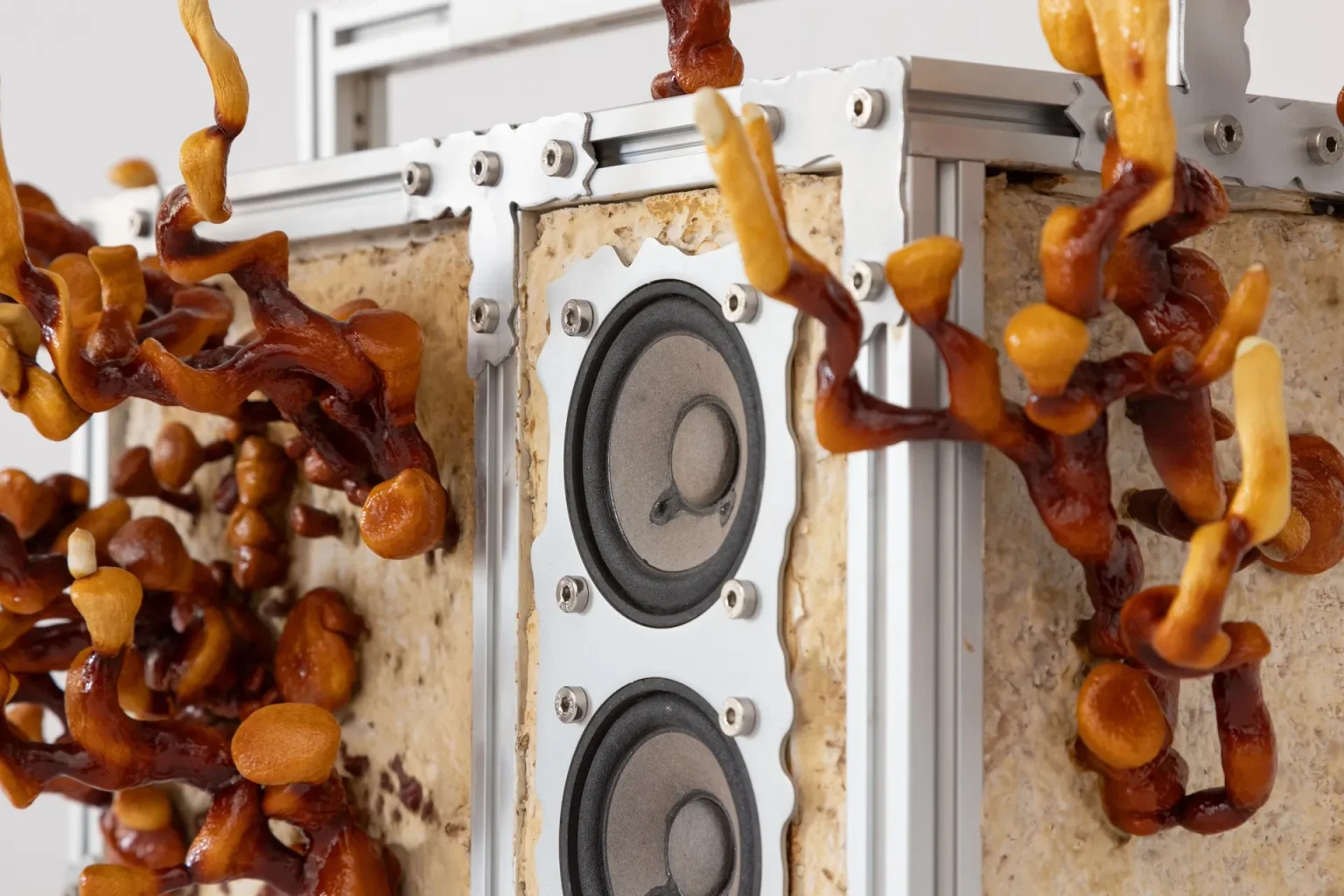
Hyphal Fidelity
By 10th Floor Studio
Price Upon Request -
 In stock
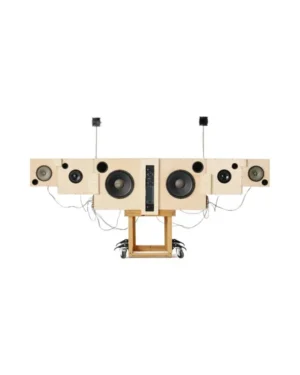
Boombox Ii
By 10th Floor Studio
Price Upon Request
Unique speakers at ADORNO are one-off pieces, built by studios who treat sound equipment as sculpture rather than hardware. Each is shaped by hand or grown from biomaterial, so no two units share the same grain, surface or silhouette. The result sits closer to a side table or a floor lamp than to a conventional audio product.
What sets unique speakers apart
A standard speaker is molded in series; a one-off is turned, joined, cast or grown as a single object. Studios working this way draw on cabinetmaking, metalwork, mycelium growing and biofabrication, often finishing a piece entirely by hand. Because each unit is made alone, small variations in wood grain, patina or surface texture are part of the piece, not a flaw to correct.
Materials and finishes in the range
Wood remains the most common choice: cherry and walnut darken and deepen with age and light, while birch stays pale and shows its grain plainly. Stainless steel and aluminum bring a cooler, harder surface, often left raw or brushed so the metal reads honestly. Newer studios work in mycelium and other biomaterials, pressing or growing a body that is lighter than wood and distinct in texture from anything machined.
Color tends to stay restrained: black, cream, off-white, beige and the occasional wine accent let the material carry the piece rather than the paint. Stylistically the pieces span eclectic and brutalist forms as readily as minimalist or space-age profiles, which is partly why no two studios land in the same place twice. Anyone drawn to the wider spread of grain and joinery can also look through speakers worked in solid wood, where the same cabinetmaking techniques appear across a broader set of finishes.
Choosing a speaker by scale and placement
Start with where the sound needs to sit, not just how the piece looks. A compact body suits a shelf or sideboard and reads as an object among books or ceramics; a floor-standing form needs enough clearance to stand apart from a wall so bass does not muddy against it.
- Check the stand or base height against the seating or listening position in the room.
- Match the finish to nearby wood tones or metal hardware so the piece sits with the furniture rather than against it.
- Leave space behind and beside the cabinet, since dense materials like stone-finished steel can reflect sound sharply in a tight corner.
Pairs bought as a set are worth placing symmetrically, at ear height when seated, which keeps the stereo image even across a sofa or desk.
Where these pieces work in a room
A one-off speaker carries weight in a living room or study, where it can stand beside seating as a sculptural anchor rather than disappear into a shelf. Smaller biomaterial or walnut forms suit a bedroom or reading corner, where the tone of the piece matters as much as its output. For anyone building out a room around a single material story, it is worth looking at one-off furniture and one-off lighting made in the same finishes, so wood tone, metal and biomaterial carry through the space together.
Caring for a one-off speaker
Wood bodies want a dry cloth and an occasional wipe with a wood-safe oil to keep cherry and walnut from drying out; avoid direct sun, which fades color unevenly. Steel and aluminum surfaces take a soft cloth and mild cleaner, nothing abrasive that would scratch a brushed finish. Mycelium and other biomaterial forms should stay away from damp rooms and standing moisture, since the material is porous by nature.
For the full spread of speaker types, including series-made and plastic forms, the speakers category covers the range, while one-off accessories gathers unique speakers alongside other single-run objects for the home.
How do I choose a one-off speaker for my space?
Look at material and finish first, since a one-off speaker reads as an object in the room, not just an audio tool. Match its proportions and tone to nearby furniture and let it carry weight on its own stand or shelf.
What are unique speakers made from, and how do I care for them?
Woods such as walnut, cherry and birch, metals like aluminum and stainless steel, and biomaterials such as mycelium all appear here. Dust wood with a dry cloth, keep metal away from moisture, and avoid direct sun to prevent fading or warping.
How big are unique speakers, and where should they sit?
Sizes range from compact bookshelf forms to floor-standing cabinets, with no fixed standard across makers. Chat with the maker on the piece's page to confirm exact height, depth and footprint before ordering.
Which rooms suit a unique speaker best?
Living rooms, studies and listening rooms suit a sculptural speaker well, anywhere its form can be seen as much as heard. Set a pair at ear height on a console or stand for most seating layouts.
Can I order a custom unique speaker?
Some makers take custom commissions for one-off pieces, though this depends on the individual maker. Chat with the maker on the piece's page to ask about materials, finish or sizing.
What are ADORNO's shipping, returns and authenticity policies?
Shipping is insured and worldwide. Returns are accepted within 14 days, except made-to-order pieces, and every piece arrives with a certificate of authenticity, backed by a lowest-price guarantee.