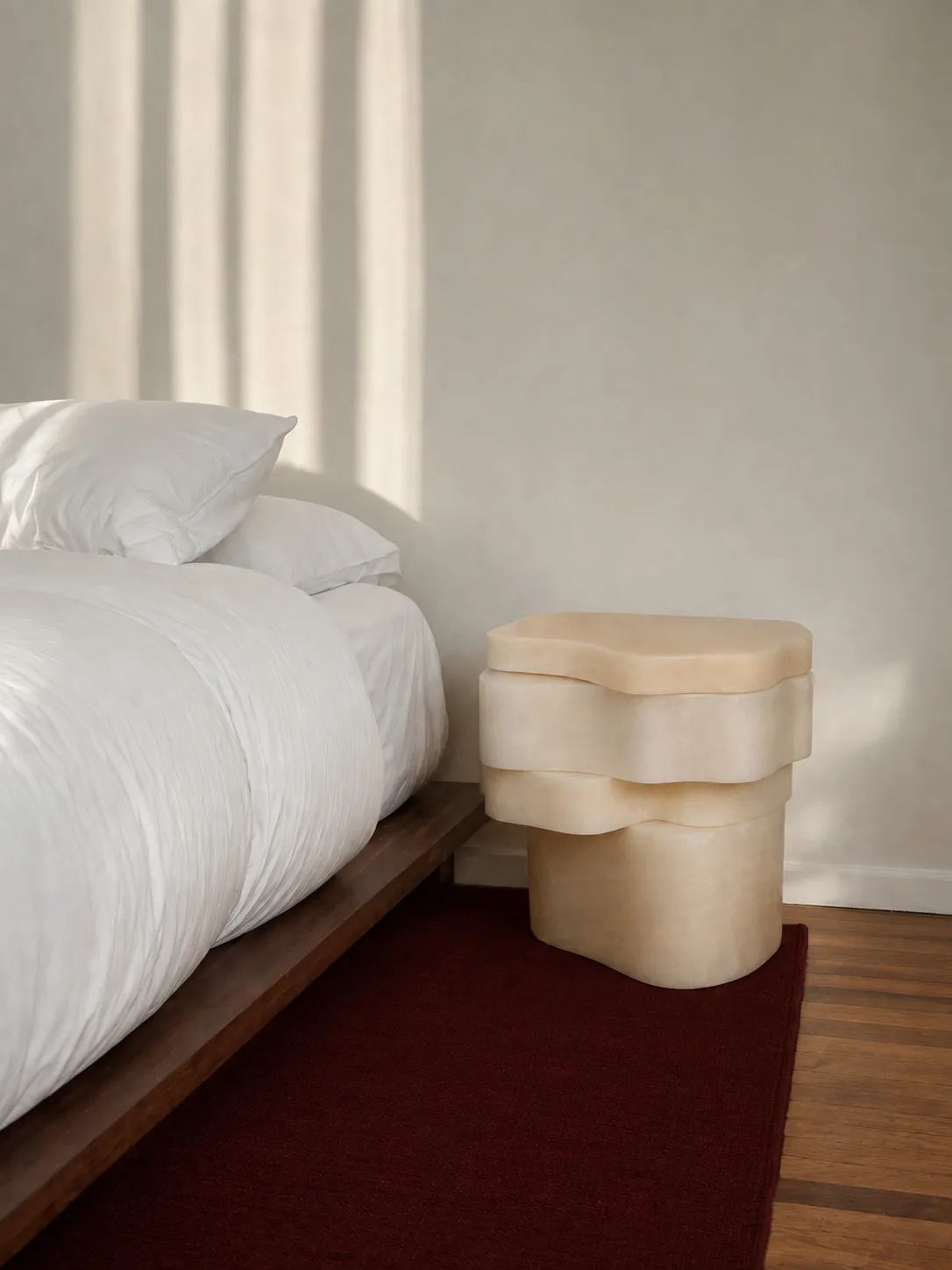
A bedroom holds more than any other room and shows less of it. That is the whole design problem.
Every other room stores things it uses. A bedroom stores a wardrobe for four seasons, bedding for two, and a decade of items that have nowhere else to go — in a space already dominated by a piece of furniture the size of a small car that cannot be moved.
Which is why bedroom storage advice that starts with containers gets it backward. What follows starts with the audit, then works through the four zones a bedroom actually has, the bedside, the wall, the end of the bed, and the one rule that decides whether storage makes a room calmer or busier.
Start by taking things out
Bedrooms accumulate differently from other rooms, because nobody sees inside them. Before adding storage, sort the contents into four groups.
- Daily. The clothes in rotation right now, what is on the nightstand, what you reach for before leaving. These need to be visible or one movement away.
- Seasonal. Coats in July, linen in January, spare bedding. These belong in the hardest-to-reach space you have — high shelves, under the bed, the top of a wardrobe.
- Sentimental. Boxes that are archives rather than storage. These are legitimate, but they should be consolidated into one defined place rather than distributed across five.
- Should not be here. Paperwork, electronics, exercise equipment, anything work-related. A bedroom accumulates these because it has a door that closes.
That last group is usually a quarter of the contents, and removing it is free. Consequently most people reach for a new dresser at exactly the point they should be emptying the one they own. The same logic applies across the house, as our guide to small room decor sets out.
The four zones a bedroom actually has
Once the bed is placed, the room divides into four areas with very different value. Most bedrooms use one of them well.
- Under the bed. The largest unused volume in most homes — roughly 25 to 30 cubic feet (0.7–0.85 m³) sitting empty under a standard frame. Shallow boxes on wheels, 6 inches (15 cm) deep, hold off-season clothing and bedding and pull out without lifting the mattress.
- The wall above 70 inches (178 cm). Empty in nearly every bedroom. A shelf running the full width of a wall at that height reads as architecture and disappears, which a cabinet does not.
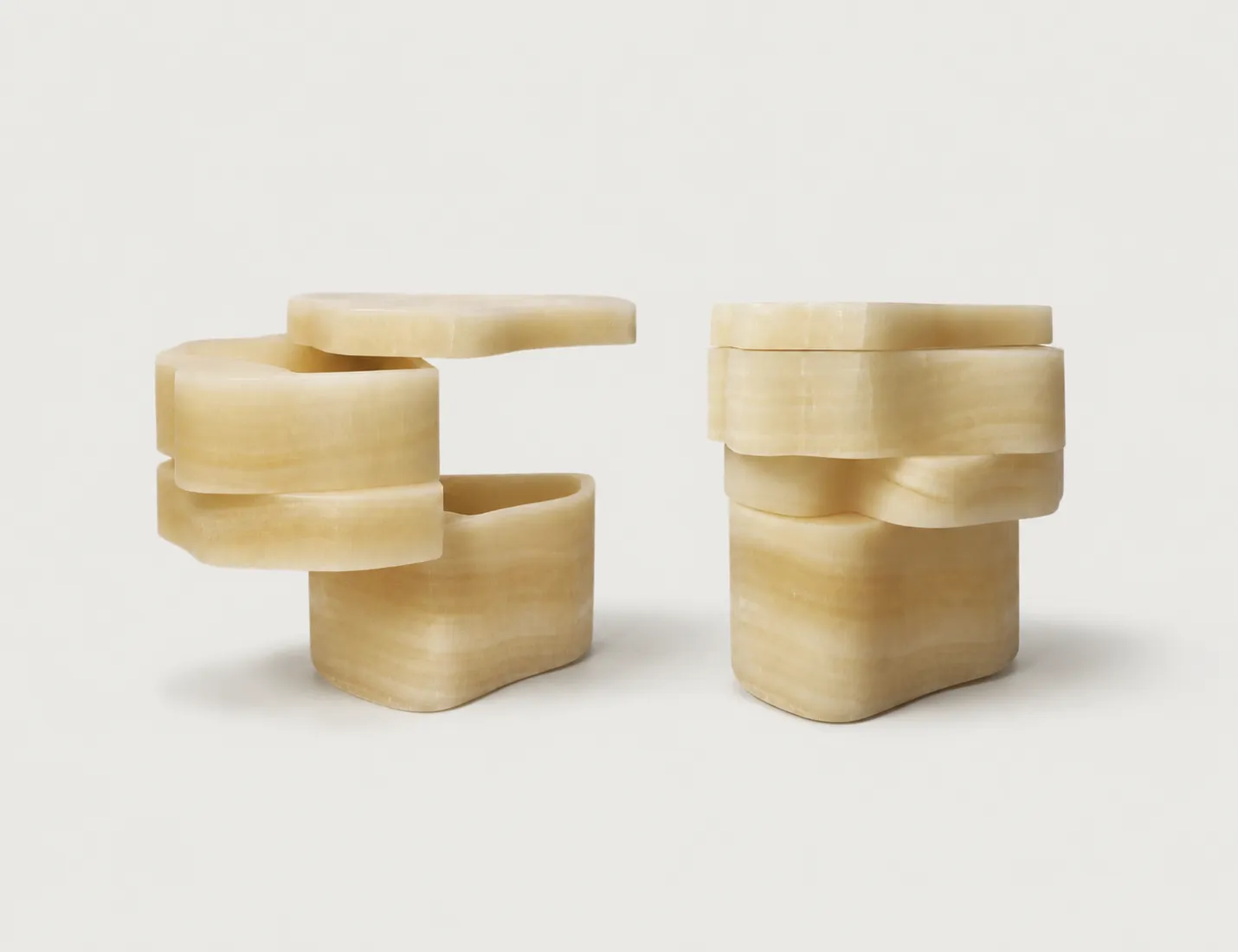
- The bedside. Small, high-traffic, and the zone most likely to be cluttered. It needs a surface and one closed compartment, not three.
- The end of the bed. Usually dead circulation space. A bench or low chest here adds storage without taking any floor the room was using.
Keep 24 inches (60 cm) of access on at least one side of the bed, and 30 (75 cm) if the room allows. Furthermore, a bed pushed into a corner frees floor but costs access on one side, which matters more than the gain in all but the smallest rooms.
The bedside, done properly
A nightstand has one surface and it fills within a week. The fix is not a bigger nightstand — it is deciding what the surface is for and moving everything else into a drawer or onto the wall.
Height matters. The top should sit within 2 inches (5 cm) of the mattress height, either way. A nightstand noticeably lower than the mattress is awkward to reach into, and one much higher looms.
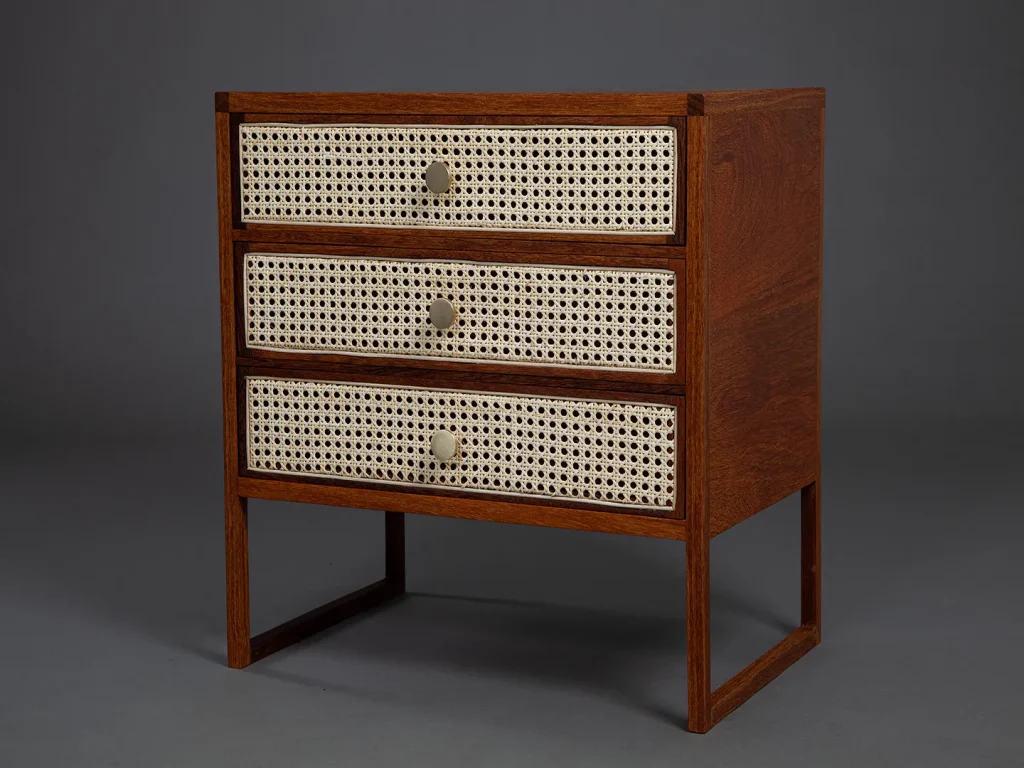
One closed compartment is enough. A drawer for the things that would otherwise sit out — chargers, medication, a notebook — and an open shelf below for books. Three drawers beside a bed usually means two are holding things nobody has looked at in a year.
Move the lamp to the wall. A sconce at around 48 inches (122 cm) frees the entire nightstand surface and puts the light on the page rather than in your eyes. In a small bedroom this is the single highest-value change available.

Go vertical before you go wider
Floor space in a bedroom is already spoken for. Wall space is not, and it is the cheaper resource by a wide margin.
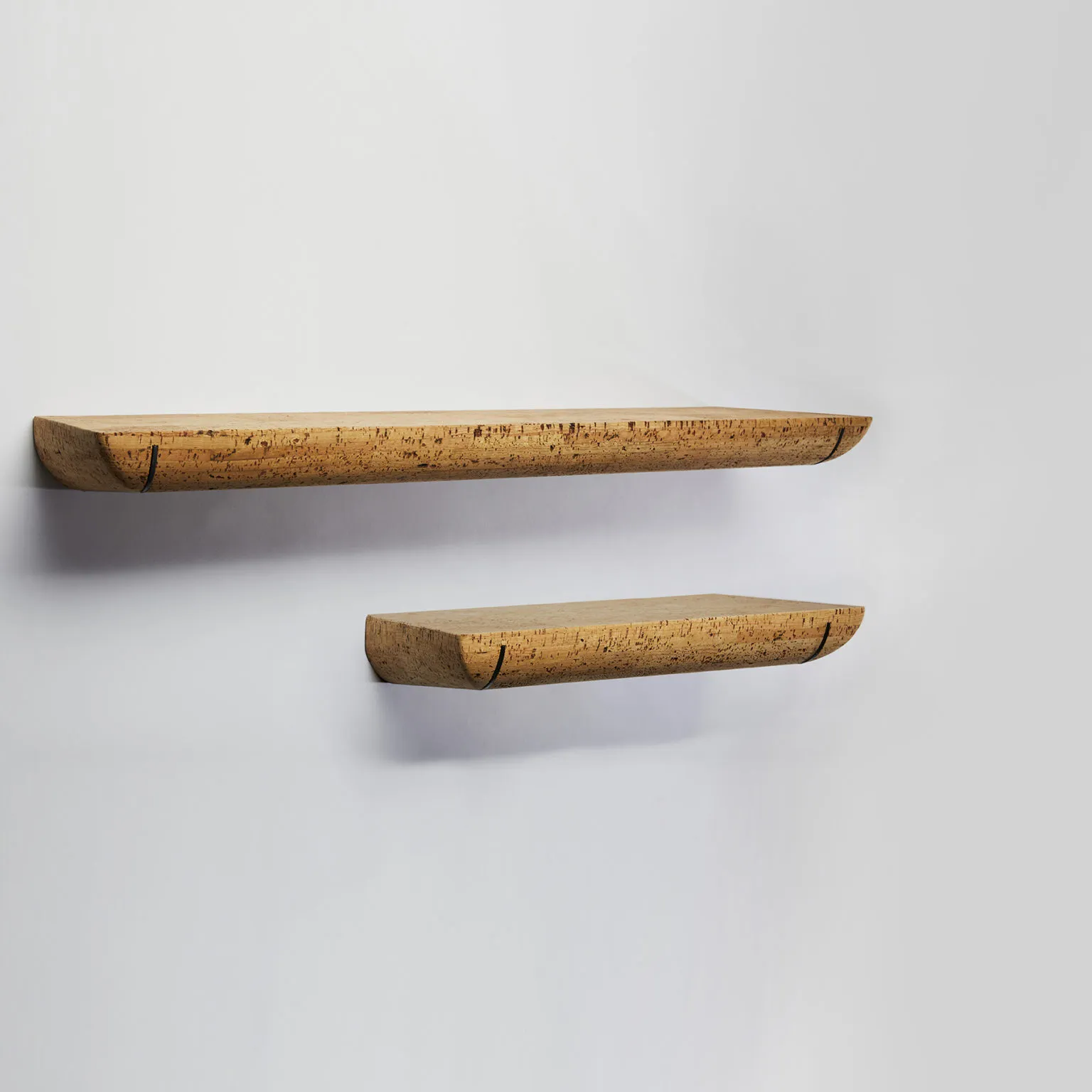
Shallow beats deep. A shelf 6 to 10 inches (15–25 cm) deep holds books, folded knitwear, baskets and most of what a bedroom needs, while a freestanding unit takes 16 to 20 inches (40–50 cm) of floor for the same capacity. Specifically, a wall-mounted cabinet above a dresser doubles its capacity without touching the footprint.
Two placement notes. Keep the busiest storage out of the 40 to 70 inch (100–178 cm) eye-level band, since that is where visual clutter registers most — high for what you rarely need, low and closed for what is unattractive. And a single long shelf disappears where three short ones read as furniture. Our selection of wall shelves goes further into the options.


Clothes: hang, fold, or neither
Most clothing storage problems come from storing everything the same way. Three categories, three methods.
Hang what creases and what you choose between. Shirts, dresses, jackets, tailored trousers. Hanging rails need 60 inches (150 cm) of height for long items and 40 (100 cm) for shirts and jackets, which means a single tall wardrobe can hold a double-hang section and gain half its capacity back.
Fold what stretches. Knitwear, t-shirts, jeans. Folded vertically in a drawer rather than stacked, so you can see every item at once — a stack means wearing only the top three things in it.
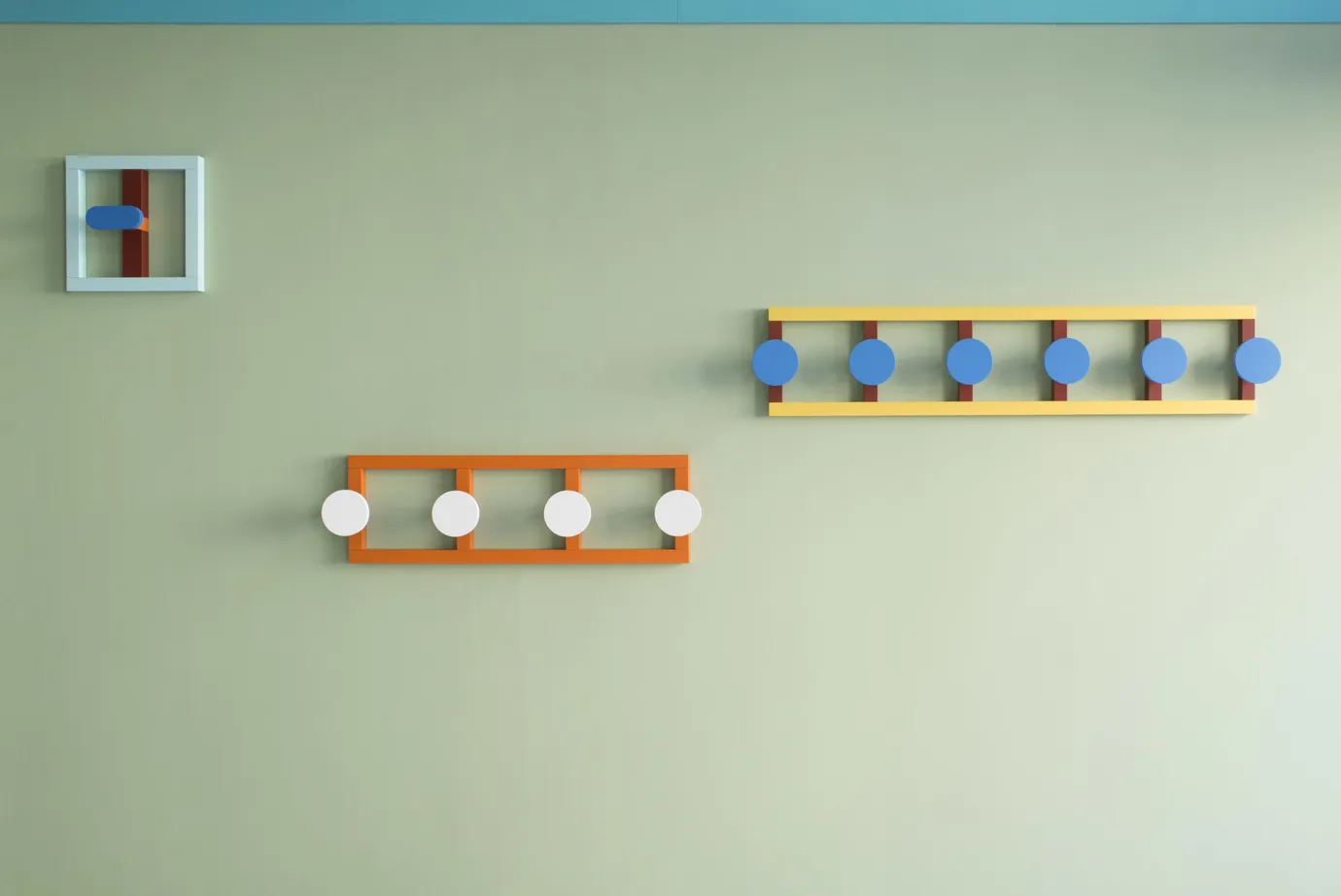
Hook what is in transit. The jacket worn today and wearable again tomorrow belongs on a hook, not in a wardrobe and not on a chair. This is what the chair in the corner of every bedroom is actually doing, and a row of hooks does it better in no floor space at all.
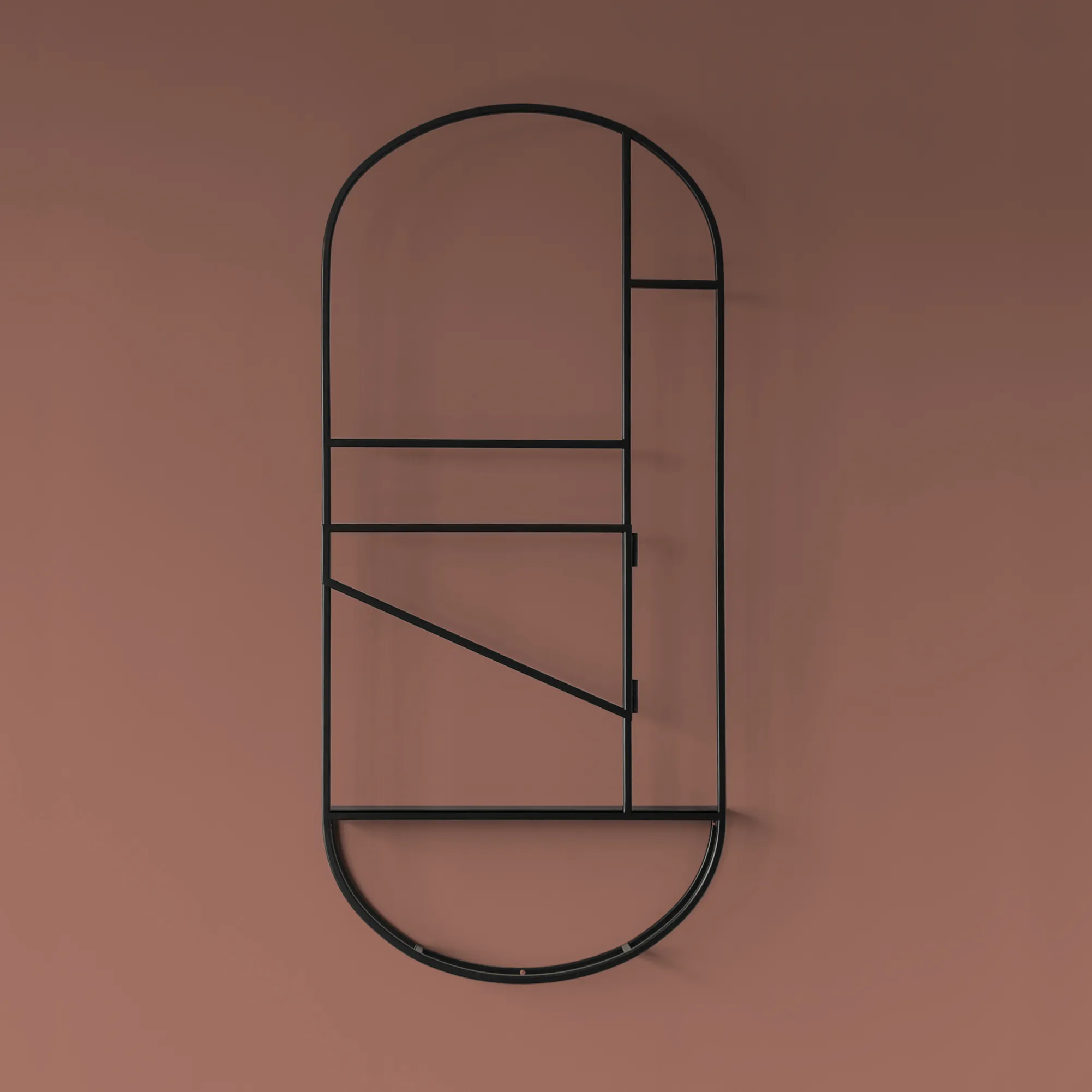
Mount hooks at 60 to 66 inches (150–168 cm) so a coat hangs clear, with a second row at 40 inches (100 cm) for children. Meanwhile a wall-mounted rack that folds flat when empty solves the small-bedroom version, since it takes depth only when something is on it.

Under the bed, and why most of it is wasted
Under a standard bed sits the largest uninterrupted volume in most homes, and in most homes it holds dust and one suitcase.
The reason is access rather than space. Deep boxes shoved under a frame become archives nobody opens, because retrieving anything means moving everything. Shallow containers on wheels, no more than 6 inches (15 cm) tall, solve it — they pull out fully, and the shallow depth forces single-layer packing so you can see the contents at a glance.
Use it for seasonal clothing and spare bedding, which are bulky, light and needed twice a year. Avoid anything that suffers from dust or humidity, and check clearance before buying: most frames give 7 to 12 inches (18–30 cm), divan bases give less, and a platform bed may give none at all.
A bed frame with integrated drawers or a lifting mechanism converts the same volume into usable storage, and in a small bedroom it is usually a better investment than any freestanding piece.
The end of the bed
The strip at the foot of a bed is circulation space that rarely circulates. A bench or low chest there adds storage, gives somewhere to sit to put shoes on, and holds the throw that otherwise ends up on the floor every night.
Keep it low — at or below mattress height — and leave at least 24 inches (60 cm) between it and the wall or whatever faces it. A chest deeper than about 18 inches (45 cm) will block the route around the bed in most rooms. Our selection of designer benches covers pieces that work at the foot of a bed as well as by a door.
Open or closed?
This is the decision that determines whether storage makes a bedroom calmer or busier, and it is not a matter of taste. It depends entirely on what the things look like.
Open shelving and rails keep a small room feeling larger, because the eye reads past the objects to the wall. They also expose everything you own, which in a bedroom means packaging, plastic hangers and mismatched boxes. Closed storage hides all of that but reads as a solid wall and visually shortens the room.
The workable answer in most bedrooms is a split: closed low down for the unattractive and the rarely used, open at eye level for books and the few things worth seeing. Furthermore, matching hangers and uniform baskets are what make an open rail look deliberate rather than chaotic — it costs little and changes the room more than another cabinet would.
One rule holds regardless: a bedroom should have at least one surface that stays empty. It is what the room needs to feel restful, and it is the first thing lost when storage is added without editing first.
Small bedrooms: what actually works
- Empty before you buy. A quarter of most bedroom contents belongs elsewhere in the house.
- Claim under the bed. 25 to 30 cubic feet (0.7–0.85 m³) sitting unused, and shallow wheeled boxes make it accessible.
- Use the wall above 70 inches (178 cm). Free, empty, and ideal for the seasonal layer.
- Sconces instead of table lamps. Frees both nightstand surfaces at once.
- Hooks instead of the chair. The chair is doing a job a row of hooks does better in no floor space.
- Go taller, not wider. A tall narrow wardrobe beats a low wide one for the same capacity.
- Hang curtains at the ceiling. Adds height, which is the dimension a small bedroom usually has most of.
- Leave one surface clear. Non-negotiable.
Common mistakes
- Buying storage before editing. The reliable way to end up with a full wardrobe and the same mess.
- Deep under-bed boxes. Anything that needs unpacking to reach the bottom becomes an archive.
- Nightstands with three drawers. Two of them are holding things nobody has looked at in a year.
- Stacking folded clothes. You wear the top three items and forget the rest. File them vertically.
- Open shelving full of packaging. Open storage exposes whatever is on it. If it is not worth seeing, close it in.
- The chair that is really a wardrobe. Hooks solve it properly and take no floor.
- Filling every wall. A bedroom crowded to the ceiling does not rest the way a bedroom should.
Frequently asked questions
What is the best storage for a small bedroom?
Under the bed and the wall above 70 inches (178 cm) — the two largest unused volumes in most bedrooms, and both free. Use shallow wheeled boxes no more than 6 inches (15 cm) tall underneath, and a full-width shelf high on the wall for seasonal items. Then replace table lamps with sconces to free both nightstand surfaces.
How much space do you need around a bed?
At least 24 inches (60 cm) on one side, and 30 (75 cm) if the room allows. At the foot of the bed, leave 24 inches (60 cm) clear in front of a bench or chest, and keep that piece under about 18 inches (45 cm) deep so it does not block the route around the bed.
How high should a nightstand be?
Within 2 inches (5 cm) of the mattress height, either above or below. Lower than that and it is awkward to reach into from bed; much higher and it looms over the pillow. One closed drawer plus an open shelf is usually the right configuration.
How do you store clothes without a closet?
Split by type rather than storing everything one way. Hang what creases on a rail — 60 inches (150 cm) of height for long items, 40 (100 cm) for shirts, which allows a double-hang section. Fold knitwear vertically in drawers so every item is visible. Put anything in transit on hooks at 60 to 66 inches (150–168 cm).
Should bedroom storage be open or closed?
Both, split by content. Closed low down for packaging, spare bedding and anything unattractive; open at eye level for books and things worth seeing. Open storage only works if what sits on it is uniform — matching hangers and consistent baskets change a rail more than any amount of tidying.
How much storage space is under a bed?
Roughly 25 to 30 cubic feet (0.7–0.85 m³) under a standard double or queen frame — the largest uninterrupted volume in most homes. Clearance is usually 7 to 12 inches (18–30 cm), though divan bases give less and platform beds may give none, so measure before buying containers.
Storage is subtraction before it is addition
Bedrooms are the only room where more storage reliably makes the problem worse, because the room’s job is to be restful and every additional object works against that. The sequence that fixes it runs the other way: take out what belongs elsewhere, claim the two free volumes under the bed and above head height, put the lamp on the wall, and give what is left a defined place.
What is then worth spending on is the small number of things that stay visible — a nightstand with one good drawer, a hook rail in solid brass, a bench at the foot of the bed. In a room this quiet, the few pieces on show carry the whole thing.