Sustainable Furniture and Design: Studios Rethinking Our Objects’ Life Cycles
Updated on: September 25, 2026
Every object has a past and a future. The best designers think about both.
Sustainability has become one of the most overused words in marketing. It can mean almost anything, which is exactly the problem. A more useful way to judge an object is to look at its whole life cycle: what it is made from, how much energy it took to produce, and what becomes of it once it has served its purpose.
The designers below answer those questions through research, experimentation and a good deal of invention. They salvage lobster traps from the ocean, turn discarded textiles into stone-like shelving, rebuild Soviet-era school chairs and reshape recycled plastic into sculpture. Together, they show what a circular economy can look like in the home.
What is sustainable furniture?
Sustainable furniture is designed to reduce environmental impact across its life cycle. That can mean using recycled, reclaimed or bio-based materials, producing locally and by hand, designing for repair and reuse, or simply making pieces that last for decades. In other words, the most sustainable design is often the object you never need to replace.
How designers rethink the product life cycle
Material: starting with waste
Many designers begin with what others throw away: off-cuts, ocean debris, used textiles or plastic. Consequently, the first stage of the life cycle becomes a rescue rather than an extraction. See our selection of upcycled designs for more examples.
Process: making locally and by hand
Local, small-batch production cuts transport emissions and keeps traditional skills alive. It also means designers can control waste closely and adapt each piece to its material.
Use and afterlife: designing for longevity
Modular, repairable and timeless pieces stay in use longer. Some designers go further, planning for their objects to be taken apart and recycled again at the end of their life.
Studios turning waste into furniture
These studios build new pieces from materials at the end of their first life, a practice at the heart of upcycling.
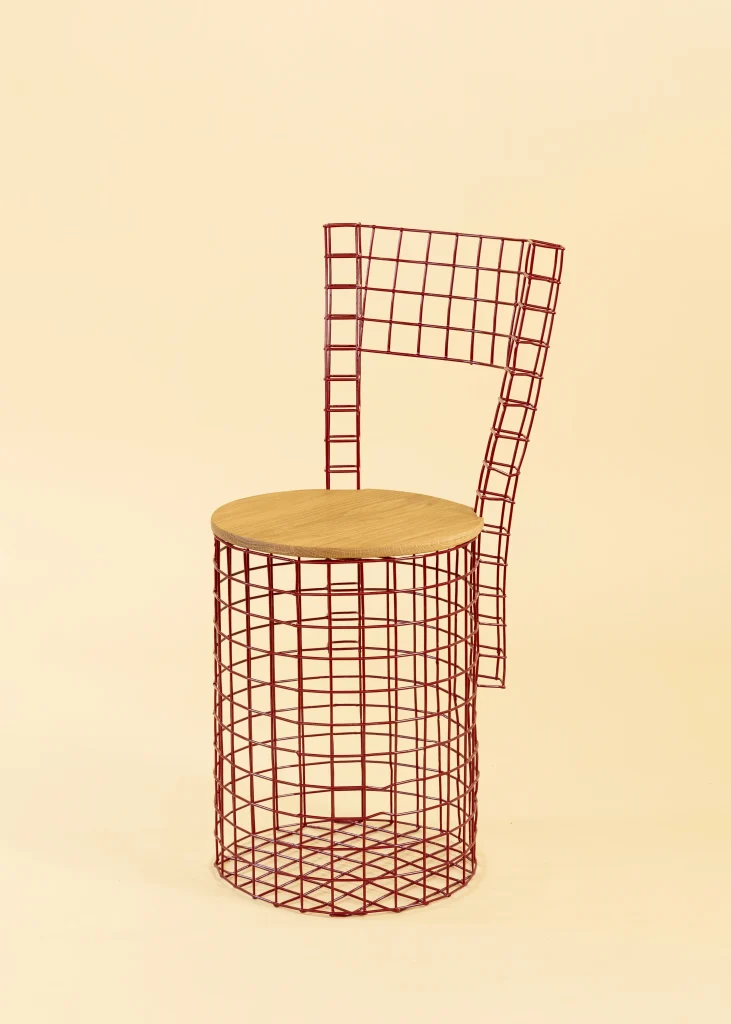
Fresh Catch Chair I – Upcycled Steel by Lauren Goodman
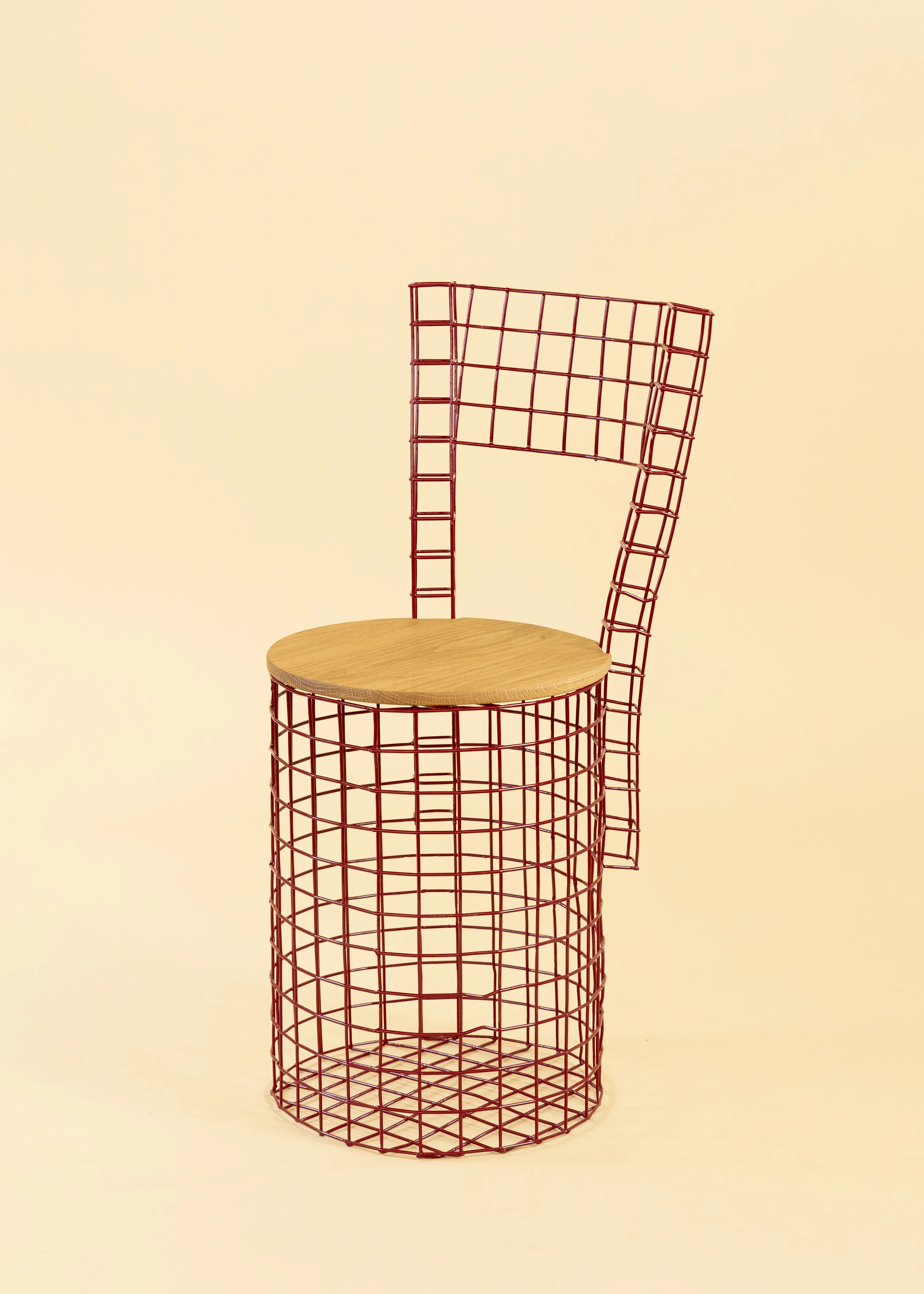
Lauren Goodman collects abandoned lobster traps by hand from tidal coves off the coast of Maine, where over 100,000 are lost every year and become dangerous ghost gear. Each trap is taken apart, cleaned, rearranged and welded into furniture. This chair pairs the reclaimed steel with a white oak seat, turning ocean cleanup into something you can sit on.
€2.223 incl. tax
School Chair – Upcycled Materials by Around the Studio

A relic of the Soviet era, the public school chair is often found abandoned on the streets of Georgia. Around the Studio reimagines it in felt and aluminum, topped with a silver bird, a motif that once decorated the gates of homes in western Georgia. As a result, an everyday object becomes a piece about memory and cultural heritage.
€1.500 incl. tax
Hood Light Table Lamp in Stainless Steel by Nolan Talbot-Kelly
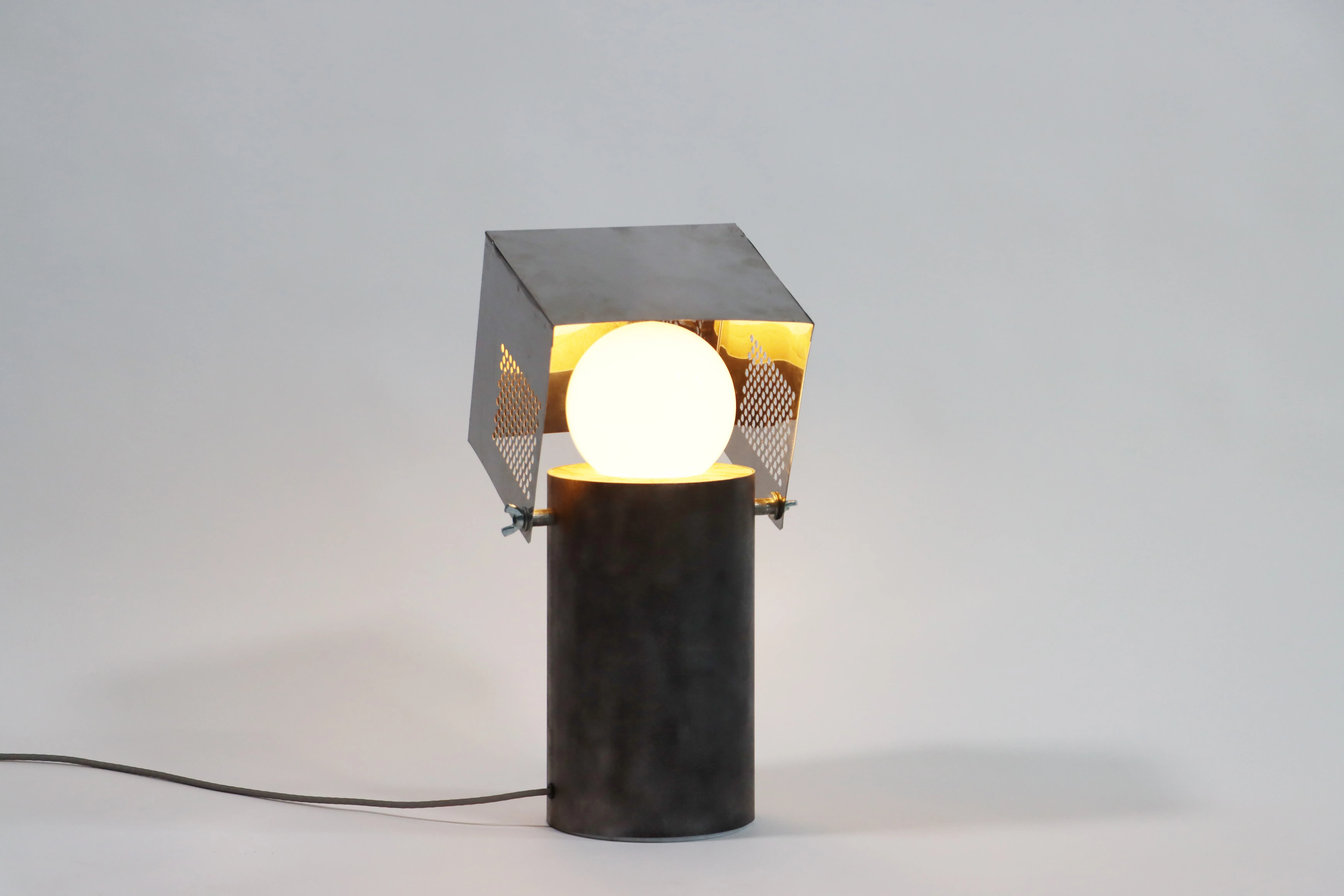
Built from upcycled stainless steel, the Hood Light gives industrial scrap a second life as a sculptural table lamp. The reclaimed metal keeps its character, while the form feels deliberate and refined. Notably, it shows how salvaged material can reach the same standard as new.
€900 incl. tax
Studios reimagining recycled materials
Here, recycled textiles, plastics and fibers are transformed into entirely new materials, often unrecognizable from their source.
L’intervalle “s” / Shelving Unit // Reimagined Textile by FabBRICK
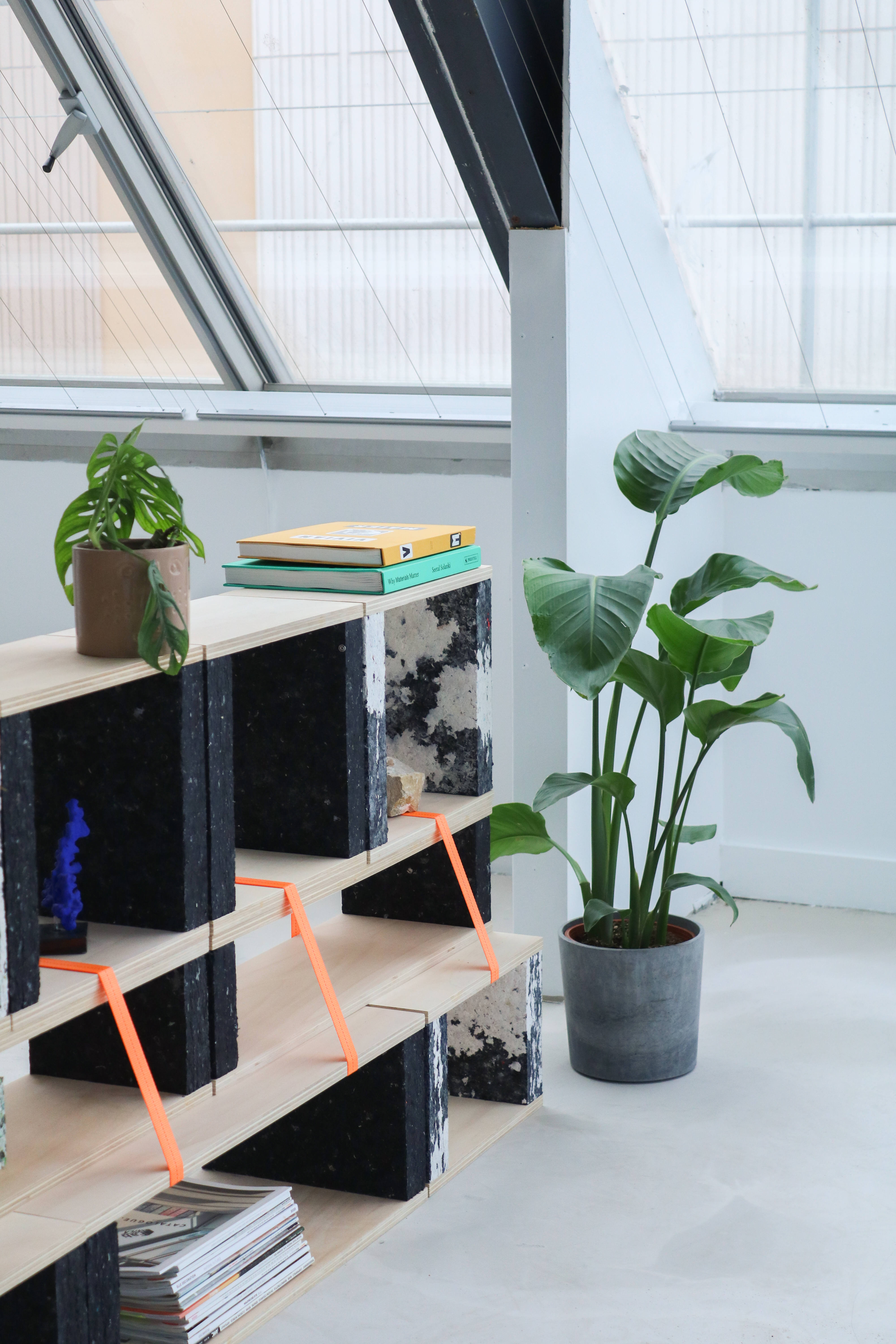
FabBRICK turns discarded clothing and textiles into dense, marbled bricks that look almost like stone. L’intervalle uses them to build a modular bookshelf, with modules held together by simple straps so it can be tied, untied and rearranged. The larger version alone saves around 42 kg of textile waste.
By FabBRICK
€3.166 incl. tax
Really Rococo Il – Recycled Textile Table by Ebba Lindgren

Swedish designer Ebba Lindgren uses Really Board, a fiberboard made from textile off-cuts, industrial laundry waste and worn hotel linens, milled and pressed with a binder. Her Really Rococo pieces give this recycled material ornamental, historical curves. Moreover, she collaborates on Fiber Land, which promotes wool, flax and hemp production in Sweden.
€2.000 incl. tax
Recycled Plastic Armchair Version 1 by Willem A. Stibolt
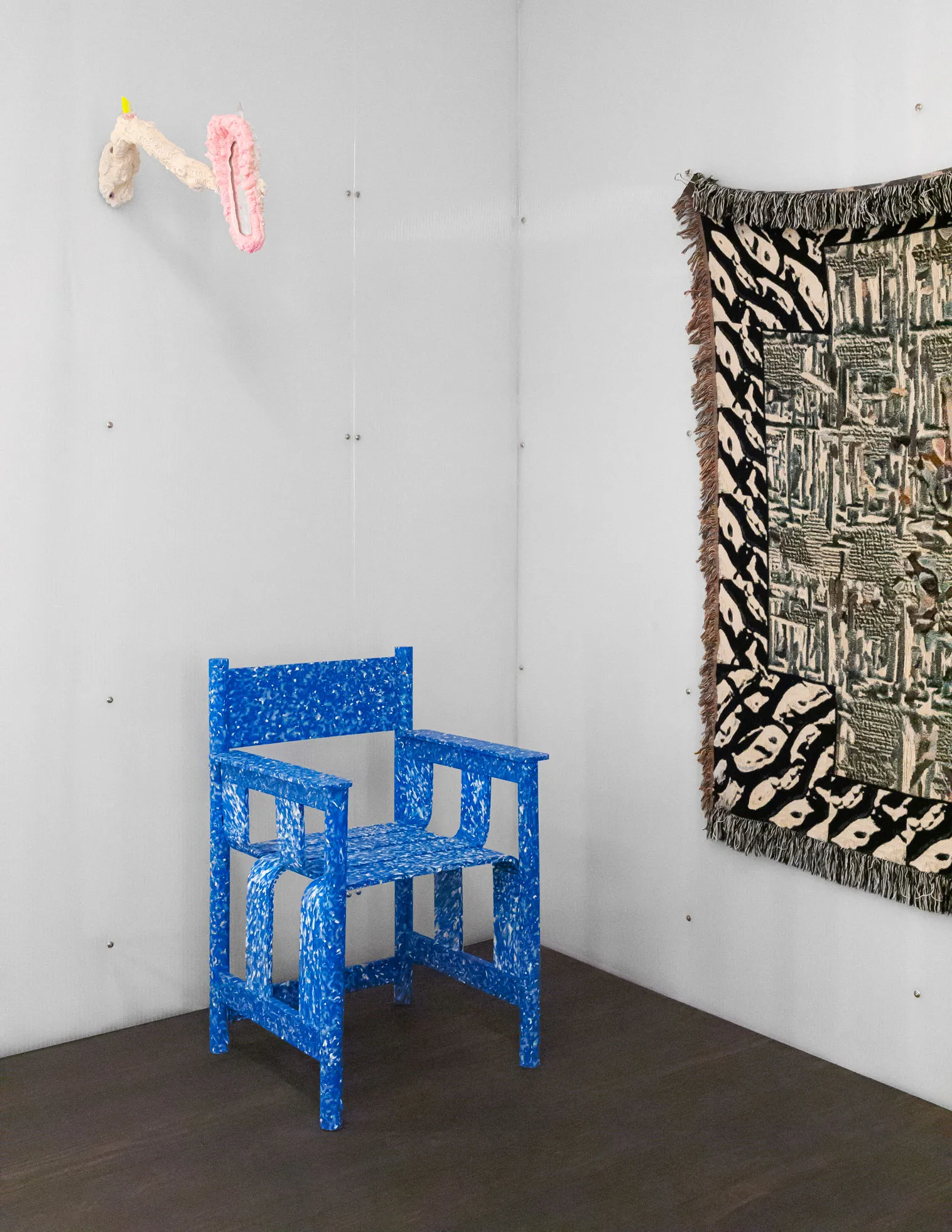
This outdoor armchair explores the meeting point of material, technology and form. Willem A. Stibolt pairs a contemporary recycled plastic with classical references and traditional processing. As a result, it shows how recycled plastic can be bold and playful rather than purely practical.
€4.350 incl. tax
Axile Table Lamp in Bio Plastic by Errance.

Modeled on a dried, almost fossilized thistle, Axile is printed in bio-plastic, a plant-based alternative to petroleum plastics. Its form comes from hand-drawn shapes turned into 3D volumes and arranged symmetrically. Consequently, it reads as part organism, part archaeological find.
By Errance.
€335 incl. tax
Studios rooted in local craft
For these studios, sustainability starts with where and how things are made: local production, traditional techniques and materials with a story.
“your Skin” Chair by Tributo
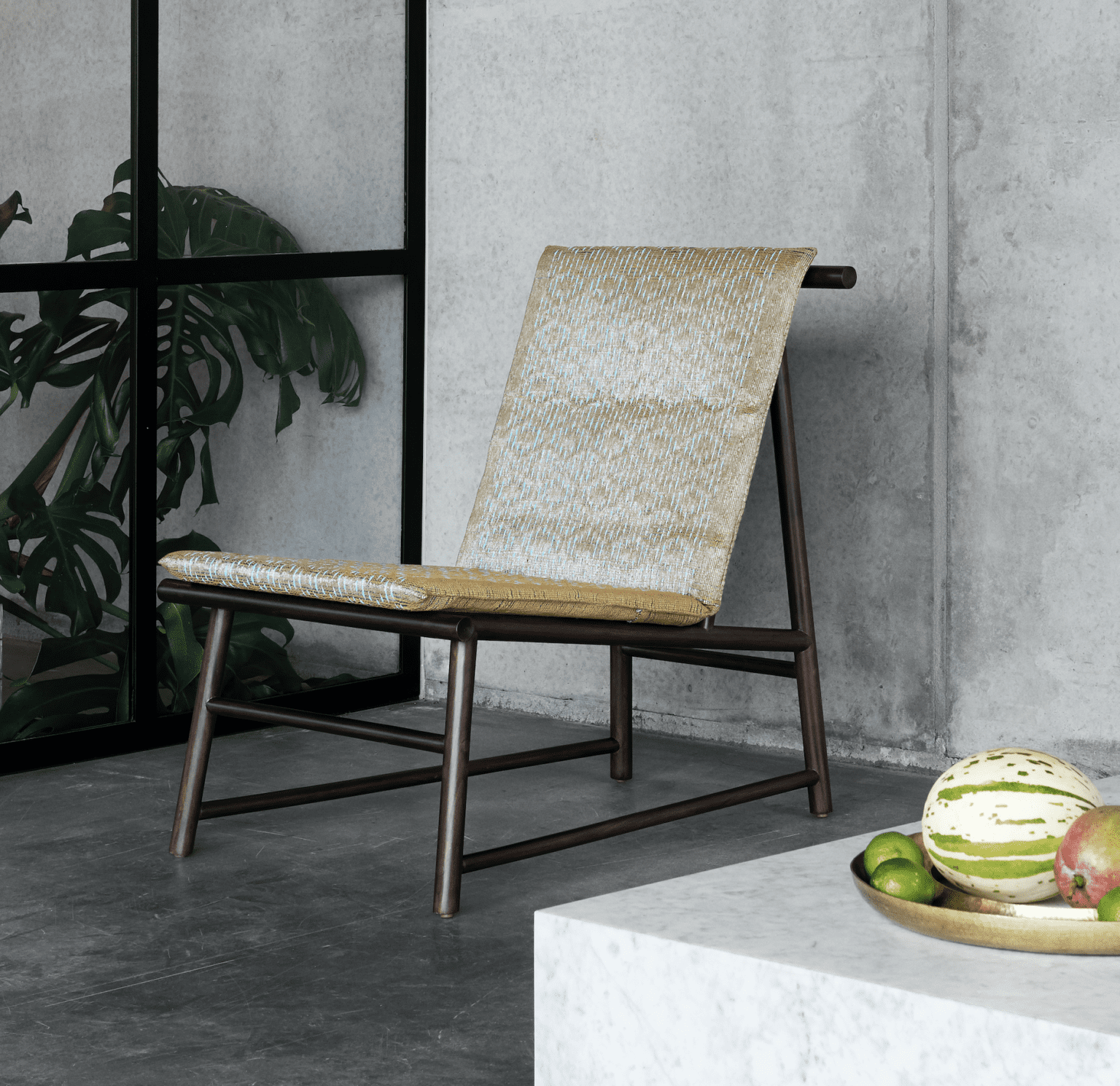
Founded by Laura and Gabriela Noriega in Jalisco, Mexico, Tributo bridges contemporary design and local artisans. The Your Skin chair has a frame of solid wood cylinders in walnut or beech, and interchangeable seats, including an Oaxacan handwoven textile made from recycled plastic and cotton. Furthermore, the studio measures its carbon emissions and works to offset them, an approach at the core of Mexican design today.
By Tributo
€2.180 incl. tax
Minute – Candle Holder by Studio Flétta

Founded by Birta Rós Brynjólfsdóttir and Hrefna Sigurðardóttir, Studio Flétta works with reused materials and local production in Iceland. The Minute candle holders are hand-shaped in one minute each, a method developed to make local, handmade production affordable. As a result, the maker’s hand stays visible in every piece.
€320 incl. tax
How to choose sustainable home decor
Start by asking where a piece comes from and where it will go. Look for recycled, reclaimed or natural materials, local or small-batch production, and designs that can be repaired or rearranged. Above all, buy less and choose pieces you will keep. For more on the idea, read our essay on sustainability and our relationship with material possessions.
Frequently asked questions
What makes furniture sustainable?
Its materials, production and lifespan. Sustainable furniture uses recycled, reclaimed or renewable materials, is made with low waste and energy, and is built to last or to be repaired and recycled.
What is the product life cycle in design?
The full path of an object: raw material, manufacturing, transport, use and end of life. Designers who think in life cycles try to reduce impact at every stage, not just one.
What is circular design?
Circular design keeps materials in use for as long as possible. Products are designed to be repaired, reused, remade or recycled rather than thrown away.
Is upcycled furniture durable?
Often yes. Many upcycled pieces use steel, wood or dense composites that are as strong as new materials. Check each product’s materials and care guidance.
What are the most sustainable materials for furniture?
Reclaimed wood and metal, recycled textiles and plastics, and fast-growing natural materials such as bamboo, cork and wool. Local sourcing further reduces impact.
How can I make my interior more sustainable?
Buy fewer, better pieces, choose second-hand or upcycled designs, favor natural and recycled materials, and look after what you own so it lasts.
Objects that close the loop
Each of these studios treats the life of an object as a story with more than one chapter. By starting with waste, working locally or designing for longevity, they make sustainability tangible rather than theoretical. Choosing their work is a small way to keep materials, and meaning, in circulation.
