9 Upcycled Furniture and Sustainable Designs to Shop
Updated on: August 21, 2026
Upcycled furniture has moved past the point where it needs defending on environmental grounds alone. The pieces below are worth having because of what the material does — recycled plastic that reads like terrazzo, carpet waste pressed into a lamp, clay and paper pulp sculpted by hand — and the sustainability argument follows rather than leads.
Nine pieces made from recycled plastic, salvaged textile and other reclaimed materials, across Boho Chic, Maximalist and Coastal registers.
What counts as upcycled furniture?
Furniture made from material that would otherwise have been discarded, transformed into something worth more than the input rather than broken down and reprocessed. That distinction matters: recycling degrades most materials with each cycle, while upcycling keeps them intact and changes what they are.
Consequently the supply is finite and inconsistent, which is why almost everything here is a one-off or a very short edition. Colour and pattern vary piece to piece because the input varied — a characteristic rather than a flaw, and the clearest sign the material is genuinely reclaimed.
9 upcycled and recycled designs
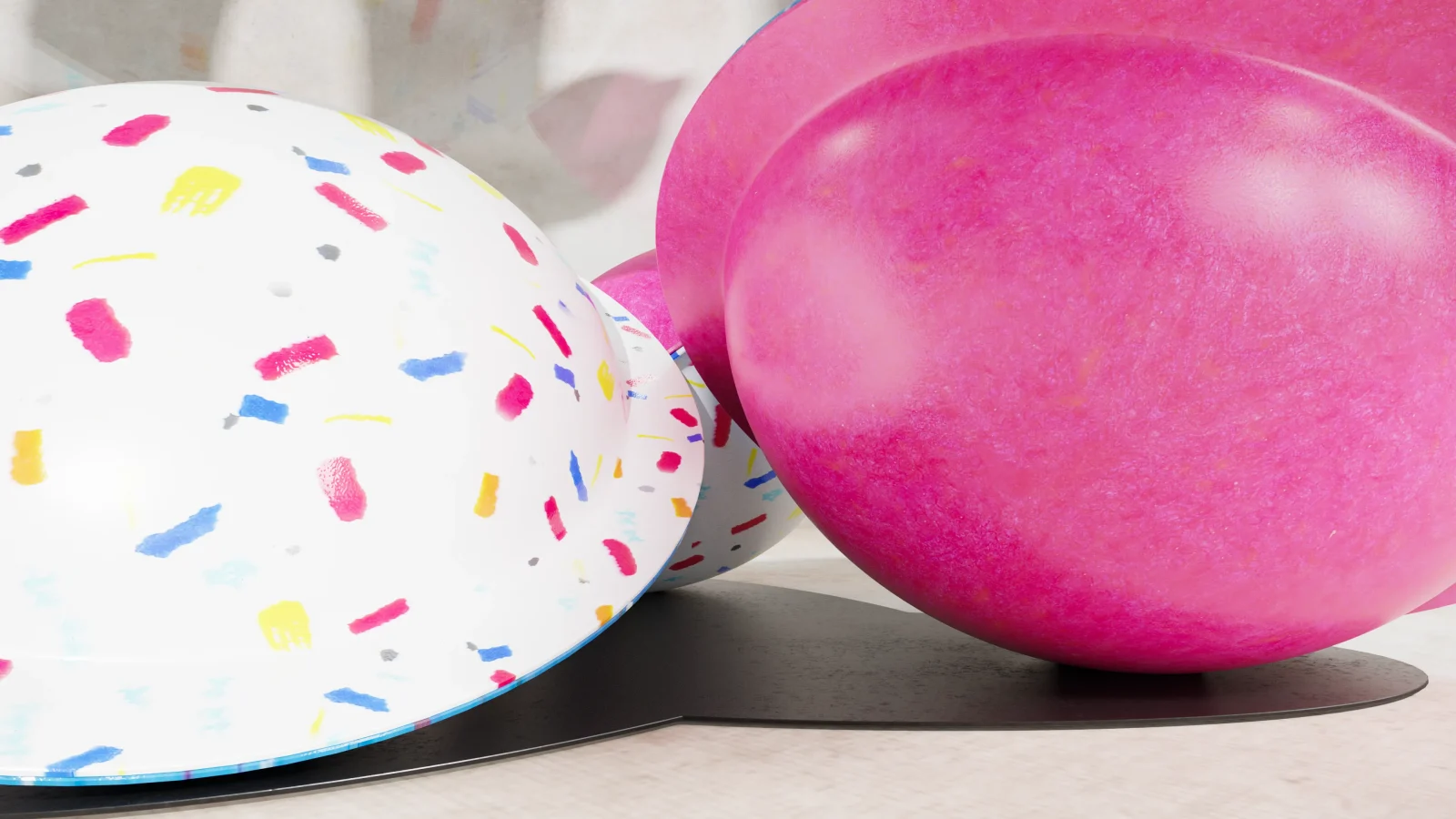
Flying Saucer Coffee Table by Duffy London Ltd

Retro-inspired and firmly maximalist, combining vibrant pop colour and pattern in something nostalgia-drenched. The most assertive object here by some distance — a piece that decides the room rather than fitting into it.
By Duffy London Ltd
€18.985 incl. tax
Pregnant Lady – Upcycled Floor Lamp by StorqueStudios
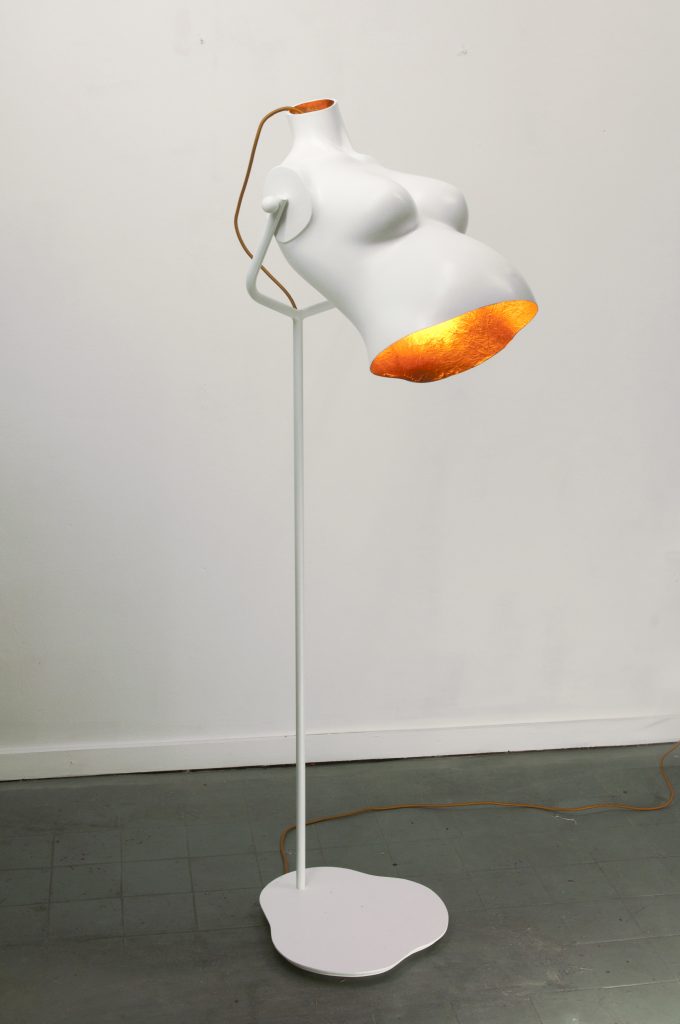
A thrifted mannequin turned into sculptural lighting. The studio calls these “regenerated bodies of light” — an object originally made to stand in for a human body, given a second life doing something else entirely. Among the few pieces here where you can still read exactly what the material used to be, which is the point.
By StorqueStudios
€4.869 incl. tax
“Object 02” Wall Lamp from the “Hotel” Collection by Hot Wire Extensions
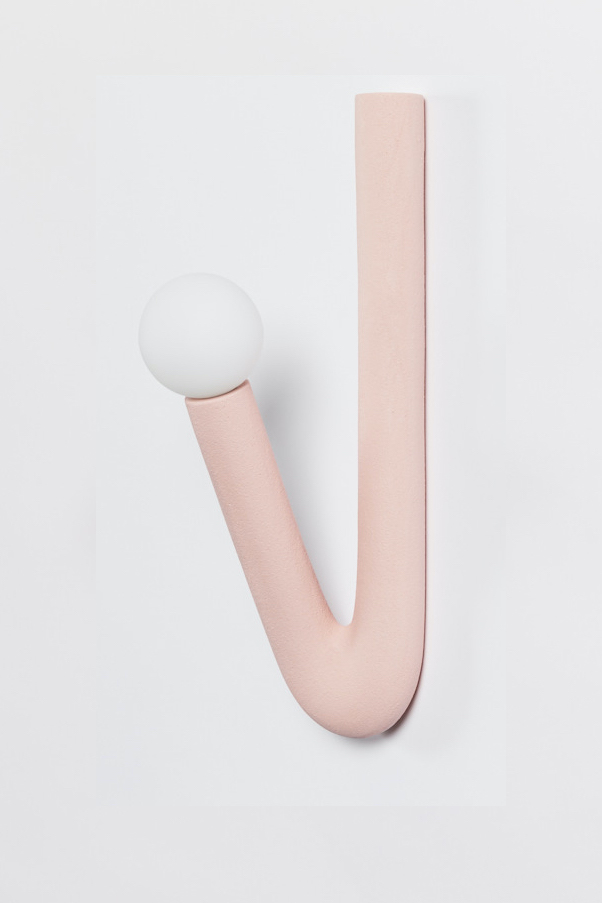
Made from waste nylon powder left over by SLS 3D printing — a material that currently is not recycled at all — fused with silica sand. A nichrome wire is bent into shape, buried in the powder mix, then charged with current until the surrounding nylon melts and grows around the form. The longer the current runs, the larger it becomes, so length and width are decided during the making rather than beforehand. Hardwired wall sconce with a hand-blown glass bulb.
By Hot Wire Extensions
€1.145 incl. tax
ZTISTA Console by FAINA
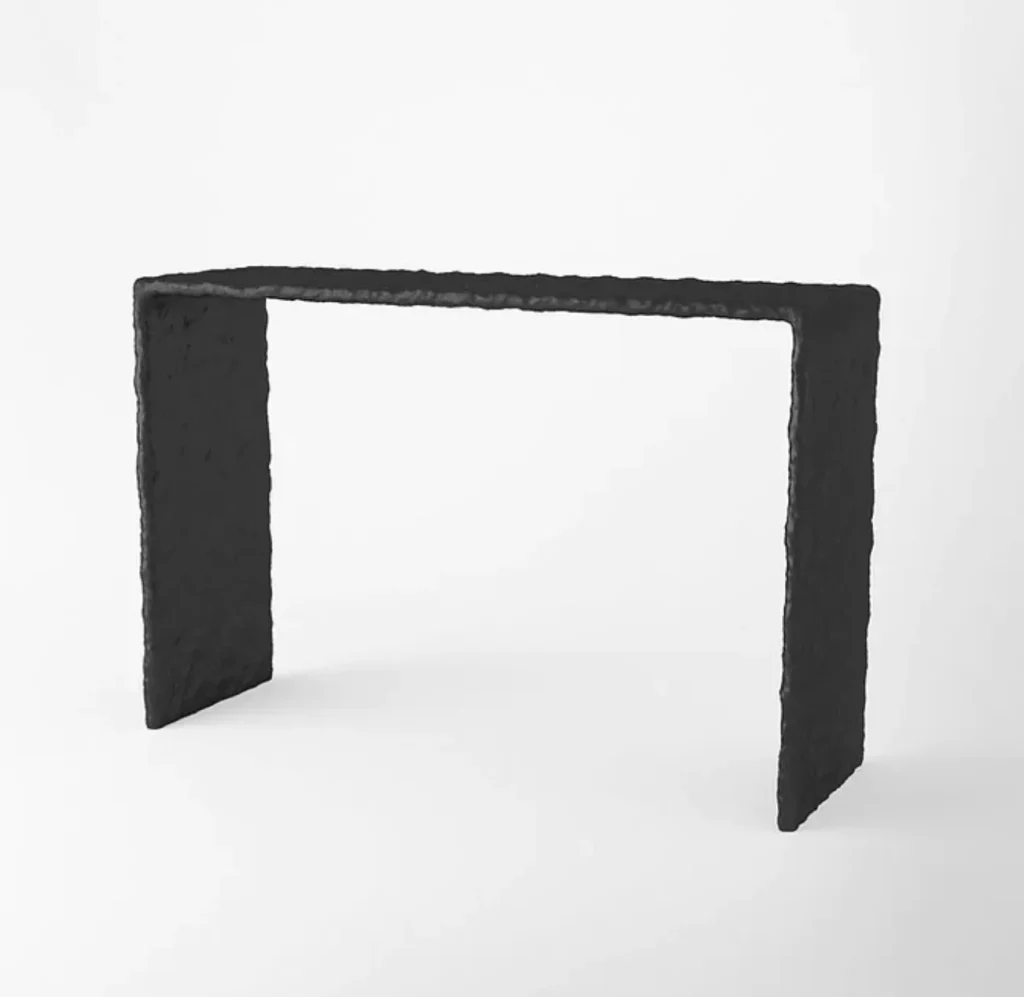
Hand-sculpted from ZTISTA, FAINA’s own material — a blend of clay, recycled paper, flax fibre and wood chips over an upcycled steel frame, finished with a biopolymer cover so it can eventually return to the ground. The making borrows from valkuvannya, a Ukrainian wall-finishing craft, which is why each console differs slightly and why the signature holes read as spontaneous rather than designed.
By FAINA
€2.470 incl. tax
Really Rococo II – Recycled Textile Table by Studio Ebba Lindgren

Recycled textile compressed into a rigid table — soft material asked to do the job of a hard one, which is the same inversion FabBRICK works with. The Rococo reference is doing real work here too: an ornamental historical style rebuilt from the least ornamental material available.
By Studio Ebba Lindgren
€2.000 incl. tax
Tooth – Papier-mâché Coffee Table in Light Purple by David Čáp

Papier-mâché is the oldest recycling technique in furniture and among the least respected, which makes its use at this scale genuinely interesting. Waste paper pulped, formed and finished into a coffee table with enough structural integrity to take daily use.
By David Čáp
€1.200 incl. tax
Chess Chair 2 in Blue by David Čáp
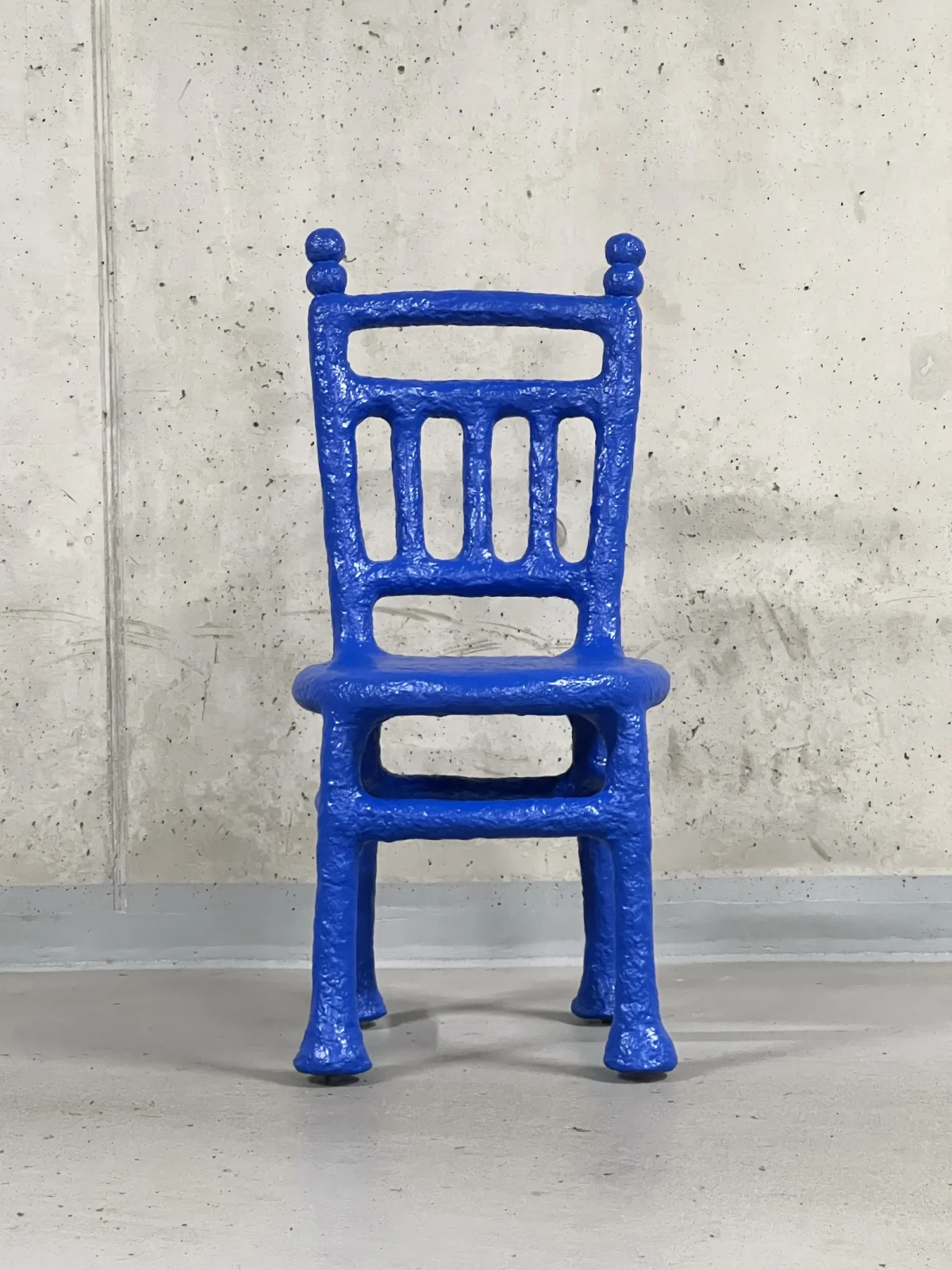
From the same papier-mâché series, in a saturated blue that recycled material rarely achieves — reclaimed input usually forces a muted palette, so a strong flat color here is a deliberate technical result rather than a default. Sculptural enough to work as an occasional chair or as an object in its own right.
By David Čáp
€1.000 incl. tax
Carpet Matter Lamp #2 by Riccardo Cenedella
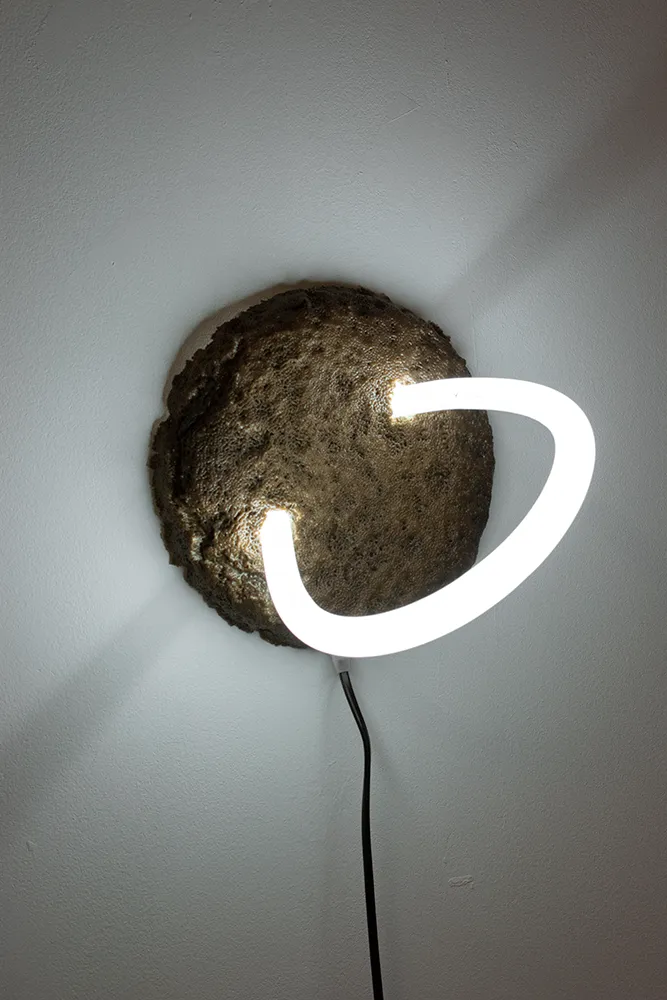
Made from discarded carpet — a material that recycles particularly badly, since most commercial carpet is a mixed-fibre composite that cannot be separated economically. Compressing it into a solid lamp body is one of the few routes that keeps it out of landfill, and the resulting surface has a density and grain nothing else here matches.
By Riccardo Cenedella
€800 incl. tax
Brown “Terazzo” Papier-mâché Stool & Table by David Čáp

Stool or side table depending on need, with a speckled finish that imitates terrazzo — recycled paper standing in for stone aggregate. The cheapest entry point here, and a sensible way to find out whether you actually like living with reclaimed material before committing at four figures.
By David Čáp
€600 incl. tax
Frequently asked questions
What is upcycled furniture?
Furniture made from discarded material transformed into something of higher value, without breaking the material down first. Recycling reprocesses material into feedstock and usually loses quality; upcycling keeps it intact and changes what it is.
Is upcycled furniture durable?
It depends on the making rather than the material. Reclaimed old-growth timber is often better than new stock, and recycled HDPE is genuinely waterproof and hard-wearing. What matters is whether the piece is properly constructed and repairable — the same question you would ask of anything new.
Why does colour vary between upcycled pieces?
Because the input varied. Reclaimed plastic, paper and textile arrive in whatever colours were discarded that month, so no two batches match. Studios generally treat this as a feature and describe pieces as one of a kind for that reason.
Can upcycled furniture be recycled again?
Sometimes, and it is worth asking. Single-material pieces are the best case — furniture made entirely from one plastic can be re-melted into new sheets or disassembled and rebuilt. Mixed-material construction is much harder to separate at end of life.
Why is upcycled design expensive if the material is waste?
The cost is in labour and sourcing, not material. Salvage has to be collected, sorted, cleaned and worked individually, and inconsistent input means nothing can be batched. Cheap material, expensive process.
Browse our full selection of upcycled design
ADORNO works with independent studios treating waste as stock rather than as a constraint — recycled plastic, salvaged timber, reclaimed textile and paper pulp, worked into pieces that hold up on their own terms.
