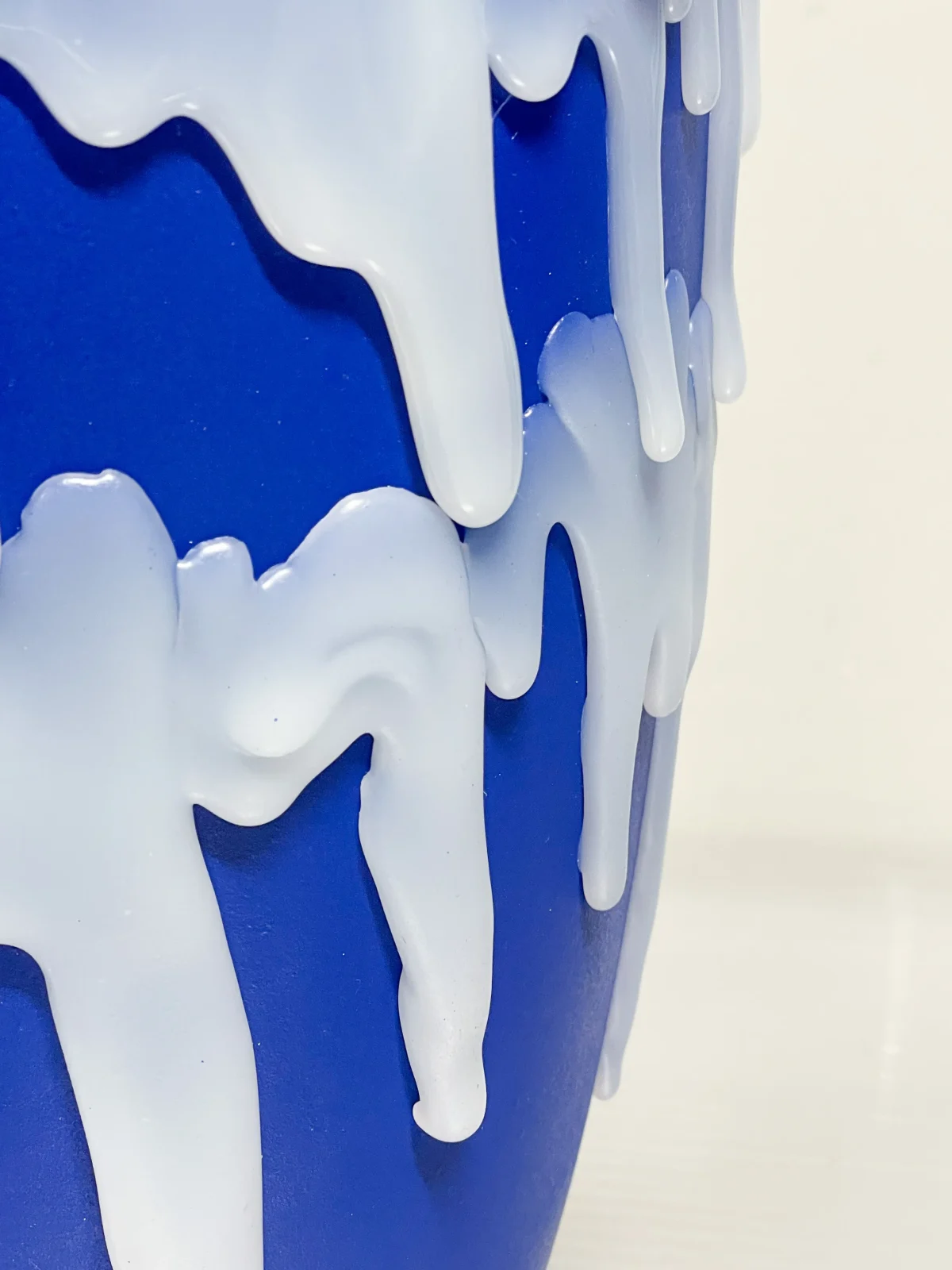
Onwards & Upcycled: What Upcycling Means in Design
Updated on: August 6, 2026
Upcycling is often filed under sustainability, which undersells it. Reusing a discarded material is an environmental decision, but choosing to make the origin visible — leaving the scorch, the weld, the brick face, the offcut edge — is an aesthetic one. That second decision is what separates collectible upcycled design from thrift.
The results cut across styles. A Space Age form assembled from obsolete machine parts, a Brutalist object cast from construction waste, a coastal piece built from driftwood, a pared-back vessel in reclaimed glass. What follows covers what upcycling actually means, how it differs from recycling, the techniques studios use, and the designers on ADORNO working this way.
What is upcycling?
Upcycling is the practice of transforming discarded material or objects into something of higher value or quality than the original. The defining word is higher. A pallet becomes a chair; a broken lamp becomes a sculpture; industrial offcuts become a stool. The material moves up the value chain rather than down it.
Upcycling vs recycling vs reuse
These three get used interchangeably and describe different processes. **Recycling** breaks material down to feedstock and remakes it — energy-intensive, and usually quality is lost along the way. **Reuse** puts an object back into service in its existing form, with no transformation. **Upcycling** transforms without breaking down, and the output is worth more than the input.
Consequently upcycling sits between the other two in effort and above both in outcome. It needs no industrial processing, which keeps the energy cost near zero, and it produces something that did not exist before — which is why it belongs in a design conversation rather than only a waste-management one.
What upcycling is not: downcycling
The useful counter-term is downcycling, and most of what we call recycling is closer to it. Plastic degrades with each cycle, so a bottle becomes fibre and then landfill. Paper fibres shorten until they cannot be reused. Concrete is crushed into aggregate — technically recycled, functionally demoted. Notably this is why upcycling matters disproportionately for materials that recycle badly: for mixed plastics, composites and treated timber, transformation into a durable object may be the only route that does not end in downgrade.
A short history of upcycling in art and design
Readymades and assemblage
People have repurposed objects out of necessity for as long as objects have existed. What changed in the twentieth century is that artists began doing it as an argument. Dada and Surrealism put found objects into galleries specifically to unsettle what counted as art. Picasso assembled a bull’s head from a bicycle saddle and handlebars in 1942 — a piece that works only because you can still see the bicycle.
That legibility is the through-line to contemporary practice. The point was never to disguise the source material, and it still isn’t.
Where the word comes from
The term is much newer than the practice. It is generally credited to the German engineer Reiner Pilz, quoted in the salvage trade press in 1994, who objected that recycling as then practised was really downcycling and argued for the opposite. It entered wider circulation through McDonough and Braungart’s Cradle to Cradle in 2002, which framed material flows as closed loops rather than lines ending in disposal.
Therefore the word carries a built-in critique. It was coined against recycling, not as a synonym for it.


Upcycling techniques in contemporary design
Reclaimed wood and timber
Old-growth timber salvaged from buildings, barns and industrial fit-outs is denser and more dimensionally stable than most new stock, because it grew slowly and has already finished moving. Practically that makes it better material, not merely a greener one. The visible history — nail holes, saw marks, weathering — is what buyers are actually paying for, so the working discipline is to clean it without erasing it.
Metal and industrial waste
Offcuts, swarf, obsolete components and structural scrap suit metalwork particularly well, since steel and aluminium can be cut, welded and refinished indefinitely without material loss. This is the route into Brutalist and industrial registers, where weld seams and mill marks are left legible rather than ground away.
Textile offcuts and reclaimed cloth
The garment and furnishing industries generate enormous cutting waste, and textile studios have long absorbed it — the quilt is the original upcycled object. Contemporary practice extends this into pressed fibreboard, rewoven yarn from industrial carpet waste, and panels made from worn hotel linen. Studios in our textile design roundup work across all three.
Glass, plastic and construction debris
Glass remelts cleanly and loses nothing, which makes recycled glass genuinely circular rather than downcycled. Plastic is the harder case: it degrades, so the useful move is to lock it into something durable instead of running it through another short cycle. Construction debris — brick, concrete, terrazzo aggregate — behaves similarly, and is where some of the most interesting current work sits.
Which material suits which technique
Match the material to the outcome rather than to the style label. Solid wood takes modification best — it can be cut, planed, joined and refinished — so it suits anything structural. Cotton and linen are the easiest textiles to rework by hand, and they take dye and wear visibly, which is usually the intention.
Metal and concrete give the raw, weighted quality a Brutalist reading needs. Driftwood, shell and sea glass carry a coastal register, though driftwood needs proper drying and salt removal before it goes indoors. For spare, quiet forms, glass and polished timber hold a clean surface where a rougher salvage would not. And for Space Age work, obsolete electronics and metallic-finish plastics do the job — with the caveat that mixed plastics are the hardest thing here to recycle later, so the piece needs to be built to last.
Upcycled designers on ADORNO
The clearest way to see what upcycling can be is through people doing it at a collectible level rather than as a craft hobby. The pieces shown throughout this article are a fair cross-section, and what stands out is how little they share beyond method — three distinct strategies, one underlying refusal to disguise the source.
Construction debris as structure
The heaviest results come from building waste. Lucas Muñoz’s B.A.R.E Series table lamp sets salvaged brick against copper and lets the brick carry the form rather than clad it, so the material is doing load-bearing work instead of decorating. The Terazzo Brick Chair takes the same debris further, suspending brick fragments in binder as terrazzo — with the pieces left coarse enough to be read individually rather than ground down into a uniform speckle. Neither disguises what it was.


Plastic locked into something durable
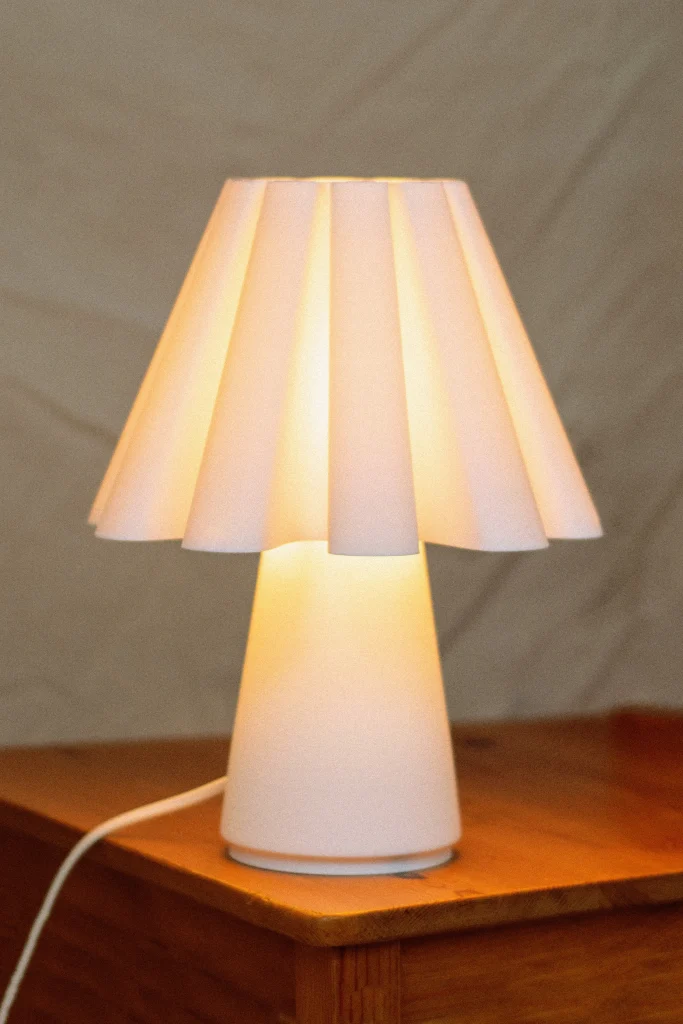
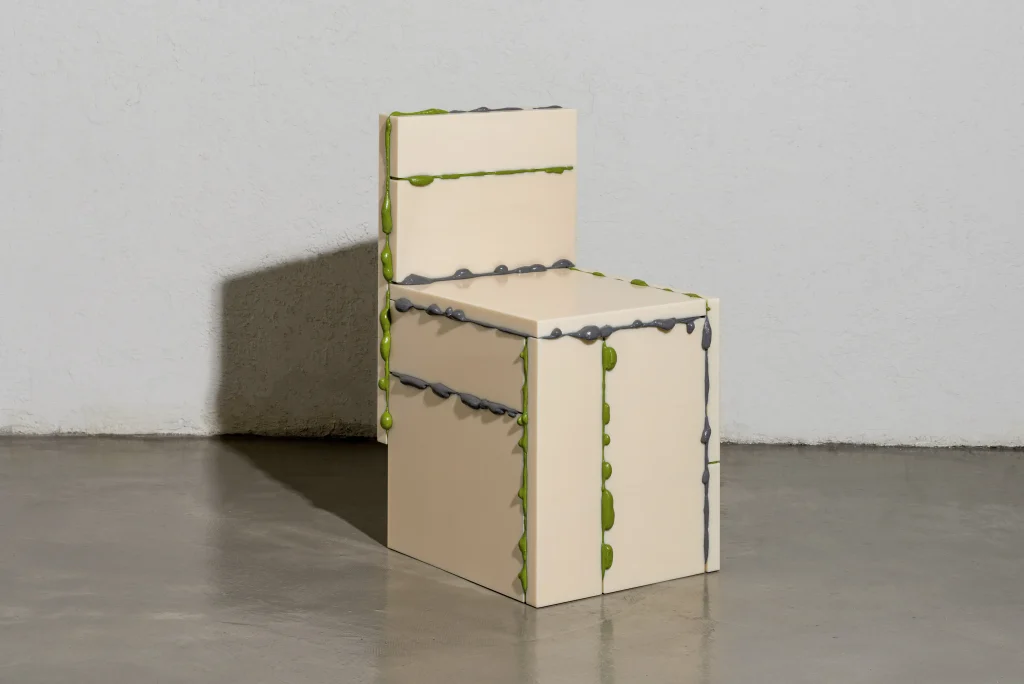
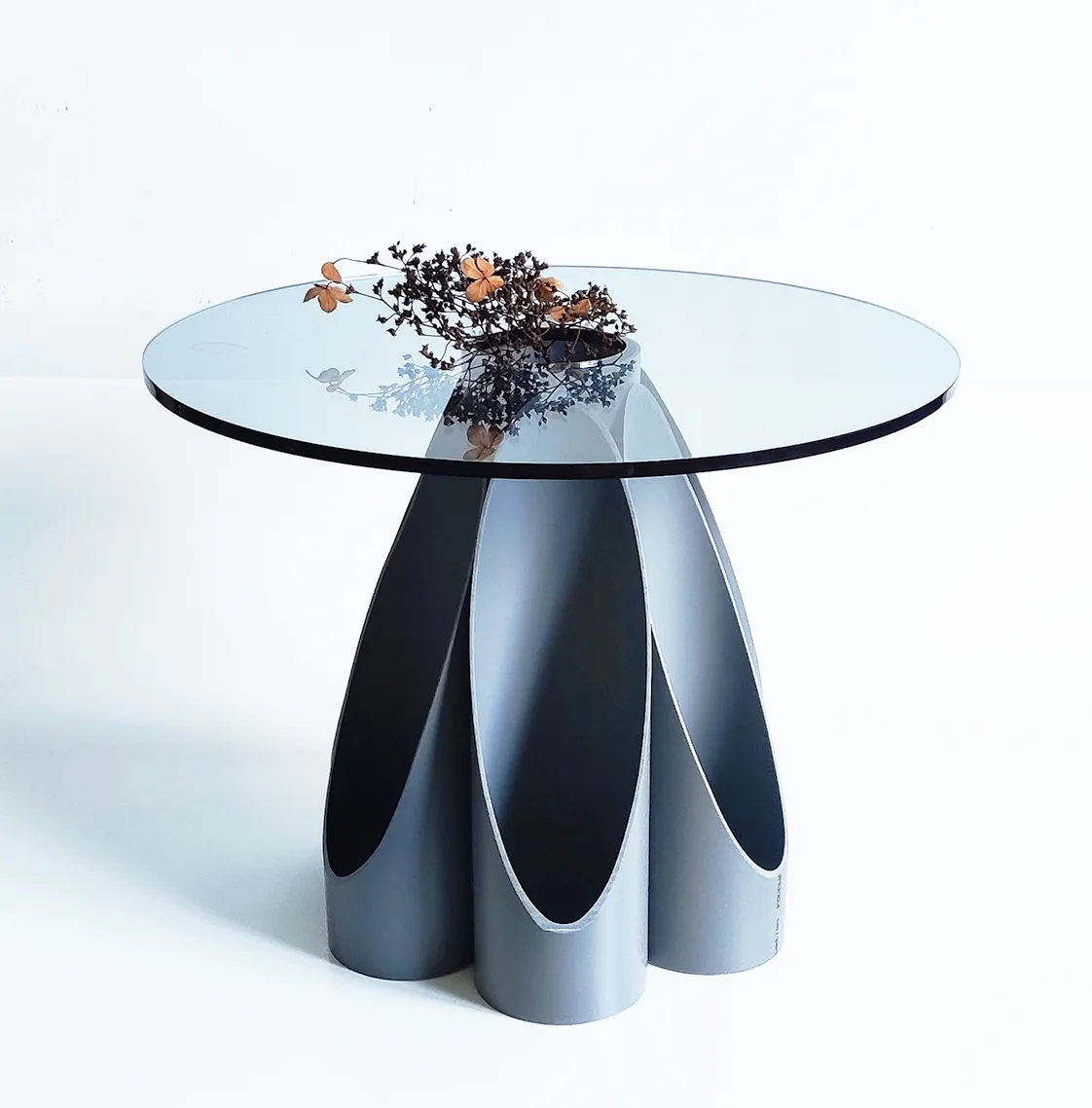
Plastic is the harder case, since every cycle degrades it and the material cannot be run round indefinitely. The useful move is therefore to trap it in an object built to last, which is what the Ruff table lamp does in recycled PLA and what the B.S.P Series chair does at furniture scale — a considerably more demanding structural test than a small object. Elisabeth Baeza’s Soliflore reaches the same end with almost no processing at all: PVC tubing, cut and assembled, still legible as tubing.
Assemblage from found parts
The oldest strategy, and the one closest to Dada. Gábor Góbi’s Torch lamp is assembled from repurposed components deliberately left identifiable. Yoomoota’s Fast Money and BehaghelFoiny Studio’s Lampadulure floor lamp both work outward from salvaged parts toward forms that would be difficult to arrive at from a blank sheet — which is the productive-constraint argument in practice rather than in theory.
What they share is not a style — the pieces look nothing like each other, and span lighting, seating and tableware. It is that in every case the origin stays visible. Our roundup of upcycled and sustainable designs collects more, and the full upcycling and reuse discipline holds the rest.
What makes upcycled design valuable
The market has grown alongside broader interest in provenance and how long we keep things. Online platforms, fairs and galleries have made small-batch upcycled work reachable in a way it was not when it depended on local markets.
Two things drive the value, and neither is the environmental claim. The first is unrepeatability: if the input is salvaged, the supply is finite and inconsistent, so pieces are one-offs or very short editions by necessity rather than by marketing decision. The second is legibility — a visible weld or brick face is evidence of a specific history, and that is the same quality people pay for in antiques.
Even so, the constraints are real. Sourcing consistent salvage is slow and often more expensive than buying new stock, which caps how much any studio can produce and puts upcycled work at a structural disadvantage against mass-produced decor on price. That is worth knowing when a piece looks expensive for what it is made of: the material was cheap and the labour was not.

Frequently asked questions
What does upcycling mean?
Transforming discarded material into something of higher value or quality than the original, without breaking it down first. The word was coined specifically to contrast with recycling, which frequently degrades material rather than improving it.
What is the difference between upcycling and recycling?
Recycling breaks material down to raw feedstock and reprocesses it, usually with some loss of quality and a significant energy cost. Upcycling keeps the material intact and changes what it is, ending with something worth more than the input. Reuse, a third option, changes nothing at all.
What is downcycling?
Recycling that produces a lower-grade material than the original — plastic bottles becoming fibre, concrete becoming aggregate, paper fibres shortening with each pass. Most consumer recycling is downcycling in practice, which is the problem upcycling was named against.
Is upcycled furniture good quality?
It depends entirely on the making, not the material. Reclaimed old-growth timber is often better than new stock — denser, drier and more stable. What matters is whether the piece is properly constructed and repairable, the same question you would ask of anything new.
Why is upcycled design expensive?
Because the cost sits in labour and sourcing rather than material. Salvage has to be found, assessed, cleaned and worked individually, and inconsistent input means no two pieces are identical — so nothing can be batched. Cheap material, expensive process.
What is reclaimed wood?
Timber salvaged from existing structures — barns, factories, warehouses, flooring — and reworked rather than felled new. It is typically old-growth, so it is denser and more dimensionally stable than contemporary plantation stock, and it carries visible marks of its previous use.
Why any of this holds up
Upcycling works as design rather than only as ethics because the constraint is productive. Being handed a specific piece of salvage — this brick, this offcut, this obsolete component — forces decisions a blank brief never would, and the results tend to be stranger and more specific than anything designed from nothing.
Above all, the visible history is the value. An object that shows where its material came from carries a record no new material can, which is the same reason people keep old furniture. The environmental case is real, but it is not the reason these pieces are worth having.
View the full upcycling and reuse selection →
