 Loungechair
Space Age Aesthetic: Retro-Futuristic Design Explained
Updated on: August 14, 2026
Space Age design is what the future looked like when the future still seemed to be arriving on schedule. It emerged in the decade either side of 1960, when spaceflight moved from speculation to television, and it committed to that optimism completely — moulded plastic, polished metal, forms borrowed from capsules and satellites, and a general conviction that tomorrow would be smoother than today.
What follows covers what the aesthetic actually is, where it came from, how to recognise it, and why a style built on a specific historical optimism keeps returning.
What is the Space Age aesthetic?
Space Age design is a mid-century movement that took the imagery and materials of space exploration and applied them to furniture, lighting, interiors and product design. Streamlined shapes, metallic and reflective surfaces, moulded plastics, and a preference for the curved and capsule-like over the rectilinear.
It is properly a subset of retro-futurism — which is the broader category for any past era’s vision of the future. Consequently what we now find appealing about Space Age design is partly the forms and partly the dramatic irony: we are looking at a confident prediction that we know did not come true.
Space Age versus Atomic Age
Related and often conflated. Atomic Age design runs slightly earlier, from the late 1940s, and takes its motifs from physics rather than spaceflight — starbursts, molecular models, boomerang shapes, the atom itself as ornament. Space Age picks up around 1957 with Sputnik and shifts the reference from the atom to the rocket. In practice the two overlap heavily through the 1950s.

The origins of Space Age design
The trigger is datable. Sputnik launched in October 1957, Gagarin orbited in 1961, and Apollo 11 landed in 1969 — and design tracked that arc almost in real time. What made the aesthetic possible technically was a parallel materials story: injection-moulded plastics, fibreglass, ABS and vacuum forming all matured commercially in the same period, which meant designers could finally make the seamless curved shapes the imagery demanded.
Architecturally, Eero Saarinen’s TWA Flight Center and his Tulip series removed the visual clutter of legs and joints, while Buckminster Fuller’s geodesic structures made engineering itself the aesthetic. In furniture, Verner Panton, Eero Aarnio and Pierre Paulin pushed moulded plastic into shapes that had no precedent in timber.
Notably the movement’s decline is also datable. Interest faded through the 1970s as the oil crisis made petroleum-based plastics expensive and the general optimism that underwrote it ran out.
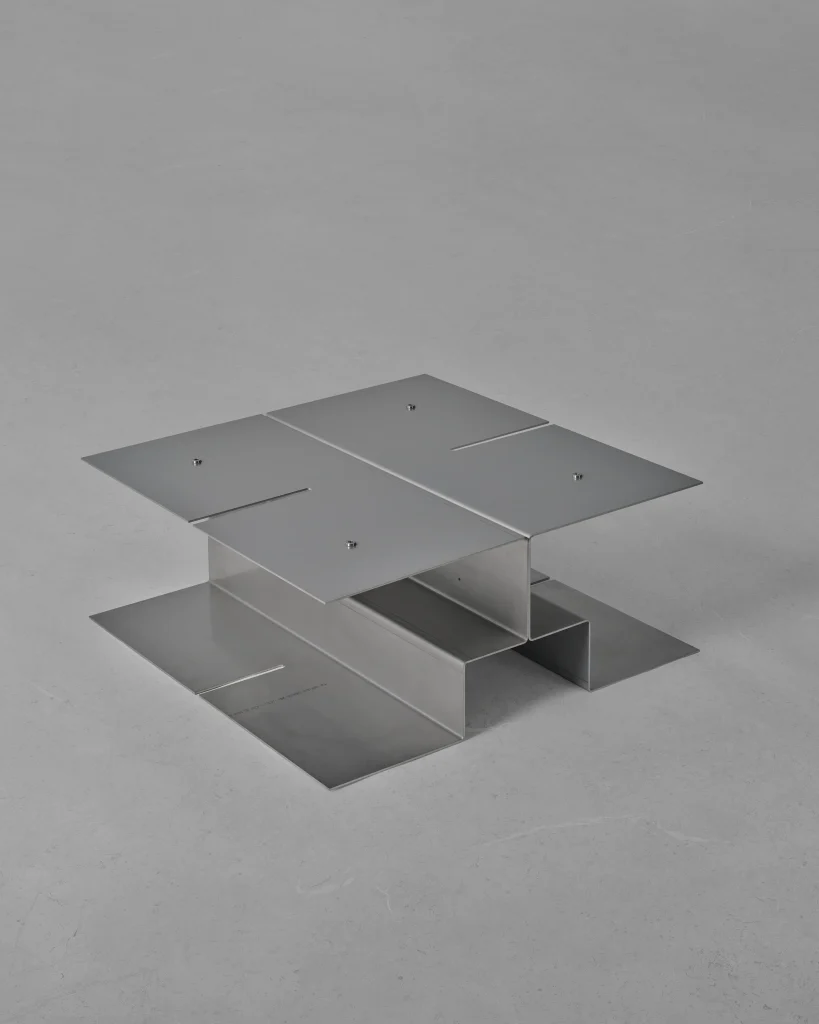
by 304.cage

by Akademie
Key characteristics of Space Age design
- Curved, seamless forms. Capsule and pod shapes with no visible joints — the look of something moulded in one piece rather than assembled.
- Reflective and metallic surfaces. Chrome, polished aluminum, mirror finishes and lacquer, chosen because they read as engineered rather than crafted.
- New materials, visibly new. Moulded plastic, fibreglass and acrylic used in ways that made no attempt to imitate wood.
- Saturated or stark colour. Orange, white and silver dominate — high contrast rather than gradation.
- Integrated lighting. Light built into the object rather than added to the room, which was itself a futuristic proposition at the time.
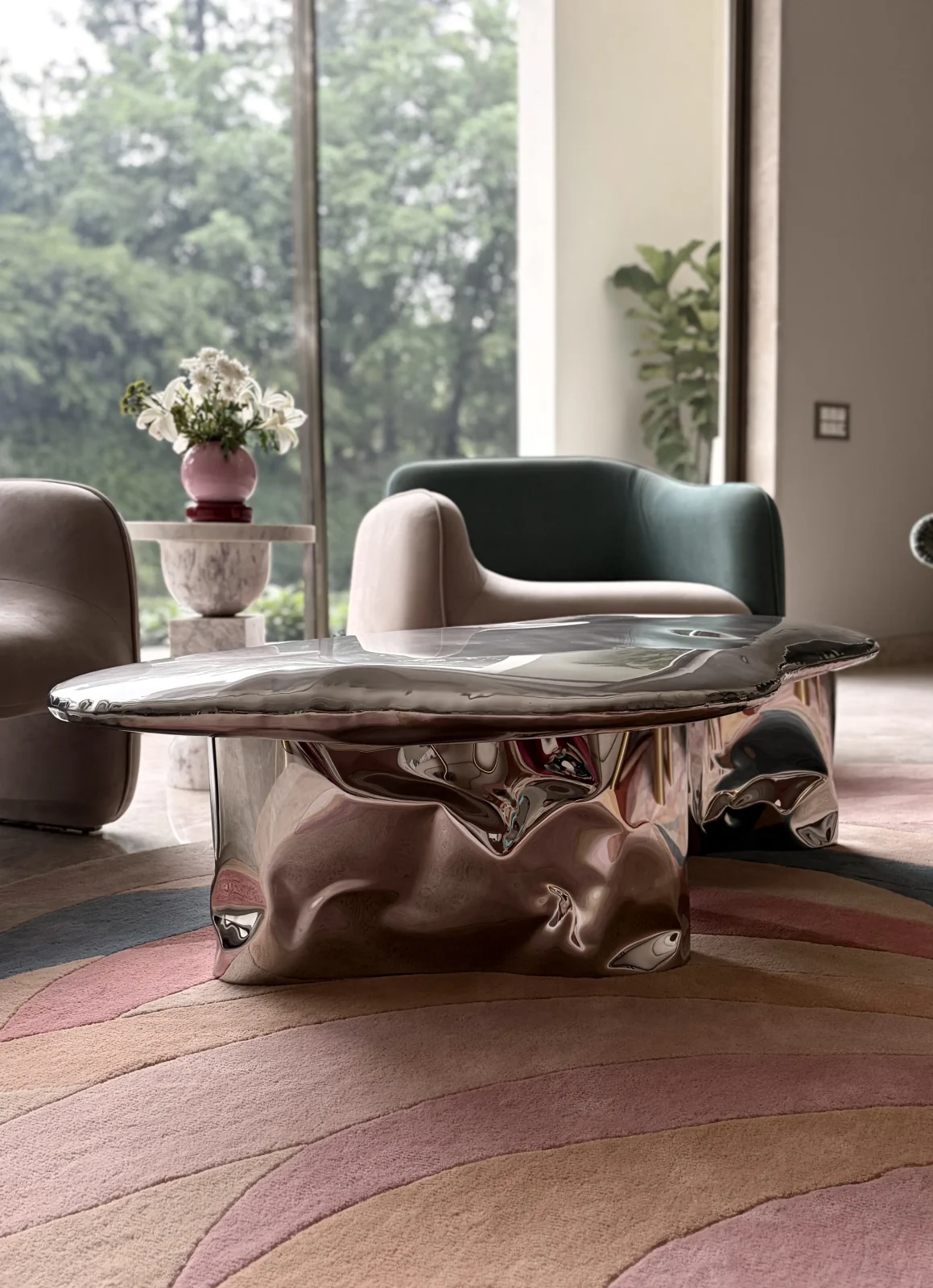
by Nitush and Aroosh
Retro-futurism now
The aesthetic has returned repeatedly, and the current revival is driven by material rather than nostalgia. Aluminum is having a genuine moment in independent design — it can be cut, folded, polished and recycled indefinitely, which gives the Space Age surface quality without the petroleum plastics the original depended on.
Contemporary work also handles the reference more knowingly. Where the 1960s meant it sincerely, studios now tend to acknowledge that this is a historical vision of the future rather than a live prediction — which is why the results read as futuristic and slightly wistful at once.
Even so, the original criticism still stands. Space Age design was frequently better at looking forward-thinking than at being comfortable or repairable, and moulded single-piece construction is difficult to fix when it fails. The version worth buying takes the forms and leaves that part behind.
How to use Space Age pieces at home
One per room. These are assertive shapes. A single pod chair or capsule lamp against otherwise quiet furniture reads as deliberate; three compete.
Warm the surroundings. Reflective metal and moulded plastic both read cold. Wool, timber and unglazed ceramic around them stop the room feeling like a waiting area — the same principle behind warm lighting and tactile surfaces generally.
Watch the light. Polished surfaces bounce every source in the room. Position them where they will catch something worth reflecting rather than a bare bulb.
Mix eras deliberately. Space Age sits comfortably with mid-century modern — they are contemporaries — and surprisingly well with eclectic schemes, where the anachronism becomes part of the point.
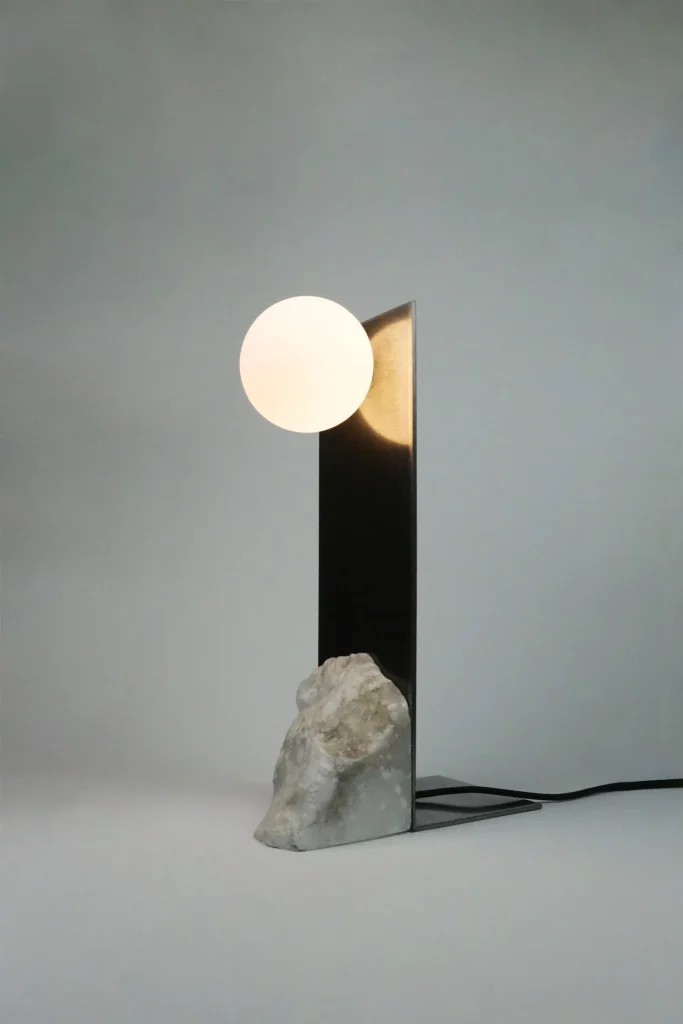
by HEAKO
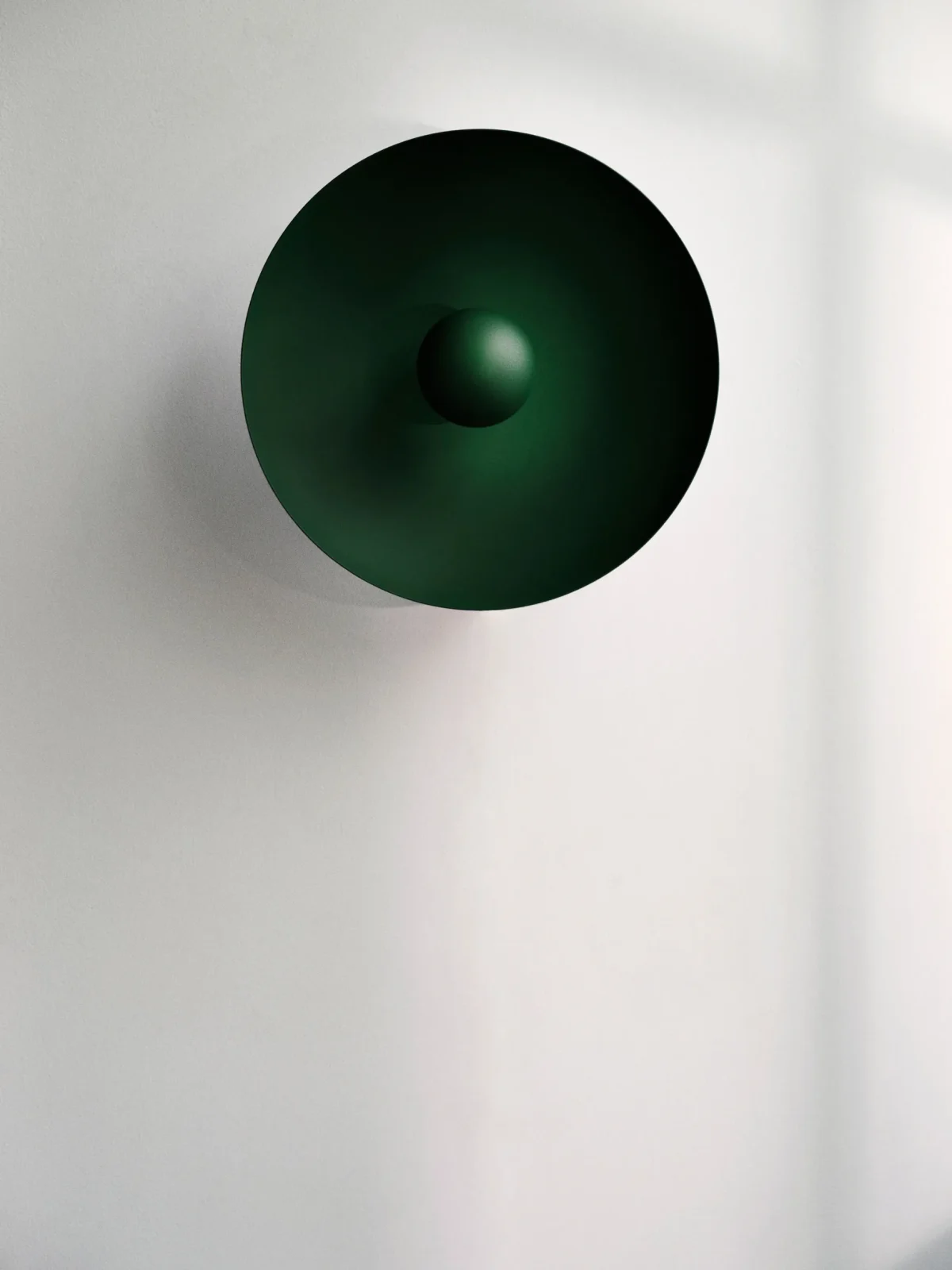
by Anne Nowak
Frequently asked questions
What is the Space Age aesthetic?
A design style from roughly 1957 to the early 1970s that borrowed the forms and materials of space exploration — curved capsule shapes, polished metal, moulded plastic, integrated lighting and high-contrast colour. It is the design expression of mid-century optimism about technology.
What is retro-futurism?
Any past era’s vision of the future, viewed from now. Space Age design is the best-known example, but the term also covers Victorian steampunk imagery and 1980s cyberpunk. The appeal is partly aesthetic and partly the gap between what was predicted and what happened.
What is the difference between Space Age and Atomic Age design?
Atomic Age is earlier, from the late 1940s, and draws on physics — starbursts, molecular forms, boomerang shapes. Space Age begins around Sputnik in 1957 and draws on spaceflight — capsules, rockets, satellites. They overlap considerably through the 1950s.
Who were the key Space Age designers?
Eero Saarinen for the Tulip series and TWA Flight Center, Buckminster Fuller for geodesic structures, and Verner Panton, Eero Aarnio and Pierre Paulin for moulded plastic furniture that had no timber precedent.
Does Space Age design work in a small flat?
Yes, with restraint. Reflective surfaces extend a small room visually, and the legless moulded silhouettes read as less bulky than they measure. One piece is the limit — these shapes need clear space around them to be legible.
Is Space Age the same as mid-century modern?
Overlapping but distinct. Mid-century modern is broader and largely timber-based, rooted in Scandinavian and American functionalism. Space Age is the plastic-and-metal, explicitly futuristic strand within the same period. They sit together well because they are contemporaries.
Why the future keeps coming back
Space Age design endures because it is the rare style with a fixed emotional register. It always means optimism — specifically the optimism of a moment when technology looked purely promising — and that is not a mood any other design movement reliably delivers.
Above all it works now because the making has caught up with the imagery. Aluminium, 3D printing and bio-polymers let studios build these forms in materials that can be repaired and recycled, which is the one thing the original could not do.
