Updated on: September 24, 2026
The future looked brighter in 1965. Some of it still does.
The Space Age began with a beep: the radio signal of Sputnik 1 in 1957. Within a decade, the optimism of the space race had reshaped how homes looked, with globe lamps, molded plastics and polished chrome that imagined daily life in orbit. Designers such as Verner Panton turned light into sculpture, and that idea never fully went away.
Today, a space age lamp still does what it did then: it makes a room feel like it belongs to the future. This selection gathers ten lights by independent designers, from mouth-blown glass and inflatable PVC to folded steel and cast bronze. Each one carries the retro-futuristic spirit of the era, but with materials and making that belong firmly to now.
What is space age design?
Space age design is the style that grew out of the late 1950s and 1960s, when rockets and satellites captured the popular imagination. It favors spheres, domes and orbital curves, glossy synthetic materials, and bright, optimistic color. Consequently, it sits close to mid-century modern design, but it leans harder into futurism and play.
In lighting, the style shows up as globes that glow like planets, reflective metal that looks machined, and forms that seem to float. Contemporary space age design keeps that vocabulary while trading mass production for handmade, small-batch pieces.
How to choose a space age lamp
Start with form. A strong silhouette — a dome, a sphere, a folded shell — is what makes a lamp read as space age, even before it is switched on. In other words, judge it unlit first, because it will spend most of the day that way.
Next, think about the light itself. Opaque glass and resin give a soft, planetary glow, while perforated metal throws patterns across walls and ceilings. Finally, consider placement: a table lamp works as a sculptural accent, whereas a pendant or wall light becomes the focal point of a room.
Materials that define space age lighting
Glass
Mouth-blown glass brings the glowing, orb-like forms most associated with the era. Opaque glass diffuses light evenly, so the lamp reads as a single luminous object.
Stainless steel and aluminum
Polished steel and aluminum recall spacecraft and instrument panels. Moreover, they reflect their surroundings, so the lamp changes as the room changes around it.
Inflatables and synthetics
The 1960s championed plastic as a material of the future, from molded chairs to air-filled furniture. Today, PVC and polyurethane continue that experiment, often with more attention to recyclability.
Bronze and cast metal
Cast metal gives space age forms weight and permanence. As a result, bronze and sand-cast aluminum pieces feel less like props and more like artifacts from an imagined future.
Space age table lamps
Table lamps are the easiest way to bring the style into a room: compact, sculptural, and visible from every angle.
Fold Table Lamp In Stainless Steel by Akademie
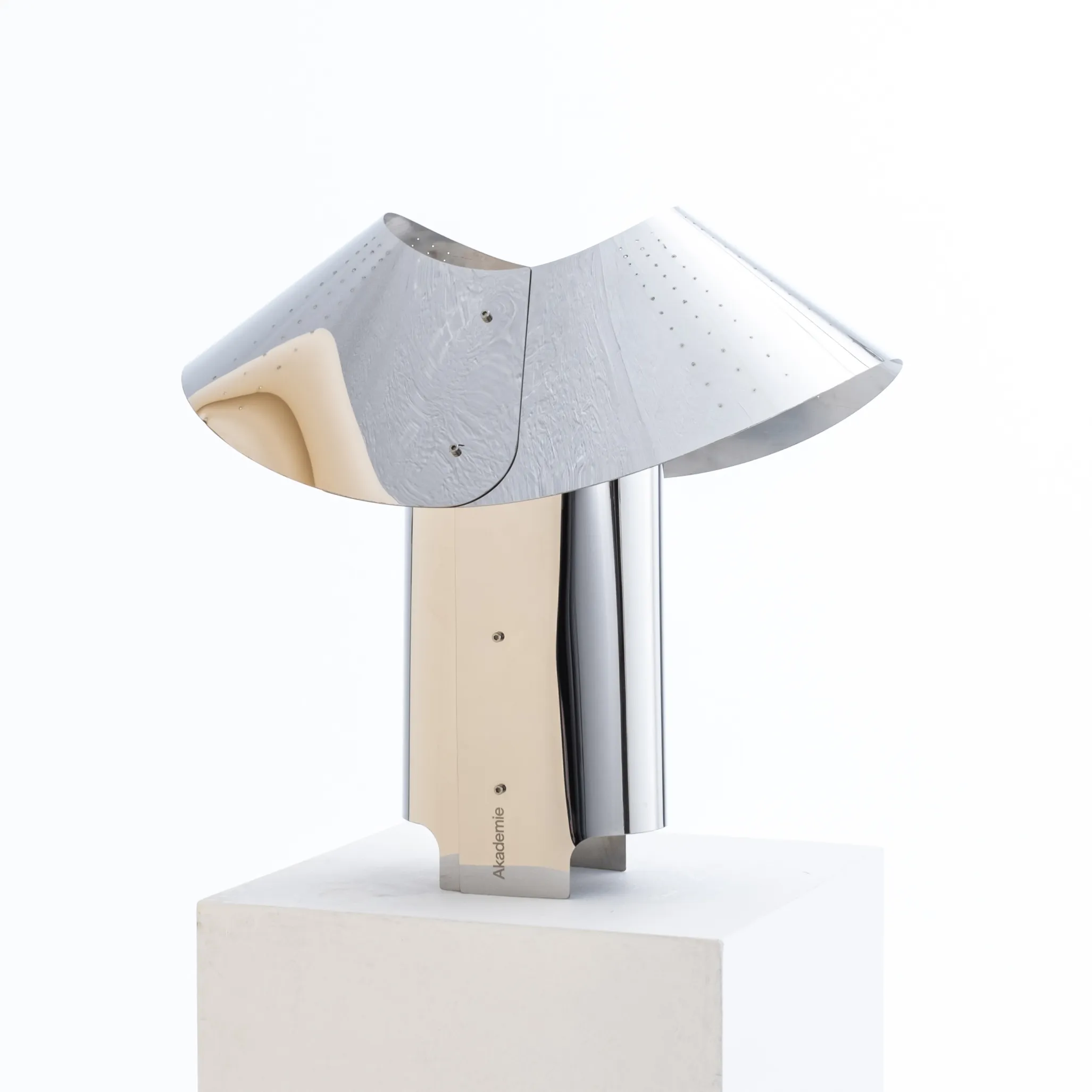
Polished stainless steel folded into a faceted shell, lit from within so the light reflects through each fold. It was developed through physical modeling rather than on screen, and it reads as futuristic and timeless at once. Consequently, this metal table lamp holds its own on a console even when switched off.
By Akademie
€1.200 incl. tax
Natalia Table Lamp in Stainless Steel by Saadia Design

Polished stainless steel wraps a silicone center that lights up when you touch any part of the metal. It works as a reading lamp, a decorative piece, or simply an object to admire. Notably, the touch interaction turns switching it on into part of the experience.
€490 incl. tax
Haumea Convex Table Lamp in Blue Opaque Glass by ELOA – Unique Lights
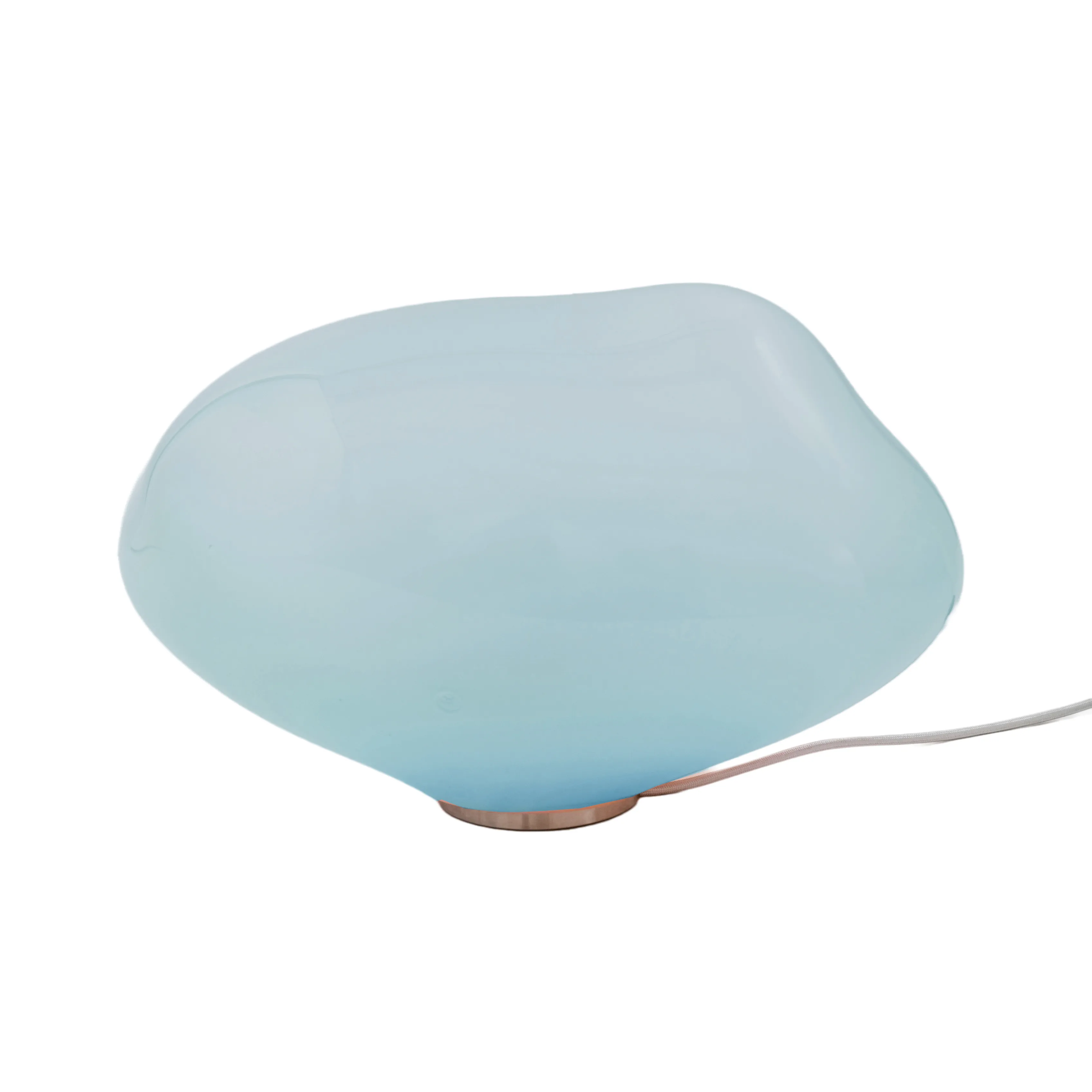
Named after a dwarf planet, Haumea curves outward like a weightless asteroid or a drifting bubble. The opaque blue mouth-blown glass gives it a full, tactile presence. Furthermore, it comes in five sizes and can also hang as a pendant or combine with other Haumea pieces into a floor lamp.
€2.330 – €4.085 incl. tax
Tenfold Low Table Lamp in Aluminum by Luft Tanaka Studio
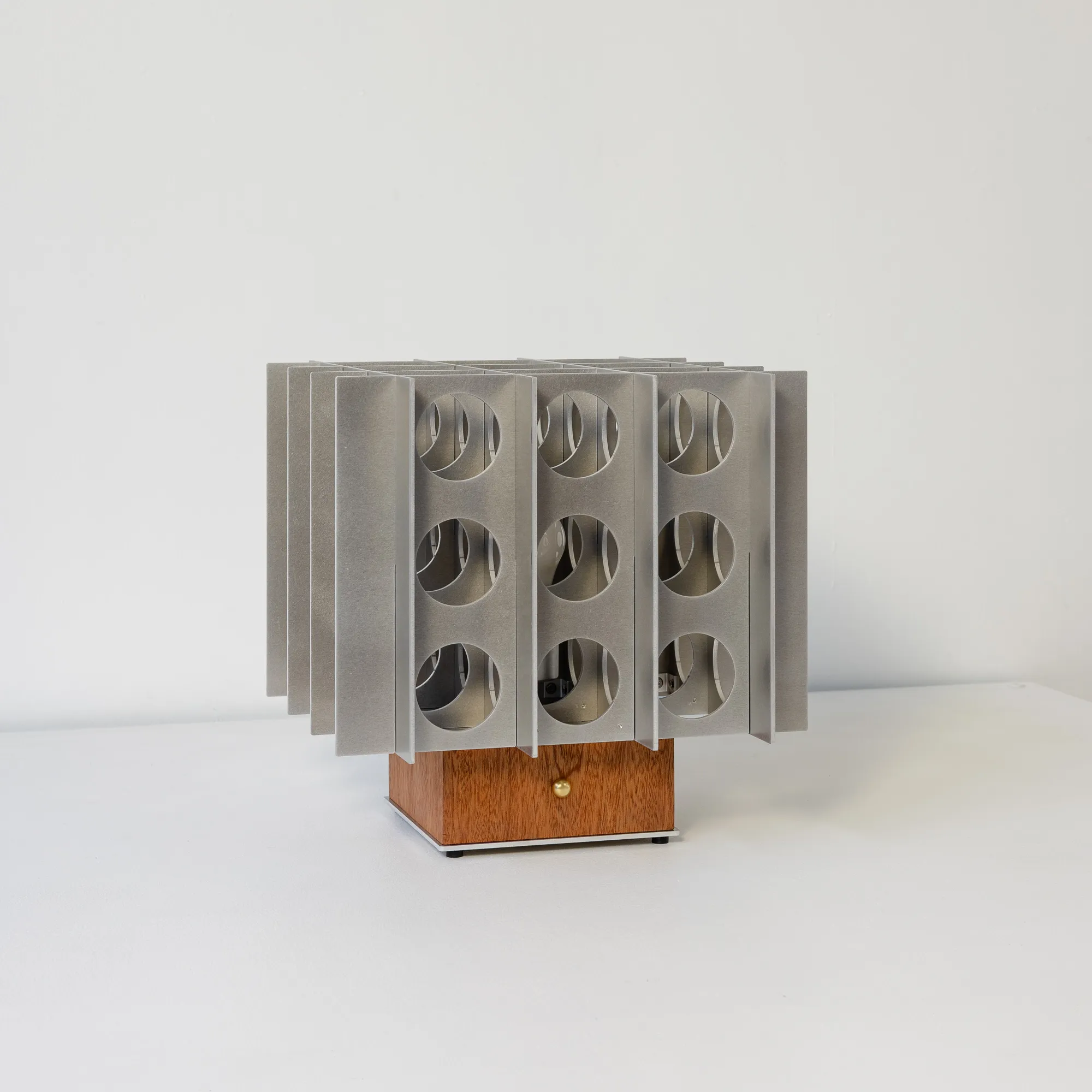
Perforated aluminum panels draw on Brutalist architecture and Op Art, scattering light and shadow across the room. The diffuser rests on a warm sapele wood base with a brass touch switch for power and dimming. In other words, it pairs machine-age precision with a softer, domestic touch.
€3.000 incl. tax
Prisma Massiva Table Lamp in Cast Aluminum, Resin & Steel by DONÓ Design
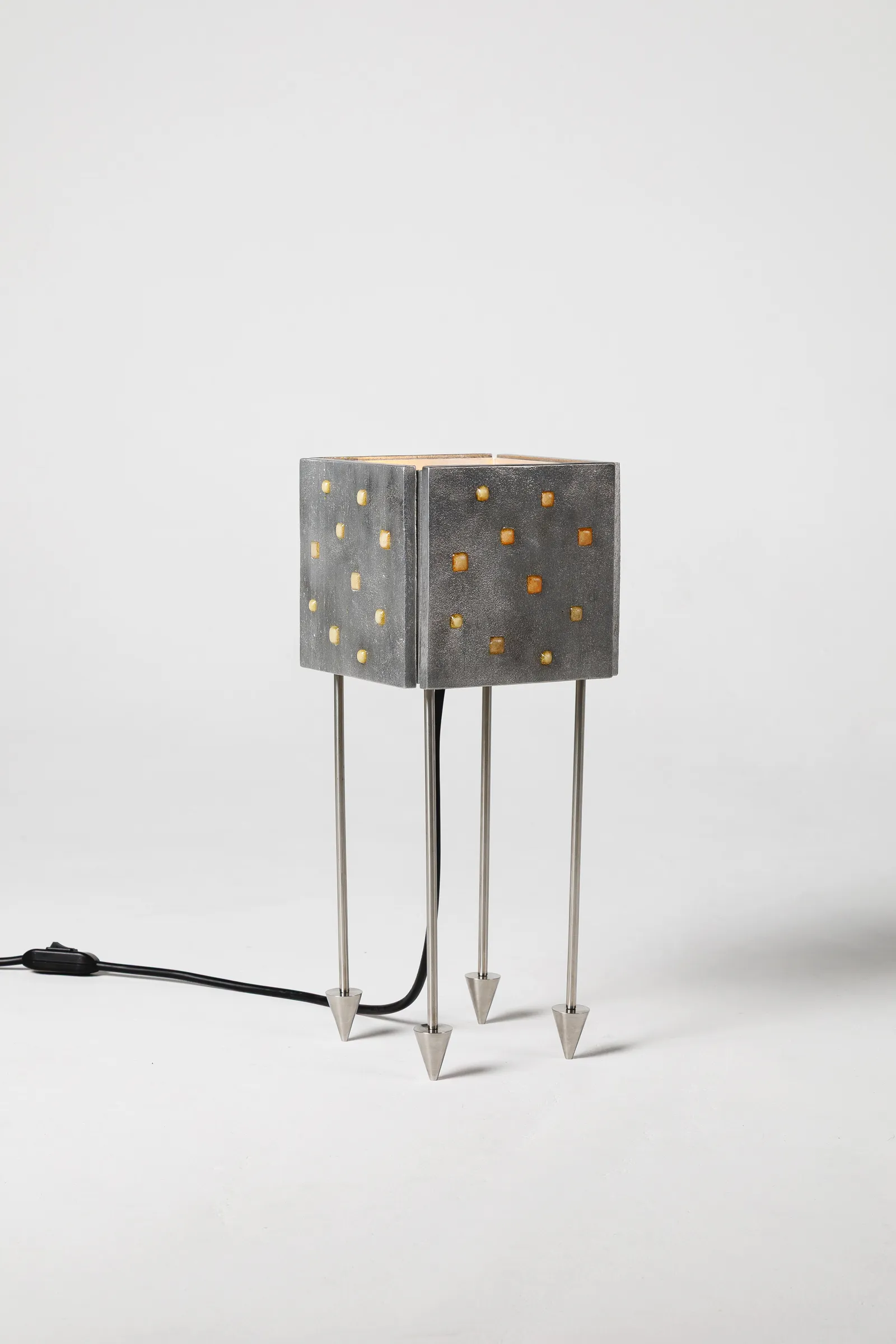
Four polished stainless steel tubes hold up a dome of folded and sand-cast aluminum, its square openings filled with amber resin. Unlit, the dome reads as dense and heavy; switched on, light passes through the resin and glows across the surface. As a result, it looks like a small spacecraft that landed on the sideboard.
By DONÓ Design
€1.898 incl. tax
Cornice Supreme No. 2 Table Lamp in Polyurethane by Teresa Fernández-Pello

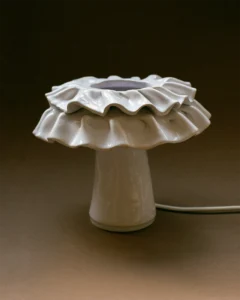
Polyurethane, a humble building material, is transformed into a sculptural lamp that borrows the profile of an architectural cornice. The result challenges how we read ordinary materials in a room. Indeed, it shows the space age appetite for synthetics is still alive in contemporary design.
€1.986 incl. tax
Space age wall and ceiling lights
Wall and ceiling lights take the style off the table and onto the architecture, where a single piece can define the whole room. For more ideas, see our guide to sculptural wall lighting.
Lightpulse Wall Lamp in Oak Wood and Acrylic by Studio Lampent

An award-winning light box (Ung Svensk Form 2021) inspired by circular pulse waves, built in oak wood and acrylic. The light is emitted in a circular form, but only when you change your viewing angle does the circle reveal its depth. Therefore, this wall lamp rewards being seen from across the room.
€1.400 incl. tax
Blue Moon Wall Lamp in Aluminum by Anne Nowak
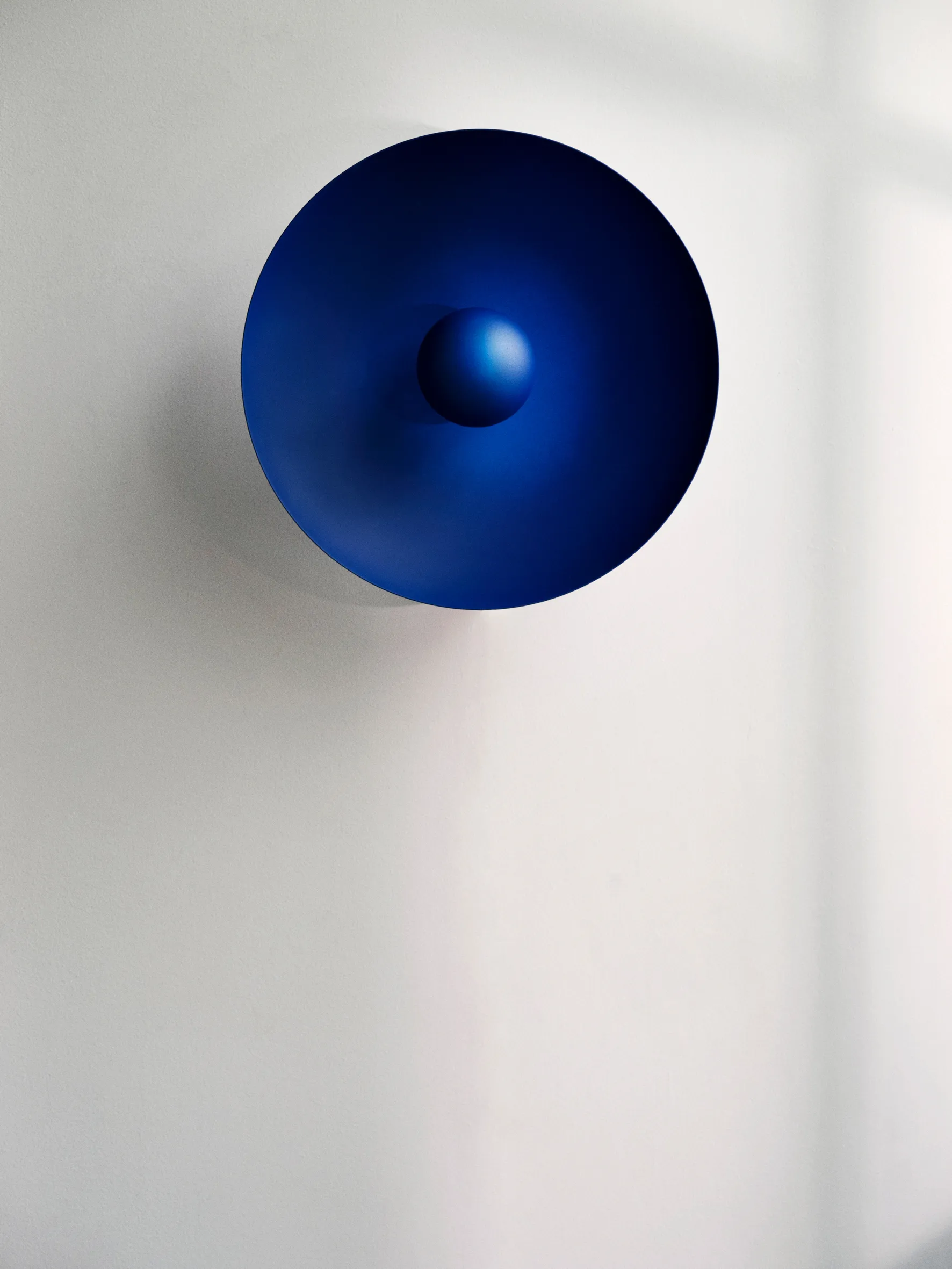
Handmade in collaboration with Art Group 1103, this aluminum wall lamp carries a circular, hand-painted relief. Lit, it looks like a nebula held in a metal shell; unlit, it becomes the surface of a distant planet. Altogether, it is the most literal nod to outer space in this selection.
By Anne Nowak
€1.675 incl. tax
Bird of Prey Ceiling Lamp in Bronze by Atelier Haute Cuisine
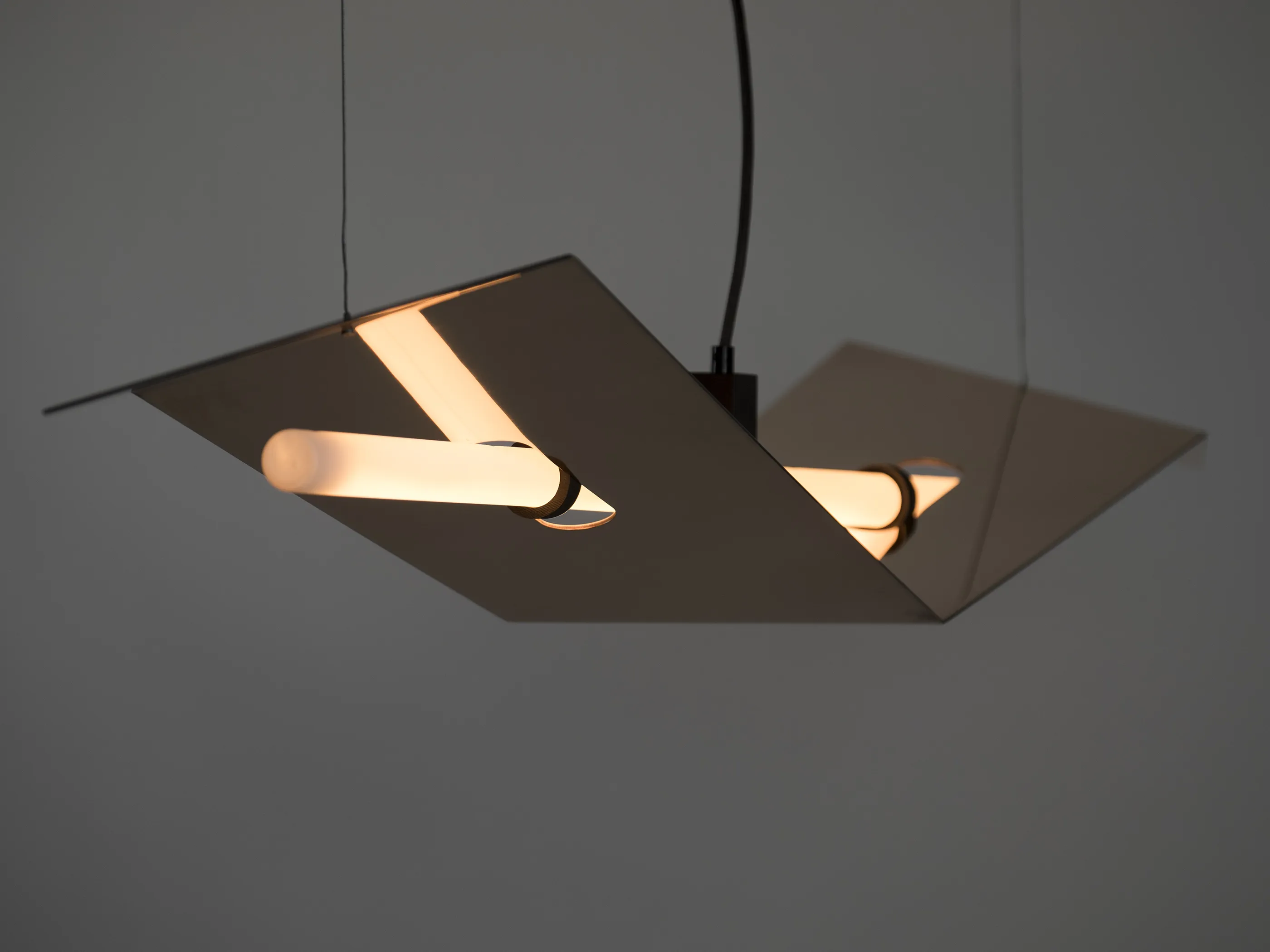
A simplified bronze plate, inspired by the wings of predatory birds, glows with a warm, sunset-like light along its edges. The reduced shape gives it a streamlined, futuristic feel. Accordingly, this ceiling lamp suits a dining table or entryway where a single statement is needed.
€3.700 incl. tax
Orca Pendant Lamp in Galvanised Steel and PVC by PUFF-BUFF
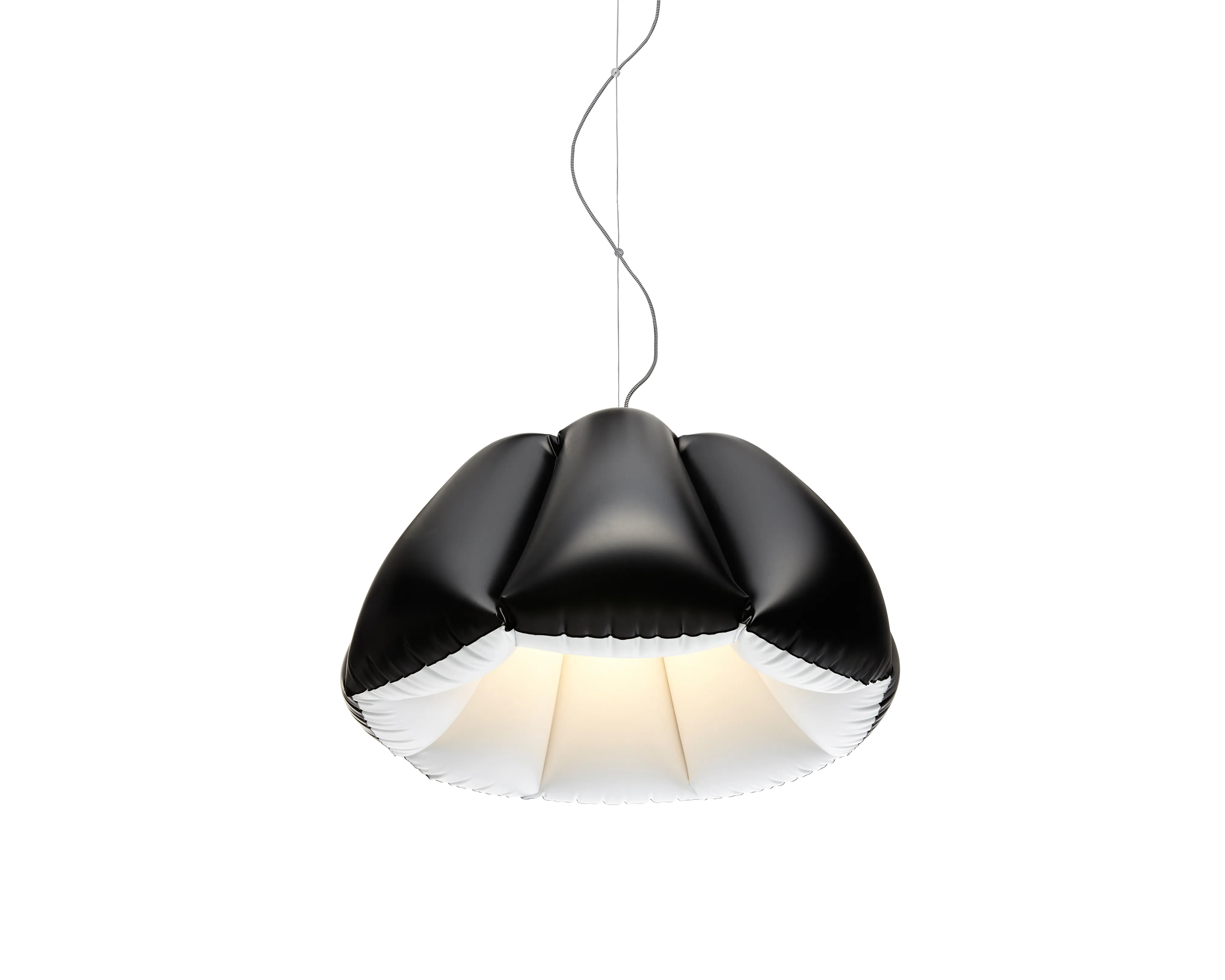
An air-filled PVC dome in matte black and satin white, built in eight parts and inspired by the orca. It arrives flat and inflates itself, a direct descendant of the 1960s fascination with inflatable design. Moreover, it is made in Poland and fully recyclable, bringing the humor of pop design with a lighter footprint.
By PUFF-BUFF
€430 incl. tax
How to style space age lighting
Living room
Let one lamp lead. A glowing globe or steel sculpture on a side table can anchor the whole living room, especially against warm wood and soft textiles that balance the futurism.
Dining room
A statement pendant or ceiling light above the table is the classic move. Keep the rest of the dining room simple so the fixture reads as the centerpiece.
Bedroom and home office
Compact table lamps with a soft glow suit nightstands and desks. Touch-activated or dimmable models make them practical as well as sculptural in a home office.
Caring for space age lamps
Glass and acrylic
Dust with a soft microfiber cloth, and clean with a mild, ammonia-free solution. Avoid abrasive products on acrylic, which scratches more easily than glass.
Metal
Wipe polished steel and aluminum with a dry cloth to prevent water marks and fingerprints. Bronze develops a patina over time, which many owners prefer to keep.
PVC and inflatables
Keep inflatable lamps away from sharp edges and direct heat, and use LED bulbs, which run cooler. A soft, damp cloth is enough for regular cleaning.
Frequently asked questions
What is a space age lamp?
A lamp inspired by the design of the late 1950s to early 1970s, when the space race shaped popular culture. Typical features include spherical or domed forms, glossy synthetics or polished metal, and a futuristic, sculptural silhouette.
What is the difference between space age and mid-century modern?
Mid-century modern is the broader movement, known for clean lines, wood and organic forms. Space age is a later, more futuristic branch of it, favoring plastics, chrome, spheres and bold color.
Are space age lamps still in style?
Yes. Retro-futuristic design has returned through collectible and handmade pieces, and a single space age lamp adds character to otherwise calm interiors.
What materials are used in space age lighting?
Glass, acrylic, polished stainless steel, aluminum, PVC and other synthetics were the originals. Contemporary designers add cast bronze, resin and wood to the mix.
Where should I put a space age lamp?
On a side table or console where its form can be seen from several angles, or overhead as a pendant in a dining room. Give it space so the silhouette reads clearly.
What bulbs work best in sculptural lamps?
LED bulbs are the safest choice: they run cool, which protects glass, resin and PVC, and warm color temperatures around 2700K soften metal and glass surfaces.
A future that keeps arriving
Space age design was always more about hope than accuracy. The homes of the future never quite looked like the magazines promised, yet the lamps from that era still feel ahead of their time. As a result, a well-chosen space age lamp does more than light a room; it lends it a sense of optimism.
Explore more space age design on ADORNO, or read about futuristic furniture for the pieces that complete the look.