Fungi growing from the wall, a lamp with a sense of humor, aluminum bolted like a circuit board: the Nordic studios to know now are not playing it safe.
Updated on: October 30, 2026
Scandinavian design is often reduced to pale wood, white walls and a well-made chair. That picture is not wrong, but it is incomplete. Today’s Scandinavian designers still care about function, material and everyday use, the values that made the region famous, yet they bring color, humor and new materials to the table, from lead-free tin and recycled glass to scagliola and resin.
This guide looks at where Scandinavian design comes from, what sets the new generation apart, and ten studios from Denmark, Sweden, Norway, Finland and Iceland whose work is available on ADORNO.
What makes Scandinavian design
Scandinavia, strictly speaking, means Denmark, Norway and Sweden. The wider Nordic region adds Finland and Iceland, and in design the five are usually discussed together. What connects them is less a style than a set of values: furniture and objects should be useful, well made, honest about their materials and within reach of ordinary households.
Those values took shape in the first half of the 20th century and reached the world in the 1950s. The touring exhibition Design in Scandinavia traveled across the United States and Canada from 1954 to 1957, and the Lunning Prize, awarded from 1951 to 1970, rewarded young Nordic designers. Names such as Alvar Aalto in Finland, Arne Jacobsen, Hans Wegner and Finn Juhl in Denmark, and Bruno Mathsson in Sweden became international references. Their wood furniture, soft curves and attention to how a piece feels in the hand still define Scandinavian design for many people.
The new generation of Scandinavian designers
The studios working today grew up with that legacy and are now pushing against its edges. Three shifts stand out.
- New materials: designers experiment with mycelium, recycled glass, bio-based resin, tin and historic plaster techniques, often developing their own composites.
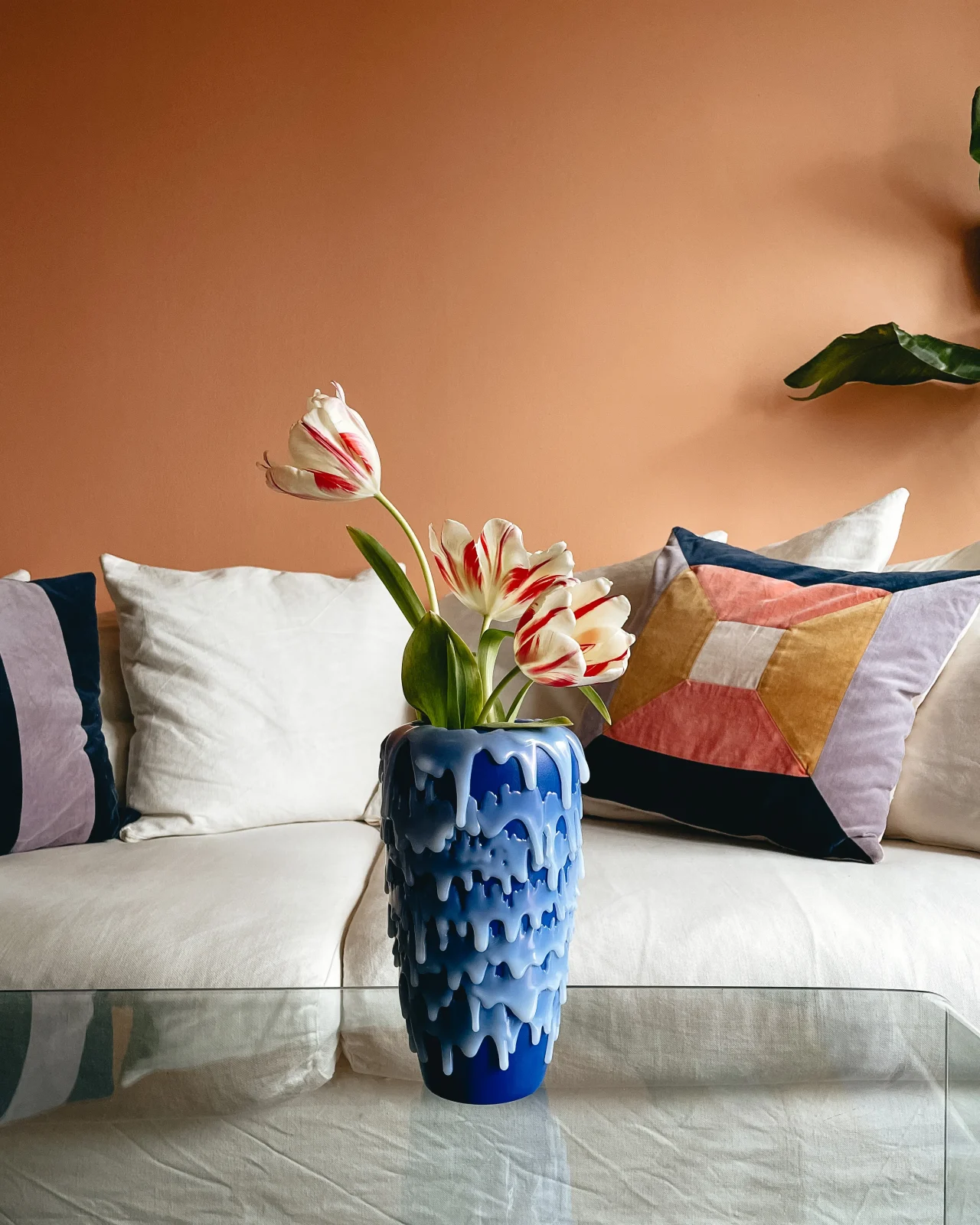
- Color and humor: the restrained palette has opened up to pink glass, poured resin landscapes and objects that make you smile.
- Sculpture and function together: many pieces sit between furniture and art, made in small editions in the designer’s own workshop.
Collective platforms matter too. Independent showcases have filled the gap while the Stockholm fair pauses, as Wallpaper* reported from Stockholm in 2026, and Copenhagen’s 3 Days of Design has become one of the most visited events of the year. For a closer look at Denmark, read Rethinking Danish Design: Voices From Within.
10 Scandinavian and Nordic designers to know
Each piece below comes from a different studio, and all are available on ADORNO.
Ticka Fungi Wall Shelf by Olle Sahlqvist

Stockholm designer Olle Sahlqvist works on the climate crisis through objects that ask for more empathy with nature. Ticka, Swedish for bracket fungus, is a small shelf carved from birch that seems to grow straight out of the wall. It measures 12 × 20 × 10 cm (4.7 × 7.9 × 3.9 in), and it can also be made as a wall lamp on request.
By Olle Sahlqvist
€250 – €450 incl. tax
Favorite Vase by Studio Formbart

Sarah E. Haukka of Studio Formbart makes her Tin Collection in Sweden by soldering, mold casting and freeform casting lead-free tin. Favorite is made for one flower: a slim stem holder rises from a small bowl that holds just enough water. Rough finishes and fine details sit side by side, and the vase stands 15 cm (5.9 in) tall.
By Studio Formbart
€224 incl. tax
Sluren Table Lamp in Blown Glass by Sara Sjöbäck

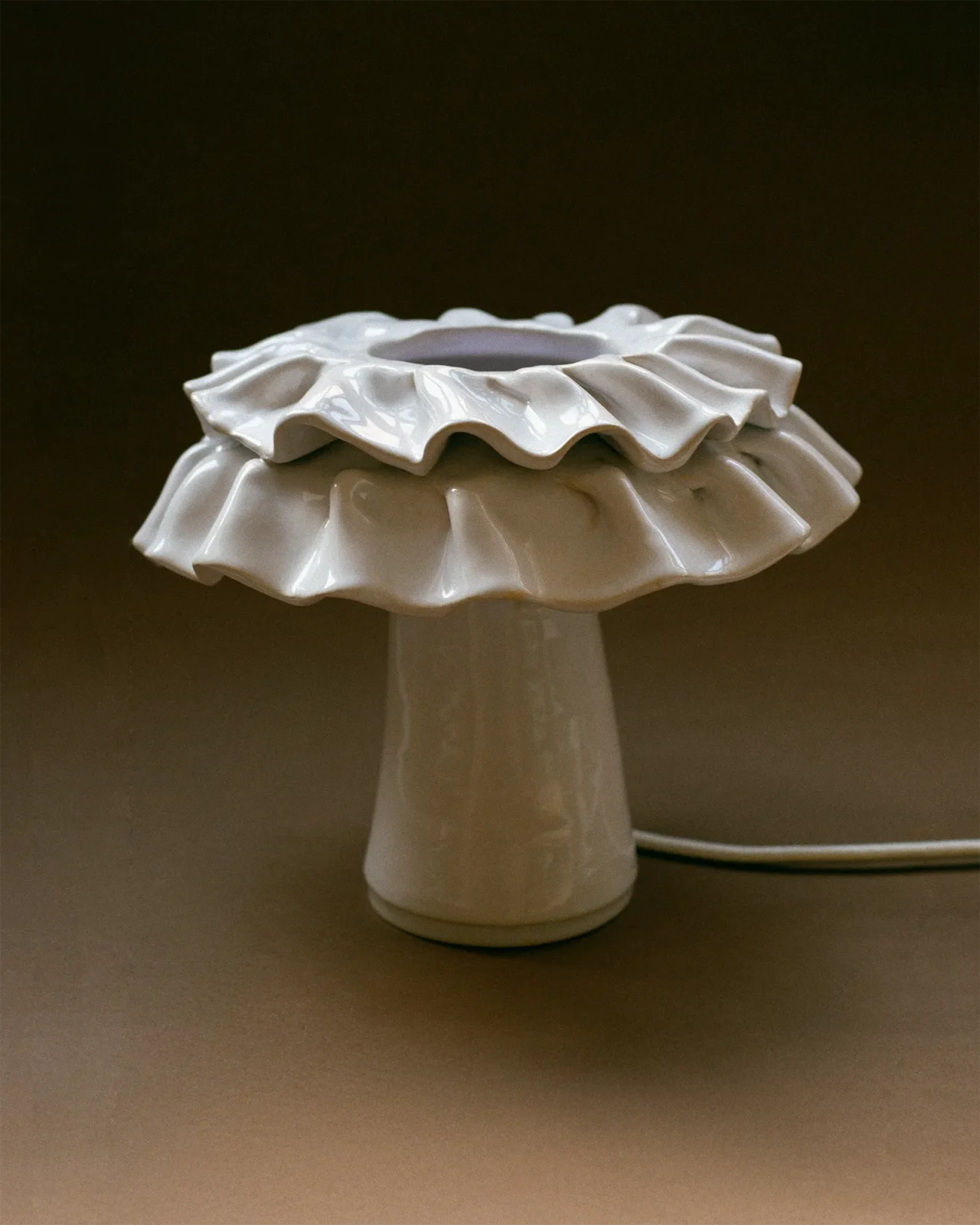
Malmö designer Sara Sjöbäck brings humor to glass. Sluren was first commissioned by the Swedish Institute in Paris and has been shown at Milan Design Week. It is mouth blown in a limited edition, and each year the edition takes a new color; a few remain in the original pink. It measures 30 cm (11.8 in) in each direction.
By Sara Sjöbäck
€1,450 – €1,850 incl. tax
Kalia Table Lamp in Glass and Resin by Justyna Poplawska

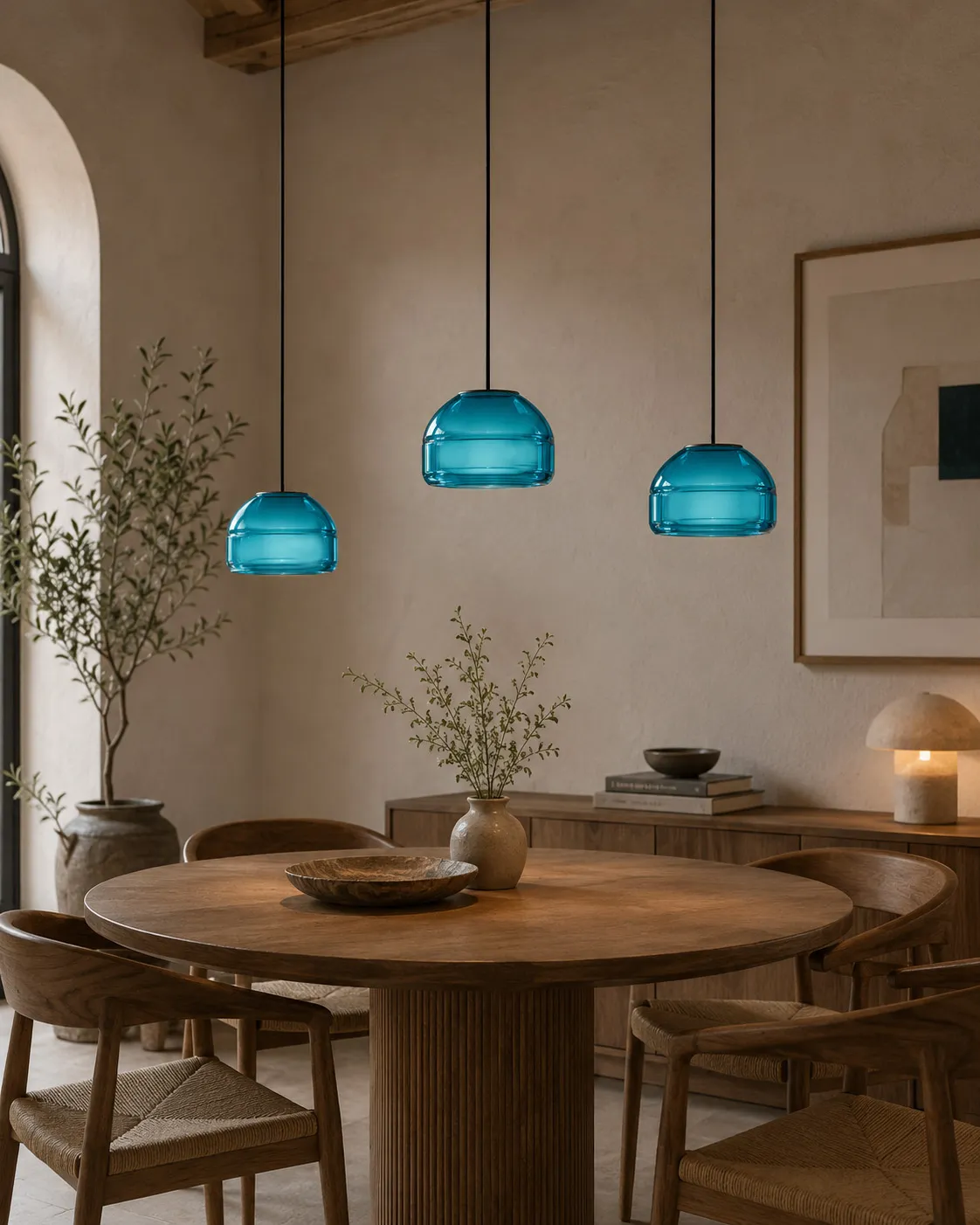
Frederiksberg designer Justyna Poplawska casts Kalia from her own composite of recycled glass grit, bio-based resin and pigment. The shape folds inward like a shell, and when lit the glass particles shimmer inside the body. One face is matte and the other slightly glossy, so the lamp changes with the light. It is 38 cm (15 in) tall.
By Justyna Poplawska
€536 incl. tax
CPU Low Coffee Table in Brushed Aluminum by Thomas Gayet

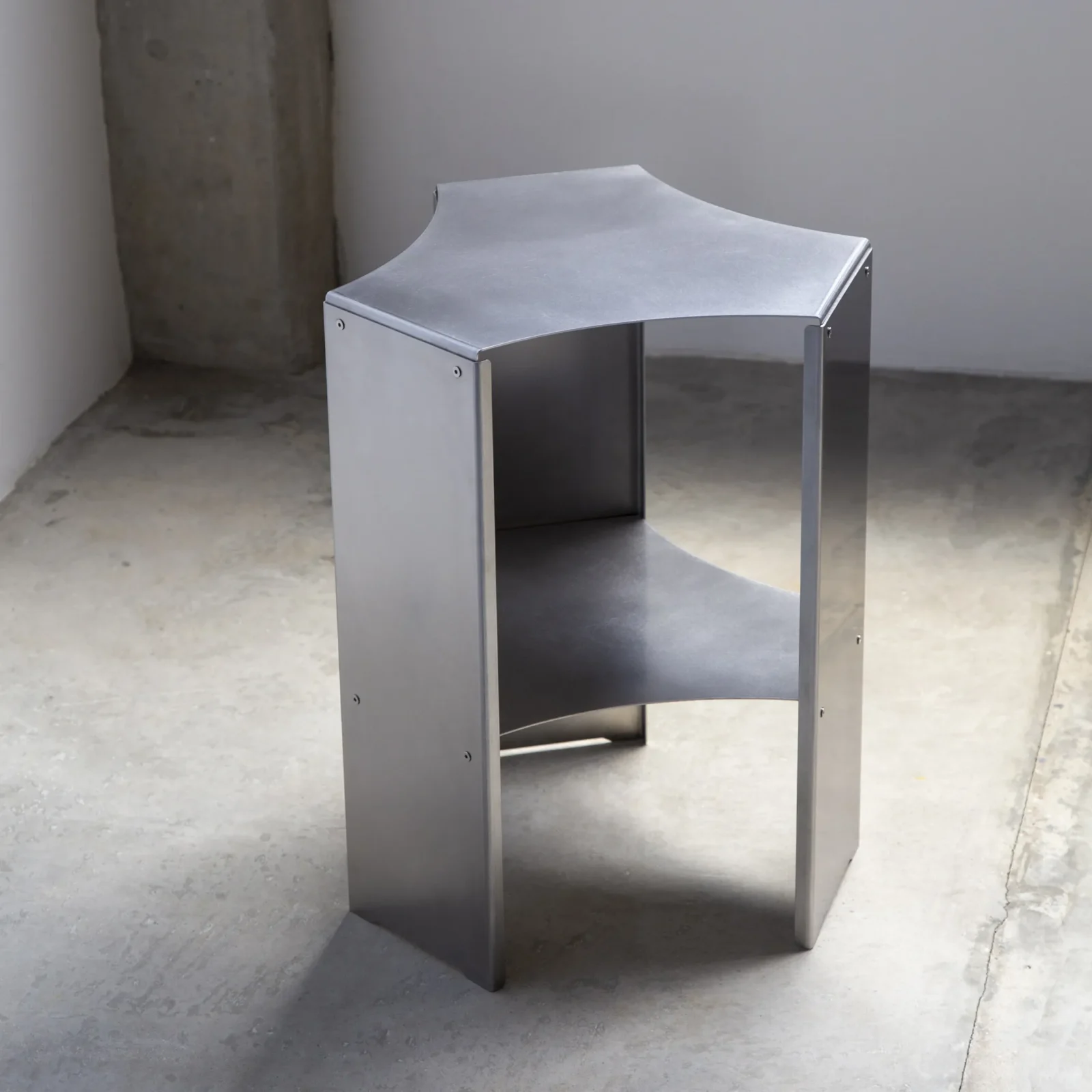
Copenhagen designer Thomas Gayet builds his ALUCUTS series from 12 mm (0.5 in) square cuts of aluminum plate, bolted together until the piece reveals itself. The blade-scarred edges shine against the brushed finish, and countersunk bolts mark every joint. CPU sits low, at 75 × 75 × 23 cm (29.5 × 29.5 × 9.1 in), and custom sizes are possible.
By Thomas Gayet
€3,300 incl. tax
Revolve No. 06 Side Table in Scagliola and Natural Wax by Flensted Mouritzen

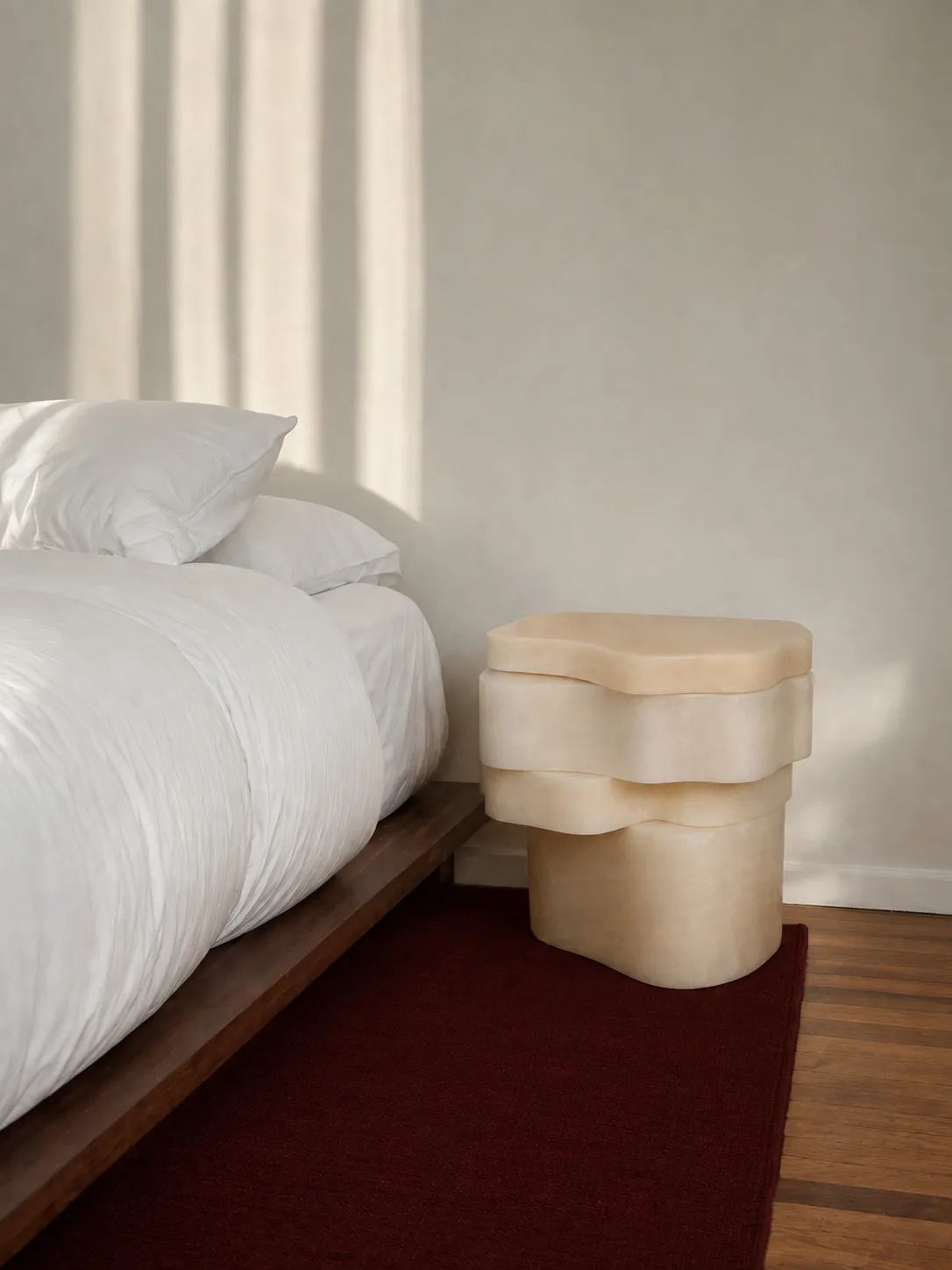
Danish duo Flensted Mouritzen revive scagliola, an old stucco technique, with a turning machine they built themselves. A single profile line is run through layer after layer of pigmented plaster until it becomes a three-dimensional form, decorated in the act of making. Revolve No. 06 stands 81 cm (31.9 in) tall and is a limited edition of three.
By Flensted Mouritzen
€2,988 incl. tax
Tango Side Table in Glass and Maple Wood by Kim Thomé

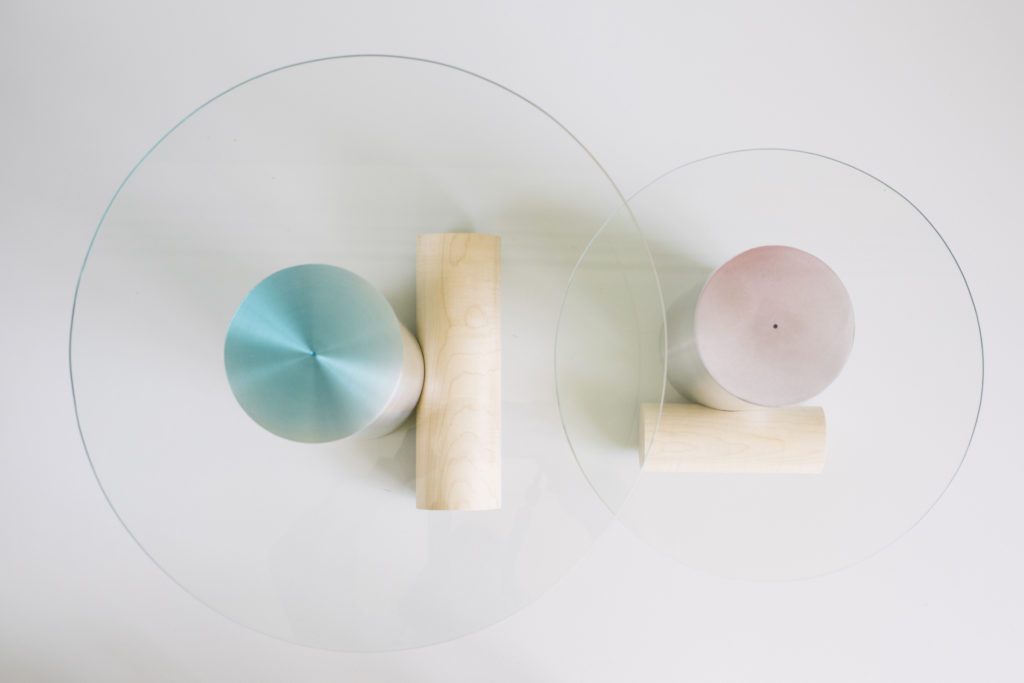
Norwegian designer Kim Thomé, now based in England, is known for color and light. Tango joins three cylinders of glass, aluminum and maple wood with tinted UV glue, so the joint, usually hidden, becomes a colored line. The glue tint was developed for this project. It measures 40 × 40 × 47 cm (15.7 × 15.7 × 18.5 in).
By Kim Thomé
€900 incl. tax
Collier S1 Wall Sconce in Glass and Aluminum by Darka

Oslo studio Darka designed the Collier System as a modular kit of fluted glass, diffused light and milled aluminum clamps that recall construction systems. S1 is its simplest version, a three-part diffracted light that can be mounted vertically or horizontally. At 130 cm (51.2 in) long and only 9 cm (3.5 in) deep, it works as a line of light on a wall.
By Darka
€1,050 incl. tax
Cabinet From the 1+1+1 Series by AaltoAalto Studio

Helsinki studio AaltoAalto took part in 1+1+1, a collaboration in which three studios each design one part of an object, and the parts are then combined in unexpected ways. It began at DesignMarch in Reykjavik in 2015 with floor lamps and moved on to cabinets for Helsinki Design Week. This one, in ash wood and glass, is 107 cm (42.1 in) tall.
By AaltoAalto Studio
€2,600 incl. tax
Grit Candle Holder Family by Ragna Ragnarsdóttir

Reykjavík designer Ragna Ragnarsdóttir pours colored layers of acrylic resin by hand so each candle holder carries its own small landscape, and no two match. The family is a set of three: two small holders of 5.5 × 6.5 cm (2.2 × 2.6 in) and one large of 5.5 × 9.5 cm (2.2 × 3.7 in), with hand-blown glass inserts.
By Ragna Ragnarsdóttir
€110 incl. tax
How to bring Scandinavian design into your home
- Start with natural materials: birch, ash, oak and maple keep a room light. Add one piece in aluminum or blown glass for contrast.
- Layer the light: long Nordic winters made lighting central to Scandinavian homes. Combine a table lamp with a wall sconce and candleholders for warm, low pools of light.
- Choose pieces with two jobs: a side table that reads as sculpture or a wall shelf that looks like it grew there saves space and adds character.
- Allow one surprise: a colored glass lamp or a poured resin object keeps a calm interior from feeling cold.
- Keep it uncluttered: leave space around each piece so its material and shape can be seen.
For more on interiors, read What Is Scandinavian Interior Design?, or see more Nordic designers.
FAQ
Who are the most famous Scandinavian designers?
The best-known names are mid-20th-century designers such as Alvar Aalto, Arne Jacobsen, Hans Wegner, Finn Juhl, Børge Mogensen and Bruno Mathsson. Today, independent studios such as Olle Sahlqvist, Sara Sjöbäck, Thomas Gayet and Flensted Mouritzen carry the tradition forward in new materials.
What is the difference between Scandinavian and Nordic design?
Scandinavia includes Denmark, Norway and Sweden. Nordic design also includes Finland and Iceland. The two terms are often used together because the countries share design values and history.
What are the main characteristics of Scandinavian design?
Function, natural materials, good craftsmanship, simple forms and attention to light. Contemporary designers add color, humor and new materials such as recycled glass and bio-based resin.
What materials are typical of Scandinavian furniture?
Light woods such as birch, ash, oak and pine, along with wool, leather, glass and metal. Many studios now also work with recycled and bio-based materials.
Is Scandinavian design still relevant today?
Yes. Its focus on durable, useful objects fits today’s interest in buying fewer, better things, and a new generation of designers keeps it evolving.
How do I find contemporary Scandinavian designers?
Look beyond the big brands to independent studios showing at Copenhagen’s 3 Days of Design, Stockholm’s independent design events and DesignMarch in Reykjavik, or browse the studios on ADORNO.