Updated on: October 1, 2026
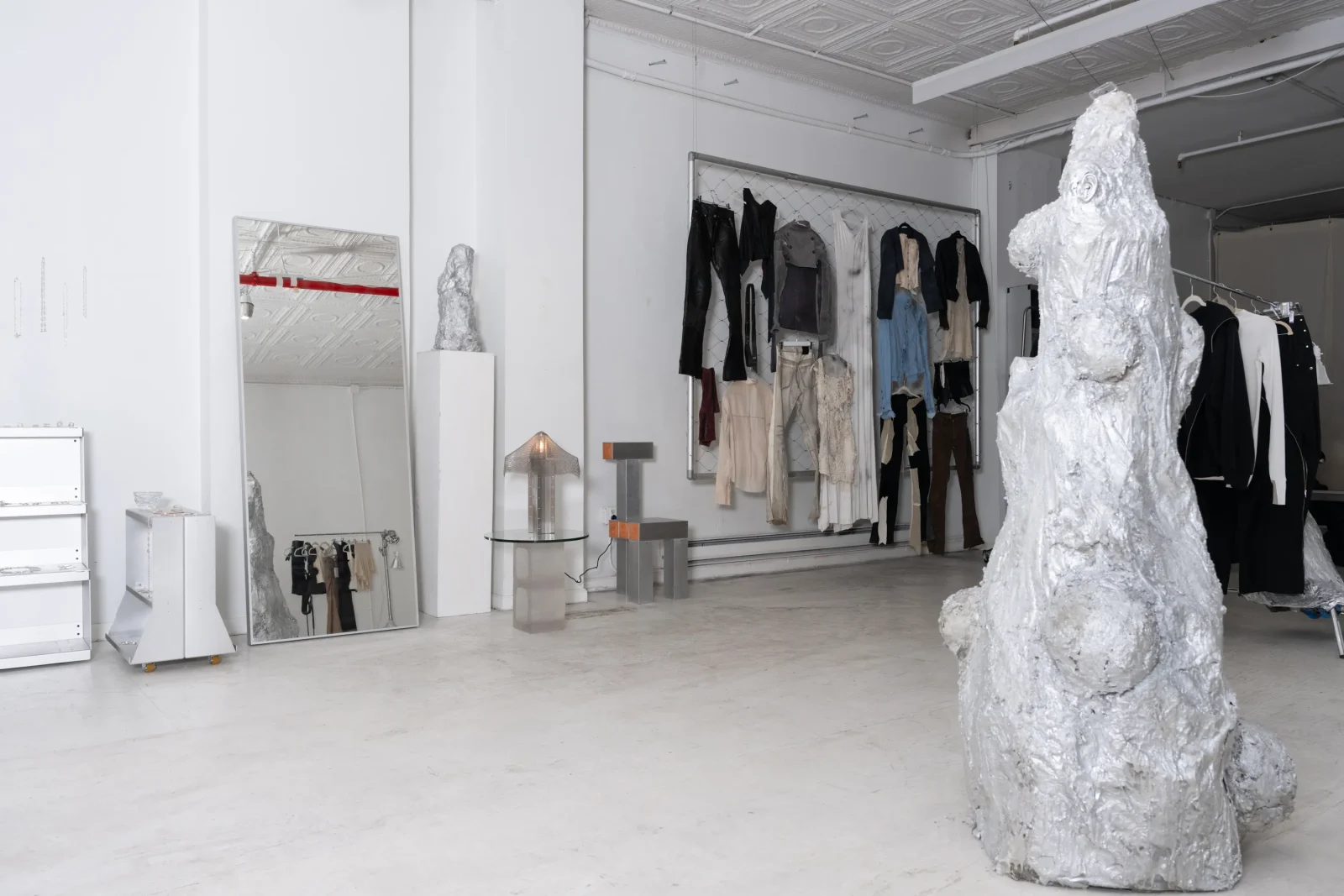
In January 2020 ADORNO opened Mexico & the Nordics: A Meditation on Individuality in Craft, Tradition, & Modernism at Klosterstræde 20 in Copenhagen, organized with the Mexican Embassy in Copenhagen. The exhibition set two geographically distant design cultures against each other to ask how cultural authenticity survives in an era of mass production and a globalized market.
What follows is a record of that show, structured as it was — through four elements of contemporary design: craft, tradition, individuality and modernism. Several of the studios featured are still working with ADORNO today, and those are listed at the end.
In Mexico, a country of vast and diverse cultural traditions, a community of designers works to preserve authentic voices while trailblazing in natural material use, ancestral forms and social participation in design. Nordic designers, by comparison, push at material, social and environmental concerns while addressing personal identity in an environment shrouded by the legacy of its mid-century masters. Both groups end up at the same questions — material innovation, responsible consumption, the preservation of craft tradition, the limits of experiment.
Craft

“Craft” often conjures busy studios and hands working material — finessing edges, encouraging shapes, applying color — producing objects that speak for themselves. Among these designers it took many forms: ceramic, glasswork, metalwork. They perpetuated age-old techniques and experimented with new materials to create objects illustrating personal design philosophies. Across both regions, individuality was sought through color, texture and technique — each piece defining and defying traditional approaches at once.
In line with the larger Mexican scene, the work of Estudio Pomelo showed reverence for artisanal technique alongside a contemporary eye. Developed from the limits of a cube, the “Margarita” Vase is a study of material, space and form, made by hand by local artisans. In a similar exploration, Norwegian designer Kim Thomé investigated the possibilities of glass in the “Panes” Vase, which reveals different reflected colors depending on where the viewer stands. Finnish designer Veera Kulju‘s sculpture “Queen of the Dessert” used an unlikely pairing — ceramic and popcorn — for a surface both masterful in technique and genuinely strange in process.


Experimentation also drove Danish designer Troels Flensted’s “Perception – Floor”, where stainless steel mirrors were altered to hand the viewer a skewed perspective. Mexican designer Perla Valtierra presented “Royal Quetzalcoatl”, named for the Aztec feathered serpent god and made using recovery moulds from the Royal Boch manufacture in Belgium. Combining historical Belgian form with blue-toned color that references Quetzalcoatl himself, Valtierra aligned the pieces with Mexican heritage while openly borrowing an aesthetic from abroad.

Tradition

As Aldo Alvarez-Tostado of Piedrafuego put it, tradition should not be treated as static — many expressions we consider customary, or even outdated, were once revolutionary. Each designer here spoke to that through the integration of traditional and contemporary form. Some referenced culturally significant patterns, others well-established materials and techniques. In each case individuality arrived through the shifting of tradition rather than the rejection of it.
Inspired by the pre-Columbian tzompantli walls, which were covered in carved or real skulls, Piedrafuego’s Large “Pantli” Planter uses recognizable patterns to take on an identity of heritage while creating an altered viewpoint through its function. Icelandic designer Ragna Ragnarsdottir‘s “Coral Vase” explores the process of production itself, built in layers of acrylic resin into an object that can be read several ways. Iceland’s design scene is relatively new, but the mixture of color, texture and arresting form connects to the country’s mountainous landscape and its folk tales.


Swedish designer Åsa Jungnelius and Danish designer Stine Mikkelsen both explored form through medium — Jungnelius through glass, Mikkelsen through composite marble, volcanic ash and fish glue. Jungnelius’s “Lampett” Candle Holder 3 portrays the shift of identity in Swedish design and its rejection of “Nordic simplicity”, catching the eye through bright color, texture and an overt commentary on how society views the body.
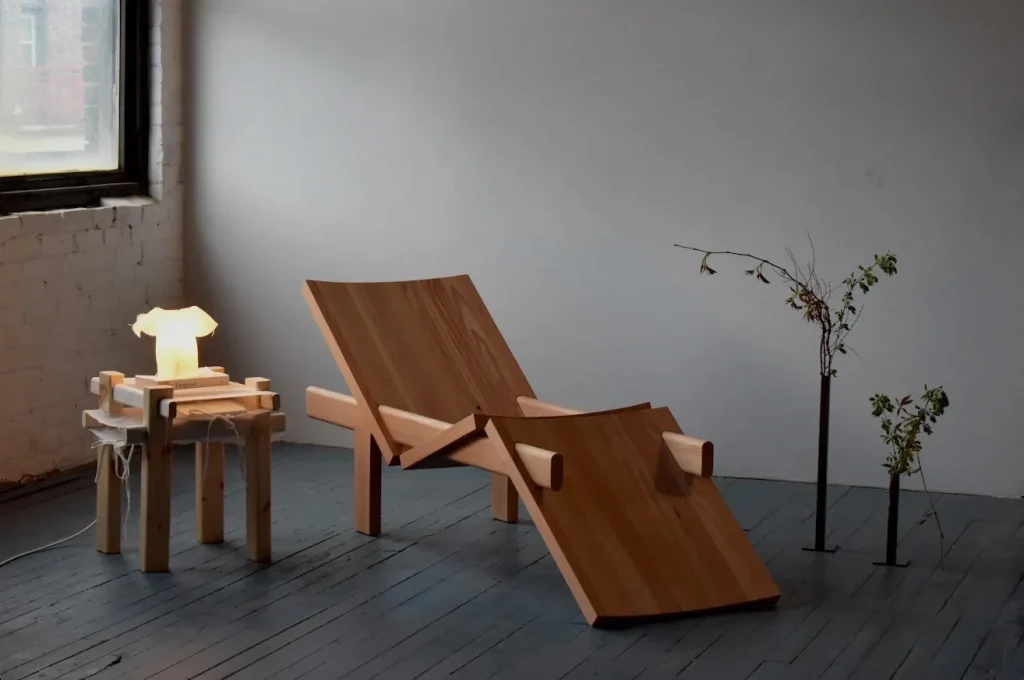
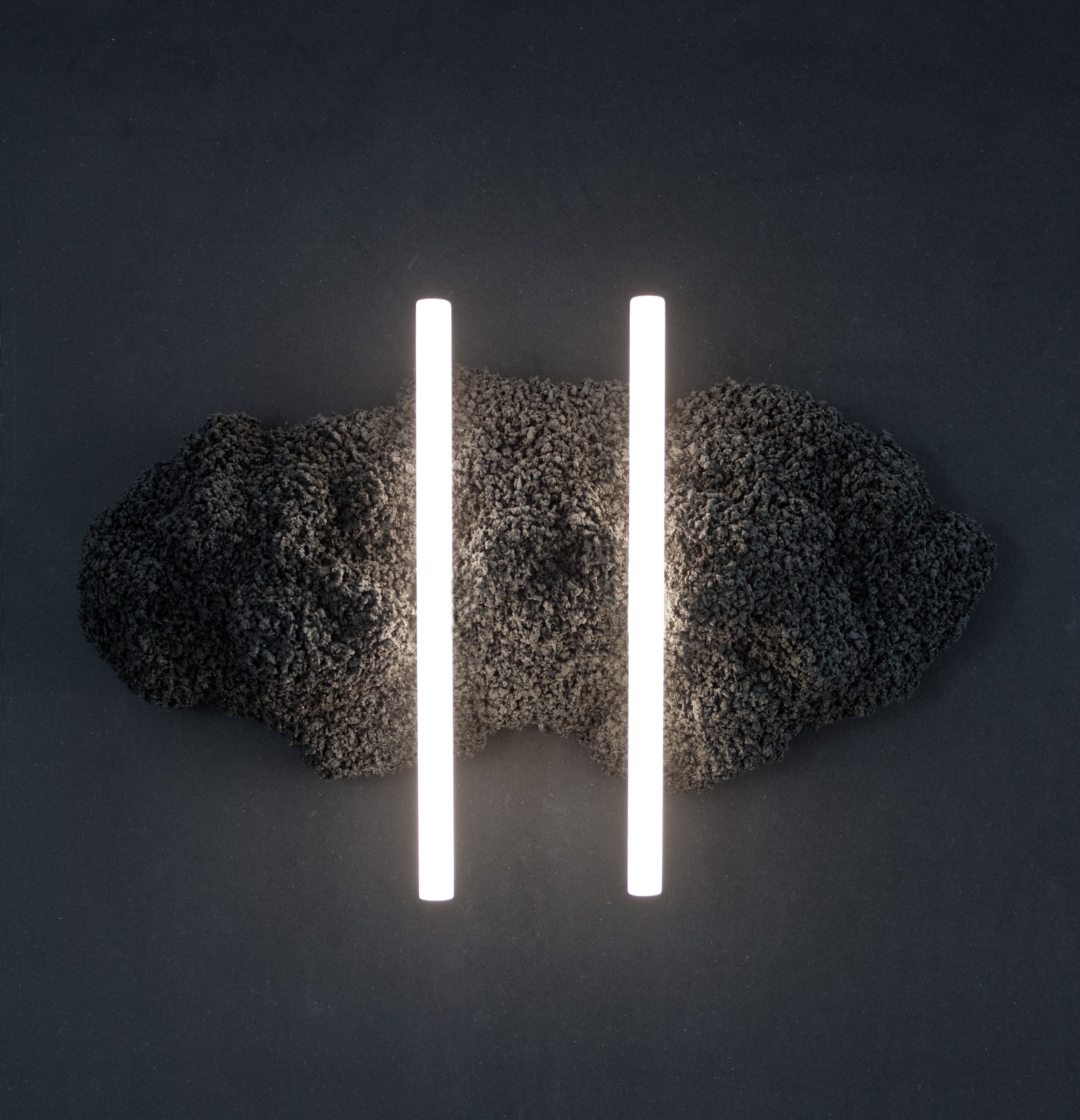
Mikkelsen’s “Solid Formations No. 5” approaches the intersection of material and human manipulation — a rough surface that invites touch, held in a minimalist form that nods to the Danish tradition. The “Your Skin” Chair from Mexican studio Tributo brings traditional and contemporary together through Japanese-influenced sensorial aesthetics and hand-crafted construction. Its handwoven Oaxacan textile, made from recycled plastic, connects directly to the theme — continuity of artisan craft alongside socially and environmentally sustainable practice.

Individuality
Individuality in design can mean approach, material, technique, or simply a recognizable mind at work. Does an object offer an alternative point of view? Does it ask its audience to reflect? Does it immediately signal whose practice it came from? The designers in this section occupied several of those positions at once — alternative materials, innovative technique, a break from or a counter to tradition.
Studio Kajsa Willner‘s “Polarized Portrait – Rainbow” used disposable plastic to comment on the state of the environment, with a research-led approach and a collaboration with material scientist Dmytro Orlov that sat well outside conventional design practice. Mexican designer Oscar Hagerman‘s simple ergonomic forms appear to reference Nordic design, but their development with local artisans tells a different story — his “Ruiseñor” Chair places its emphasis on the continuity of tradition and on local material, championing every stage of making.

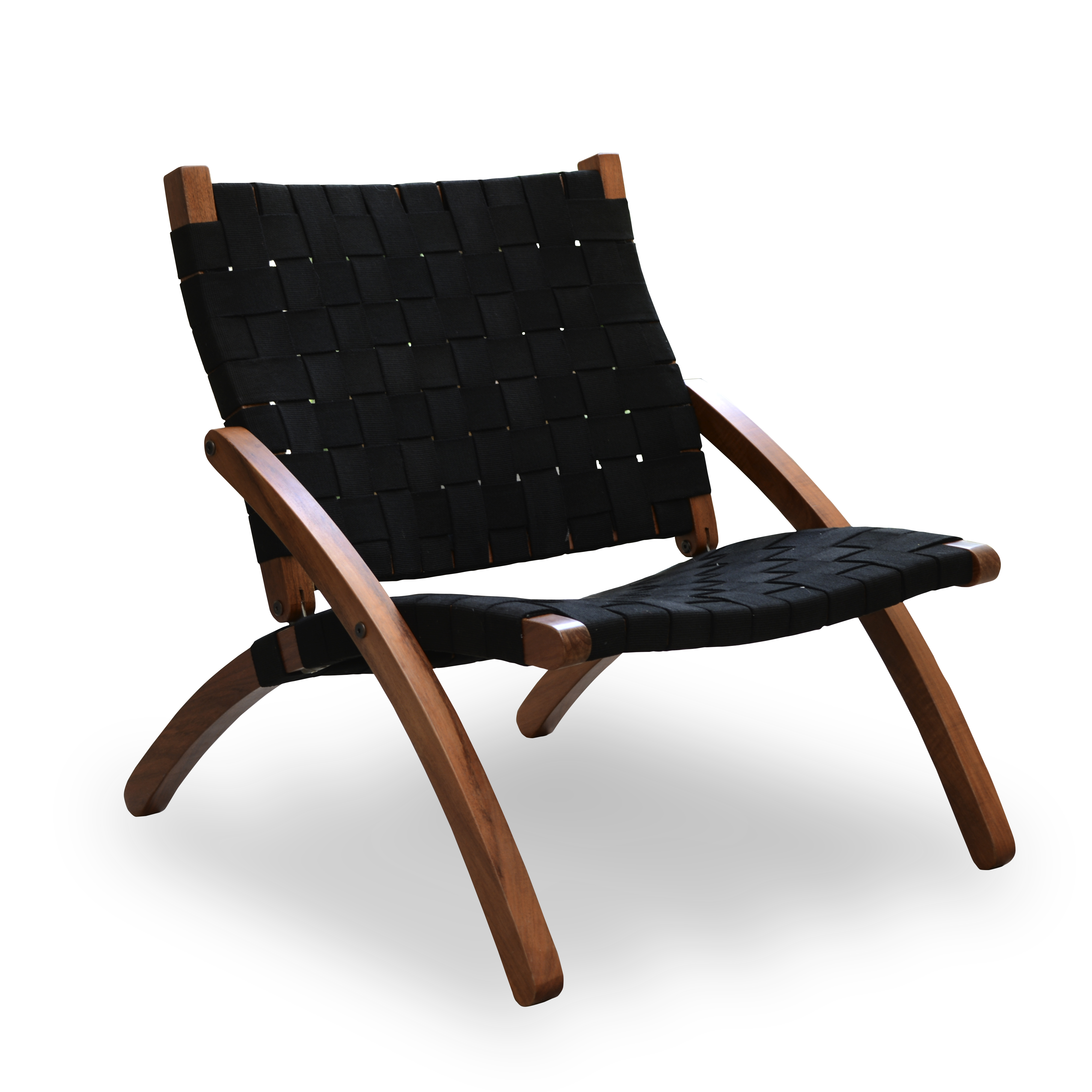
Playing with iron and concrete in the “Toucan” Lamp, Norwegian duo Pettersen & Hein made a piece that reads as malleable and soft despite being neither — a juxtaposition that turns cold hard material into something tactile. Swedish designer Sara Lundkvist‘s “Portal” Mirrors bring viewers into a realm they inhabit simply by looking. Through glass, Lundkvist investigates the role of material culture and how we assign meaning to objects — reflecting our own views and desires back at us.


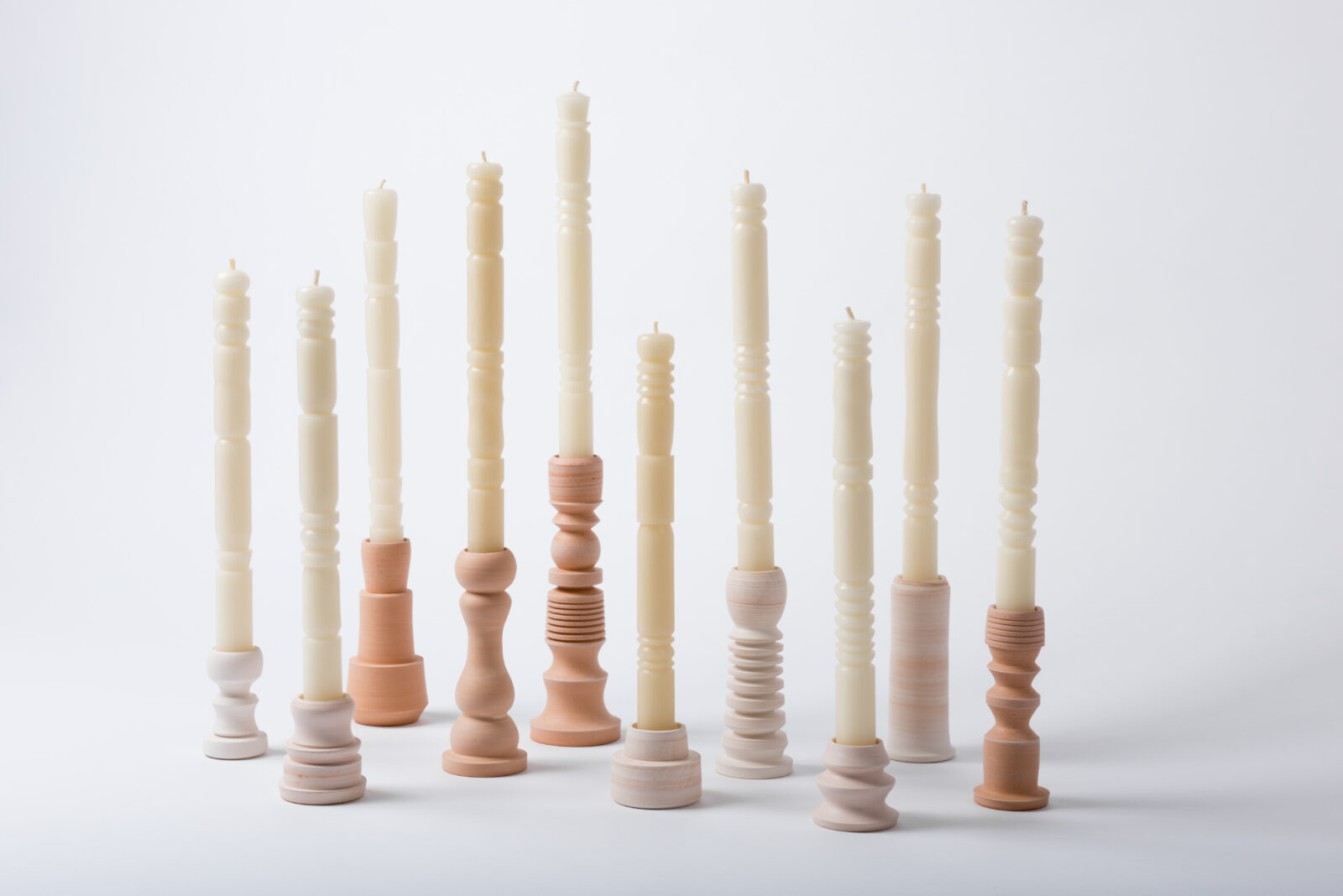
On individuality of material, Danish designer Jonas Edvard investigated waste in “Relic Lamp, Ring” — a moulded combination of wood, metal and stone dust that points at both alternative technique and the necessity of sustainability. Mexican studio Popdots went the other way, seeking to master a single material. Their “Dias en Vela” Candleholders are a study in material evolution and refined technique, investigating the relationship between artisan and craft across a repeated series.
Modernism

As a twentieth-century movement, modernism challenged previous ideals and placed its focus on innovation in material and technique. Traditional forms gave way to abstraction and to experiments with artistic process. It is in that spirit that this final group sits — investigations into new materials, different uses for old forms, and experiments with how objects get made and with whom.
Mexican studio Ayres MX reinterprets prehistoric and pre-Hispanic forms in collaboration with artisans across the country. The “Cozumel” Long Vessel uses smooth lines and contrasting natural color to reveal the craftsmanship behind it. Danish duo Artsign question the boundary between nature and artifice — can one be found in the other, and can nature be recreated by artificial means? “Meadow Block – Side Table” attempts exactly that, using recycled mattress, jesmonite and resin to make something that reads as stone.

Swedish designer Lotta Lampa‘s “Tjabo Thunder Light” Floor Lamp pushes past the boundaries of “Nordic design”, using steel to reference thunder and lightning in bold, altered but recognizable shapes — the material taking on a flexibility that counters what we expect of cold rigid metal. Mexican studio Rituales MX made a modernist interpretation of papel picado, the elaborate paper craft connected with Aztec culture, in the “Luciernaga” Ceiling Lamp. The minimalist form might read as Nordic-influenced, but the choice of shape and the use of gold point firmly at local heritage.

In drawing attention to craft, tradition, individuality and modernism across two geographically distinct regions, the exhibition highlighted the artistic value in each design scene on its own terms. Mid-century Nordic design has long been lauded as the design philosophy, but the work of contemporary designers in both regions showed a shared desire to find personally significant forms, materials and techniques. Each designer brought their own history and understanding to those four themes — and that, rather than any regional style, is where individuality actually lives.
Where they are now
Six years on, three of the Mexican studios from this exhibition are still working with ADORNO — and the pieces shown in Copenhagen, or their direct descendants, remain available.
Piedrafuego
The Pantli planters shown in 2020 are still made, hand-sculpted in the Íñiguez family workshop in Yahualica, Jalisco, from cantera — a volcanic tuff long used in Mexican architecture. Three sizes, from €60.
Studio Ayres
The Cozumel vessel has been retired, but the studio continues in the same register. The Lago Tall Vessel and Lago Short Vessel are sculpted from stone by Mexican artisans, €896 to €936, made to order.
Popdots
The “Dias en Vela” Candleholders are still in production at €550, and in stock. The studio has since extended the same material enquiry into translucent porcelain lighting.
For the current generation of Mexican studios, see our guides to Mexican furniture designers, Mexican interior design pieces and Mexican decor.