Hardwood is not always hard, and softwood is not always soft. The difference begins with the tree.
Updated on: October 29, 2026
Most furniture labels say “solid wood” and leave it there. Yet the species matters as much as the design: it decides how heavy a piece is, how easily it dents, how its color changes with time and how much it costs. The first split every maker learns is hardwood vs softwood.
This guide explains what the two terms really mean, how hardness is measured, the common hardwoods and softwoods used in furniture and how to choose between them. It ends with ten pieces of wood furniture by independent studios, seven in hardwood and three in softwood.
Hardwood vs softwood: what is the difference?
The names are botanical, not mechanical. Hardwoods come from angiosperms, broadleaf trees whose seeds grow inside a fruit or shell, such as oak, walnut, ash and cherry. Most lose their leaves in winter. Softwoods come from gymnosperms, conifers with needles and cones, such as pine, spruce, fir and cedar. Most stay green all year.
In practice, most hardwoods are denser and harder than most softwoods, but not all. Balsa, the lightest wood used in model airplanes, is botanically a hardwood. Yew, a conifer, is harder than many hardwoods and was used for longbows. The difference also shows in the grain: hardwoods have pores that carry water, which gives oak and ash their open texture, while softwoods have a more uniform structure with clear growth rings.
How wood hardness is measured
Furniture makers use the Janka hardness test: the force needed to press a steel ball 11.28 mm (0.444 in) in diameter halfway into a piece of wood. The higher the number, the better the wood resists dents. Typical values for furniture woods:
- Hard maple: 1,450 lbf (6,450 N)
- White oak: 1,360 lbf (6,050 N)
- White ash: 1,320 lbf (5,870 N)
- Yellow birch: 1,260 lbf (5,600 N)
- Black walnut: 1,010 lbf (4,490 N)
- Black cherry: 950 lbf (4,230 N)
- Douglas fir (softwood): 660 lbf (2,940 N)
- Red alder: 590 lbf (2,620 N)
- Eastern white pine (softwood): 380 lbf (1,690 N)
- Western red cedar (softwood): 350 lbf (1,560 N)
Alder shows why the label can mislead: it is a hardwood, yet it is softer than Douglas fir.
Common hardwoods for furniture
- Oak: hard, heavy and open-grained, the workhorse of tables, chairs and cabinets.
- Walnut: dark brown and fine-grained, easy to carve and polish, and usually the most expensive of the common hardwoods.
- Ash: pale, strong and flexible, used for bent and slender chairs.
- Cherry: smooth, with a pinkish tone that darkens to a warm red over time.
- Birch: pale and even, often used in plywood and Nordic furniture.
- Mahogany: stable, reddish and easy to work, long favored for fine cabinetmaking.
- Alder: a soft, light hardwood that carves easily and takes stain well.
Common softwoods for furniture
- Pine: light, inexpensive and knotty, the classic wood of farmhouse and Scandinavian furniture.
- Spruce and fir: straight-grained and light, mostly used for construction timber, frames and plywood.
- Cedar: aromatic and naturally resistant to rot and insects, good for chests and outdoor pieces.
- Larch: one of the hardest softwoods, with a strong resinous grain used outdoors.
Which is better for furniture?
Neither, by default. Hardwood suits pieces that take daily wear, such as dining tables, chairs and desks, because it resists dents and holds joints tightly for generations. It is heavier and more expensive, and slower-growing trees mean slower-growing stock. Softwood is lighter, cheaper and grows faster, which makes it easier to source responsibly; it suits shelves, frames, room dividers and anything that will be moved often. Its softness also gives it character: dents and scratches become patina.
Construction and finish matter as much as species. A well-made pine chair with good joints will outlast a poorly glued oak one. Furthermore, finishes such as oil, lacquer or charring change how both types behave. For more on choosing species for a table, read our wood dining table guide.
Design publications have taken notice of the less obvious woods too. Wallpaper* profiled designers rethinking wood at London Design Festival 2025, including work in an underused grade of American timber, while an exhibition at the Design Museum asked twenty young designers to work in red oak, cherry and maple.
10 hardwood and softwood furniture pieces
Each piece comes from a different studio and is available on ADORNO, ordered by demand on ADORNO over the last 90 days.
Plus01 Medium Side Table in Birch Wood by 301 Design Studio
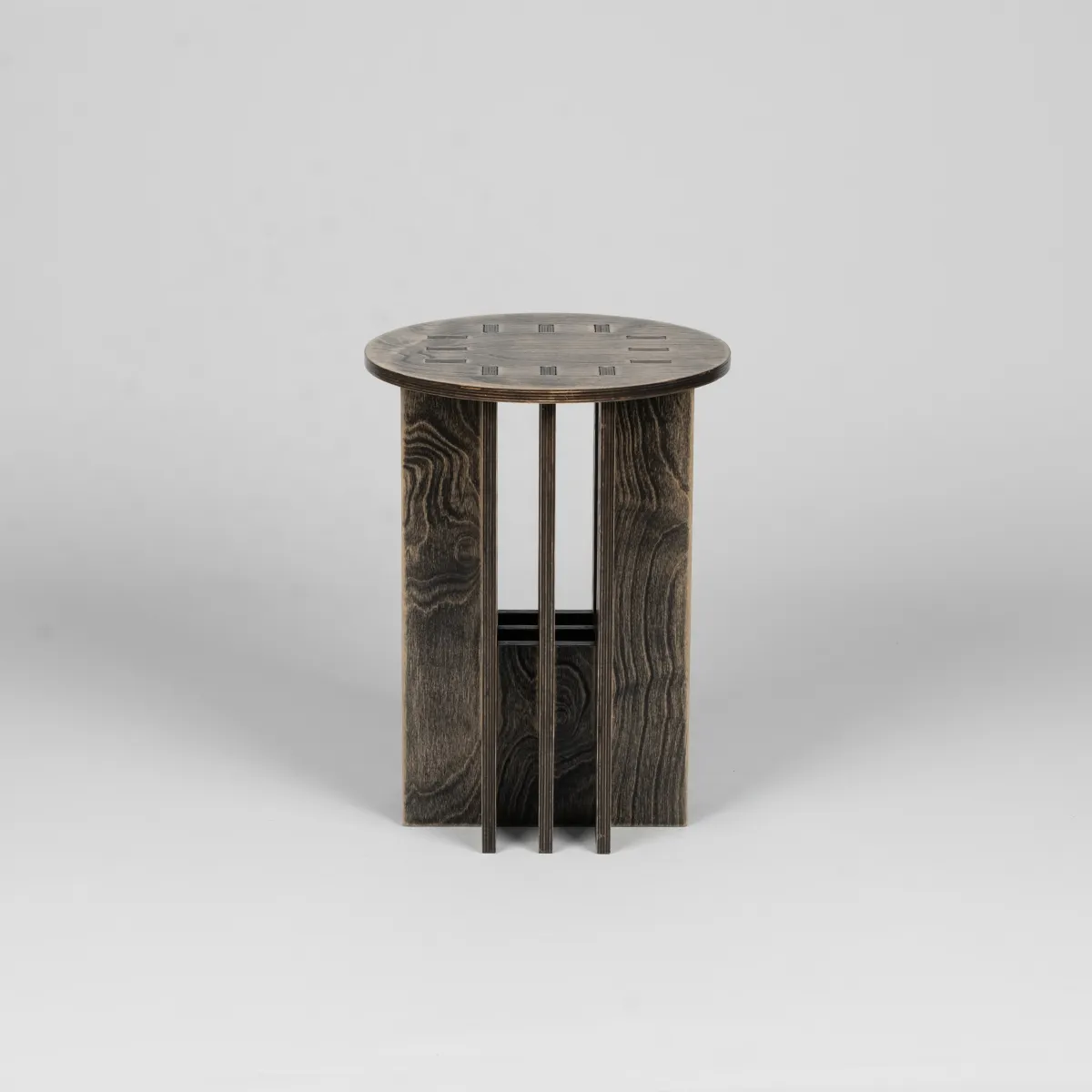
Turkish studio 301 Design Studio builds Plus01 from layered birch, a pale, even-grained hardwood that takes stain well, and leaves the joints in view. A round top rests on two slab supports and a row of slim rods, so it reads as a small piece of architecture. It works as a side table or an extra seat and comes in several colors.
By 301 Design Studio
€800 incl. tax
New Shoes Stool by Studio Ebba Lindgren
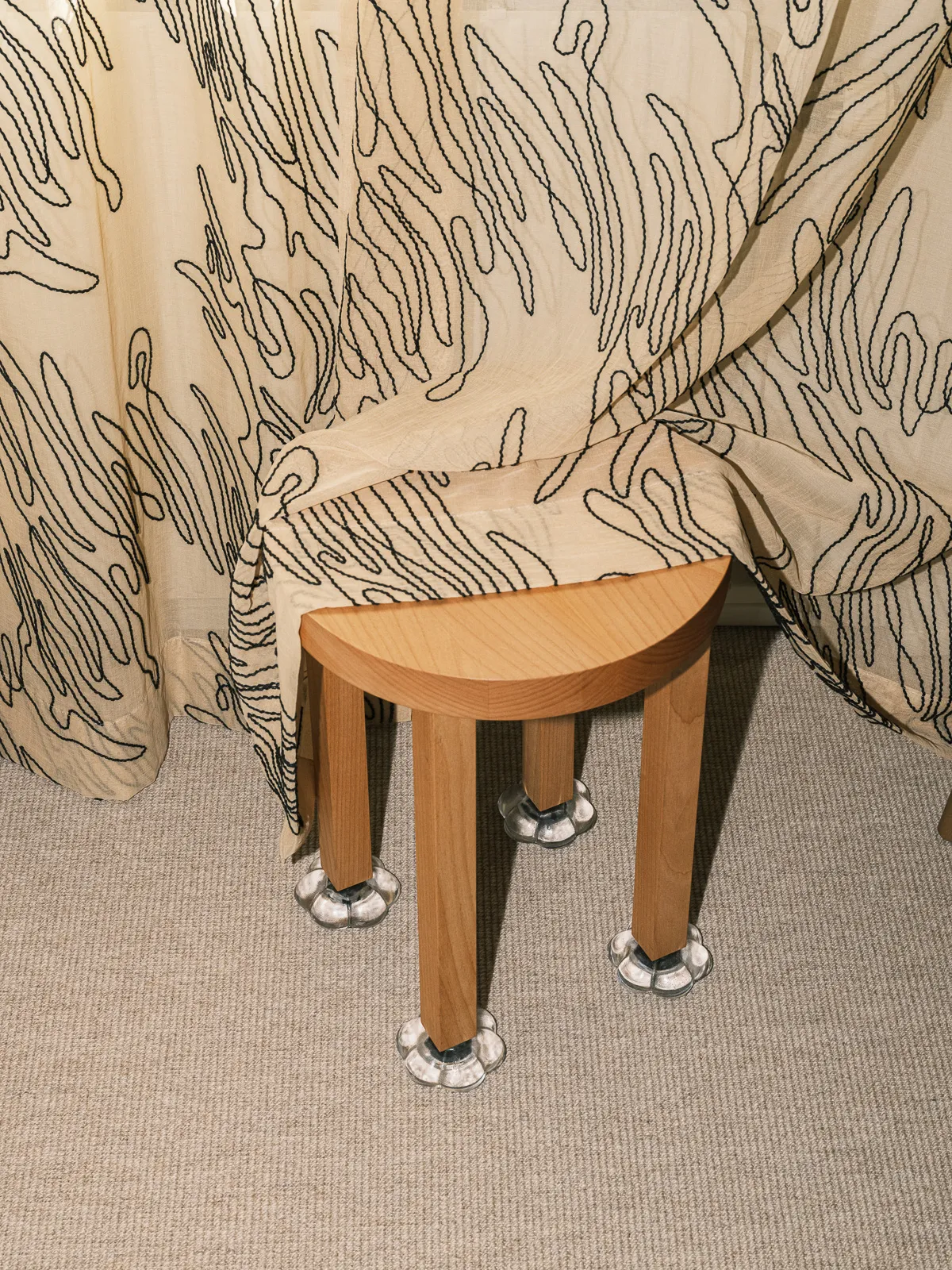
Swedish designer Ebba Lindgren shapes the thick, slightly concave seat from alder, a hardwood soft enough to carve easily, and rounds its edges by hand. Each leg stands in a small “shoe” of sand-cast glass and rubber, a little ornament that changes the whole piece. It measures 35 cm (13.8 in) across and 47 cm (18.5 in) tall and is made in Malmö.
By Studio Ebba Lindgren
€800 incl. tax
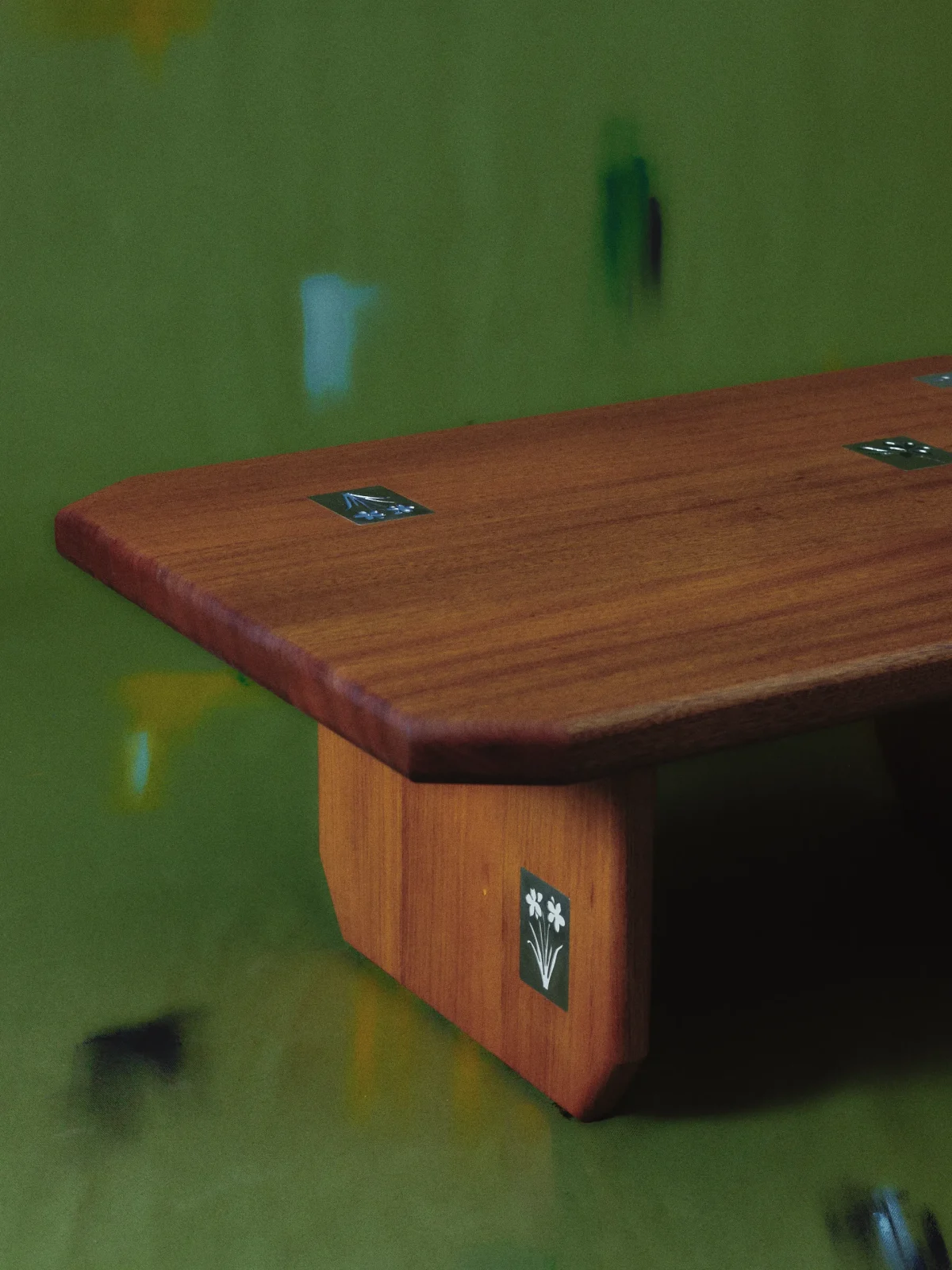
Meadows Side Table in Mahogany and Stainless Steel by BOTHI

Amsterdam studio BOTHI makes Meadows by hand from solid mahogany, a tropical hardwood prized for its stable, reddish grain. Small floral inlays are set into the top and only appear as you come closer. The oiled finish can be refreshed and repaired over the years, so wear becomes part of its history.
By BOTHI
€1.820 – €2.315 incl. tax
Timber – Pine Wood Room Divider by Studio Onno Adriaanse

Dutch designer Onno Adriaanse builds this divider from standard pine construction beams, the kind of softwood sold at any lumberyard, and finishes them dark so they read as sculpture. The modular blocks give it the rhythm of a colonnade. In use it measures 80 x 20 x 180 cm (31.5 x 7.9 x 70.9 in), and more panels can be added on request.
By Studio Onno Adriaanse
€1.570 incl. tax
F15 E Side Table in Oak Wood by Mantas Lesauskas

Lithuanian designer Mantas Lesauskas pairs a top of limed oak with a brushed aluminum base. Oak is the hardwood most furniture makers reach for first: hard, heavy and full of open grain that takes a lime or dark finish. It measures 40 x 43 x 58 cm (15.7 x 16.9 x 22.8 in), a size for a sofa end or a bedside.
By Mantas Lesauskas
€1.500 incl. tax
Shift Stool – Walnut by Studio Yann Gandon

Danish studio Yann Gandon cuts each Shift stool from a single offcut of finger-jointed walnut left over from kitchen manufacturing, and lets some of the joints show. Walnut is a dense hardwood with a dark, chocolate tone that deepens with age. The stool measures 40 cm (15.7 in) across and 40 cm (15.7 in) tall and doubles as a side table.
By Studio Yann Gandon
€690 incl. tax
N2v – Cherry Wood Bench by Aaron Scott

American designer Aaron Scott stacks and laminates solid cherry, then carves it by hand until the wood behaves almost like clay. The bench is bleached to a bone-white tone, a reminder that hardwood need not look dark or traditional. It measures 132 x 50 x 50 cm (52 x 19.7 x 19.7 in) and is finished with a hard-wearing satin lacquer.
By Aaron Scott
€5.400 incl. tax
Brut Lounge Chair | Re-enchantment by małe dobra
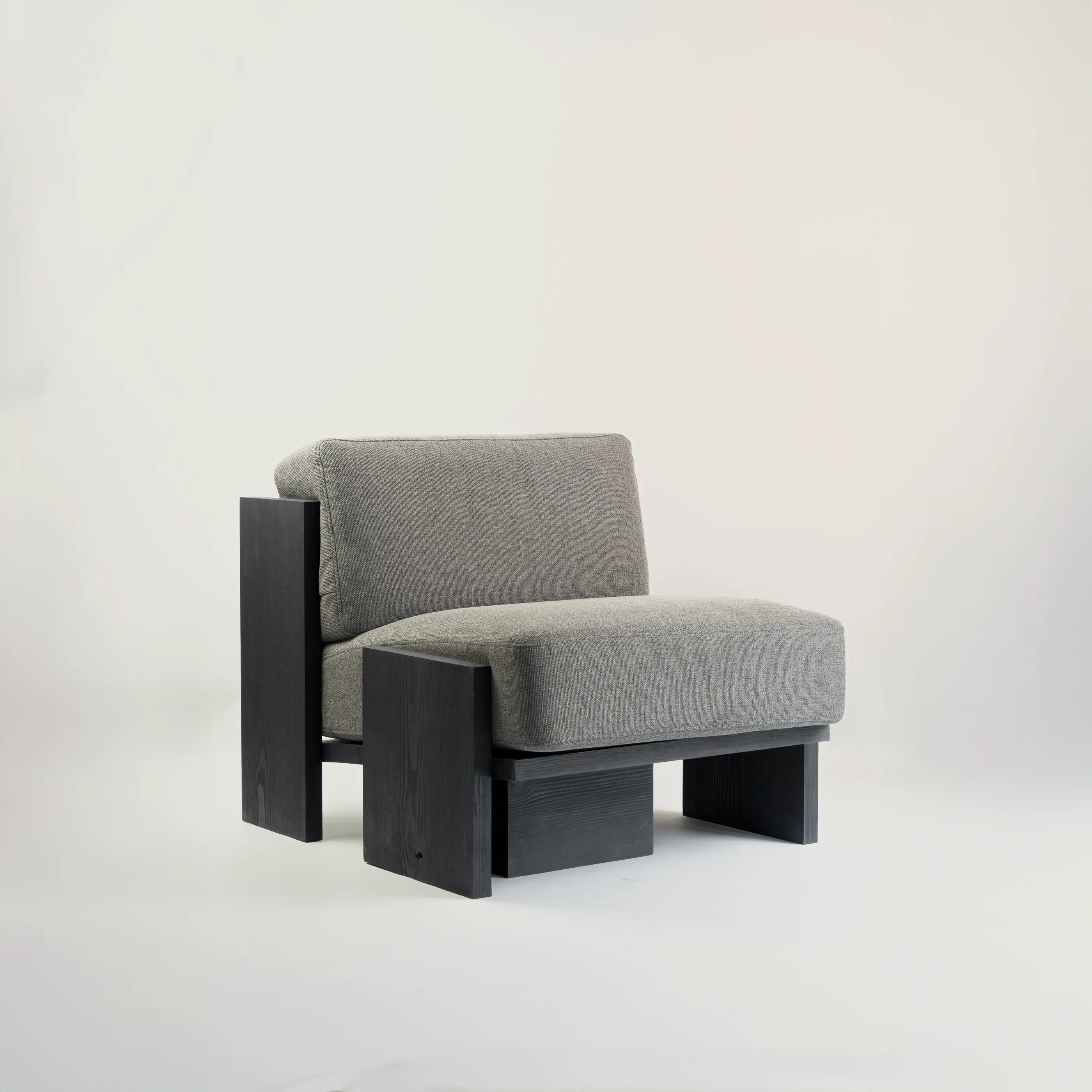
Polish family workshop małe dobra builds the Brut frame from thick slabs of locally sourced pine and leaves the grain exposed. Softwood is light and easy to work, so the chair can look massive without being too heavy to move. A soft upholstered seat and back sit inside the frame. It measures 86 x 75 x 65 cm (33.9 x 29.5 x 25.6 in) and joined ADORNO this fall.
By małe dobra
€1.500 incl. tax
The Black Sheep Coffee Table in Burnt Pine Wood by Masha Volkova
Dutch-based designer Masha Volkova carves this coffee table from solid pine, then burns and coats it until the surface turns black. Charring seals the surface of a softwood against moisture and insects, an old technique best known from Japan. The table is a portrait of a former classmate who kept coming back stronger, “from the ashes”.
By Masha Volkova
€2.600 incl. tax
Knot – Accent Chair – Solid Ash Wood by Luis Gimeno Design

Spanish designer Luis Gimeno shapes and assembles Knot by hand from solid ash, a hardwood that is strong and springy, which is why it has long been used for tool handles and bent chairs. The slats cross under the seat like a knot. It is stained a walnut tone and measures 49 x 50 x 73 cm (19.3 x 19.7 x 28.7 in).
By Luis Gimeno Design
€1.100 incl. tax
How to care for wood furniture
Dust wood with a soft, dry cloth and wipe spills at once. Keep pieces away from radiators and direct sun, which dry and fade the surface, and aim for a stable humidity of 40 to 60 percent so joints do not open. Oiled hardwoods such as walnut and mahogany need a fresh coat of oil once or twice a year. Lacquered pieces only need a damp cloth. Softwoods dent more easily, so use felt pads under objects and coasters under glasses. Charred and stained surfaces can mark light fabrics when new; wipe them before use.
Browse more wood side tables, coffee tables, stools, benches, accent chairs, lounge chairs and room dividers, or read our edits of wooden side tables and wooden benches.
FAQ
What is the difference between hardwood and softwood?
Hardwood comes from broadleaf, usually deciduous trees such as oak and walnut. Softwood comes from conifers such as pine and cedar. Most hardwoods are denser and harder, but the terms describe the tree, not the wood’s actual hardness.
Is pine a hardwood?
No. Pine is a softwood because it comes from a conifer. It is light, affordable and easy to work, but it dents more easily than oak or maple.
Is oak a hardwood?
Yes. Oak is one of the most common hardwoods in furniture. White oak scores about 1,360 lbf (6,050 N) on the Janka hardness scale.
Which wood is best for furniture?
For pieces in daily use, such as dining tables and chairs, dense hardwoods like oak, maple, ash and walnut last longest. For lighter or decorative pieces, softwoods like pine and cedar are lighter and more affordable.
Is softwood furniture good quality?
It can be. Quality depends on construction, joinery and finish as much as species. Solid pine furniture that is well built can last for generations and gains character as it ages.
Why is hardwood furniture more expensive?
Hardwood trees grow more slowly, the timber is harder to cut and shape, and there is less of it, so both the wood and the work cost more.
Browse the whole wood collection on ADORNO.