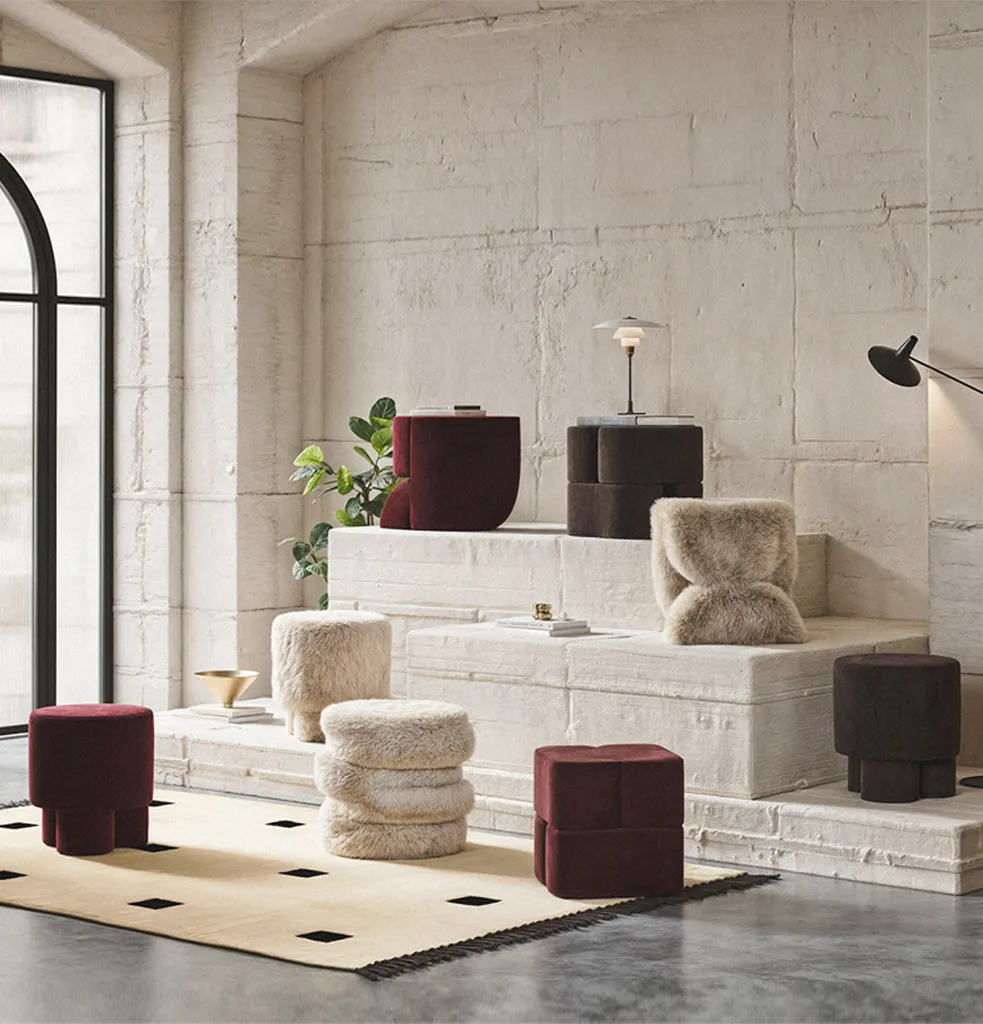
The lowest piece in the room is usually the one everyone reaches for first.
The footstool has spent centuries as furniture’s quiet helper: a step up to a throne, a rest for tired feet, a spare seat when friends arrive. Yet because it sits so low and moves so easily, it is also the piece where designers take the most liberties with form, color and material.
The nine footstools below come from independent studios working from Mexico and Ecuador to Germany, India and Indonesia. Consequently, they range from bouclé drums on wooden dowels to bolted stainless steel and hand-knotted Tibetan wool — proof that the humblest seat in the house can carry the most personality.
How to choose a footstool
Start with height. A footstool used with an armchair or sofa should sit level with the seat cushion or an inch or two below, typically 14–18 inches (35–45 cm), so your legs rest straight without lifting your knees. Moreover, if it will double as extra seating, aim closer to 18 inches (45 cm), the height of a standard stool or dining chair.
Then consider footprint and surface. A round pouf of 16–20 inches (40–50 cm) suits a single chair, while a wider ottoman can serve two people or hold a tray beside a coffee table. Finally, decide between soft and firm: a dense upholstered top is comfortable for feet and seating, whereas a wood or metal surface lets the piece work as a side table too. Browse the full range of poufs and ottomans to compare shapes side by side.
Materials and construction
Because a footstool takes feet, shoes, trays and the occasional child, its materials matter as much as its shape. Each of the main families below wears differently once it is in daily use.
Bouclé and textured upholstery
Bouclé, a looped yarn originally woven in France, gives a soft, nubby surface that hides wear and invites touch. Similarly, textured velvets and chenilles soften a sculptural form without flattening it. Both reward a vacuum with an upholstery brush more than aggressive scrubbing.
Handwoven and natural textiles
Handwoven cotton and hand-knotted, plant-dyed wool bring pattern and provenance to a small piece. Notably, they carry the hand of the maker, so small irregularities are part of the appeal rather than a flaw. In return, they ask for gentler cleaning and a little protection from direct sun.
Solid wood
An all-wood footstool, often in teak, oak or tzalam, is the most durable option and the easiest to use as a side table. As a result, it suits hallways, bathrooms and covered terraces where fabric would struggle. Oiled finishes can be refreshed at home, so the piece only deepens in tone over the years.
Metal bases and frames
Stainless steel, chrome and aluminum bring structure and light to a low piece. Polished steel reflects its surroundings, while brushed or bolted metal reads as industrial and honest. Therefore, a metal footstool works especially well against soft sofas, where the contrast keeps the seating group from feeling heavy.
Frame, fill and firmness
Under the fabric, most footstools use a wooden frame topped with high-density foam, which keeps its shape far longer than loose fiber fill. By contrast, beanbag-style poufs with soft filling are cozier but need regular plumping. Ask the studio about foam density if the piece will be used daily as a seat.
9 footstools to collect
Loto Pouf In Boucle by Peca Mobiliario
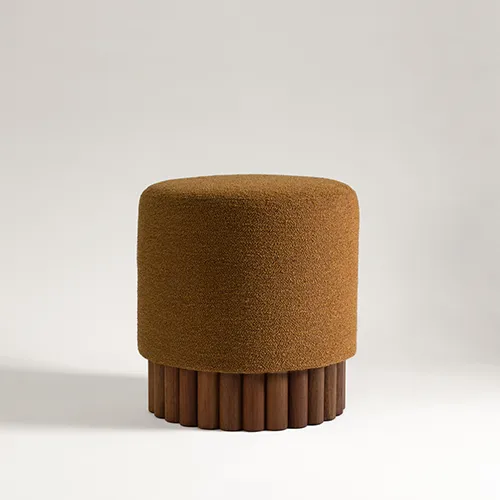
Made in Guadalajara by Peca Mobiliario, the Loto collection is built from slender wooden dowels arranged into planes and curves. Here, a round seat in thick bouclé covers almost the whole frame, leaving only a glimpse of the rods below, so the two textures play off each other. Available in rust, green or white bouclé on tzalam, beech or black-finished oak — and the most-viewed footstool on ADORNO this season, a highlight among our pieces from Mexico.
By Peca Mobiliario
€1.553 – €1.627 incl. tax
Tronco Pouf by Nitush and Aroosh
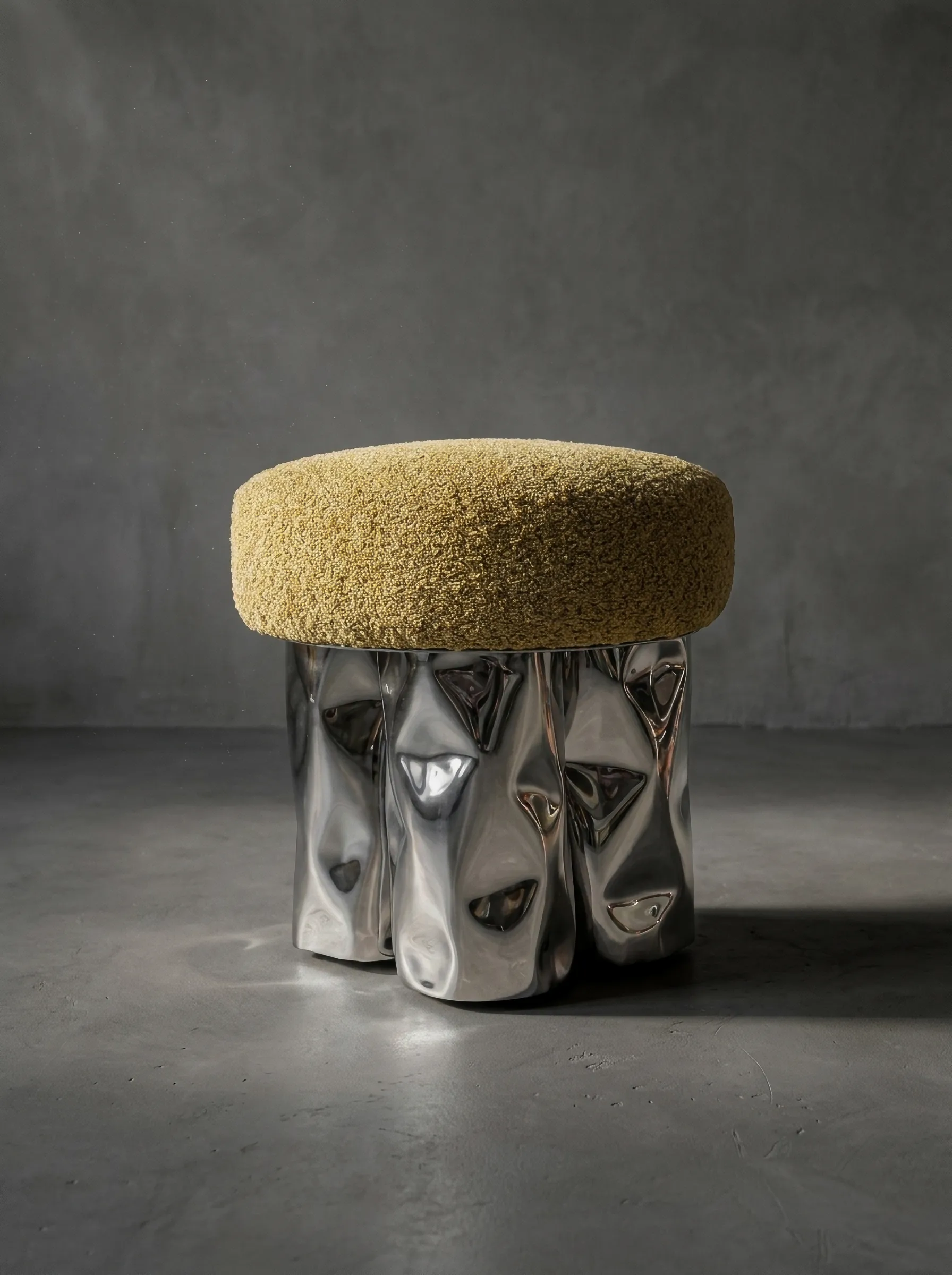
A dense upholstered seat rests on a stainless steel base shaped through pressure, its undulations left as a record of how the metal was formed. The polished surface catches and distorts the room around it, so the base seems to move while the cushion stays grounded. The fabric color can be customized — a compact piece of functional art at the most accessible price in this edit.
By Nitush and Aroosh
€950 incl. tax
Sybille – Eclectic Fringed Pouf by Lyk Carpet
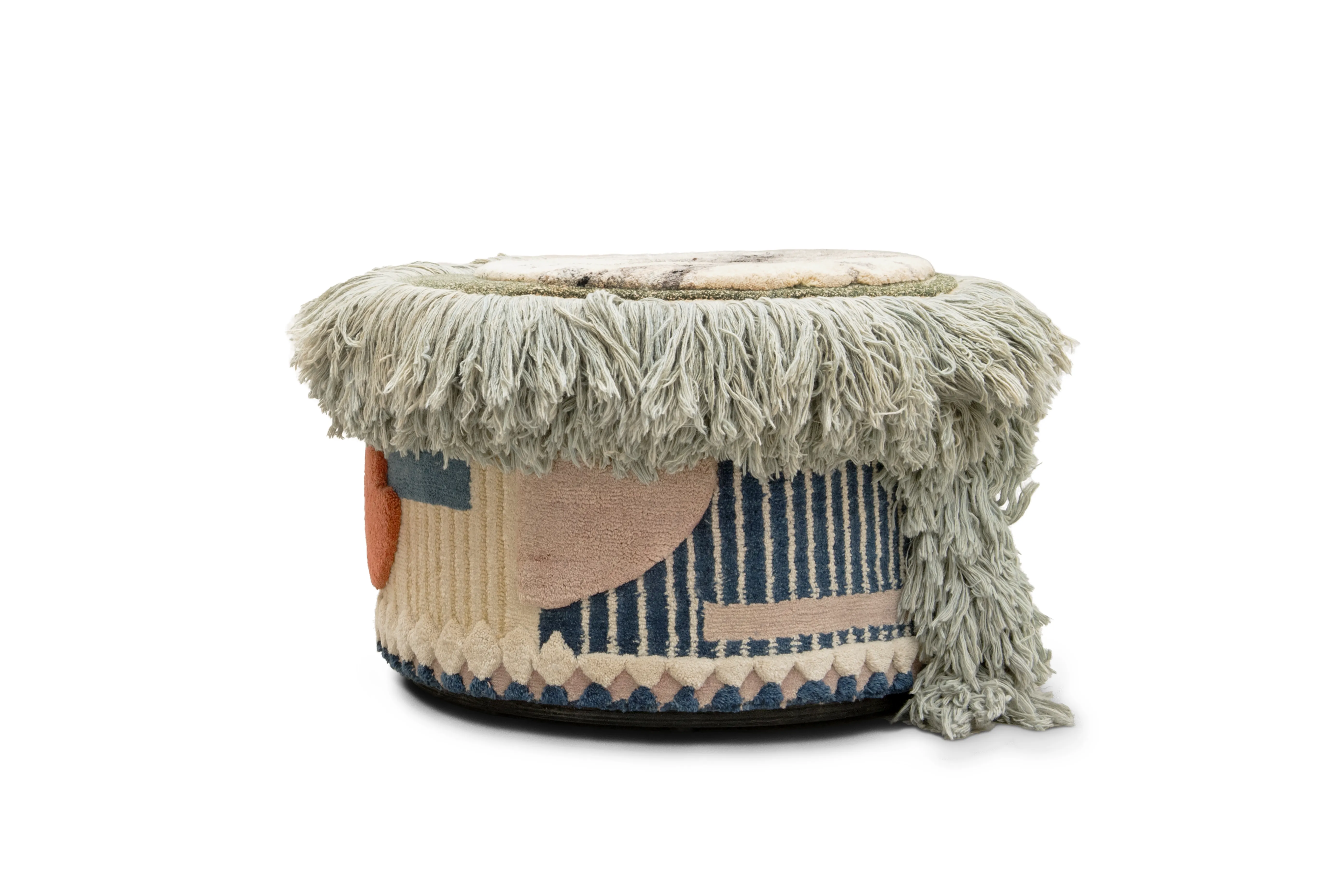
From Mareike Lienau’s Berlin label Lyk Carpet, Sybille is hand-knotted from hand-spun Tibetan highland wool, plant- and pot-dyed in shades of blue, green, beige and orange. Several knotting techniques meet on one wooden frame, so fringe, pile and flatweave give the pouf a real character. Upholstered in Berlin as part of a numbered edition of 25 — the boldest accent here, made for a maximalist room.
By Lyk Carpet
€2.866 incl. tax
Ups Pouf by hermhaus
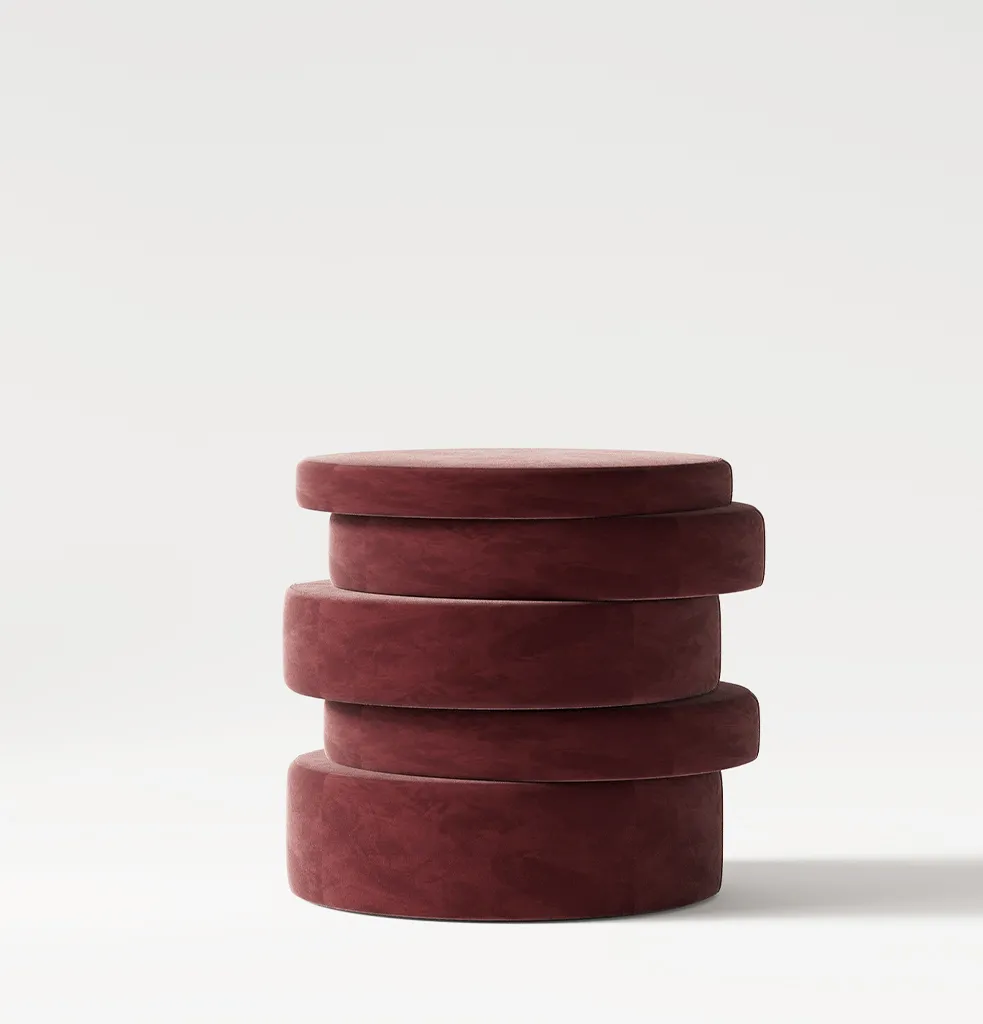
Five upholstered cylinders of different heights cluster into one pouf, 40 cm across and 45 cm high. The stepped top turns a simple footrest into a small sculpture, and the textured fabric keeps it soft underfoot. Handmade by local artisans on a wooden frame, in six finishes from burgundy to off-white fur — a cheerful fit for a boho-chic room.
By hermhaus
€1.220 incl. tax
Striped Teak Ottoman by STUDIO KALLANG
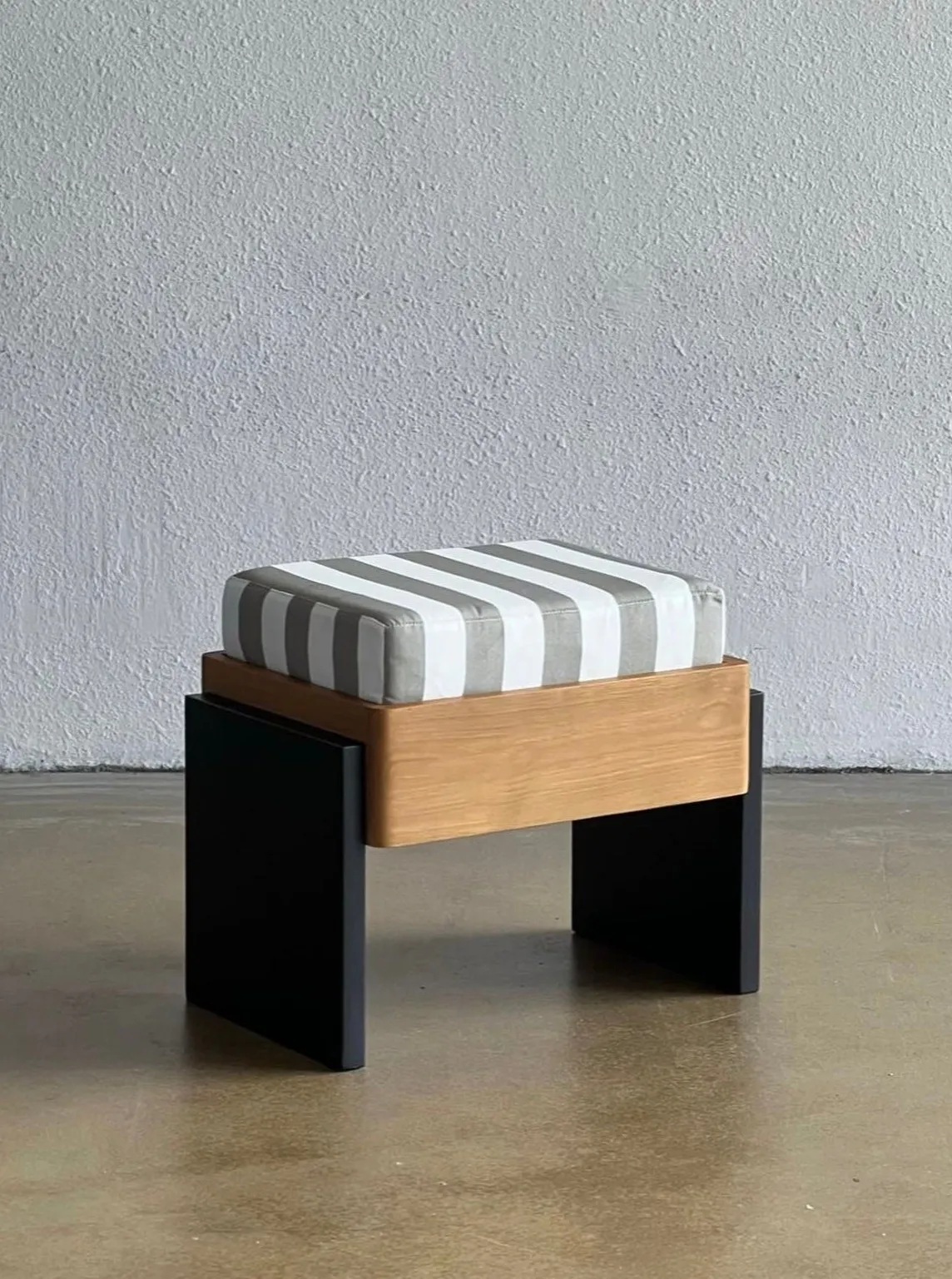
Made from solid teak by Indonesian artisans, with stripes formed by the wood itself rather than any upholstery. Traditional joinery meets a modernist outline, so the piece works as a footstool, a perch or a low side table. The hardest-wearing option here, and a natural match for a mid-century modern living room.
By STUDIO KALLANG
€1.025 incl. tax
Müra Ottoman by Shivangi Vasudeva
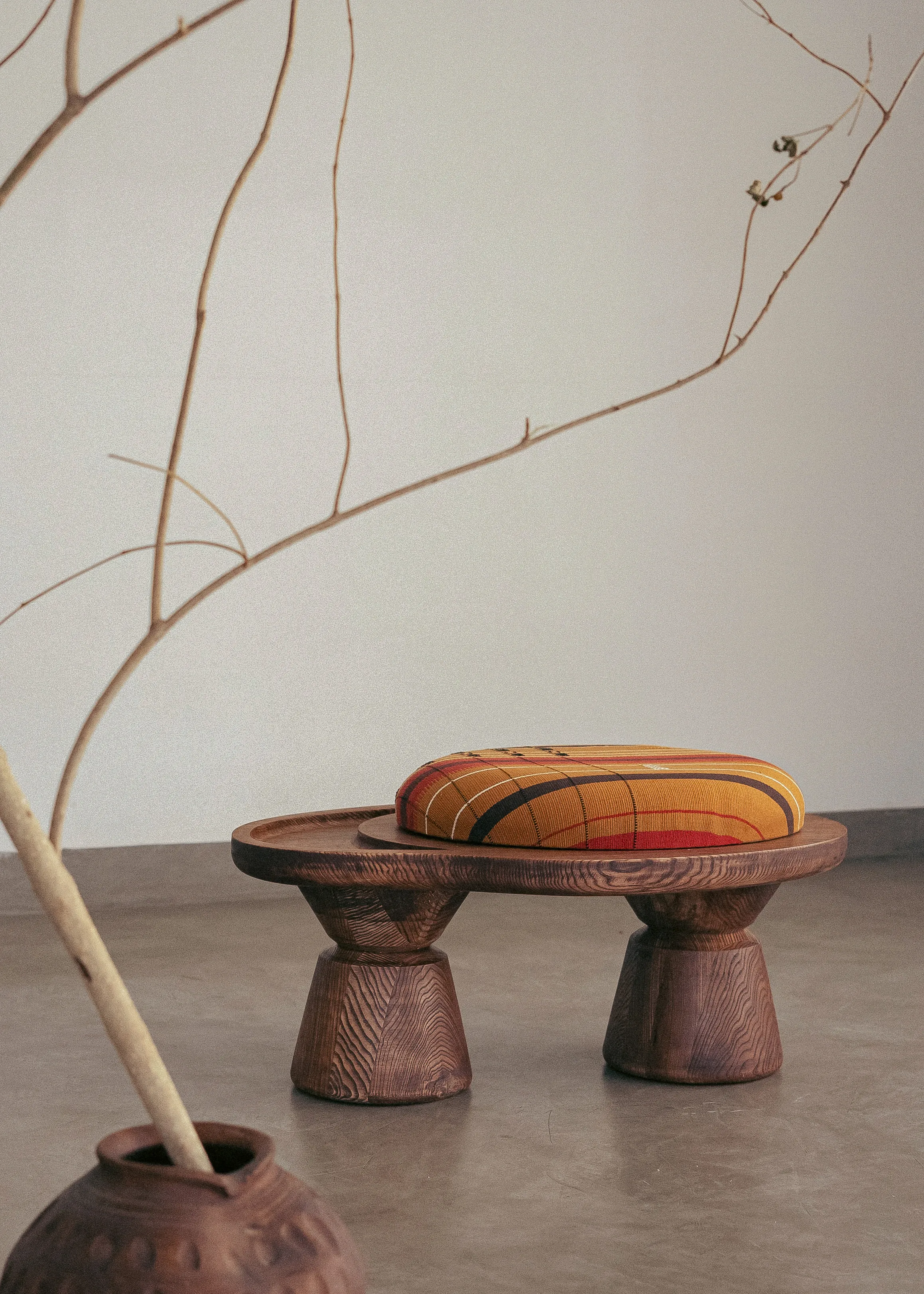
A curved wooden body topped with a mustard seat in cotton handwoven by women weavers in Nagaland. Shivangi Vasudeva reworks silhouettes from Naga jewelry, ornaments and weaponry, so the ottoman feels both ancient and new. Finished with a zero-VOC wood oil and the warmest-looking piece in this edit.
By Shivangi Vasudeva
€2.100 incl. tax
Wrp-001 Stainless Steel And Vegan Leather Ottoman / Stool by NAVE
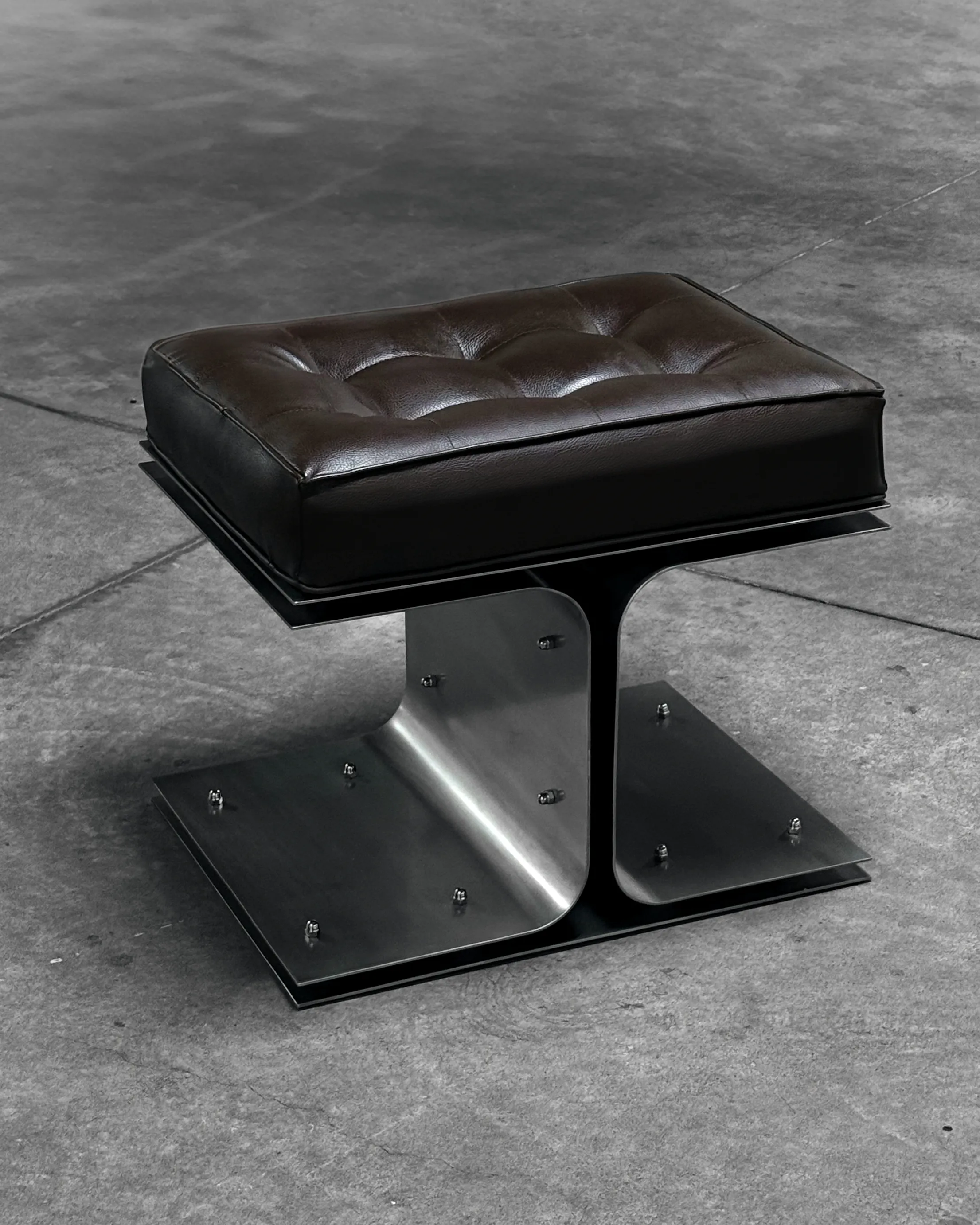
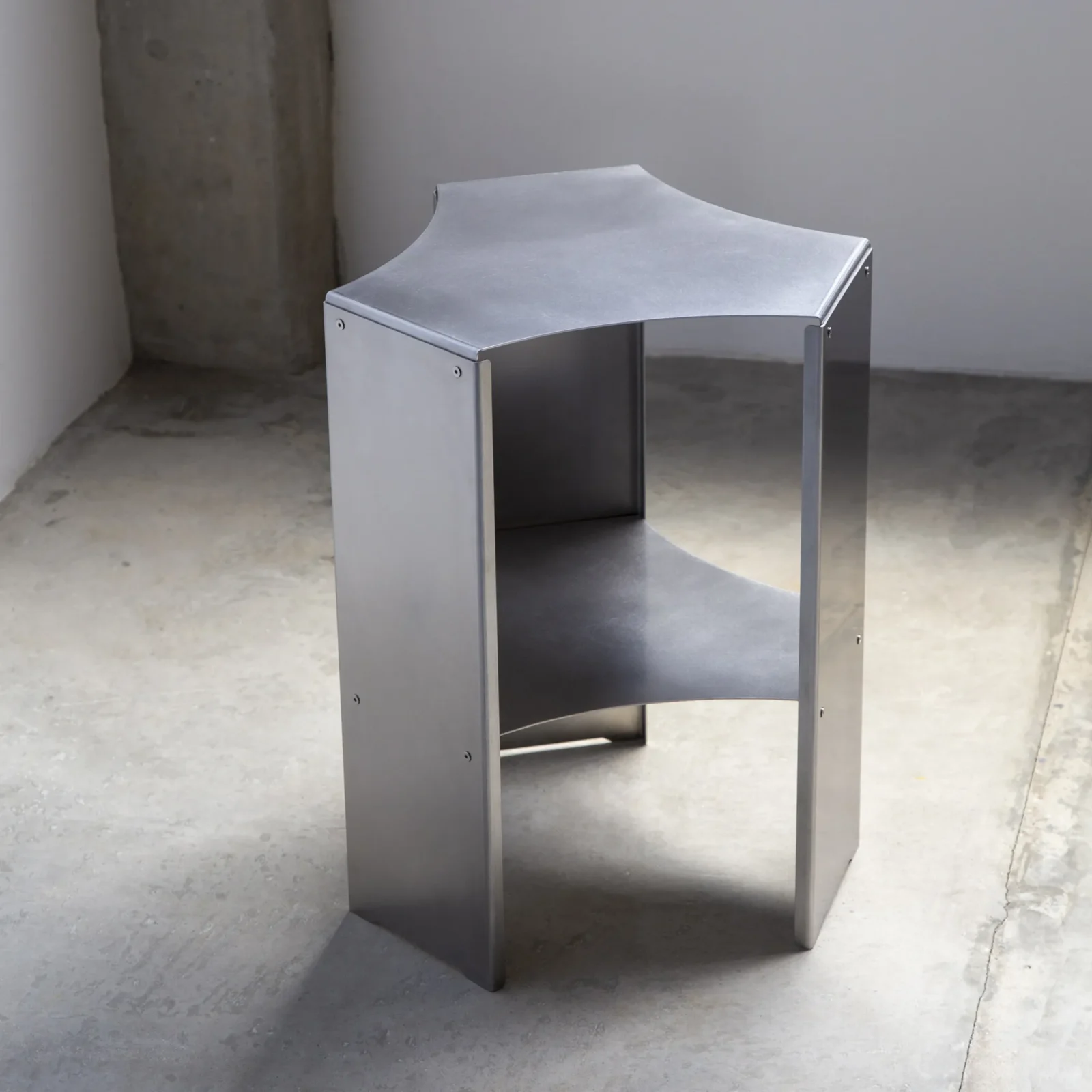
Designed and made by NAVE & STUHL in Ecuador from four sheets of 4 mm stainless steel, each cut, bent and joined with exposed bolts. The plates never touch, leaving a void that casts a continuous shadow through the base. On top, a tufted brown vegan leather cushion softens all that precision — a footstool with a frankly brutalist streak.
By NAVE
€1.990 incl. tax
Bauhaus Low Stool by Vintola Studio
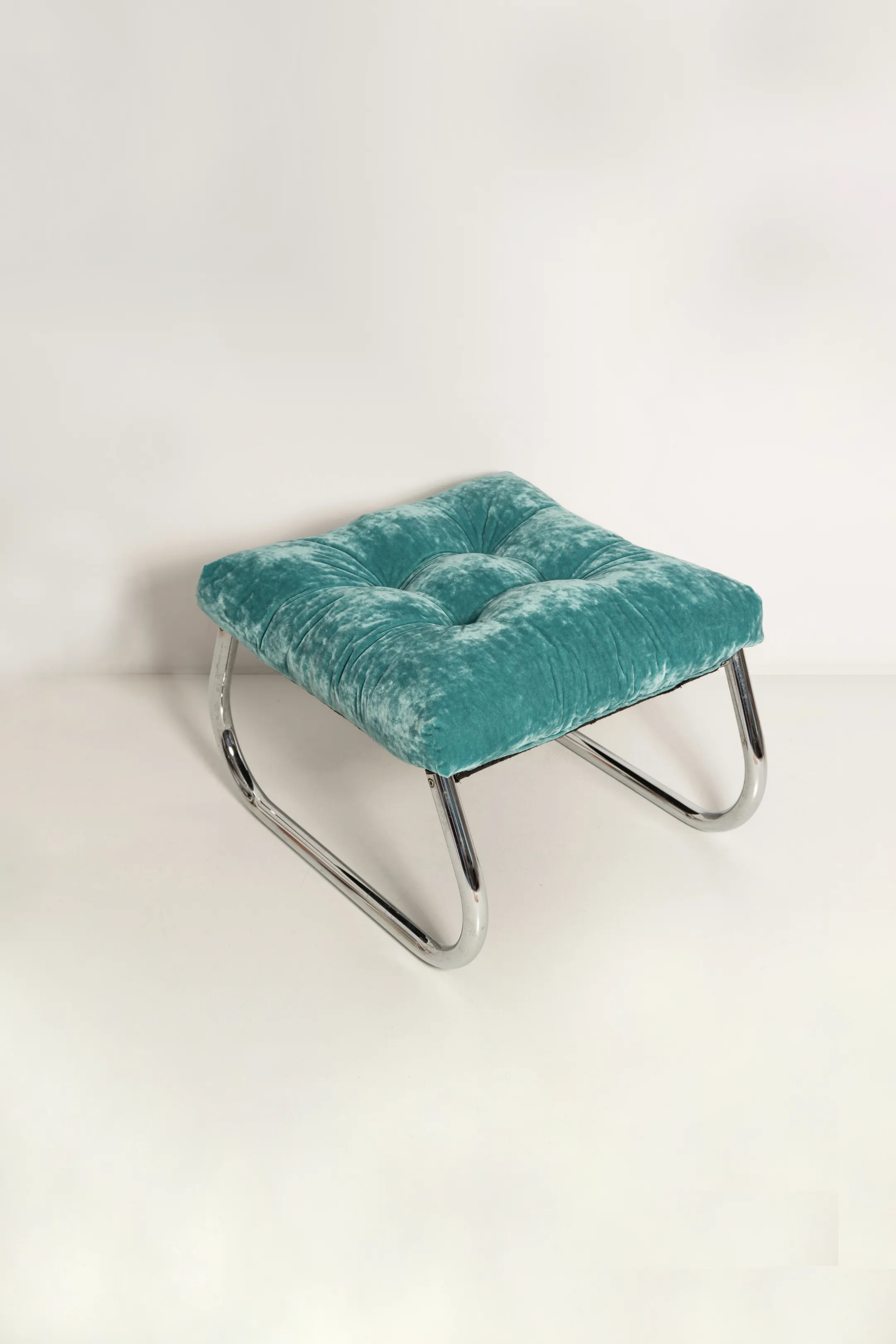
A vintage footstool in the spirit of the Bauhaus and Art Deco, with a chrome frame and clean geometric lines. Vintola Studio has fully restored it, cleaning the original chrome back to its shine and reupholstering the seat in a watered velvet that resists crushing. A one-off piece of early modernism, and one of the few here ready to ship.
By Vintola Studio
€1.200 incl. tax
Django • Bone White • Sculptural Textured Velvet Ottoman by Odditi
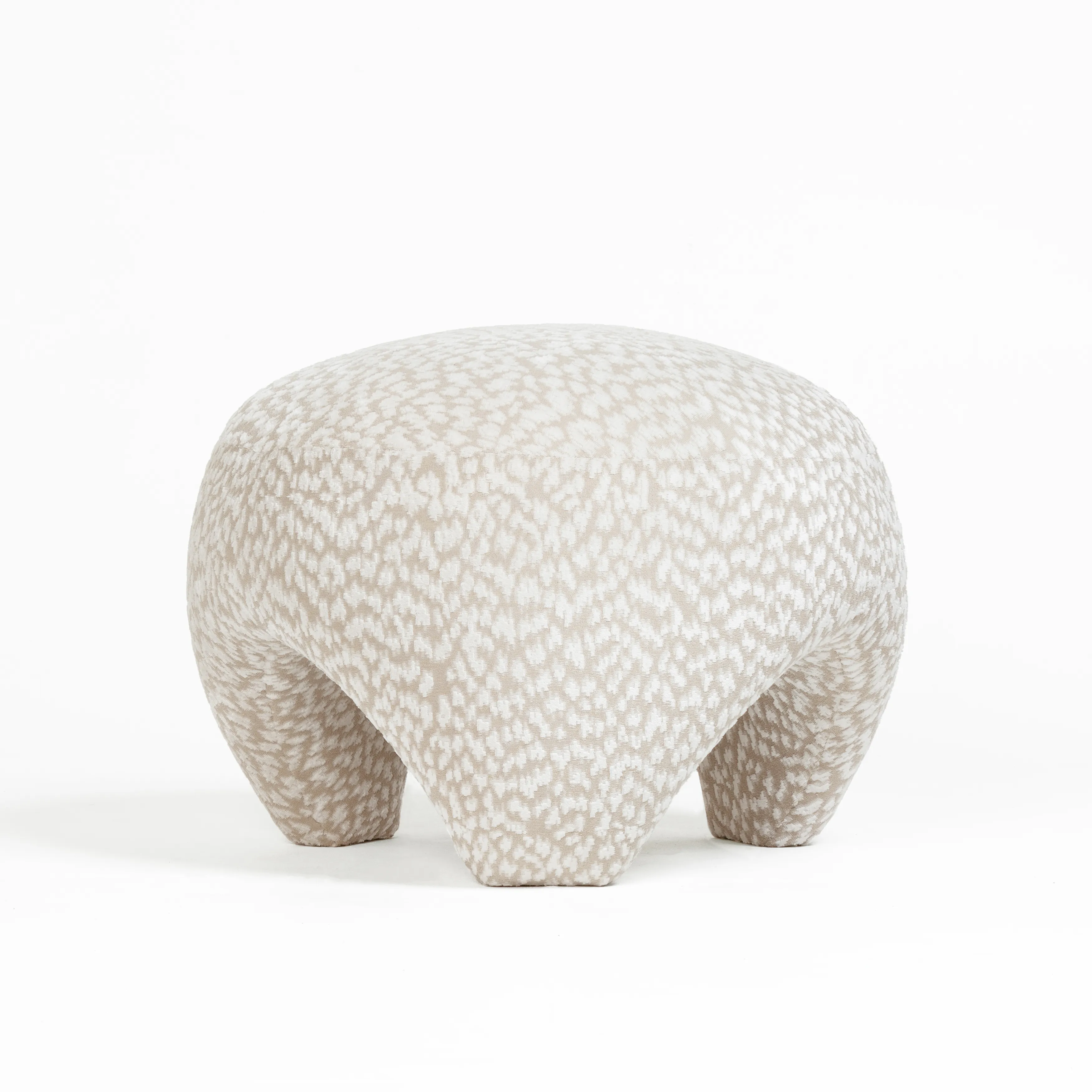
Odditi describes Django as a living object, and its soft, rounded silhouette does feel more like a character than a cushion. Upholstered in Bone White textured velvet, it is sleek and playful at once, and also comes in Sienna Earth. All fabrics are commercial grade and easy to maintain — a sculptural footstool that still handles everyday life in any room.
By Odditi
€990 incl. tax
Footstools room by room
Living room
In a living room, a footstool earns its place by doing several jobs: footrest during the film, extra seat when guests arrive, tray stand for drinks. Place it within easy reach of the sofa or armchair, and choose a color that picks up something already in the room — a cushion, a rug, a print. Moreover, two matching poufs can stand in for a coffee table in a smaller space.
With an armchair or reading corner
Paired with a lounge chair, the footstool turns a seat into a reading spot. Keep its top level with or just below the chair cushion, and set it about a leg’s length away. Similarly, add a side table and a table lamp to complete the corner.
Bedroom and dressing area
At the foot of the bed or beside a wardrobe, a footstool gives you somewhere to sit while putting on shoes. A firm upholstered top works best here, since it will take more weight than feet. On the other hand, a solid wood stool can double as a nightstand in a narrow room.
Entryway and hallway
Near the front door, a compact footstool is the spot for tying laces and dropping a bag. Choose a durable fabric or bare wood, because outdoor shoes are hard on upholstery. Alternatively, tuck it under an entryway table so it stays out of the way until needed.
Troubleshooting footstools
The footstool is too high or too low
If your knees lift when your feet are up, the footstool is too high; if your heels hang, it is too low. Many studios make pieces to order, so ask for a custom height before buying. For an existing piece, felt glides add a little lift, and a folded throw on top adds soft height.
Cleaning upholstery and bouclé
Vacuum weekly with an upholstery brush to lift dust from the weave. For spills, blot rather than rub, then dab with a damp cloth and a drop of mild soap. Consequently, bouclé loops and velvet pile stay intact; for anything deeper, call a professional upholstery cleaner.
Flattened cushions and lost shape
Soft-filled poufs flatten with use, so plump and rotate them every week or two. Foam-topped pieces hold their shape longer, but heavy daily sitting will still compress the edge. Ask the studio whether the foam can be replaced, which can give a well-made footstool decades of life.
Protecting floors
Metal and wooden bases can scratch hardwood and stone floors when dragged. Fit clear felt pads underneath, and lift rather than slide the piece when moving it. Furthermore, check the pads every few months, since grit trapped in them does the damage.
Caring for wood and metal
Wipe oiled wood with a dry cloth and re-oil once or twice a year, more often near a sunny window. Stainless steel and chrome need only a soft cloth and warm water; avoid abrasive pads that leave scratches. As a result, both materials age gracefully rather than wear out.
Frequently asked questions
What is the difference between a footstool, an ottoman and a pouf?
A footstool is any low seat for resting your feet. An ottoman is usually upholstered, wider and often padded on a frame, while a pouf is a soft, frameless or lightly framed cushion — though designers use the three terms loosely.
How tall should a footstool be?
Most footstools stand 14–18 inches (35–45 cm) high. Aim for level with your chair or sofa seat, or an inch or two below, so your legs rest straight.
Can a footstool be used as extra seating?
Yes, as long as it has a firm top and a sturdy frame. Pieces around 18 inches (45 cm) high sit most comfortably, and wood or foam-topped designs handle daily sitting best.
Which footstool material is easiest to maintain?
Solid wood and stainless steel are the most hard-wearing. Among fabrics, commercial-grade velvets and tightly woven bouclé resist wear well and clean with a damp cloth.
How big should a footstool be next to a sofa?
For one person, 16–20 inches (40–50 cm) across is enough. For a shared sofa, choose a wider ottoman or pair two poufs, keeping about 16 inches (40 cm) of walking space around them.
Can a designer footstool be customized?
Often, yes — several studios here offer other fabrics, colors, woods or sizes, and many make each piece to order. For something specific, ask our curation service to source it for you.
Why a good footstool is worth it
A footstool is the easiest piece of furniture to move, restyle and share, which is exactly why it rewards a little ambition. Chosen well, it becomes the object guests notice first and the seat everyone ends up fighting over. Indeed, few pieces deliver as much comfort and character in so little space.
ADORNO works with independent studios that upholster, weave, carve and bend each piece themselves. Browse the full edit of poufs and ottomans below, or widen the search to stools in every material.