A tea bowl is turned, held and studied before anyone drinks from it. Few objects ask for that much attention.
Updated on: October 30, 2026
The matcha bowl, known in Japanese as chawan, is the central vessel of the Japanese tea ceremony. It looks simple: a wide, deep bowl, often handmade, sometimes irregular. Yet the history of the chawan runs through China, Korea and Japan, and each bowl carries centuries of ideas about beauty, imperfection and the value of everyday things.
This guide traces that history, explains the main types of chawan, shows how to choose and care for a matcha bowl, and presents nine contemporary bowls by independent designers, many first shown at ADORNO’s CHAWAN exhibition in New York in 2025.
What is a chawan?
A chawan is a bowl for preparing and drinking matcha, powdered green tea. It is wider and deeper than a teacup, usually 10 to 15 cm (4 to 6 in) across, so there is room to whisk the tea into a froth with a bamboo whisk, or chasen. The bowl is held in both hands, and its weight, texture and temperature are part of the experience. In a formal ceremony the guest turns the bowl before drinking, so as not to drink from its front, the side the host has chosen to present.
Origins: Chinese bowls and early tea culture
The first tea bowls used in Japan were not Japanese at all. Chinese imports, called karamono, arrived with tea and Zen Buddhism in the late 12th century. In China, tea had been drunk in Buddhist monasteries as an aid to meditation, and the Song dynasty (960–1279) developed it into a refined, formal practice.
The most admired imports were tenmoku bowls, named after the Tianmu mountains, where Japanese monks encountered them. Their dark, conical forms carried metallic glazes with names that became legendary: nogime, streaked like hare’s fur; yuteki, with oil-spot dots; and the rare yōhen, with silvery spots ringed by iridescence.
The Korean turn: the beauty of ordinary bowls
In the late 15th and 16th centuries, Korean bowls, called kōraimono, transformed Japanese taste. The most treasured were ido bowls, originally everyday rice bowls made for ordinary households in Korea. Japanese tea masters prized them precisely for their unassuming irregularities, and their rustic simplicity helped shape wabi-cha, the austere style of tea. Centuries later, the philosopher Yanagi Sōetsu would call this the beauty of everyday things.
This history is not only one of admiration. During the Japanese invasions of Korea in the 1590s, Korean potters were forcibly taken to Japan, where they founded kilns that still shape Japanese ceramics today. The chawan’s story is also a reminder that cultural exchange often happens on unequal terms.
Japan finds its voice: raku
In the late 16th century, the tea master Sen no Rikyū worked with the tile maker Chōjirō to create raku ware: bowls formed by hand rather than on the wheel, fired at low temperature and pulled from the kiln while glowing hot. Light, porous and slightly irregular, raku bowls embodied wabi aesthetics, and with them Japan stopped importing its tea bowls and began defining them. Under Rikyū’s influence, tea became less a display of wealth and more a practice of attention.
Types of chawan
- Tenmoku: conical bowls with dark, often metallic glazes, descended from Chinese originals.
- Ido: Korean-style bowls with a tall foot and loose, warm glazes.
- Raku: hand-formed, low-fired bowls, usually black or red, light and warm to hold.
- Hagi: soft, pale bowls whose glaze changes color with years of use.
- Shino and Oribe: thick white or boldly green-glazed bowls, often asymmetrical, from the Mino region.
- Contemporary: porcelain, glass, stoneware and even metal-waste glazes, keeping the form and ritual while changing the material.
Designers continue to return to the form. Wallpaper* named Theaster Gates’ Chawan Cabinet for Prada Home, with bowls by Japanese potters, one of the highlights of Milan Design Week 2026, and designer Shinichiro Ogata told Wallpaper* how his tearooms rethink the tradition of sado.
How to choose a matcha bowl
- Size: 10 to 15 cm (4 to 6 in) across and 7 to 9 cm (2.8 to 3.5 in) tall gives enough room to whisk without splashing.
- Shape: a wide, flat-bottomed bowl makes whisking easier; a taller, narrower bowl keeps tea warm longer in winter.
- Material: thick stoneware and raku hold heat; porcelain is lighter and easier to clean; glass shows the color of the tea.
- Interior: a smooth inside surface helps the whisk move freely and the foam form.
- Feel: hold it in both hands. A good chawan feels balanced, and its foot sits comfortably in the palm.
9 matcha bowls by contemporary designers
Each bowl comes from a different studio and is available on ADORNO. Several were made for ADORNO’s CHAWAN exhibition and matcha ritual at Silence Please in New York in May 2025.
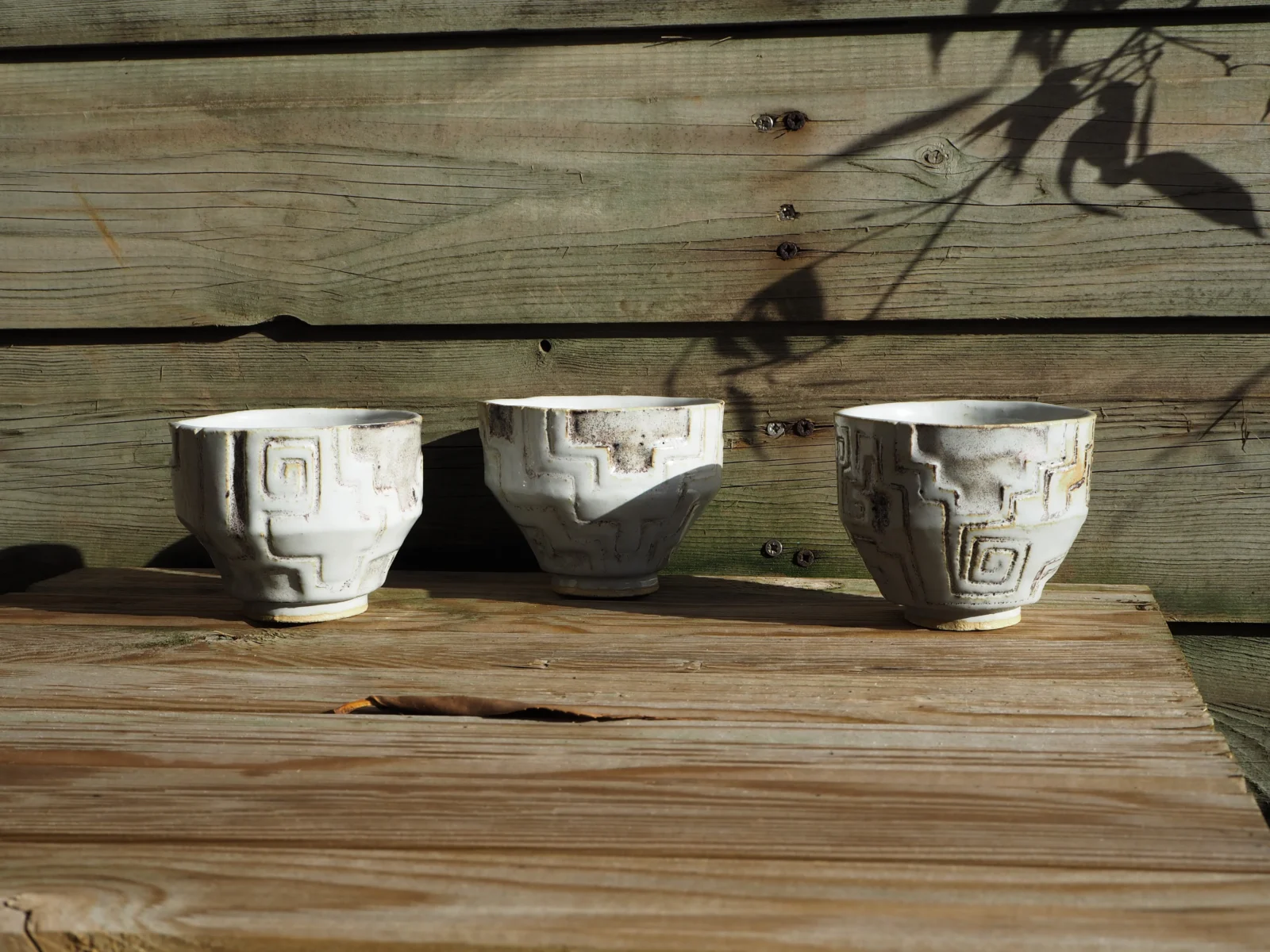
Samiria Raku Chawan – Ceremonial KENÉ pattern Matcha Bowl by Vale Ro

Spain-based ceramicist Vale Ro reimagines the raku chawan and carves its surface with her interpretation of kené, the sacred geometric patterns of the Shipibo-Konibo people of the Peruvian Amazon. The patterns are paths of memory and healing, so the bowl carries a second tradition alongside the Japanese one. At 15 cm (5.9 in) across and 12 cm (4.7 in) tall, it is a classic chawan size.
By Vale Ro
€220 incl. tax
Chawan – Mass-tinted Hand-blown Glass Matcha Bowl by OOG Objects

Polish studio OOG Objects blows this chawan from mass-tinted glass, colored all the way through, so the green deepens where the walls are thicker. The celadon tone recalls the glazes of Chinese and Korean bowls that first reached Japan, translated into glass. A low foot lifts it like a traditional tea bowl.
By OOG Objects
€200 incl. tax
Melo Chawan – Sculptural Ceramic Matcha Bowl by Catalin Filip

Romanian-British designer Catalin Filip of Melo Clay shapes this chawan from black volcanic stoneware into soft, stacked folds, as if the clay had begun to melt. Inside, a glossy glaze catches the green of the tea. It is watertight and food-safe, a sculptural bowl made for daily use.
By Catalin Filip
€250 incl. tax
Verde 10 – stoneware Matcha Bowl by Federica Paglia

Italian designer Federica Paglia tells the story of matcha in one object: a base covered in leaf-like relief, a matte powdery band for the ground tea, and a glossy glaze inside for the infusion. The bowl lifts off a brass pivot so it can be used for whisking and returned to its stand afterward.
By Federica Paglia
€460 incl. tax
Kawa Matchawan – Limited Edition Leather-cast Porcelain Tea Bowl by Luft Tanaka Studio
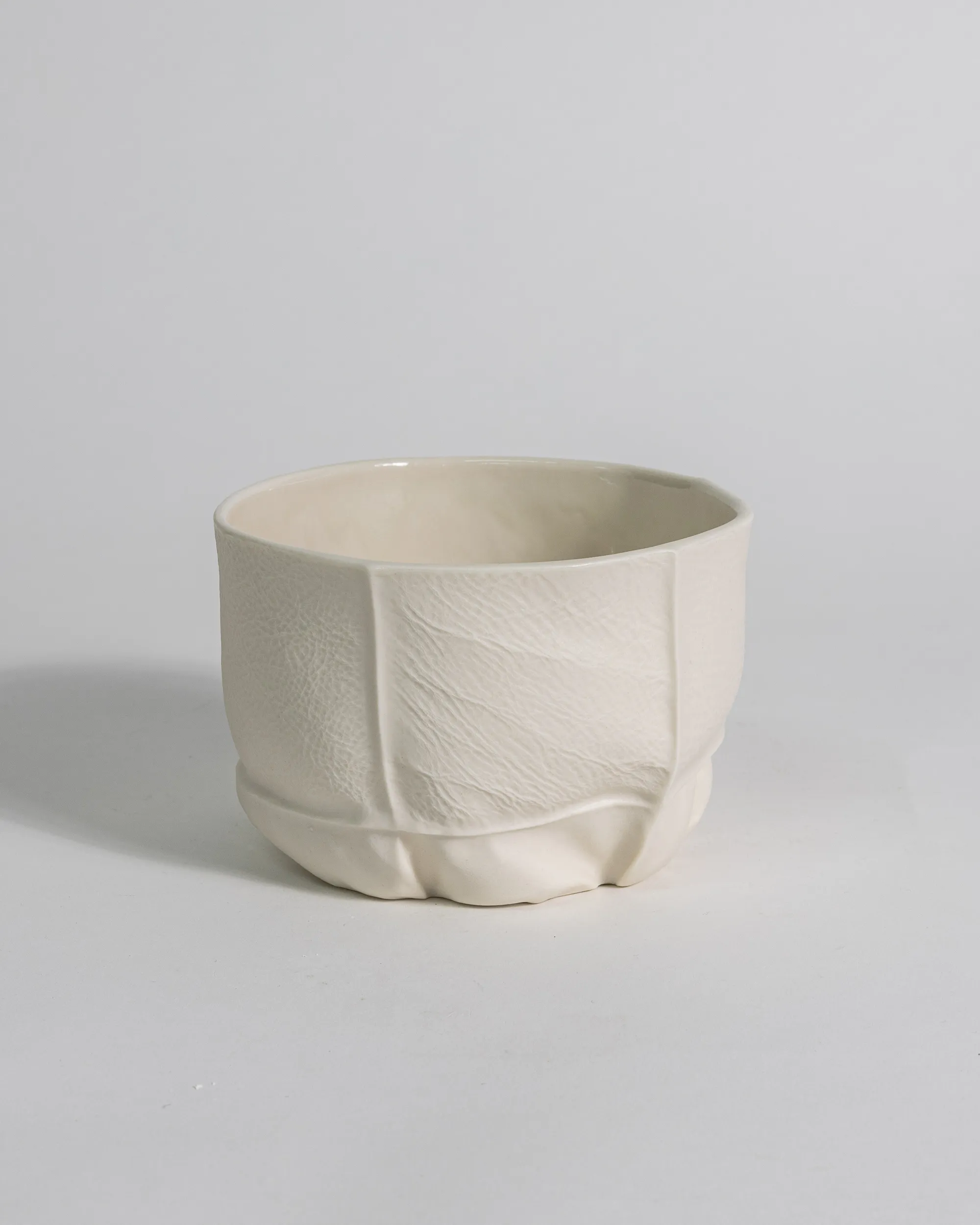
Luft Tanaka slip-casts porcelain in a leather mold, so the seams and creases of the leather stay in the surface of the bowl. The soft, irregular shape plays against the coolness of porcelain. It was made for ADORNO’s SILENT MATTERS tea installation in New York and is a limited edition.
By Luft Tanaka Studio
€300 incl. tax
Chawan – Limited Edition Mouth-blown Glass Vessel by Szkło Studio

Polish glassblowers at Szkło Studio, led by Aleksandra Zawistowska, shape this clear chawan with stones and ceramics while the glass is still hot, so each bowl takes a rough, rock-like form. It is a limited edition of ten, and no two are the same.
By Szkło Studio
€290 incl. tax
Fleuve Chawan – Porcelain Matcha Bowl by SCHOEMIG PORZELLAN
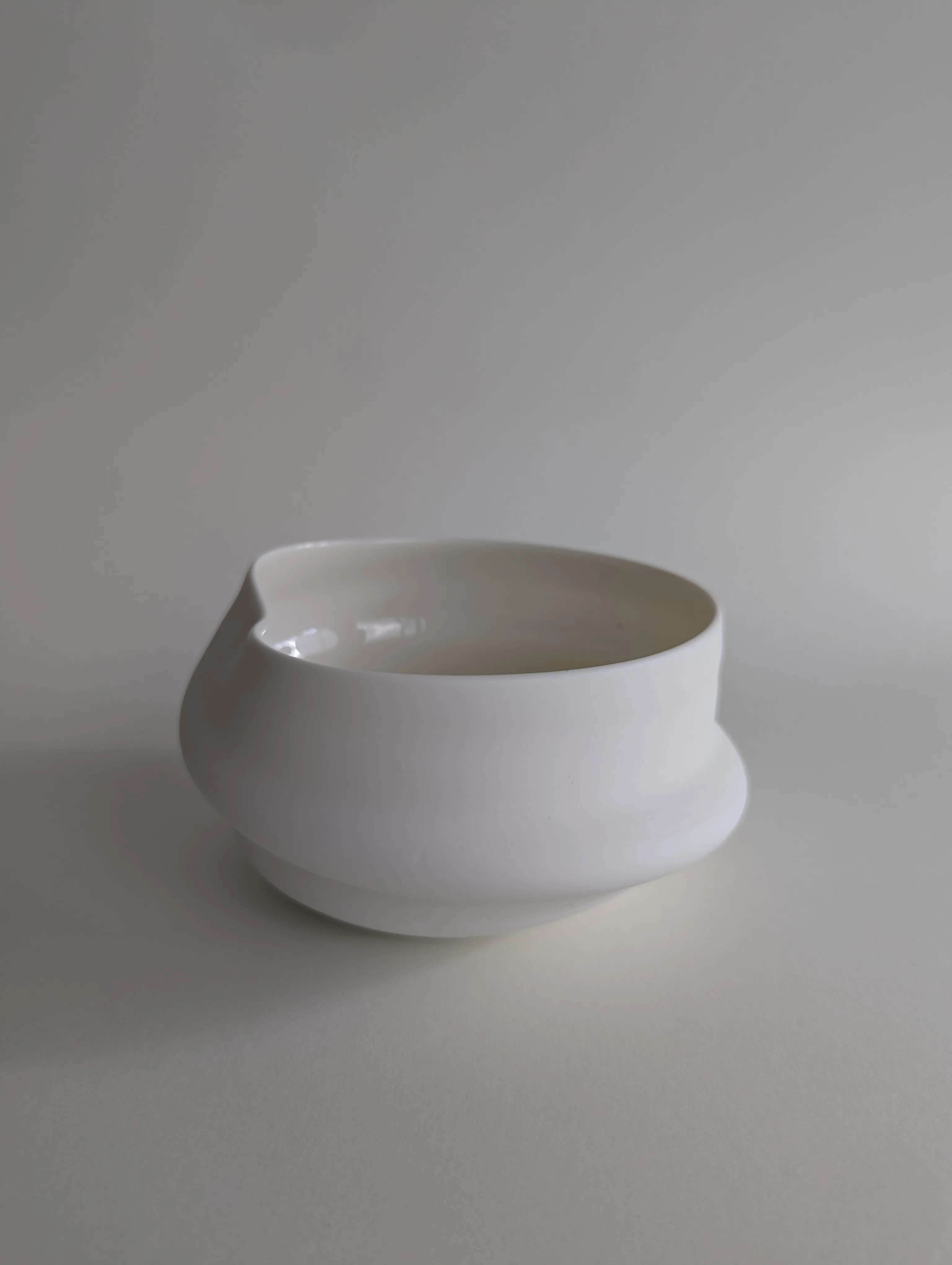
German studio SCHOEMIG PORZELLAN throws each Fleuve bowl by hand and lets the porcelain wander as it turns, leaving a softly rippled rim. The idea, in the studio’s words, is to give space for the unpredictable, the same lesson the wabi tea masters took from Korean bowls. At €115 it is the most affordable chawan here.
By SCHOEMIG PORZELLAN
€115 incl. tax
Rsa (rhythmic Slow Activity) matcha Bowl by Studio S II

Brooklyn’s Studio S II turned the sound of Lake Tazawa in Akita, Japan, into a three-dimensional form, manipulating its sound waves into the outline of this bowl. Rhythmic Slow Activity refers to theta waves, the brain state of deep calm. It was made for the CHAWAN exhibition and matcha ritual in New York in 2025.
By Studio S II
€250 incl. tax
Ignorance Is Bliss – Metal Waste Matcha Bowl by Agne Kucerenkaite

Netherlands-based designer Agne Kucerenkaite glazes her porcelain with pigments recovered from metal waste, from water supply and soil cleanup industries. The more contaminated the raw material, the more vibrant the color. It is a contemporary take on the tea masters’ idea that beauty can come from humble, even discarded sources.
By Agne Kucerenkaite
€150 incl. tax
How to use and care for a chawan
Warm the bowl with hot water before making tea, then pour the water out and dry it. Sift about 2 g (1 tsp) of matcha into the bowl, add 70 to 80 ml (2.4 to 2.7 fl oz) of water at around 80 °C (176 °F), and whisk in a quick W or M motion until a fine foam forms. Afterward, rinse the bowl with warm water only, as soap can linger in porous clay, and let it dry completely before storing. Raku and other low-fired bowls are porous and may slowly change color with use, which tea drinkers value as part of the bowl’s life. Avoid the dishwasher and sudden changes in temperature.
Browse more handmade bowls and cups, explore ceramics on ADORNO, or read our guide to teaware.
FAQ
What is a chawan?
A chawan is a Japanese tea bowl used to prepare and drink matcha. It is wide and deep enough to whisk powdered tea into a froth, and it is the central object of the Japanese tea ceremony.
What is the difference between a matcha bowl and a chawan?
There is none: chawan is the Japanese word for tea bowl, and in English it usually means a bowl for matcha.
What size should a matcha bowl be?
Most chawan are 10 to 15 cm (4 to 6 in) across and 7 to 9 cm (2.8 to 3.5 in) tall, large enough to whisk without spilling.
Can you use any bowl for matcha?
You can whisk matcha in any wide bowl, but a chawan’s flat base, wide shape and thick walls make whisking easier and keep the tea warm.
Why do you turn the bowl in the tea ceremony?
The front of the bowl, the side the host chooses to present, faces the guest. Turning it before drinking avoids drinking from the front, a gesture of humility and respect for the bowl and its maker.
How do you clean a chawan?
Rinse it with warm water, without soap, and let it dry completely. Do not put a handmade chawan in the dishwasher.
Browse ADORNO’s CHAWAN collection.