-
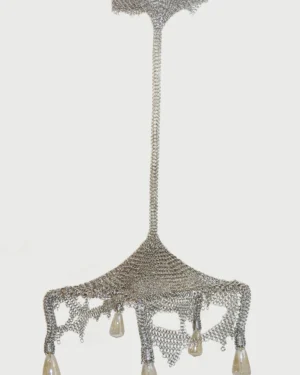
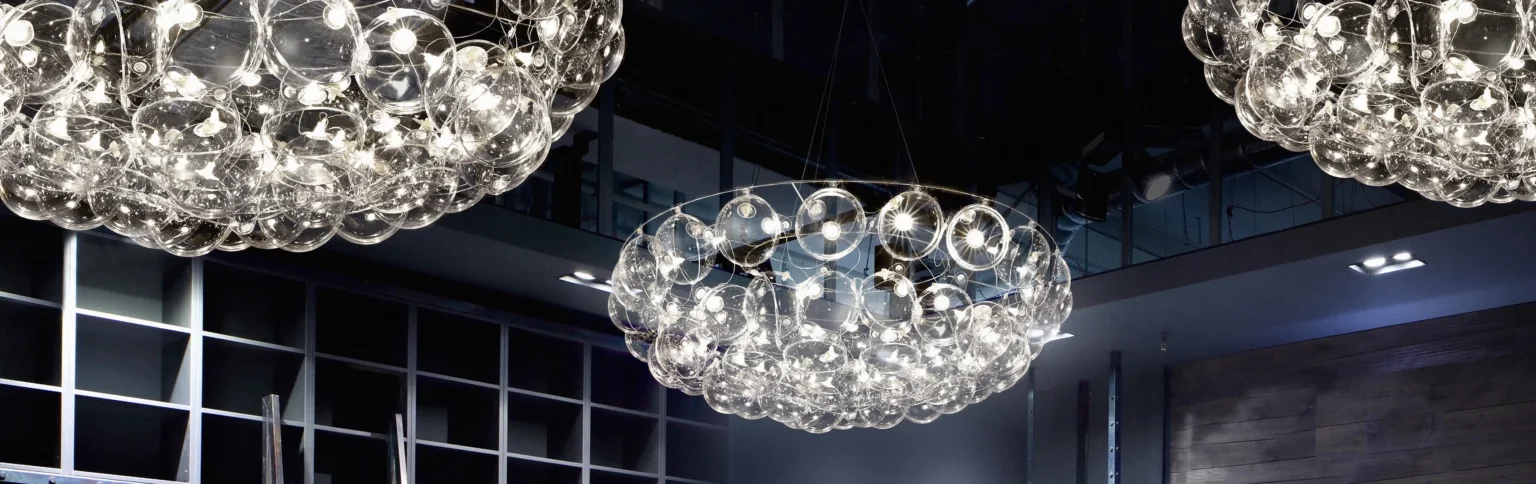
Chainmail Cobweb Chandelier In Glass And Steel
By Panorammma Atelier
€4.250 -

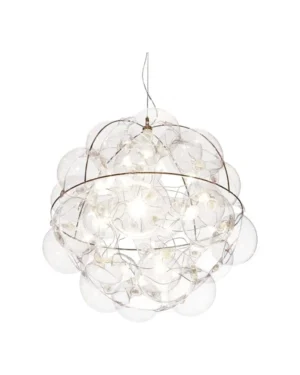
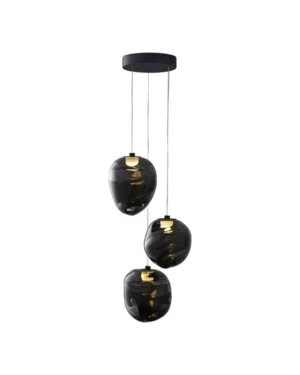
GP033 Chandelier in Brass and Blown Glass
By Naama Hofman
€4.200 -

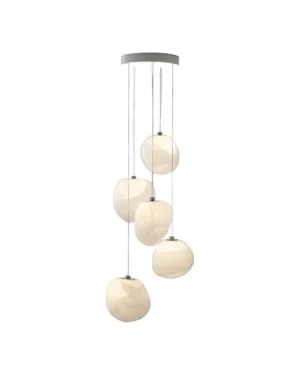
GP032 Chandelier in Brass and Blown Glass
By Naama Hofman
€6.500 -
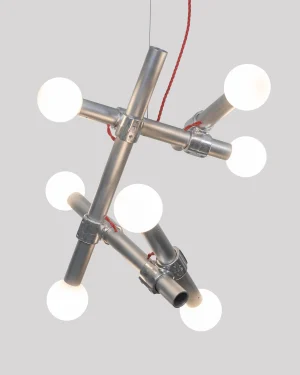
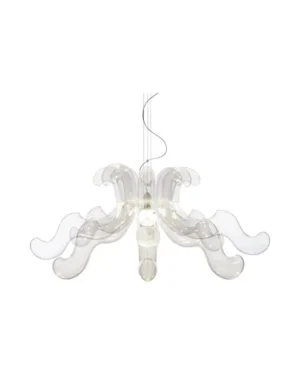
Pipe Dream Chandelier in Aluminum and Glass
By Luft Tanaka Studio
€3.655 -
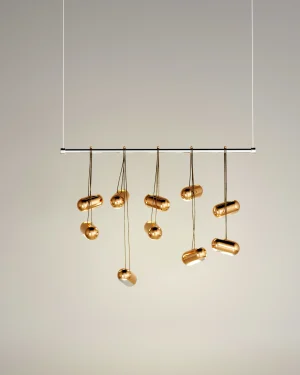
Tere Chandelier in Stainless Steel, Bronze and Acrylic Resin
By Design VA
€12.432 -
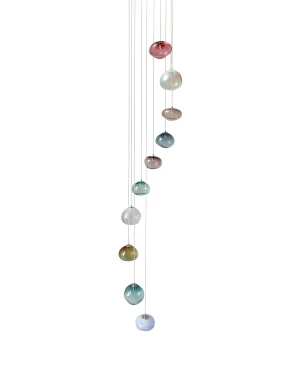
Starglow Spiral Chandelier In Blown Glass
By ELOA - Unique Lights
€12.980 - €13.270 -
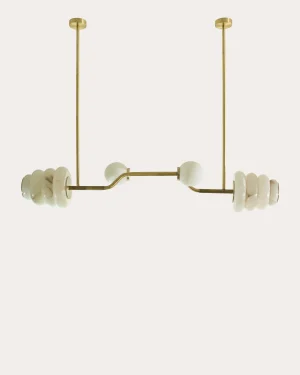
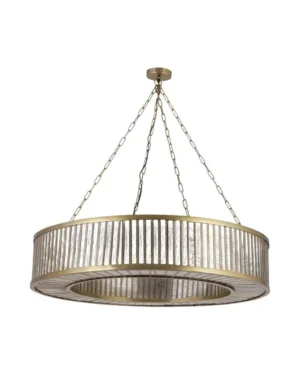
Barbell Chandelier in Brass
By Nama Home
€5.710 -
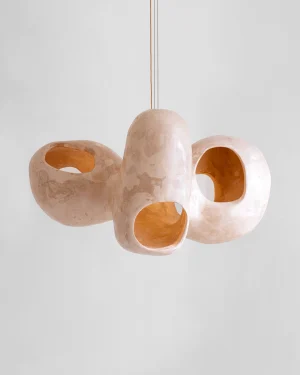
Bosei Chandelier in Gypsum
By Studio AOAO
€15.000 - €29.000 -

Stardust Chandelier in Iron
By Nama Home
€1.750 - €2.750 -
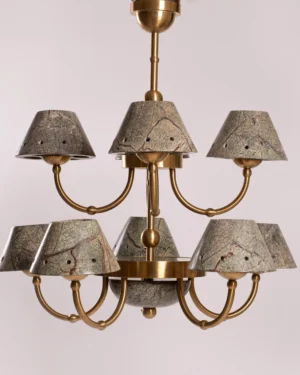
The Marble Chandelier In Rainforest Marble And Brass
By Harshita Jhamtani Designs
€9.030 -
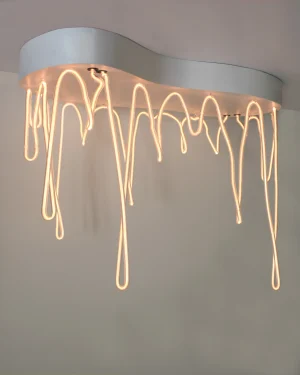
Vertical Fractal Helium Chandelier In Glass And Metal
By Dace Sūna
Price Upon Request
Contemporary chandeliers on ADORNO gather brass, blown glass and steel into fixtures that read as sculpture as much as light source. Independent studios working in metalwork and glassblowing shape each piece by hand or in small production runs, favoring open structures and reflective surfaces over the symmetry of a traditional candle-branch frame. The result is a fixture built for the proportions and finishes of a room furnished today, not a period interior.
What sets a contemporary chandelier apart
Where a traditional chandelier relies on cut crystal and a fixed branching form, a contemporary piece is often built from a single gesture: a bent brass arm, a cluster of blown glass globes, a ring of polished aluminum. The framework is usually visible rather than dressed in prisms, and the light source sits close to the material so brass warms, glass refracts and steel throws a harder, cooler glow.
Finish does much of the work. Polished brass or bronze reads as warm and slightly formal, while raw steel and aluminum sit closer to an industrial register. Amber, olive or pink glass brings color into the fixture itself, so the chandelier can act as the main accent in a room rather than a background element.
Materials, techniques and editions to expect
Across the full range of chandeliers on ADORNO, contemporary pieces are usually built from one or more of the following, shaped by hand through metalwork and glassblowing, with the occasional sculpted or cast piece:
- Brass and bronze frames, polished, brushed or left to patinate
- Blown glass elements in clear, amber, olive or pink, each slightly different from the next
- Stainless steel and aluminum structures, often paired with glass for contrast
- A sculpted piece in pigmented alabaster gypsum, for a softer, matte presence
Some studios produce these designs as open editions, repeatable over time; others work in limited editions or one-off pieces, where no two chandeliers carry quite the same bend of glass. For fixtures built specifically around stainless steel or glass, it is worth looking separately at stainless steel chandeliers and glass chandeliers, where the material sets the whole character of the piece.
Choosing scale, height and finish
A chandelier needs to be read from below and from across the room, so scale matters more than it does with a table lamp. As a rough guide, the fixture should sit roughly a third to a half the width of the table or seating area beneath it, with enough clearance above head height that no one has to duck or crane around it.
Finish should answer the metals already in the room. Brass and bronze sit well against walnut or oak and darker upholstery; chrome, aluminum and stainless steel suit cooler palettes of stone, glass and pale wood. Where a room already carries strong color, a clear or amber glass chandelier adds light without adding another hue; where the walls are quiet, an olive or pink glass fixture can carry the color on its own.
Where contemporary chandeliers work
Dining rooms remain the most direct setting, hung low and centered over the table so the glow falls across place settings rather than into eyes. Entrance halls and stairwells suit taller, narrower forms that can be seen from several angles and floors at once, while living rooms take wider, lower clusters that double as a centerpiece over a seating group. For broader lighting ideas beyond the chandelier form, contemporary lighting and contemporary pieces across every category show how the same material language carries into pendants, floor lamps and sconces.
Caring for metal and glass chandeliers
Brass and bronze darken with handling and air; a soft cloth and occasional wax keep a warm tone without stripping the patina some owners prefer. Stainless steel and aluminum resist tarnish but show fingerprints, so a dry microfiber cloth is usually enough. Blown glass elements should be dusted gently and never gripped at a thin neck or rim, since the glass carries the weight of the fixture through those points.
How do I choose a contemporary chandelier?
Start with finish and scale rather than shape. Warm brass or bronze suits formal rooms, while steel, aluminum or glass fits a plainer, more industrial setting; let the fixture match the proportions of the room it hangs in.
What materials are contemporary chandeliers made from?
Most combine metal, such as brass, bronze, steel or aluminum, with blown glass. Gypsum and resin appear less often, in more sculptural pieces.
How do I care for brass, glass or steel chandeliers?
Dust metal and glass with a dry or barely damp cloth; unlacquered brass will darken with age unless polished, while steel and aluminum stay stable with only occasional wiping.
What size chandelier do I need and how high should it hang?
Leave at least 30 inches between the fixture and the table below, or about 7 feet from the floor in a walkway, and let the maker confirm exact drop and scale for a given room.
Which rooms suit a contemporary chandelier?
Open living areas, dining rooms and stairwells with enough ceiling height give these fixtures room to read as sculpture rather than crowd the space; lower ceilings suit smaller, tighter clusters.
How does buying a chandelier through ADORNO work?
Shipping is insured and worldwide, each piece arrives with a certificate of authenticity, and ADORNO offers a lowest-price guarantee. Returns are accepted within 14 days, except made-to-order pieces.