-
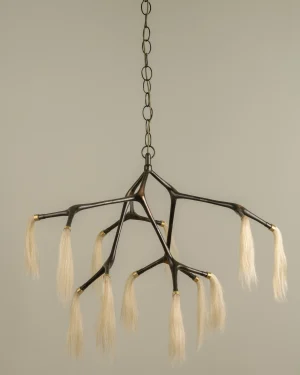
Maratus Horsehair Chandelier in Bronze
By Isabel Moncada
€33.345 -
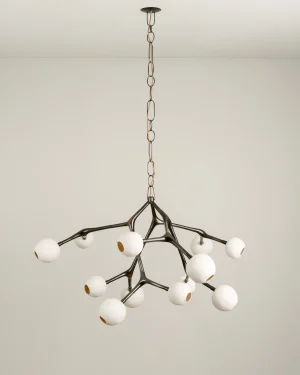
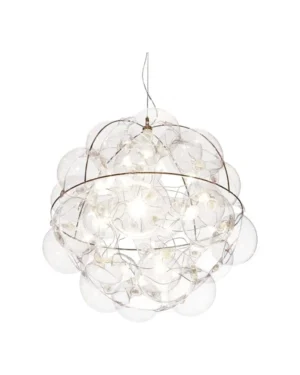
Maratus Chandelier in Bronze and Glass
By Isabel Moncada
€31.005 - €35.655 This product has multiple variants. The options may be chosen on the product page -
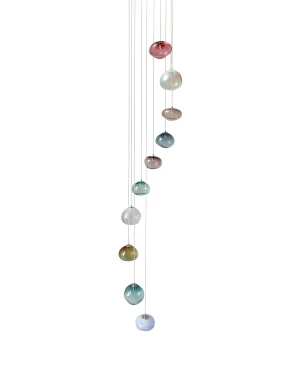
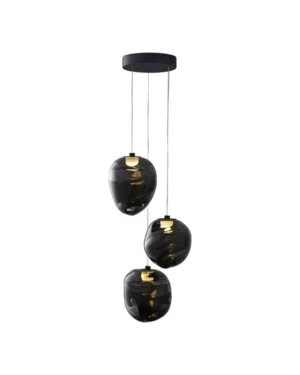
Starglow Spiral Chandelier in Blown Glass
By ELOA - Unique Lights
€12.980 - €13.270 This product has multiple variants. The options may be chosen on the product page -
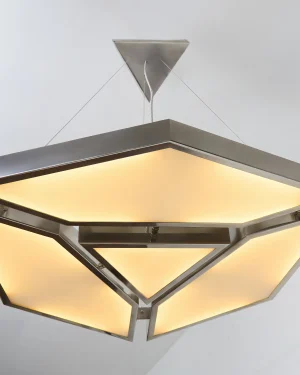
Alban Chandelier in Stainless Steel and Glass
By Nathan Chintala
€5.066 -
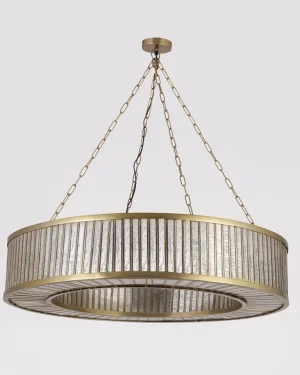 In stock
Fossil Chandelier in Stainless Steel
By Nama Home
€1.360 This product has multiple variants. The options may be chosen on the product page -

Stardust Chandelier in Iron
By Nama Home
€1.750 - €2.750 This product has multiple variants. The options may be chosen on the product page -
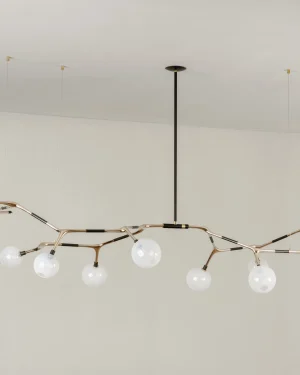
Mantis 13-Piece Chandelier in Bronze and Glass
By Isabel Moncada
Price Upon Request - This product has multiple variants. The options may be chosen on the product page -

Mantis 9-Piece Chandelier in Bronze and Glass
By Isabel Moncada
Price Upon Request - This product has multiple variants. The options may be chosen on the product page -
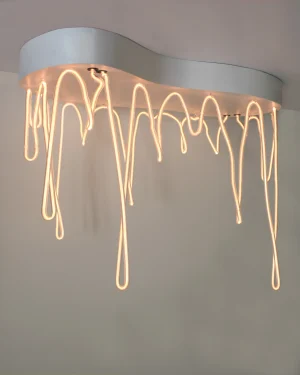
Vertical Fractal Helium Chandelier in Glass and Metal
By Dace Sūna
Price Upon Request
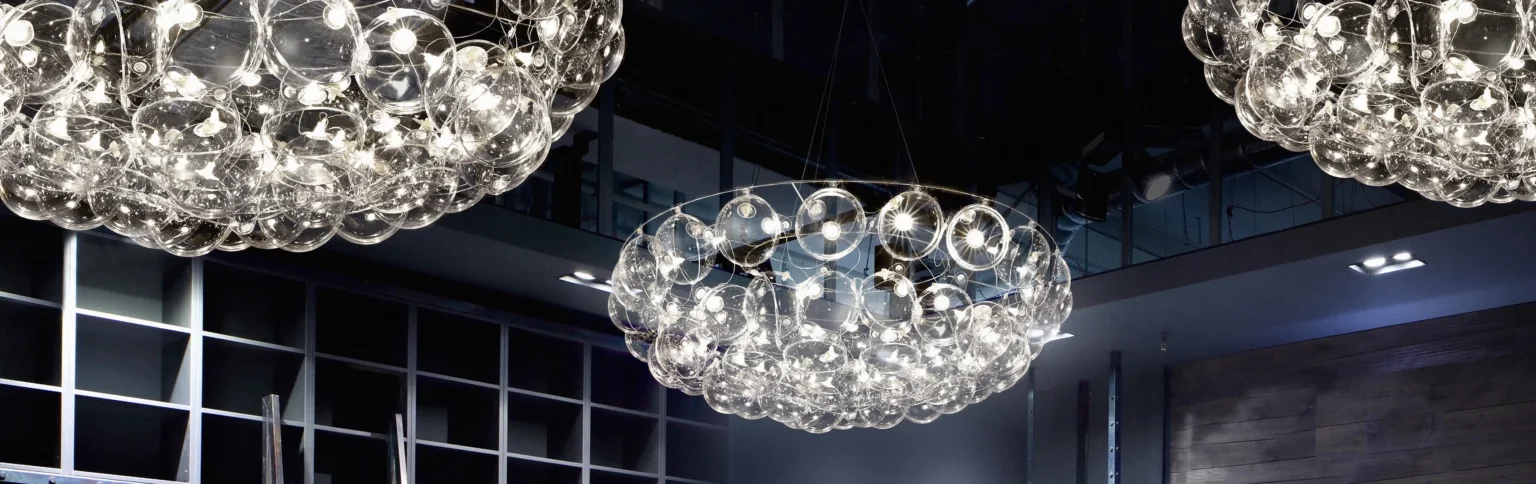
Unique chandeliers at ADORNO are one-off pieces, each one assembled by hand and never repeated. Studios working in blown glass, brass, bronze and spun or welded metal build them individually, so every fixture carries the particular weight, bubble pattern or hammer mark of the hands that made it. What defines them is not a single material but a way of working: casting, blowing, spinning and finishing that resists standardization.
What makes a chandelier a one-off piece
A production chandelier is drawn once and repeated many times. A one-off piece is made once, full stop. The glass may be gathered and blown at the end of a pipe, the metal cast through the lost-wax method or spun on a lathe, and small variations in flame, mold or hand pressure become part of the object rather than a flaw to correct.
This changes how the fixture reads in a room. Instead of a fixed catalog shape, you get asymmetric arms, glass with its own cloud of air bubbles, or a patina that shifts slightly across the surface. Buyers who choose unique lighting over production runs are usually after exactly this: a fixture with a visible origin story in its surface, not just its catalog description.
Materials, finishes and color
Blown glass dominates this group, prized for the way it holds and scatters light rather than just pointing it downward. Brass and bronze follow, often worked through metal spinning or lost-wax casting, then left raw to darken over years or sealed to hold a fixed tone. Stainless steel and iron appear where a studio wants sharper geometry or a colder, more industrial read, frequently finished with powder coating for a flat, durable color.
Porcelain shows up less often but brings a matte, light-absorbing surface that sits well against brass or glass arms. Color ranges from white, light gray and sand, which keep a fixture quiet against most walls, to bronze, aubergine, scarlet and multicolor glass, which push a chandelier toward becoming the focal object in a room rather than a background fixture. Style follows a similar split: contemporary and minimalist pieces favor restraint and single materials, while futuristic and radical ones lean into sculptural arms, mixed finishes and asymmetry.
Choosing scale, height and placement
Start with the ceiling, not the fixture. A chandelier needs clearance so its lowest point sits well above head height in a hallway or entry, and roughly thirty inches above a table surface in a dining room, though taller ceilings allow more drop and more visual weight overhead.
Consider also how the piece reads when unlit. Glass arms and bronze castings have presence as sculpture during the day, so placement should account for daytime view as much as evening light.
- Entryways and stairwells suit taller, narrower forms that read well from below and from a half-landing.
- Dining rooms favor chandeliers with a wide, even spread of light across the table.
- Living rooms and bedrooms can take lower-hanging, more sculptural pieces since sightlines are less fixed.
For a broader sense of scale and form before narrowing to material, it helps to look across chandeliers as a whole, then return to the one-off pieces once a general shape and size feel right.
Living with metal and glass finishes
Brass and bronze left unlacquered will darken and develop a patina with handling and air exposure; this is normal aging, not damage, and many studios intend for it to happen. Powder-coated steel and iron hold their color far longer and only need a dry cloth to keep dust from dulling the finish.
Blown glass should be dusted gently and never wiped while dry if the surface has fine texture, since grit can scratch it. Because every one-off chandelier is unrepeatable, it is worth keeping any care notes from the studio, as replacement parts are rarely possible.
Where this fits among other one-off pieces
Chandeliers sit alongside other one-off work across the gallery, including unique lamps, unique decor and unique furniture, all made with the same logic: one piece, one maker, no repeat run. Choosing a chandelier from this group means accepting a fixture with its own small irregularities, and treating those as the point rather than an exception.
How do I choose a unique chandelier?
Start with the material and how it meets light, blown glass scatters it, bronze and brass hold it warm, iron and steel frame it. Then weigh scale and finish against the room before the form.
What materials are unique chandeliers made from?
Most are blown glass, brass, bronze or iron, with some in stainless steel or porcelain. Each takes light differently, so material shapes the mood of a room as much as the shape does.
How do I care for a glass or metal chandelier?
Dust glass and metal with a dry or barely damp cloth, avoid ammonia-based cleaners on brass and bronze, and let any patina develop rather than polishing it away. Check wiring periodically if the piece is vintage.
What size chandelier suits my room and ceiling height?
Scale the piece to the room's width and the ceiling's height, leaving enough clearance below for people to pass comfortably. For an exact fit, chat with the maker on the piece's page.
Which rooms suit a one-of-a-kind chandelier?
Dining rooms, entryways and stairwells carry a sculptural chandelier well, giving it room to be seen from several angles. Living rooms with high ceilings also let a larger, heavier piece sit comfortably.
How does shipping, returns and authenticity work at ADORNO?
Shipping is insured and worldwide, with a 14-day return policy excluding made-to-order pieces. Every chandelier arrives with a certificate of authenticity, backed by ADORNO's lowest-price guarantee.