
-
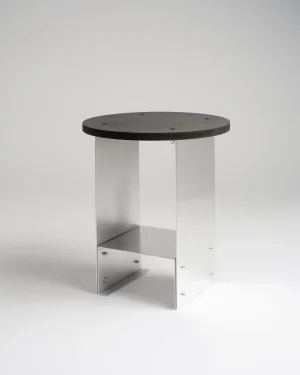
Broken Wing Stool
By Obscure Objects
€290 -

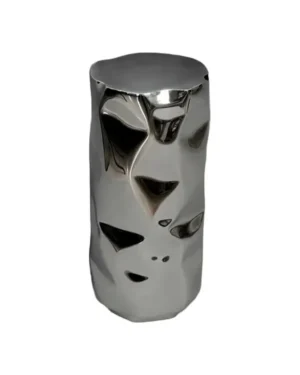
Tronco Drinks Entryway Table in Stainless Steel
By Nitush and Aroosh
€900 -
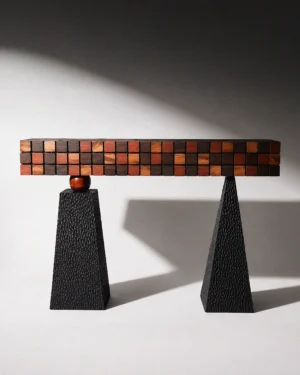
Caapora Entryway Table in Solid Brazilian Hardwood
By Estudio Leonardo Zanatta
€7.150 -

Junco Stool
By Daniel Couttolenc
€1.500 This product has multiple variants. The options may be chosen on the product page -
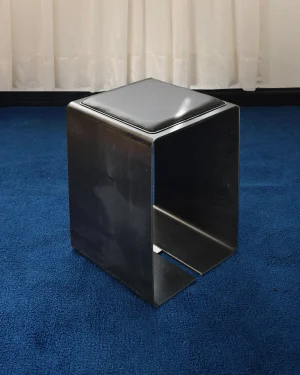
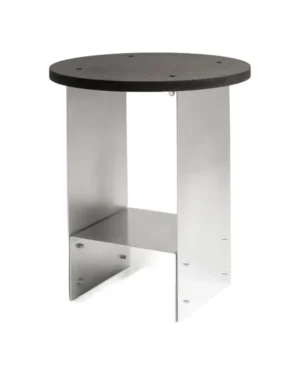
S001-10 Raw Steel Stool
By NAVE
€450 -
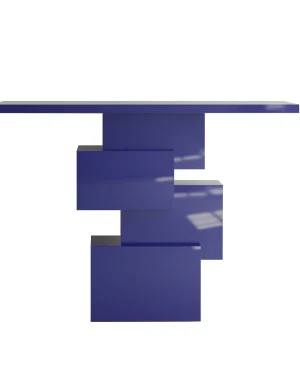
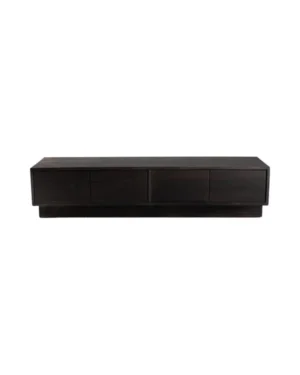
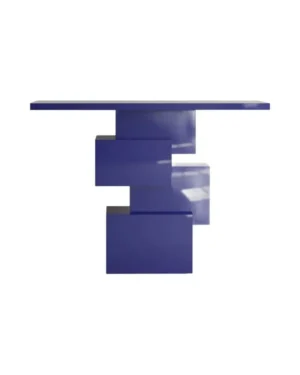
Kruz Entryway Table in Lacquered MDF
By hermhaus
€3.632 This product has multiple variants. The options may be chosen on the product page -
 In stock
Tronco Entryway Table in Hydroformed Stainless Steel
By Nitush and Aroosh
€3.000 -
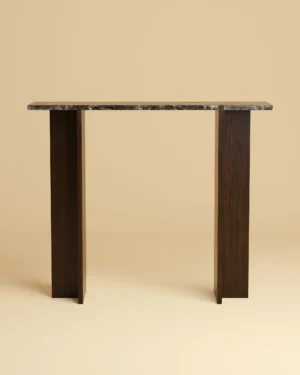
Maha Entryway Table in Emperador Dark Marble and Oak
By Lebanto
€3.500 -
 In stock
Route 01.03 Entryway Table in Cast Aluminum
By SK - Sofia Karnukaeva
€2.000 -
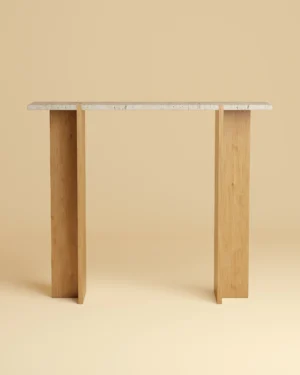
Maha Entryway Table in Roman Travertine and Oak
By Lebanto
€3.100 -
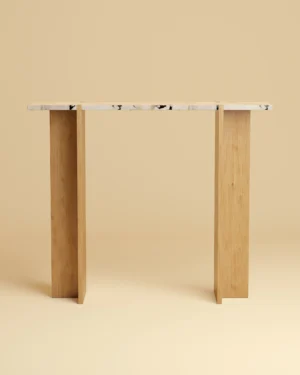
Maha Entryway Table in Calacatta Viola Marble and Oak
By Lebanto
€3.500 -
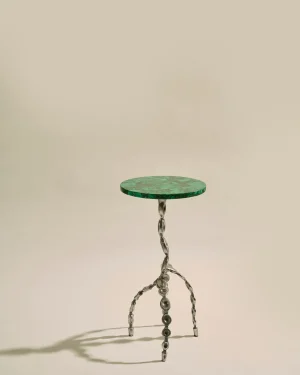
Aetheris Entryway Table in Malachite and Aluminum
By LMNOH
Price Upon Request -

Bellance Entryway Table in Cast Bronze and Glass
By Costantini Design
€3.250
Modern entryway tables bring a pared-down structure to the first surface a room offers: a slab or slim frame, often in wood, stone or metal, set on legs that read as lines rather than ornament. Studios working in metalwork, joinery and stone carving build these pieces around restraint, letting a single material or a tight pairing of two carry the design. The making tends toward visible joinery, cast or welded bases and finishes that stay close to the material's own color.
What makes a table read as modern
A modern entryway table avoids applied decoration. Where an earlier style might turn a leg or carve a skirt, a modern piece leaves the surface flat and the support simple, so the material itself, oak grain, veined stone, brushed steel, does the talking. Edges are often squared or softly eased rather than molded, and tabletops sit thin relative to their footprint, which keeps the whole object light against a wall.
This discipline extends to color. Black, cream, dark brown and white recur because they let a table sit against any wall tone without competing with coats, mirrors or the art above it. Occasional greens, burgundies or violets appear where a studio wants the table itself to be the accent in an otherwise quiet hallway.
The range of material and technique
Among entryway tables built in this style, wood dominates, particularly oak worked through wood and cabinetmaking or woodturning, prized for a grain that deepens with age and a hardness that resists the daily knock of keys and bags. Natural stone and stone carving produce heavier, cooler-surfaced pieces, while stainless steel, chrome and aluminum, shaped through metalwork and metal casting, give a harder, more reflective edge that suits a brutalist or neo-industrial reading. MDF appears where a studio wants a flat, stable core under a painted or veneered finish. Some pieces are built as open editions, repeatable from the same molds or templates; others are limited editions or unique pieces, where stone carving or marquetry makes exact repetition unlikely. For a closer look at either direction, wooden entryway tables and metal entryway tables each gather a narrower slice of this same approach.
Choosing scale, height and finish
An entryway table has to carry weight without crowding the path through a hall. Measure the width of the clear floor first: a table deeper than about twelve to sixteen inches can start to narrow a corridor uncomfortably. Standard console height runs close to standard table height, around twenty-eight to thirty inches, which keeps the surface usable for mail, keys or a lamp without rising to coffee-table or dining proportions.
- Choose a pale oak or cream finish to lighten a narrow or windowless hall.
- Choose stone or dark stained wood where the table sits against a light wall and needs to hold its own.
- Choose a steel or aluminum frame with an open base where floor space is tight, since a slim leg reads as less volume than a solid plinth.
Where these tables sit well
Beyond the front hall, the same proportions suit a landing, a wide corridor or the wall behind a sofa, anywhere a surface is needed but a full table would be too much. Paired with a mirror and a single lamp, a modern piece keeps the arrangement spare rather than decorative. The broader range of modern tables on ADORNO, and the full spread of modern design across other rooms, follow the same logic of material left honest and form kept quiet.
Living with wood, stone and metal
Oak and other hardwoods want a dry cloth and occasional wax or oil to keep the surface from drying out; they darken slightly and take small marks well. Natural stone stains if left wet, so spills and damp keys need wiping promptly. Stainless steel, chrome and aluminum resist moisture but show fingerprints, so a soft cloth kept nearby serves better than any cleaner.
How do I choose a modern entryway table?
Look at scale first: a narrow profile suits tight hallways, while a wider top holds keys, mail and a lamp. Clean lines in wood, stone or metal read as modern without competing with other furniture nearby.
What materials are modern entryway tables made from?
Common choices include oak and other woods, natural stone, stainless steel, chrome and aluminum, often paired with MDF for structure. Each ages differently, so care depends on the surface.
How do I care for wood, stone or metal entryway tables?
Wipe wood with a dry or slightly damp cloth and keep it from direct heat to avoid cracking. Seal natural stone against staining, and buff chrome or stainless steel with a soft cloth to prevent fingerprints and water marks.
What height and size should an entryway table be?
Most modern entryway tables stand around hip height, low enough to set down keys or bags without bending far. Depth usually stays shallow so the piece does not crowd a hallway or doorway.
Which rooms suit a modern entryway table?
Beyond entryways, these tables work well in hallways, landings and narrow corners where a slim silhouette matters. Their straight lines also suit open-plan spaces near a front door or staircase.
What are ADORNO's shipping and return policies?
Shipping is insured and worldwide. Returns are accepted within 14 days, except for made-to-order pieces, and every piece arrives with a certificate of authenticity.