Indigo Chair
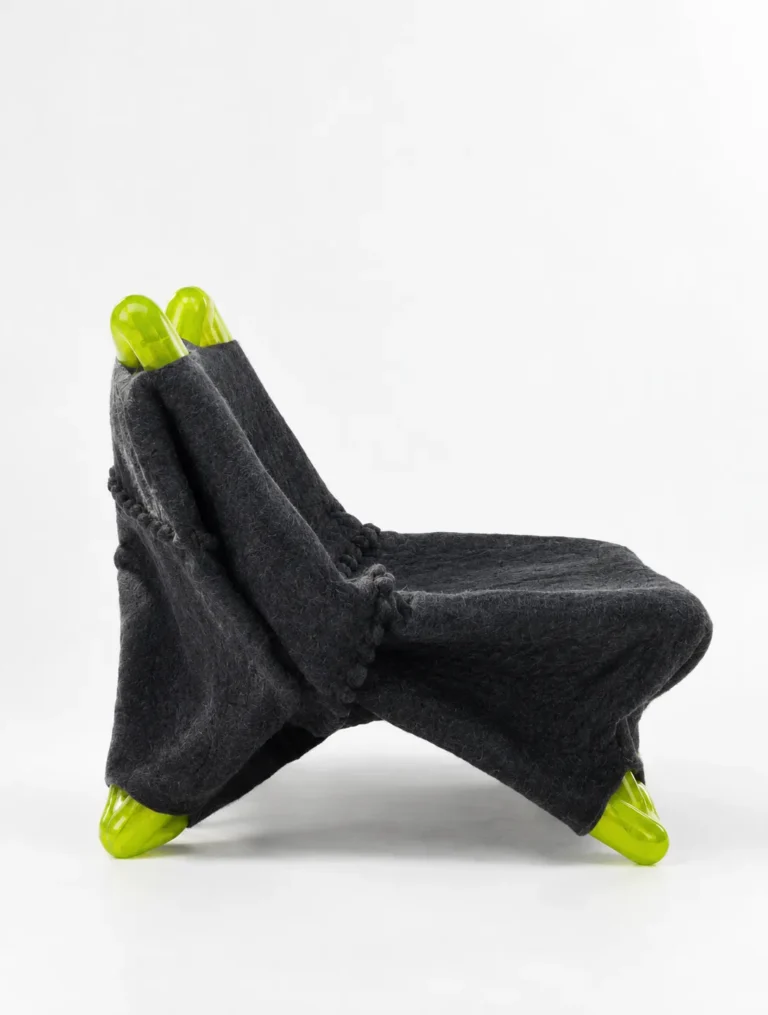
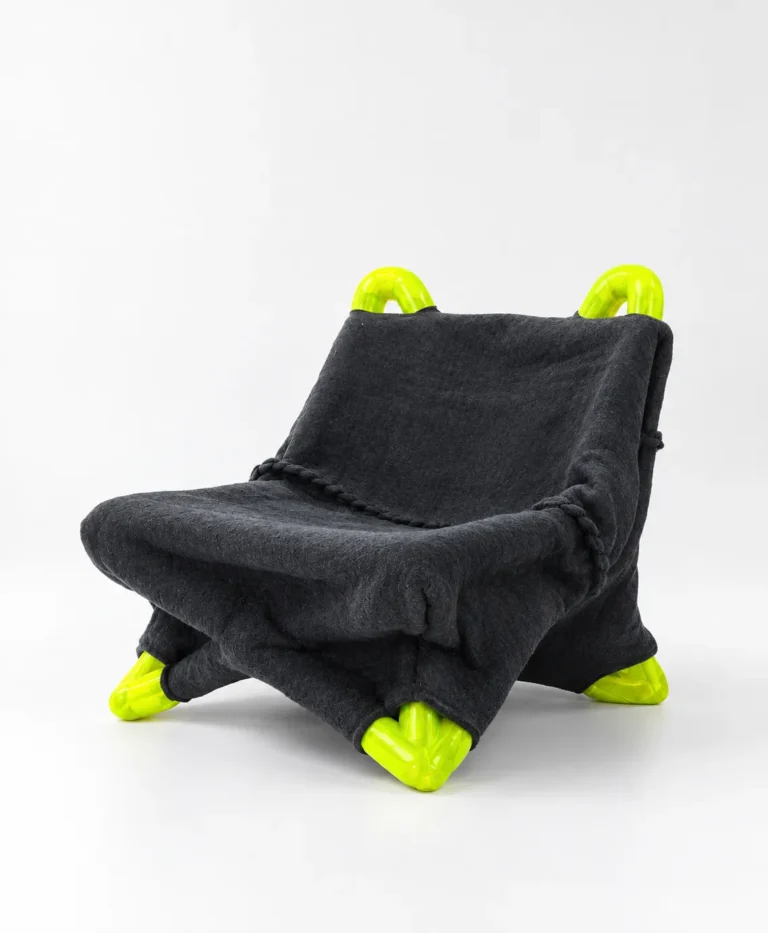
The Indigo Chair continues Daniyar Uderbekov’s exploration of combining traditional materials and craft principles with contemporary technologies. The project rethinks the conventional chair not as a complex industrial object made from numerous parts, adhesives, and hardware, but as a simple construction in which each material performs its natural function.
The main material of the chair is natural wool felt. For the designer, it is not simply upholstery, but an independent structural material with its own cultural history. Felt has been used for centuries by nomadic peoples of Eurasia, including in the construction of yurts. It is durable, breathable, resistant to the environment, and at the same time creates a sense of warmth and protection. In his projects, Uderbekov works with large, continuous sheets of felt, minimizing the number of seams and connections. This preserves the integrity of the material and emphasizes its natural texture.
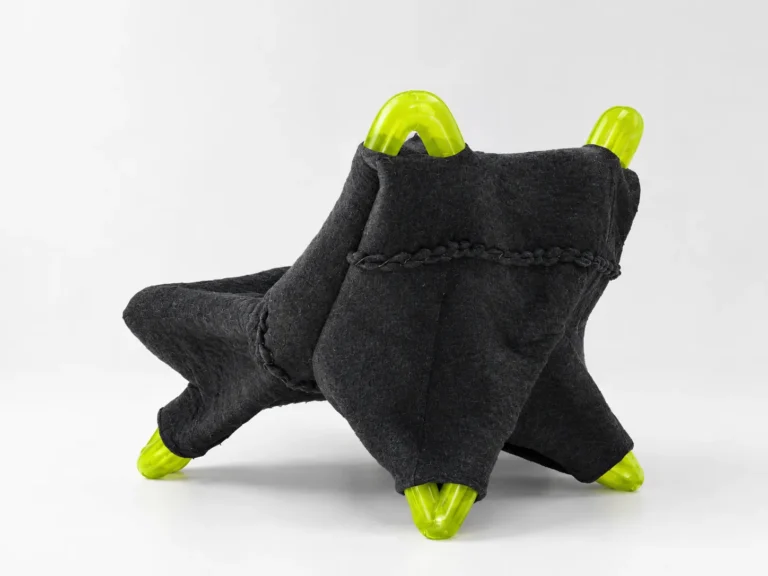
The form of the chair is built around the idea of a shell that simultaneously creates the seat, backrest, and armrests. Instead of hiding the construction beneath numerous decorative elements, the project reveals the logic of how it is assembled. The felt wraps around the frame and is fixed in a way that allows it to remain an independent part of the structure.
An important role is played by the combination of felt with contemporary 3D-printed components. A similar principle appears in Uderbekov’s furniture series, where the frame is made from accessible wooden elements and the connections are produced using 3D printing. This approach reduces the number of individual components and allows the geometry of the joints to be explored. In the 10 Nodes project, for example, the construction was deliberately developed to use a minimal number of connection points.
| Dimensions LxWxH | 100x80x80cm (39x31x31'') |
|---|---|
| Piece Weight (kg) | 23 |
| Production Year | 2026 |
| Material | |
| Style | Neolithic, Radical, Wabi-Sabi |
| Room | |
| Technique | |
| Design Class | Limited Editions |
| Number Of Pieces Created | 7 |