Pre-dawn waltzes in the Englischer Garten, a hidden courtyard of galleries, and Alpine water in the city center: Munich, as two designers who live there see it.
Updated on: October 31, 2026
Munich exists as a paradox in European design. While Berlin claims Germany’s avant-garde, Bavaria’s capital cultivates a quieter, more embedded creativity, a sensibility that grows from historical continuity rather than rupture. For Magdalena Shterianova and Johannes von Schoenebeck, the designers behind STUDIO VON SCHOENEBECK, Munich is both laboratory and archive.
This Munich guide follows five places that shape their work, from a centuries-old dance at dawn to the world’s largest design collection. Each one says something about how design grows out of a city, and each is worth a visit whether you come for Oktoberfest or for a quiet week in spring.
1. Englischer Garten and the Kocherlball

The Kocherlball shows how a ritual can shape design. The pre-dawn dance began in the 1800s, when domestic workers held their own celebration before their employers woke, hence the 6 a.m. start. It still takes place every July in the beer garden around the Chinesischer Turm in the Englischer Garten.
As the studio describes it: “People come in traditional Bavarian clothes, bringing homemade food and their own candleholders to light up the dark Biergarten around the Chinesischer Turm. It all starts before dawn, and as the first light filters through the trees, hundreds of couples begin to waltz.”

“It was this unique atmosphere, flickering candlelight, soft music and the warmth between strangers, that inspired our TETRIS candleholders.” Rather than imposing an outside aesthetic, the studio took its forms from a lived ritual. As a result, the candleholders work as material translations of a shared moment, when everyone at the table is briefly equal.
2. Luitpoldblock
Design is often told as a story of individual genius. Luitpoldblock tells a different one, in which creative communities grow through proximity and variety. For the studio, the place is personal: “This place is personal. It’s where we met.”

Luitpoldblock works as organized complexity: galleries, design stores, a music label and exhibition spaces that feed one another rather than compete. “Today, Luitpoldblock has grown into one of Munich’s most exciting cultural spots, a hidden courtyard filled with galleries, design stores, a music label, and spaces for exhibitions and events.” The studio’s MASTER & MARGARITA chair has been shown there, a sign of Munich’s model of creative growth from existing places rather than planned districts.
3. The Isar River
In summer, Munich offers a remarkable way to stay cool: you can plunge into cold, clear Alpine water right in the city center, an almost surreal meeting of urban density and wild nature.
“The Isar is not just a river, it’s a way of life,” the studio explains. “In how many cities can you take a dip in cold, crystal-clear Alpine water right in the city center?” Visitors are often surprised to see barefoot, dripping people carrying surfboards through the streets, until they find the Eisbach, the Isar channel in the Englischer Garten where surfers ride a standing wave.

If the riverbanks feel too busy, follow the Isar out of town and walk for hours along its green banks while technically staying inside the city limits. “It’s the place we go to slow down, to breathe, to reset.”
4. Westend and Theresienwiese
Munich’s reputation for polish hides a more layered city. Westend, where the studio is based, feels open and unguarded. “Munich is known for being polished and expensive, but Westend is where the city lets its guard down,” they say. “It’s a relaxed, creative, diverse neighborhood with hidden ateliers, vintage shops, casual cafes, and old-school Boazn (local pubs). The best thing? You can grab a drink at the kiosk, sit at a street corner, and just watch the world go by. Someone will talk to you. It’s that kind of place.”

Nearby, the Theresienwiese, famous for Oktoberfest, adds another layer. Whether packed with tents or completely empty, the open field is part of the studio’s daily horizon. Its swing from global spectacle to quiet emptiness mirrors the rhythm of creative work: intense periods followed by necessary solitude.
5. Die Neue Sammlung at the Pinakothek der Moderne
Die Neue Sammlung at the Pinakothek der Moderne shows how seriously the city takes design. “Munich doesn’t shout about it, but it holds a hidden gem for design lovers: the world’s largest design collection.”

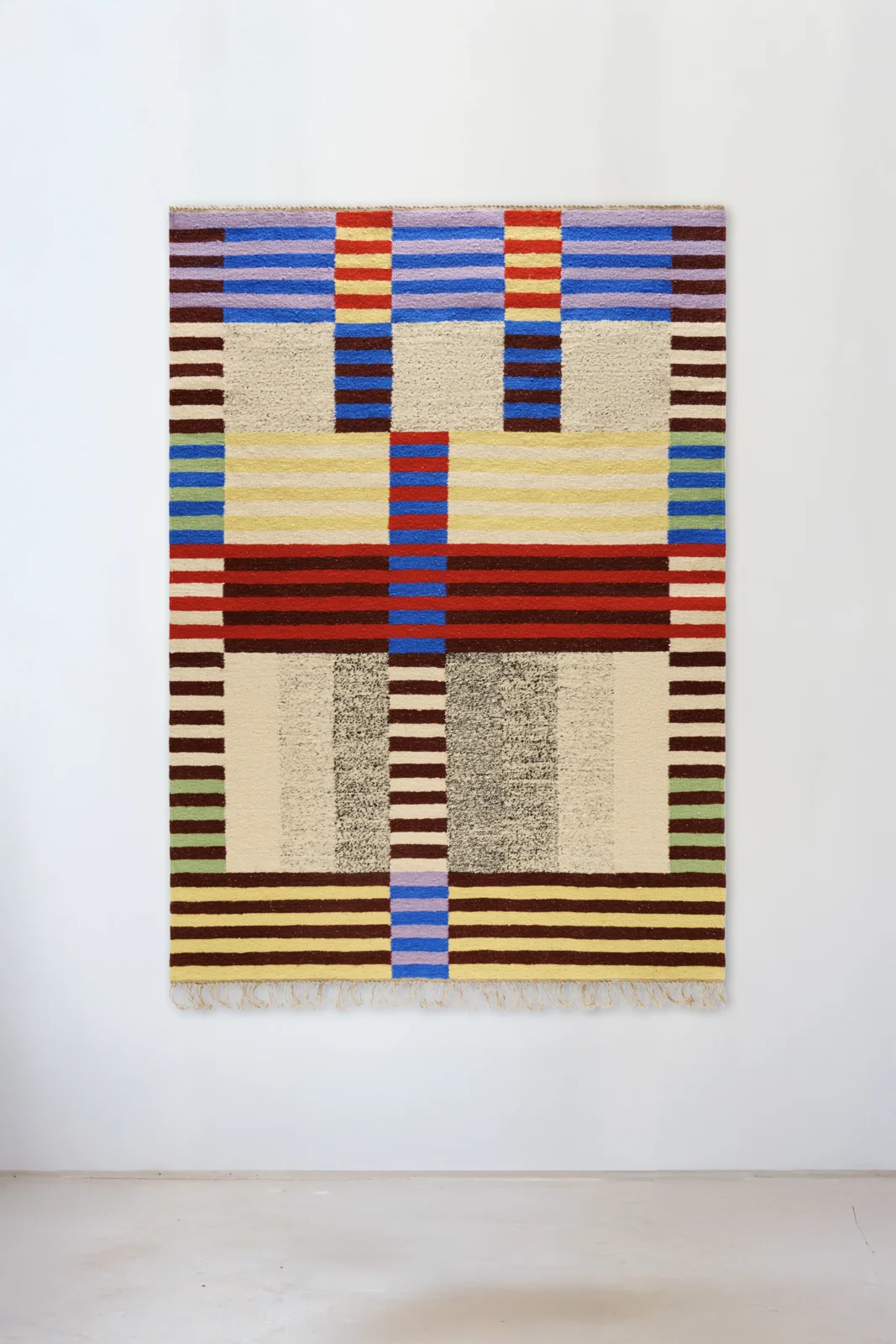
“It’s a place where everyday objects and radical design ideas live side by side, from Bauhaus icons to contemporary experiments.” The collection lends widely, too: its Bauhaus textiles appear in Wallpaper*’s guide to Anni Albers. “Whenever we need inspiration, we go there to reconnect with design history and dream of what comes next,” the studio says.

Pieces by STUDIO VON SCHOENEBECK
The studio’s work carries these places with it: candlelight from the Kocherlball, the plain wooden benches of a Bavarian beer garden, the literary weight of a novel set on a park bench. Here are three pieces to collect.
Tetris No. 7 – Wooden Candle Holder by STUDIO VON SCHOENEBECK

Stacked bars of beech are charred with a centuries-old Japanese technique, so the black surface carries the story of fire on its own. Indeed, the idea came when burnt-down candles began to scorch the studio’s first rough prototypes, made for the Kocherlball. At 45 x 33 x 33 cm (18 x 13 x 13 in), it turns a dining table into a small candlelit landscape.
By STUDIO VON SCHOENEBECK
€820 incl. tax
Master And Margarita 2 In 1 Chair by STUDIO VON SCHOENEBECK

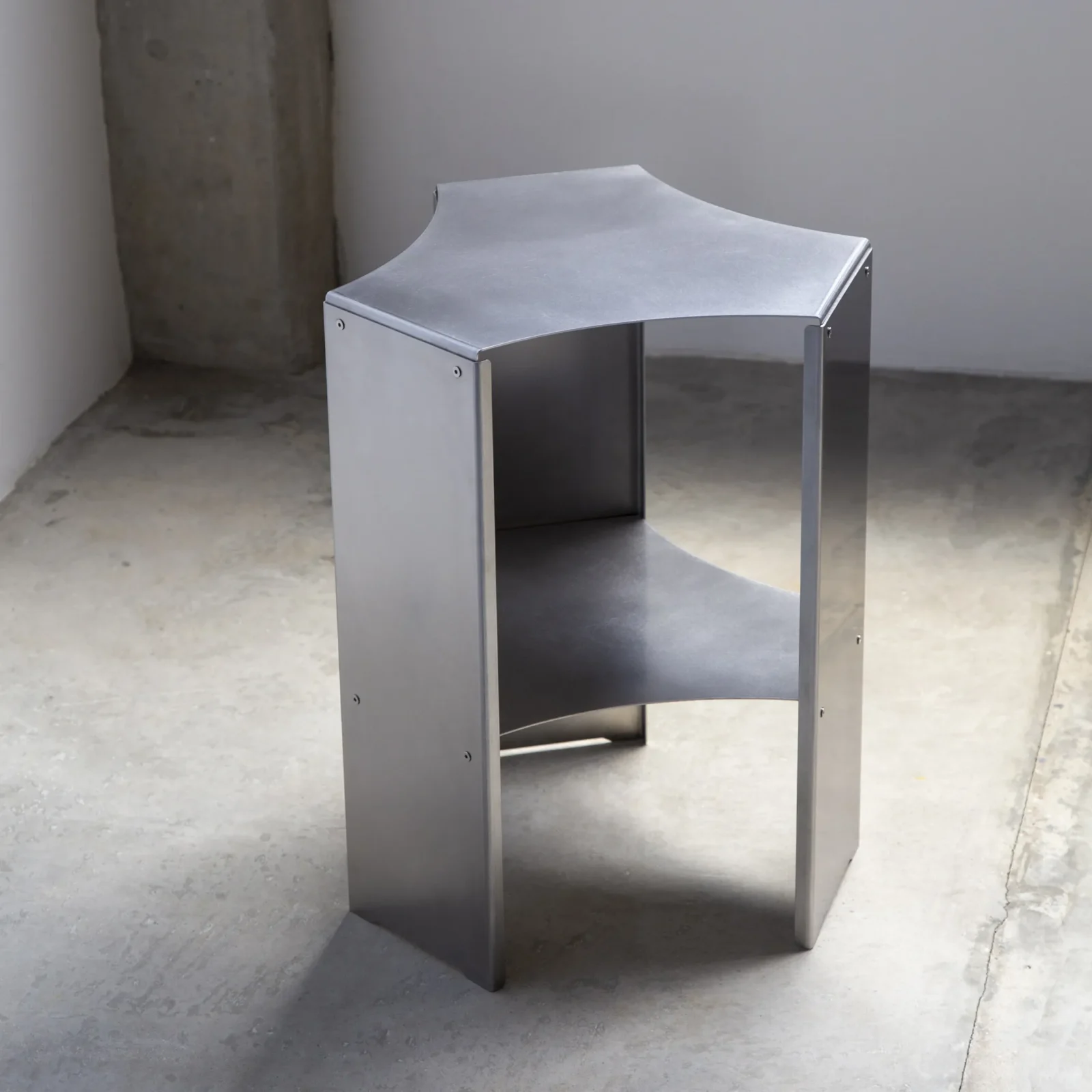
Two chairs in polished aluminum, sharp in outline but soft in finish, come together as one piece named after Bulgakov’s novel. Notably, engraved quotes nod to the dedication plaques on park benches, where the book’s story begins. Each chair measures 45 x 51 x 84 cm (18 x 20 x 33 in), and the pair reads as a sculpture in a hallway or a living room.
By STUDIO VON SCHOENEBECK
€8,600 incl. tax
Hockdi – Oak Wood Bench by STUDIO VON SCHOENEBECK

Hock di! is Bavarian dialect for “have a seat,” and the bench answers in lightly treated oak with evenly spaced slats. Moreover, its slightly angled sides add stability and let water drain away, so it works indoors and out, just like a beer garden bench. At 150 x 45 x 45 cm (59 x 18 x 18 in), it seats three in an entryway, on a terrace or at the end of a bed.
By STUDIO VON SCHOENEBECK
€1,690 incl. tax
Munich, Rich, Traditional and Hidden
Munich reveals itself slowly. Outsiders may reduce it to beer halls and tradition, but the studio describes “the second biggest and fastest-developing art scene in Germany, after Berlin,” and sums the city up in three words: “Rich. Traditional. Hidden.” So enjoy the beer gardens and Oktoberfest, and then look further: the dawn dancers in the Englischer Garten, the courtyards of Luitpoldblock, the icy Isar, the quiet streets of Westend and the design treasures of the Pinakothek der Moderne.
Frequently Asked Questions
When is the Kocherlball in Munich?
The Kocherlball takes place once a year, early on a Sunday morning in July, at the Chinesischer Turm in the Englischer Garten. Dancing starts around 6 a.m., so most guests arrive before dawn. Check the city’s event calendar for this year’s date.
Can you swim in the Isar in Munich?
Yes. Many locals swim in the Isar in summer, especially along the gravel banks south of the center. The water comes from the Alps and stays cold, and the current can be strong, so swim only where others do and check local guidance.
Where can I see design in Munich?
Die Neue Sammlung at the Pinakothek der Moderne holds one of the largest design collections in the world. For galleries and design stores, visit the Luitpoldblock courtyard near Odeonsplatz, and for studios and ateliers, explore Westend.