-
 In stock
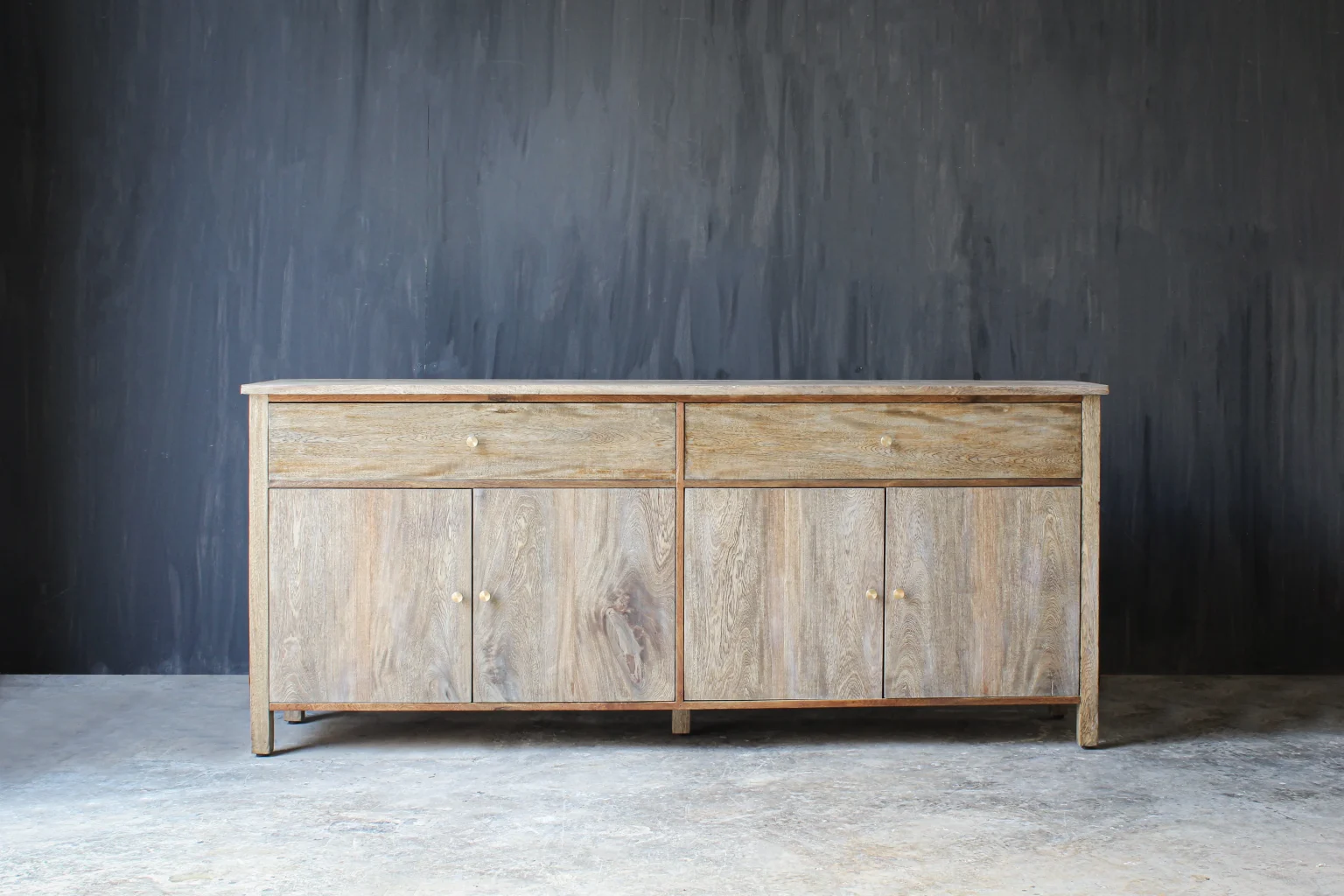
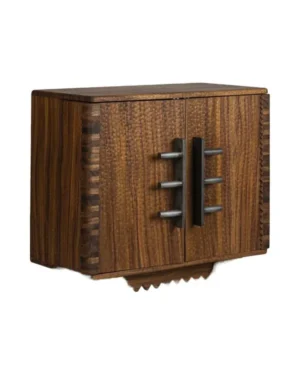
Obsidian Console | Burned Solid Oak
By NO AGE STUDIO
€4.060 -
 In stock
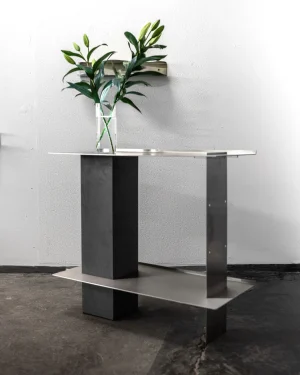
[moduline] Stainless Steel Sideboard
By case studios
€1.370 -
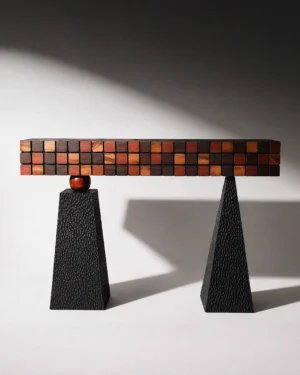
Caapora Console
By Estudio Leonardo Zanatta
€7.150 -

Sonar System
By form & eisen
€1.000 - €2.667 This product has multiple variants. The options may be chosen on the product page -
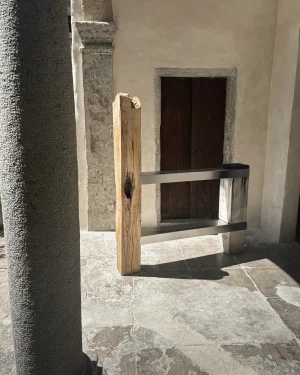 In stock
Ice Beech Wood Sideboard
By case studios
€1.810 -
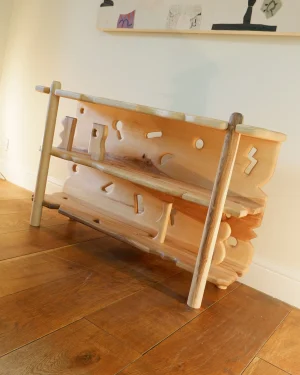
Cut Out Ash Wood Sideboard
By Josh Page Studio
€1.790 -
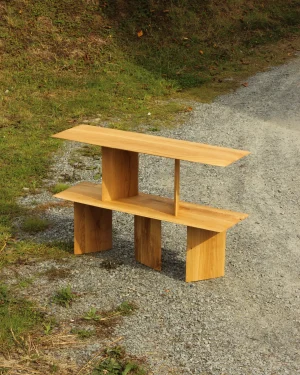 Sold
SoldGavrinis Sideboard – Solid Oak Wood
By Vital Lainé
€2.500 -
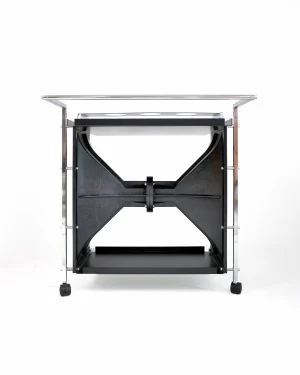
Horn Series – Storage Trolley
By juyong shim
Price Upon Request -
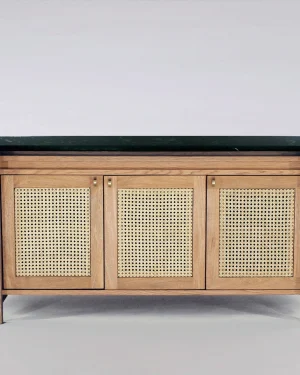 Sold
SoldAvenida Mexico Sideboard
By Comité de Proyectos
Price Upon Request -
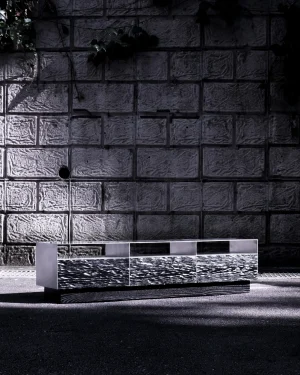 In stock
Yunseul Series – Ash & Steel Sideboard
By Woohyun Han
Price Upon Request
Minimalist sideboards are built on restraint: flat planes, hidden hardware, and a single material allowed to speak for itself. The studios working this way favor oak, ash, and steel over ornament, letting grain, seam, and proportion carry the design. Joinery stays visible only where it serves the structure, and color is often limited to the material's own tone or a single applied black or gray.
What makes a sideboard minimalist
A minimalist sideboard reads as one gesture rather than a stack of details. Doors sit flush, legs are thin or absent in favor of a plinth, and handles recede into a routed edge or disappear entirely. The discipline is in what's left out: no molding, no contrasting trim, no decorative hardware competing with the wood or metal underneath.
This restraint depends on precise wood and cabinetmaking or careful metalwork, since there's nowhere for an imperfect joint to hide. Some studios char the surface using shou sugi ban, which blackens oak or ash and leaves a matte, slightly textured skin that still shows the wood's grain beneath.
The materials and finishes found here
Solid oak and ash dominate for their straight grain and the way they darken evenly over years of light. Stainless steel and other metal pieces offer a cooler, harder-edged alternative, often finished in black or silver and paired with welded or seamed construction rather than visible screws. Beech appears less often but shares oak's density and takes a flat, even finish well.
- Wood finishes: natural oak or ash, solid construction, charred surfaces from shou sugi ban
- Metal finishes: brushed or matte stainless steel, welded steel in black or gray
- Editions: open runs alongside limited editions and occasional unique pieces, depending on the studio's way of working
Color stays close to the material: dark brown and black from charring or staining, gray and silver from raw or treated metal. Few of these pieces introduce a hue that isn't already present in the wood grain or metal surface.
How to choose a minimalist sideboard
Start with height and depth rather than style. A sideboard sitting below sightlines in a dining room reads differently than one anchoring an entryway at eye level, so measure the wall and the traffic around it before the finish. Scale matters more here than in ornamented furniture, since there's no detail to distract from a piece that's too heavy or too slight for the room.
Finish should match how the room ages. Light oak brightens a space and keeps darkening with use; charred or black-finished pieces hide scuffs better and suit rooms that already run darker. Steel holds its surface longer with less visible wear, which suits a kitchen or hallway more than a bedroom.
Where these pieces sit in a home
Minimalist sideboards work as sight-line anchors: a long, low form along a dining wall, a media console under a television, or added storage in an entryway where a single clean volume reads better than a cluttered shelf. Because the design relies on few parts, they also sit comfortably alongside other minimalist furniture or against a plainer wall where the material itself is the focus.
Caring for wood and metal sideboards
Solid oak and ash want a stable room, away from direct heat or damp, with an occasional wipe using a dry or barely damp cloth and a wood-safe oil every year or two to keep the surface fed. Charred wood needs less upkeep since the burned layer already resists moisture and insects, though it can mark if scraped hard. Steel surfaces wipe clean with a soft cloth and benefit from avoiding abrasive cleaners that dull the finish.
For the full range of forms within this style, see every minimalist piece on ADORNO, or compare against the broader sideboard category and the wooden sideboards working in oak and ash. A matching minimalist table can carry the same material language through the rest of the room.
How do I choose a minimalist sideboard?
Look at proportion and material first: a flat, unadorned front in oak, ash or steel reads as minimalist when the hardware disappears and the grain or finish carries the piece.
What materials are minimalist sideboards usually made from?
Solid oak, ash and stainless steel are common, often paired with steel or wood legs. Each material shows joinery or welding plainly, which keeps the form quiet and the lines clean.
How do I care for a wood or steel sideboard?
Wipe wood with a dry or slightly damp cloth and keep it from direct heat to avoid cracking; wipe steel with a soft cloth and avoid abrasive cleaners that dull its surface.
What size and height should a sideboard be?
Most sideboards stand around 30 to 35 inches high, close to counter height, so they work alongside dining tables or under art without crowding the wall.
Which rooms suit a minimalist sideboard?
Dining rooms, entryways and living rooms all take well to one, since the flat front and restrained hardware let it hold weight visually without competing with other furniture.
What are ADORNO's shipping, returns and authenticity policies?
Shipping is insured and worldwide. Returns are accepted within 14 days, except made-to-order pieces. Every sideboard arrives with a certificate of authenticity, backed by a lowest-price guarantee.