
-
 In stock
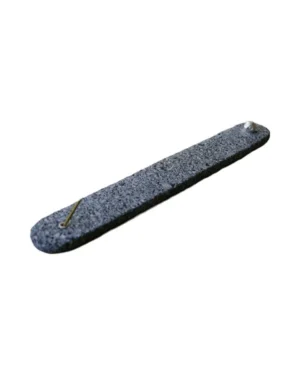
“Aves” Incense Holder
By Tributo
€97 -
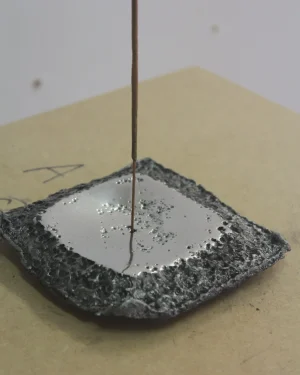
Melancholy – Incense Burner – Aluminium
By Saturday Yard Work
€133 -
 In stock
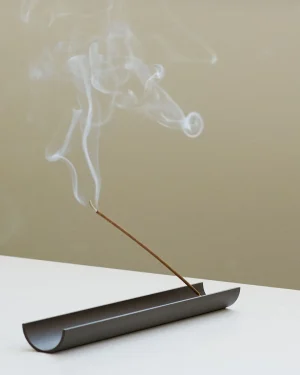
Burn Plate – Aluminum Incense Tray
By Calen Knauf Studio
€83 -
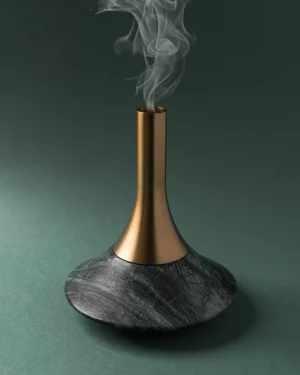 In stock
Dervish Incense Burner
By Boo Design Studio
€265 -

Incense Holder I-45
By julius.works
€140 -

Ib002-004 Incense Holder
By NAVE
€320 -
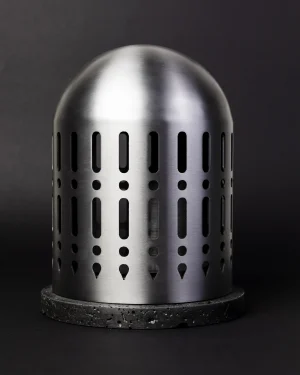 In stock
Medaillon – Incense Burner & Candle Holder
By Boo Design Studio
€202 - €240 -
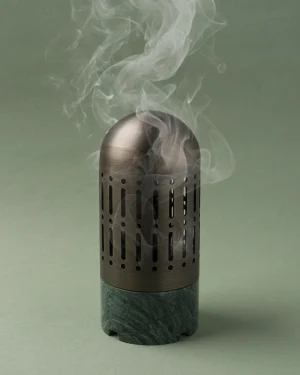 In stock
Green Medaillon Incense Burner
By Boo Design Studio
€193 -
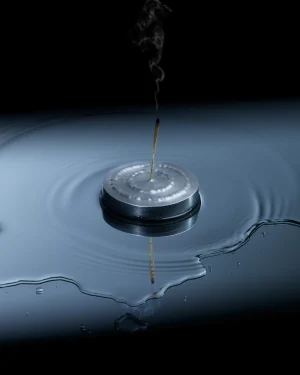
Sasso – Incense Holder
By Emilia Tombolesi
€175 -
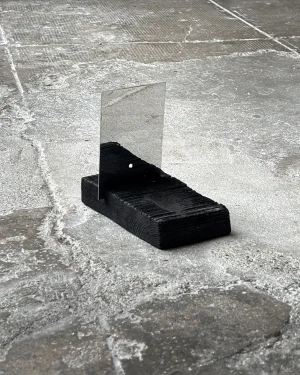 Sold
Burned Wood Incense Holder
By case studios
€90 -
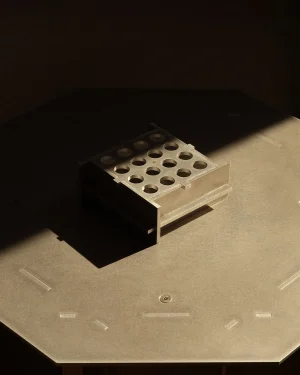
Regolith – Aluminum Ashtray & Incense Burner
By BUREAU OF ENTROPY
Price Upon Request
Metal incense holders bring a cool, reflective weight to a ritual that is otherwise made of smoke and air. Studios working in aluminum, stainless steel, brass, 925 silver and chrome turn sheet and bar stock into small sculptural objects through metalwork, casting and anodising, so the holder itself becomes the object worth keeping on view. Some pieces are cast in open runs, others are finished and numbered as unique pieces, but all of them are built to carry ash and heat without warping.
What defines a metal incense holder
Metal behaves differently from the stone or ceramic also used for this purpose. It conducts heat quickly, so a holder in aluminum or stainless steel is usually built with a wide base or a raised lip to keep the working surface cool. Brass and chrome catch light along their edges, which is part of why these pieces are chosen to sit, unlit, as small objects of their own on a shelf or sideboard.
Finishes, techniques and editions
The range on ADORNO within this material runs from matte, sand-finished aluminum to polished chrome and darkened, near-black brass. Casting and CNC milling tend to produce cleaner, more geometric forms, while lost-wax casting allows for the kind of irregular, hand-finished surface associated with Wabi-Sabi or Brutalist pieces. Anodising adds color without adding bulk, which is how some of the gray, green and sand tones appear on otherwise plain metal.
- Minimalist and Midimalist forms, usually in aluminum or steel, kept to a single bent or turned shape
- Neo-Industrial and Brutalist pieces, heavier in brass or cast metal, left with visible seams or tool marks
- Contemporary and Futuristic designs in chrome or polished stainless steel, built around reflection rather than mass
- Romanticism-leaning pieces in silver, softened with curved lines or engraved detail
Editions vary by maker: some metal incense holders are produced as open editions in steady runs, others are cast or finished as unique pieces, with no two surfaces quite alike. Where a listing does not say which, it is worth asking before buying if that distinction matters to you.
How to choose one
Scale matters more than it first appears. A holder meant for a single stick needs only enough base to catch falling ash, while a burner designed for cones or resin wants more surface and often more height to manage heat. Match the finish to what sits around it: polished chrome and silver read as formal and reflective, while matte aluminum, charred wood accents or darkened brass sit more quietly against stone, linen or raw timber.
Placement follows the same logic as any small object meant to be seen. A metal piece holds its own on a low table, a mantel, a bathroom shelf or beside a bed, anywhere it will be seen as often lit as not.
Where these pieces work in a room
Living rooms and entryways suit the more sculptural, Brutalist or Neo-Industrial forms, where a heavier cast piece can sit permanently among books or ceramics. Bedrooms and bathrooms favor smaller, Minimalist holders in aluminum or chrome, easy to wipe down and unobtrusive when not lit. Studies and altar-style surfaces tend toward brass or silver, materials that darken and gain character with handling over years of use.
Caring for metal incense holders
Most metals used here only need a soft, dry cloth to clear ash and dust. Brass and silver will darken slightly with age and handling; this patina can be left as it is or brought back with a light metal polish, depending on preference. Avoid abrasive cleaners on anodised color finishes, since they can wear through the surface layer faster than plain polished metal.
For a wider view of the material, see every piece listed under metal design on ADORNO, or step back to incense holders as a whole, including stone and ceramic alternatives. Those drawn to pared-back forms might also look at minimalist incense holders, while stone incense holders offer a heavier, more matte counterpoint to polished metal. Other small metal objects for the home appear among metal accessories more broadly.
How do I choose a metal incense holder?
Consider the metal's weight and finish against where it will sit, and whether you want a piece that reads as sculptural when the incense is out. Cast and milled forms tend to hold a room's attention even unlit.
How do you care for a metal incense holder?
Wipe soot away with a dry or slightly damp cloth once cooled, and avoid abrasive cleaners on anodized or plated surfaces. Aluminum and stainless steel resist tarnish, while brass and silver develop a patina over time unless polished.
What size incense holder do I need?
Most sit low and compact, built to hold a single stick or cone steady rather than dominate a surface. Choose a heavier base if the holder will sit somewhere exposed to drafts or foot traffic.
Which rooms suit a metal incense holder?
They hold their own on a shelf, sideboard, or altar surface in living rooms, bedrooms, or entryways. Metal's heat resistance also makes it a practical choice near soft furnishings or wood surfaces.
What does buying from ADORNO include?
Every order ships insured worldwide and comes with a certificate of authenticity. Returns are accepted within 14 days, except for made-to-order pieces, and ADORNO offers a lowest-price guarantee.
Can I order a custom metal incense holder?
Some studios take custom requests on finish, size, or metal type. Chat with the maker on the piece's page to confirm what is possible.