




-
 In stock
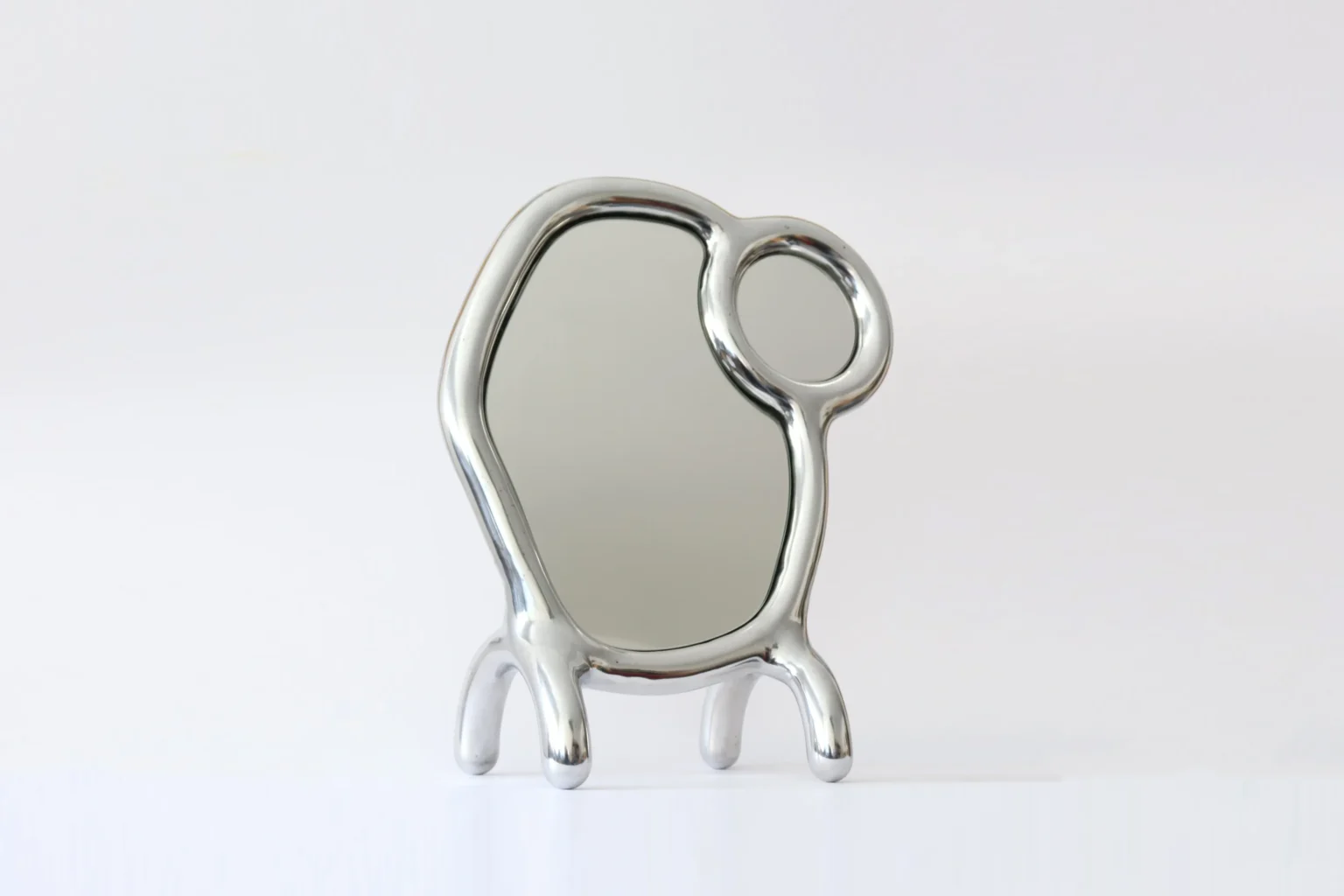
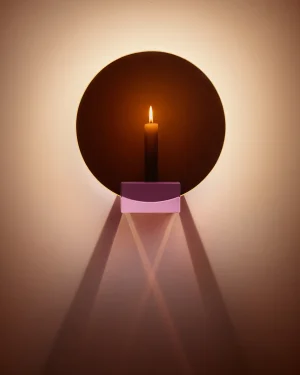
Spegla Wall Edition – Mirror & Candle Holder In Crystal Glass And Half-transparent Mirror
By Jochen Lavéno Mangelsdorff Studio & Objects
€345 - €395 This product has multiple variants. The options may be chosen on the product page -

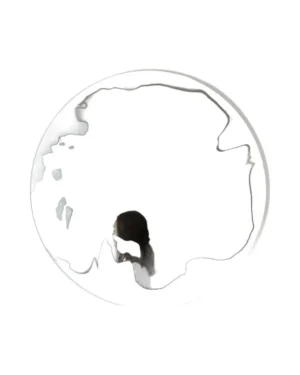
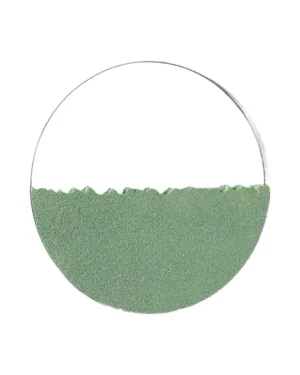
Float Mirror Black #b_31 in Liquid Silver and Glass
By Studio Speculo
€465 -
 In stock
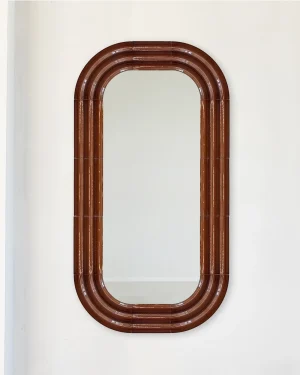
Elo Mirror 150×80 Cm – Hand Glazed Ceramic
By Pani Jurek STUDIO
€2.135 This product has multiple variants. The options may be chosen on the product page -
 In stock
Elo Mirror 60×90 Cm – Hand Glazed Ceramic
By Pani Jurek STUDIO
€1.070 This product has multiple variants. The options may be chosen on the product page -
 In stock
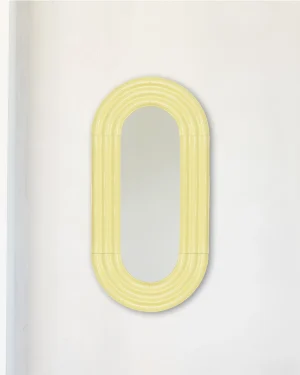
Elo Mirror 120×60 Cm – Hand Glazed Ceramic
By Pani Jurek STUDIO
€1.360 This product has multiple variants. The options may be chosen on the product page -
 In stock
Elo Mirror 60×60 Cm – Hand Glazed Ceramic
By Pani Jurek STUDIO
€815 This product has multiple variants. The options may be chosen on the product page -
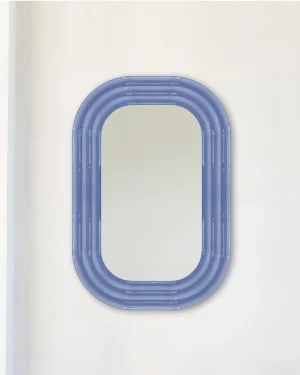 In stock
Elo Mirror 120×80 Cm – Hand Glazed Ceramic
By Pani Jurek STUDIO
€1.730 This product has multiple variants. The options may be chosen on the product page -

“lago” Wall Mirror | Liquid Metal
By Giselle Vanessa Johnson
€3.900 -
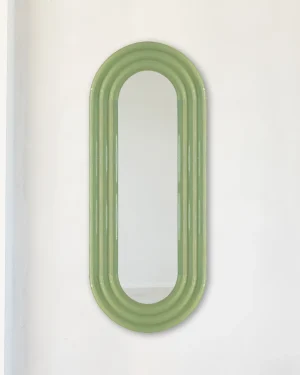 In stock
Elo Mirror 150×60 Cm – Hand Glazed Ceramic
By Pani Jurek STUDIO
€1.730 This product has multiple variants. The options may be chosen on the product page -
 In stock
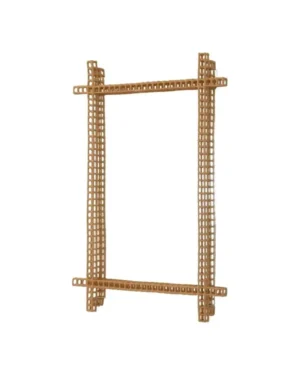
Persona — Wall Object, Amber
By MILA ZILA
€2.800 -

Phondo Mirror
By TheUrbanative
€1.400 -
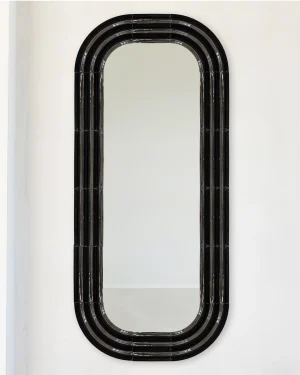 In stock
Elo Mirror 180×80 Cm – Hand Glazed Ceramic
By Pani Jurek STUDIO
€2.540 This product has multiple variants. The options may be chosen on the product page -
 In stock
Mirror 01.01 ´route´
By SK - Sofia Karnukaeva
€2.000 -
 In stock
Ondara Mirror Mini
By Dace Sūna
€1.800 -

In Between Mirror
By please touch studio
€420 -
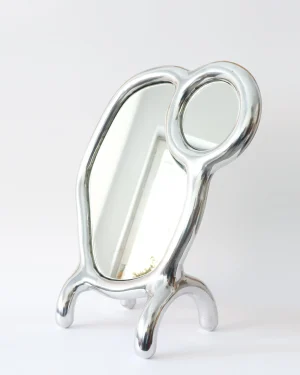 In stock
Mi-rr 13
By Studio Speculo
€1.100 -
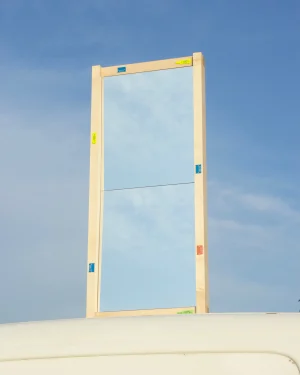 In stock
Avivé Mirror – Maple
By Vital Lainé
€1.000 -
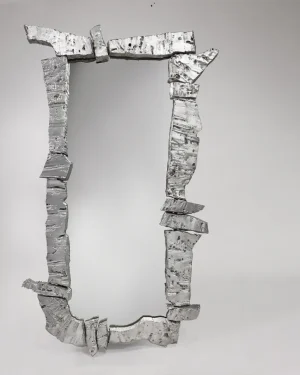 In stock
Insect – Recycled Cast Aluminum Mirror
By BY JAMPS
€2.200 -
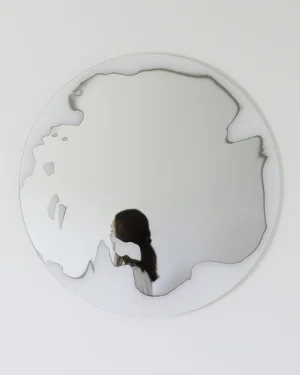
Float Mirror White – Liquid Silver / Glass
By Studio Speculo
€370 -

Ondara Mirror
By Dace Sūna
€3.500 -
 In stock
Mirror O – Sand Decor & Plaster – Wall Mirror
By Sacha Parent & Valentine Tiraboschi
€1.350 -
 In stock
De Vita Ad Vitam: The Mirror As A Philosophical Object
By Yury Goncharov
€9.600 -
 In stock
Trama Mirror
By Joana Teixeira
€1.270 -
 In stock
Abbas – Aluminum Wall Mirror
By Joana Teixeira
€1.250 -
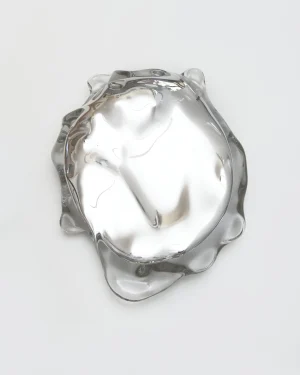 In stock
Persona Mirror Sculpture – Silver
By MILA ZILA
€1.200 -

Chip Mirror
By Obscure Objects
€350 -
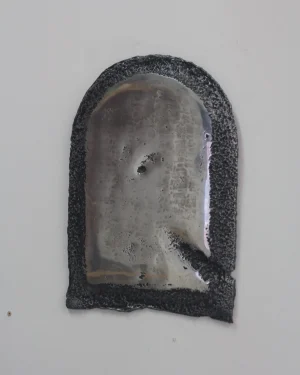
Melancholy Hanging Mirror – Arch – Aluminium
By Saturday Yard Work
€610 -

Painted Beech Mirror A — Ves
By Anna Bera
€647 -
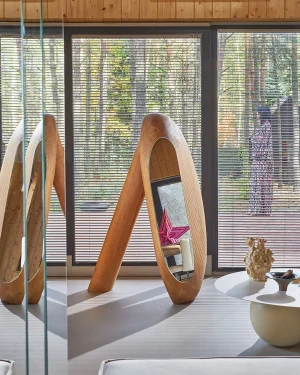
Object N.16 Mirror
By Anna Bera
€11.294 -
 In stock
Incidence No. 01 – Mirror
By Leo Vairo
€8.500 -

Bistrò Reflections Floor Mirror
By Toro Manifesto
€6.200 -
 In stock
Scarpa Coffee Table
By Arbore x Cezar Moldovan
€3.910 -
 In stock
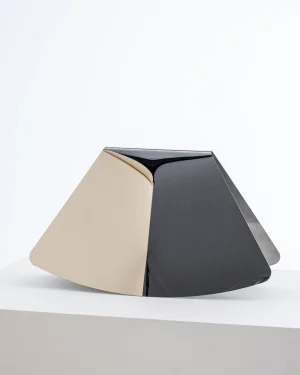
Almost Mirror
By Akademie
€1.000 -
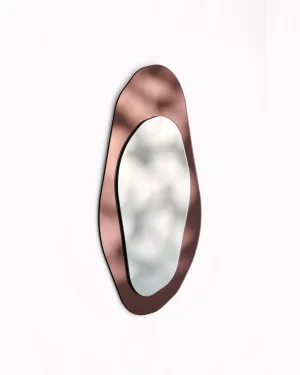
Siena – Rose Gold Asymmetric Mirror
By Yugen Lab
€350 -
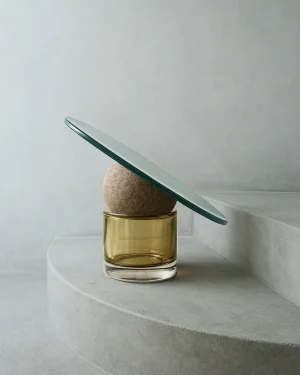 In stock
Mirror – Astra 24 Yellow
By Clemence Birot
€345 -
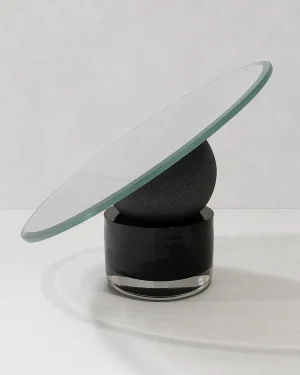 In stock
Mirror – Astra 24 Charcoal Edition
By Clemence Birot
€297 -
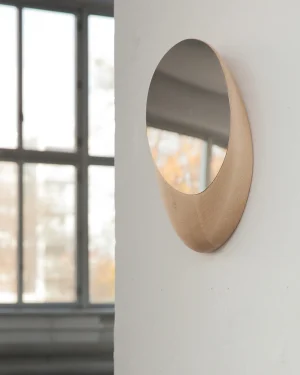
Maple Mirror E — Ves Medium
By Anna Bera
€2.118 -
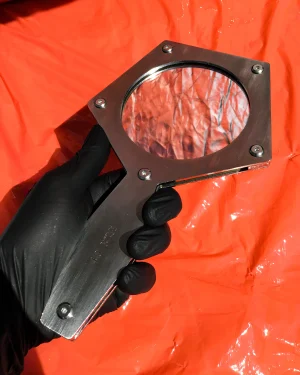 In stock
D100 Hand Mirror – Bruched Stainless Steel
By MLK Furniture
€390 -
 In stock
Escampette – Wall Mirror
By Pirouette
€1.632 -
 In stock
Rye Straw & Stainless Steel Small Table Mirror
By Sacha Parent & Valentine Tiraboschi
€320 -

Hvyli Q9 – Wavy Full-length Mirror
By oitoproducts
€1.492 -
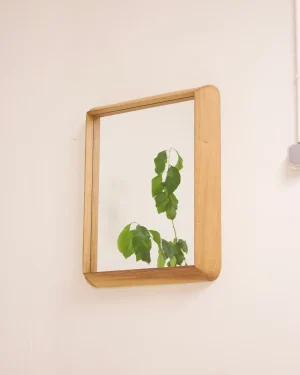 In stock
Gavrinis Mirror – Solid Oak Wood
By Vital Lainé
€2.000 -
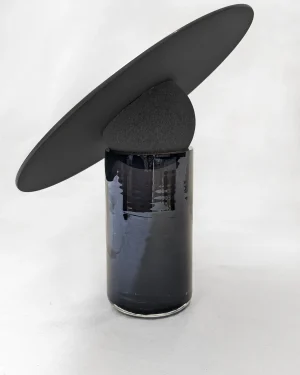 In stock
Mirror – Astra 30 Charcoal Edition
By Clemence Birot
€409 -
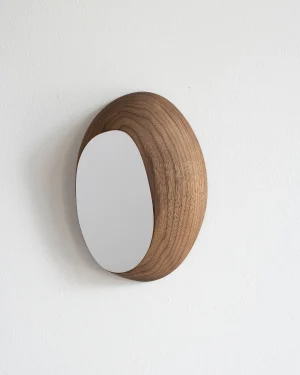
Walnut Mirror F — Ves
By Anna Bera
€659 -
 In stock
Mirror – “les Endormis” Collection
By Pirouette
€1.492 -

“Glory” Mirror
By VAUST Studio
€9.000 -
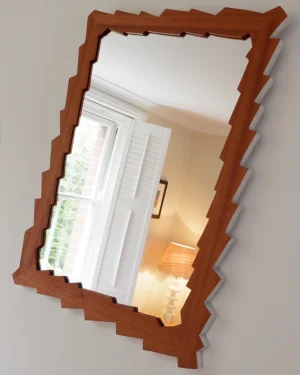
Shocking Mirror – Sapele Mahogany And Aluminium Gilded Frame
By Josh Page Studio
€400 - €588 This product has multiple variants. The options may be chosen on the product page -
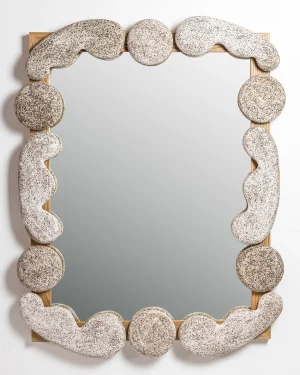
Roebling – Ceramic Wall Mirror
By Luft Tanaka Studio
€4.800 -
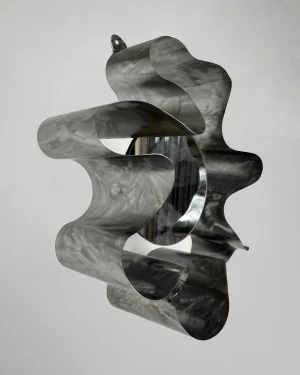 In stock
Mirror 3.4
By Masha Volkova
€1.600 -
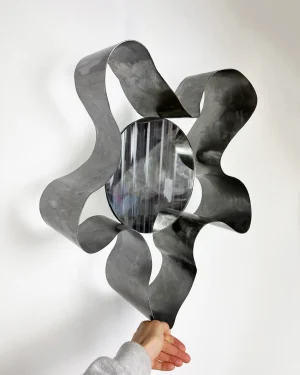 In stock
Mirror 3.5
By Masha Volkova
€1.680 -
 In stock
Persona Mirror Sculpture – Bluesilver
By MILA ZILA
€1.200 -

“Romance & Gravity” Mirror
By Marija Puipaitė & Vytautas Gečas
€3.700 -
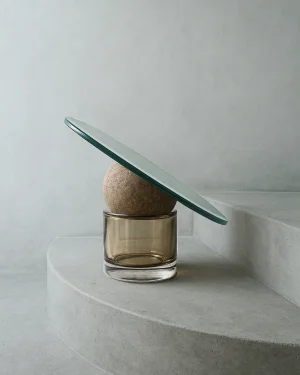 In stock
Mirror – Astra 24 Amber
By Clemence Birot
€345 -
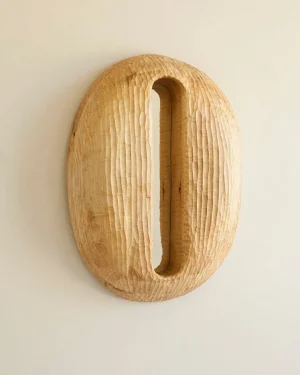 In stock
Object N.1 Mirror
By Anna Bera
€2.598
Contemporary mirrors on ADORNO bring together glass, metal and glaze in forms that favor clean lines and clear geometry over ornament. Studios working in glassblowing, metal casting and cold working produce frames and reflective surfaces side by side, so a single piece might pair a cast brass edge with hand-finished mirrorglass. The result sits apart from historical mirror-making while still relying on the same core material, silvered glass.
What defines a contemporary mirror
A contemporary mirror reads through its restraint: flat or gently curved glass, a frame kept thin or removed altogether, and a finish that stays close to the raw material rather than disguising it. Mirrorglass itself can run clear, smoked, tinted cobalt blue or tea-toned brown, each shift changing how much light a room keeps and how warm or cool the reflection feels. Where a frame does appear, it tends to be aluminum, stainless steel or brass, worked through metalworking or casting into a band rather than a decorative surround.
Materials, finishes and editions found here
The range spans a few recurring approaches. Glass cold working and glass casting shape the mirror body itself, sometimes into irregular or sculptural outlines rather than the standard oval or rectangle. Metal casting and sheet metalwork build frames and stands in steel, aluminum or brass, left raw, polished to a silver shine, or given a black or beige finish. Glazing and hand-building bring ceramic elements into play on some pieces, adding a matte, tactile edge next to the glass.
- Reflective surfaces: mirrorglass in clear, smoked, cobalt blue or brown tones
- Frames and hardware: aluminum, stainless steel, brass and steel, polished or matte
- Editions: open editions for everyday use, limited editions and unique pieces for anyone building a smaller, more considered collection
For a closer look at how glass alone is used across styles, the glass mirrors group is worth a look, as is the metal mirrors group for frame-forward designs.
How to choose a contemporary mirror
Scale decides whether a mirror anchors a wall or simply accents it. A large mirror set low, near console or floor height, can carry the visual weight of an entire entryway, while a smaller round or geometric piece works better grouped or placed above a console table. Height matters too: hang a mirror so its center sits roughly at eye level for the room's main vantage point, lower in a hallway, higher above a mantel.
Finish should follow the rest of the room's metal tones. A brass frame reads warm against wood and brings out cobalt or brown-tinted glass, while stainless steel or aluminum stays neutral and pairs easily with black or white surfaces. Where a frame is absent, the glass edge and its tint become the only variable, so clear or lightly smoked glass tends to sit more quietly in a small space.
Where contemporary mirrors work
Entryways and hallways gain the most from a mirror hung near the door, both for the practical check before leaving and for the sense of added depth. Living rooms use larger pieces to bounce window light across the room, while bathrooms call for a tighter, more upright scale near the sink. Bedrooms often take a full-length or leaning mirror, propped rather than fixed, which suits glass cast or cold-worked into a single sculptural pane.
Caring for glass and metal mirrors
Mirrorglass should be cleaned with a soft, lint-free cloth and a mild glass cleaner, applied to the cloth rather than sprayed directly, since moisture at the edges can work under the silvering over time. Metal frames in brass or steel benefit from an occasional wipe with a dry cloth to keep fingerprints and dust from building in cast details. Avoid abrasive cleaners on polished aluminum or stainless steel, which can dull a mirror finish that depends on an even, unbroken surface.
For the wider range of contemporary pieces beyond mirrors, the contemporary style grouping covers furniture, lighting and objects made with the same restraint, and the full set of mirrors sits under all mirrors. Anyone drawn to bolder color might also look at the black mirrors group, where frame and glass are both kept dark.
How do I choose a contemporary mirror?
Start with the frame material and how it reads against your walls, then the shape: irregular and sculptural forms suit an eclectic room, while a clean round or rectangular frame sits quietly in a minimalist one.
What materials are contemporary mirrors made from?
Frames are worked in aluminum, steel, brass or cast glass, often paired with mirrorglass that is beveled, tinted or left clear, so finish and weight vary from piece to piece.
How do I clean and care for a contemporary mirror?
Wipe the glass with a soft, lint-free cloth and a mild, ammonia-free cleaner, and dust metal or glazed frames dry to avoid streaking or tarnish over time.
What size mirror should I buy and how high should I hang it?
Center the mirror roughly at eye level, about 60 to 65 inches from the floor to its middle, and leave it wide enough to reflect light without crowding nearby furniture.
Which rooms suit a contemporary mirror best?
Entryways, living rooms and bathrooms all benefit, since a contemporary mirror opens up a narrow space, bounces light across a seating area, or adds a sculptural note above a vanity.
What are ADORNO's shipping, returns and authenticity policies?
Shipping is insured and worldwide. Returns are accepted within 14 days, excluding made-to-order pieces, and every mirror arrives with a certificate of authenticity under ADORNO's lowest-price guarantee.