Updated on: September 18, 2026
Maximalism is not clutter. It is editing with the volume turned up.
Maximalist decor asks more of a room than minimalism ever did. Color has to hold against color, pattern against pattern, and every object has to earn its place in a composition where nothing recedes. Consequently the style rewards pieces with real presence — hand-built, hand-knotted, cast or carved — and punishes filler almost immediately.
The twelve pieces below come from independent studios working in porcelain, glazed ceramic, papier-mâché, hand-spun wool, powder-coated metal and mirrored glass. Prices run from €125 to €24.000, so the selection works as a first color accent or as the object a whole room is built around. Each one is available now, with its price and maker listed.
What is maximalist decor?
Maximalist decor is a more-is-more approach to interiors: saturated color, layered pattern, mixed periods and objects chosen for character rather than restraint. Indeed the style has a longer history than its recent revival suggests — Phaidon traces four centuries of maximalist interiors from Baroque palazzi to contemporary rooms, and maximalism as a term has moved between literature, music and design for decades.
Within maximalist style, the distinction that matters is between accumulation and composition. A maximalist room reads as deliberate because its colors answer each other and its objects share a register — a lacquered orange sculpture and a mint-and-saffron wool pouf belong in the same room, while a beige accessory bought to fill a gap does not. Notably, this is also why eclectic design and maximalism overlap so often: both depend on tension between pieces rather than agreement.
How to choose maximalist decor
Start with scale rather than color. One large object — a wall mirror, a rug, a sculptural chair — sets the ceiling for everything that follows, and small accessories layered underneath it read as intentional. By contrast, a room assembled from small objects alone tends to look busy no matter how good each one is.
Then decide which surface carries the pattern. Furthermore, keep one material thread running through the selection — glazed ceramic, say, or brushed metal — so the eye has a route through the room. Finally, buy the piece with the strongest form rather than the loudest color; color can be answered elsewhere, while a weak silhouette stays weak. Browsing decorative objects by material is usually a faster way in than browsing by color.
Materials and construction
Porcelain and glazed ceramic
Porcelain fires dense, white and hard, which is why it holds saturated glaze and gold luster without muddying either. Slip-casting allows shapes that would collapse if thrown, so studios working in ceramic can push forms well past the symmetrical. Meanwhile the surface — matte, gloss, crazed — changes the color as much as the pigment does.
Hand-knotted wool
Hand-spun Tibetan highland wool takes plant and pot dyes deeply, giving tonal variation that machine-dyed yarn cannot reproduce. Knotting density decides how sharply a graphic line holds, and pile height decides how the color shifts as you move around the piece. As a result, a wool rug often reads differently from either end of a room.
Papier-mâché and reclaimed paper
Papier-mâché is the oldest recycling technique in furniture and among the least respected, which makes its use at this scale interesting. Pulped waste paper is formed over an armature and finished until it takes structural load, and the resulting surface carries a grain that paint sits into rather than on. Specifically, strong flat color is harder to achieve here than muted tone, so a saturated finish is a technical result rather than a default.
Mirrored glass and acrylic
Mirror is the one maximalist material that adds color without introducing any of its own — it borrows whatever is already in the room and doubles it. Translucent Plexiglas panes behave differently again, conducting light along their cut edges so the object glows where it meets the wall. Therefore placement relative to a window matters more for mirrors than for anything else on this list.
Powder-coated and cast metal
Powder coating lays flat, even color over steel and aluminum, and holds it — which is why so much brutalist and radical furniture arrives in matte orange, ivory or mustard rather than a finish that will chip. Cast metal carries weight in a way that reads immediately in a room full of soft surfaces. In addition, metal tolerates handling, so it suits pieces meant to be used rather than admired.
Upholstery, marquetry and pattern
Pattern applied to a curved surface behaves differently from pattern on a flat one, which is what makes upholstered and marquetry pieces so useful in a layered room. Laser-cut veneer allows ornament at a density that hand-cutting could not sustain, while fringing and tufting add shadow that keeps a strong color from flattening. Altogether, these are the pieces that stop a maximalist room from reading as a series of objects on hard surfaces.
12 maximalist decor pieces to collect
Jupiter – Porcelain Vase by Liquid Void Studio
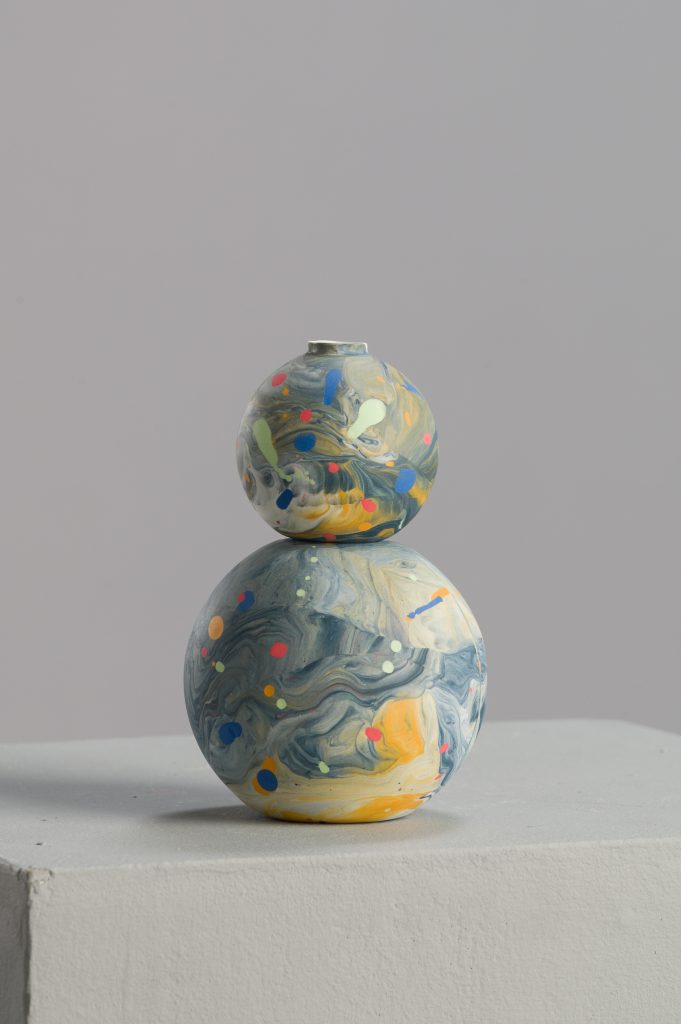
Individually slip-cast shapes, hand-built together and finished matte, so the color reads as pigment rather than gloss. The form drifts rather than resolves, which is unusual in porcelain at this price. Consequently it works as a first step into eclectic decor without committing a whole room.
€125 incl. tax
Heros, Sunset Art Deco Wall Mirror by Andreas Berlin
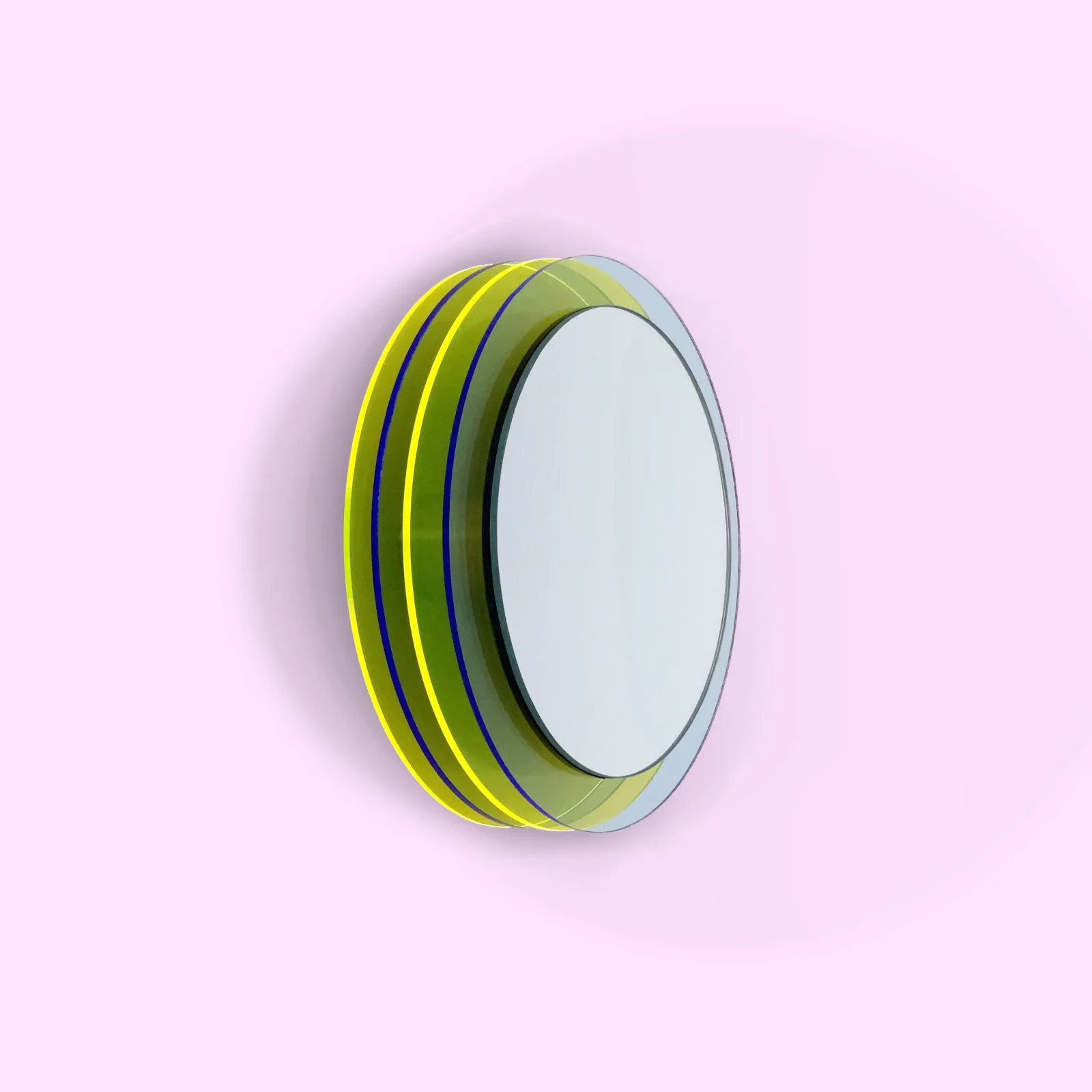
Translucent, light-conducting Plexiglas panes arranged in layers, with an 18cm mirror at the center. The edges catch whatever light the room has, so the color shifts through the day rather than sitting still. Notably it reads as Art Deco without period pastiche — closer to the 1970s than the 1920s.
€540 incl. tax
Hot! – Porcelain Ashtray by Hania Jneid
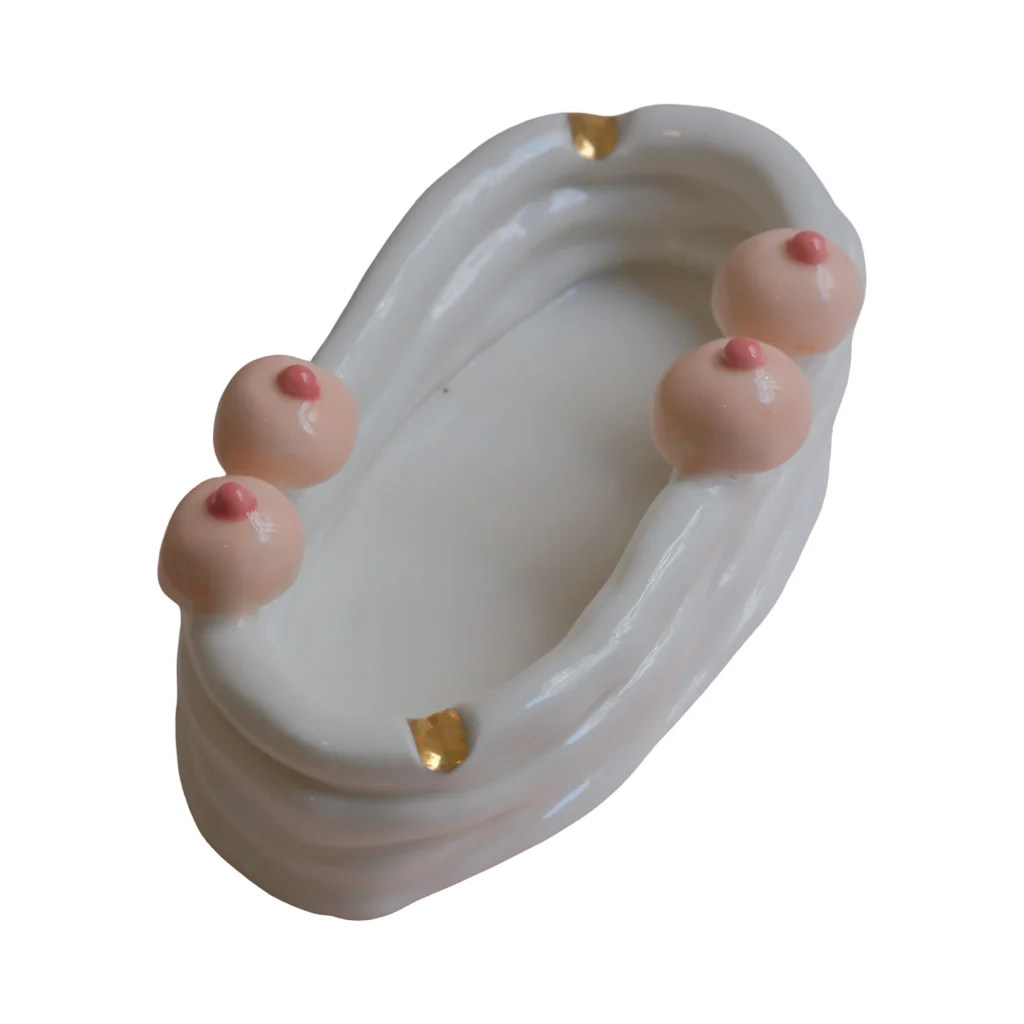
Hand-built porcelain, hand-painted and finished with gold luster — a celebration of womanhood in an object usually treated as an afterthought. The detail rewards close looking, which is the point of a tabletop piece. Indeed, ashtrays have quietly become one of the most expressive categories in handmade design.
By Hania Jneid
€600 incl. tax
Fraise – Ceramic Strawberry Vase by UAU Studio
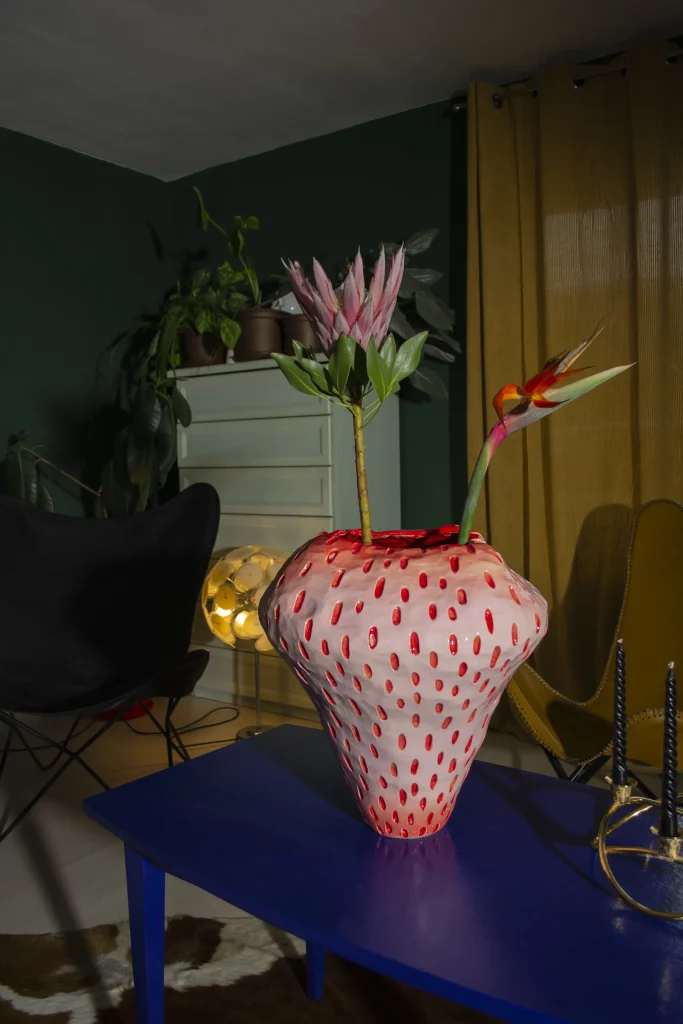
A strawberry-shaped vessel from the Romanian studio, hand-finished in glazed ceramic and built to hold water. The form is literal where most sculptural vases are abstract, and it carries a clear Barbiecore charge. Moreover it is food safe, so it earns a place on a dining table as easily as a shelf.
By UAU Studio
€900 incl. tax
Blue Yellow Pink – Textured Papier-mâché Mirror by David Čáp
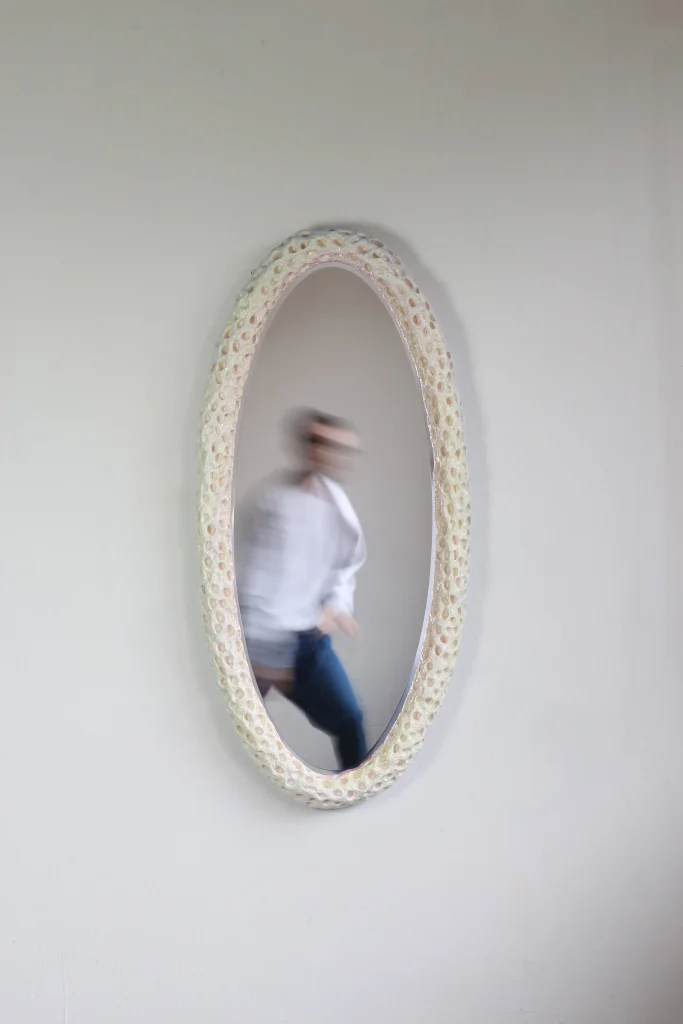
Pulped waste paper formed into a thick, textured frame and finished in blue, yellow and pink. The pastel palette pulls the piece away from the usual saturated maximalist register without softening the form. By contrast with a flat-framed mirror, the surface holds shadow, so the color changes depth across the day — a reclaimed material doing genuinely decorative work.
By David Čáp
€1.000 incl. tax
Ryōan-ji – Black And White Wool Rug/Wallhanging by Lyk Carpet

Hand-knotted from plant-dyed Tibetan highland wool by Mareike Lienau, after the stone garden at the Ryōan-ji temple. A woolen nest interrupts the graphic lines, standing in for the blind spot the garden is built around. Furthermore it works hung or underfoot, which makes it the most flexible piece here — proof that maximalism can be carried by pattern alone rather than color.
By Lyk Carpet
€1.772 incl. tax
Brutante A – Brutantes by Fi
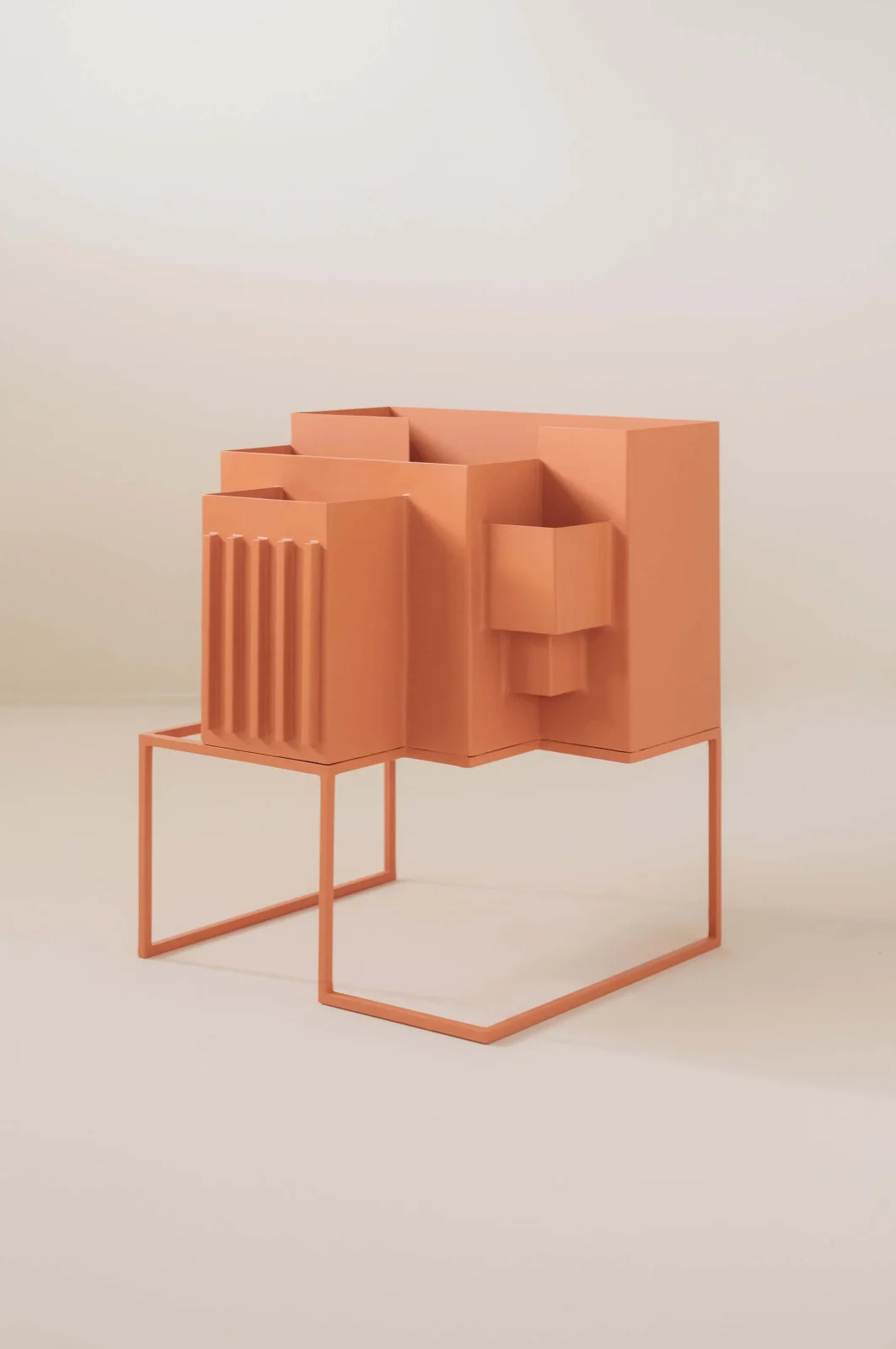
Metal, used as the only material, finished in a matte burnt orange chosen as a symbol of renunciation. The series abstracts everyday artifacts into functional sculpture, holding the line between object and tool. Consequently it anchors a room the way a sculpture does while still being asked to work — and it can be ordered in ivory, gray suede or mustard instead.
By Fi
€2.125 incl. tax
Pouffe – Maximalist Upholstered Stool by Jaclyn Pappalardo
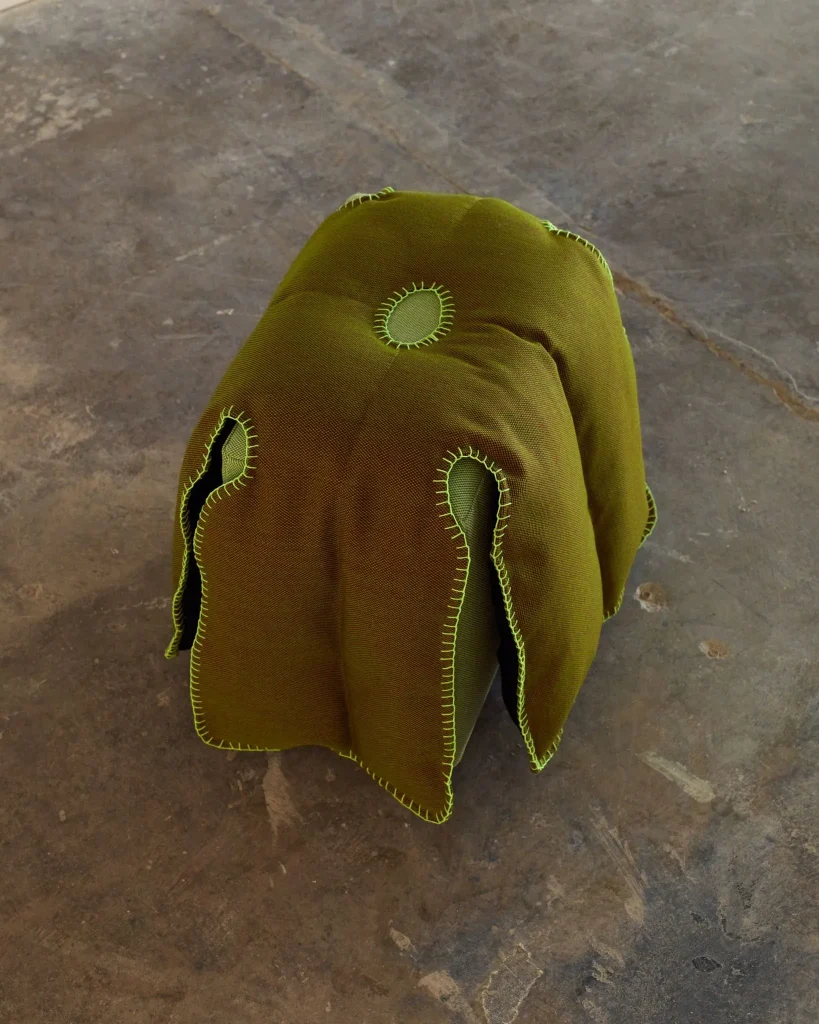
An upholstered stool from the London-based designer, built in two colorways — acid green and deep blue. The silhouette is soft and slightly absurd, which keeps it from reading as a straightforward pouf. Meanwhile the pattern wraps a curved surface, so it holds color at eye level without occupying wall space.
€2.350 incl. tax
Super Superficial – Lounge Chair by Laura Kjær Studio
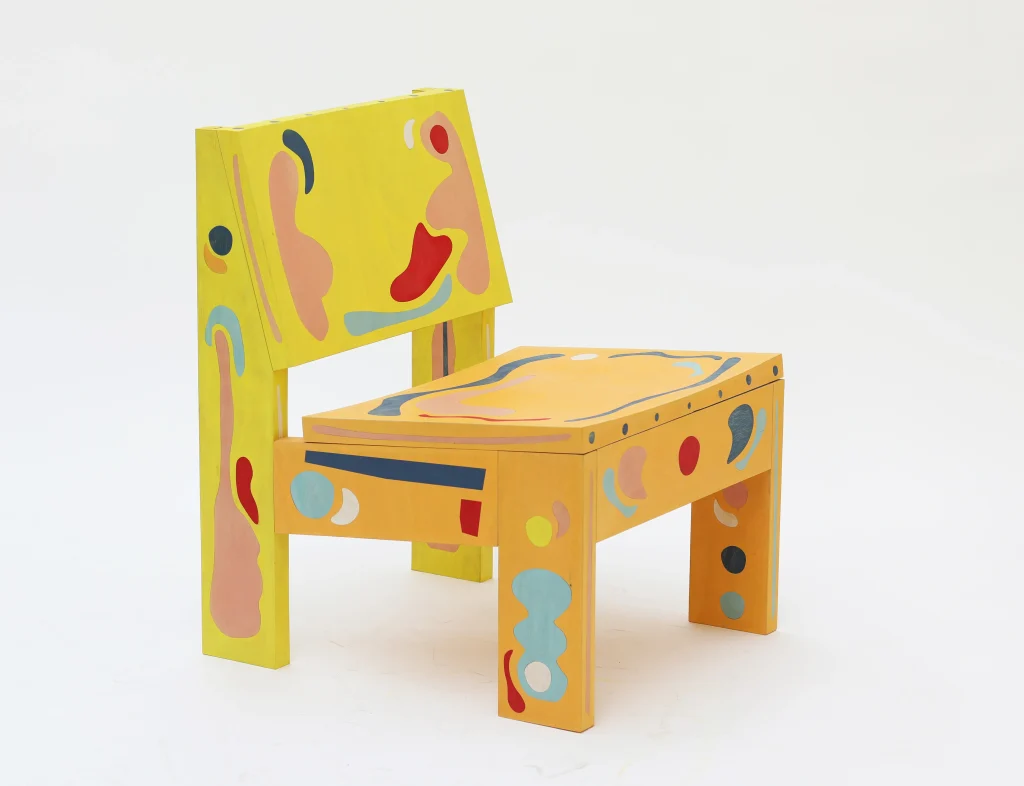
Traditional marquetry cut by laser, pulling folk-art ornament into a chair that draws on 1990s rave color. Laura Kjær treats surface as a tool rather than a finish, and the density of pattern is only possible because the cutting is mechanized. As a result it sits between furniture and artwork, closer to an accent chair that decides the room than one that joins it.
€3.000 incl. tax
Dome Mirror by thehighkey

A parabolic mirror set into a routed plywood frame that reads as ripples in water. Reliefs are historically carved from natural material; here the studio cuts into industrial plywood and foam instead, softening the square edge until the sheet looks handled. Therefore it distorts rather than reflects, which makes it the most disruptive mirror in this selection.
By thehighkey
€4.200 incl. tax
“ANDO” Mirror by Leo De Carlo
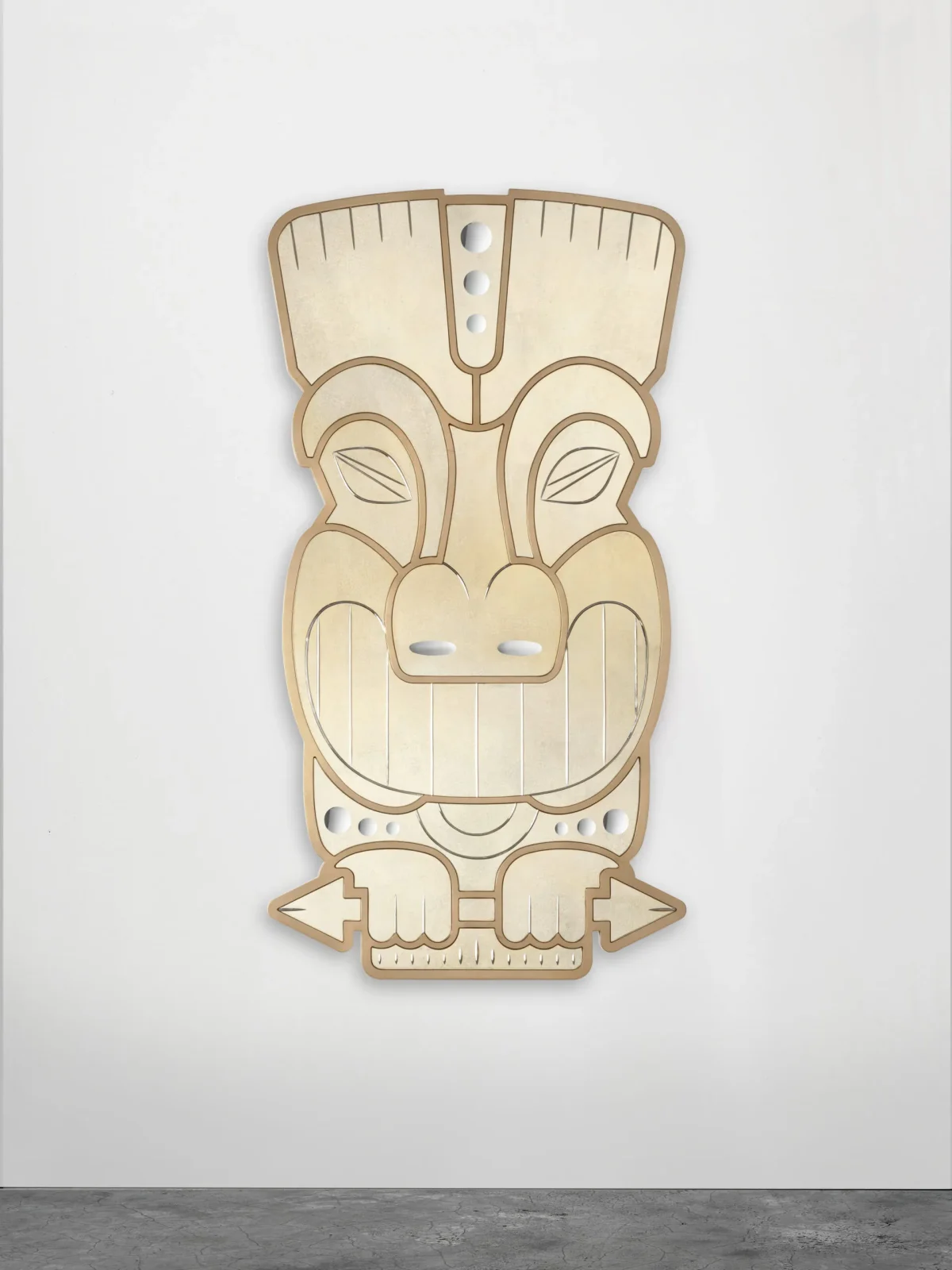
Handmade and engraved in Venice over a gold-leaf-coated wood structure, in an edition of eight. The totem form comes with an invented mythology — ANDO is described as the guardian of burnt-out bulbs — which is exactly the kind of narrative maximalism runs on. Subsequently the piece works less as a mirror than as a limited edition object that happens to reflect.
By Leo De Carlo
€12.000 incl. tax
S.S Series, Sound System 01 by Lucas Muñoz Muñoz
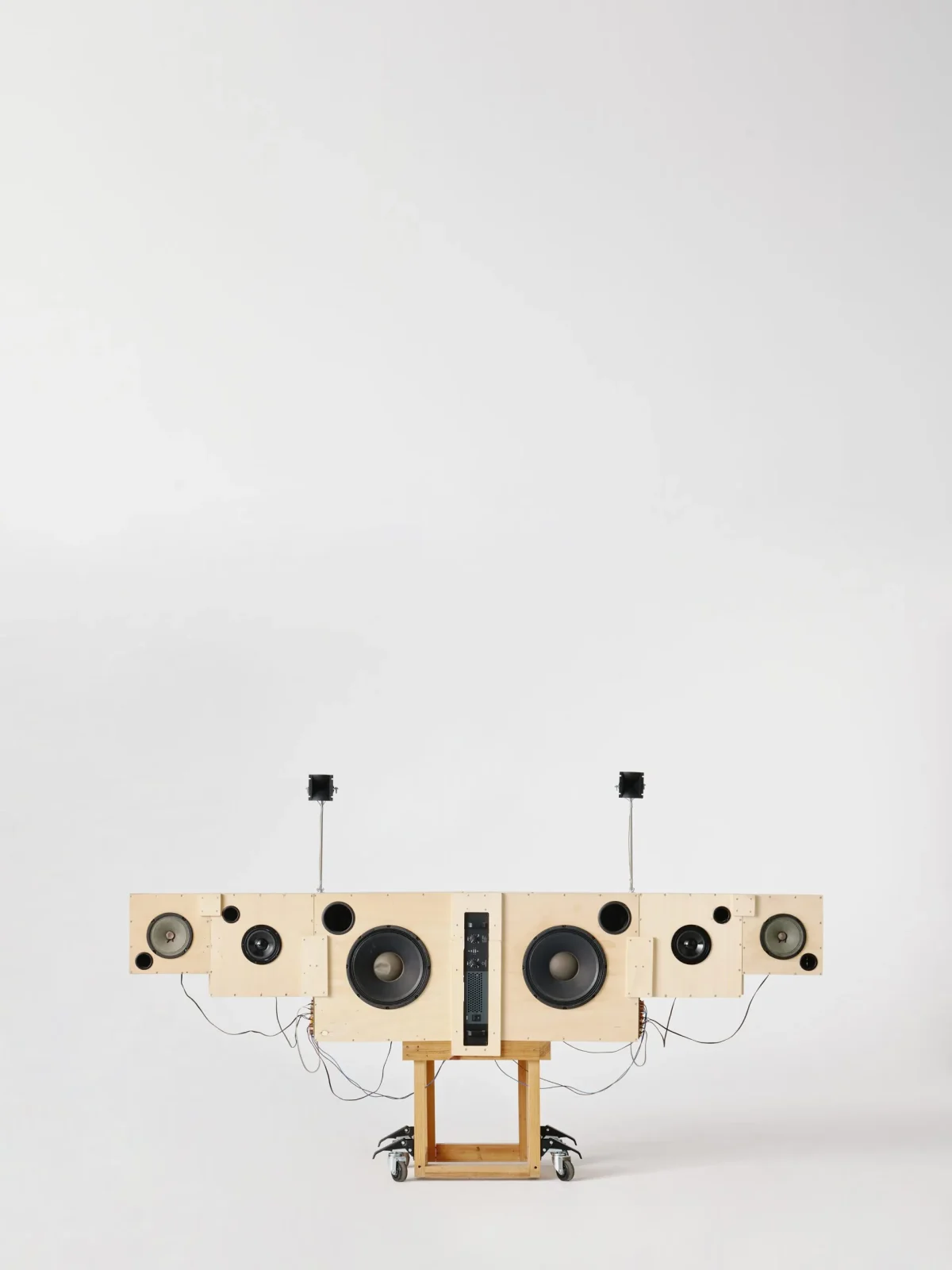
Poplar plywood reclaimed from a 2018 festival skate ramp, dismantled and rebuilt into cabinets held with heat-blackened screws and lined with recycled textile geopanel. Nothing inside is glued, and 2.500w runs across three channels. Altogether it is the clearest argument here that speakers belong in the same conversation as sculpture.
€24.000 incl. tax
Maximalist decor room by room
Living room
The living room can carry the largest object in the house, so start there. A patterned chair or a wall-scale mirror sets the register, and smaller ceramic pieces on the coffee table layer underneath without competing. Meanwhile keep one wall quiet — maximalist living room decor holds together far better when the eye has somewhere to rest between statements.
Bedroom
A maximalist bedroom works best when the color sits above the bed rather than around it: a textured mirror, a hung rug, a grouping of small wall pieces. Consequently the sightline from the door does the work, and the rest of the room can stay comparatively plain. A pouf at the foot of the bed adds a second color at low height, which balances a tall wall piece.
Entryway and hallway
Entryways are short encounters, which makes them the right place for the most assertive object you own. A mirror is the obvious choice and the practical one. Specifically, hang it where it catches light from the room beyond rather than flat against a dark wall, and give it a single companion piece — a vase on a console, nothing more.
Dining room and kitchen
Tableware and vessels are the easiest entry into going maximalist, because they arrive in sets and change with the season. A food-safe ceramic vase on the table, a sculptural ashtray on the sideboard, glazed color against plain linen. In addition, the dining room tolerates more pattern than most rooms, since people are seated and the walls sit behind them.
Caring for maximalist decor
Hanging mirrors and wall pieces safely
Match the fixing to the wall, not to the piece. Drywall needs toggle or spring anchors rated well above the actual weight; masonry takes a plug and screw. Heavy mirrors should hang from two points rather than one, and a gold-leaf or engraved frame should never take the load through the frame itself. Therefore check whether the piece ships with a hook, a cleat or neither before the day it arrives.
Cleaning ceramic, porcelain and glazed surfaces
A damp cloth with light pressure removes most dust; dish soap handles the rest. Avoid abrasive cream cleaners on glaze, and avoid dishwashers entirely where gold luster is involved, since the metal will dull. Notably, gravity is the real enemy with ceramics — handle vessels by the body rather than the rim, and empty them before moving.
Caring for hand-knotted wool
Vacuum without a beater bar, in the direction of the pile. Plant-dyed wool releases a little color when new, so blot spills rather than rubbing them and never soak the backing. Furthermore, rotate a floor rug twice a year so foot traffic and sunlight wear it evenly — the same piece hung on a wall needs almost nothing beyond occasional airing.
Protecting papier-mâché and painted finishes
Paper-based pieces dislike humidity more than they dislike handling, so keep them out of bathrooms and away from radiators. Dust with a dry brush rather than a wet cloth. Consequently a textured frame stays crisp for years, while a damp-wiped one will eventually lift at the edges.
Keeping color true over time
Direct sun fades saturated pigment faster than anything else in a room, and it fades unevenly. Position strong color out of the path of afternoon light where you can, or accept the shift as part of the object’s life. Moreover, powder-coated metal and fired glaze hold color almost indefinitely, which is worth weighing when you decide where the investment piece goes.
Frequently asked questions
How do I start decorating in a maximalist style?
Buy one object with real presence and build outward from it. A large mirror, a patterned chair or a rug gives you a color reference the rest of the room can answer. Starting with small accessories is the common mistake, since they accumulate into busyness rather than composition.
How many colors should a maximalist room use?
Three to five, repeated. Maximalism is not color without limit — it is a palette used at full strength and echoed across several objects. If a color appears only once in a room, it reads as an accident.
Can maximalist decor work in a small apartment?
Yes, and often better than in a large one. Small rooms benefit from wall-mounted pieces and vertical color, which leave the floor clear. A single mirror and two or three strong objects carry a small space; the same pieces would look sparse across a large open plan.
Is maximalism the same as eclectic style?
They overlap but differ in intent. Eclectic interiors mix periods and origins; maximalist interiors turn up intensity — color, pattern, ornament, scale. A room can be eclectic and restrained, or maximalist and drawn entirely from one decade.
How do I keep maximalist decor from looking cluttered?
Leave negative space on purpose. One quiet wall, one clear surface, and grouping small objects together rather than scattering them across the room. Clutter is what happens when objects are distributed evenly; composition is what happens when they are gathered.
Are maximalist design pieces a good investment?
Pieces from independent studios in short editions tend to hold value better than mass-produced statement decor, particularly when they carry a certificate of authenticity. Material matters too — fired ceramic, hand-knotted wool and powder-coated metal age well, while printed and laminated surfaces generally do not.
Why maximalist decor earns its place
Maximalism gets dismissed as a reaction to minimalism, and for a while it was. The pieces here suggest something more durable: objects made slowly, in small numbers, by studios that treat color and ornament as technical problems rather than decoration applied at the end. A gold-lustered porcelain ashtray and a hand-knotted wool object have more in common with each other than either has with a trend.
At ADORNO we work with independent makers across design styles and rooms, from maximalist tables to maximalist lamps and decor. Each piece is handmade, one-of-a-kind or produced in a short edition, and collected directly from the studio that made it.