Updated on: September 24, 2026
Two truths and a lie:
A dragonfly’s compound eyes can contain up to 30,000 individual lenses.
A cockroach can live for a week without its head.
There’s a species of ant that explodes itself as a defense mechanism, turning its own body into a living grenade.
Trick question: they’re all true. When it comes to insects, reality is often stranger than fiction, and there is no shortage of bizarre truths.
This is exactly the kind of fascinating, otherworldly energy that makes insects such compelling design inspiration. Love them or hate them, for most people insects fall squarely into “can’t look away” territory, that particular balance between curiosity and unease that keeps us transfixed. This selection channels that uncanny tension: designs that draw on 400 million years of evolutionary experimentation to produce objects that feel at once elegant, efficient and eerily unfamiliar. These aren’t literal recreations, but works that hum with the strange, specific vitality of the insect world.
Why insects make such good design muses
Insects are nature’s most successful engineers. Their armored shells, jointed limbs and iridescent surfaces solve real problems of protection, movement and survival. As a result, they offer designers a vocabulary of forms that look both futuristic and ancient. The pieces in our insect-inspired design collection borrow that vocabulary to create sculptural furniture, lighting and objects that refuse to be ordinary. For a wider look at nature’s influence, see our guide to biomimicry.
The exoskeleton aesthetic
Beetles gleam in armor that looks forged rather than grown: shiny, segmented shells that feel closer to machinery than biology. Designers echo this with furniture and objects that lean into exoskeletal logic, from glossy, modular surfaces to ribbed textures and fractured geometry. Think concrete facades that resemble the compound eyes of a fly, or chairs whose legs splay out like a praying mantis mid-strike. These designs don’t mimic insects outright; they share their logic, protective yet delicate, minimal yet intricate.
Insect Sconce – Recycled Aluminum / Burnt Ash Wood by BY JAMPS
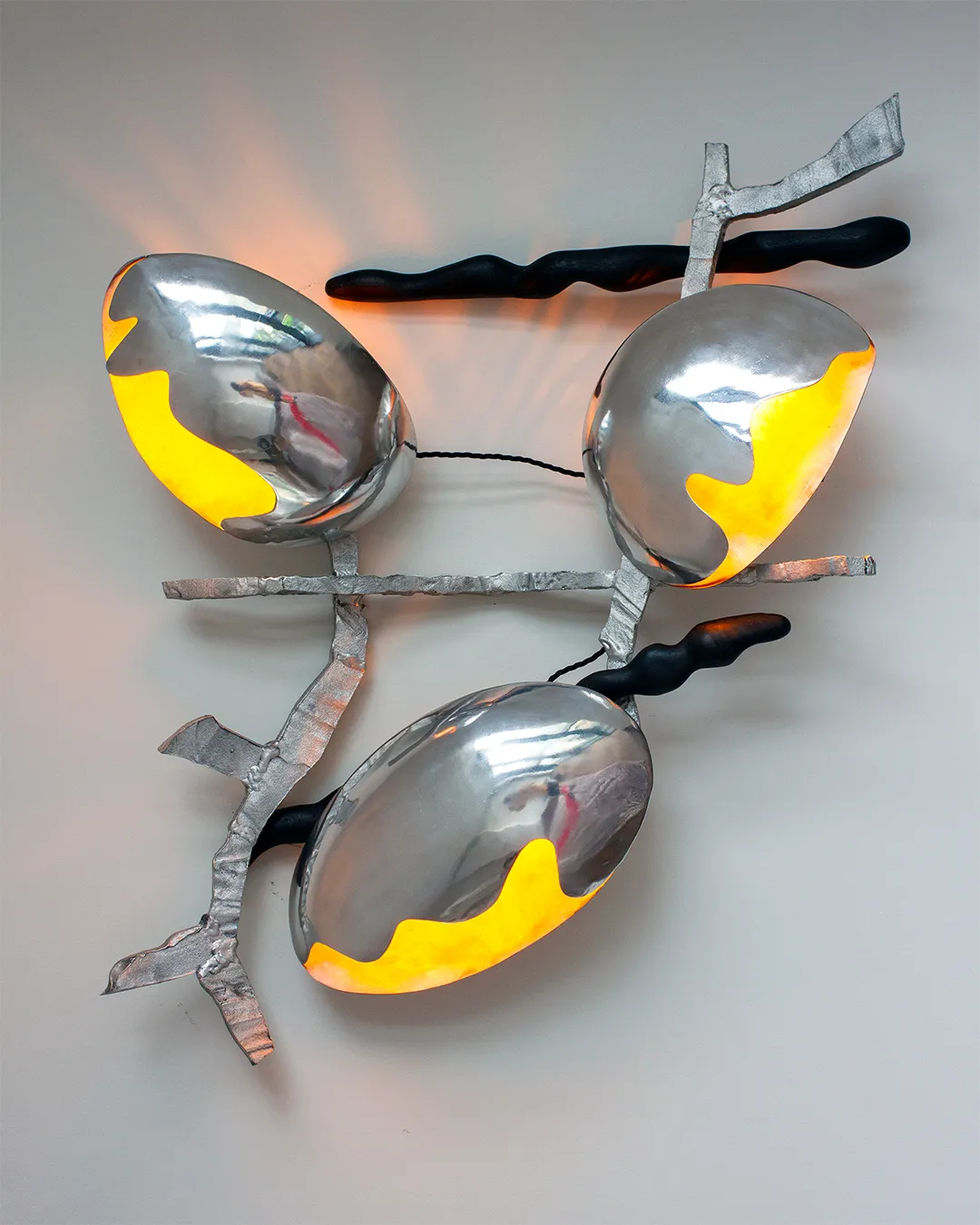
Recycled aluminum and burnt ash wood combine in a wall sconce with a segmented, shell-like body. The dark, charred wood contrasts with the metal, like a beetle’s wing case against its body. Consequently, it looks as though it has just landed on the wall.
By BY JAMPS
€5.000 incl. tax
Insect Lounger – Recycled Cast Aluminum by BY JAMPS
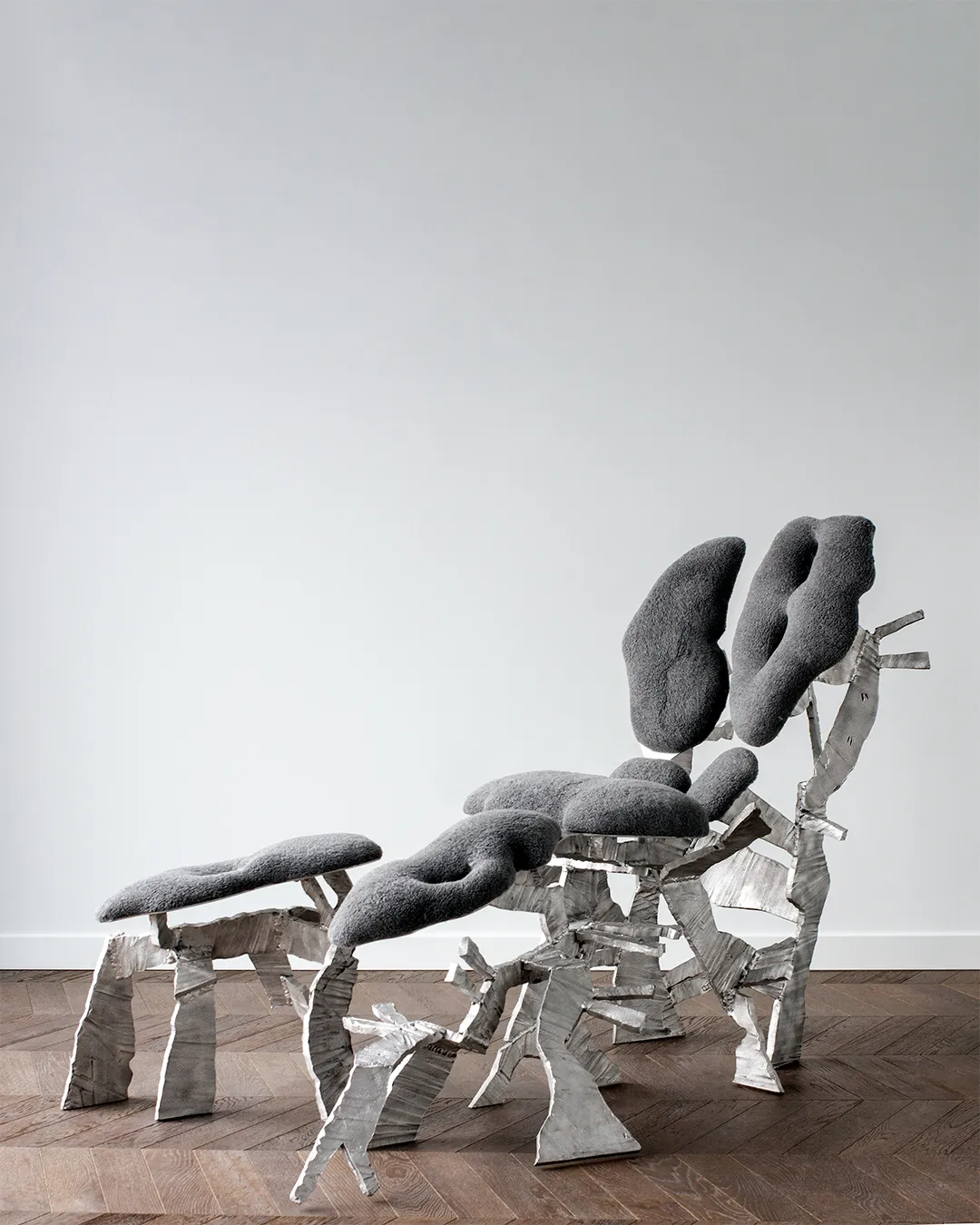
Cast in recycled aluminum, the Insect Lounger stretches out like a creature at rest, its body segmented and its limbs splayed. The metal surface catches light like a polished carapace. In other words, it is the exoskeleton aesthetic at full scale, and it is in stock.
By BY JAMPS
€8.000 incl. tax
Pouffe – Maximalist Upholstered Stool by Jaclyn Pappalardo
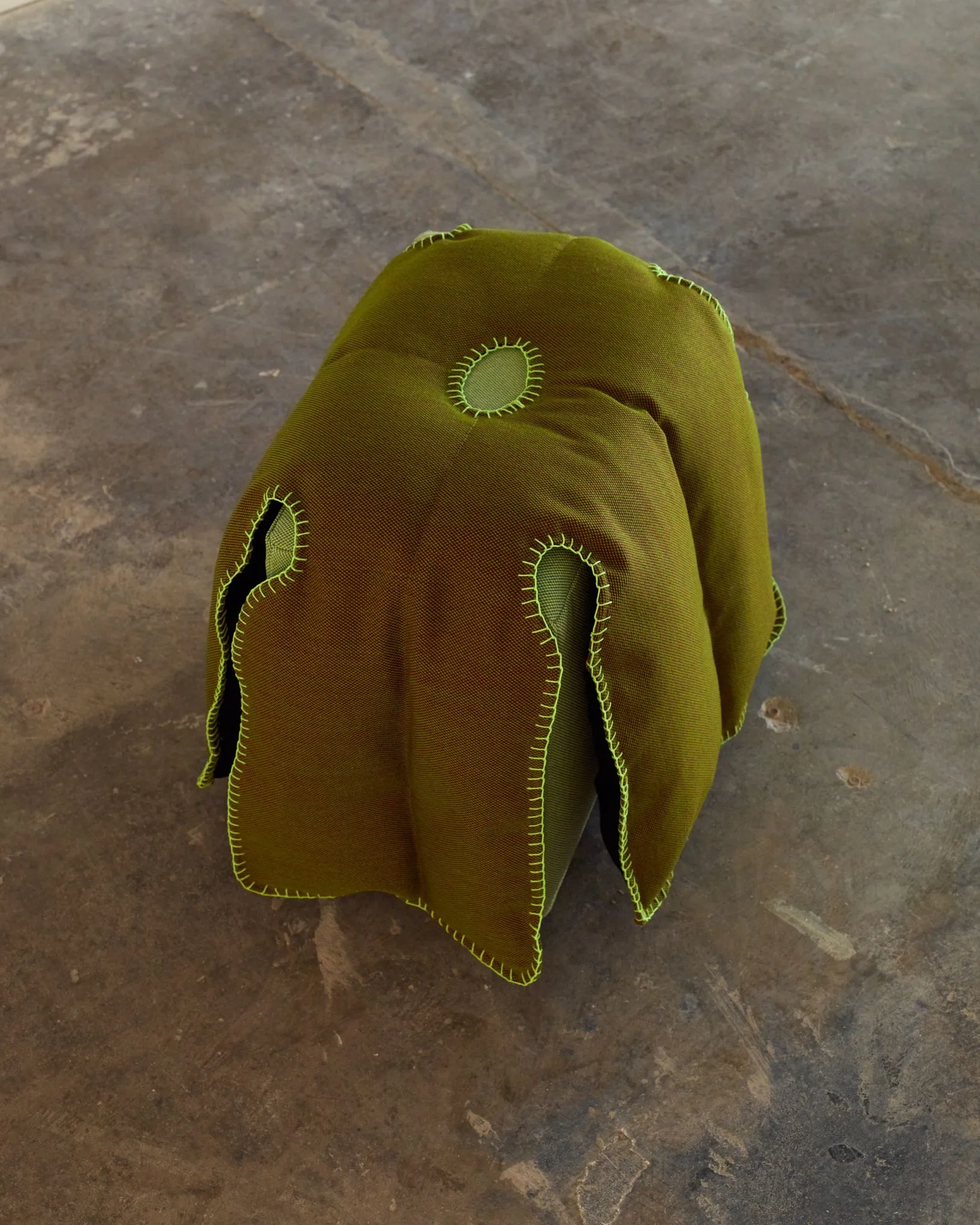
Upholstered in acid green or deep blue, the Pouffe has a soft, rounded body that recalls a larva or a beetle curled in on itself. It is playful, tactile and unapologetically bold. Therefore, it brings a maximalist jolt of color to any corner.
€2.350 incl. tax
Crawling forms and unpredictable movement
Other works lean into the writhing, kinetic energy insects exude. Lighting with curling appendages twists as though caught mid-molt, while sculptural pieces bristle with jointed limbs, segmented like a centipede’s back. Even at rest, these designs buzz with implied motion. It’s the visual equivalent of a rustle in the leaves: you’re not sure what it is, but you can’t ignore it.
The Disco Dancer Table Lamp in Textile by Masha Volkova
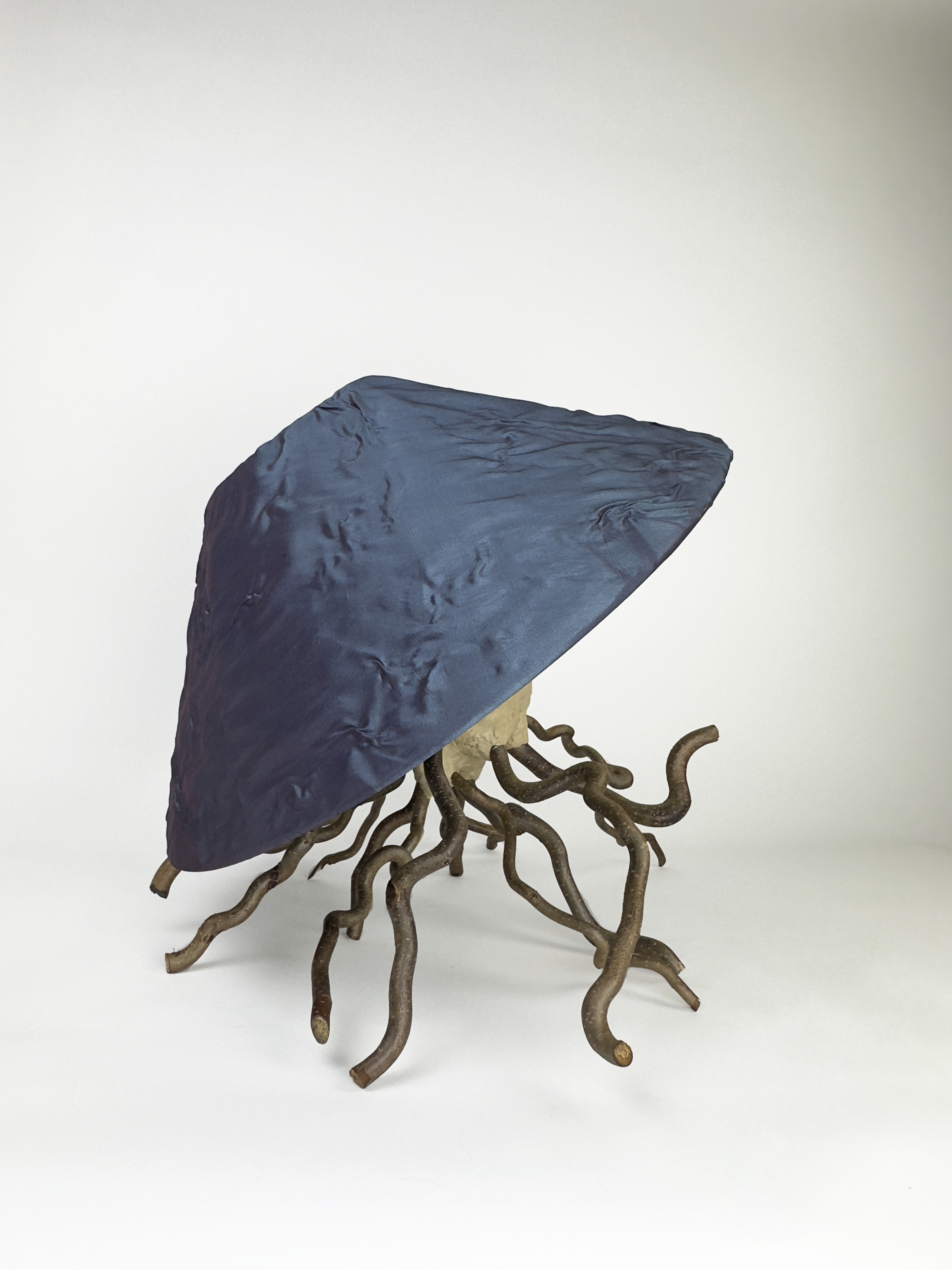
Made in textile, the Disco Dancer seems frozen mid-move, its limbs bent as if caught in a strange dance. The soft material contrasts with its angular, animated pose. As a result, it is one of the most characterful table lamps in the collection, and it is in stock.
€1.300 incl. tax
Untitled I Floor Lamp in Steel and Bronze by aeny studio
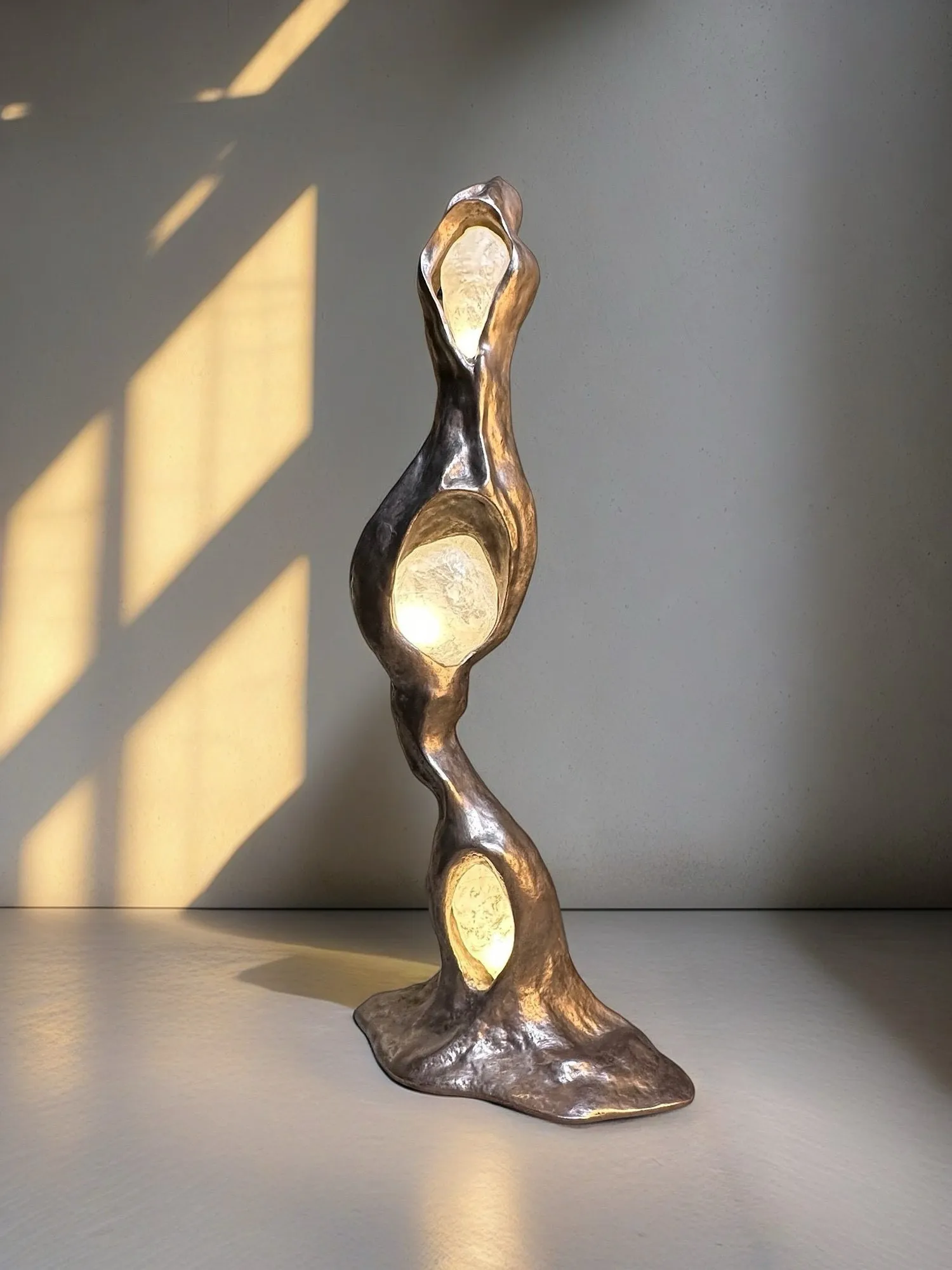
Steel and bronze rise in a tall, spindly structure that recalls the legs of a stick insect or a mantis poised to strike. The floor lamp reads as a sculpture first. Indeed, its thin, jointed silhouette gives a room a quiet, watchful presence.
By aeny studio
€12.500 incl. tax
Ocellus Sconce by Isabel Moncada
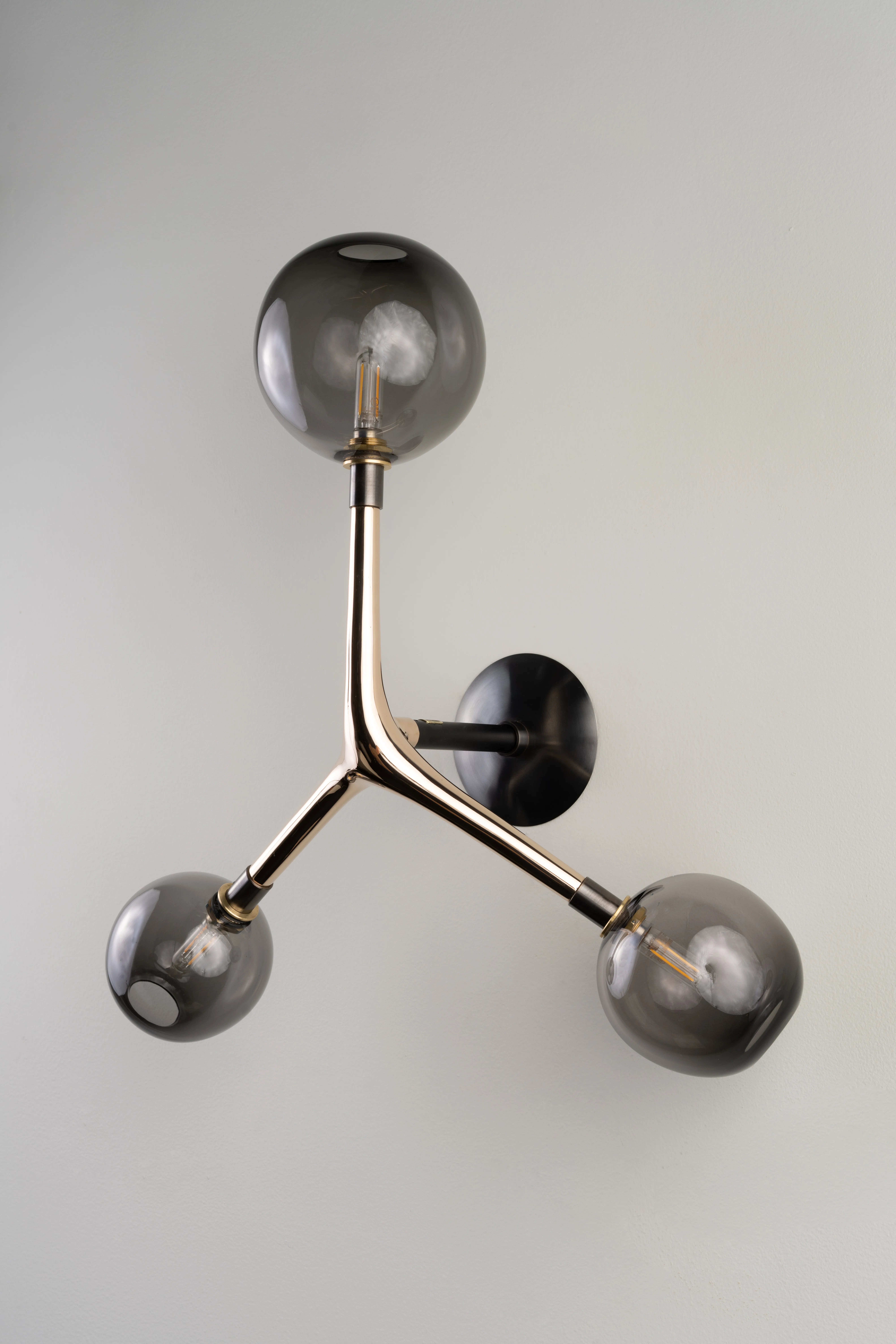
Some insects have eye-like spots between their eyes, used to scare predators or attract a mate; these lures are called ocelli. Isabel Moncada’s Ocellus sconce translates the idea into cast bronze with three blown glass or porcelain globes. Moreover, its low-watt LED lasts up to 18 years and saves 90% of energy.
€3.510 – €4.036 incl. tax
The intrigue of the unsettling
What makes insect-inspired design so powerful is its refusal to comfort. We’re conditioned to seek out soft curves, smooth finishes and symmetry. Insects offer none of that. Their forms are sharp, angular and alien, yet they work. There’s a harsh elegance to their segmented bodies and armored hides, and when that aesthetic enters the home, it reshapes how we define beauty: not as ease or familiarity, but as intrigue. As edge.
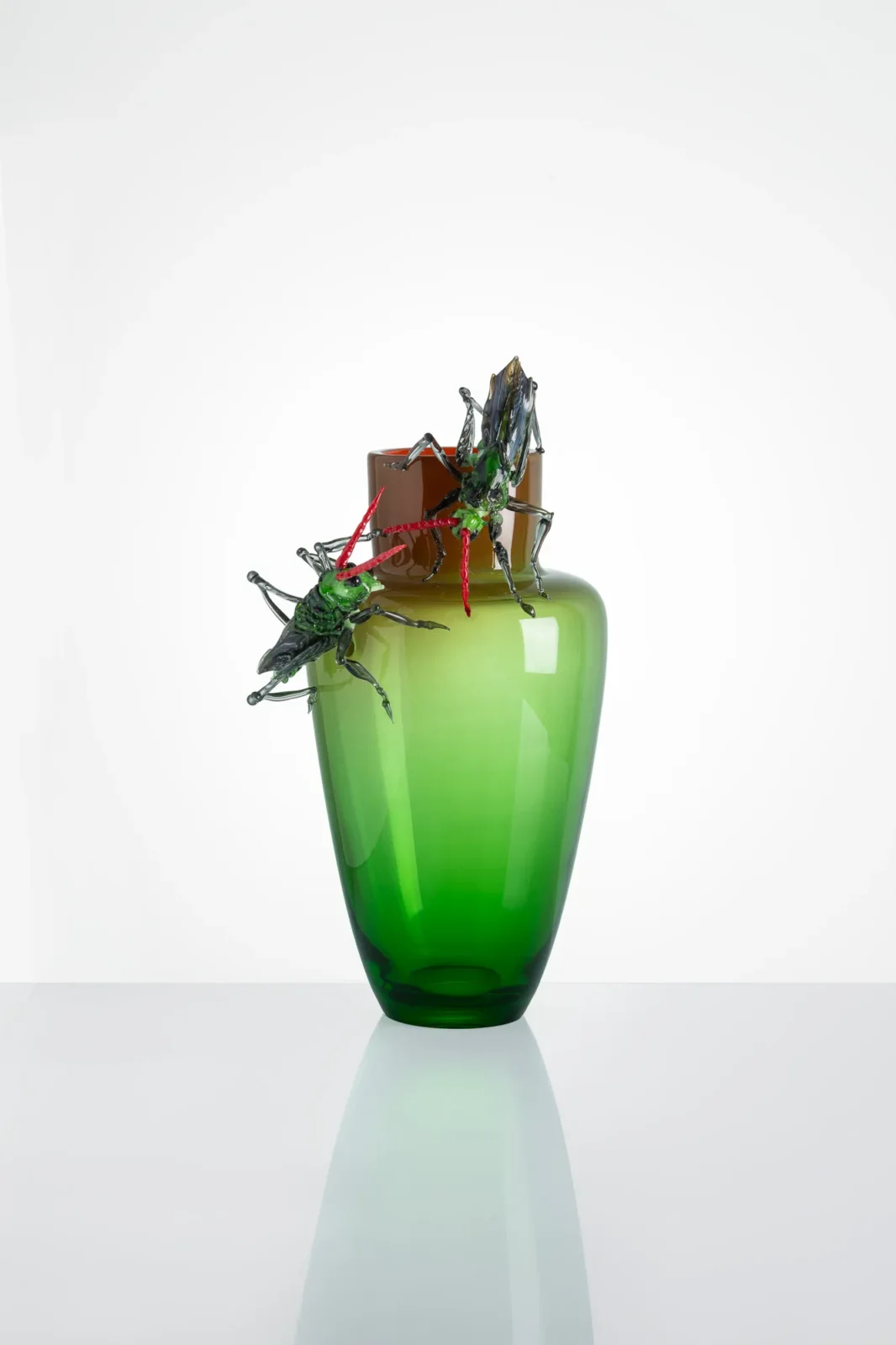
Dark Cave Animals Bug Vase by Frantisek Jungvirt
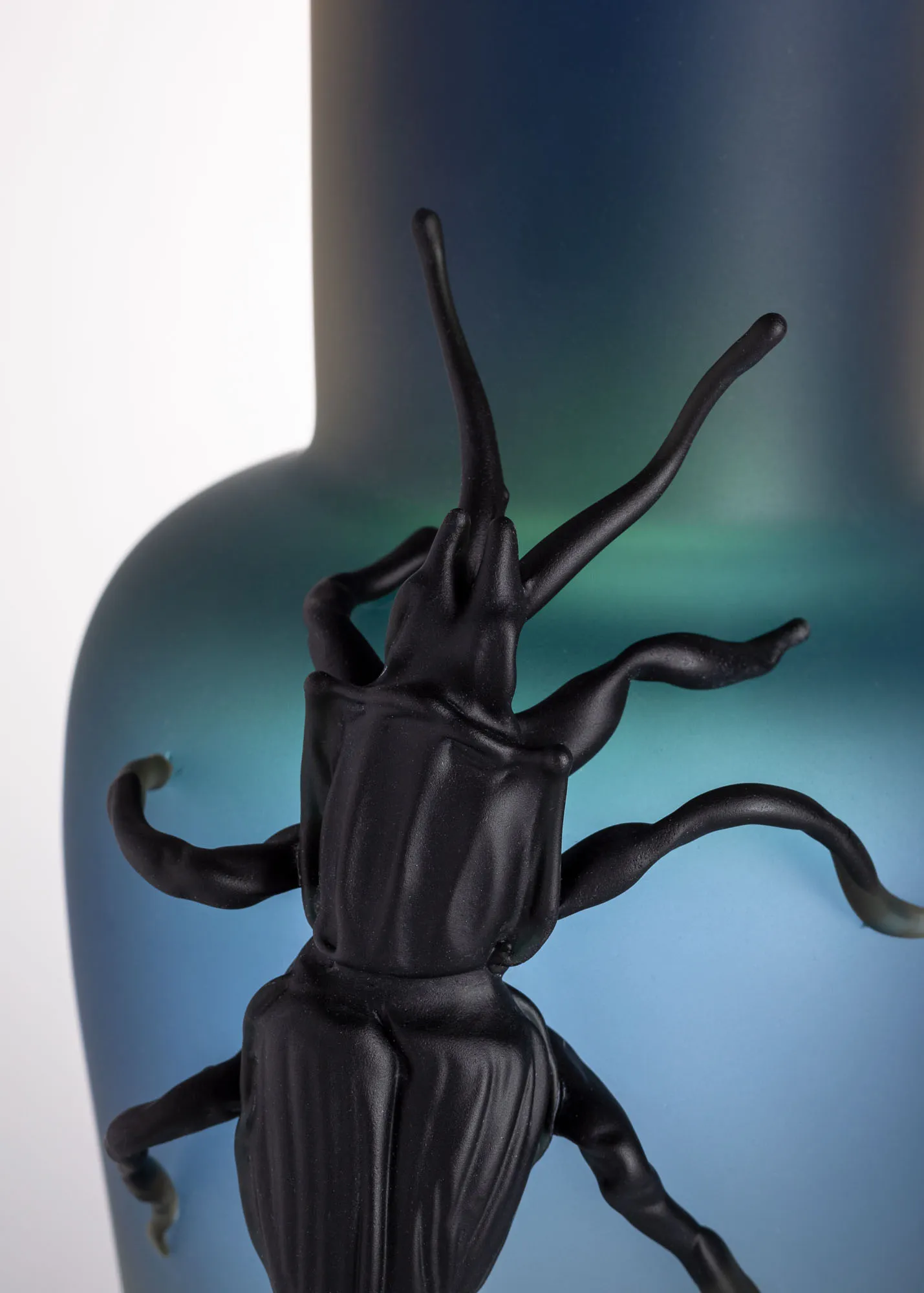
Part of Frantisek Jungvirt’s Dark Cave Animals edition, this mouth-blown glass vase carries a hot-glass modeled bug on its surface. The creature is so lifelike it feels about to move. Consequently, the vase plays on the tension between beauty and unease that runs through this whole selection.
€6.900 incl. tax
Grasshoppers – Vases With Meadow Grasshoppers by Frantisek Jungvirt
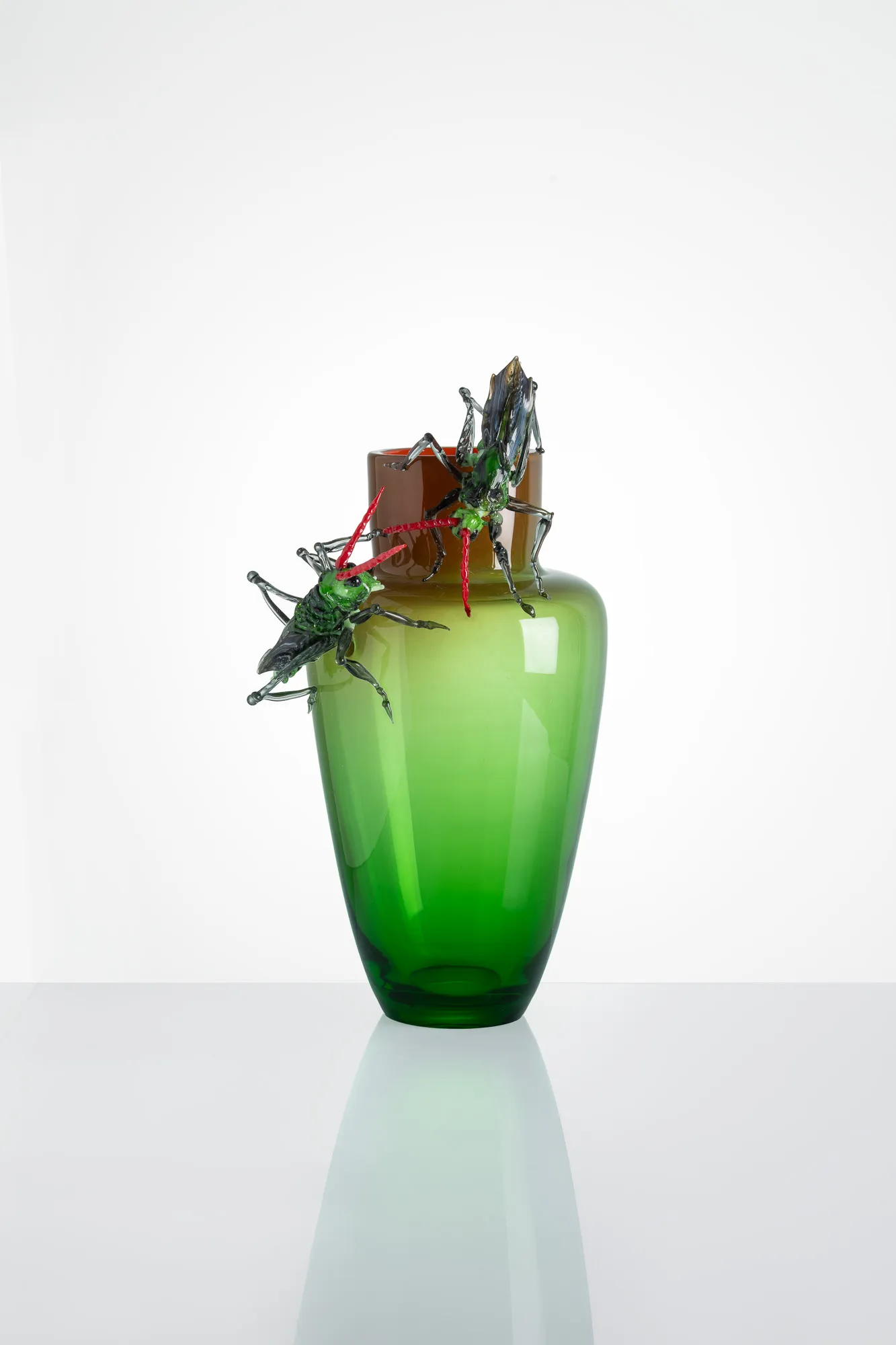
In this collector’s edition, a grasshopper leaps into a vase lying on its side while two others watch from outside, a small drama about the boundary between life and death. The figures are hot-glass modeled by glass master Martin Štefánek and hand painted with specially developed colors. Each piece is one of a kind, signed, certified and numbered.
€10.200 – €10.900 incl. tax
Shocking Chair – Stained Oak Wood Dining Chair by Josh Page Studio
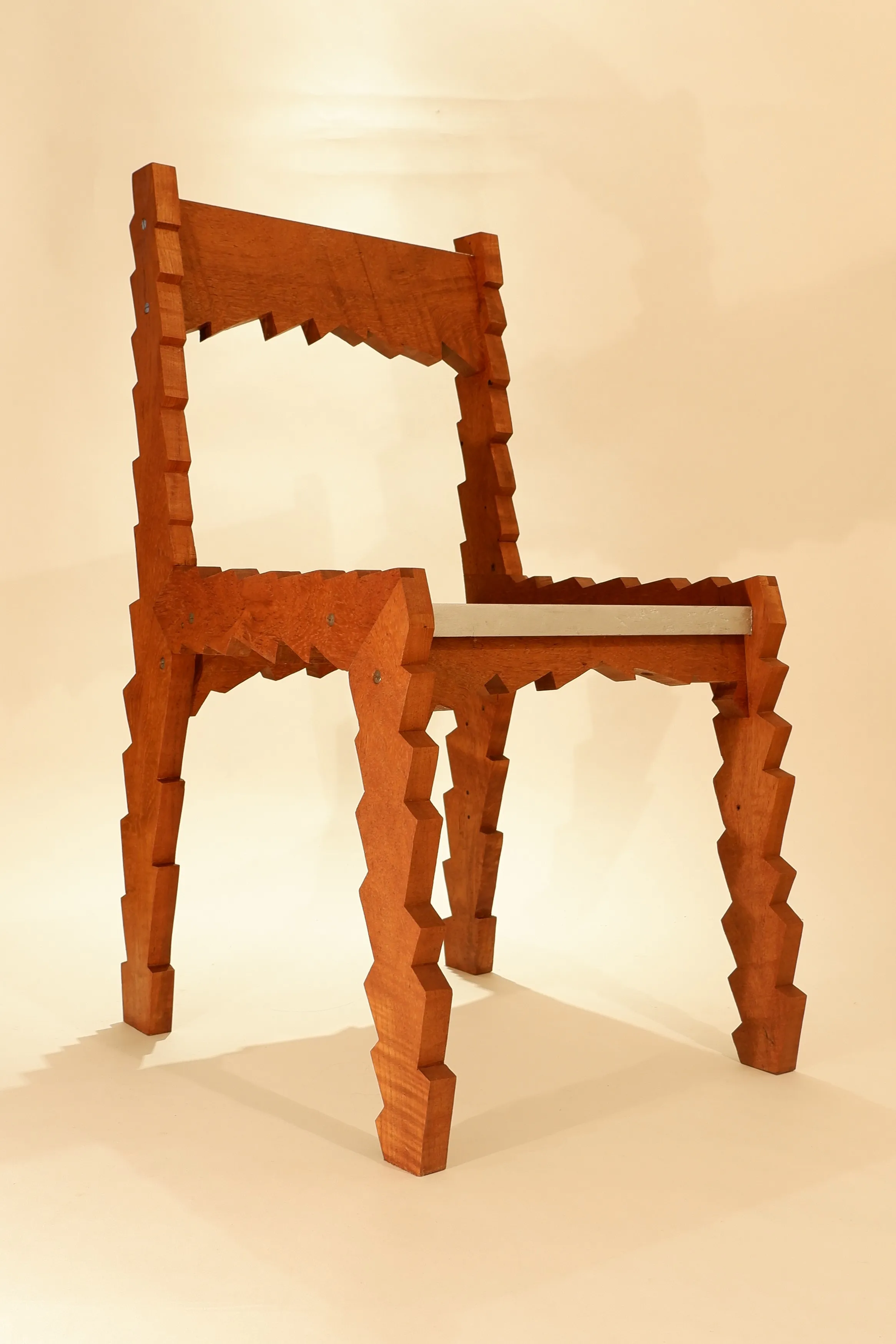
In stained oak, the Shocking Chair balances on angular, splayed legs that feel poised to scuttle away. Its sharp geometry makes an ordinary dining chair feel alert and alive. In short, it is proof that weird furniture can still be practical.
€940 incl. tax
How to style insect-inspired decor
Treat one insect-inspired piece as a conversation starter rather than a theme. A sculptural sconce or a glass vase with a hidden creature works best against calm surroundings, where its details can be noticed. Pair metallic, shell-like surfaces with natural textures such as wood and linen, and let the strangeness speak for itself. For more unusual furniture, browse our unique chairs.
Frequently asked questions
What is insect-inspired design?
Furniture, lighting and objects that borrow the forms and logic of insects: segmented shells, jointed limbs, compound eyes and iridescent surfaces. The best examples evoke insects without copying them literally.
Is insect-inspired decor the same as biomimicry?
Not quite. Biomimicry borrows nature’s processes to solve functional problems, while insect-inspired decor is mostly about form and atmosphere. Some pieces do both.
How do I decorate with weird furniture without it feeling like a theme?
Choose one or two strong pieces and surround them with simple, natural materials. Let the unusual form stand out rather than repeating the motif throughout the room.
What materials are used in insect-inspired design?
Recycled aluminum, bronze, blown glass, burnt wood, textile and upholstery all appear here. Metals and glass are especially good at capturing the gloss of an exoskeleton.
Are these pieces functional or purely decorative?
Both. The selection includes working lamps, chairs, stools and vases, each designed for everyday use as well as visual impact.
Let things get weird
This isn’t biomimicry in the traditional sense. It’s not just form following nature; it’s form channeling something deeper and stranger. Insects don’t evolve for aesthetics; they evolve for survival. In doing so, they’ve produced some of the most mesmerizing, efficient and baffling structures on Earth. Designers tapping into this energy aren’t imitating; they’re tuning in to an ancient, alien rhythm.
Maybe what we need now isn’t more refinement but more risk. More forms that challenge us. More designs that crawl under the skin. Insects have spent hundreds of millions of years perfecting strange solutions to real problems, each limb, shell or feeler a response to the world’s chaos. Perhaps it’s time to listen. After all, they were here long before us, and their designs are still going strong.