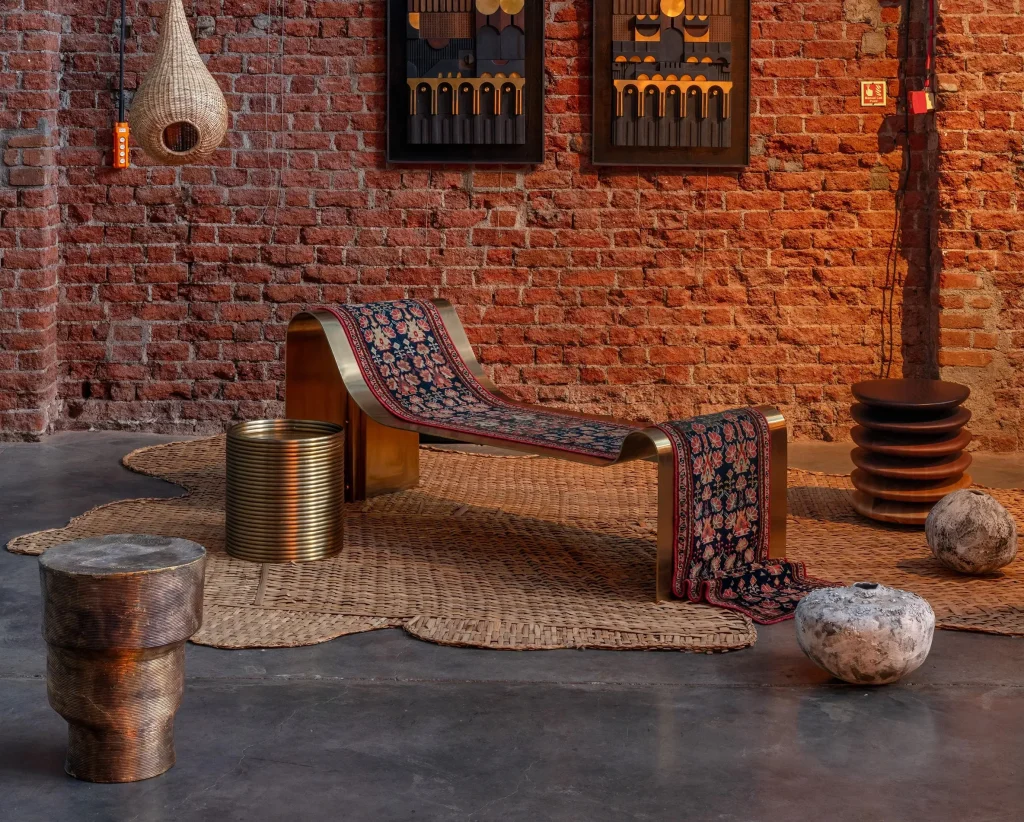
“Craft is being reimagined not as heritage locked in time, but as a living system of knowledge adaptable to the present.”
Updated on: October 31, 2026
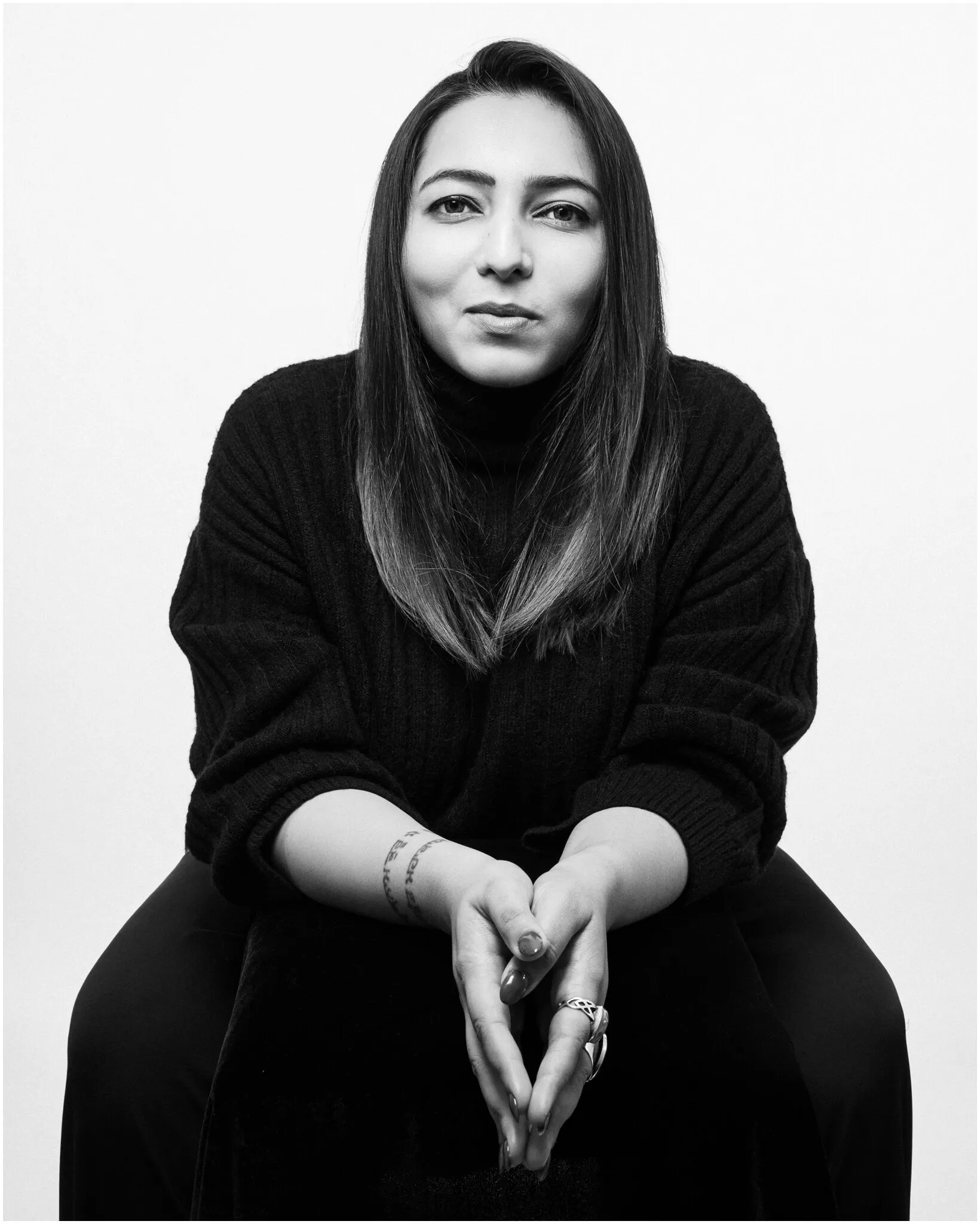
When Kamna Malik speaks about Indian design, she draws on more than a decade of shaping how the world sees creativity from the subcontinent. As former editor of ELLE India and curator of the India Design ID fair, she has brought creative communities together, introduced global audiences to leading Indian voices and argued for India as a serious contributor to the global design conversation. Today, she runs the cultural agency KRSP, working on brand strategy, international collaborations and curatorial projects.
In 2025, Malik selected seven studios for ADORNO’s Design Destination: India campaign. This interview, first published in August 2025, is kept as a record of that campaign and of her view of Indian design at a turning point. Most of the studios she chose have since left ADORNO; the Indian studios available today are listed at the end.
Kamna Malik on the Current Moment in Indian Design
How would you describe the current moment in Indian design?
The current moment in Indian design is one of powerful redefinition, a transitional phase where tradition and modernity are in active dialogue. We’re witnessing a new design vocabulary emerging: one deeply rooted in India’s material culture, craft practices and regional diversity, yet unafraid to engage with contemporary forms, technologies and global aesthetics.
Design in India today is no longer just about utility or ornamentation; it’s about meaning-making. There’s a growing sensitivity to context, social, cultural and ecological, which is leading to more intentional and narrative-driven products.
Importantly, the design landscape is also decentralizing. Talent is emerging from outside traditional urban centers, and digital access is reshaping how products are imagined, produced and experienced. There’s a visible shift toward material experimentation, sustainable thinking and a hybrid aesthetic that is neither purely vernacular nor entirely Western, but distinctly Indian in its multiplicity.

What do you hope international audiences take away from this campaign?
I hope international audiences come away with a more layered, contemporary and expansive understanding of Indian product design, one that goes beyond the clichés of color, craft or ornamentation that often frame global perceptions of India.
This campaign is about reframing the narrative: showcasing Indian design as a site of critical inquiry, material intelligence and conceptual depth. It’s an invitation to see Indian designers not just as inheritors of craft legacies, but as cultural thinkers, reinterpreting tradition, responding to modernity and shaping new identities through form and function.
“I want audiences to engage with the tension and harmony between the past and present that defines much of Indian design today.”
From material experimentation and process-driven making to socially embedded practices and slow, sustainable models, Indian product design today offers alternative futures, grounded in local knowledge systems but globally resonant in thought and execution. Ultimately, I hope the campaign challenges assumptions, sparks curiosity and positions Indian design not as peripheral or exotic, but as vital, plural and globally relevant.

How did you approach selecting these studios? What qualities, voices or values were you looking for?
The selection process was deeply intentional, shaped by a desire to represent the diversity, depth and evolving language of Indian product design. I wasn’t looking to present a single narrative or aesthetic, but rather a constellation of voices that reflect the multiplicity of India’s design landscape today.
This is not just a selection of beautiful objects; it’s a gathering of perspectives that challenge, provoke and expand how we think about design from the Indian subcontinent.
I looked for studios that are not only skilled in form and function but are also rooted in ideas, studios where design is a medium for cultural inquiry, storytelling and material exploration. Many of the selected designers reinterpret traditional knowledge systems, work closely with craftspeople or innovate with indigenous materials. Others experiment with form, scale or typology in ways that challenge what Indian design is “supposed” to look like.

Is there anything else you’d like to share about this project?
What’s important to acknowledge is that this campaign sits at the intersection of creativity and commerce, and that’s very intentional. While the curatorial lens is grounded in cultural and material storytelling, it’s also about positioning Indian design within a global marketplace in a way that is both authentic and competitive. It’s an invitation to see India not just as a source of inspiration, but as a serious contributor to global design discourse, and commerce.
Platforms like ADORNO offer an opportunity to shift the perception of Indian design from purely artisanal or decorative to collectible, conceptual and commercially viable. The selection reflects this duality: each piece holds artistic and cultural value, but is also made to exist in real spaces, in global contexts and for discerning audiences.
Ultimately, this is about expanding visibility and creating access, not just for the designers, but for international collectors, curators and design patrons to engage with Indian design in a more meaningful way.

The Seven Studios of Design Destination: India
Malik’s 2025 selection brought together Aku Zeliang, whose Angkha collection draws on the weaving of Nagaland; Project 810 (Vritima), with the Rahi bench and stools; Tectona Grandis Furniture, with the Cleave armchair and the Ripple 2.0 coffee table in teak; Josmo, with the Cosmos Cluster table and the Nanyuki lounge chair; Room Therapy Collective, with the Bend daybed and the Ring side table; House of Creatomy, with the Holt swing and the Amara coffee table; and Kohelika Kohli Karkhana, with the Abyss side table and the Plateau coffee table. For the full selection and the thinking behind it, see Design Destination: The New Voices of Indian Design.
Consequently, the campaign read as a map of where Indian design was heading in 2025: from the northeast to Delhi and Mumbai, from teak and stone to brass and woven cane. Like the designer Vikram Goyal, whom Wallpaper* profiled on bringing Indian craftsmanship to the global stage, these studios treated craft as a starting point rather than a style.
Indian Design on ADORNO Today
The studios in this campaign are no longer on ADORNO, but the conversation Malik describes continues. Our guide to Indian designers working in brass, stone and steel brings together six studios available today: by.aman, whose Kamal coffee table is cast in brass; Stem; Nitush and Aroosh; Mugen, with the alabaster Lunel lamp; Harshita Jhamtani Designs; and Arisaa.
Each of them works in the same territory Malik mapped: local materials, close work with craftspeople, and forms that belong in a contemporary room anywhere. Notably, Mugen and Harshita Jhamtani both work in alabaster, a translucent stone with a long history in Indian interiors. Furthermore, ADORNO keeps adding Indian studios, so the picture she drew in 2025 is still being filled in.