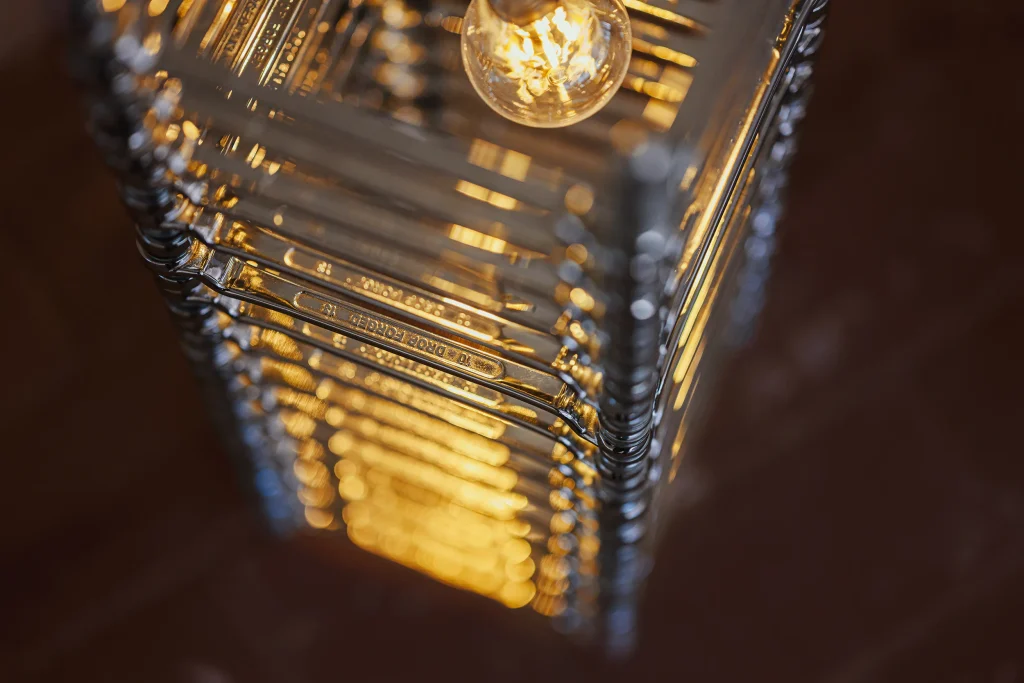
Light, strong and endlessly recyclable, aluminum can be cast, brushed, polished or folded into almost any lamp a designer can imagine.
Updated on: November 12, 2026
Aluminum is the most abundant metal in the Earth’s crust, yet in the 19th century it was so hard to refine that it was worth more than gold. Today it is one of the most common materials in design, and in lighting it is especially useful: it conducts heat away from bulbs, resists rust, and weighs far less than steel or brass.
Here is why designers choose aluminum for lamps, the main finishes and how to care for them, and seven aluminum lamps by independent studios, from a reshapeable tower of wrenches to a brutalist wall light.
Why Aluminum Works for Lamps
It handles heat. Aluminum conducts heat well, so it draws warmth away from LEDs and bulbs and helps them last longer. That’s why it is used for so many lamp bodies and heat sinks.
It is light but strong. A large aluminum shade or arm weighs a fraction of the same piece in steel or brass, which makes floor lamps easier to balance and wall lights easier to hang.
It resists corrosion. Aluminum forms a thin oxide layer that protects it from rust, so it works in bathrooms, kitchens and covered outdoor spaces.
It can be shaped in many ways. It can be sand-cast, lathe-turned, laser-cut, folded, brushed or polished, giving designers a wide range of forms and surfaces from one material.
It is recyclable. Aluminum can be recycled again and again without losing quality, and recycling it uses only a small part of the energy needed to make new metal. As NPR’s history of aluminum explains, it went from precious metal to everyday material in little more than a century.
Aluminum Lamp Finishes
Raw and brushed
Left untreated or brushed by hand, aluminum has a soft gray sheen. It slowly oxidizes and dulls, which many designers welcome as a natural patina.
Polished
Polishing gives a bright, mirror-like surface that reflects light around a room. It shows fingerprints, so it suits pieces you won’t touch often.
Cast and sand-cast
Molten aluminum poured into sand or a mold keeps the texture of the process, with ripples and pitting that make each piece unique.
Anodized and powder-coated
Anodizing hardens the surface and can add color; powder coating gives a durable matte or gloss finish in almost any shade.
Designers often pair aluminum with a contrasting material. Barber Osgerby’s Signals lamps, featured in Wallpaper*, set aluminum bases against mouth-blown Venini glass, and several lamps below do the same with brass, oak or bamboo.
7 Aluminum Lamps from Independent Studios
From cast and brushed to polished and folded, these lamps show how differently aluminum can look in the hands of independent designers. Explore more in our lighting collection, or see our guide to aluminum furniture.
Wrench Standing Lamp by Iyo Hasegawa

Built from offset aluminum wrenches, long screws, washers and hex nuts, with nothing glued or welded. The wrenches twist freely, so the lamp can be reshaped, folded flat, or taken apart and its parts used as tools again.
By Iyo Hasegawa
€2,300 incl. tax
Aurora Table Lamp by Hasik Design Studio

A circle and a rectangle in hand-brushed raw aluminum, recalling a solar eclipse or a saint’s halo. The metal is left to oxidize naturally, so the surface gains character over time.
By Hasik Design Studio
€700 incl. tax
Rln460 Wall Lamp by MLK Furniture
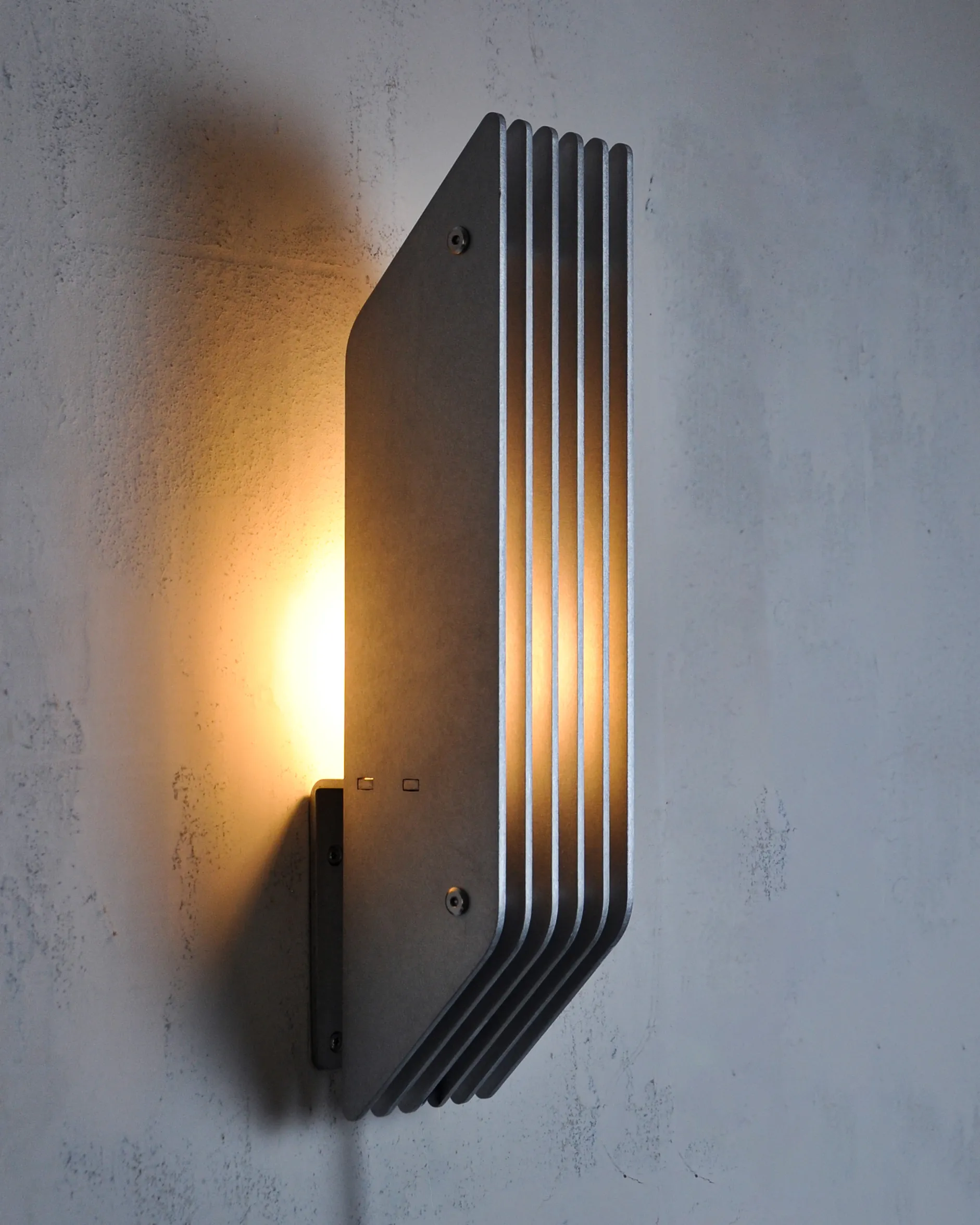
A brutalist wall light in raw aluminum, hand-sanded and finished, with stacked fins that wash warm light across the wall. Supplied with a Philips 2.5 W, 2700 K bulb.
By MLK Furniture
€390 incl. tax
7plates Floor Lamp by Calen Knauf Studio
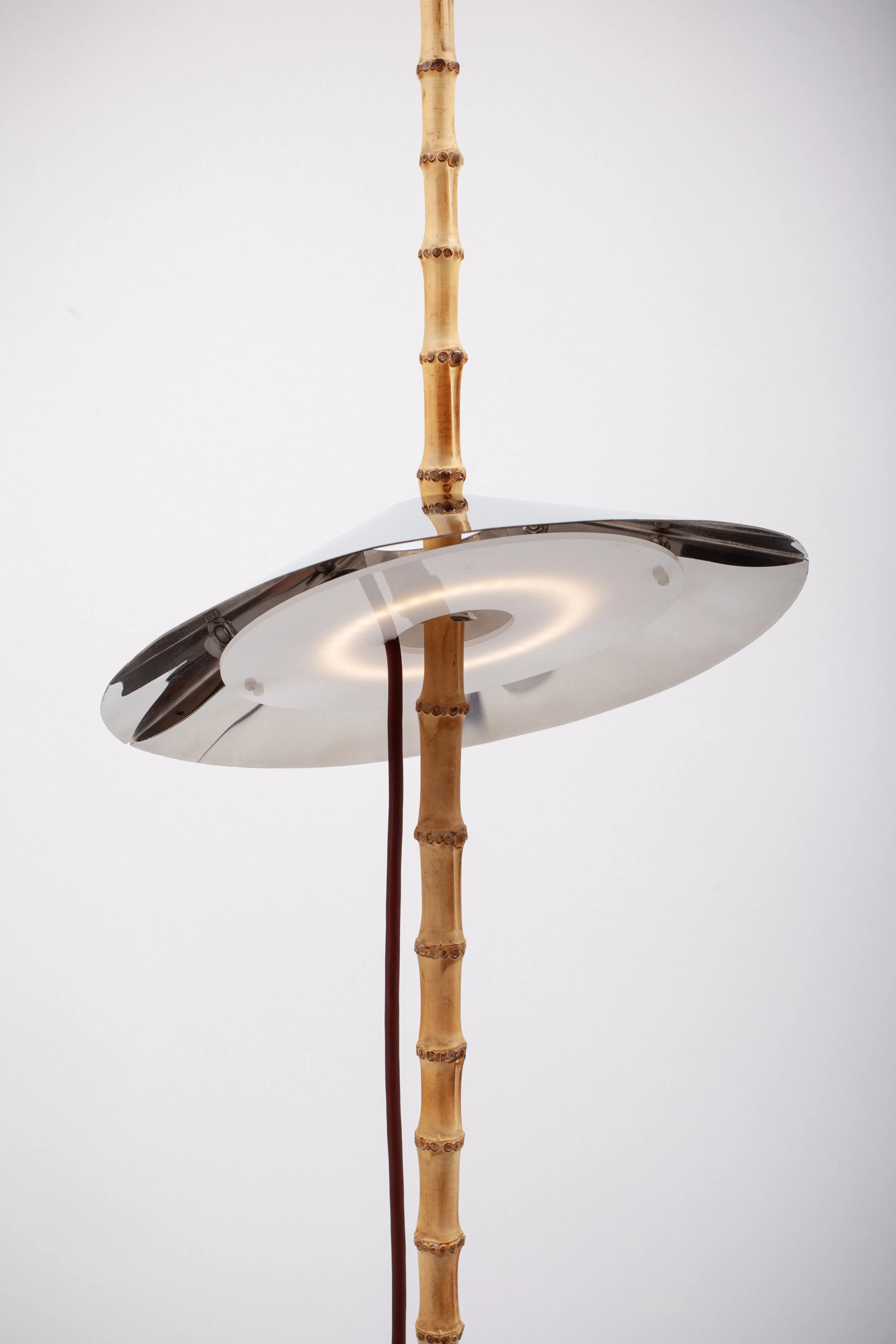
Named after plate spinning, 7plates stands on a hand-cast aluminum base. A bamboo rhizome stem carries a mirror-polished steel shade, and a gimbal uses the bamboo’s nodes to adjust the height on three axes.
By Calen Knauf Studio
€1,918 incl. tax
Pivot Table Lamp by Stem
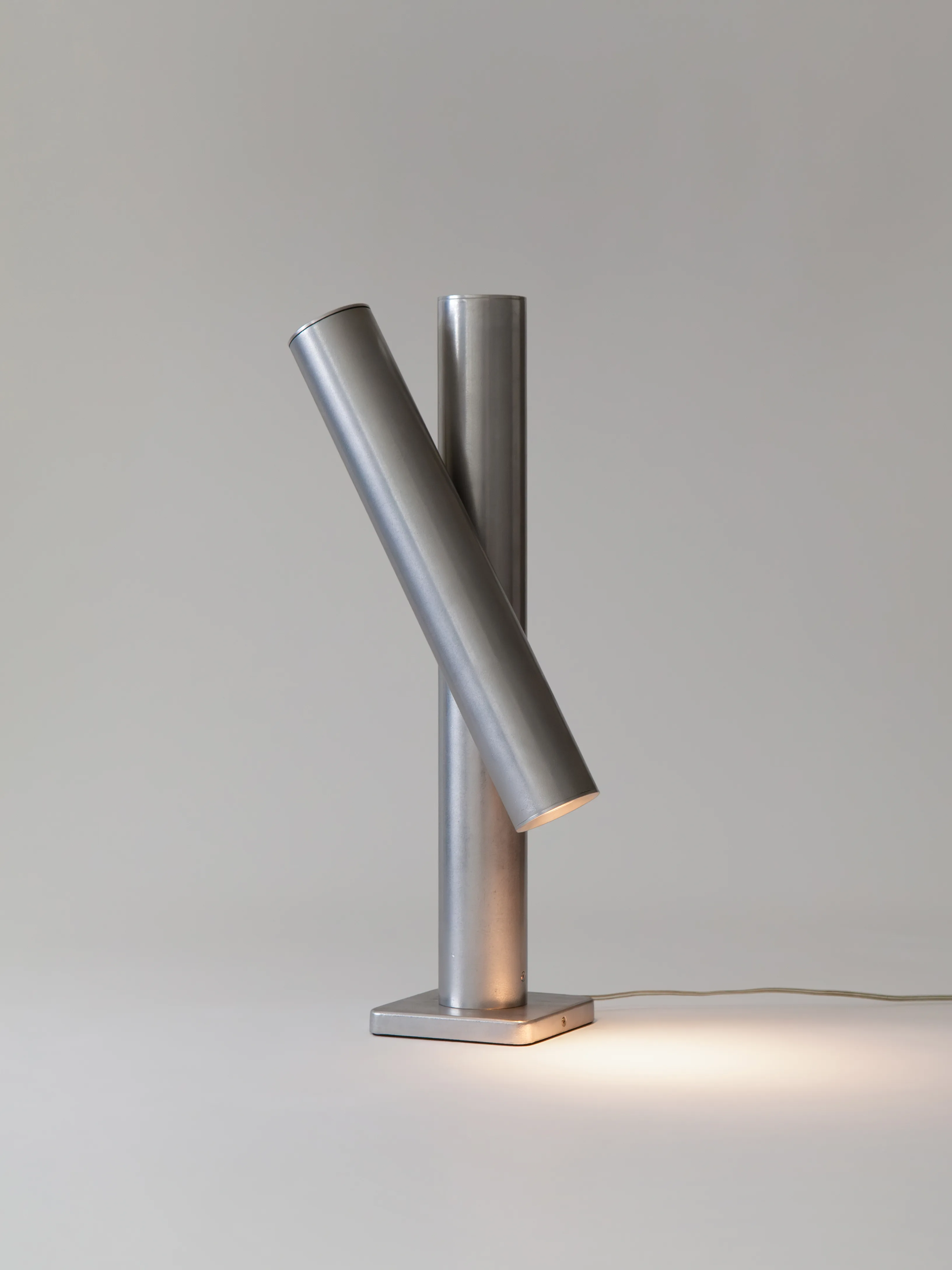
Two lathe-turned tubes balance on a concealed pivot, so one movement redirects the light onto a wall, an artwork or a desk. Available in tumbled aluminum or dark patinated brass.
By Stem
€1,155 – €1,700 incl. tax
Plus Table Lamp by 301 Design Studio
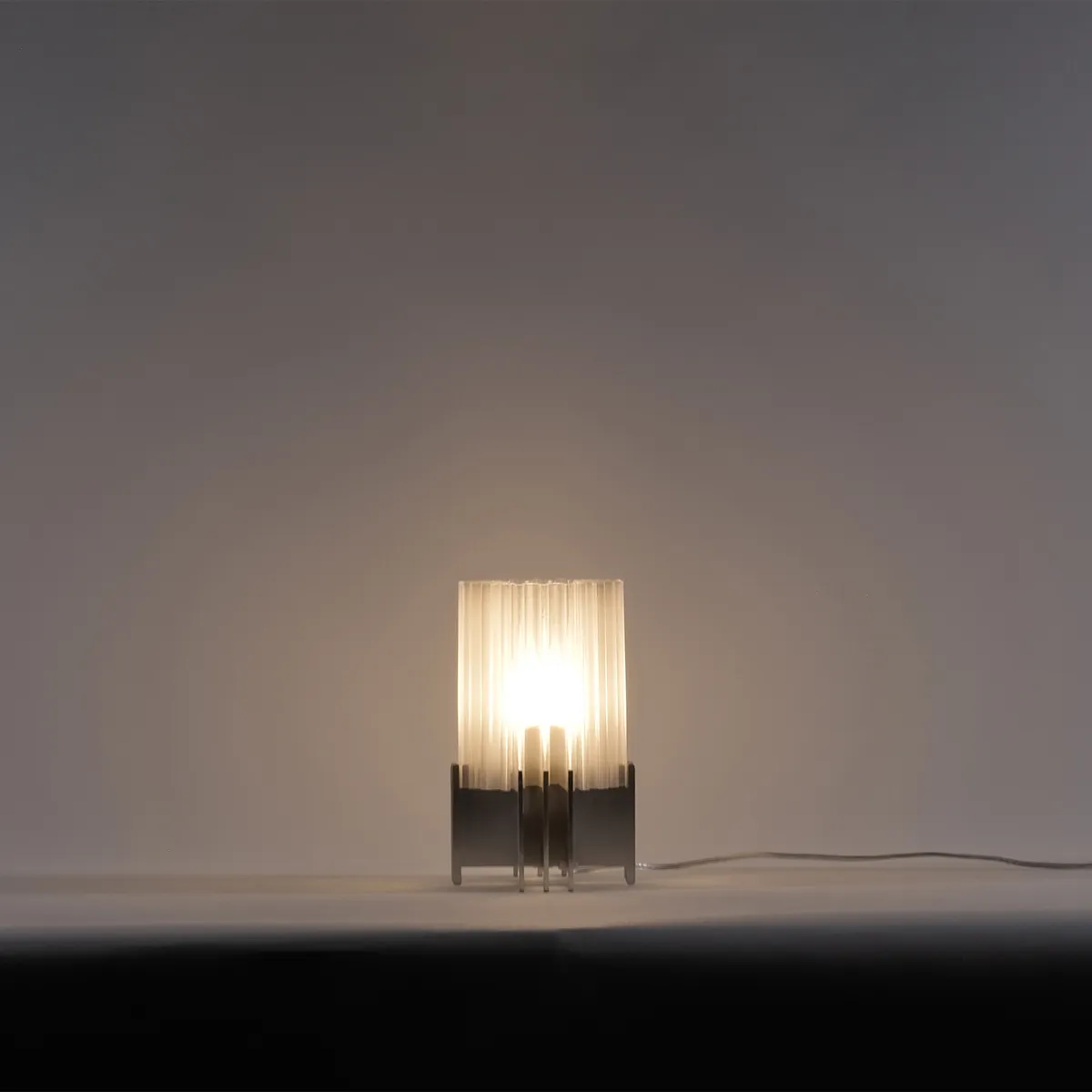
Translucent layers held in an aluminum frame filter the light rather than emitting it directly. Like the rest of the Plus collection, the lamp can be taken apart and reassembled.
By 301 Design Studio
€300 – €900 incl. tax
T-Lamp Floor Lamp by HEAKO

A horizontal aluminum LED fixture balanced on a polished brass rod and anchored by a matte oak sphere. It swivels 180 degrees, from a classic T to a vertical line of light.
By HEAKO
€3,850 incl. tax
How to Choose an Aluminum Lamp
Match the finish to the room. Raw and brushed aluminum feels calm and industrial and suits concrete, wood and linen. Polished aluminum adds sparkle and works best where it can reflect daylight or other lamps.
Think about the light, not just the lamp. Decide whether you need direct light for reading or working, or soft indirect light that washes a wall. Adjustable designs, such as a pivoting table lamp, can do both.
Check the size. A table lamp of about 40 to 60 cm (16 to 24 in) suits most side tables and desks, while a floor lamp of 150 to 180 cm (59 to 71 in) lights a reading chair from above.
Pair it with a warm material. Aluminum next to oak, brass, bamboo or glass feels softer and more personal than a room of metal alone.
How to Care for an Aluminum Lamp
Always switch off and unplug the lamp, and let it cool, before cleaning. Dust it with a soft, dry microfiber cloth. For marks, use a cloth dampened with warm water and a little mild soap, then dry it straight away to avoid water spots. Avoid abrasive pads, bleach and acidic cleaners, which can scratch or stain the surface. Raw and brushed aluminum will slowly darken as it oxidizes; if you prefer it bright, a non-abrasive metal polish restores the shine, but test it on a hidden spot first.
Frequently Asked Questions
Are aluminum lamps safe?
Yes. Aluminum conducts heat away from the light source, which helps keep bulbs and LEDs cool. As with any lamp, use the bulb type and wattage the designer recommends.
Do aluminum lamps get hot?
The metal can feel warm near the bulb because it draws heat away from it, but LED bulbs keep this low. Let the lamp cool before touching the shade or cleaning it.
Does aluminum rust?
No. Aluminum doesn’t rust like iron or steel. It forms a thin protective oxide layer, which can dull raw aluminum over time but protects it from corrosion.
Is aluminum good for outdoor lamps?
It is a common choice for covered outdoor lighting because it resists corrosion and is light. Check that the lamp is rated for outdoor use before placing it outside.