
-

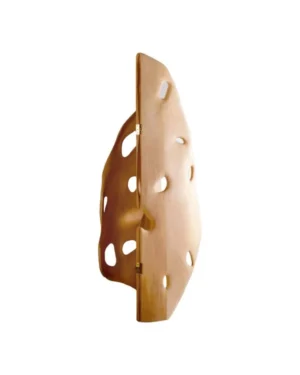
The Three Room Divider
By Sam Later
€7.800 -
 In stock
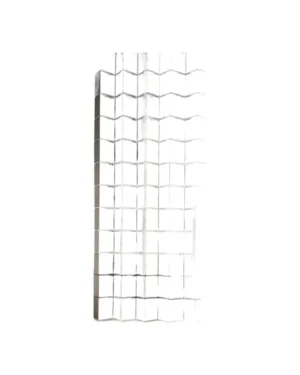
Duck Butt Room Divider
By Pupcha
€3.950 -
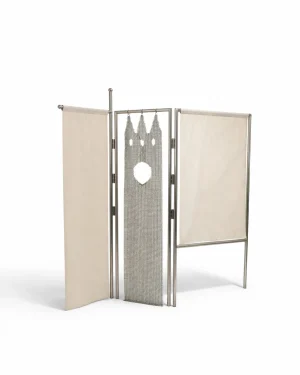
Gonfalon Paravent, Room Divider In Textile And Metal
By Panorammma Atelier
€7.400 -

Wadi Screen
By TheUrbanative
€2.200 -
 In stock
Soundproof Felt Screen – Natural Sheep Wool
By Danik Uderbekov
€1.950 -
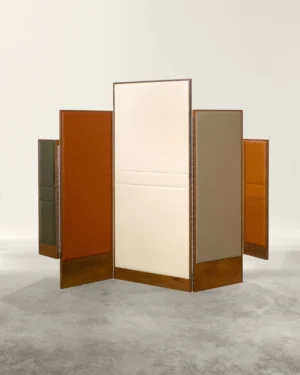
Amigo Biombo
By Fi
€6.800 -

Artistica Collection – Room Divider (body #1)
By STUDIO FP
€4.050 -
 In stock
Modern Stainless Steel Biombo Aaa – Room Divider
By Toro Manifesto
€6.720 -

Artistica Collection – Room Divider (rei #1)
By STUDIO FP
€4.250 -

Artistica Collection – Room Divider (tinta Unita #1)
By STUDIO FP
€3.700 -

Paravent, Objects Of Service – Room Divider
By Haritini Gritzali
Price Upon Request -
 Sold
Emérita
By Moneo Brock Studio
€8.000 - €11.000 This product has multiple variants. The options may be chosen on the product page
Limited edition room dividers are made in small runs or as single pieces, rather than produced continuously for stock. Studios working in oak, ash, birch, steel, wool and leather turn screens and freestanding panels into independent works, numbering each run or stopping production once a series is complete. The result sits closer to a sculptural object than a standard partition, built to be lived with rather than replaced.
What sets a limited edition apart
A limited edition room divider carries the marks of its making: a hand-planed edge, a weld left visible, a weave tied by hand rather than machine-finished. Studios working this way often number each piece or close a run once a set quantity is reached, so no two editions behave quite the same even when the design is shared. Wood grain, metal patina and fiber texture vary piece to piece, which is part of what the format promises.
Because production stops rather than continues, these pieces tend to hold their presence in a room over time. Choosing one means choosing a specific moment of a studio's work, not an open catalog item that gets reissued indefinitely.
Materials, colors and techniques to expect
Wood panels, often birch, pine or oak, come from cabinetmaking traditions: jointed frames, surfaces charred using shou sugi ban, or finishes hand-painted in black, beige or burgundy. Metal versions lean on welding and powder coating, giving steel a matte or saturated finish that resists fingerprints and daily handling. Textile panels, woven in wool or worked in leather, soften a room acoustically as well as visually, and some studios set crystal into a frame for pieces that filter light rather than block it.
Stylistically the range runs from restrained, geometric screens in a contemporary or minimalist vein to heavier, brutalist or neo-industrial forms, with occasional gothic or conceptual pieces that read as freestanding sculpture. Color tends toward off-white, beige, black and green, chosen to sit quietly against a wall or to stand apart from it.
Choosing a divider for scale and placement
Height and weight matter as much as finish. A panel used to separate a seating area from a work corner should stand tall enough to break sightlines at eye level when seated, while a lower screen reads as a visual cue rather than a true partition.
- Check the floor contact: free-standing feet need a stable, level surface, while hinged panels can fold flat against a wall when not in use.
- Match weight to the room: a steel or stone-inlaid divider holds its position without anchoring, while a lighter wood or textile screen suits a space that gets rearranged often.
- Consider finish against existing surfaces, pairing a charred or dark panel with pale floors, or a woven, pale divider against darker walls.
Where these pieces work
Limited edition room dividers earn their keep in open-plan living rooms, studio apartments and home offices, where a wall is not an option but a boundary still is. A woven or leather panel adds warmth to a bedroom corner used for dressing, while a welded steel or powder-coated piece can hold its own in an entryway or a work space that wants a harder edge.
Living with wood, metal and textile dividers
Wood paneling benefits from the same care as any solid furniture: keep it from direct heat and sustained damp, and dust along the grain. Charred or hand-painted surfaces should be wiped rather than scrubbed to protect the finish. Metal dividers in steel need only occasional dusting, though powder-coated surfaces should avoid abrasive cleaners that can dull the finish. Wool and leather panels take a soft brush or a damp cloth, kept away from direct sun to prevent fading.
For a broader look at how these pieces are made, see all room dividers, or compare against wooden room dividers and metal room dividers on their own terms. The same approach to small runs and one-offs extends across limited edition furniture and into limited edition decor for objects that share the same studios and techniques.
How do I choose a limited edition room divider?
Start with the material and how it meets the floor, wood and steel read as architecture, woven textiles and leather read as soft partitions. Match the scale and finish to the room's existing furniture and light.
What materials are limited edition room dividers made from?
Most are built from wood, steel or other metals, with wool, leather and crystal appearing in smaller runs. Wood is often joined by hand, metal is welded or powder coated, and textiles are woven or hand painted.
How do I care for a room divider in wood, metal or textile?
Wood wants a stable, dry room and an occasional wax or oil to keep the grain from drying out. Metal needs dusting and dry conditions to avoid corrosion, while woven or leather panels should stay out of direct sun.
What size and height should a room divider be?
Height typically runs from waist level, for a visual break, to above eye level, for full privacy. Panel width should divide the room's footprint without crowding doorways or walkways.
Which rooms suit a limited edition room divider?
Open-plan living areas, studio apartments and entryways all benefit, where a divider can zone a space without adding permanent walls. Bedrooms and home offices use them to carve out privacy within a larger room.
What should I know about buying a limited edition room divider on ADORNO?
Shipping is insured and worldwide, with a 14-day return policy that excludes made-to-order pieces. Every piece arrives with a certificate of authenticity, and ADORNO offers a lowest-price guarantee.