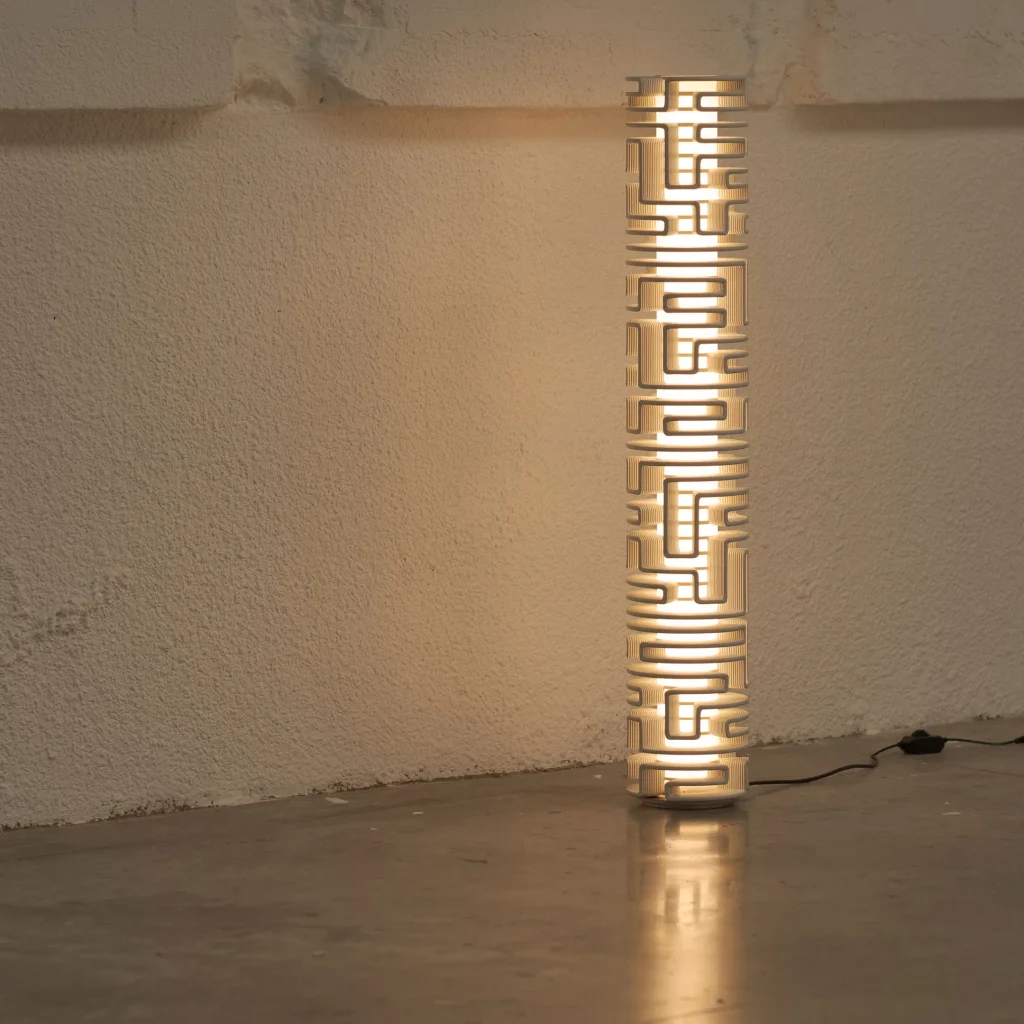
Switch it off, and it should still be the best object in the room.
A lamp used to be a tool. Now, in the right hands, it is a sculpture that happens to give light. Collectors have noticed.
For independent studios, that is a rare opening. Lighting fits almost any room and almost any budget. It also shows off form, material, and craft in a single piece.
This guide looks at what buyers are asking for, what the 2026 fairs showed, and how to present a sculptural light so international collectors say yes.
What the Signals Say
Four separate signals point the same way.
- Buyers search for it. Ahrefs data for the US shows about 1,600 monthly searches across seven sculptural-lighting phrases. Floor lamps lead at roughly 500 a month. Table lamps follow at about 250, then pendants at 200, with sconces and chandeliers at 150 each.
- Milan made it a trend. At Milan Design Week in April 2026, Galaxus reported that light was becoming jewellery. Interior designer Barbara Reimelt calls it “lighting like jewelry.”
- Designers specify it. In 1stDibs’ designer survey, 28 percent named Murano-glass pendants the top lighting trend.
- Big names are moving in. According to The Design Guide 2026, Aesop launched its first lighting designs in Milan, and Flos introduced Maap by Erwan Bouroullec.
When established brands and independent studios chase the same category, buyers are already looking.
Why Lighting Suits Independent Studios
- It fits every room. A lamp works in a bedroom, a hallway, or a hotel lobby. Furniture is more specific.
- It carries the material. Blown glass, cast bronze, paper, and stoneware all read clearly in a lit object.
- It suits both extremes. A lamp can be minimalist or maximalist and still sell. Collectors choose by taste, not by room.
- It is often easier to ship. Many lights are smaller and lighter than furniture. That helps with freight and customs.
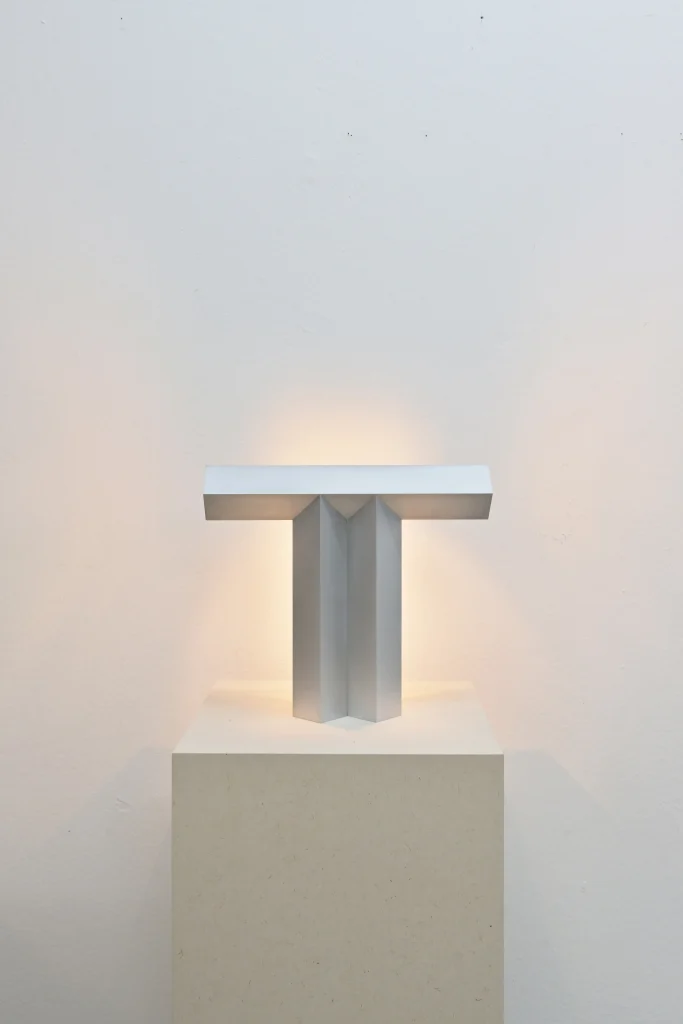

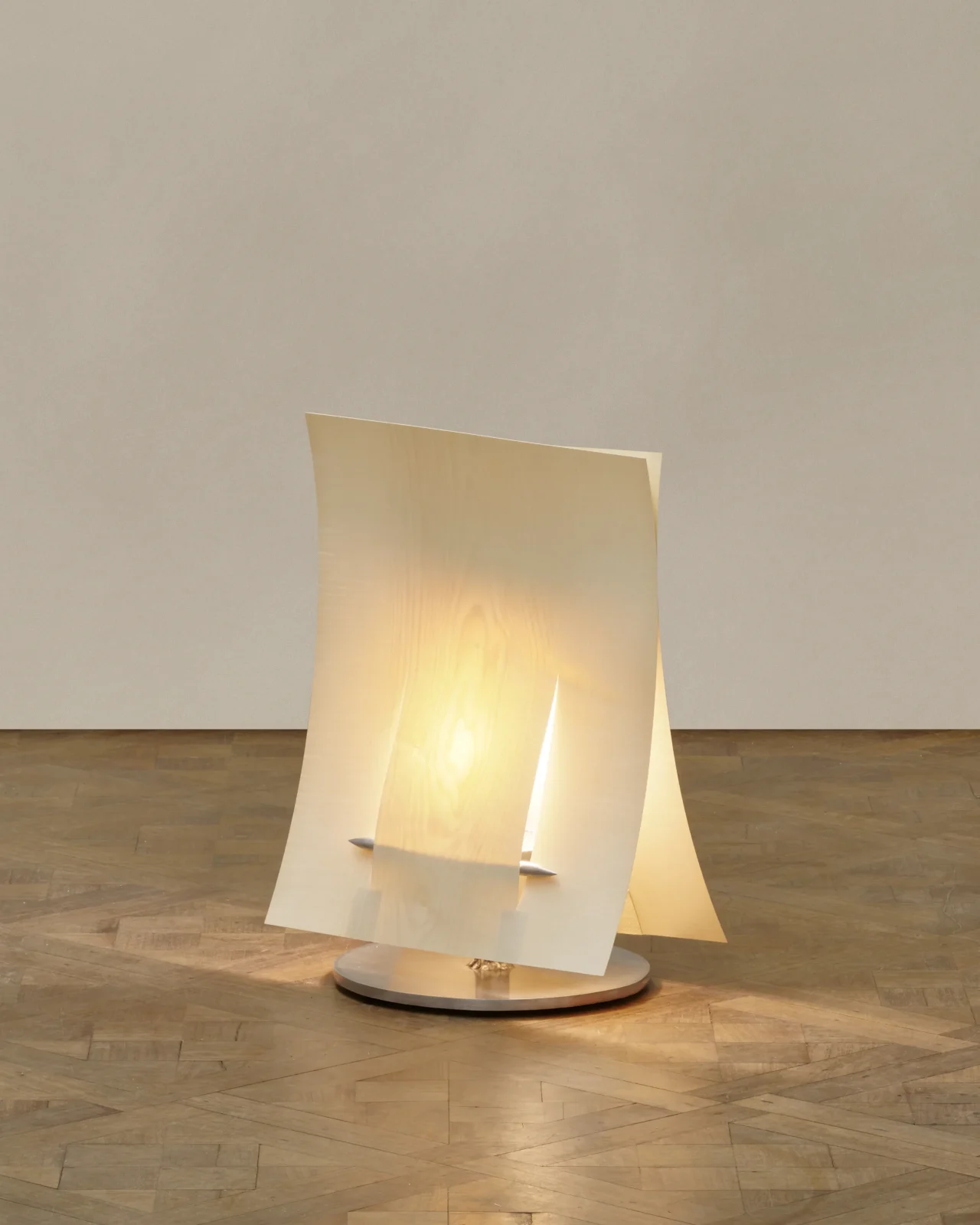
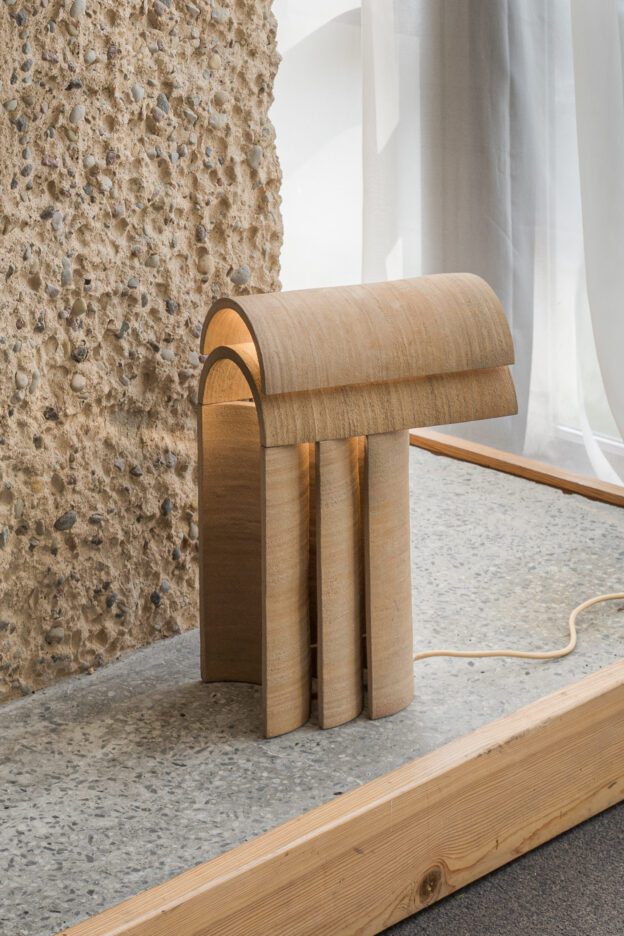
Aluminium, cotton and resin, birch ply, and layered stoneware. Four lights, four materials, four ways to be sculptural.
How to Present a Sculptural Light
A light has to work twice. It must be beautiful off, and beautiful on. Show both.
- Photograph it lit and unlit. The unlit shot sells the form. The lit shot sells the mood.
- Show it in a room. Scale is hard to judge from a studio shot. A table, a wall, or a ceiling gives it context.
- Name the material and method. “Hand-pleated textile” or “slip-cast stoneware” tells a collector more than “decorative lamp.”
- List the electrical details. Give voltage, bulb type, wattage, and plug or fitting. International buyers need to know it will work at home.
- Offer regional versions. A piece wired for one country can be rewired for another. Say so in the listing.
- State size and weight. Include the cord length and whether it ships assembled.
What Collectors Ask Before They Buy
Answer these in your listing, and you save a round of emails.
- Will it work with my country’s voltage and plug?
- Which bulb does it take, and is it dimmable?
- Can the cord or fitting be replaced later?
- Is it one-of-a-kind, limited, or made to order?
- How long until it ships, and how is it packed?
Where ADORNO Fits
Lighting is already a strong category on ADORNO. Editorials like 3D Printed Lamps and Polish Design in Surface and Light put independent lighting studios in front of collectors, based on editorial fit and timing.
ADORNO’s team also handles buyer questions, tax, shipping, and insurance. A studio’s job stays simple: make the light, and pack it to spec.
Applications are reviewed on a rolling basis. An accepted profile typically goes live within one to two weeks.
Apply to ADORNO and put your lighting in front of collectors →