 Comet Floor Lamp in Brass and Marble - White
  Atom Barstool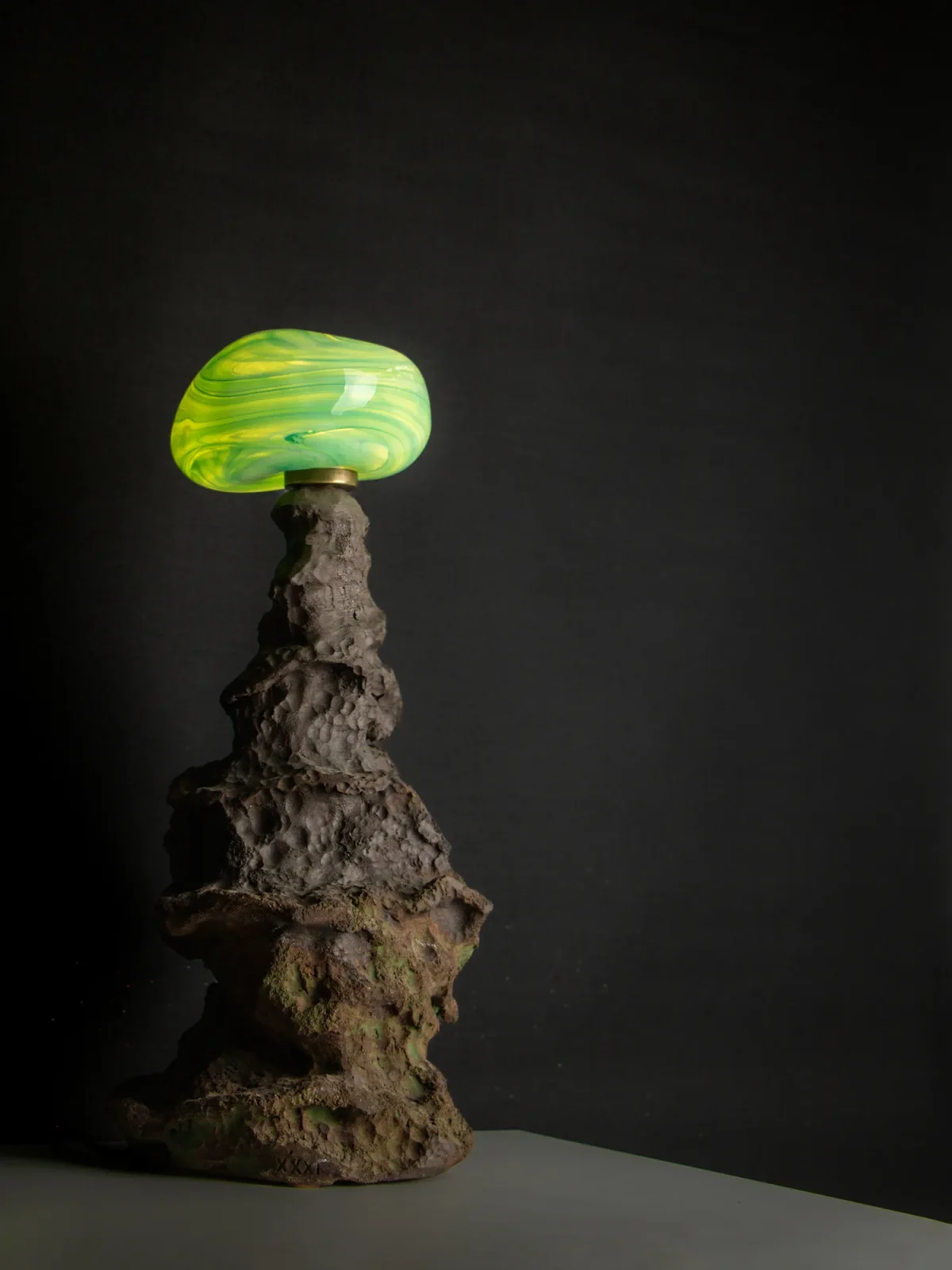
Ceramic Lamps: Lighting Across Techniques, Textures and Temperatures
Updated on: September 24, 2026
Ceramic doesn’t conduct light so much as negotiate with it.
Porosity, thickness, firing temperature and glaze all determine how illumination is absorbed, reflected or diffused. Some makers pursue porcelain’s translucence; others lean into the density of stoneware. Glazes add another dimension: matte surfaces pull light inward, while glossy finishes send it outward and interact with the light around them. The result is a medium with unusual latitude, where the outcomes feel nearly endless.
The fourteen ceramic lamps in this selection reflect that range. They shift between restraint and experimentation, from translucent porcelain pendants to raku-fired sconces and raw clay table lamps, exploring the full spectrum of what ceramic lighting can be.
How ceramic shapes light
Each clay body behaves differently once a bulb is switched on. Understanding them makes it easier to choose the right ceramic lamp for a room.
Porcelain: translucent and luminous
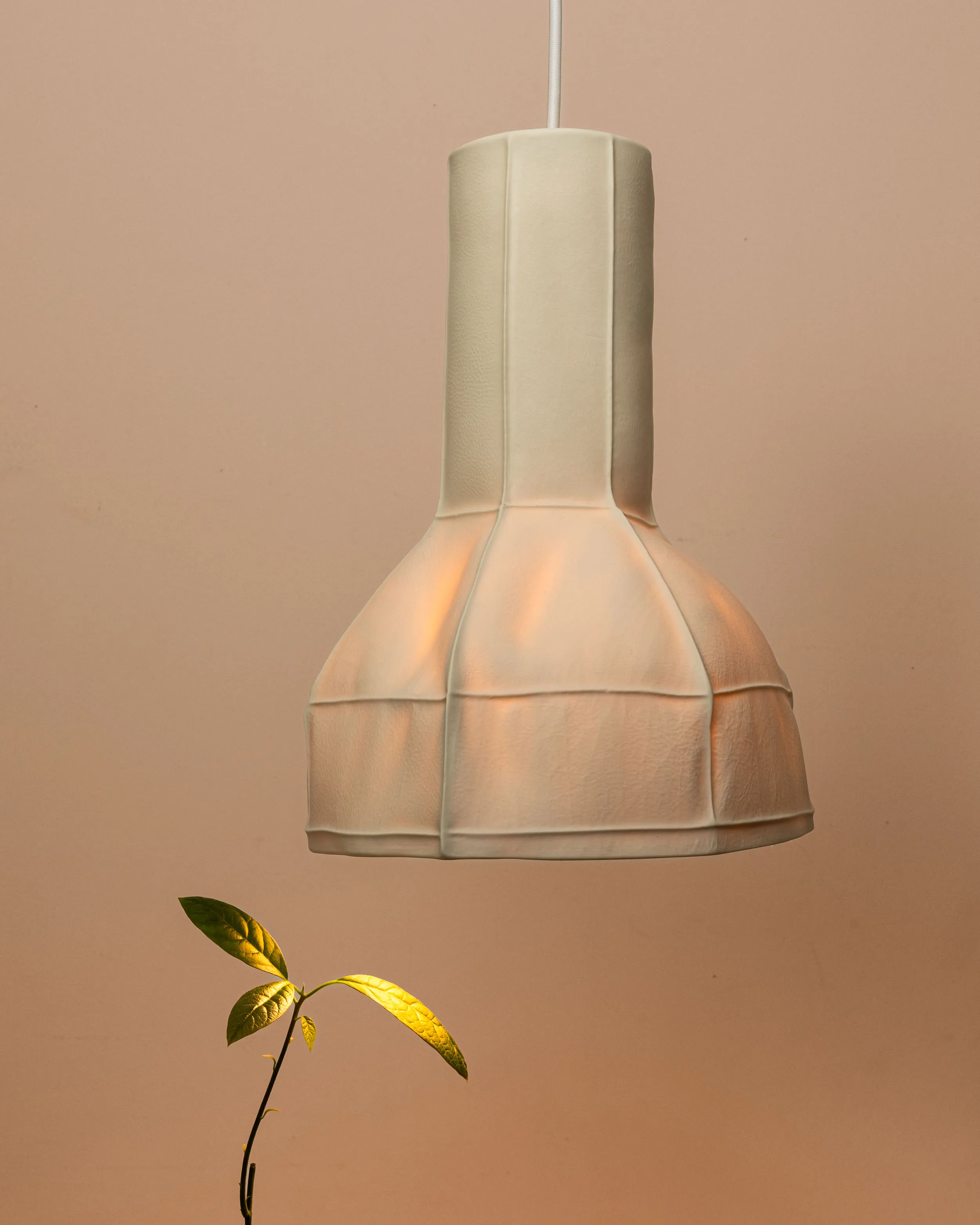
Fired at the highest temperatures, porcelain can be cast thin enough to let light pass through, producing a soft, even glow ideal for pendants.
Stoneware: dense and sculptural
Stoneware is opaque and strong, so light is directed through openings or reflected off its surface. It suits carved, textured and monolithic forms.
Terracotta and raw clay: earthy and warm
Low-fired terracotta and stabilized raw clay keep their natural color and texture. They read as elemental objects by day and give off a warm, grounded light at night.
Raku and glaze: unpredictable surfaces
Raku firing produces crackles, metallic tones and color shifts through flame and smoke. Glazes in general decide whether a surface absorbs or reflects light, which is why the same form can feel completely different in matte and gloss.
Ceramic table lamps
A ceramic table lamp brings weight, texture and a sculptural presence to a side table, console or nightstand.
Canyon Lamp by Katia Langeard
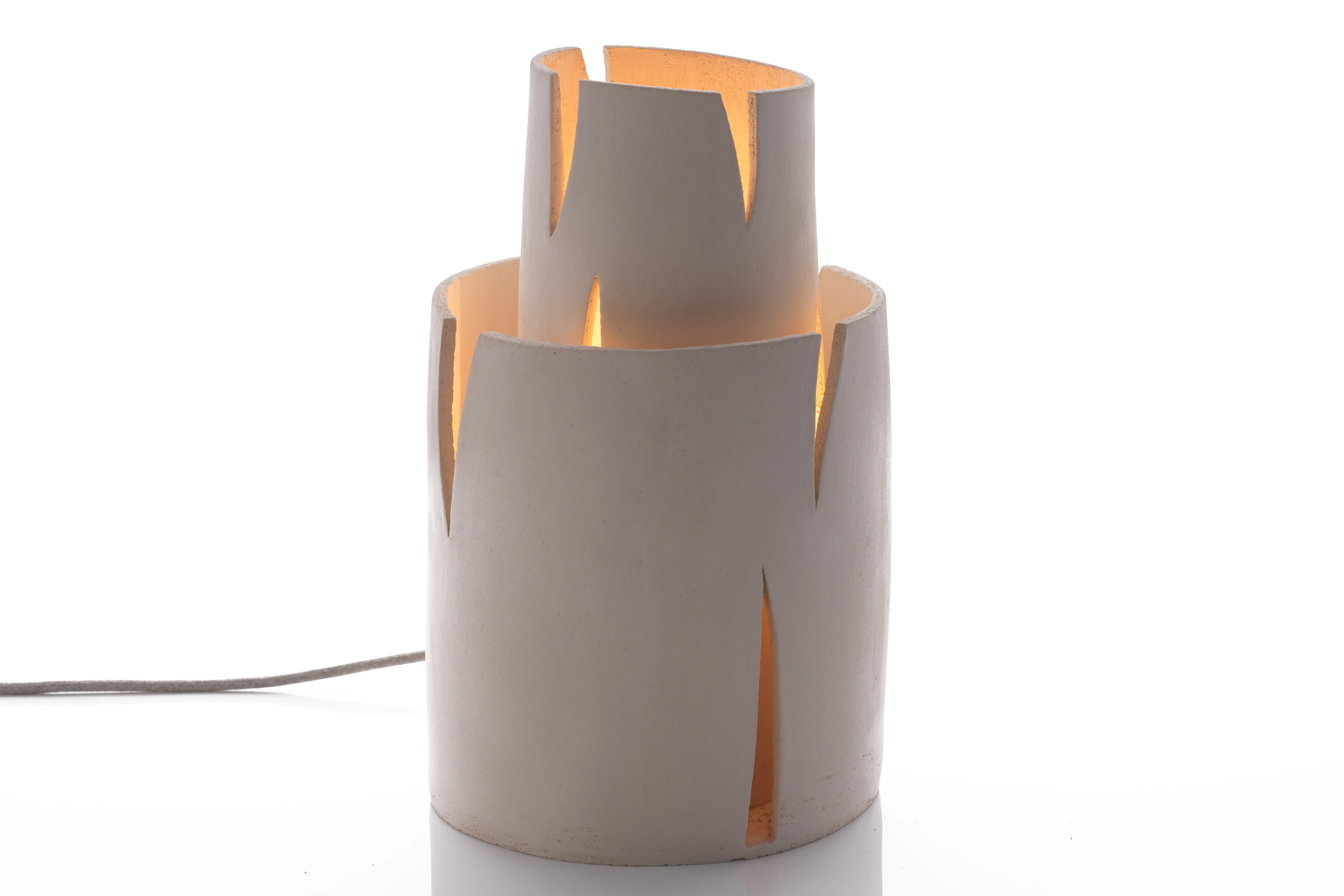
Drawing inspiration from Petra’s ancient canyon walls, this lamp uses strategic gaps between clay layers to keep direct light from escaping. It illuminates a table surface without glare, making the light comfortable and refined. Each piece varies because it is hand-built, so no two lamps share the same character.
€550 incl. tax
Navazi Table Lamp in Ceramic by SVITANOK
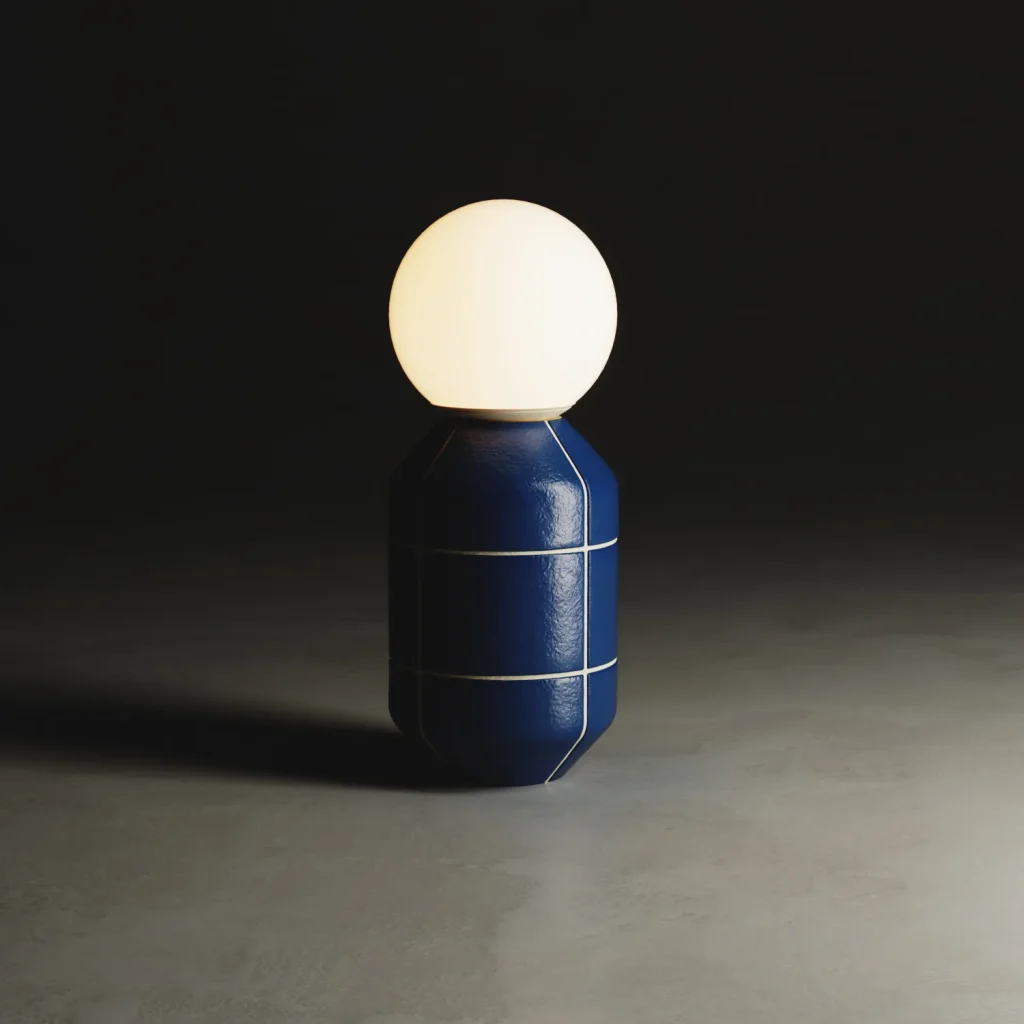
Hand-blown glass orbs rest on a sculptural ceramic base, available in sixteen glazes from smooth gloss to tactile matte. Each variation offers a different interplay of surface and light. As a result, it suits a bedside, a side table or a dining centerpiece, and it is in stock.
By SVITANOK
€440 – €670 incl. tax
Sonora Small Table Lamp In Terracotta And Rattan by NASSI LAMPS
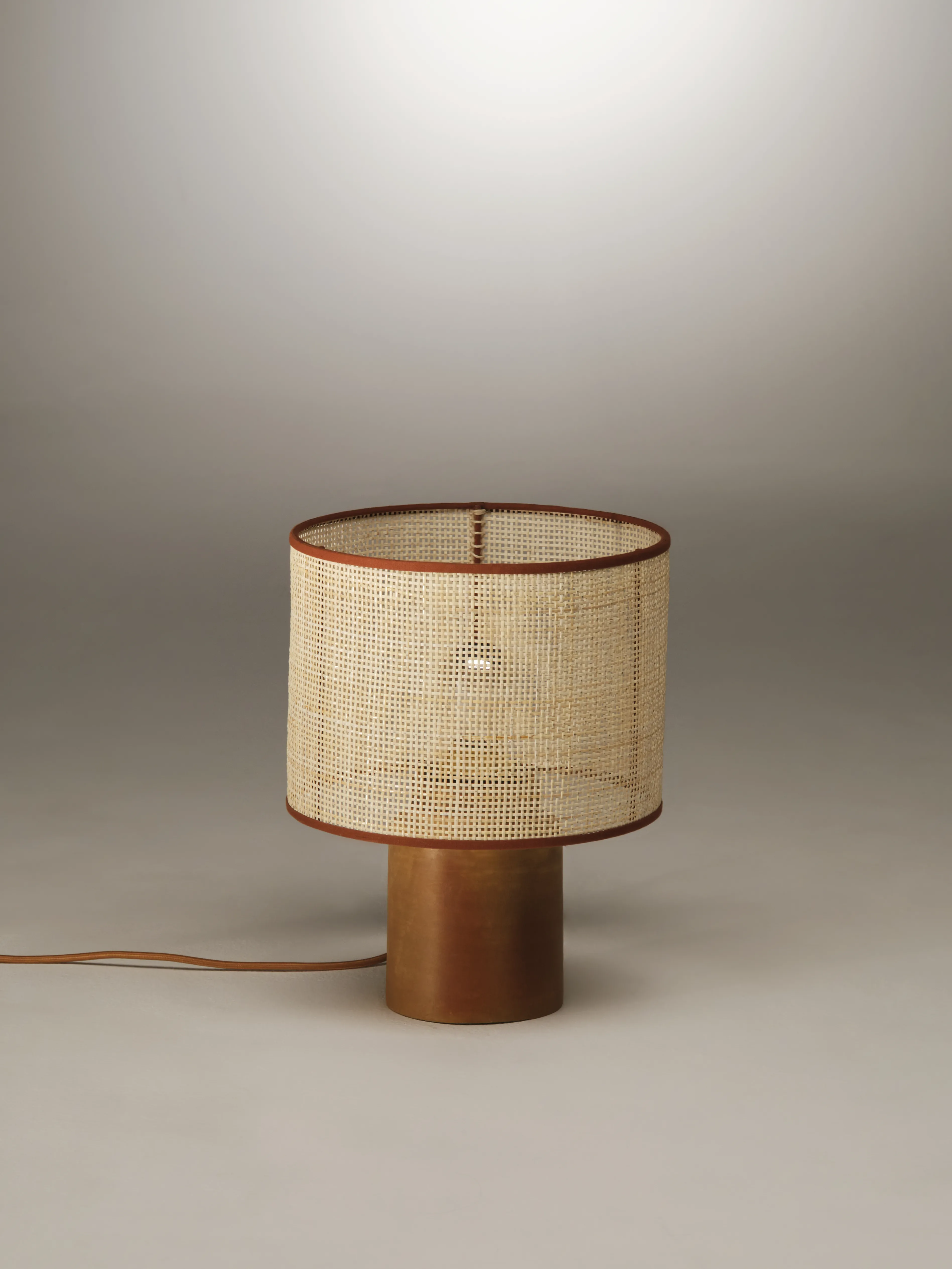
Rooted in Puglia’s rural traditions, the Sonora lamps by NASSI LAMPS pair a lathe-turned terracotta base, fired in an ancient wood oven and finished with polish and natural wax, with a woven rattan shade. The natural fiber filters the light into warm, dappled patterns. In other words, it is a terracotta lamp with deep regional roots.
By NASSI LAMPS
€585 incl. tax
Āstra Table Lamp in Clay by Andrei Clontea STUDIO
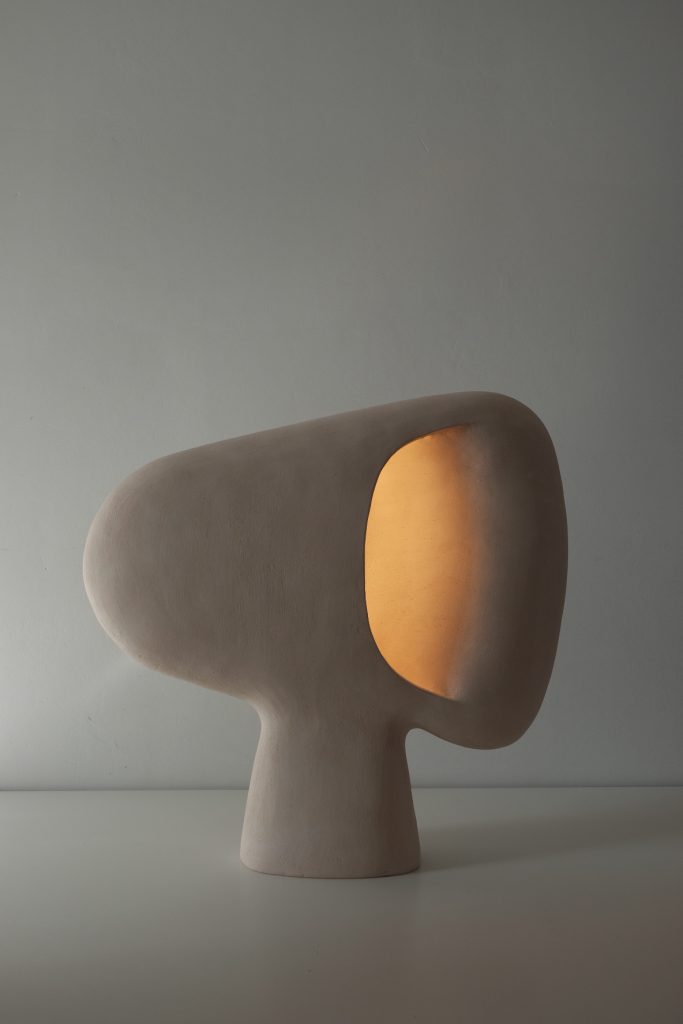
White ceramic takes on a porous, rocky texture inspired by celestial elements, with an architectural approach shaping the organic form. Soft, ethereal light emerges when it is switched on, like the faint radiance of a comet’s tail. Consequently, it works equally as a light source and a sculpture.
€1.300 incl. tax
Théros Orbita Table Lamp by Studio Aristotelis Barakos
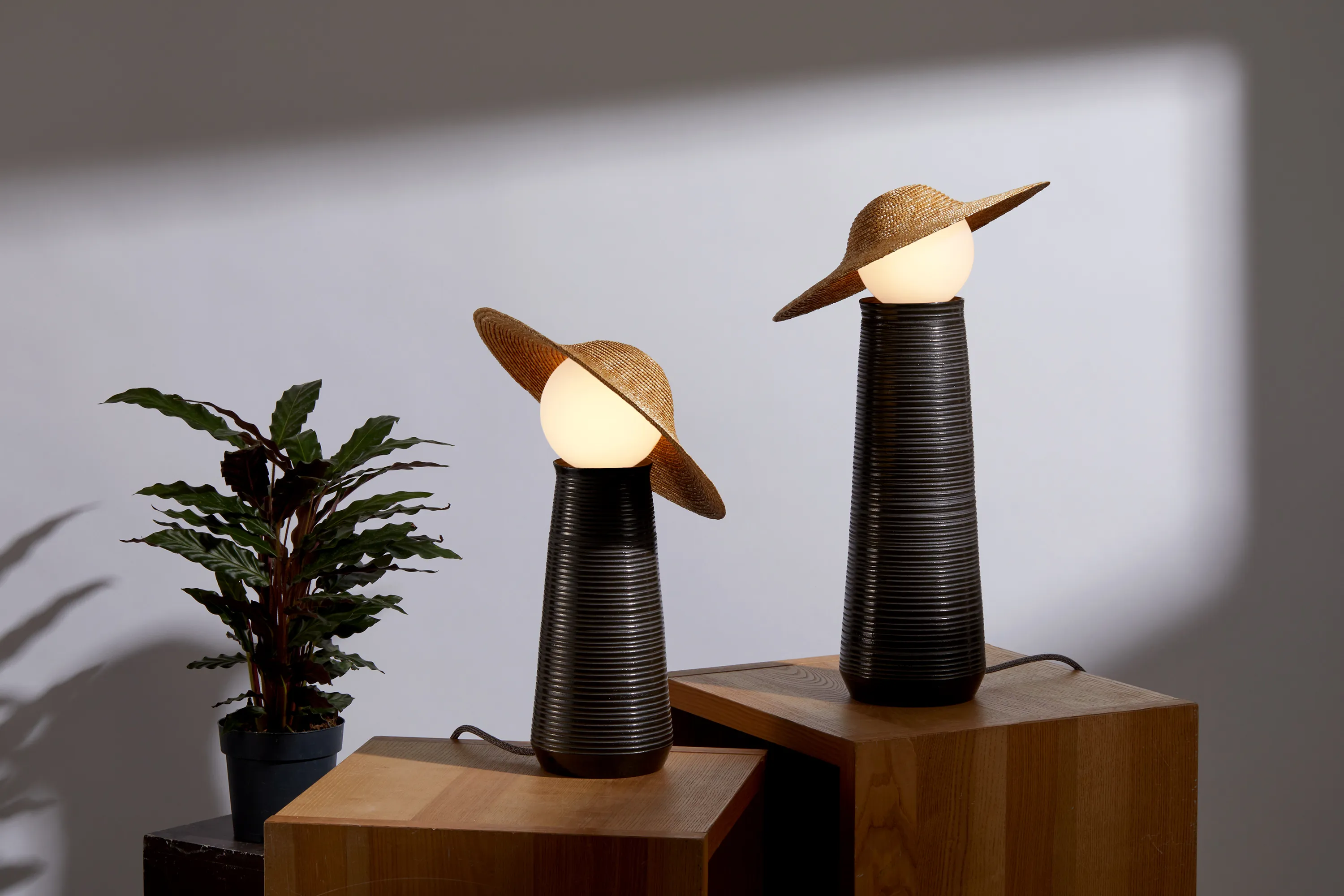
Dark brown stoneware replaces the original marble in this collaboration between Aristotelis Barakos and ceramicist Giannis Zois, with hand-engraved rings circling the glazed body. An opalina glass globe tops the slender form, while a handwoven straw hat adds a playful Mediterranean touch. Each lamp is entirely handmade in Athens.
€590 – €780 incl. tax
Baby Tutu Table Lamp in Glazed Stoneware by Slō
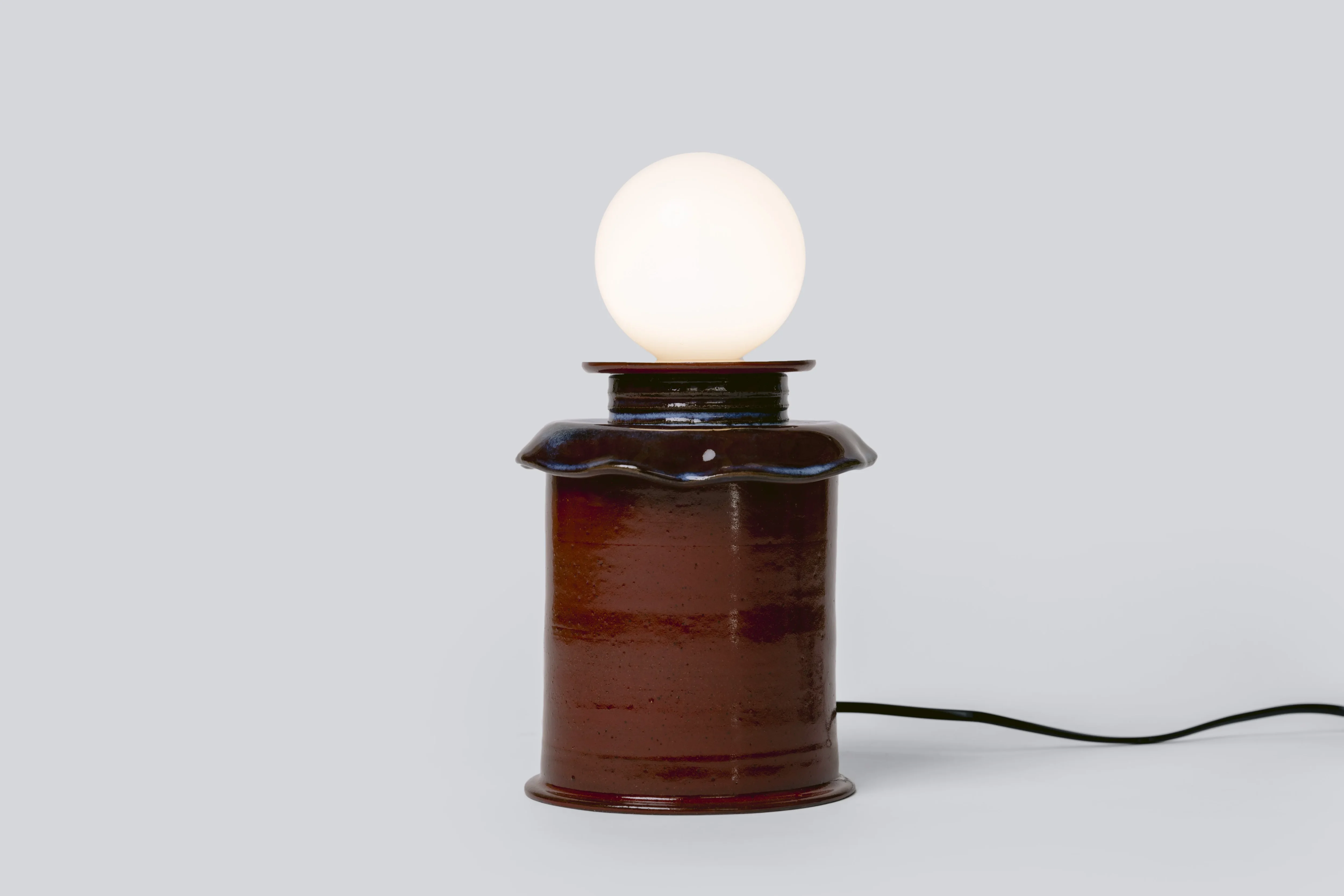
Wheel-thrown components are joined by hand, with individual glazing creating unique variations in every lamp. The bold red finish brings saturated color to neutral interiors. Therefore, traditional pottery techniques meet contemporary lighting needs in a compact, joyful form.
By Slō
€750 incl. tax
Abyss No. 31 Table Lamp in Stoneware and Glass by maiizen

Ceren Gürkan hand-carves each Abyss piece with textures that recall the deep sea, pairing dark stoneware with hand-blown glass. Light moves across the contours the way it filters through water. No two pieces match exactly, and this one is in stock.
By maiizen
€1.400 incl. tax
Nomad Ⅱ:09 Table Lamp in Ceramics and Stoneware by SK – Sofia Karnukaeva
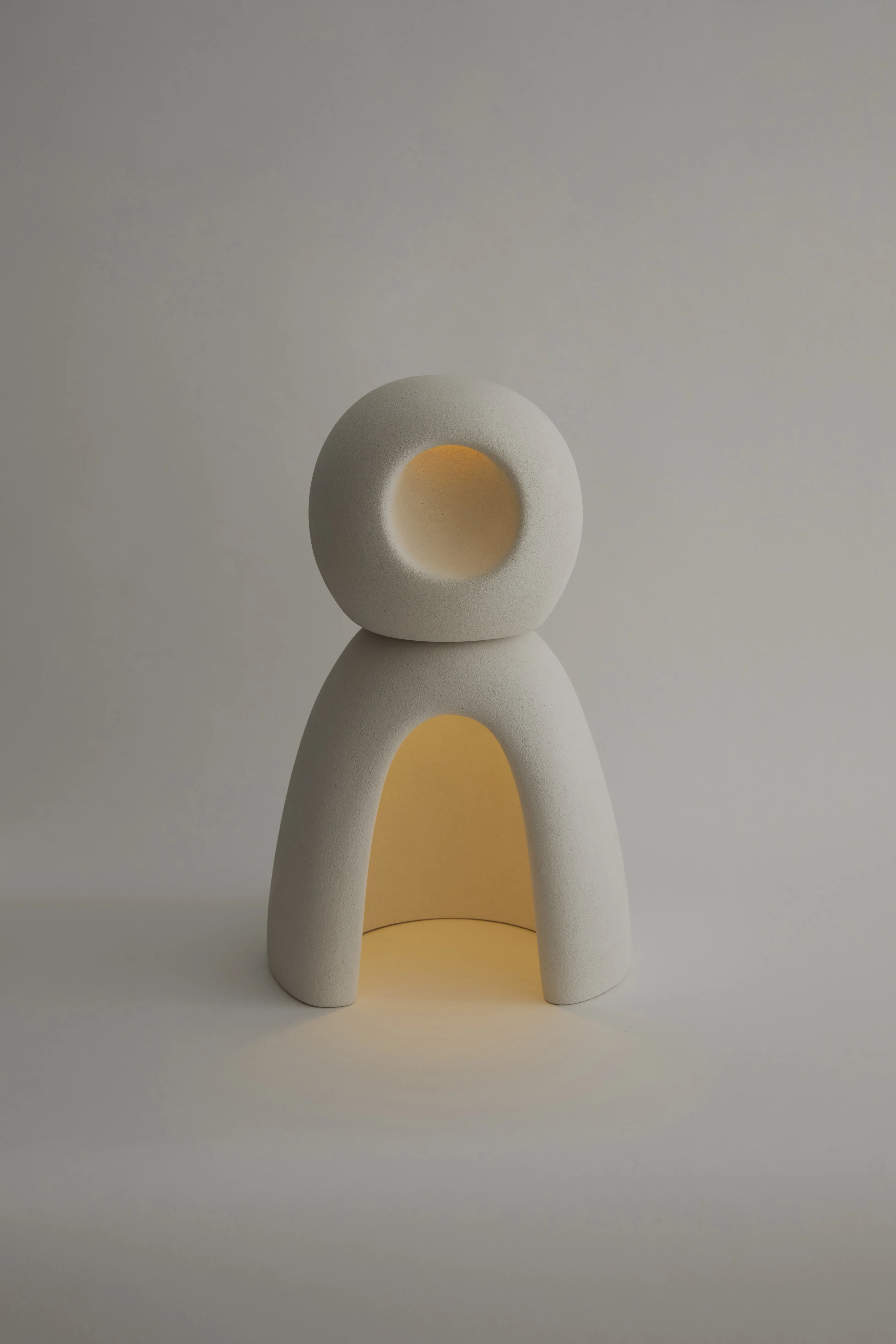
Streamlined stoneware evokes nests, beehives and caves at once, with the surface left unglazed so light interacts directly with the raw clay. Hand-sculpted forms feel both bodily and zoomorphic, between sculpture and functional object. The piece explores home as a safe refuge where light and shadow coexist.
€2.780 incl. tax
The Mesia Table Lamp in Ceramics and Glass by Luis Gimeno Design
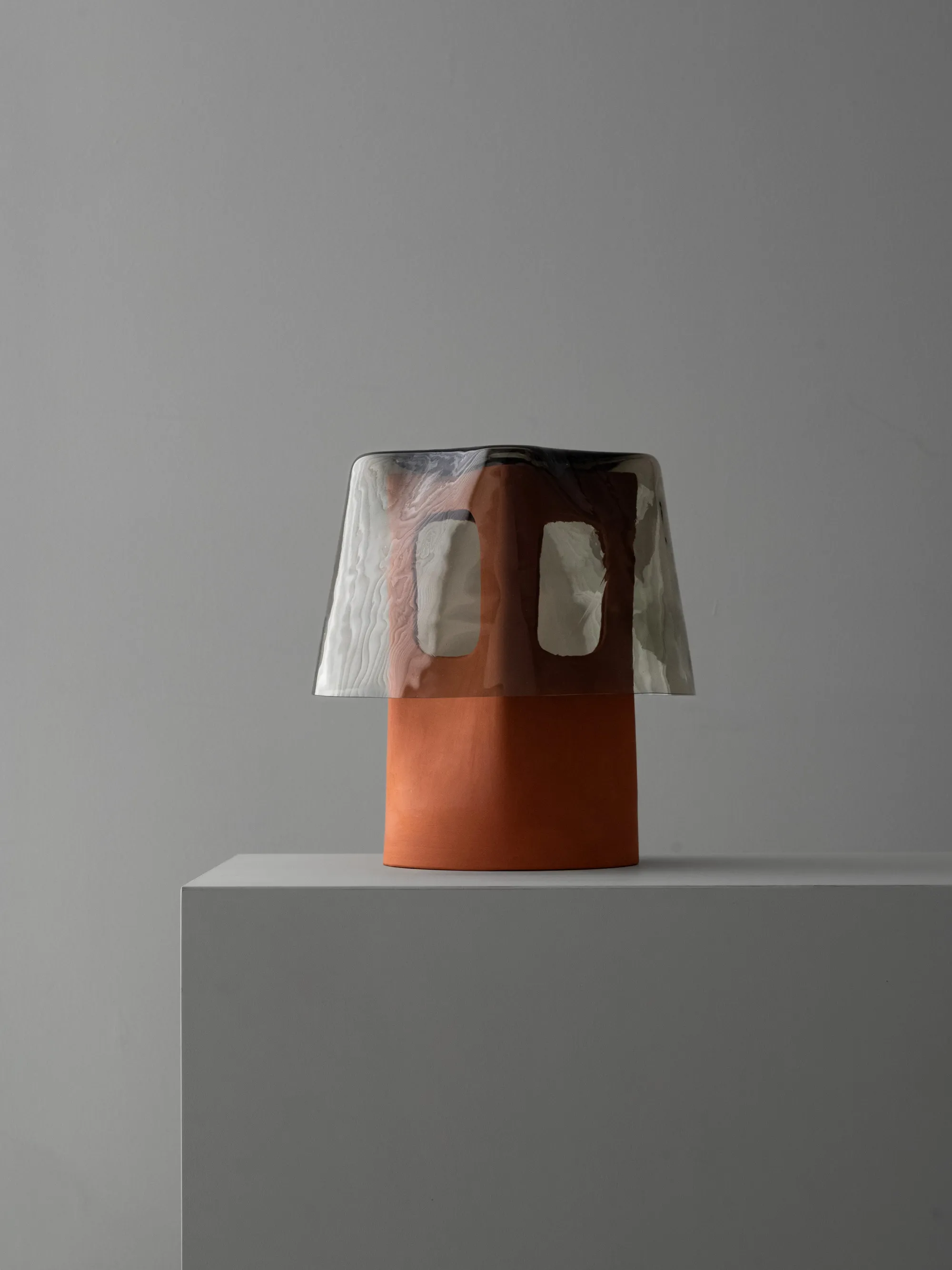
A colored glass shade sits directly on the white ceramic base without joint pieces, creating a clean connection between materials. Mediterranean style receives a contemporary interpretation, with the green or brown shade tinting the light. As a result, the materials express their essential qualities without unnecessary complexity.
€1.400 incl. tax
Coral Table Lamp in Clay and Ceramic by Dzovag Kotchian

Stabilized raw clay forms organic shapes inspired by Mediterranean seabeds, referencing coral reefs through its sculptural language. Created in the south of France, it channels the marine influences of the surrounding coast. Indeed, it has the quality of a precious object retrieved from a shipwreck, and it is in stock.
€900 incl. tax
Ceramic pendant lights
Hung above a dining table or kitchen island, a ceramic pendant light shows off glaze and form at eye level.
Kawa Series 04 – Ceramic Pendant Lamp by Luft Tanaka Studio
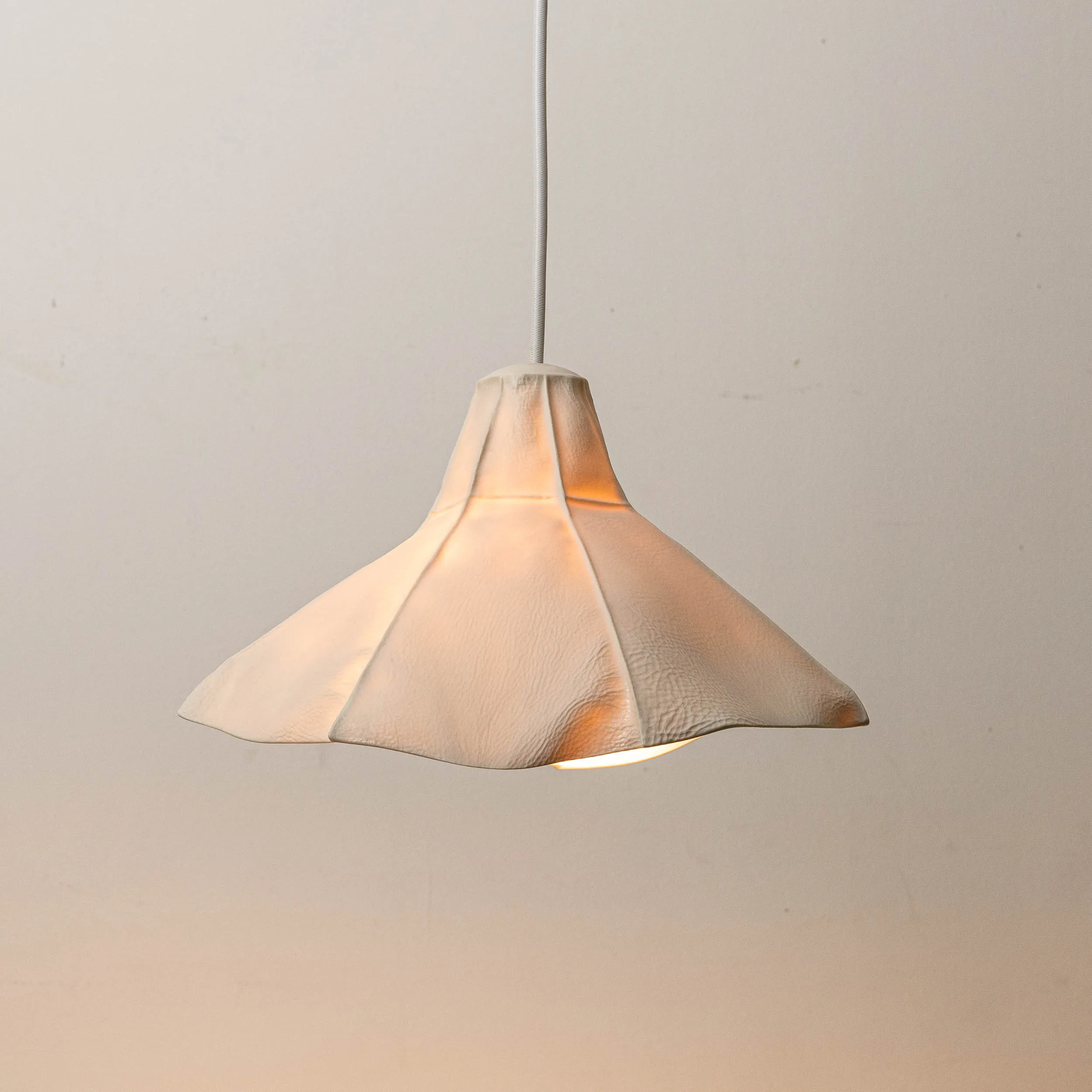
Luft Tanaka developed a unique technique that begins with hand-sewn leather molds, into which liquid porcelain is poured to form a thin layer. Once the porcelain sets, the leather peels away to reveal the delicate form before firing. The translucent diffuser casts warm light well suited to dining rooms and kitchens.
€1.375 incl. tax
Trn / Model F3 Pendant Lamp in Ceramic by Pani Jurek STUDIO
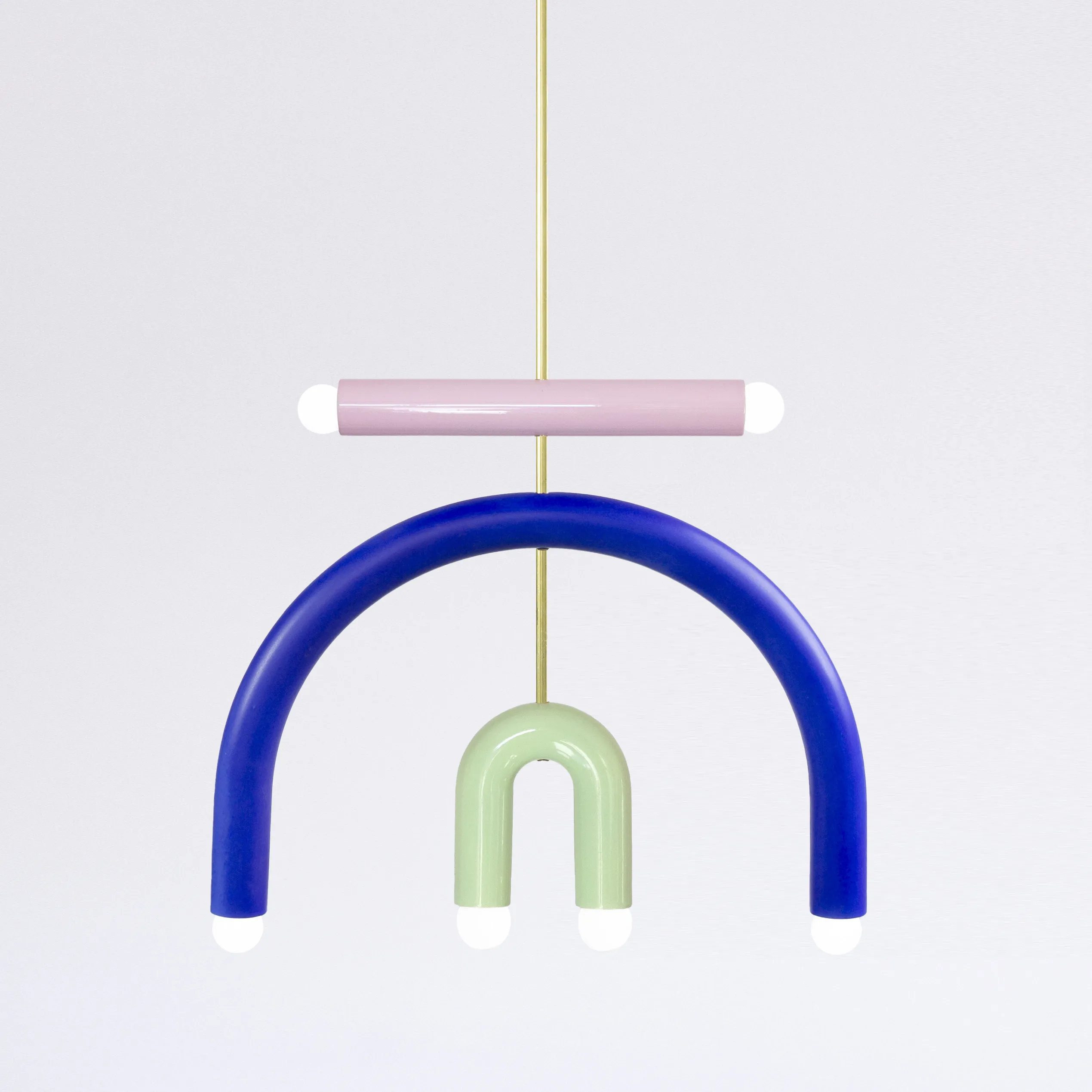
Jan Tarasin’s paintings inspired these hanging forms, where simple shapes interact like letters from an invented alphabet. Hand-glazed ceramic surfaces gain unique character, with brass elements adding warmth and structure. Moreover, the playful design brings energy to entrances, dining rooms and living areas, and it is currently on sale.
€1.520 incl. tax
Ceramic wall sconces
A ceramic wall sconce turns a blank wall into a lit relief, casting light up, down or across the surface.
Onda Raku Green by arrived aliens

Raku firing produces unpredictable results as metal oxides meet flame and smoke. This sconce shows color shifts, metallic tones and surface cracks from rapid cooling, while clean modernist lines contrast with the irregular texture. Its wave forms reference Florida’s coastal landscape.
€2.200 incl. tax
Tenderness Sconce in Ceramic by Studio Ēeme
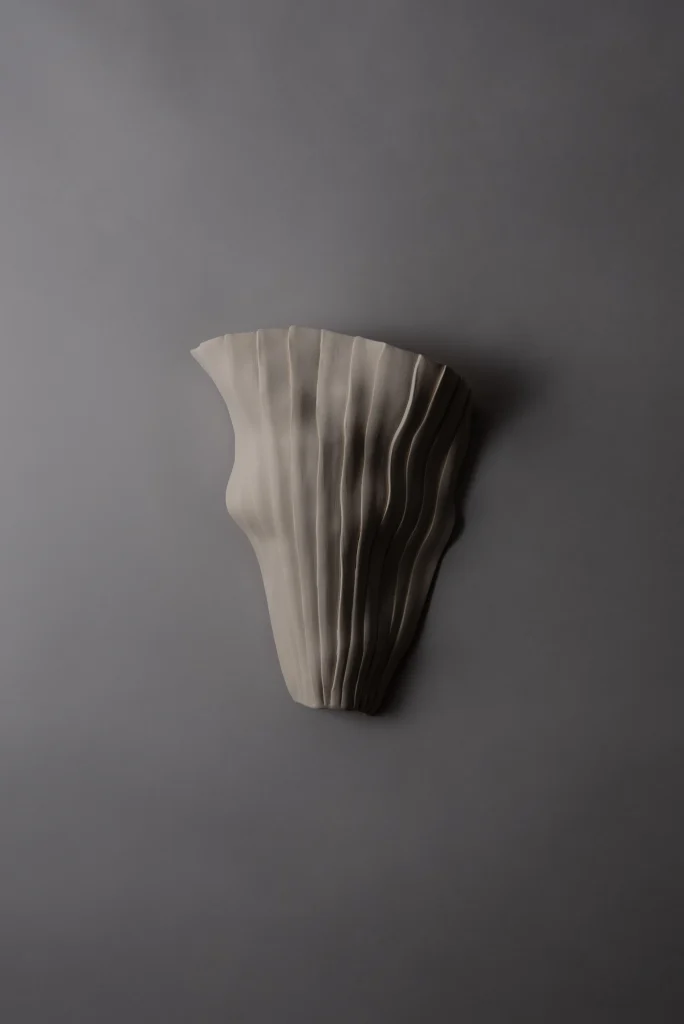
Stoneware layers are assembled by hand in a quiet, iterative process to create the signature drape patterns of these lamps. Peaks and hollows catch daylight differently as the sun moves, while at night warm light extends upward toward the ceiling. It comes in white, toffee, black and red.
By Studio Ēeme
€750 – €800 incl. tax
Frequently asked questions
Do ceramic lamps get hot?
Ceramic handles heat well, but the bulb determines how warm the lamp gets. Use LED bulbs, which run cool and protect both glaze and shade.
What is the difference between porcelain and stoneware lamps?
Porcelain is fired at higher temperatures and can be thin enough to glow translucently. Stoneware is denser and opaque, so light is directed through openings or reflected from its surface.
Are handmade ceramic lamps fragile?
Fired ceramic is durable in everyday use but can chip or crack if dropped. Place table lamps on stable surfaces and handle them by the base when moving.
How do I clean a ceramic lamp?
Unplug it first, then dust with a soft dry cloth. Glazed surfaces can be wiped with a slightly damp cloth; unglazed or raw clay should only be dusted.
Where should I use a ceramic pendant light?
Above dining tables, kitchen islands and entryways, where the glaze and form can be seen at eye level. Hang it about 75 to 90 cm above a table.
Why does every handmade ceramic lamp look slightly different?
Hand-building, wheel-throwing, glazing and firing all introduce natural variation. Kilns and raku firing in particular produce color and texture that can’t be fully controlled.
The incredible variety of ceramic lighting
These ceramic lamps demonstrate how clay responds to different hands and techniques, with translucency depending on porcelain thinness or stoneware density. Surface texture determines how light exits each form, while firing methods introduce color and finishes you cannot fully predict. The material demands attention at every stage, from wheel throwing to final glazing.
Your space gains more than illumination when you add handmade ceramic lighting: you bring in the weight, texture and presence only fired clay delivers. These pieces shift throughout the day as natural light moves across their surfaces, then transform entirely when switched on at night.
