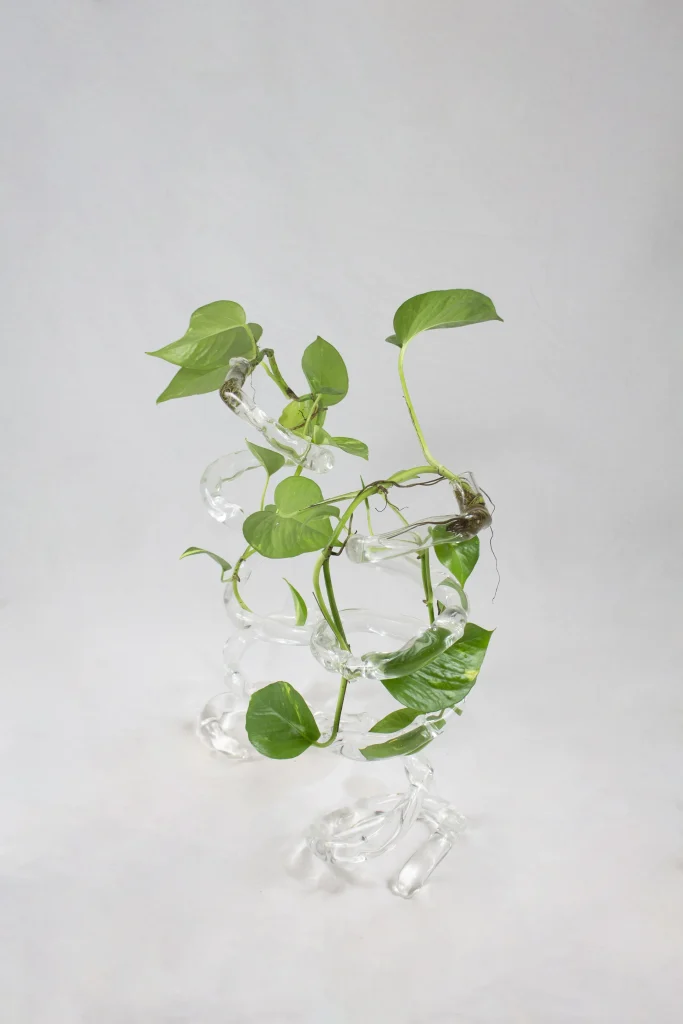
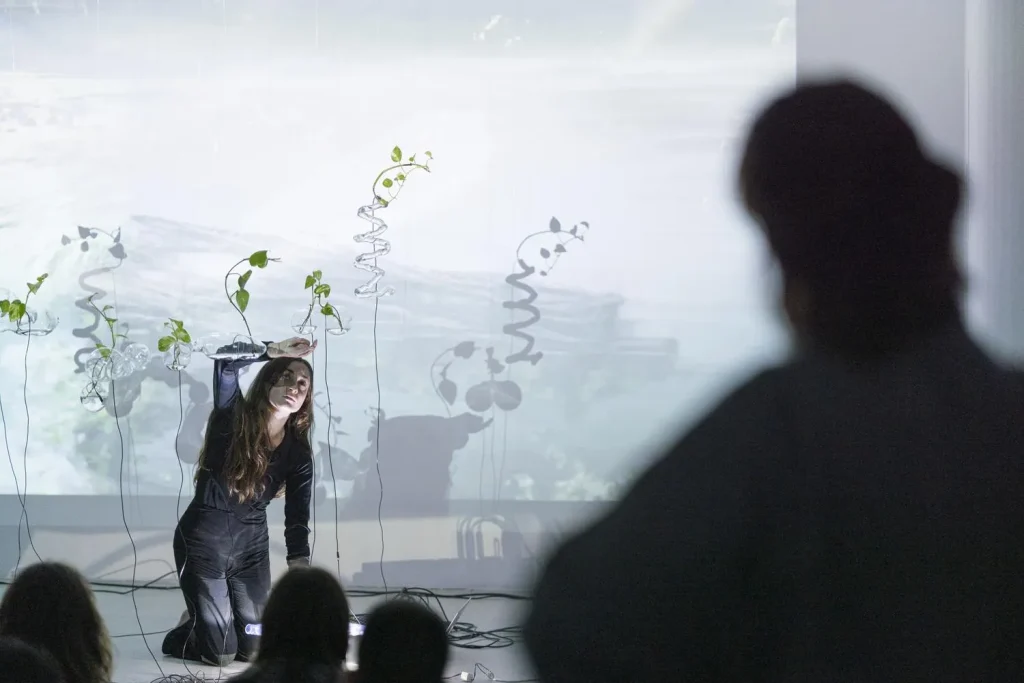
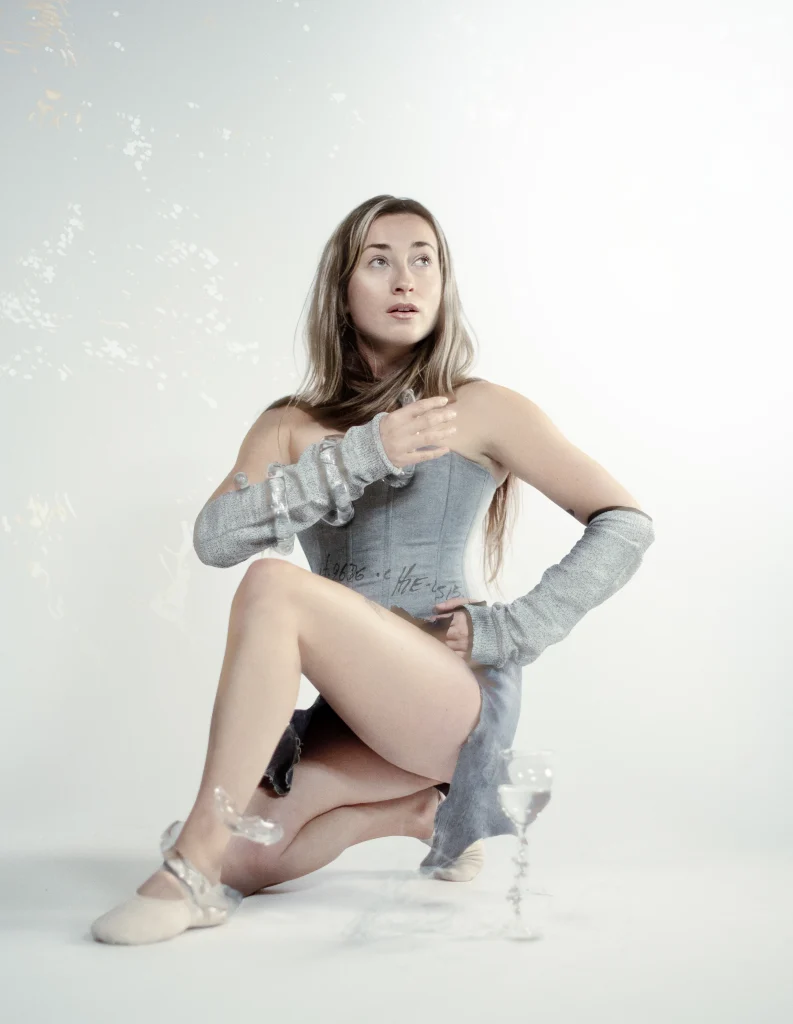
Magdalena Hart (UK / Uruguay) practices porosity as a methodology that allows her to inhabit decomposition and sustain sensitivity within contexts of accelerated change and deep erosion. Her work unfolds through sensitive devices and interactive installations that expand forms of perception beyond dominant modes of knowledge production. Materially, her sculptural language is built from blown glass and the accumulation of electronic waste, intertwining with more-than-human collaborations. From this dialogue, she questions how fragility can generate care, how matter becomes language, and how subtlety enables forms of permanence, embodying a constant tension between resistance and vulnerability, between fluidity and rigidity.She has lived and worked in Barcelona since 2018. She currently participates within the residencies at Hangar, Tandem x Casa R.A.R.O, and as a Maker Sherpa at the Centre Cívic Convent Sant Agustí. She obtained a Master’s degree in Audiovisual Innovation and Interactive Environments, and has presented her work in spaces such as the Mies van der Rohe Pavilion, CosmoCaixa, Circuito Ecuestre, the Espacio de Arte Contemporáneo of Uruguay, the Alexander von Humboldt Foundation, Madrid Design Festival, MIRA Festival, Arts Santa Mònica, Barcelona Design Festival, among others.Her awards include: the Barcelona Crea Research and Experimentation Grant at Hangar (Manglar Collective), the Digital and Electronic Art Grant from MEC Uruguay, the Montevideo Visual Arts Award, and the Performing Arts Grant from Fonds Darstellende Künste (Akyute Collective). She is represented by Il·lacions Gallery in Barcelona, Adorno Gallery in Milan, Apoc in London, among others. She has been interviewed by The New York Times, Metal Magazine, Art Connect, among others.Since 2019, she has led Akyute, an artistic duo exploring ecological sensitivity through interactive installations and performances. From this dialogue, she created Rain and Rivers in 2023, a practice based on research into glassblowing, water, and wearables. In 2023, she co-founded Manglar, a transdisciplinary collective of Latin American artists and researchers brought together at Hangar’s WetLab. This experimental project proposes situated sciences that de-universalize the scientific gesture, integrating the body as both site and perspective.
Her research has developed through guiding questions that shape her practice: it began with “How can nature be integrated in an increasingly digitalized era?” and evolved into “How can we imagine a future conditioned by a lack of vocabulary?” This search has led her to practice porosity as a way of challenging dominant modes of knowledge production within the context of the Anthropocene, a method for softening the boundaries between bodies, languages, technologies, and the territories we cross.She approaches her research as a process of composting in which she understand her archive as a territory that fractures, ferments, decays and reorganizes into new forms of intimacy: a gesture of revisiting what is kept, archived, and what is buried. The formats that emerge are made with accessible materials that register traces of time and displacement.
From the necessary revision of the concept of nature, she is drawn to the vocabularies that are missing when we speak about care, interspecies alliances, and possible futures. Porosity allows her to build more situated and sensitive relationships. She has cultivated long-term collaborations with riverine, oceanic, and estuarine waters, wild plants, and polluted soils across diverse ecosystems in Uruguay and Europe, moving between erosion, care, and repair.