
Spain makes room for the speculative and the handmade at once, and its designers move between the two without apology.
Updated on: October 30, 2026
Spanish design is often reduced to sunshine and color, yet its range is far wider: industrial lighting and esparto weaving, Catalan stoneware and aluminum casting, radical prototypes and furniture built to last generations. What connects it is a close relationship between designers and the workshops around them, and a willingness to let craft and concept share the same object.
This guide looks at what defines contemporary Spanish design, revisits ADORNO’s 2017 studio visit with Barcelona designer Martín Azúa, and presents nine pieces by Spanish studios available on ADORNO today.
What defines Spanish design?
Much of Spain’s 20th-century design story runs through Barcelona. At the turn of the 20th century, Antoni Gaudí and the Catalan Modernisme movement designed furniture as carefully as buildings. After 1975, with the return of democracy, the city became a center for new design, and the 1992 Olympic Games carried Barcelona’s graphic and product design to the world. Madrid, Valencia and the Basque Country have since built their own scenes, each with its own industries and crafts.
- Craft as a partner, not a reference: designers work directly with ceramists, glassblowers, woodworkers and weavers, often in the same region.
- Mediterranean materials: stoneware and terracotta, esparto grass, olive and oak, glass and stone.
- Industrial curiosity: aluminum, steel and building components turned into domestic objects.
- Color and humor: a lightness of touch that can make even serious objects feel friendly.
- Concept first: many Spanish designers describe their best work as speculative, asking questions rather than answering a brief.
Wallpaper* profiled three Spanish studios that show this range, from a father-and-son ceramics workshop near Barcelona to a Mallorcan studio mixing 3D printing and stone, and Sight Unseen covered Jorge Penadés turning aluminum offcuts from BD Barcelona’s factory into vases.
Case study: Martín Azúa, Barcelona
Born and raised in the Basque Country, Martín Azúa has always felt he “found his place” in Barcelona, where he graduated in Fine Arts from the University of Barcelona in 1994. “I love this city, which is so very different from the Basque Country, the transition from the cold side of Spain to the more Mediterranean side,” he told ADORNO in 2017. “And let’s say that this has captured me.”
Azúa found early success as an industrial designer for companies such as Kvadrat and Majoral, yet he describes his best work as speculative. His Casa Básica (1999), an inflatable polyester cube large enough to live in, is in the collection of MoMA in New York: a whole house that folds into a pocket.
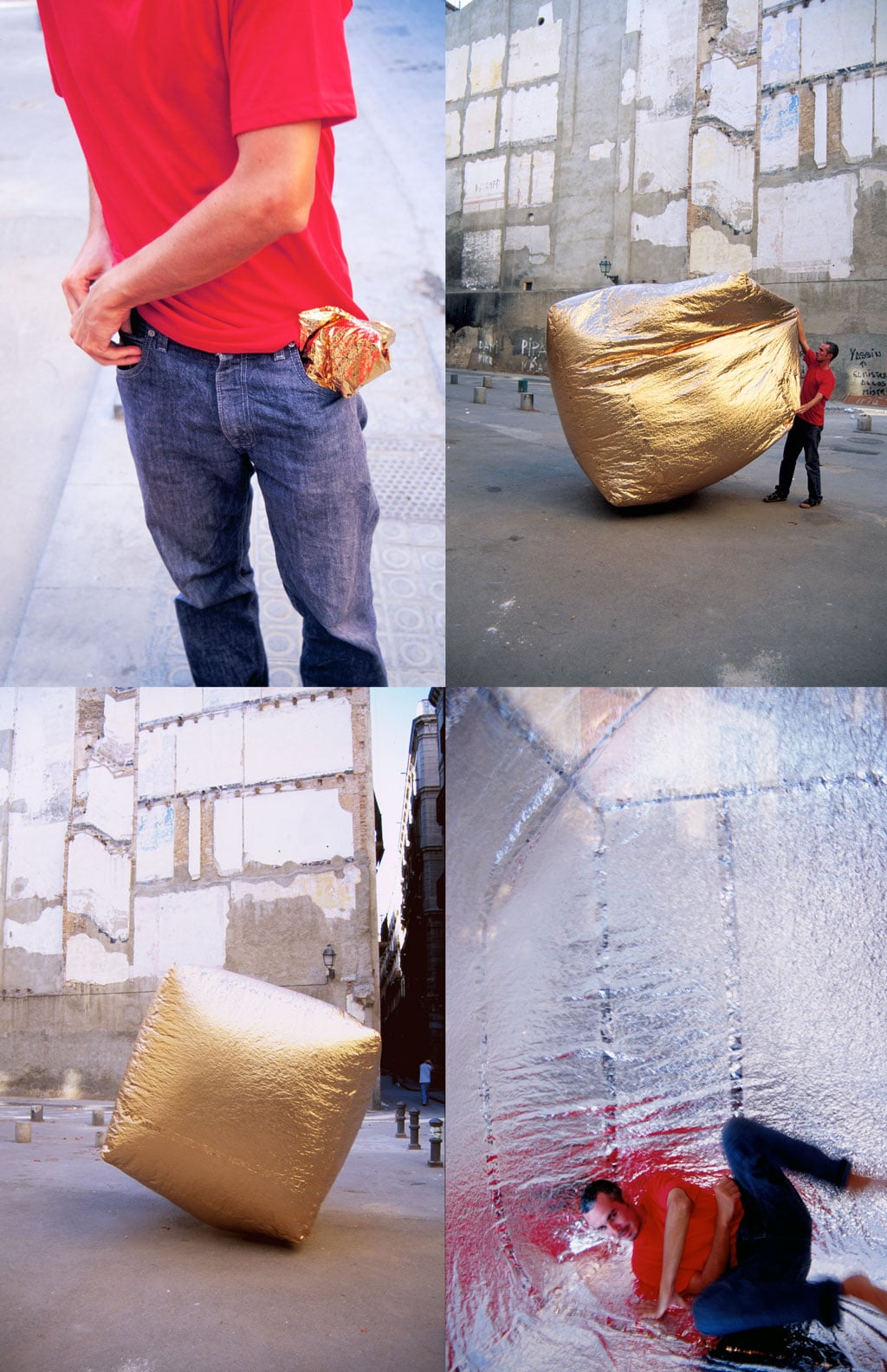
Much of his work invites nature into the process. For Natural Finish, he left porous white ceramic vessels outdoors for a year and let weather and earth decorate them, asking what natural decoration really means. For a project with craftswomen in Murcia, he worked with esparto, a dry grass woven in Spain for thousands of years and once used for traditional shoes.
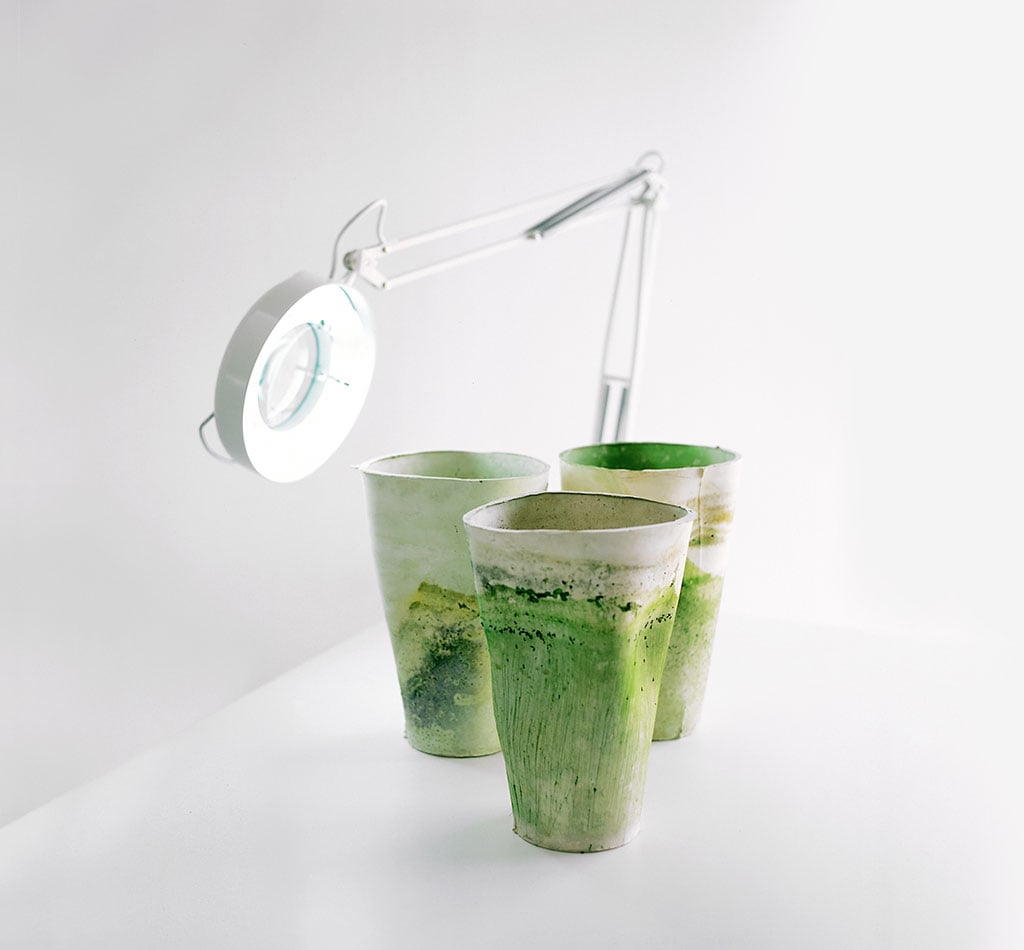
“More and more I think it is interesting to work with local manufacturers and reclaim a design with local meaning,” he said. “Everyone is trying to be famous, to sell all over the world, but I think in the process we are losing something.” His collaboration with ceramist Marc Vidal shows how quickly that can work: an idea for a jar to hold autumn leaves on a Monday, a finished jar on his table by the end of the week. “I am not dogmatic about handicrafts, or against industrial production,” he added. “My concern is that all these techniques do not disappear.” Azúa’s pieces are no longer available on ADORNO, but the approach he described runs through the Spanish studios below.
9 pieces by Spanish designers
Each piece comes from a different Spanish studio and is available on ADORNO, ordered by demand on ADORNO over the last 90 days.
O.f.i.s Series Table Lamp in Pipe, Rod And Brick by Lucas Muñoz Muñoz

Spanish designer Lucas Muñoz Muñoz builds his O.F.I.S. series, Objects From Interstitial Space, from parts normally hidden inside walls. Here a pipe elbow becomes the shade, a steel rod the stem and a rough block the base. It turns the plumbing of a building into something meant to be seen, and at €280 it is the most accessible way into his work.
By Lucas Muñoz Muñoz
€280 incl. tax
LMC mobile by Jordi Canudas Faura

Spanish designer Jordi Canudas balances discs of colored acrylic glass on thin brass tubes hung from pink thread. LMC stands for light, movement and color: as the mobile turns, each disc throws its own colored shadow. The discs are arranged at random, so no two mobiles are the same.
By Jordi Canudas Faura
€215 incl. tax
Glass Flower Organic Bouquet by PIA GLASSWORKS
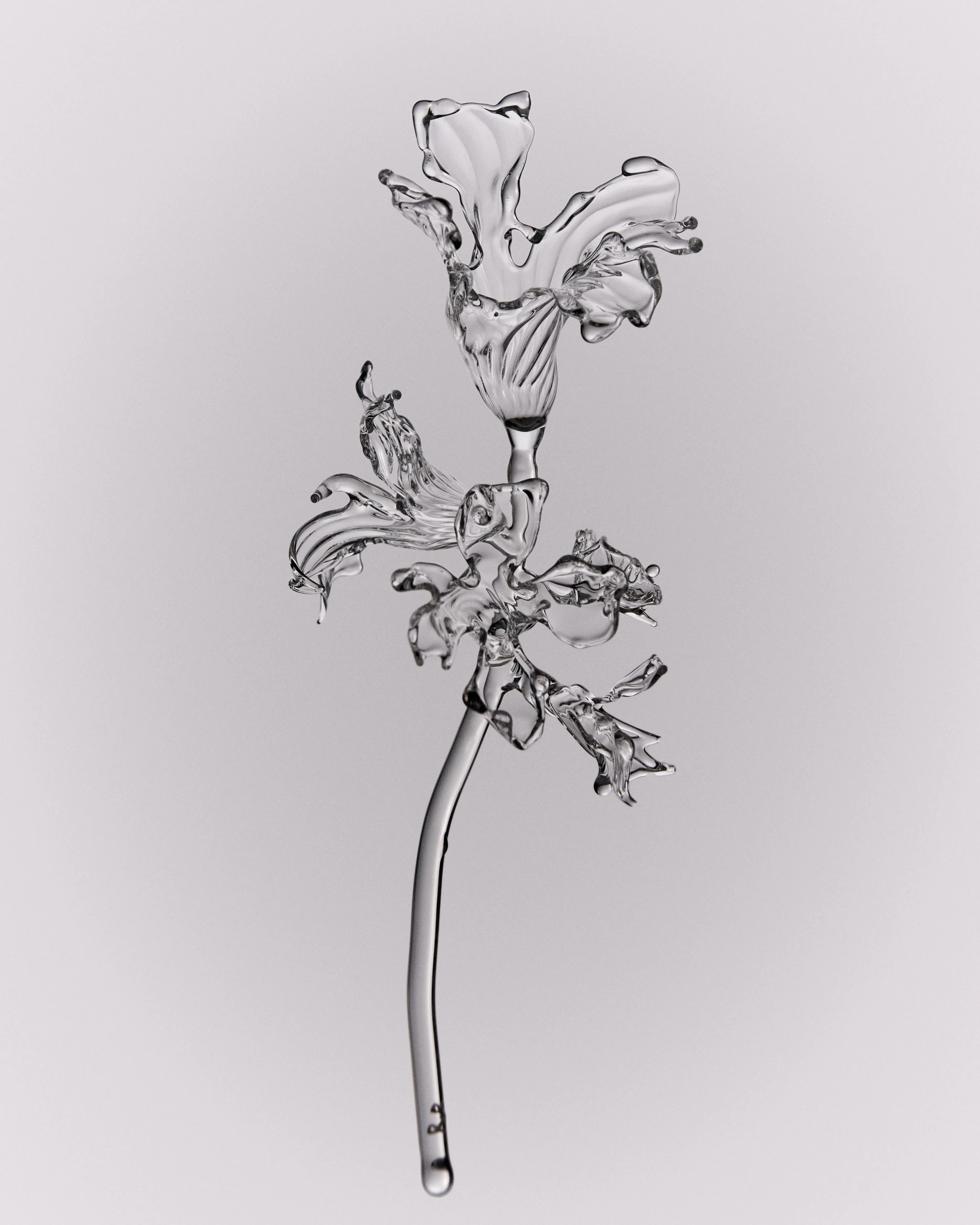
Spanish studio PIA GLASSWORKS shapes these flowers by flameworking borosilicate glass, petal by petal, so each one is a little different. They are made to last where real flowers fade, for a table, a shelf or a wedding. The bouquet can be made in the flowers and colors you choose.
By PIA GLASSWORKS
€1.000 incl. tax
Flamingo Stool by Mina Wright

Mina Wright builds this stool by hand in her Barcelona workshop from Catalan stoneware with grog, then glazes it in many layers of pink. Its outline is a Matisse flower pulled upward into a seat. It measures 38 cm (15 in) tall and 42 cm (16.5 in) wide and works as a stool or a side table.
By Mina Wright
€1.330 incl. tax
Nicola Round Dining Table in Solid Oak by Mike Hausmann
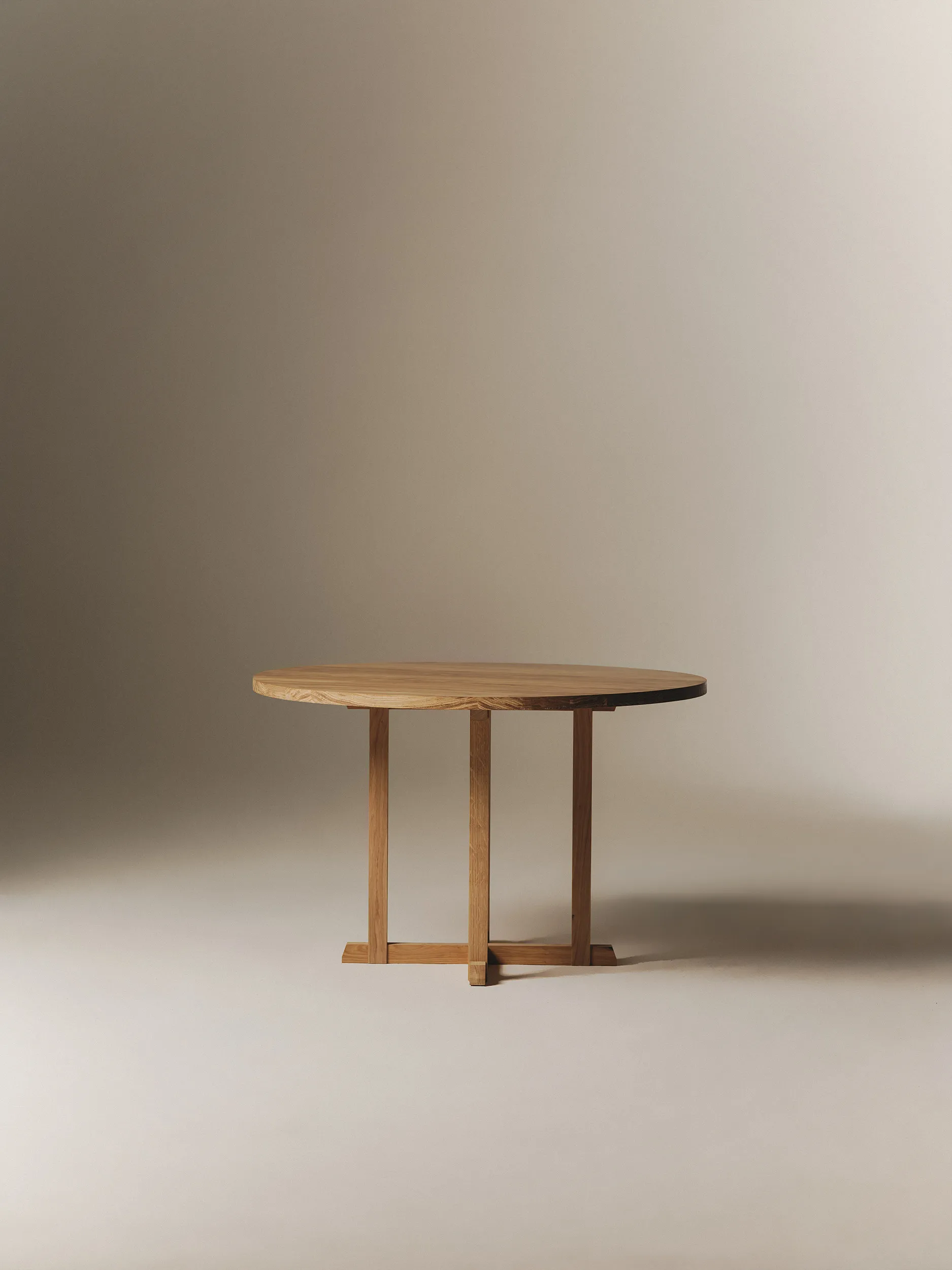
Spain-based Mike Hausmann makes the Nicola table entirely from solid oak, with a round top resting on two intersecting trestles. The joinery is left in view, a quiet display of cabinetmaking. At 120 cm (47.2 in) across and 75 cm (29.5 in) tall, it seats four to six and joined ADORNO this month.
By Mike Hausmann
€9.980 incl. tax
The Mesia Table Lamp in Ceramics and Glass by Luis Gimeno Design
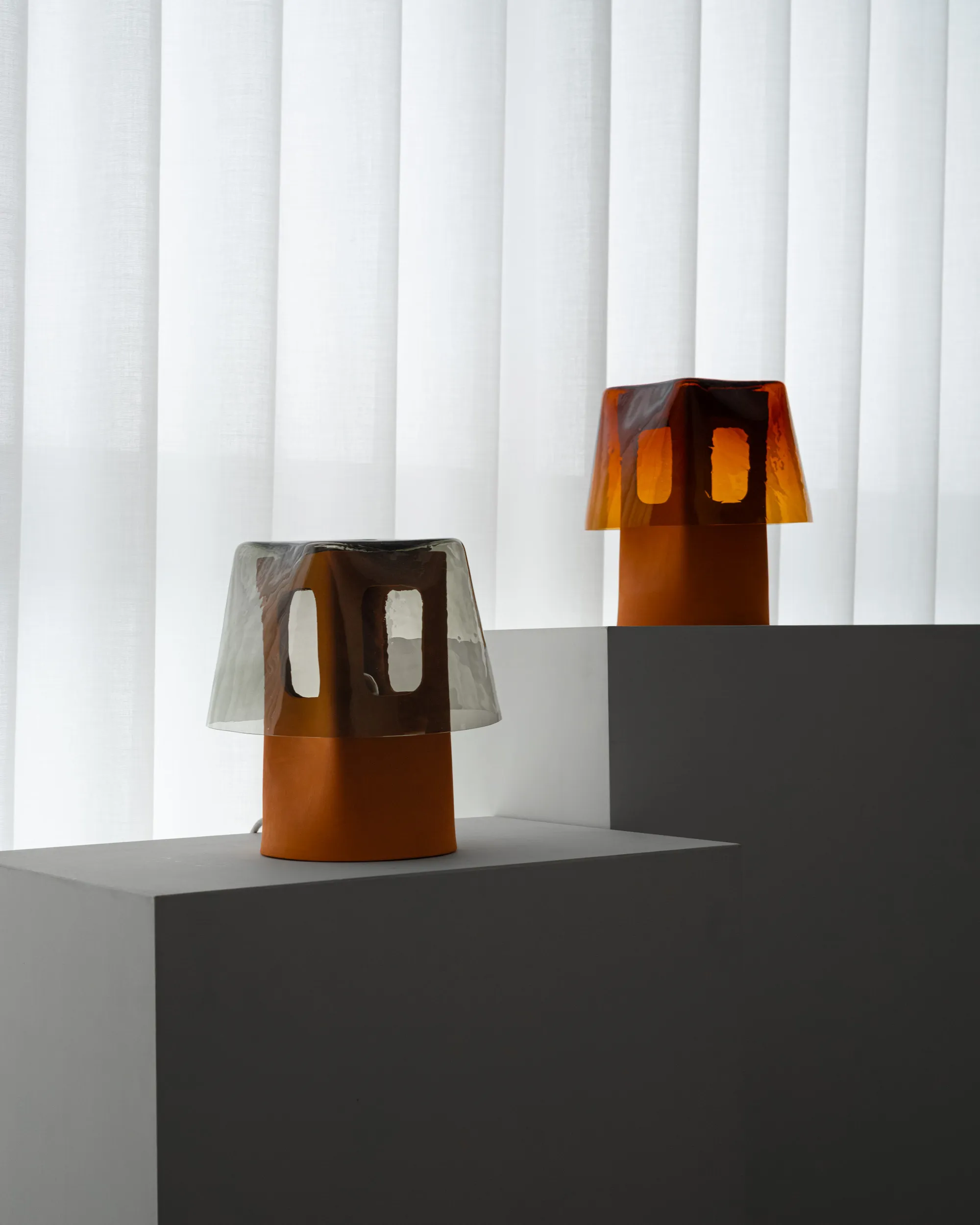
Luis Gimeno gives a Mediterranean ceramic base a personal twist and sets a blown-glass shade on top with no fixing at all; gravity holds it in place. The ceramic is made by hand and the glass is mouth-blown, so each lamp varies slightly. It is made to order in eight to ten weeks; the bulb is not included.
By Luis Gimeno Design
€1.400 incl. tax
Anuk Stool by Heaps & Woods
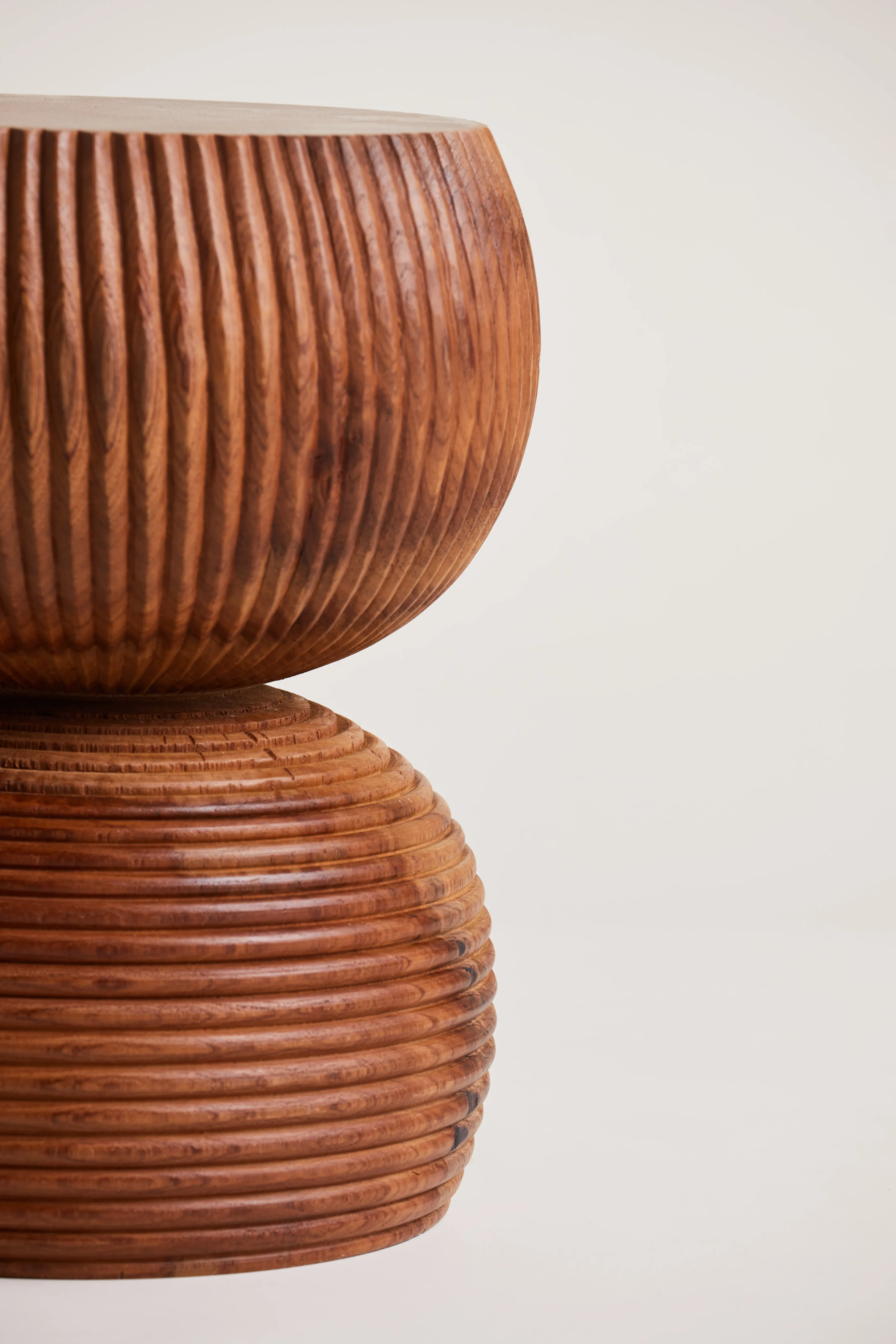
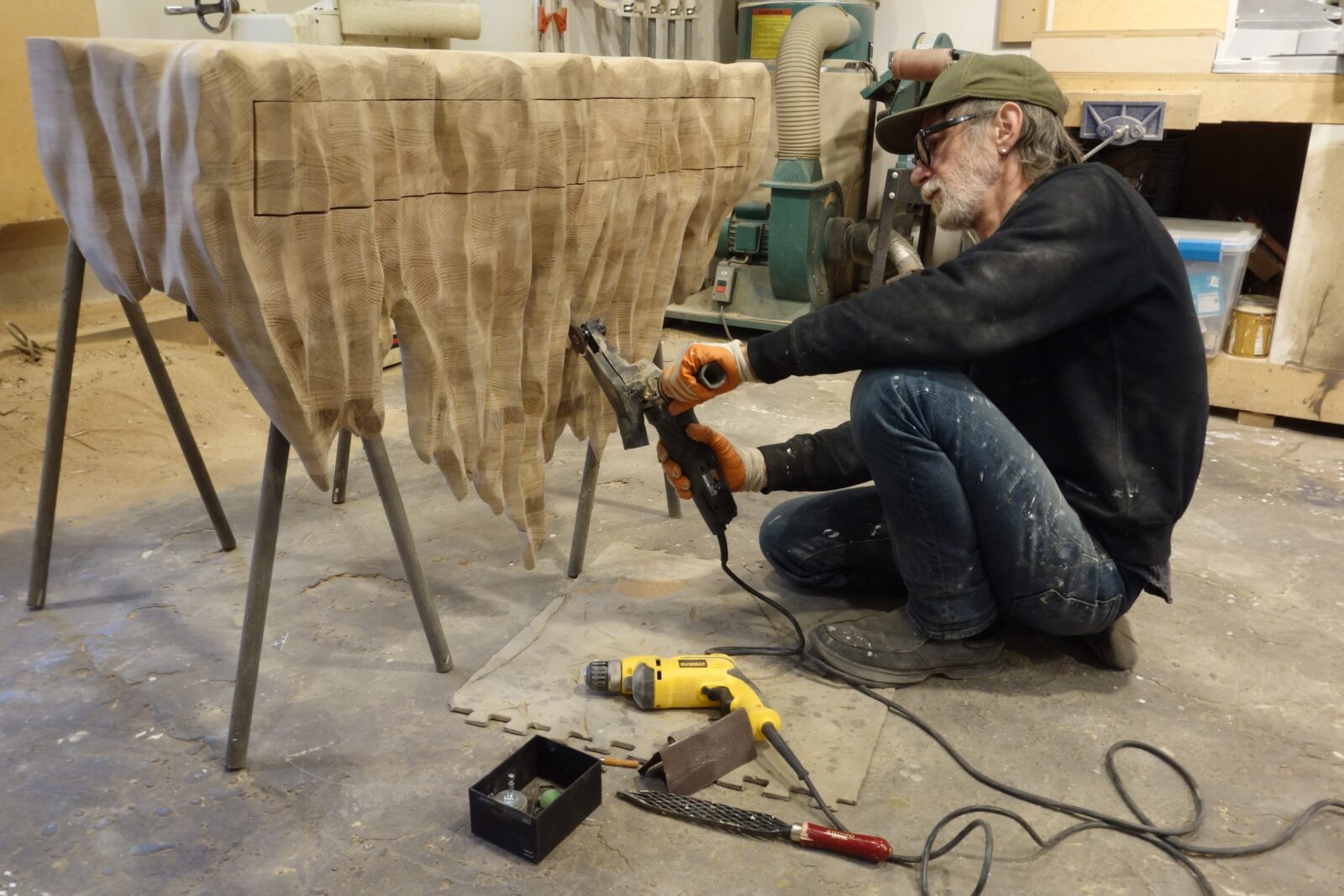
Spanish studio Heaps & Woods carves the Anuk stool from a single block of teak, cutting deep ridges by hand so the surface ripples like water. The artisans adapt to each block, and a natural finish lets the grain show. It is 40 cm (15.7 in) high, weighs 18 kg (39.7 lb) and doubles as a side table.
By Heaps & Woods
€1.344 incl. tax
Route 03.01 Entryway Table in Cast Aluminum and Blown Glass by SK – Sofia Karnukaeva
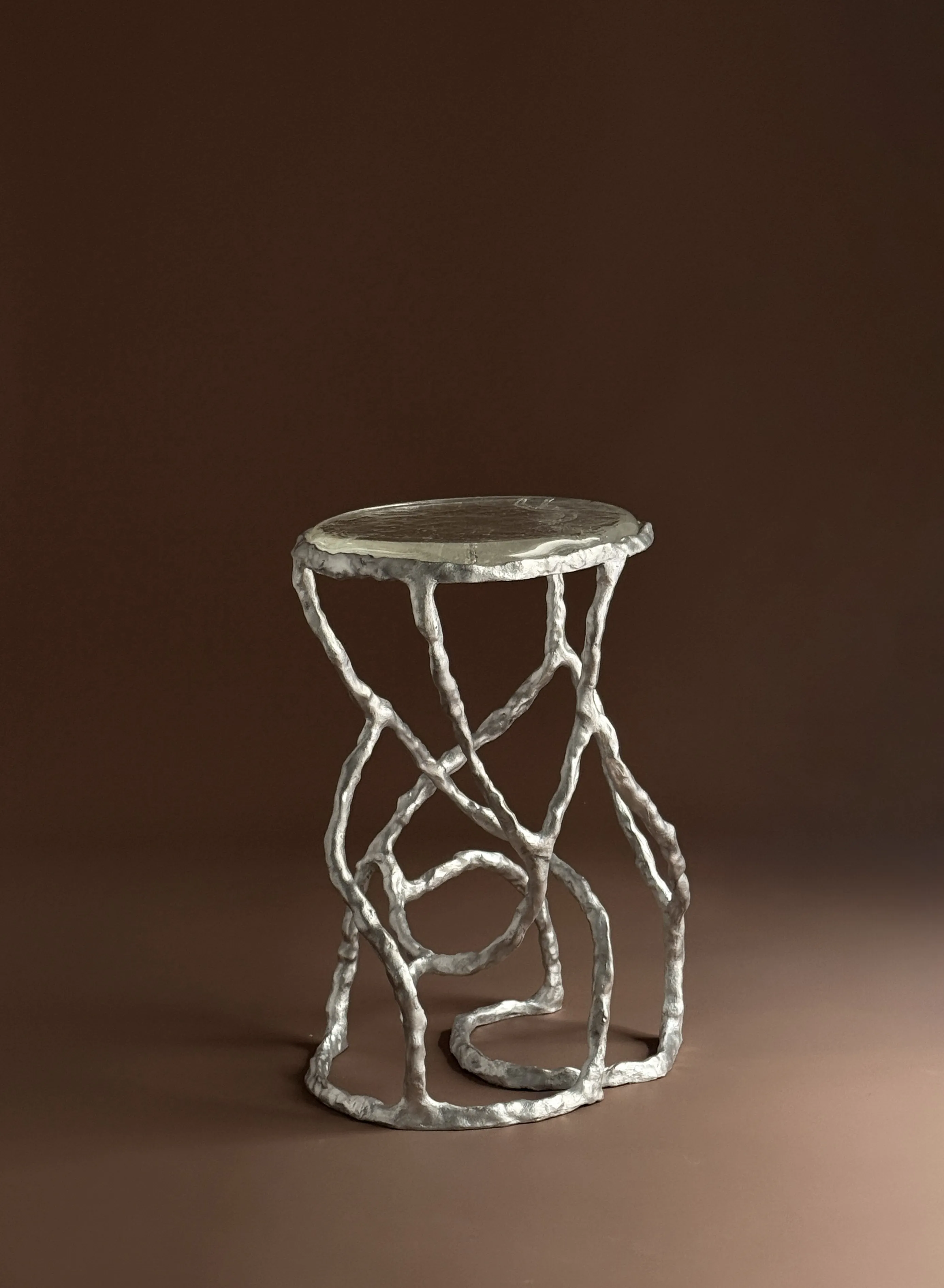
Spain-based artist Sofia Karnukaeva casts her Route series in aluminum, letting the form grow like a riverbed, roots or branches. The legs twist and divide beneath a round top of blown glass. Each piece is cast by hand, and the casting process is part of the work’s story.
By SK – Sofia Karnukaeva
€1.800 incl. tax
Citadel Floor Lamp in 3D Printed PLA by Ultramar Studio

Spain-based Ultramar Studio 3D prints the Citadel in plant-based PLA and finishes it by hand. Stacked tiers recall East Asian palace architecture and the Heavenly Palace of Chinese mythology, and the lamp throws a soft wash of light upward. It belongs to a family of four luminaires, from table lamps to light sculptures.
By Ultramar Studio
€1.400 incl. tax
How to bring Spanish design into your home
Start with one handmade piece in a Mediterranean material: a stoneware stool, a carved teak side table or a glazed ceramic lamp. Pair it with something industrial, such as aluminum or steel, to echo the mix of craft and concept. Keep color for accents and let natural oak, glass and stone carry the room. In a dining room, a solid wood dining table and handmade tableware do most of the work; in a hallway, a sculptural console table sets the tone. Add light last: Spanish table lamps and floor lamps often double as sculpture.
For more on how regional design traditions shape contemporary work, read our look at contemporary Polish design and our earlier visit to Spain at Virtual Design Destination 2020.
FAQ
What is Spanish design known for?
Contemporary Spanish design is known for close collaboration between designers and craftspeople, Mediterranean materials such as stoneware, esparto, oak and glass, an interest in industrial materials, and a light, often playful sense of color and form.
Who are famous Spanish designers?
Antoni Gaudí shaped Spanish furniture at the turn of the 20th century, and contemporary names include Patricia Urquiola, Jaime Hayón, Javier Mariscal and Martín Azúa, whose Casa Básica is in the MoMA collection. ADORNO also features independent studios such as Lucas Muñoz Muñoz, Jordi Canudas and Mina Wright.
What materials are typical of Spanish furniture?
Solid wood such as oak and olive, glazed stoneware and terracotta, esparto and other natural fibers, glass, stone, and increasingly aluminum and steel.
Is Barcelona a design capital?
Yes. Barcelona has been one of Europe’s design centers since the 1980s, with a long tradition of furniture, lighting and graphic design and a strong network of workshops in and around the city.
Where can I buy furniture by Spanish designers?
ADORNO’s Spain page gathers furniture, lighting and objects by independent Spanish designers, made to order or ready to ship.
Browse all pieces by Spanish designers on ADORNO.




Responses