Steel and aluminum are no longer just the frame. In contemporary design, metal has become the expressive part of the piece.
Updated on: November 22, 2026
Metal has shaped furniture for more than a century, from tubular steel chairs to industrial shelving. What has changed is how designers use it. Cool-toned metals, especially aluminum and stainless steel, have taken over from the copper and brass of the last decade, and makers are pressing, folding, casting and polishing them in ways that make metal feel soft, fluid or even playful.
Here are the ideas driving metal furniture today, each illustrated with pieces from independent studios.
Why Metal Furniture Is Having a Moment
Metal is durable, fire-resistant and immune to rot and insects, and it can be recycled again and again. Steel is the most recycled material in the world, and aluminum can be remelted indefinitely without losing quality, which makes both a strong choice for furniture meant to last. The look has shifted too: where warm metals like copper and rose gold defined interiors in the 2010s, today the palette is cooler, with brushed aluminum, polished stainless steel and chrome.
For more on the material itself, see our guides to aluminum furniture and metal coffee tables.
The Liquid Metal Look
One of the most striking directions is metal that looks fluid, as if it had been poured and frozen in place. Designers achieve it through hydroforming, pressing metal under extreme pressure or casting it, and the results sit somewhere between furniture and sculpture.
Pressure Stool by TIM TEVEN
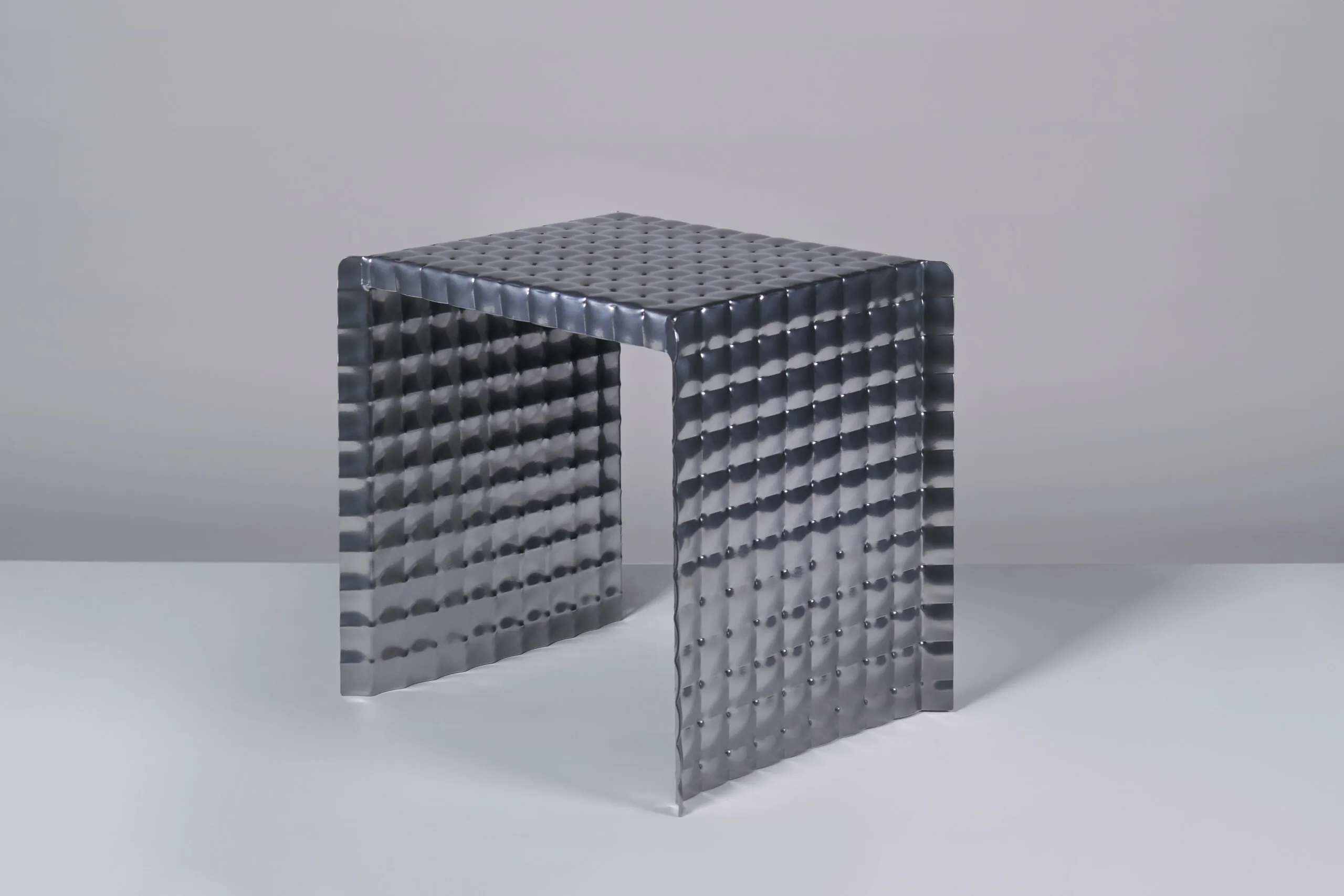
Tim Teven presses a pattern into sheet aluminum under extreme pressure, which hardens the metal and gives it an unexpectedly soft, quilted look. The 40 cm (16 in) Pressure Stool works as a seat or side table and shows how cold metal can read as almost textile.
By TIM TEVEN
€484 incl. tax
Diamante Bench by Nitush and Aroosh

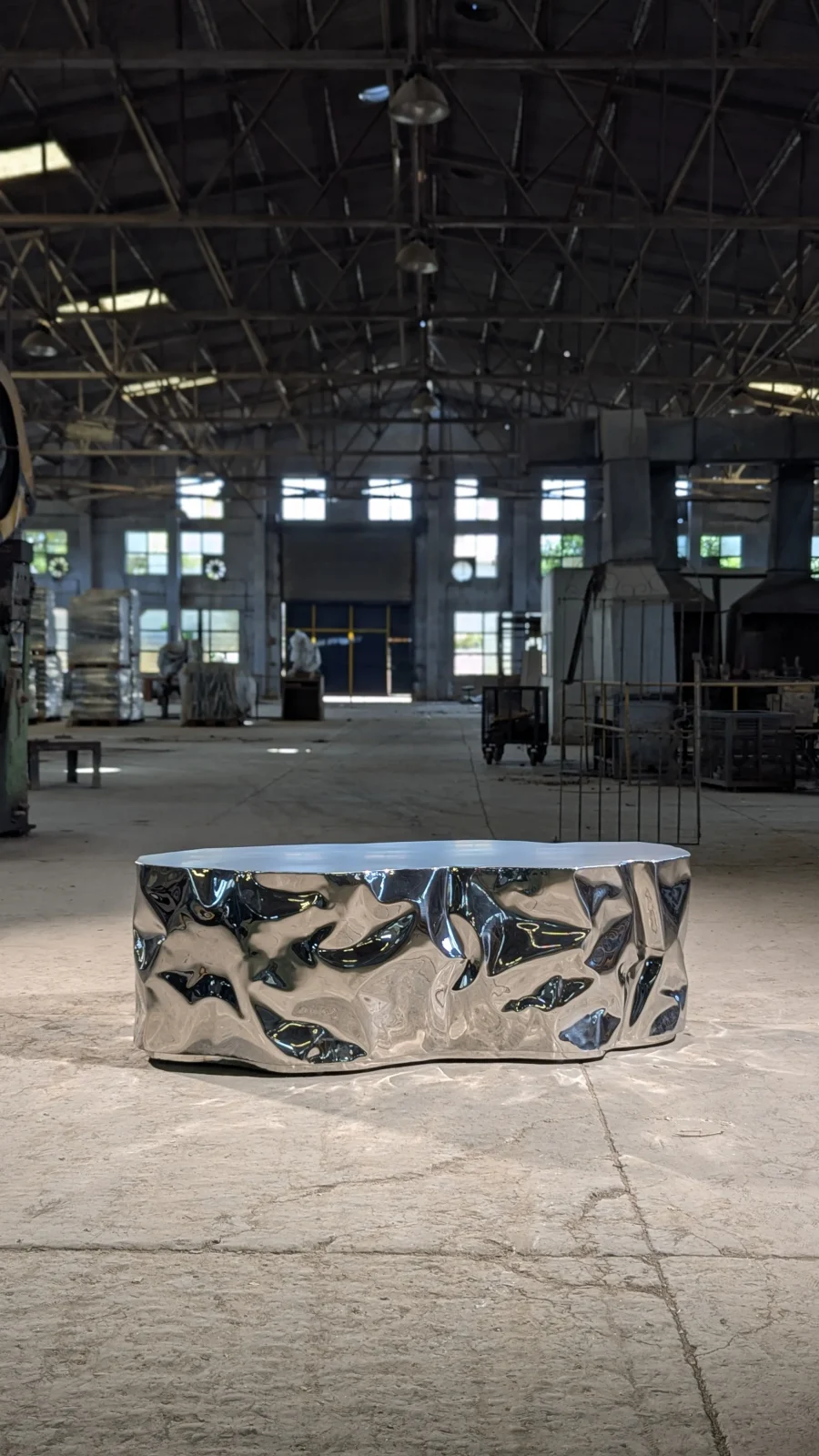
Diamante’s polished body ripples like water frozen in place, catching and scattering reflections across the room, while its flat matte top gives a quiet counterpoint. At 165 cm (65 in) long, it works as a bench or a low table and brings the liquid metal look into everyday use.
By Nitush and Aroosh
€5,500 incl. tax
One Sheet, Few Parts
At the other end of the spectrum, many designers are reducing furniture to as few parts as possible: a single folded sheet, three plates bolted together, two angled planes. Less material means less waste and easier recycling, and the construction becomes the design.
Clip Chair by Metalmorphosis Studio
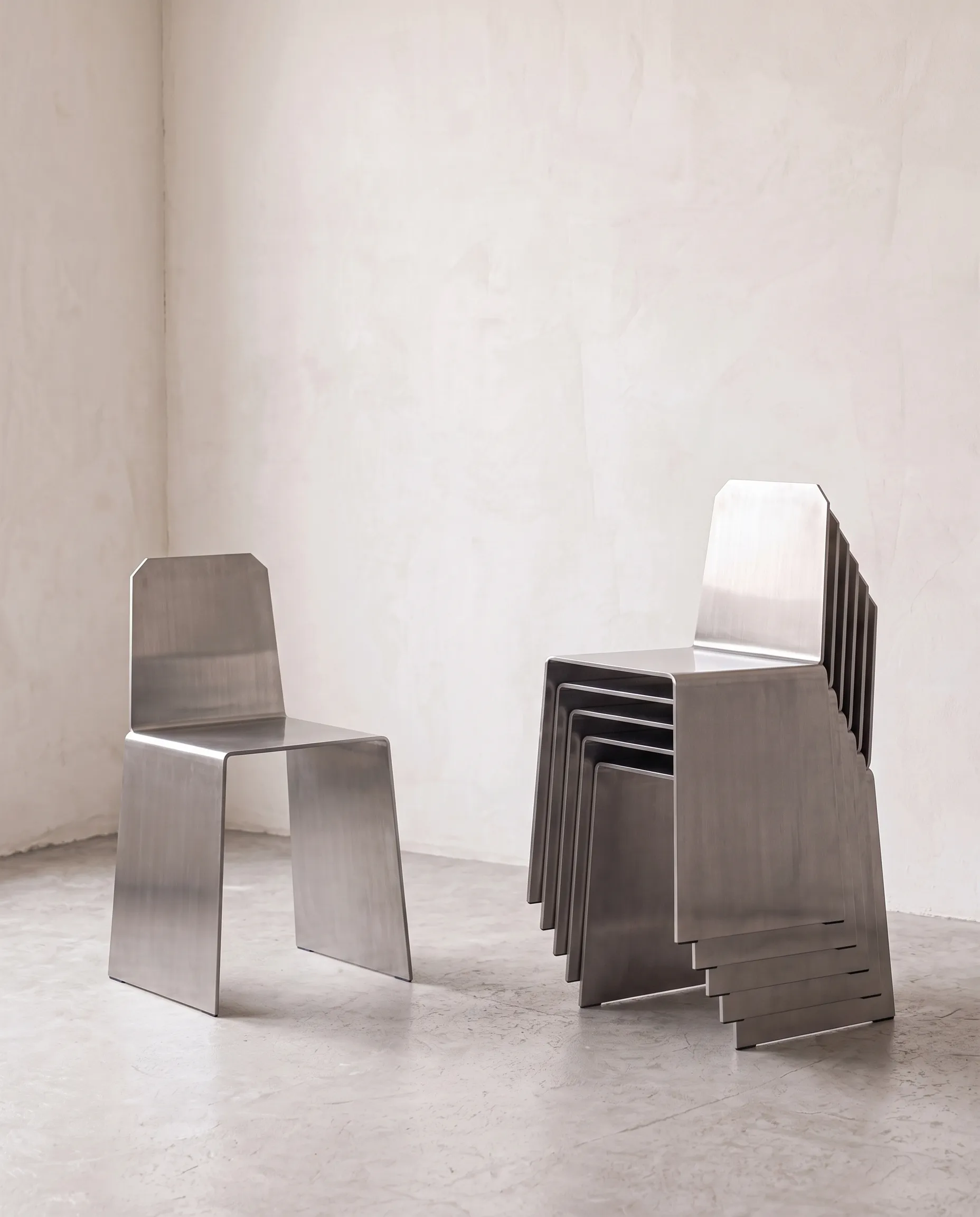
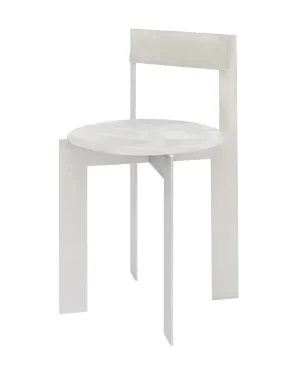
One sheet, three bends, nothing else. Clip’s U-shaped body forms the seat and legs, and an L-shaped back clips on, with no welds or padding. Made by hand in aluminum, it stacks neatly and is a good example of how little material a well-designed chair needs.
By Metalmorphosis Studio
€490 incl. tax
Polysemy Multifunctional Table by So Koizumi
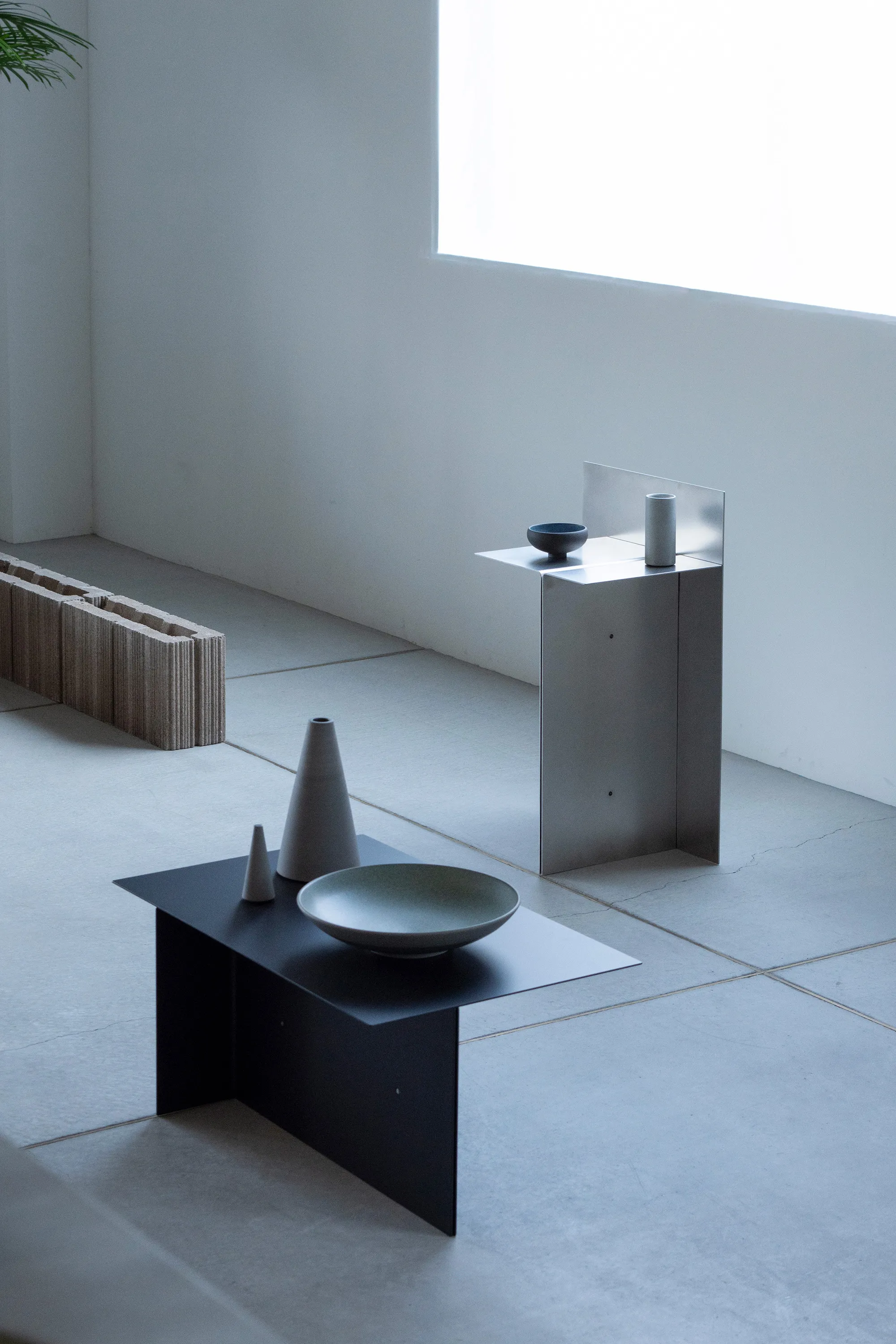
So Koizumi bolts three stainless steel plates into one form that becomes a bookshelf, a side table or a display shelf depending on how you turn it. Instead of dictating a use, it leaves the decision to you, a modular idea reduced to its simplest form.
By So Koizumi
€1,200 incl. tax
Kut Accent Chair by SABAN FURKAN
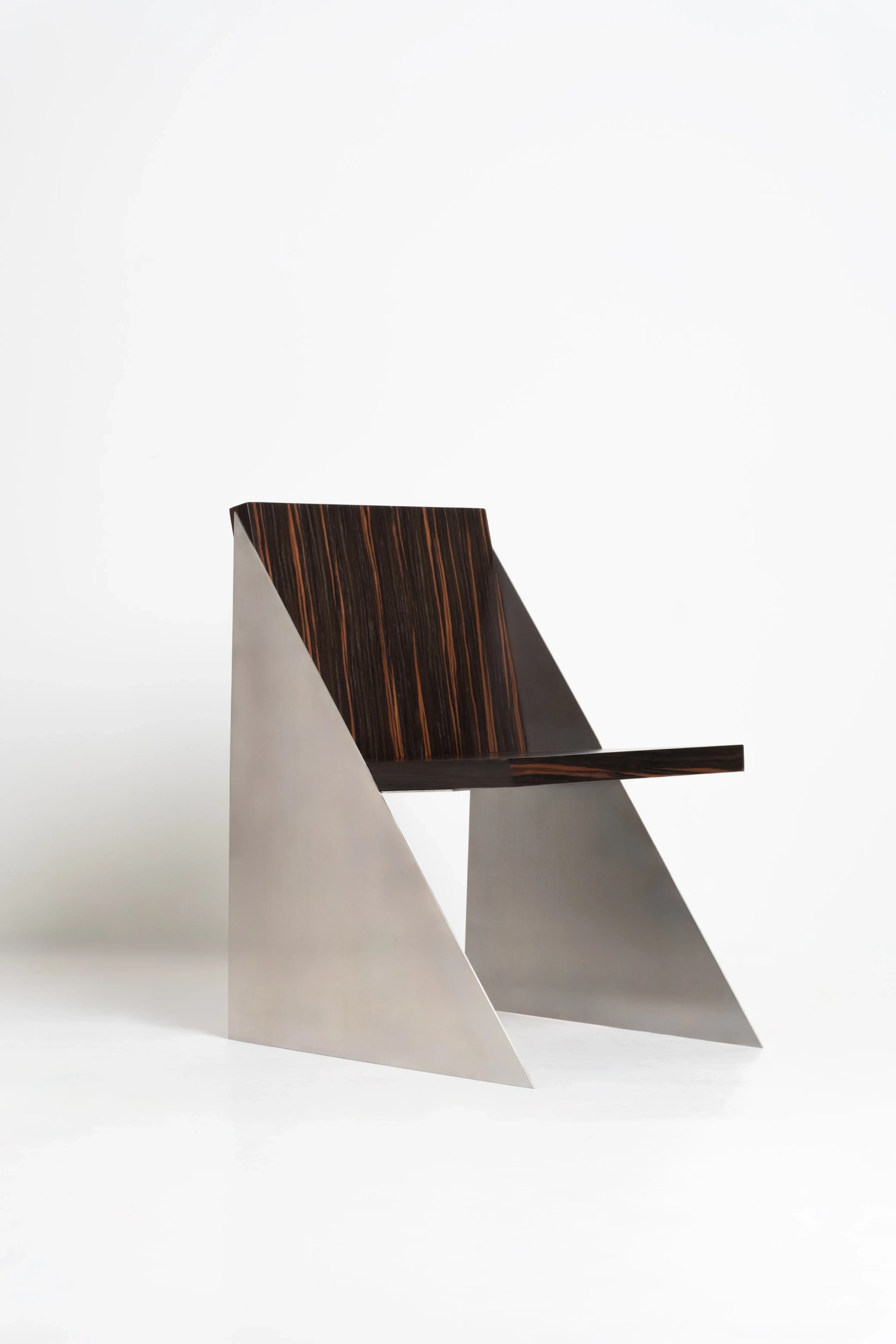
Kut achieves stability through precision rather than visual weight. Two angled planes of stainless steel carry a dark wood seat with the minimum number of parts, so the chair looks almost weightless while staying solid in use.
By SABAN FURKAN
€3,400 incl. tax
Mirror Finishes and Chrome
Polished stainless steel and chrome bring light into a room by reflecting it. A mirrored piece changes with the time of day and the viewer’s position, which makes it one of the most dynamic ways to use metal at home.
Finepianta 02 Dining Chair by FINEPIANTA

Mirrored stainless steel turns this geometric chair into a play of reflections. From the front it reads as a flat facade; from the side, a pyramid shape appears beneath the seat. It is the cool, chrome side of the metal trend, in a chair that changes with every angle.
By FINEPIANTA
€1,785 incl. tax
Metal With a Story
Cast metal can also carry history. Reworking a familiar form in a new metal or finish links a piece of furniture to a place and a time, while giving it a second life indoors.
Oto Low Stool and Side Table by Neiw Studio

Oto reimagines Otto Wagner’s 1895 railing design for Vienna’s public transport as a cast aluminum stool and side table. The ornamental round seat carries more than 130 years of city history into a compact, low piece that works indoors or out.
By Neiw Studio
€1,400 incl. tax
How to Style Metal Furniture
Balance cool metal with warm materials such as wood, wool, linen and leather so a room does not feel clinical. Stick to one or two metal finishes per room, for example brushed aluminum with polished steel, and repeat them in smaller objects like lamps or vases. Mirror-finish pieces work best where they can reflect light from a window or a lamp. For a look at award-winning work in the same materials, see Wallpaper*’s pick of aluminum and steel designs from its Design Awards.
Frequently Asked Questions
Is metal furniture durable?
Yes. Stainless steel and aluminum resist rust, rot, insects and fire, and most metal furniture lasts for decades with simple care.
Is aluminum or stainless steel better for furniture?
Aluminum is lighter and easy to move, which suits chairs and stools. Stainless steel is heavier and harder, and takes a mirror polish well, which suits tables, benches and statement pieces.
How do you clean metal furniture?
Wipe it with a soft, damp cloth and mild soap, then dry it to avoid water marks. Avoid abrasive pads, and rub brushed finishes along the grain.
Is metal furniture sustainable?
It can be. Steel and aluminum can be recycled indefinitely, and pieces made from a single sheet or with few parts use less material and are easier to recycle at the end of their life.