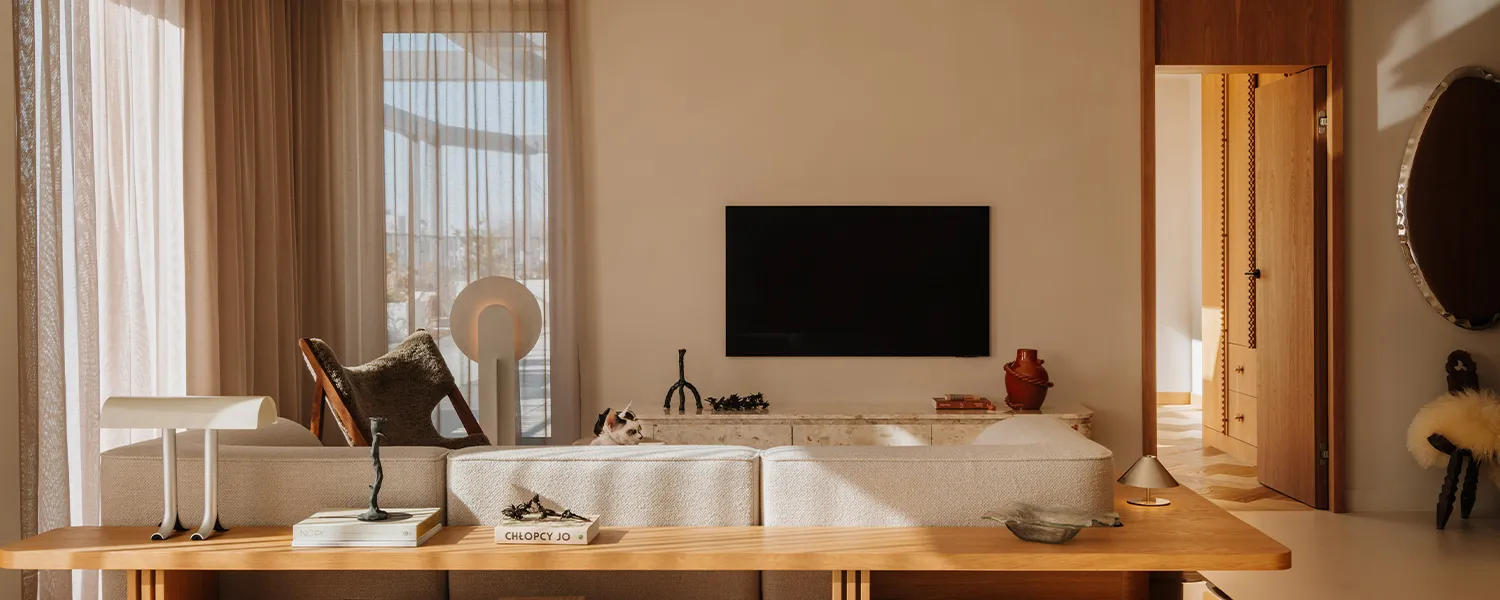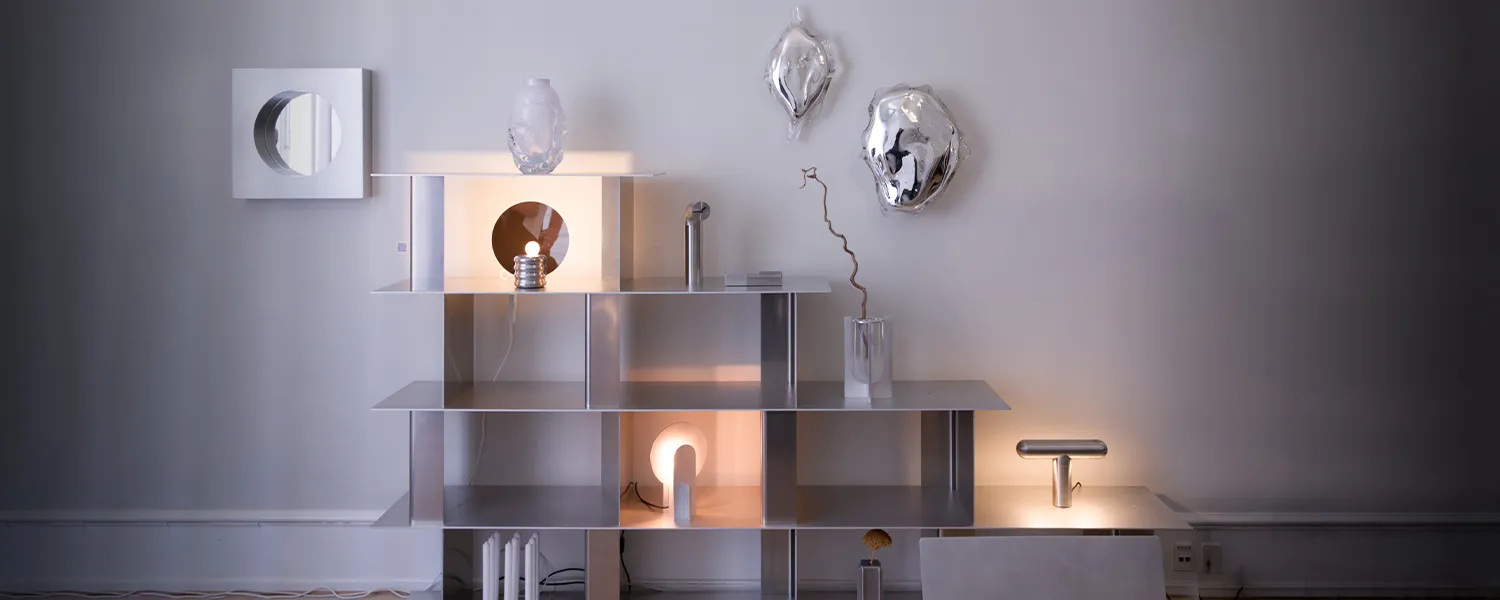
A bookshelf holds what you return to. Style it so the objects earn their place.
Most bookshelves are underestimated. They are treated as storage — a place to stack what accumulates rather than a surface to compose. Indeed, the bookshelf is one of the few places in a home where the personal, the functional, and the decorative share the same plane. A well-styled shelf reads as a portrait. A poorly styled one just reads as clutter. The difference, more often than not, comes down to restraint, proportion, and the quality of the objects you choose to live there. This guide addresses each of those — and introduces a selection of sculptural pieces, vases, bookends, and decorative objects from ADORNO that are worth styling around.
Bookshelves worth starting with
Before considering what goes on a shelf, it is worth considering the shelf itself. The structure defines the composition as much as any object placed on it. The Stack series by studio MOTO — raw aluminum shelving units built with the same modularity and material honesty across the range — offers one of the clearest starting points available on ADORNO. Each piece in the series is designed to be both architecturally present and optically restrained, letting the objects it holds carry the visual weight. Stack 029, Stack 127, Stack 021, Stack 131, and Stack 086 each approach the shelf differently in scale and configuration, but share the same material logic: raw aluminum, unfinished, honest.


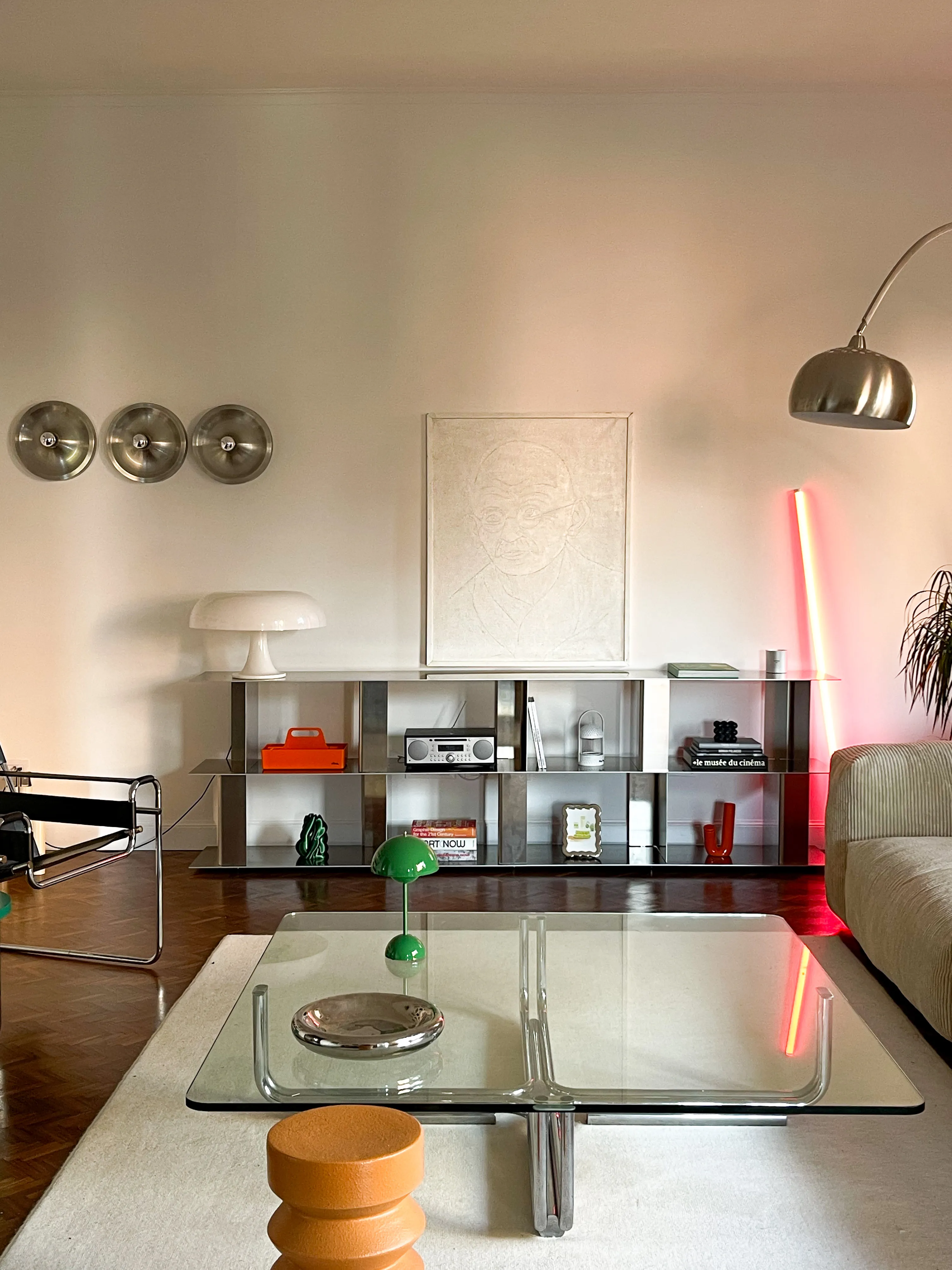
How to choose what goes on a bookshelf
The first question is not what to put on a shelf but what to take off. Bookshelves accumulate by default — a shelf filled edge to edge with books and objects of equal scale carries no visual interest. Notably, negative space is not an absence of decision. It is the decision. Start by clearing the shelf entirely and placing back only what you would frame.
Think in three categories: vases and vessels, which introduce height and material contrast; sculptural objects, which anchor a shelf with visual weight; and books, which serve as both content and structure. A shelf styled with only objects feels like a gallery vitrine. A shelf with only books feels like a library. The proportion between the two is where character lives. Moreover, the objects you select should carry a point of view — handmade ceramics, cast metals, blown glass — rather than the generic decorative items that accumulate without intention.
Scale is the most common oversight. One tall object per shelf section reads as a focal point; three tall objects of similar height flatten into visual noise. Therefore, vary the scale deliberately — one tall, one low, one horizontal — and let them breathe. The rule of three is a reliable framework, not because it is a rule, but because odd numbers resist symmetry, and symmetry on a shelf is rarely interesting.
Types of objects and what they do on a shelf
Different object types perform different compositional roles on a shelf. Understanding what each brings prevents the most common styling mistake: placing beautiful things in ways that cancel each other out.
Vases and vessels
Vases and sculptural vessels are among the most versatile objects a shelf can hold. They introduce vertical rhythm, and their surface — whether ceramic, glass, or stoneware — catches and holds light differently across the day. On a shelf, a vase reads differently than it does on a dining table: it is no longer a container but a form, and its silhouette becomes the point. Consequently, the more considered the form — an asymmetric profile, a texture that interrupts a smooth wall — the harder it becomes to ignore, in the best sense.
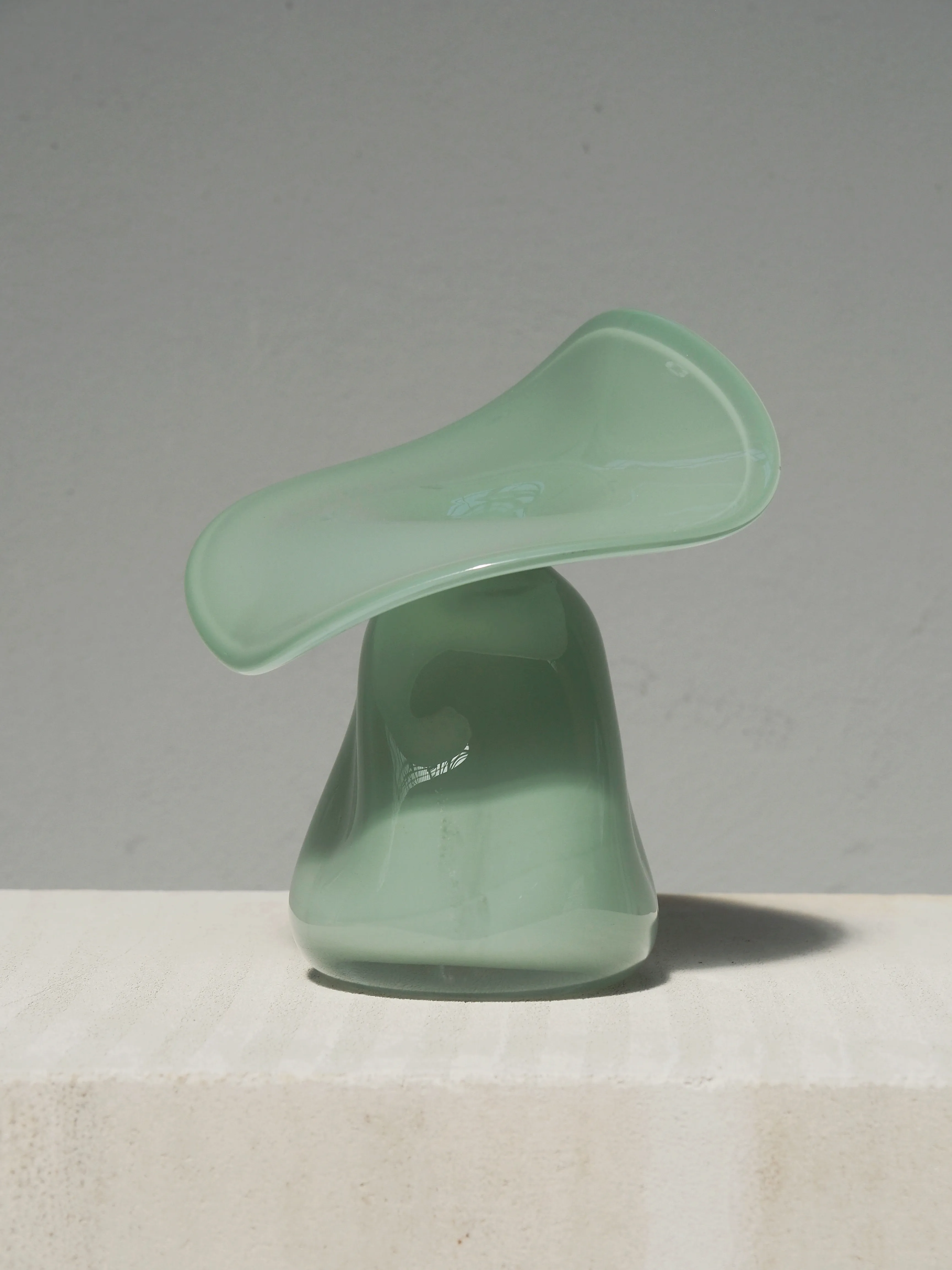


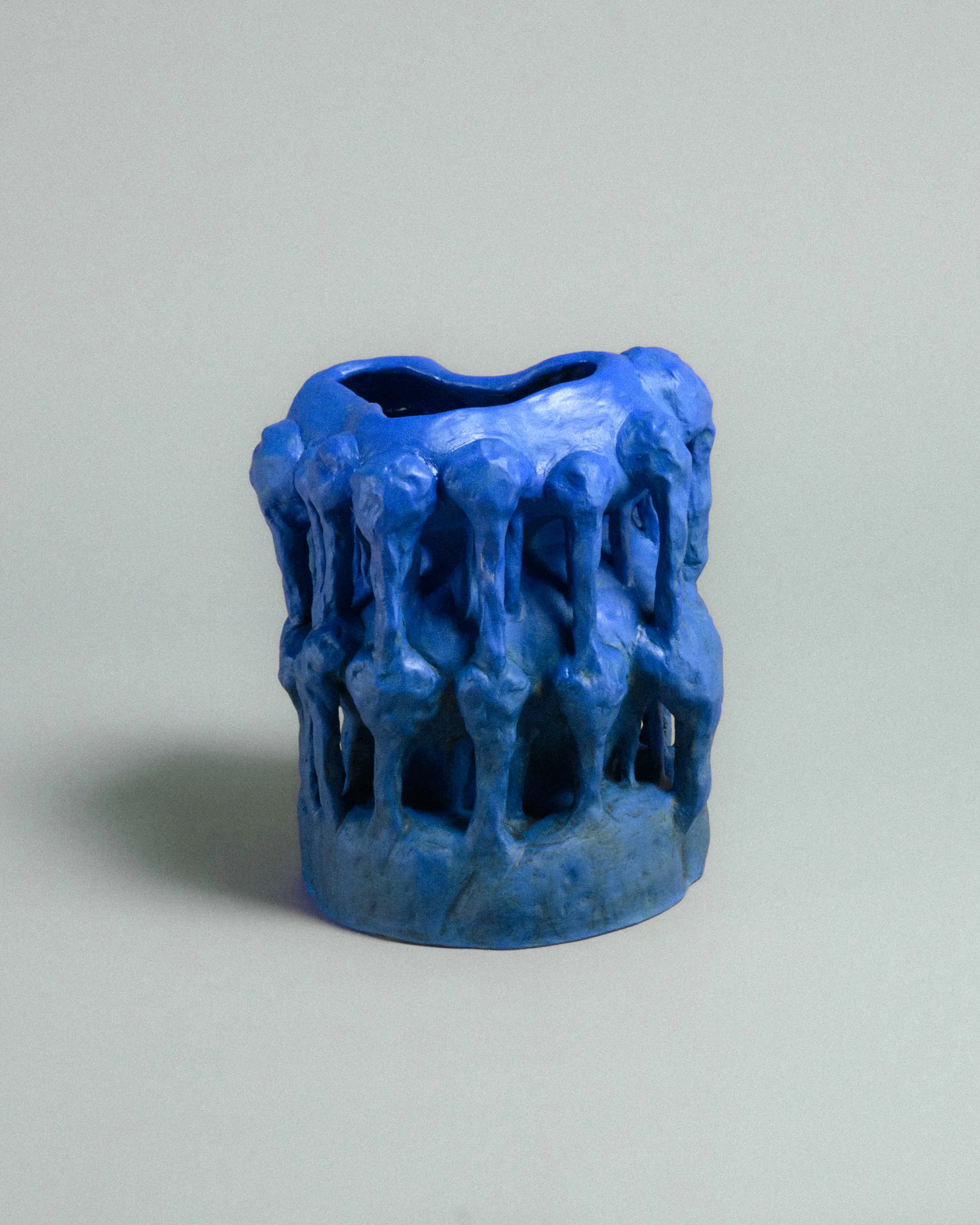
The Glass Vase In Layers by Alicja Hajkowicz is hand-blown in Poland from overlapping glass forms that move between opaque and transparent depending on the light — its sage green sits easily on a shelf without demanding attention. The Echoes No.07 by Lena Krivenkova is handbuilt in stoneware with a textured exterior and glazed interior; it holds water, which makes it genuinely functional even when styled dry. The Sand 01 from the Raw Resonance series is a hand-built vessel where firing conditions and material behaviour have shaped the final outcome as much as any deliberate gesture — not watertight, but entirely resolved as a shelf object. The Estalactica 01 from La Cauna carries painted cave art references on its surface; it holds water and holds a narrative simultaneously.
Sculptural objects
A sculptural object anchors a shelf in a way that books and vases rarely do. Its three-dimensionality invites the eye to move around it rather than across it, introducing depth where shelves are otherwise flat. Furthermore, pieces in fired clay, cast metal, or reclaimed material carry a weight that grounds a shelf against lighter elements. Place them low and toward the front of a shelf section, where their mass can be appreciated without crowding the shelf behind.


Athitos by Chryssa Kotoula is made from Circular Terrazzo — a ceramic material developed to address glaze waste, where reclaimed studio remnants are fired directly into the clay body, producing a texture that cannot be repeated. The Abyss No.24 by Ceren Gürkan is hand-built in stoneware, its abstract geological surface shaped in a meditative state from references to canyon walls and natural erosion. The Oto Cast Aluminum Bowl by Jakob Axel Brix reinterprets Otto Wagner’s 1895 Vienna transit railing as a contemporary bowl — an architectural reference held lightly in cast metal.
Bookends
Bookends are the most underused compositional tool on a bookshelf. Functionally, they hold a vertical group of books in position without a wall or panel to lean against. Compositionally, they introduce visual anchors at the ends of a book group — and when the bookend is a considered object in its own right, it earns its place both structurally and aesthetically. The most interesting bookends tend to be those where the functional purpose is almost incidental: a sculptural object that also happens to work.
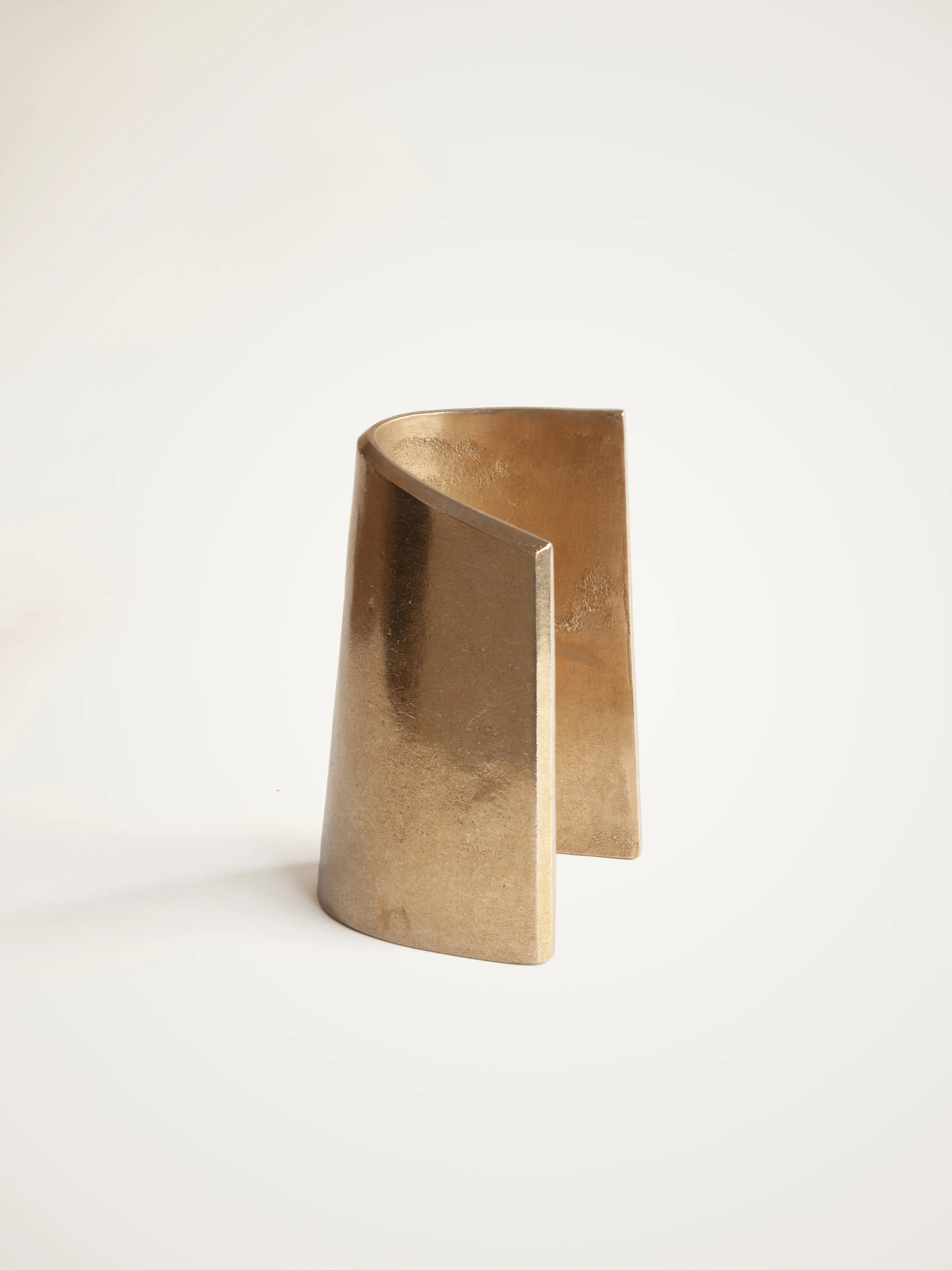

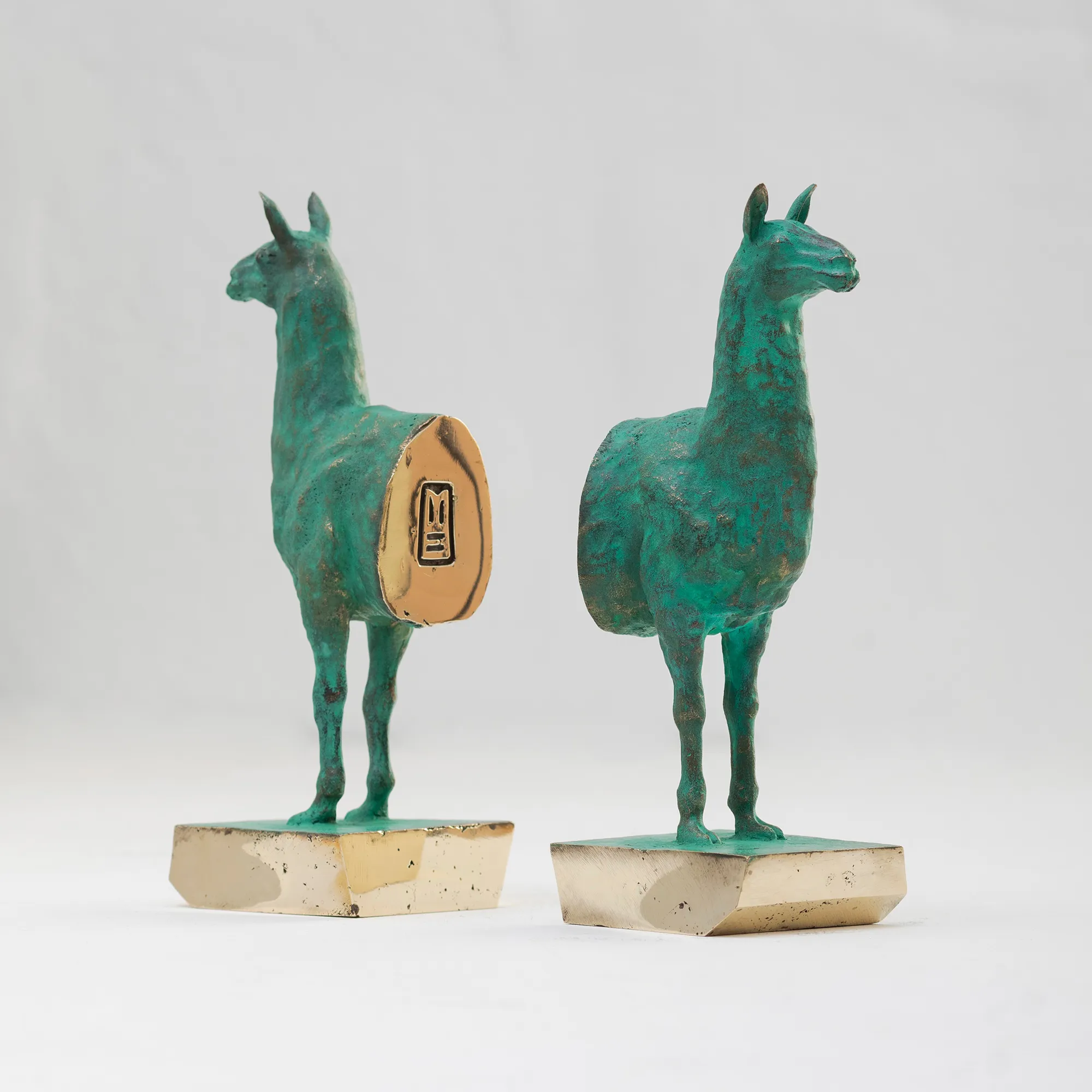
The Fold by Stem is sand-cast in solid brass and captures the act of turning a page as a sculptural form — each piece finished by hand in small batches, with slight variations between them. The Ribbon by Cornu Design pairs a cylindrical glass vessel with a fluid outer structure, functioning simultaneously as bookend and vase — a piece that earns both roles rather than compromising between them. The Llamas by Andean Studio are cast in solid bronze from a lost-wax mold by Ecuadorian sculptor Jorge Ávila Chico — part of the Íconos collection, a family of functional objects built on the abstraction of Andean iconography.
Books
Books are the structural framework of a bookshelf, and they function best when grouped rather than distributed individually. Stack three to five horizontally to create a plinth — a low platform on which a smaller object can sit. Stand a curated selection vertically, grouped loosely by spine color or height, and leave breathing room between groups. In other words, books do not need to perform the decorative work; they need to give the objects room to do it. An edited selection of well-chosen volumes does more for a shelf than a comprehensive library. Consider also turning some books so their page edges face outward — the off-white, textured block of pages creates a quiet, uniform texture that allows objects placed nearby to carry more visual weight than colored spines would allow. For inspiration, explore our guide to the perfect pieces for your summer reading or how to build a home library.
Materials and construction: what to look for in shelf objects
The collectible objects that hold up over time on a bookshelf tend to have one thing in common: material honesty. A piece made from stoneware that wears its firing marks openly, a vessel in blown glass whose layers are visible rather than hidden — these objects do not require explanation. Their materials tell the story.
Notably, handmade pieces reward proximity. The slight asymmetry of a hand-built vessel, the texture that varies across a fired surface — these are qualities that become more apparent the closer you stand. On a shelf, where objects are encountered at arm’s length, this kind of material richness performs in a way that manufactured objects rarely can. Moreover, handmade pieces age differently: they acquire presence rather than losing it.
In terms of color, a shelf benefits from a restrained palette with one or two considered departures. Neutrals — sand, iron, off-white, warm grey — provide the ground. A single piece in an unexpected tone, a sage green glass or an aquatic-glazed vessel, acts as a counterpoint without disrupting the composition. As a general principle, pieces that share a material family — all ceramics, for instance — create quiet cohesion even when their forms differ significantly. By contrast, an assembly of unrelated materials requires more careful curation to hold together visually.
How to organise a bookshelf: room by room
The approach to bookshelf styling shifts depending on the room. A bookcase in a living room is a social object — it is seen from across the room, read from a distance, and expected to participate in the atmosphere of the space. Here, scale matters most: objects need to be large enough to register from a sofa, and the overall composition needs to hold at ten feet. A shelf in a home office or study is a more intimate proposition — it is encountered up close, often by the same person every day. In this context, smaller and more personally resonant objects earn their place: a singular handmade vessel, a piece of sculpture that changes with the light, a stack of books that marks where the reader stopped.
In a bedroom, a shelf above a desk or beside a window tends to carry fewer objects and more air. The restraint appropriate here is different from living room restraint — not compositional but personal, quieter. One vessel, one stack of books, one object that means something. The shelf in a dining room or kitchen, if it carries decorative objects at all, works best when those objects relate to the activity of the room: vessels that could hold something, bowls that could be used, pieces that carry material resonance with the table.
Bookshelf decor ideas: styling approaches that hold
A few approaches that consistently work — not as rules but as starting points.
Anchor with one large piece per shelf section
Each section of a shelf — roughly a third of the horizontal span — benefits from one object of greater visual weight than the others. This can be a tall vase, a large sculptural object, or a dense stack of horizontally placed books. The anchor gives the eye a place to rest, and the smaller objects arranged around it gain definition from proximity to something resolved. Without an anchor, a shelf section reads as a collection of items rather than a composition.
Use material contrast deliberately
The most interesting shelves work through contrast: ceramic next to glass, wood next to cast metal, a matte surface beside a reflective one. These contrasts do not need to be dramatic — a single piece in blown glass among ceramic and wood objects is enough to shift the temperature of a shelf. By contrast, a shelf composed entirely of ceramics, however beautiful each piece, reads as a collection rather than a composition. Introduce one material that does not belong to the dominant family, and the whole shelf becomes more resolved.
Leave shelves you are not ready to style empty
This is perhaps the most counter-intuitive piece of bookshelf decor advice: leave a shelf empty rather than fill it with objects that do not earn their place. An empty shelf reads as restraint — as a decision — whereas a shelf filled with second-choice objects reads as avoidance. In addition, an empty shelf creates contrast with the styled shelves above and below it, giving the composition room to breathe in a way that no amount of negative space within a shelf can replicate. Furthermore, it is easier to add objects when the right one appears than to remove the wrong ones once they have settled into place.
Group by material or origin, not by type
Grouping all the ceramics together, all the glass pieces together, and all the sculptural objects in another section is a common approach, but it tends to produce zones rather than a composition. Instead, consider grouping by material family across the whole shelf: warm neutrals — stoneware, wood, warm-toned ceramics — on the left, cooler or reflective pieces — glass, cast metal, pale stone — toward the right. This creates a tonal gradient that reads as compositional intention rather than organizational habit. Alternatively, group by the occasion of collecting: pieces acquired on a specific journey, from a particular designer, or in a period of sustained interest in a material. The coherence of provenance and personal meaning can hold a shelf together as reliably as formal or material cohesion.
Practical guidance: how to keep a styled shelf looking considered
Dust and light
Open shelves collect dust, and dust changes the appearance of objects before it changes their condition. Ceramic vases and stoneware vessels with textured surfaces hold dust visibly in their ridges, which can dull a shelf over time. A soft brush — a dry pastry brush or a dedicated dusting brush — is more effective than a cloth on textured surfaces, and less likely to shift the objects from their positioned place. Glass pieces, conversely, show marks from handling before dust settles — wipe them with a lint-free cloth when they are moved or adjusted.
Rotating the shelf
A shelf styled once and left unchanged will eventually stop being seen. The eye adjusts to permanence, and what was once a composition becomes wallpaper. Consequently, rotating two or three objects — introducing a new piece, moving one to storage, changing the angle of something that has been facing the same direction for a year — refreshes the composition without requiring a complete restyle. Additionally, pieces that leave the shelf for a time tend to be encountered differently when they return. Meanwhile, bringing pieces from other rooms temporarily onto a shelf is a useful way of understanding how they work in a new context before committing to a permanent arrangement.
What to do if a vase is not fully watertight
Several of the most compelling vessels designed for shelves are not watertight — and do not need to be. Pieces like Sand 01 from the Raw Resonance series are sculptural vessels: they hold their form, not water. On a shelf, a vessel used dry — with dried botanicals, a single branch, a piece of dried grass — is entirely appropriate and often more shelf-appropriate than a watered arrangement, which introduces moisture risk. Accordingly, when collecting pieces for a shelf, do not discount those that are not watertight; they are often the most interesting ones.
Frequently asked questions
What is the rule of three in bookshelf styling?
The rule of three suggests that objects arranged in groups of three are more visually engaging than groups of two or four. In bookshelf styling, this typically means grouping one tall object, one medium, and one low within a shelf section — creating a visual triangle that the eye moves through rather than across. It is a useful starting point, though not a strict requirement; what matters is that the arrangement has a visual rhythm rather than a flat even distribution of equal-height objects.
What is the triangle rule for shelves?
The triangle rule refers to the practice of repeating a color, material, or object type in three positions across a shelf or shelving unit, creating a visual triangle that unifies the composition without the repetition being obvious. For example, placing a ceramic piece on the far left of one shelf, the center of the shelf below it, and the far right of the shelf below that creates a diagonal rhythm that moves the eye across the whole unit. It is more effective than placing matching objects side by side, which creates grouping rather than movement.
What should I put on the bottom shelf of a bookcase?
The bottom shelf of a bookcase is encountered from above, which changes how objects read in this position. Large, low objects — a wide bowl, a stack of oversized books, a flat sculptural piece — work better here than tall, slender ones. Heavy pieces also sit more naturally on a bottom shelf, both compositionally and structurally. Furthermore, the bottom shelf is the most useful position for objects you want to be able to reach without moving other pieces, so functional items — a bowl used for keys, a basket, a frequently accessed book — can earn their place here on practical grounds alone.
How do I style a bookshelf without it looking cluttered?
The single most effective way to prevent a shelf from reading as cluttered is to reduce the number of objects to fewer than you think necessary, then add back selectively. A shelf with five objects, each of which has a clear reason for being there, reads as composed. A shelf with fifteen objects, even if each is individually interesting, reads as accumulated. Consequently, the editing process — deciding what to remove — is more consequential to the final result than the styling process of arranging what remains. Deliberate empty space is not a sign that a shelf is unfinished; it is a sign that it is considered.
Is it better to display books with spines facing out or facing in?
Spines facing out is the standard approach and rarely the most interesting one. Turning books so their pages face outward — the textured, off-white page block visible rather than the colored spine — creates a uniform, calm texture that allows objects on the shelf to carry more visual weight. This works particularly well when the book spines themselves are visually inconsistent: a mix of colors, fonts, and widths that would otherwise fragment a composition. By contrast, if the books are uniformly bound or share a tonal palette, spines-out can be just as resolved. The choice depends on the books.
Can I put plants on a bookshelf?
Plants on a bookshelf introduce organic color and movement, and in the right context they are entirely appropriate — particularly trailing plants on upper shelves, where the downward cascade creates vertical rhythm the structure of the shelf does not. However, watering is the practical constraint: a shelf that holds books and irreplaceable objects requires either drought-tolerant plants that need watering infrequently, or a removal protocol that moves them to a sink for watering. Dried botanicals in an unwatered vessel are a lower-risk alternative that carries similar visual effect.
The shelf as a considered space
A well-styled bookshelf does not declare itself. It is not a display case or a mood board; it is a composition that happens to be part of a room, holding objects and books that earn their place through form, material, and personal resonance. Indeed, the most satisfying shelves tend to be those that were edited over time rather than styled all at once — pieces added when found, removed when they no longer work, the whole composition in a state of slow, considered revision. Accordingly, it is worth collecting objects for a shelf the way one collects anything worth collecting: with patience, a clear point of view, and a willingness to say no to things that are almost right.