-
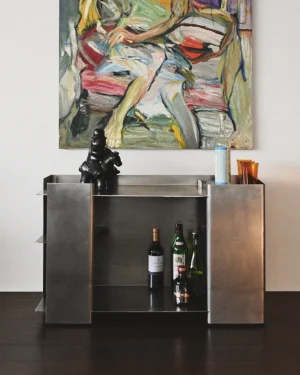
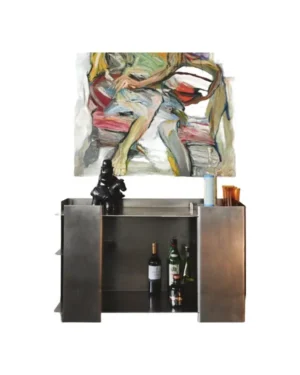
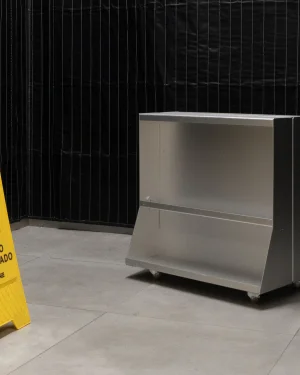
Stainless Steel Bar Cart
By NAVE
€2.900 -

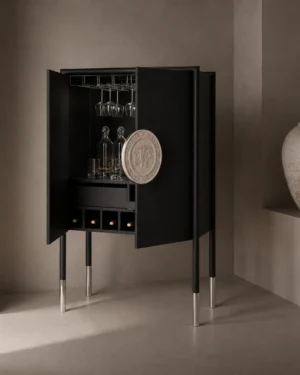
Carmen Bar Cabinet
By Comité de Proyectos
€10.900 -
 In stock
Bar Cart – Sandblasted Aluminum
By andykim.global
€1.850 -
 In stock
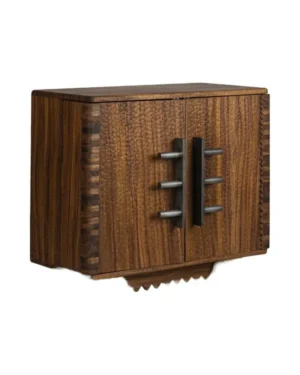
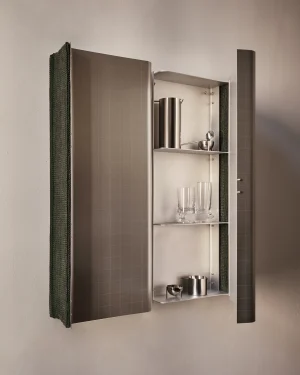
Plĭco – Wall Cabinet
By Atelier Nuanda
€6.250 -
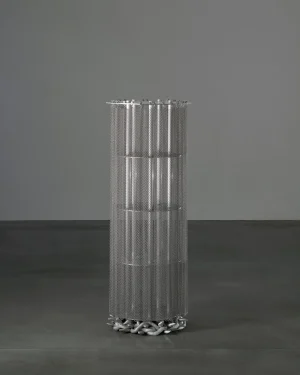
Natrix Natrix Bar Cabinet
By Mantas Lesauskas
€8.000 -
 In stock
Puduhepa Liquor Cabinet
By MARAU
€25.000 -
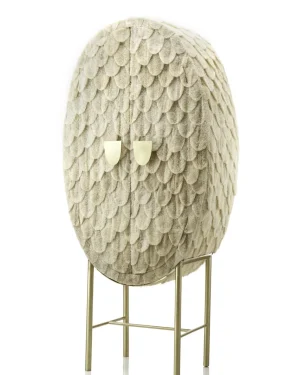
Bucha Soberana Cabinet
By Cultivado em Casa
€11.977 -
 In stock
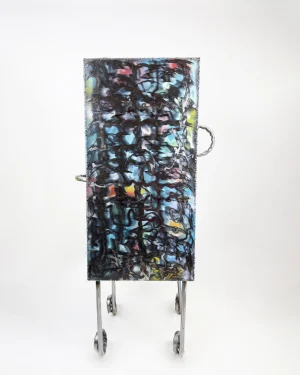
Perfidia_01 Solid Wood & Casted Bronze Bar Cabinet
By ANDEAN
€12.551 -
 In stock
The Awkward Cabinet
By Masha Volkova
€3.900 -

Das Bar Cabinet
By Nathan Chintala
€14.500 -
 In stock
Capri – Drink Cabinet
By Lebanto
€10.500 -
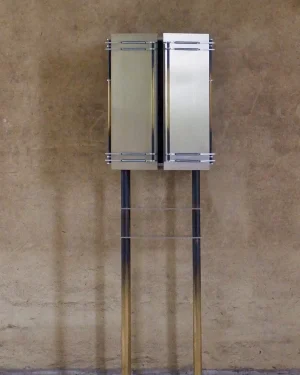
Tabernaculum – Aluminum & Brass Cabinet
By Hasik Design Studio
Metal bar cabinets are built from sheet or cast metal rather than timber or lacquer, and they carry a different kind of weight into a room: cool to the touch, reflective, and resistant to the knocks of daily use. Independent studios working in brass, aluminum, and stainless steel bring these cabinets together through metalwork, welding, patination, and engraving, often pairing the metal shell with leather, wood, or mirror glass for contrast. Closed, a metal bar cabinet reads as an object in its own right; open, it gives up bottles, glassware, and whatever else a household pours.
What defines a metal bar cabinet
Metal holds a sharper edge and a flatter plane than wood, so these cabinets tend toward geometric forms, cylinders, blocks, slender legs, rather than the organic curves timber invites. The surface can be left raw and brushed, polished to a mirror, or pushed into patina so the metal darkens and mottles with age. That range is part of the appeal: a metal bar cabinet can sit as quietly as a gray steel box or announce itself in glossy brass.
Finishes, colors, and techniques across the range
Studios listed under every metals piece on ADORNO work the surface in different ways. Some common threads:
- Base metals: brass, aluminum, stainless steel, often combined with wood, leather, or mirror glass
- Finishes: glossy, bronze, black, beige, each changing how the cabinet reads in daylight versus lamp light
- Styles: contemporary, neo-industrial, Bauhaus-leaning, radical, and futuristic forms sit alongside one another
- Editions: open editions, limited editions, and unique pieces, so the degree of scarcity varies piece by piece
Where a studio works across materials rather than metal alone, the same cabinet form sometimes appears in wood; anyone drawn to the shape but not the cold surface can look at wooden bar cabinets for comparison.
Choosing one: scale, height, and finish
Bar cabinets run taller than sideboards and shallower than wardrobes, so measure the wall and the swing of the door or drawer before committing to a footprint. A glossy or mirrored finish bounces light around a small room and can make a cabinet feel larger than its frame; a matte or patinated surface recedes and works better as a backdrop for other objects. Consider the hardware, too: exposed hinges and visible welds read as neo-industrial, while flush seams and polished edges lean closer to Bauhaus restraint.
Where a metal bar cabinet works
Living rooms and dining rooms are the usual settings, since both call for a piece that can stand at the edge of a gathering and hold its own visually. A metal finish also suits a den or a home office corner where a quieter wood cabinet might disappear into the rest of the furniture. For anyone building a dedicated drinks setup rather than a single statement piece, the wider range under home bar cabinets is worth a look, as is the full spread of bar cabinets across materials.
Caring for metal surfaces
Brass and bronze will darken and spot with handling unless they are lacquered; a soft cloth and occasional polish keep a bright finish bright, while leaving it alone lets the patina deepen on its own. Stainless steel and aluminum resist tarnish but show fingerprints and water marks readily, so a dry wipe after use keeps the surface even. Avoid abrasive cleaners on any plated or painted metal, since they cut through the finish faster than ordinary wear. For a broader sense of how these metals are used outside cabinetry, the range of metal furniture on ADORNO shows the same finishes applied to tables, shelving, and seating.
How do I choose a metal bar cabinet?
Look at how the metal is worked, brushed, polished, patinated or engraved, since that finish sets the tone more than the shape. Match its weight and reflectivity to the room, a glossy brass front reads differently than a brushed steel one.
How do I care for a metal bar cabinet?
Wipe steel and aluminum with a dry or slightly damp cloth, avoiding abrasive cleaners that dull the finish. Brass and bronze develop a patina over time, which can be left to deepen or kept bright with occasional polishing.
What size bar cabinet do I need?
Most stand at sideboard height, low enough to use as a serving surface, with internal space for bottles, glassware and a pull-out or fold-down bar top. A maker can confirm exact dimensions through Chat with the maker on the piece's page.
Which rooms suit a metal bar cabinet?
Metal holds its shape and shine under light, so these cabinets work well in living rooms and dining rooms where they catch the eye. Their cool surface also suits contemporary or industrial interiors better than warmer, wood-heavy rooms.
Do metal bar cabinets come in limited editions?
Some are produced as open editions, others as limited runs or unique pieces, depending on the studio and technique. The maker can confirm edition details through Chat with the maker on the piece's page.
How does buying a bar cabinet through ADORNO work?
Shipping is insured and worldwide, and every piece comes with a certificate of authenticity. Returns are accepted within 14 days, except made-to-order pieces, and ADORNO offers a lowest-price guarantee.